
Pseudolithos migiurtinus
$210.00
Hurry, only 1 item left in stock!
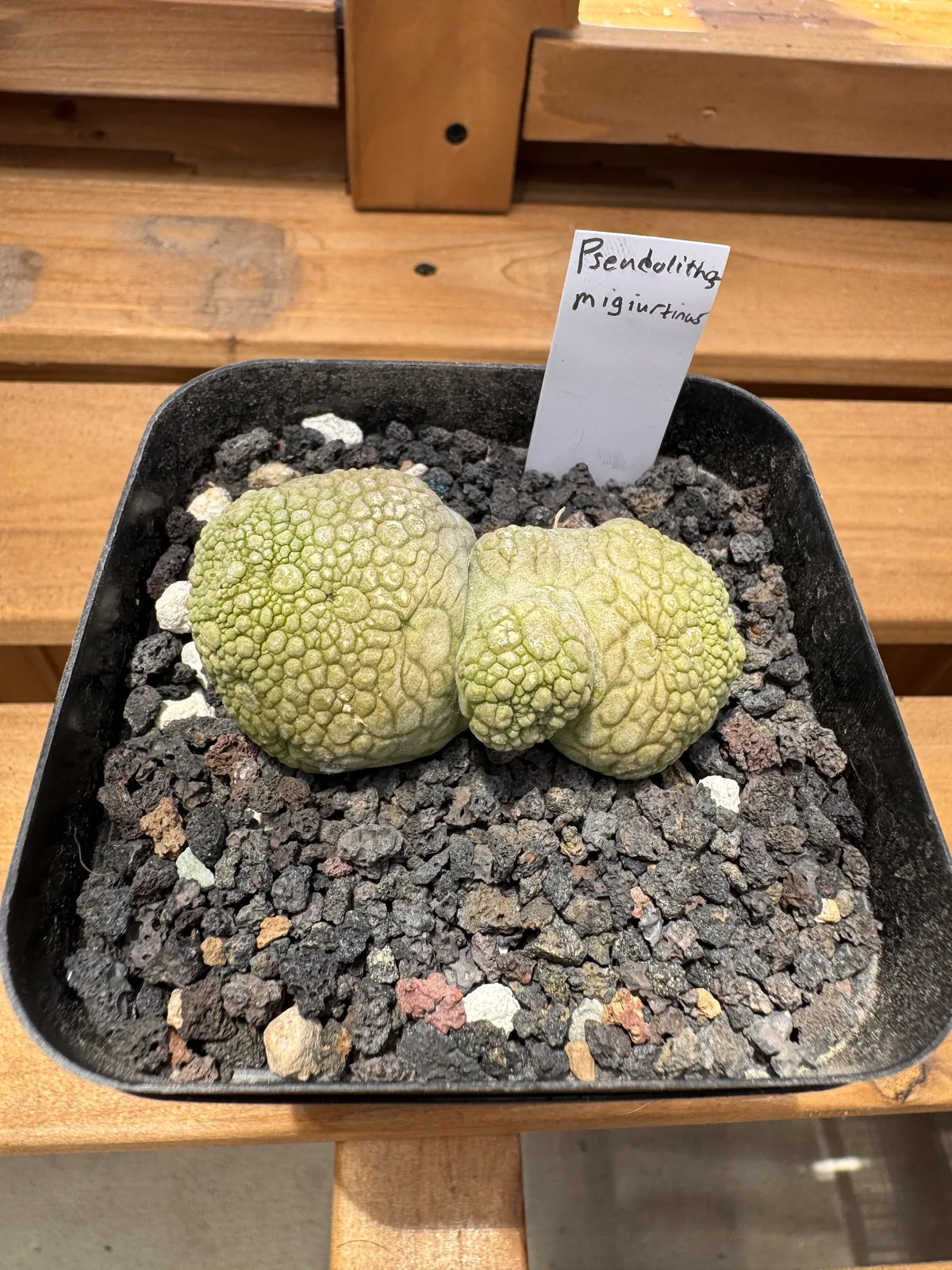
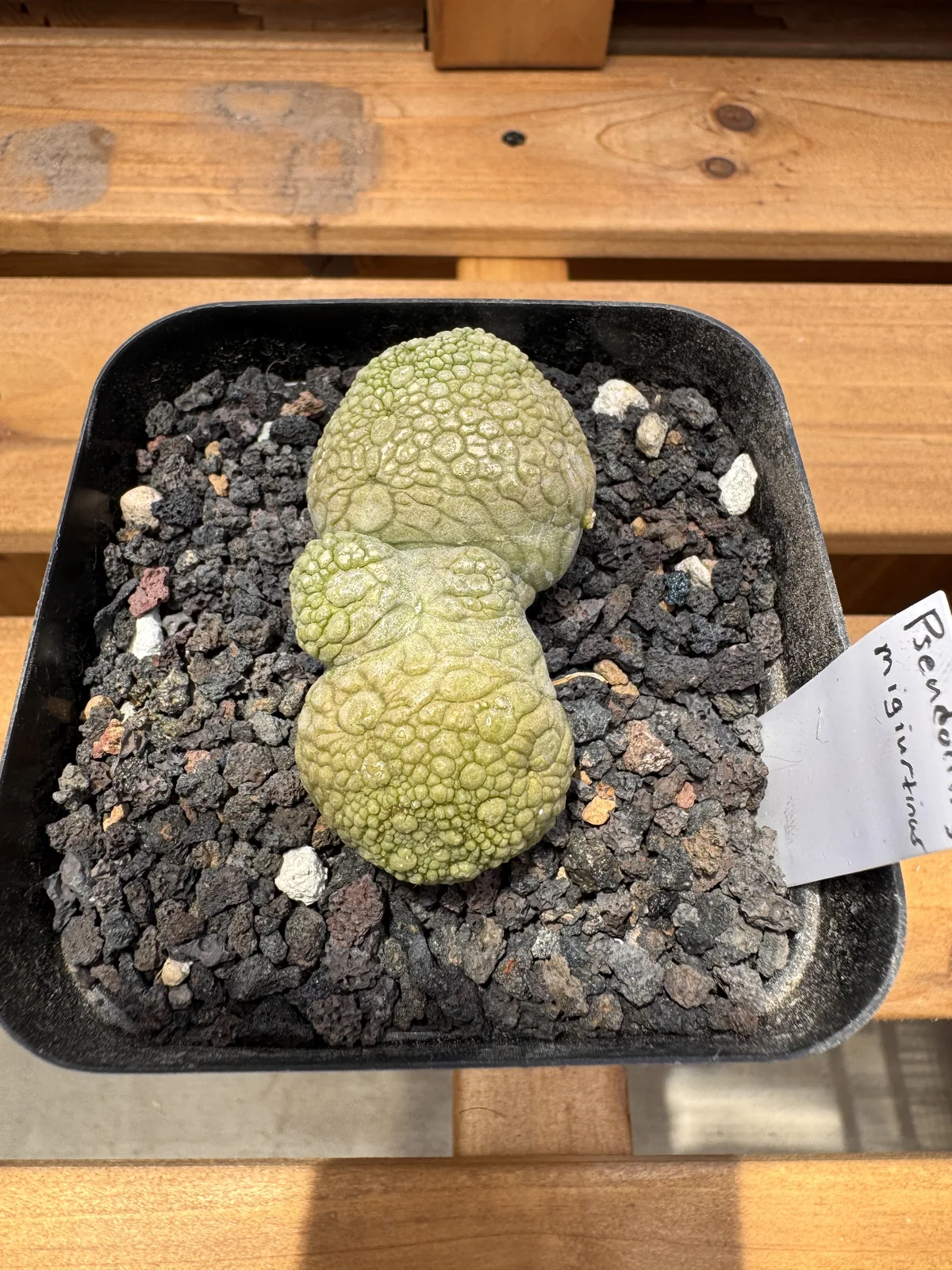
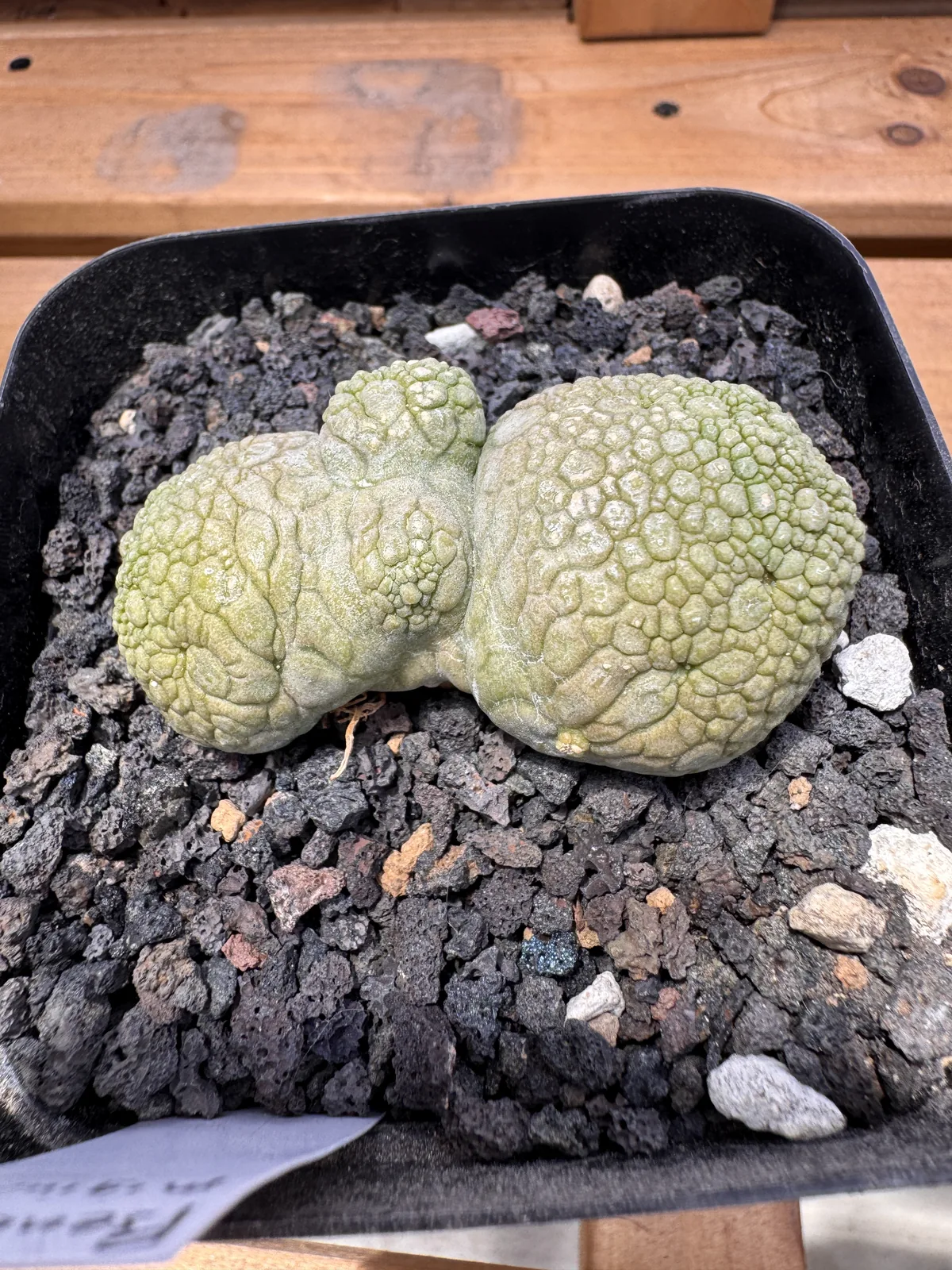
This specimen is one of a kind. The photos show the exact plant you'll receive.
Description
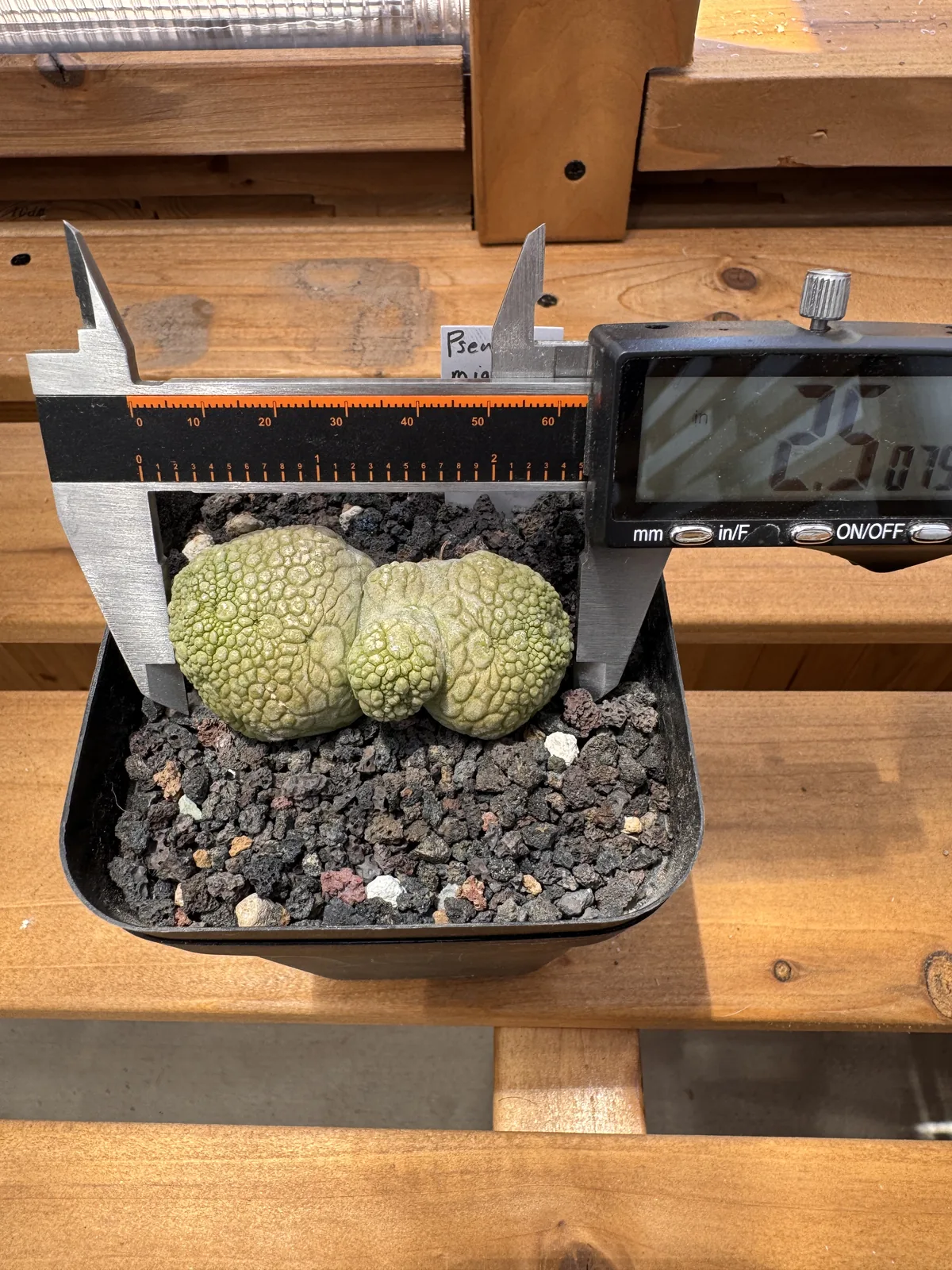
Type: Seed grown · Size: about 6 cm (2 1/2 in) across · One-of-a-kind twin-headed specimen
Pseudolithos migiurtinus is the rounded, pebble-bodied stone-mimic of the milkweed family, and this listing is for the exact plant in the photographs, a vibrant twin-headed specimen grown from seed in our own greenhouse. At rarecactus.com we grow these Somali succulents on the hard, mineral-only regime the species needs, and this one has come through with unusually fresh green colour and a second head splitting from the first as it matures.
What makes Pseudolithos migiurtinus different
Despite the rock-like looks, Pseudolithos migiurtinus is not a cactus. It sits in Apocynaceae alongside the carrion-flowered stapeliads, and it survives on the open grit plains of the Bari Region in northeastern Somalia by passing for a stone. The body is a low, rounded to sub-globose dome covered in a tessellated mosaic of soft knobbly tubercles, with no spines anywhere, and its colour slides from light green in shade to reddish-brown under hard sun, near-perfect camouflage against the surrounding rock. Of all the species in the genus this is the most forgiving in cultivation, which makes it the right Pseudolithos to start with. The accepted botany is held at Kew, where you can read the record for Pseudolithos migiurtinus, and we cover the species in full on our Pseudolithos migiurtinus specimen page.
This particular plant is doing something most do not: it has branched into two fused heads rather than staying a single solitary body, the dichotomous splitting that occasionally shows as these plants mature. Paired with the bright, well-fed green of the epidermis, it makes for a far more sculptural specimen than the usual lone dome. It sits on its own roots, as the genus does in cultivation, since migiurtinus grows well ungrafted where the harder species are usually grafted to survive.
How we grow it
We keep this Pseudolithos migiurtinus in a purely mineral mix, roughly 70 to 80 percent pumice with the balance crushed limestone and granite grit and no organic content at all, in a small pot that dries quickly. It takes bright, strong light with only the fiercest midday summer sun filtered, regular water through the hot months with a full dry-out between each soak, and almost nothing through winter. The single thing that kills these plants is wet combined with cold, so the mix has to drain hard and the plant has to be bone dry whenever the weather turns cool. Grown like this it stays firm, rounded and well coloured.
Flowering and growth
A settled Pseudolithos migiurtinus opens small, dark-red to maroon star-shaped flowers low on the flanks at the base of the body, hairy and faintly carrion-scented to draw the flies that pollinate them in the wild. Growth is slow and measured in a few millimetres a season, so a plant of this size, with a second head already forming, carries real age behind it. Warmth, strong light and restraint with the watering can are what thicken the body and deepen the tessellation over the years.
When your plant arrives
Your specimen ships kept dry for transit, well rooted and ready to pot straight up. On arrival, settle it into a sharply draining mineral mix, then acclimate it slowly to its new spot under bright indirect sun and hold off on water for a full 14 days after potting. Resume watering only on warm days once the fortnight is up. Hold it above 10°C; established plants shrug off a brief dry dip toward 5°C, but wet and cold together is the one combination to avoid.
Provenance and legality
This Pseudolithos migiurtinus was grown from seed in our greenhouse and never wild collected. Unlike the cacti we sell, the genus carries no CITES listing and no international trade restriction, so a nursery-grown plant like this moves freely and lawfully. Wild digging has long shadowed these stone-mimics in the trade, which is exactly why growing them on from cultivated seed is the only responsible way to keep one. Browse the rest of the group on our Pseudolithos encyclopedia hub.
One plant, one set of photographs. The twin-headed specimen shown is the exact plant that ships, packed dry for safe travel.
Shipping & Returns
Shipping
Flat $15 shipping anywhere in the United States, for one plant or several. Orders ship within 1 to 3 business days and usually arrive 2 to 5 business days later. Every plant is packed by hand to travel safely.
Returns
Each specimen is a living, one of a kind plant, so we do not accept general returns. We do guarantee safe arrival: if a plant arrives dead or seriously damaged, contact us within 48 hours of delivery with photos and we will replace it or refund that item.
