
Lophophora diffusa
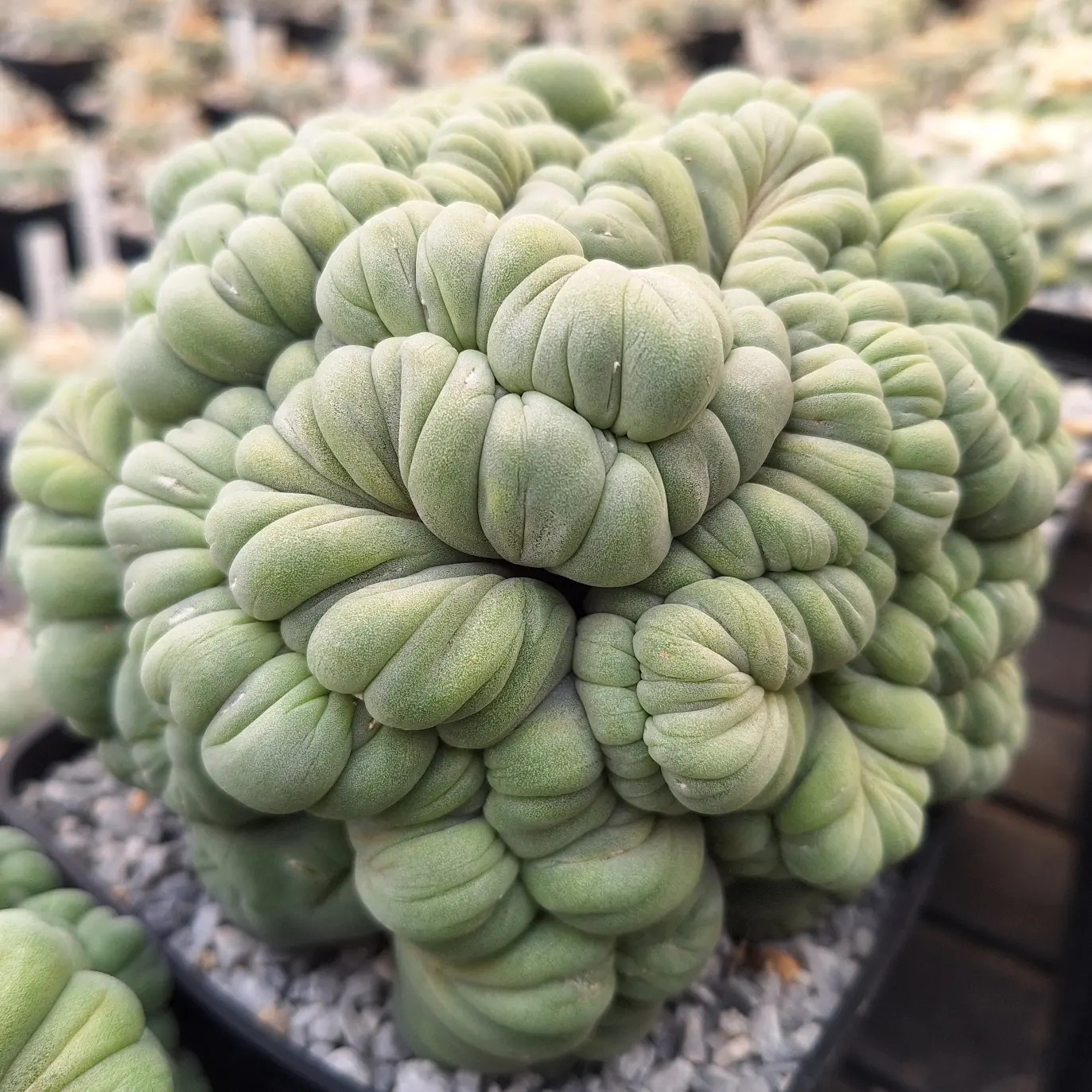
| Family | Cactaceae |
| Described by | Croizat (1944) |
| Native range | Querétaro, Mexico |
| Altitude | 1,400–2,100 m |
| Stem diameter | 3–12 cm; domed |
| Ribs | 7–13; often indistinct |
| Flowers | White to pale cream |
| Fruit | Pale pink, clavate |
| IUCN status | Vulnerable |
| CITES | Appendix II |
| Dominant alkaloid | Pellotine; mescaline absent |
False Peyote · Dry Whiskey · Peyote de Querétaro · Pelóte
Lophophora diffusa is the species that serious collectors reach for when they want to understand the genus rather than simply grow a famous plant. It is not peyote. It does not produce mescaline. It grows in a far narrower slice of Mexico than its relative, limited essentially to the limestone hills of Querétaro state, and it looks different: a paler, more yellow-green body, ribs that are softer and sometimes barely visible, areoles loaded with wool that spreads outward in a way the species name directly commemorates, and white or cream flowers where Lophophora williamsii produces pink ones. The chemical contrast between the two species is what drew pharmacologists to it in the first place, and what keeps it interesting for anyone asking questions about how and why Lophophora chemistry varies across the genus. Growing Lophophora diffusa well is, practically speaking, much the same as growing its relative well. Understanding what makes it a distinct entity is a different and more rewarding exercise.
This page covers Lophophora diffusa in full: its taxonomy and nomenclatural history, the restricted Querétaro habitat where it grows wild, its morphology and how it differs from Lophophora williamsii, the alkaloid chemistry including what pellotine dominance means in the absence of mescaline, flowering and reproduction, the growth trajectory from seedling to collection specimen, and a direct species comparison in the dedicated section below. Because this is a botanical reference page, no commercial plants are listed here.
Contents
Taxonomy & Nomenclature
Lophophora diffusa was first described by Leon Croizat in 1944. Working from plants collected in Querétaro, Croizat identified a set of characters that he considered collectively sufficient to distinguish this material from Lophophora williamsii: the body colour tending toward yellow-green rather than blue-grey-green, the ribs flatter and less defined, the areole wool spreading outward in a distinctly diffuse rather than compact tuft, and the flowers white or pale cream rather than pink. The epithet diffusa references that spreading areole wool directly. In Latin, diffusa means spread out or dispersed, and Croizat considered it the most reliable visual marker for the new entity.
The species’ nomenclatural history has a few complications worth working through. Older literature lists it under the synonym Lophophora williamsii var. diffusa, reflecting a period when workers who doubted its distinctness at the species level placed it as a geographical variety of Lophophora williamsii instead. It also appears as Lophophora echinata var. diffusa in literature that accepted the now-rejected species name Lophophora echinata. Both synonyms have been set aside in current taxonomy. The accepted name, as listed in the Kew Plants of the World Online database, is Lophophora diffusa (Croizat) H.Bravo, with H. Bravo providing the formal combination that placed it correctly within the nomenclatural framework.
The most important confirmation of the species’ validity came not from morphology but from chemistry and genetics. Heffter’s work in 1894 had already noted that a pellotine-rich material of Lophophora lacked mescaline, and Trout’s Notes documents the significance of this: the source of Heffter’s pellotine isolation was probably material from the Querétaro range rather than from Lophophora williamsii in the strict sense, as considerable trade in peyote collected from the diffusa locality existed in early times and was not differentiated from the mescaline-containing species. That chemical distinction was later formalised by Bruhn and Agurell (1975), who isolated O-methylpellotine from Lophophora diffusa and noted it was absent from Lophophora williamsii. Molecular confirmation followed with Butterworth et al. (2002), who used DNA sequence data to establish the two as genetically distinct species. Sasaki et al. (2009) and Aragane et al. (2011) completed the picture by showing that chloroplast trnL intron sequences reliably distinguish the two and that mescaline absence in Lophophora diffusa holds without exception in every analysed specimen.
There are no currently accepted subspecies or varieties of Lophophora diffusa. Some variation exists between populations from different Querétaro localities in body size, the degree of rib suppression, and flower colour intensity, and it is possible that future study will formalise some of this into named entities. For the present, the species is treated as a single entity across its range.
Historical synonyms (10)
- Lophophora echinata var. diffusa Croizat, 1944 basionym (originally described as a variety of L. echinata)
- Lophophora williamsii var. diffusa (Croizat) G.D.Rowley, 1979 heterotypic synonym (historical lumping under L. williamsii)
- Lophophora williamsii subsp. diffusa (Croizat) Scheinvar, 2004 heterotypic synonym
- Lophophora diffusa var. koehresii Ríha, 1996 heterotypic synonym
- Lophophora diffusa subsp. viridescens Halda, 1997 heterotypic synonym
- Lophophora diffusa subsp. kubesae Halda, Kupčák & Malina, 2002 heterotypic synonym
- Lophophora diffusa var. swobodaiana Halda, Kupčák & Malina, 2002 heterotypic synonym
- Lophophora viridescens (Halda) Halda, 1997 heterotypic synonym (elevated to species rank by some collectors)
- Lophophora koehresii (Ríha) Bohata, Mysák & Snicer, 2005 heterotypic synonym (elevated to species rank by some collectors)
- Peyotl diffusus (Croizat) Sotom., Arred. & Mart.Mend., 2001 nom. inval. (rejected under ICBN Article 42.1)
Sources: POWO (Kew) · IPNI · GBIF · Wikidata
Habitat & Native Range
Lophophora diffusa has an unusually restricted natural range for the genus. While Lophophora williamsii extends across a north-south sweep exceeding 1,500 kilometres through the Chihuahuan Desert region, Lophophora diffusa is essentially confined to Querétaro state in central Mexico. A small number of populations extend into adjacent parts of Hidalgo, but Querétaro is where the species is concentrated, best documented, and most securely established. The total range fits within an area roughly 150 kilometres across at its widest point.
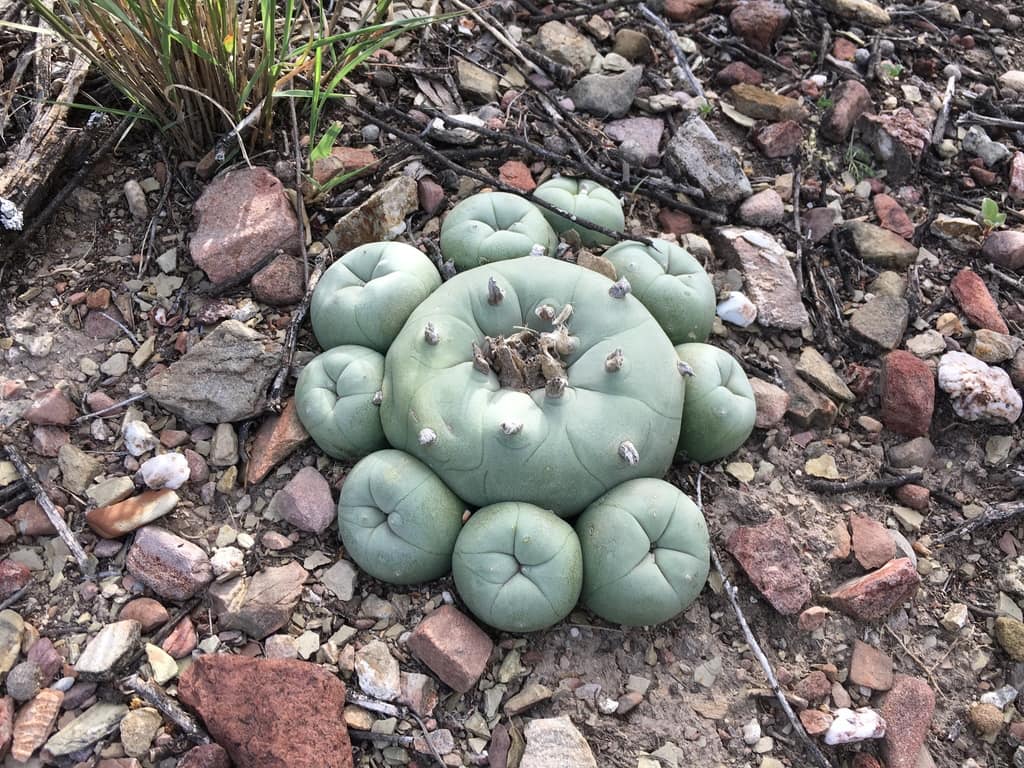
The terrain where Lophophora diffusa occurs is limestone-dominant hill country and bajadas, typically at elevations between 1,400 and 2,100 metres. This is higher ground than most of the core Lophophora williamsii range in the Chihuahuan Desert lowlands, and the climatic conditions reflect that difference. Annual rainfall is low but not extreme, typically in the range of 300 to 500 millimetres, falling predominantly in summer. The dry season is long and pronounced. Winter temperatures drop to near or occasionally below freezing, but sustained frost is uncommon. The combination of summer rain, winter dry cold, and limestone substrate is what Lophophora diffusa is built around.
The substrate is almost invariably calcareous. Where substrate data accompanies collection records, the plants are consistently associated with fractured or weathered limestone, often on slopes with a southerly or westerly aspect that maximises solar exposure during the short winter days. Soil depth is thin. The plants grow partially buried, with only the crown at or just above the soil surface. In some localities the surrounding vegetation is dense enough that the plants sit in partial shade during the hottest summer months; in others, particularly on exposed rocky slopes, they receive direct sun for most of the day.
Associated plants in the habitat of Lophophora diffusa include several species of Agave, Hechtia, Opuntia, various thorny legumes including Acacia and Mimosa species, and other succulents adapted to the limestone substrate. Some localities overlap with the ranges of Mammillaria and Turbinicarpus species, placing Lophophora diffusa within the broader zone of threatened Querétaro cacti that has attracted significant conservation attention. The area is part of the Tehuacán-Cuicatlán Valley biosphere, a dryland region of outstanding botanical significance in North America, and the limestone hills of Querétaro share in that botanical richness even as they face the same pressures from agriculture, grazing, and urbanisation that have affected the region broadly.
The more southerly and higher-altitude position of Lophophora diffusa relative to most Lophophora williamsii populations means the two species do not co-occur in the wild in the strict sense, though their ranges approach each other in the transition zones of Guanajuato and Hidalgo. They are ecologically separated rather than merely taxonomically distinguished, which is a significant point for anyone thinking about the evolutionary pressures that shaped the two species’ differences in body form, flower colour, and alkaloid chemistry.
Morphology
The body of Lophophora diffusa is hemispherical to broadly domed, rarely as flat at the crown as typical Lophophora williamsii. Diameter in cultivation ranges from 3 to 12 centimetres, with wild plants generally smaller due to slower growing conditions and periodic damage from grazing animals or drought. The epidermis is a pale yellow-green to grey-green, notably more yellow than the distinctly blue-grey-green of Lophophora williamsii. The waxy surface bloom that gives Lophophora williamsii its grey cast is less pronounced in Lophophora diffusa, and the underlying body colour therefore reads as warmer and yellower at a glance.
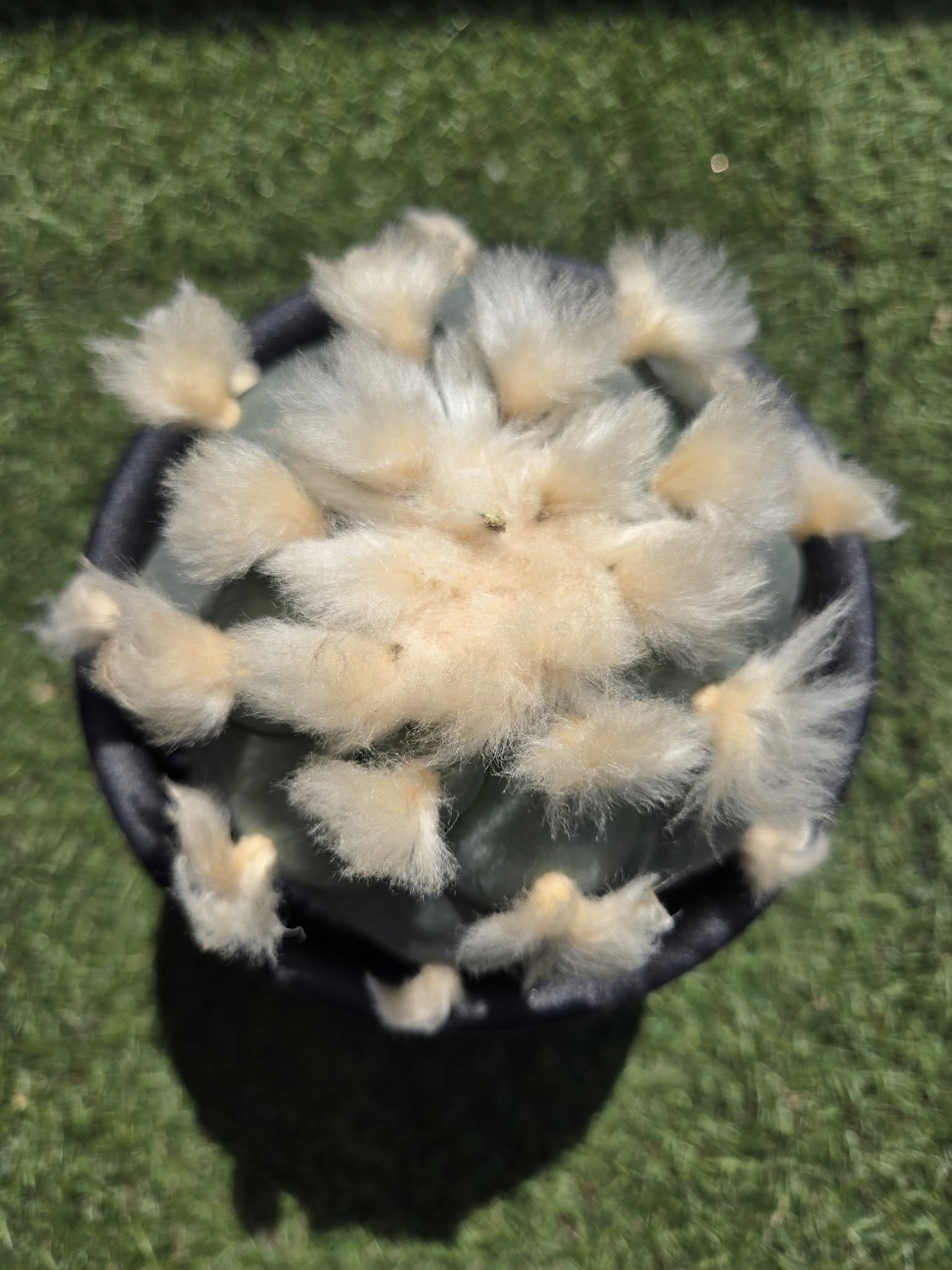
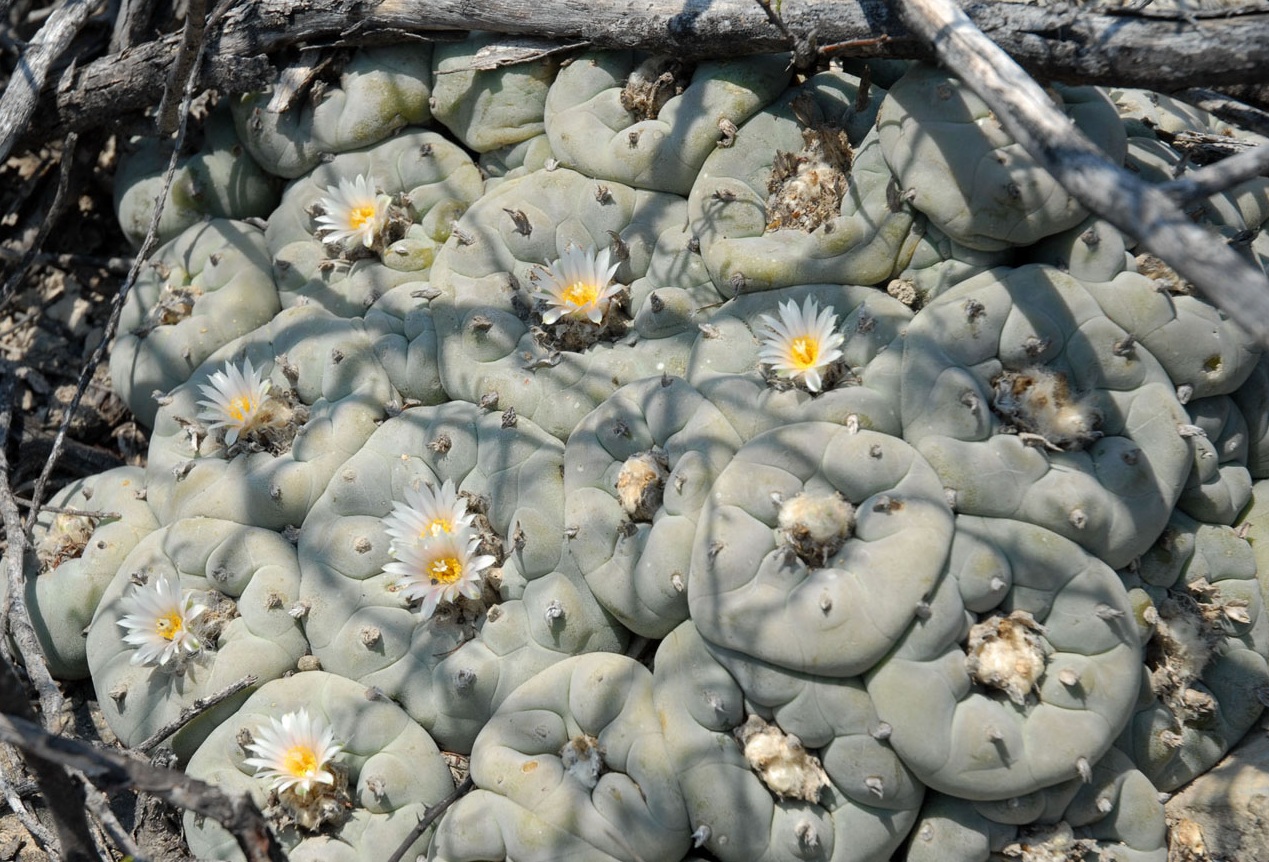
The diagnostic characters of Lophophora diffusa in detail: the warm yellow-green body, the broad, low ribs, and the areole tufts that spread outward rather than standing compactly erect.
The rib structure is the most variable character in the species and the one that requires the most care when using it as a diagnostic feature. In typical plants, the ribs are present but low, broad, and poorly defined compared to the crisp, well-developed ribs of Lophophora williamsii. In some individuals, particularly in juvenile plants and in plants from certain localities, the ribs are so suppressed that the body surface appears almost tuberculate rather than ribbed, with distinct areole-bearing protuberances but little in the way of connecting rib crests between them. In older, larger plants the ribs tend to become more defined, though they remain softer in expression than in the related species. Rib counts of 7 to 13 have been documented, with 8 to 10 being the most common in mature cultivated plants.
The areoles are the clearest single character for identification. They are large relative to body size and carry a greater quantity of wool than the areoles of Lophophora williamsii. The wool spreads outward from the areole centre in multiple directions rather than forming a compact, upright tuft. On a well-grown adult plant the areoles are clearly visible from above, their spreading wool giving the crown a looser, more open texture than the tighter, more organised woolly crown of Lophophora williamsii. This is what Croizat was naming with the epithet diffusa, and it is a reliable feature once seen on real plants.
The taproot follows the same basic pattern as in Lophophora williamsii: large, fleshy, and carrot-like in juveniles, broadening to a substantial storage organ in mature plants. The root represents a significant proportion of the plant’s total mass and is its primary water and nutrient reserve during dry periods. Plants that are being repotted reveal a root that is often two to three times the volume of the above-ground crown. Like its relative, Lophophora diffusa resents any substrate that holds moisture around the root collar for extended periods, and the root is the first structure to suffer under poor drainage conditions.
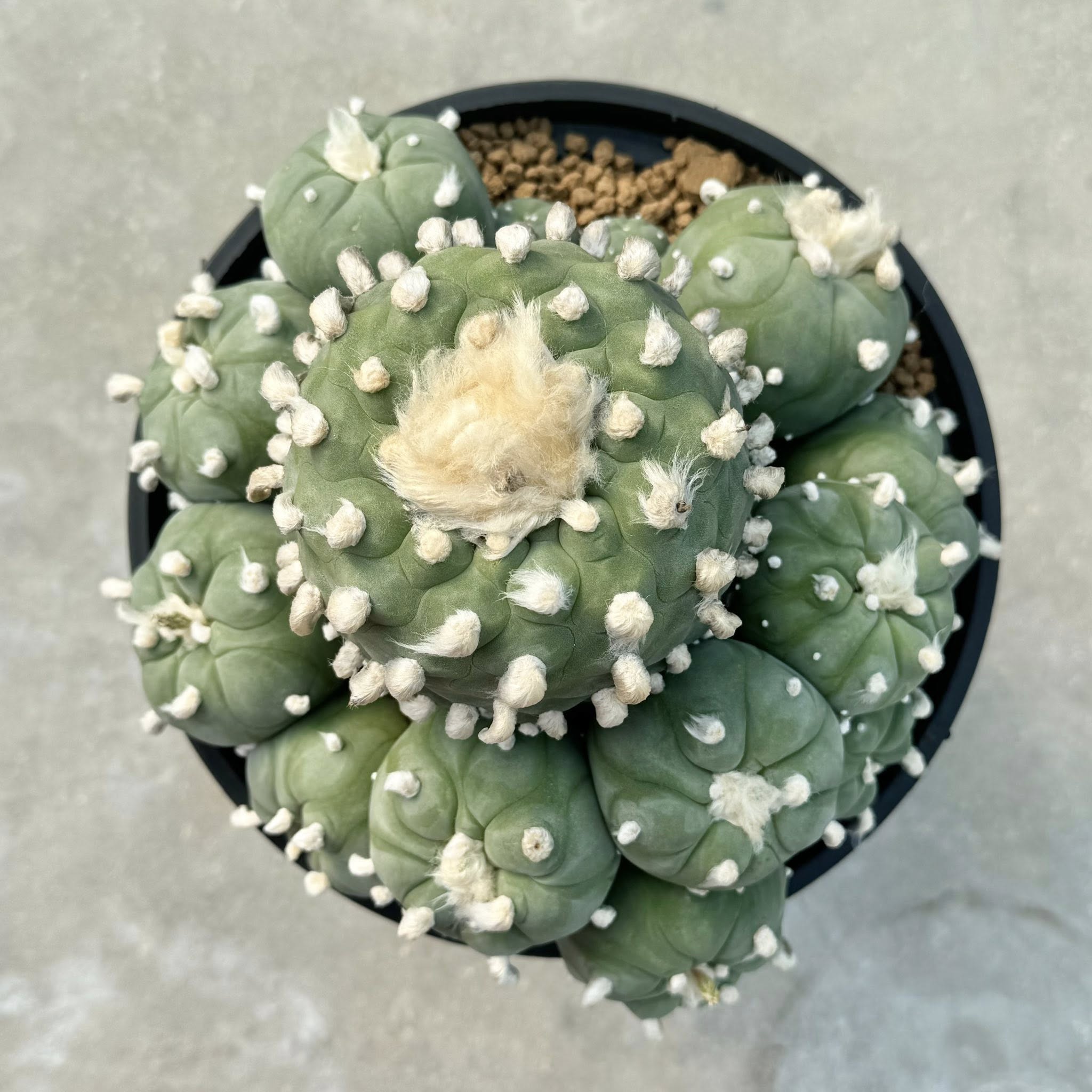
Caespitose clustering occurs in Lophophora diffusa but is reported less frequently than in Lophophora williamsii. Some cultivated plants do produce offset heads with age, particularly after damage to the central growing point or after flowering. Multi-headed plants are not uncommon in collections built from seed over many years, but they are not as much a defining character of this species as they are for some populations of its relative.
Alkaloid Chemistry: Pellotine & the Mescaline Question
The alkaloid chemistry of Lophophora diffusa is what makes it scientifically significant beyond its botanical interest. The species does not contain mescaline. Every analytical study that has examined Lophophora diffusa plants with proper species identification has confirmed this absence. The dominant alkaloid is pellotine, a tetrahydroisoquinoline alkaloid that is present in Lophophora williamsii as a secondary compound at roughly 17 percent of total alkaloid content, but that functions as the primary alkaloid in Lophophora diffusa. That chemical inversion is one of the clearest expressions of species-level distinctness in the genus.
The historical record contains an interesting complication that Trout’s Notes documents carefully. When Arthur Heffter first isolated pellotine from Lophophora material in 1894, he referred to his source as Anhalonium williamsii. The note in the analytical literature is that this 1894 isolation probably came from Lophophora diffusa material rather than from Lophophora williamsii in the strict sense, because considerable trade in peyote collected from the Querétaro locality existed in early times and the two were not differentiated from one another by the commercial suppliers of the period. If correct, that means the first alkaloid ever isolated from the genus was pellotine from what we now call Lophophora diffusa, not mescaline from the plant we call peyote. The taxonomic confusion of the era obscured this for decades.
Bruhn and Agurell (1975) provided the first clear modern phytochemical analysis of material identified as Lophophora diffusa specifically, isolating O-methylpellotine and noting that this alkaloid was not present in Lophophora williamsii material. That distinction between the species’ alkaloid profiles became a useful chemical marker as well as a taxonomic character. The subsequent work of Sasaki et al. (2009) combined alkaloid detection with chloroplast DNA analysis and confirmed, in a single study, that the absence of mescaline in Lophophora diffusa is consistent across specimens and correlates with a distinct genetic signature. Aragane et al. (2011) expanded on this, writing explicitly that they had clarified for the first time the existence of two groups within what had loosely been called Lophophora: one with mescaline and one without, and that Lophophora diffusa consistently fell in the mescaline-free group.
What pellotine actually does pharmacologically is a different question from what mescaline does, and it is worth addressing directly. Pellotine has sedative rather than hallucinogenic effects. Studies cited in the literature note sedative action at doses of around 50 milligrams in adult humans, with reported effects including heaviness of the eyelids, a sensation of fatigue, and a reduced inclination toward both physical and mental effort. Temporary convulsions have been induced in animals at higher doses. There is one mention in the older literature of hallucinations at a very large pellotine dose, and at least one claim of a hallucinogenic experience attributed to ingestion of Lophophora diffusa, but both accounts stand in contrast to all other reported observations and are not considered reliable by the analysts who have reviewed the literature. The effective pharmacological action of Lophophora diffusa is sedative, not psychedelic. This distinction has practical implications for legal status in some jurisdictions, as discussed briefly in the conservation section.
The total alkaloid profile of Lophophora diffusa includes isoquinoline alkaloids beyond pellotine and O-methylpellotine. Anhalamine, anhalonidine, anhalonine, lophophorine, and several trace alkaloids have been reported from the species. The pattern is broadly similar to Lophophora williamsii in class distribution, but the individual compound ratios are different, and the conspicuous absence of mescaline is the defining chemical feature. The biosynthetic pathway from tyrosine toward these alkaloids is shared between the two species, but the branch point that leads toward mescaline is either absent or suppressed in Lophophora diffusa. The mechanisms behind that difference have not been fully resolved, and they remain an open question in plant biochemistry.
For the collector, the practical significance of the mescaline absence is primarily legal rather than horticultural. In the United States, Lophophora williamsii is a Schedule I controlled substance. Lophophora diffusa occupies a different legal position in that context, occupying a grey area because it does not contain the scheduled alkaloid. That grey area is not a definitive statement of legality, as interpretations vary by jurisdiction and circumstances, and CITES Appendix II listing applies to both species regardless. Anyone acquiring or growing Lophophora diffusa should check the specific regulations applicable to their location independently.
Localities Within Querétaro
The collector practice of tracking plants by their geographic provenance applies to Lophophora diffusa as it does across the rest of the genus, though the smaller range naturally means fewer distinct localities are documented. The known collection points are concentrated in eastern Querétaro, centred on the municipalities of Cadereyta de Montes, Ezequiel Montes, Tequisquiapan, and the surrounding limestone hill country. Some collections have been made in the Sierra Gorda region to the north, in the municipalities around Jalpan de Serra, and a small number of records place the species into adjacent Hidalgo near the Querétaro border.
Documented Lophophora diffusa localities
Eastern Querétaro
- Cadereyta de Montes
- Ezequiel Montes
- Tequisquiapan area
- Vizarrón
- San Joaquín
Sierra Gorda
- Jalpan de Serra
- Pinal de Amoles
- Landa de Matamoros
Adjacent States
- Hidalgo (border populations)
- var. typica Croizat (type locality)
- L. diffusa cream-flower form
Locality data for Lophophora diffusa is considerably sparser than for Lophophora williamsii due to the restricted range and relatively fewer collection expeditions. Names in italic represent collector-designated forms rather than formally named taxa.
Morphological variation between localities is documented anecdotally by collectors who have grown plants from multiple sources side by side. Plants from the higher-elevation Sierra Gorda localities have been noted to show slightly better cold tolerance and somewhat more compact growth than plants from the lower eastern Querétaro bajadas. The degree of rib definition varies between localities, with some populations consistently producing plants with suppressed, almost invisible ribs while others maintain more clearly articulated rib structure. Whether these differences reflect meaningful genetic differentiation between populations or simply phenotypic responses to different growing conditions is not established in the formal literature, and the collector community does not yet have enough cross-grown provenance data to settle the question.
The Vizarrón area in Cadereyta municipality has received particular attention from cactus botanists because it falls within a broader zone of endemism that includes many of Mexico’s rarest cacti. Turbinicarpus species, Mammillaria species, and multiple Ariocarpus populations occur in this same zone of Querétaro limestone. For collectors interested in the ecology of Mexican rarities, the eastern Querétaro limestone belt is among the most important wild cactus habitats in the country, and Lophophora diffusa is one of its more botanically distinctive residents.
Flowering & Fruit
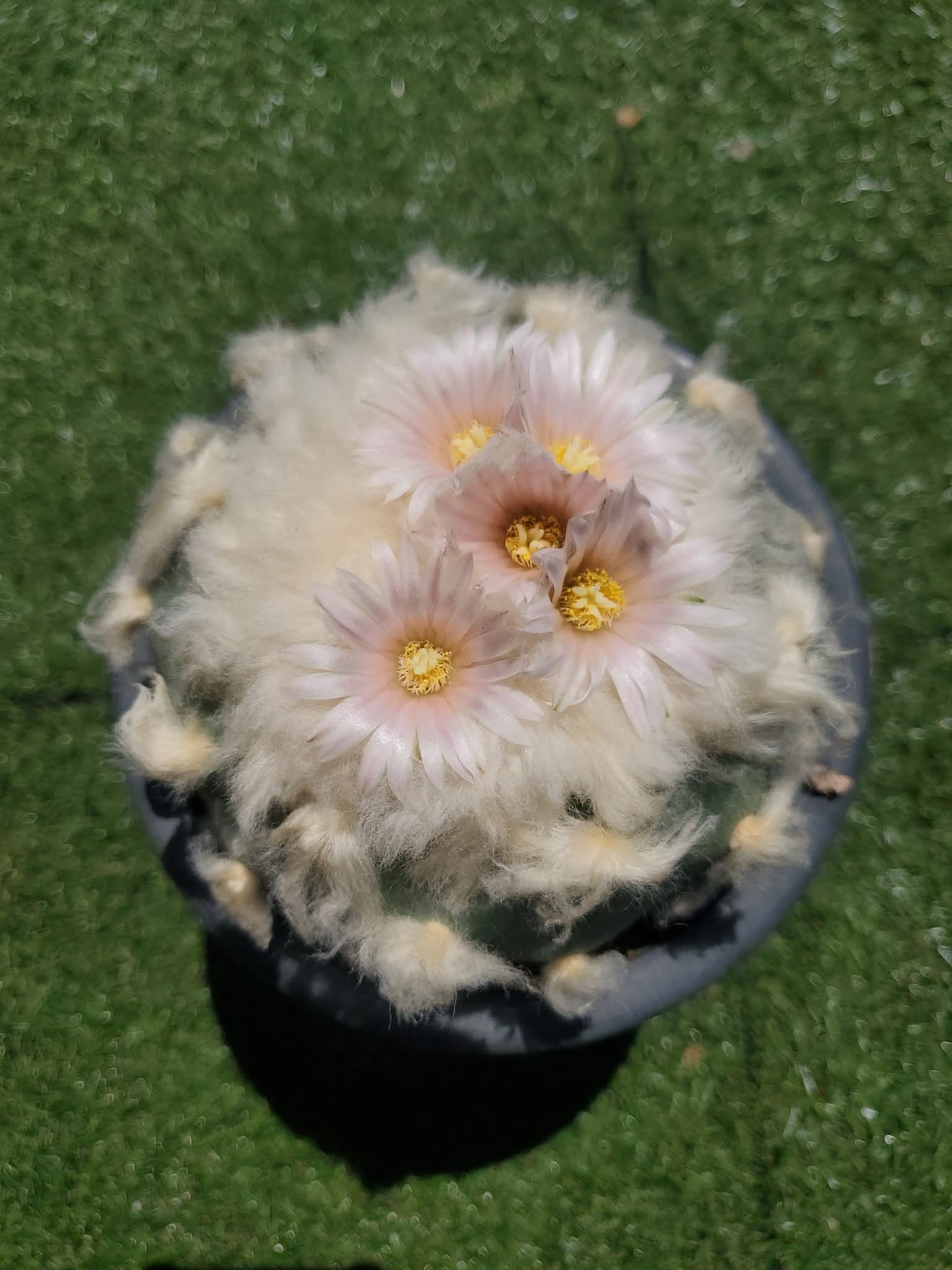
Lophophora diffusa flowers reliably under good growing conditions, and the white or pale cream flowers are the most immediately striking visual difference from Lophophora williamsii when the two are seen in bloom side by side. Flowers emerge from the youngest areoles in the central crown wool, as in the rest of the genus. They are funnel-shaped when fully open, with lanceolate petals that come to a soft point. The overall colour ranges from pure white through a very pale cream or ivory, and in some plants a faint greenish or yellowish cast appears at the petal base. A deeper cream or pale yellow flower is documented from some populations, distinct from the pink that characterises Lophophora williamsii in virtually all its forms.
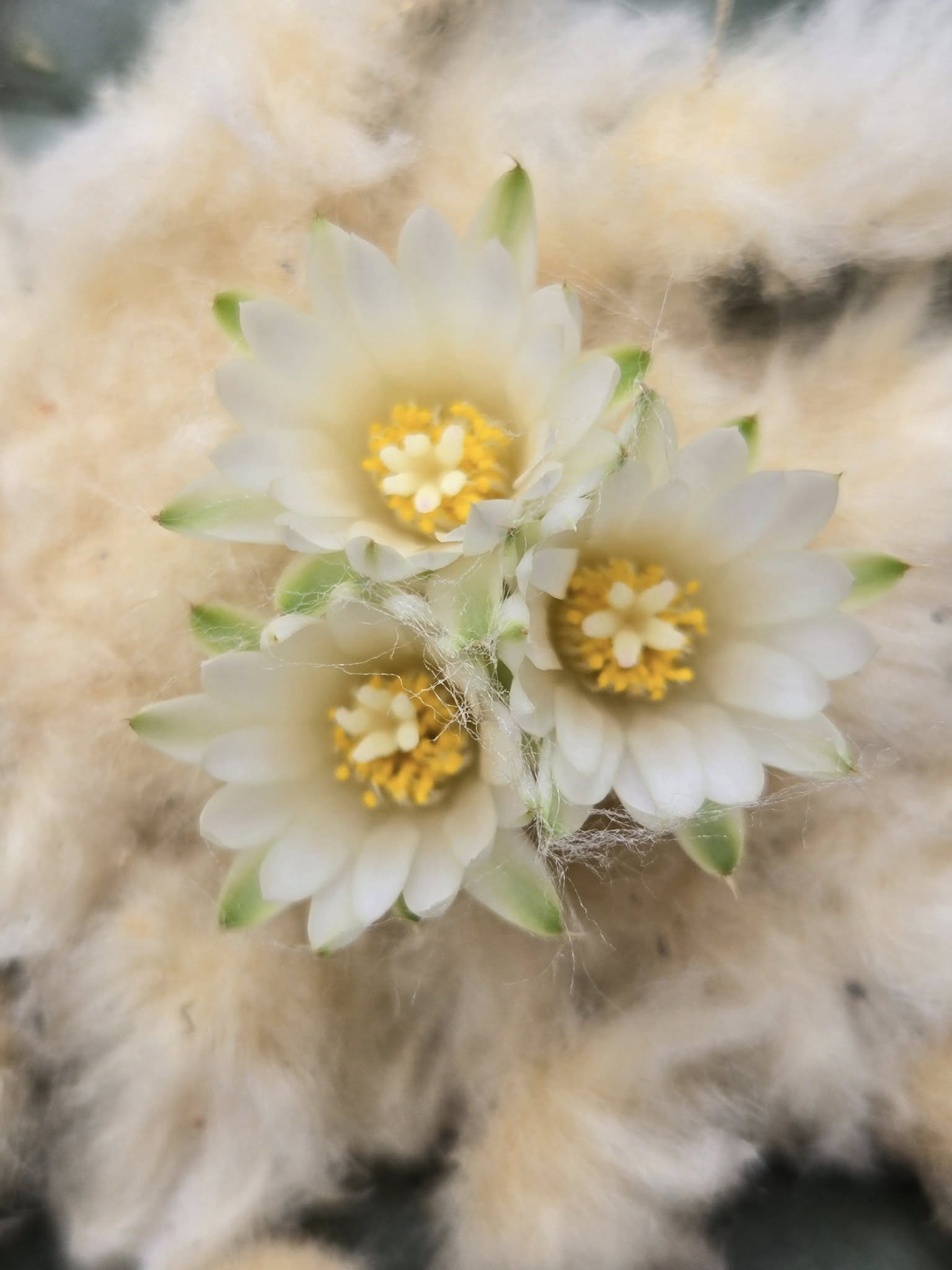
Flower detail of Lophophora diffusa. The white to pale cream colouration, lanceolate petals, and yellow stamens are characteristic. Flowers last two to four days, opening in daylight and closing at night.
Flower size is broadly similar to that of Lophophora williamsii, typically 1.5 to 2.5 centimetres across when fully open. Each flower opens during daylight hours and closes at night, lasting two to four days. A well-established adult plant in its active growing season may produce multiple flowers over a period of several weeks, with individual blooms appearing one or two at a time rather than all at once. Blooming in cultivation tends to peak after the transition from the winter dry period to active summer watering, which mimics the natural cue of the summer rainy season beginning in the Querétaro habitat.
Fruit development after pollination follows the same general pattern as in Lophophora williamsii. The fruit is clavate, ripening to a pale pink colour, and extends slowly from the central wool over a period of several weeks. Size at maturity is 1.5 to 2.5 centimetres long and 5 to 8 millimetres across. Each fruit contains a small number of black, finely pitted seeds. Seed viability is best when seed is sown fresh. Hand pollination between simultaneously flowering plants achieves reliable seed set; self-pollination within a clone is possible but tends to produce fewer seeds and reduced germination rates. In the wild, pollination is carried out by small bees and other insects.
The fruit of Lophophora diffusa is typically described as paler than that of Lophophora williamsii, with some accounts noting a yellowish-white fruit rather than the more distinctly pink-red fruit of the related species. This paler colouration parallels the difference in flower colour between the two species, though it is a character that requires direct comparison to assess reliably.
From Seedling to Specimen
Lophophora diffusa grows at a pace that matches its relative closely. The species is slow, and accepting that from the outset changes how you approach every stage of growing it. An ungrafted plant that has reached blooming size has typically been growing for ten to twenty years. One showing a diameter of 7 or 8 centimetres is older than that in most cases. The slowness is not a difficulty so much as a parameter, and a well-documented seed-grown plant with known provenance and a clear growing history is a notable object in a specialist collection.
Germination from fresh seed is reliable. Sowing in a closed propagator or under a humidity tent over a heat mat, with daytime temperatures between 25 and 35 degrees Celsius and a modest night drop, produces visible sprouts in three to ten days. The emergence sequence is the same as in Lophophora williamsii: a small hypocotyl with paired cotyledons, followed by the first adult growth showing woolly areoles. Early seedlings carry tiny rudimentary spine primordia that vanish within the first year as the plants shift to their adult, spineless form.
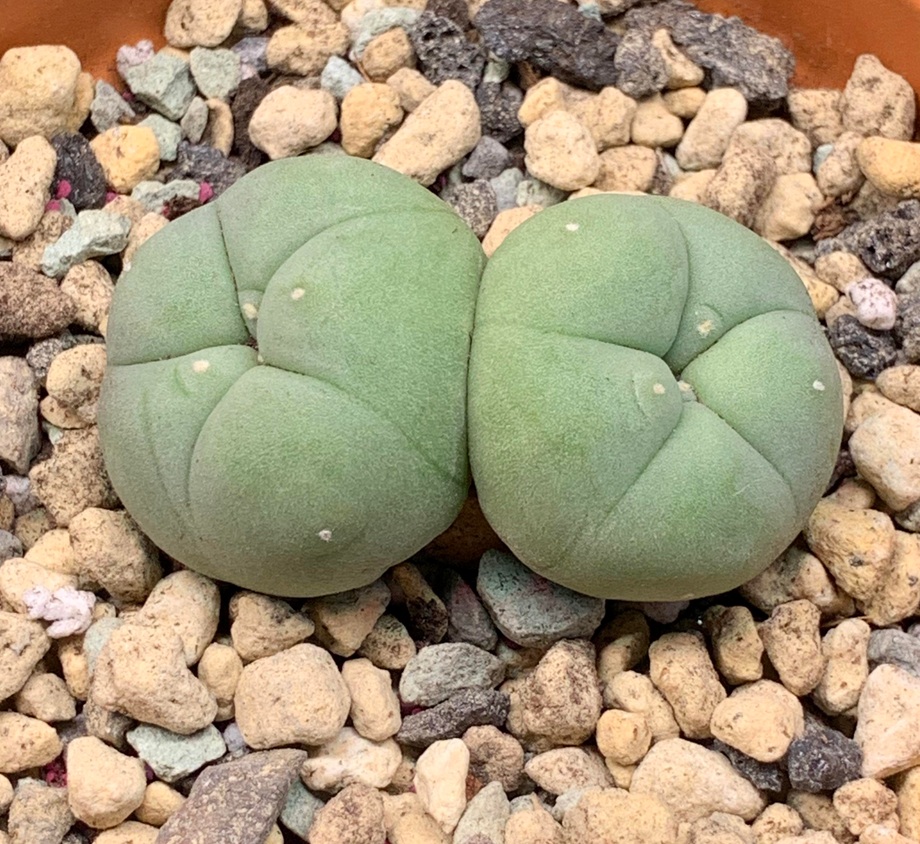
The first two to three growing seasons require the most careful management. Young plants are substantially more sensitive to overwatering than adults. They also need protection from intense direct sun during their first few years; placing seedlings in full summer sun without acclimatisation leads to bleaching and can kill small plants in a matter of days during hot weather. A bright position without direct afternoon sun, combined with a careful watering interval, is the correct approach until the plants have developed a meaningful root system and show consistent adult body form.
By years five to eight under good conditions, a well-grown ungrafted plant will have developed an identifiable adult body of 2 to 4 centimetres, begun to build its characteristic taproot, and started to show the species’ adult colour and areole character. The first flowers on ungrafted plants typically appear somewhere between years ten and twenty. The exact timing depends on the provenance, the consistency of seasonal cycles applied, and the individual plant’s vigour.
Grafting is available as an option for collectors who want to see flowers sooner or produce seed more quickly. Grafted plants on a robust rootstock can reach blooming size in three to five years. The trade-off is the same as with Lophophora williamsii: grafted plants grow upright and do not develop the low, soil-level profile of a long-term seed-grown specimen. For seed production, documentation of the white flower, and quick assessment of character, grafting is useful. For a representative grown specimen, seed-grown propagation over years remains the standard.
Mature specimens of Lophophora diffusa in experienced collections tend to reach 6 to 10 centimetres in diameter under very long-term cultivation. Plants at this size, with documented locality data and a growing history of twenty or more years, are among the more significant objects available in the specialist trade. They are not common, because they take that long to produce.
Lophophora diffusa care and cultivation
Soil and substrate
The cultivation mix used here is a house formulation: 35 per cent pumice, 15 per cent lava rock, 10 per cent zeolite, 20 per cent granite grit, 15 per cent limestone chip, and 5 per cent worm castings. Zeolite supplies cation exchange without adding water-holding mass, buffering the mix toward neutral pH; the lava fraction gives the pot the structural drainage this taproot needs. No published cultivation source sets a species-specific organic or limestone share for Lophophora diffusa; both numbers hold at the same convention applied across the genus rather than at a figure raised for this species alone. On hard tap water, reduce or omit the limestone fraction; on RO, distilled, or rainwater, keep it as formulated. Drainage speed is the overriding priority throughout.
All four Lophophora species on this site share the same house-formulation substrate; no cultivation-specific evidence differentiates them from each other, so one ratio is published across the genus. Limestone and organic both sit at convention-register values with no per-species evidence behind them.
| Species | Pumice | Lava | Zeolite | Granite | Limestone | Silica | Organic |
|---|---|---|---|---|---|---|---|
| L. williamsii | 35% | 15% | 10% | 20% | 15% | 0% | 5% |
| L. diffusa (this page) | 35% | 15% | 10% | 20% | 15% | 0% | 5% |
| L. fricii | 35% | 15% | 10% | 20% | 15% | 0% | 5% |
| L. alberto-vojtechii | 35% | 15% | 10% | 20% | 15% | 0% | 5% |
The overriding priority is drainage speed. Water should pass through the substrate and exit the drainage hole within minutes of application. Any substrate that holds moisture around the root collar for more than 24 hours after a thorough watering represents a rot risk, particularly at lower temperatures. The taproot is the first structure to suffer under sustained wet conditions. When there is any doubt about drainage adequacy, adding more pumice is the correct response.
Deep pots are important for this species for the same reason they are important for Lophophora williamsii: the taproot needs room to develop. Long tom or rose-style pots with a height-to-diameter ratio of at least 1.5 to 1 suit the root architecture well. Unglazed terracotta provides additional airflow through the pot walls and helps the substrate dry faster between waterings, which reduces the risk of overwatering in marginal conditions. Plastic pots work but require greater care in watering frequency because they dry more slowly.
Watering
During the active growing season, typically late spring through early autumn, water thoroughly and then wait. Each watering should saturate the substrate fully, with water running freely from the drainage hole. The interval before the next watering should allow the substrate to dry completely. Under warm conditions with a well-drained inorganic mix, this might be every ten to eighteen days in summer. The crown itself is a useful guide: firm and slightly turgid means well-watered, slightly soft or deflated means ready to water, and visibly shrunken or retracted toward the soil surface means overdue.
Reduce watering progressively from early autumn. Once night temperatures fall reliably below 10 degrees Celsius, stop watering entirely. The winter dry period typically runs four to five months in temperate collections. Established plants with bone-dry root systems tolerate mild frost without damage. Plants that were watered recently and carry wet roots when temperatures drop are at significant risk.
Resume watering in spring when nights have settled above 10 degrees and the crown shows new growth activity. The first post-dormancy watering should be modest, followed by a longer-than-usual dry interval before the second. This approach allows the root system to reactivate gradually rather than receiving an immediate flood after months of dormancy. Pushing water into a plant that has not yet fully resumed active metabolism increases rot risk disproportionately.
Light and temperature
Mature, hardened plants benefit from full sun through the growing season. Direct light produces the tightest body form, the most representative body colour, and the most compact rib structure. Plants grown in insufficient light produce elongated, pale bodies with a looser form that experienced growers identify immediately as suboptimal. Even so, Lophophora diffusa requires gradual acclimatisation to intense sun after any period of shade growing, recent repotting, or transit. Moving a plant directly from shade into full summer sun risks bleaching, and young plants in their first few years are particularly vulnerable to this kind of sun damage.
The higher-altitude origin of Lophophora diffusa relative to most Lophophora williamsii populations may confer slightly better cold tolerance in general, though the available data on this is informal rather than systematic. Established dry plants tolerate brief dips to approximately minus 5 to minus 6 degrees Celsius without damage. Wet roots at temperatures above freezing remain a more immediate risk than cold air on its own. In USDA zone 9b or warmer, well-drained in-ground plants often survive winter outdoors. In zones 8 and below, reliable winter protection is required.
Seed-grown vs. grafted
The same considerations that apply to Lophophora williamsii apply here. Grafted plants reach flowering size faster and are appropriate for growers focused on seed production or who want to observe the white flower sooner. Seed-grown plants raised over the long term develop the correct profile, root architecture, and body character. For collectors building a serious Lophophora collection, seed-grown stock from documented provenance is the standard.
Lophophora diffusa vs. Lophophora williamsii
Placing these two species directly side by side is useful, both for identification purposes and for understanding what kind of entity Lophophora diffusa actually is. They are closely related, share the same genus and general growth pattern, and can be grown under identical conditions. But the differences between them are consistent, meaningful, and visible in several independent character systems simultaneously, which is exactly what you expect from two distinct species rather than varieties of the same plant.
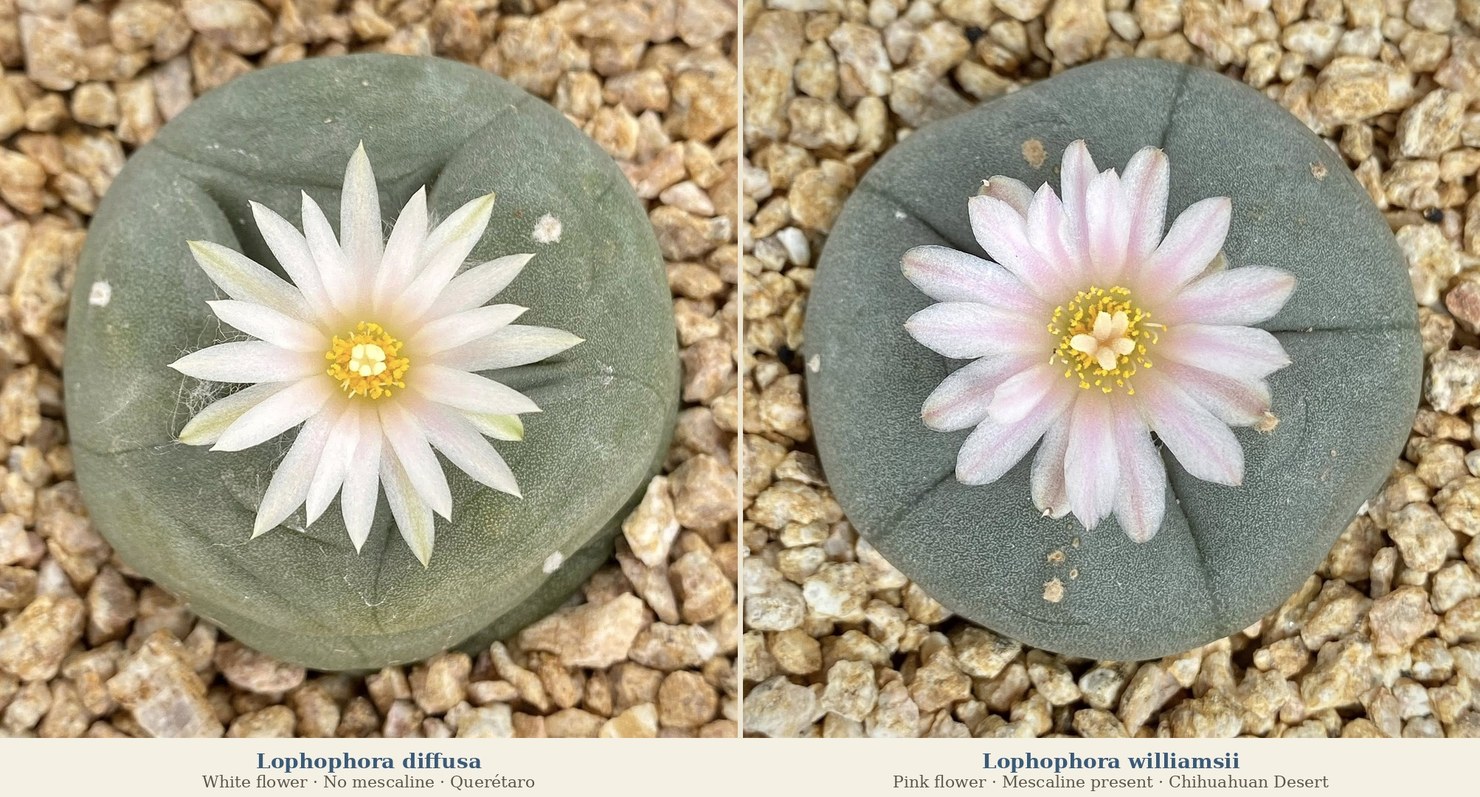
The collector significance of Lophophora diffusa derives partly from what it lacks and partly from what that absence tells you. A well-grown plant in a collection that also holds Lophophora williamsii from multiple localities makes the species boundary visible in a way that no amount of reading can fully substitute for. The body colours are different. The flowers are different. The chemical profiles are different. And yet the growth pattern, the substrate requirements, the watering regime, and the basic cultivation approach are essentially identical. Two plants from the same genus, grown side by side under the same conditions, expressing their species-level differences clearly in colour, form, and chemistry. That is a legitimate botanical interest, and it is the reason Lophophora diffusa belongs in any comprehensive Lophophora collection.
Frequently asked questions
Is Lophophora diffusa hard to grow?
Lophophora diffusa is intermediate in difficulty. The genus tolerates a narrow watering window, generous in active growth and fully dry through winter, and the slow growth rate means setbacks take years to reverse. Seedlings are forgiving for the first two seasons; mature plants punish overwatering at the soil line.
Can Lophophora diffusa be grown from seed?
Yes. Fresh seed germinates reliably at 20 to 30 °C on damp pumice-and-grit substrate, with seedling emergence inside ten days. Plants reach 2 to 3 cm and first flowers in five to seven years from sowing. Seed grown specimens develop the flat-globose body proportions and dense areole wool that grafted stock rarely achieves.
Is Lophophora diffusa legal to own?
All Lophophora are listed under CITES Appendix II, requiring documentation of legal provenance for international trade. L. diffusa carries pellotine as its dominant alkaloid and only trace mescaline, placing it outside the federal scheduling that applies to L. williamsii in the United States. Cultivation from nursery seed is legal across the European Union, the United Kingdom, Canada, and Australia. In Mexico, NOM-059-SEMARNAT-2010 protects native populations and prohibits wild collection without federal permits.
Where does Lophophora diffusa grow in the wild?
Lophophora diffusa is endemic to the limestone scrub of southern Querétaro and adjacent Hidalgo states in central Mexico, at elevations between 1,400 and 1,800 metres. Plants grow in xeric thornscrub on calcareous soils, typically beneath nurse shrubs that buffer summer sun and concentrate dew runoff at the root crown.
When does Lophophora diffusa flower?
Lophophora diffusa flowers from May through September with peak bloom during the summer monsoon. Flowers are funnelform, 1 to 2 cm across, white to pale pink with a deeper midstripe, opening for two to three days each. Cultivated plants flower at five to seven years from seed under full-sun and dry-winter conditions.
Conservation
Lophophora diffusa is listed as Vulnerable on the IUCN Red List of Threatened Species, the same status as Lophophora williamsii. The threats facing the species are related to those affecting its relative but have a distinct character that comes from the restricted range. Where Lophophora williamsii faces pressure across a large area from multiple threat vectors, Lophophora diffusa faces essentially the same threats concentrated into a much smaller geographic footprint. Any event or process that damages populations in eastern Querétaro has a proportionally larger effect on the species as a whole than the equivalent event would have on a species distributed across several states.
The primary documented threats are illegal collection for the international cactus trade, habitat loss through agricultural conversion and urban expansion around the Querétaro municipalities where the species occurs, and overgrazing by cattle and goats that damages plants directly and degrades the substrate conditions that the species depends on. Because Lophophora diffusa lacks mescaline, it is not subject to the ceremonial harvest pressure that has reduced Lophophora williamsii populations in the Wirikuta region. However, it is still collected illegally for horticultural trade, both because it is heavily sought by collectors and because some collectors or traders may not reliably distinguish it from its relative.
Both species are listed on CITES Appendix II, which means international commercial trade requires documentation of legal origin. Appendix II does not prohibit trade but requires permits and documentation to ensure that trade does not threaten wild populations. For collectors, the practical implication is that plants acquired through the international trade should come with documentation, and that the most defensible position for building a collection of either species is to source plants from established seedling growers who can document the seed origin of their material.
Population recovery after damage is slow for the same reason that applies to Lophophora williamsii: these plants grow slowly. A mature plant that has been removed from a wild population cannot be replaced on a human timescale from seed in that habitat. Studies on related species suggest that populations can take decades to recover even when collection pressure is removed, and in reality collection pressure is rarely fully removed from accessible localities.
The restricted range of Lophophora diffusa means that the entire species could theoretically be severely impacted by events affecting a relatively small area of Querétaro. That concentrates the conservation concern in a way that the wider-ranging Lophophora williamsii does not face to the same degree. Supporting seed propagation programs and buying only from documented seedling sources is the most direct contribution a collector can make to the species’ long-term viability in cultivation, which serves as a demographic buffer against the worst-case scenarios for wild populations.
Lophophora williamsiiPeyote, the most widely distributed species in the genus, with a range spanning from southern Texas to central Mexico. Over 60 confirmed alkaloids, with mescaline as the primary compound. An expansive locality record and significant chemical diversity across its range.Lophophora friciiA mescaline-free species from southeastern Coahuila, long misidentified in both botanical and chemical literature. Characterised by a grey body and larger surface protuberances than the type species. Its DNA signature falls closer to Lophophora diffusa than to Lophophora williamsii.Lophophora alberto-vojtechiiThe most recently described species in the genus, from Aguascalientes. Named for botanist Alberto Vojtěch Fríč, it represents the southernmost documented range of Lophophora and remains one of the least studied members of the group.Sources & References
Croizat, L. (1944). Lophophora diffusa sp. nov. Cactus & Succ. J. Gr. Brit. · Bravo, H. (1967). Las Cactáceas de México, vol. 1. UNAM, Mexico City. · Heffter, A. (1894). Ueber Cacteenalkaïde I. Ber. Dtsch. Chem. Ges. 27: 2975–2979 (pellotine isolation). · Bruhn, J.G. & Agurell, S. (1975). Cactus alkaloids: isolation of O-methylpellotine from Lophophora diffusa. Phytochemistry 14: 1442–1443. · Butterworth, C.A. et al. (2002). Molecular systematics of Lophophora. Haseltonia 9: 38–49. · Sasaki, K. et al. (2009). Identification of mescaline-containing Lophophora using chloroplast DNA. Forensic Sci. Int. 184: 1–6. · Aragane, M. et al. (2011). Determination of mescaline in Lophophora specimens. Forensic Sci. Int. 211: 1–5. · Anderson, E.F. (1980). Peyote: The Divine Cactus. University of Arizona Press. · Trout, K. (2014). Lophophora williamsii analysis. Trout’s Notes / Sacred Cacti. Retrieved 2026. · Gómez-Hinostrosa, C. et al. (2013). Lophophora diffusa. IUCN Red List of Threatened Species. Version 2022-2. · Royal Botanic Gardens, Kew. Plants of the World Online. Lophophora diffusa (Croizat) H.Bravo. Retrieved 2026.