Aztekium — Complete Collector & Care Guide
Encyclopedia
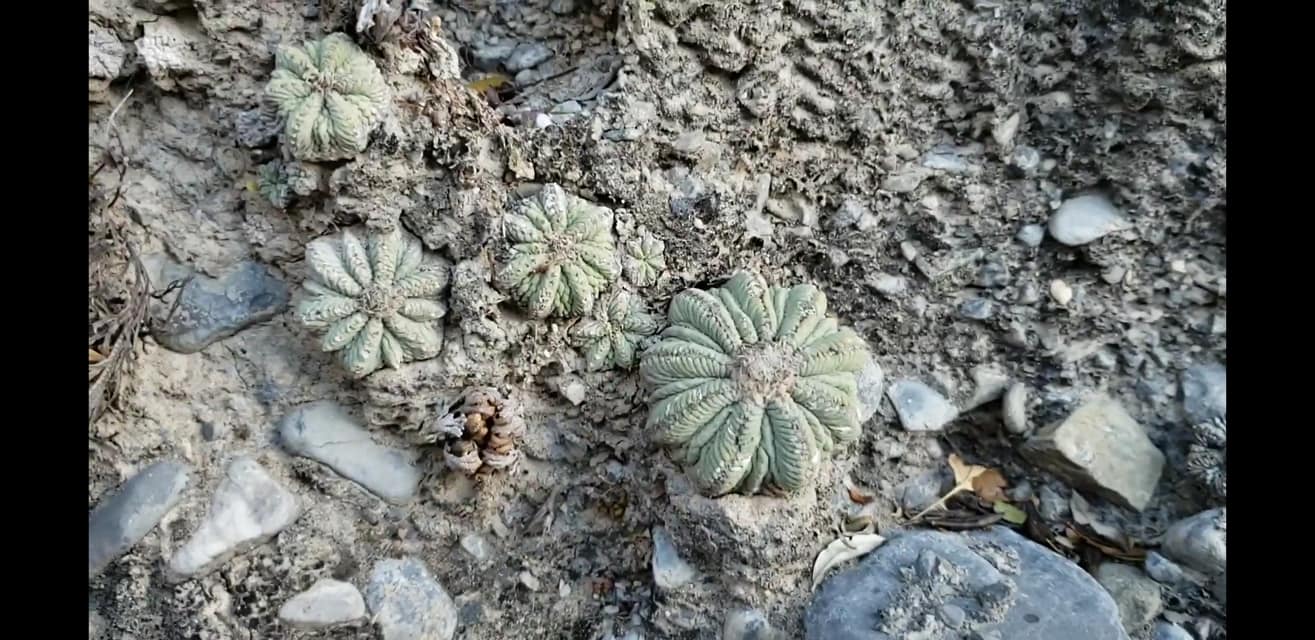
3 species
- A. ritteri
- A. hintonii
- A. valdezii
Two years to grow 3 mm in diameter. That is the rate at which Aztekium grows on near-vertical cliff faces in the Sierra Madre Oriental. By the time a wild plant reaches 3 cm across, it may be decades old. Clusters of these plants on limestone or gypsum faces look, from a short distance, indistinguishable from patches of lichen or weathered stone.
For 62 years, botanists thought the genus was monotypic. Friedrich Ritter described Aztekium ritteri in 1929; A. hintonii was not found until 1991; A. valdezii was described in 2011 from an area covering barely two square kilometres. As a result, the third species is so restricted that erosion of the cliff faces it occupies may pose a greater threat than collection.
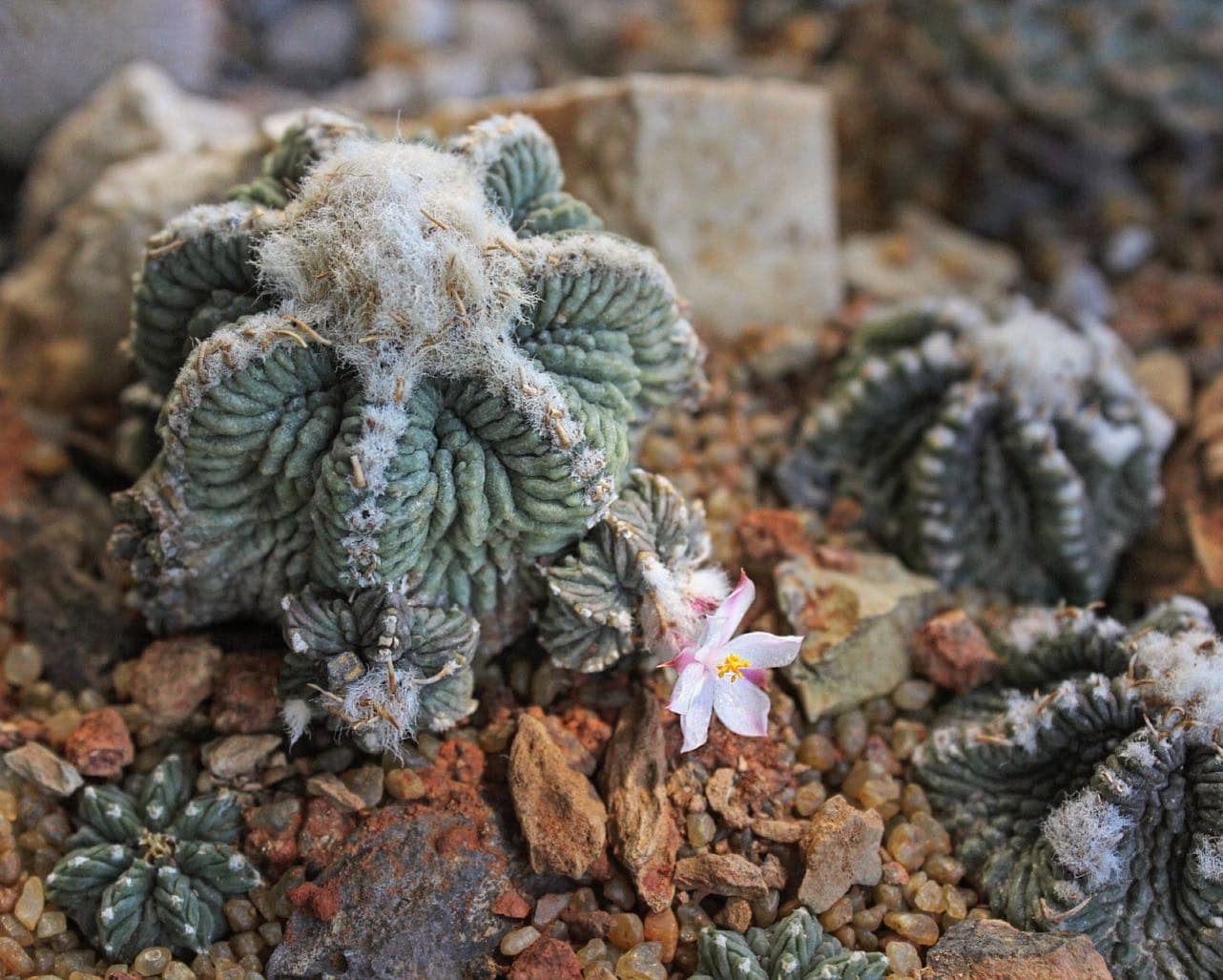
What makes Aztekium unmistakable is the secondary ribbing. Horizontal folds run across the primary ribs perpendicularly, like the banding of an accordion or the corrugation of a compressed fan. No other cactus genus produces this structure. Combined with the extreme growth rate and the vertical cliff habitat, Aztekium is the genus collectors grow when they want something with no equivalent elsewhere in the family.
Contents
What is Aztekium?
Friedrich Bödeker described the founding species as Echinocactus ritteri in 1928, then placed it in the newly created genus Aztekium the following year. The genus name references the Aztec civilisation, whose geographic territory encompassed the collection site. The species name honours Friedrich Ritter, the German botanist who collected the first specimens. In Mexico, people sometimes call the plant peyotillo — little peyote — because of a vague visual similarity to Lophophora. The name carries no pharmacological implication; Aztekium is pharmacologically inert.
The three species share the horizontal secondary ribbing unique to this genus within the cactus family. Researchers have not definitively established the function of this structure, though it may play a role in thermoregulation or water movement across the stem surface in the exposed cliff habitat.
Where they come from
All three Aztekium species grow only in Nuevo León and Tamaulipas in Mexico. A. ritteri grows in the Rayones Valley on Jurassic gypsum and Cretaceous limestone at 850 to 1,045 metres, on slopes approaching 90 degrees in areas with intermittent streams. The plants associate with Selaginella lepidophylla, the resurrection plant, which may play an important role in seed germination by buffering humidity around the tiny seeds in the crevices.
A. hintonii is the most abundant species in the genus, with population estimates in the tens of millions, and its range remains largely intact. A. valdezii, however, grows in an area of approximately 2 square kilometres. Cliff face erosion may threaten it as much as collection does.
Species profiles
Aztekium ritteri
The founding species. Plants start as globose stems, 2 to 6 cm in diameter, and flatten with age. Body colour runs grey-green to olive-green. Six to eleven ribs carry the characteristic secondary horizontal corrugation. Spines occur only on young areoles, remain soft and non-pungent, and disappear with age. Plants flower throughout summer from the young apical areoles, producing white to pale pink blooms under 10 mm in diameter.
Aztekium hintonii
The largest and most recently described of the original two species, found in 1991. Larger body than A. ritteri with more pronounced ribs, and flowers running pink to lavender rather than near-white. The most abundant species in the wild. Cultivation requirements are essentially identical to A. ritteri.
Aztekium valdezii
Described in 2011 from an area of approximately 2 square kilometres. The body is star-shaped when viewed from above, with 5 strongly pronounced ribs that sometimes follow a spiral pattern. The most restricted species in the genus and the least available in cultivation. Seed germination rates run below 5% and seedlings are extremely sensitive in the first weeks of life. Most cultivated specimens are grafted.
Flowers and flowering season
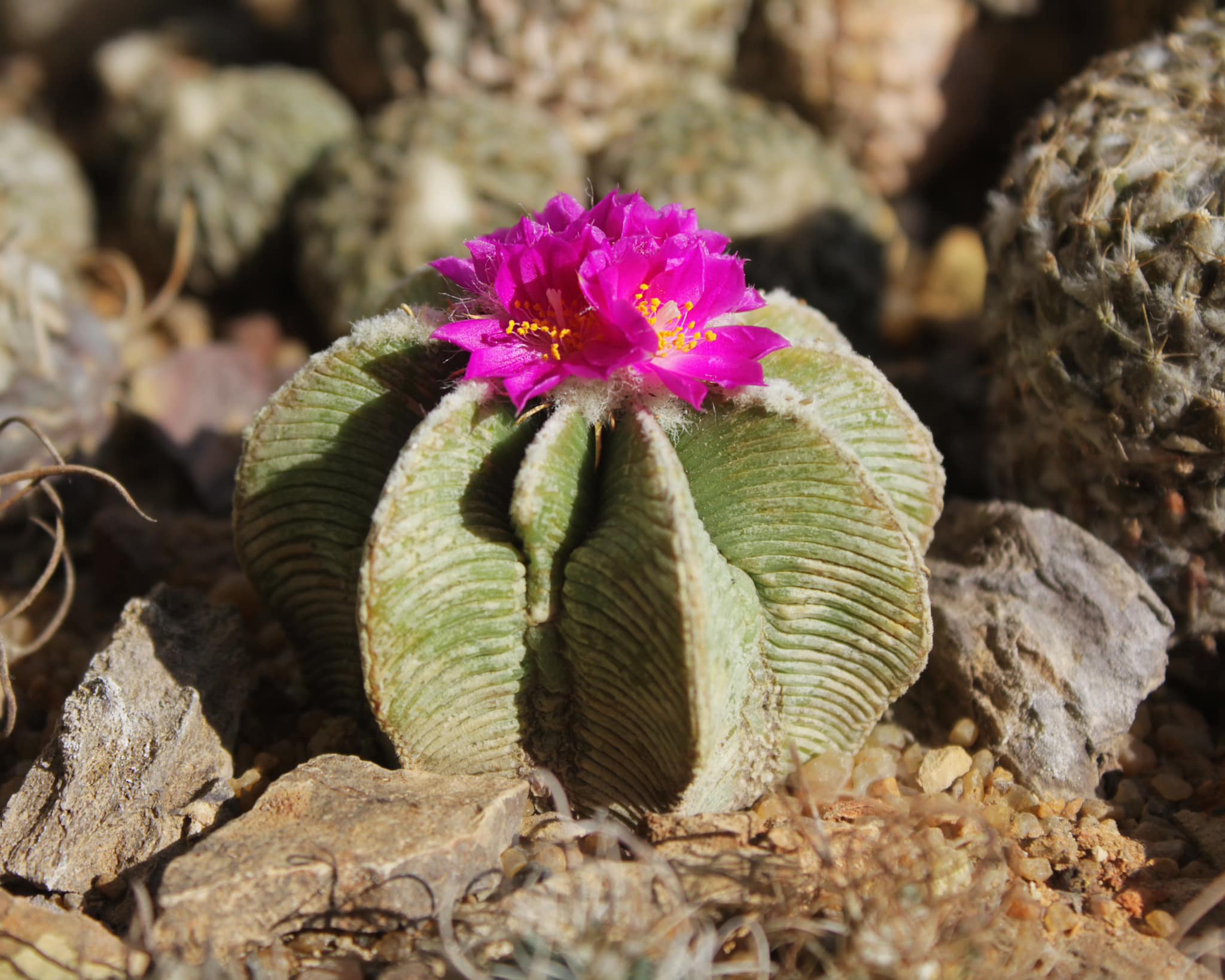
All three species flower through summer from the young apical areoles. Flowers appear small relative to most cacti but emerge repeatedly throughout the season. A. ritteri produces near-white to pale pink flowers under 10 mm in diameter. A. hintonii produces larger, more distinctly pink to lavender flowers. A. valdezii flowers pink to white. Because the seeds are extremely small, germination rates in cultivation run below 5%.
Growing them
Soil
Use near-pure mineral mix: 90% inorganic, with pumice, coarse grit, and optionally crushed limestone or gypsum to replicate the alkaline substrate. Include essentially no organic content. The roots are delicate and rot quickly in any moisture-retentive material.
Watering
Water very sparingly. In the growing season, water briefly when the mix is completely dry, then allow it to dry fully again before watering. From October through April, keep them completely dry. A plant that looks slightly shrunken in winter is healthy. A plant sitting in damp mix in winter, however, is likely dying.
Light and temperature
Give them bright light, with some protection from the most intense direct summer sun. In nature, rock overhangs buffer the cliff-face habitat. Keep the minimum above 10 degrees Celsius; these species do not tolerate frost.
Grafted vs own-root
Most commercially available Aztekium are grafted, which significantly accelerates growth. A grafted A. ritteri that would take 20 years to reach 3 cm own-root may reach that size in 3 to 5 years on a suitable rootstock. Own-root plants are structurally more correct. Both are valid approaches depending on what you want in a collection.
Rarity and what to buy
A. ritteri and A. hintonii appear through specialist seed sources and occasionally as grafted plants from specialist growers. A. valdezii is significantly harder to find in any form. Any Aztekium with documented locality data is more valuable than one without.
Legal status
CITES lists the entire genus under Appendix I. All three species appear on the CITES species database. Commercial trade in wild-collected specimens is prohibited. Seed-grown plants require CITES documentation for international trade. Mexico also lists the genus under NOM-059 special protection.
Questions collectors ask
How do I grow one from seed?
Sow in fine mineral mix, maintain surface moisture, and expect germination in 10 to 20 days. Survival rates in the first two months are low: seedlings are vulnerable to desiccation and fungal damping-off. Keep them in a semi-closed humid environment initially, then introduce drying conditions gradually over the first 6 to 12 months. Because growth is very slow even under good conditions, most growers graft seedlings at 6 to 12 months to accelerate development.
How long do they live?
In the wild, there appears to be no obvious upper limit. Colonies on near-vertical cliff faces that look ancient probably are ancient. A plant that has grown 3 mm per year for a century is a 30 cm diameter plant — large by any Aztekium standard.