Mammillaria — Complete Collector’s Guide
Encyclopedia
~200 species
- M. schwarzii
- M. duwei
- M. herrerae
- M. plumosa
- M. hahniana
- M. huitzilopochtli
- M. bertholdii
- M. crucigera
- M. bocasana
- M. spinosissima
Mammillaria is the genus most people encounter first. It is also the genus where most people underestimate how far the rabbit hole goes. Garden centres typically stock the same three or four commercial varieties. The genus, however, contains approximately 200 species.
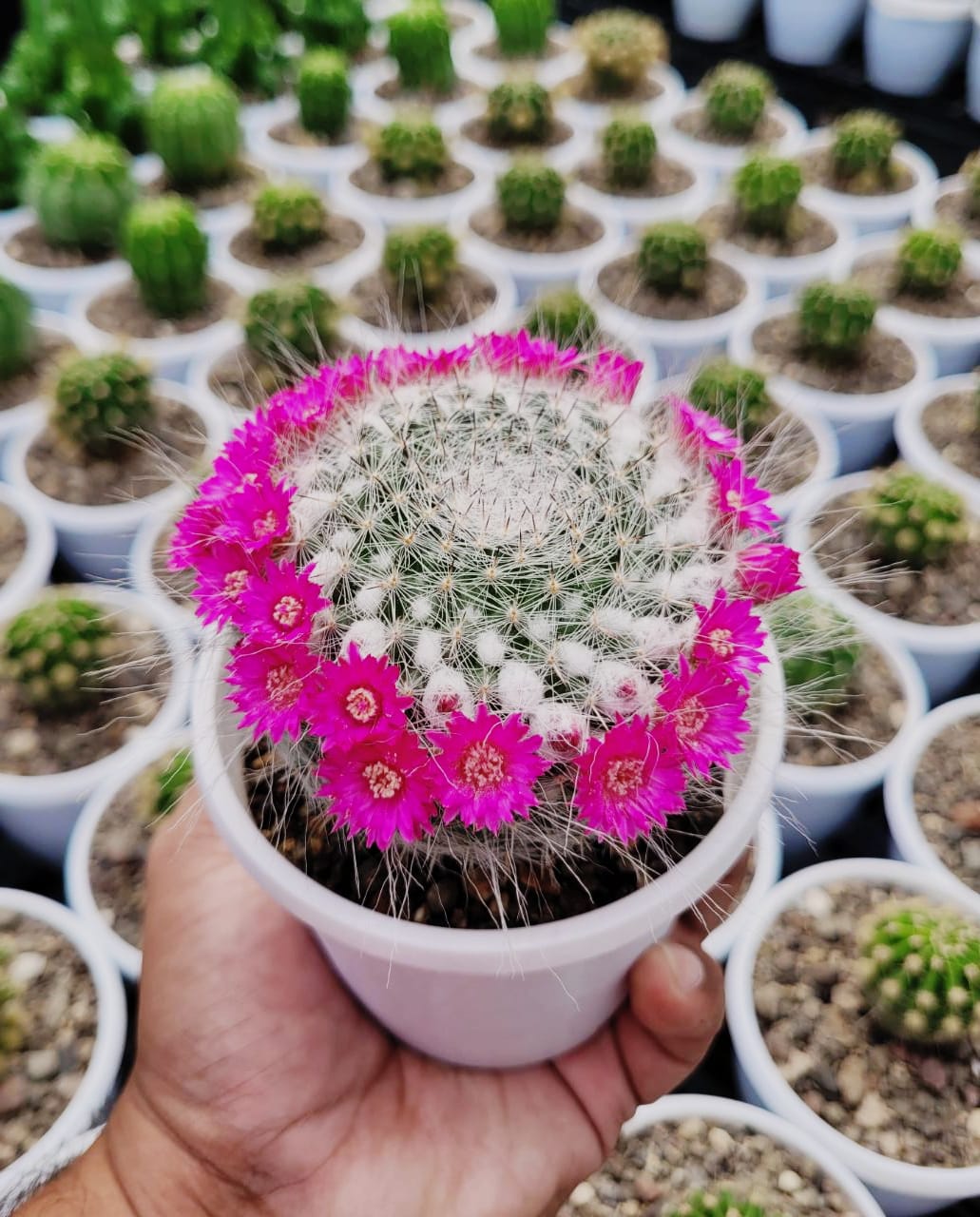
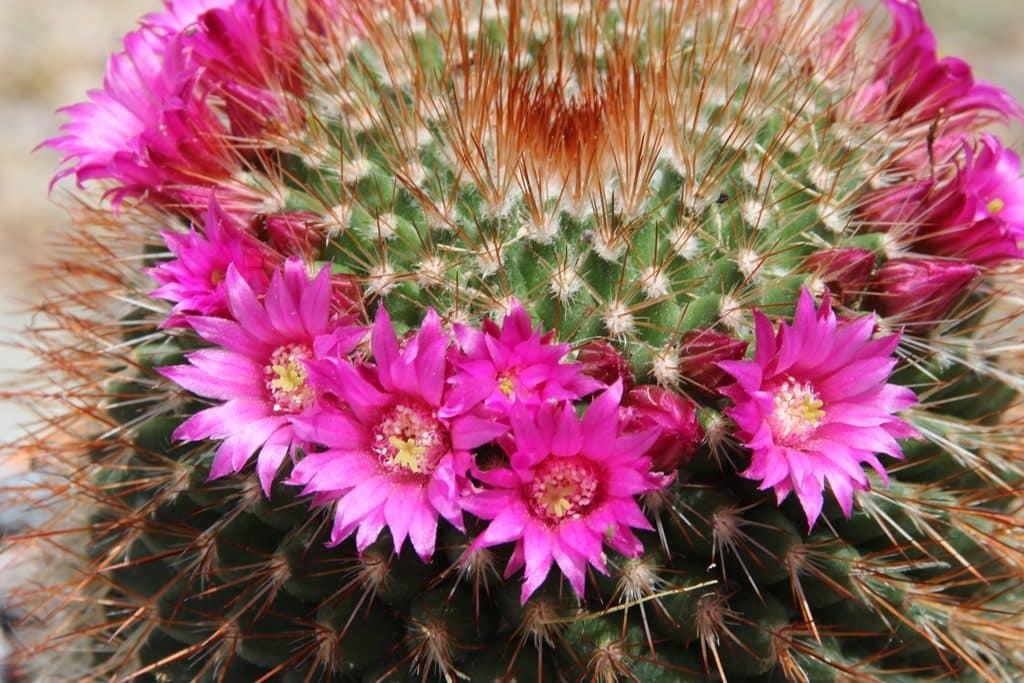
The structural difference that defines Mammillaria is the split areole. In most cacti, flowers emerge from a single areole at or near the rib apex. In Mammillaria, the areole divides into two separated parts: one at the tubercle tip produces spines, while the other at the tubercle base — the axillary areole — produces flowers. As a result, flowers appear as a ring or halo around the crown rather than from the apex. No other major genus flowers this way, and once you know this, a Mammillaria in bloom is immediately readable as something structurally different.
For serious collectors, the genus offers a range from very easy to critically rare within the same family name. A handful are microendemics restricted to single mountain ranges with populations in the hundreds, with extraordinary spination that appears in cultivation only through specialist seed networks.
Contents
What is Mammillaria?
Carl Linnaeus described the first species as Cactus mammillaris in 1753. The name comes from the Latin mammilla (nipple), referring to the tubercles. Over time the genus accumulated more names than any other in the cactus family: botanists once listed over 500 taxa, a number that careful field work and genetic analysis has since reduced to approximately 200 accepted species. DNA analysis suggests the genus is not monophyletic and botanists will eventually split it, but that work has not yet produced a widely accepted revision.
Where they come from
98.7% of Mammillaria species grow in Mexico. Of these, 88.2% are endemic there. Six major centres of species richness exist within Mexico, with San Luis Potosí carrying the highest cactus species diversity in the country. Plants grow from sea level to 3,250 metres, across an extraordinary range of substrate and vegetation type.
Over a third of species face threats by IUCN criteria. Twenty-eight of the 53 Mexican species that lack formal protected-area coverage are in serious conservation difficulty. The most endangered are microendemics — species that occupy a single cliff face, valley, or hillside, with population sizes in the hundreds.
Species profiles
Mammillaria schwarzii
Pure white, glass-fine plumose spines create a near-translucent effect around the body. This species grows only in a restricted area of Guanajuato, and the IUCN lists it as Critically Endangered. Any seed-grown specimen from a documented source is a significant acquisition. Do not confuse it with commercially available white-spined pincushion types — the spination character is in a different category entirely.
Mammillaria duwei
A miniature species from San Luis Potosí, rarely exceeding 3 to 4 cm across at maturity. Fine, spreading spines and bright yellow flowers — unusual in a genus dominated by pink and white. The IUCN lists it as Critically Endangered.
Mammillaria herrerae
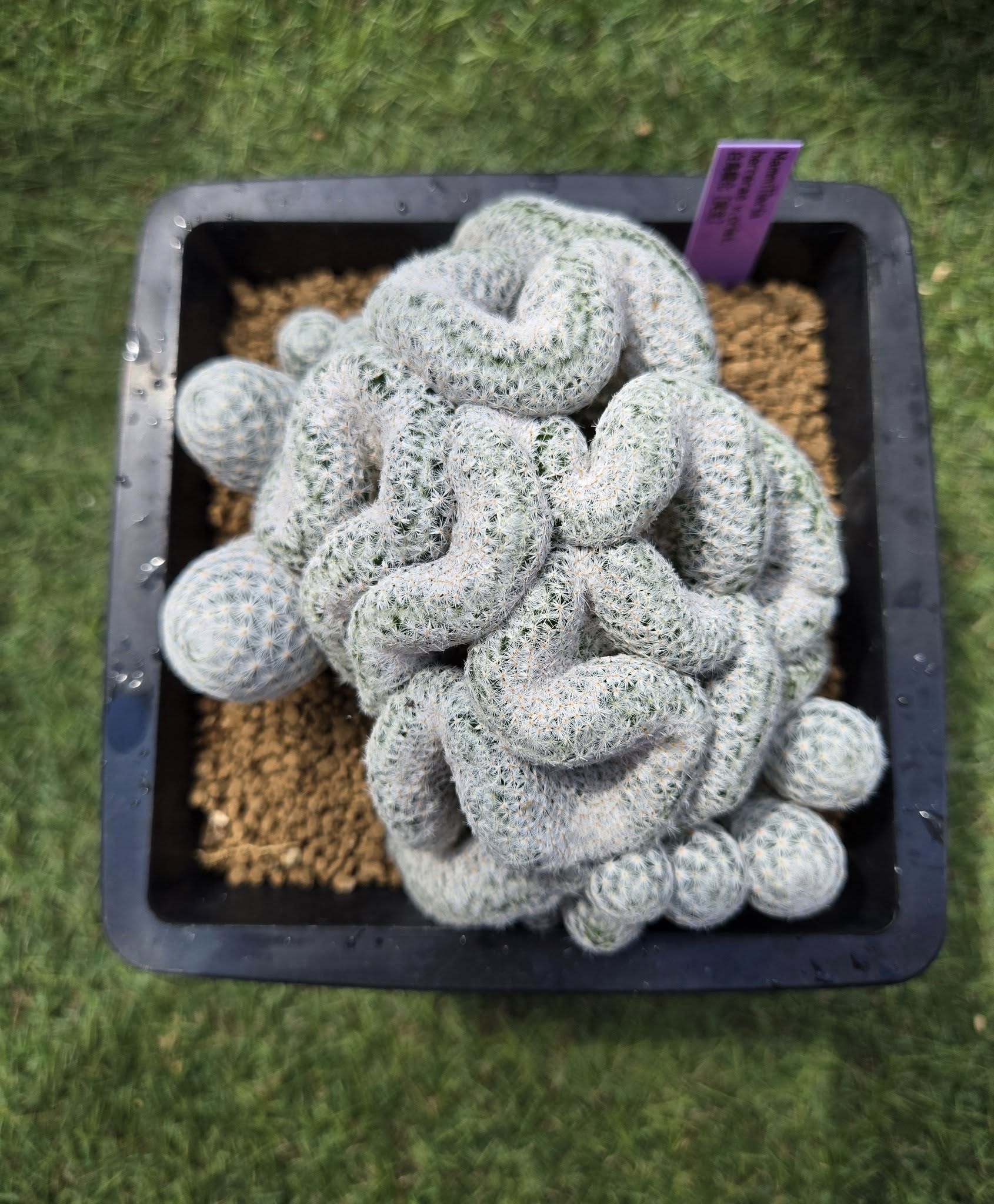
Dense white pectinate spines pack so tightly they conceal the body completely. The plant looks like a white sphere. Endemic to Querétaro, this species has lost approximately 95% of its wild individuals to illegal collection. The IUCN estimates only around 430 individuals remain. Critically Endangered.
Mammillaria plumosa
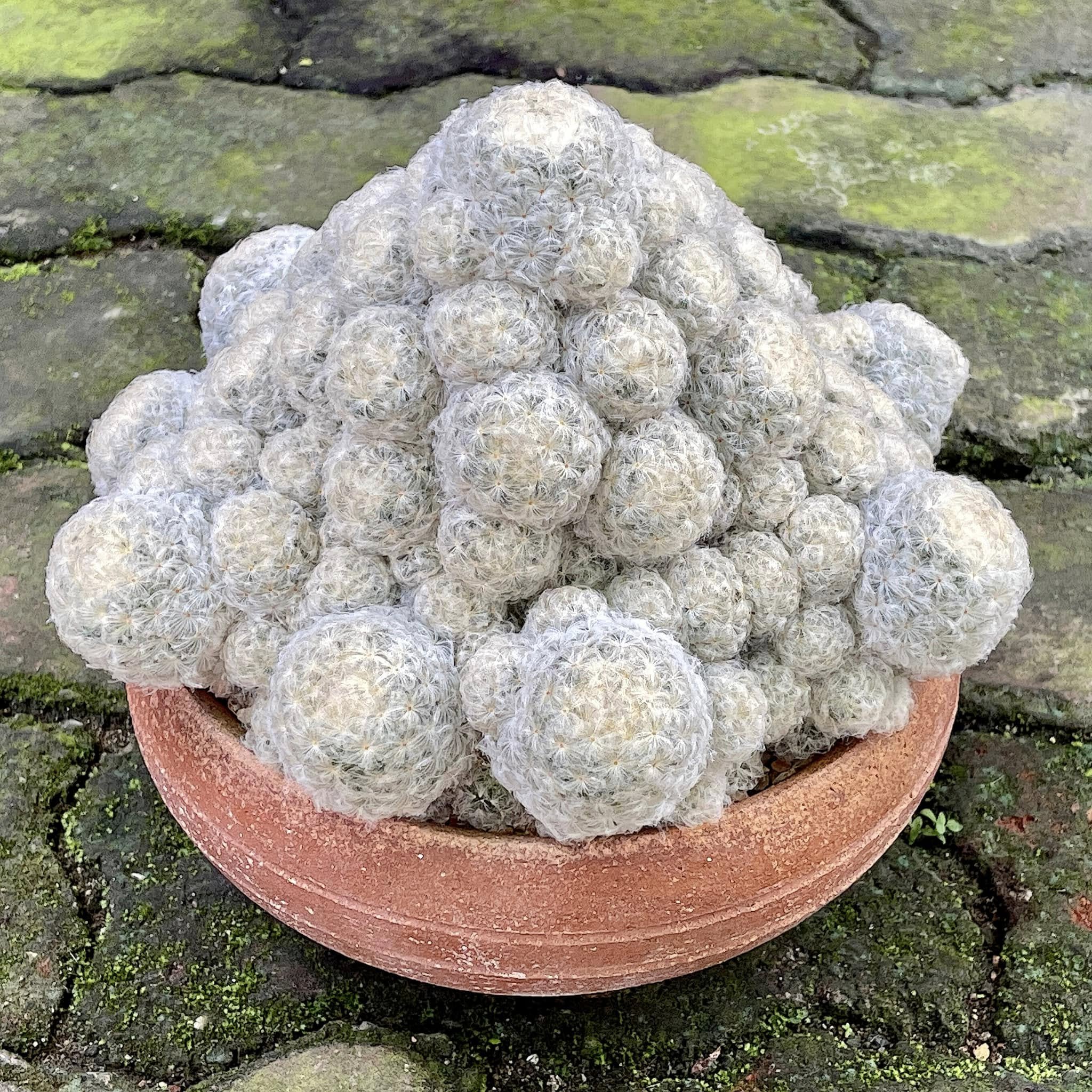
The feather cactus. Soft, white, plumose spines radiate from each areole and completely disguise what this plant is. It grows on limestone cliffs in Nuevo León and Coahuila and forms clusters with age. Unlike most species in the genus, it flowers in winter rather than spring.
Mammillaria bertholdii
Botanists formally described this species only in 2018, making it one of the most recently named in the genus. Small and clustering, it grows on a single hillside in Oaxaca. The estimated wild population is fewer than 100 individuals. Critically Endangered.
Mammillaria huitzilopochtli
Named for the Aztec deity of war. This columnar species produces long cylindrical stems with dense white radial spines and red-tipped hooked centrals. The contrast in spination colour is striking in a well-grown plant. The IUCN lists it as Endangered because of its restricted range in Guerrero.
Mammillaria hahniana
The old lady cactus. Dense white wool over the body is the identifying character. Each spring it produces a reliable crown of magenta-pink flowers. Endemic to Querétaro and Guanajuato, it tolerates cultivation errors that would damage more sensitive species. Start here if you are new to the genus.
Flowers and flowering season
Most species flower in spring, producing a ring around the crown as temperatures rise after winter dormancy. A few flower in winter instead. While the individual flowers are small compared to some other genera, plants produce them in abundance — a healthy Mammillaria in full bloom is garlanded with colour in a way that larger cacti rarely match.
Growing them
Soil
Use a fast-draining mineral mix, aiming for 60 to 70% inorganic content for most species. Species from subtropical habitats may tolerate slightly richer mixes. Do not, however, apply that treatment to the arid-zone majority — it will kill them slowly.
Watering
Follow a standard cactus regime for most species: water thoroughly when dry during the growing season, and keep them completely dry from October through March. Because that winter rest triggers spring flowering, skipping it often means no flowers.
Light and temperature
Give them full sun to bright indirect light, depending on species. Most tolerate brief dry frost down to -3 or -4 degrees Celsius. A winter minimum of 5 degrees is safe for the majority.
Pots
Most species do better in relatively shallow pots, as their root systems tend to be fibrous rather than deep-taprooted. Clustering species do best in wider, shallower bowls. Repot every 2 to 3 years.
Rarity and what to buy
Most Mammillaria are inexpensive and easy to find. The species worth seeking carefully — schwarzii, bertholdii, duwei, herrerae — appear occasionally through specialist sources with proper documentation. Start with hahniana, plumosa, or bocasana to learn how the genus behaves, then pursue the Critically Endangered microendemics with patience.
Legal status
CITES lists all Mammillaria under Appendix II. Several species — including M. pectinifera and M. solisioides — appear on Appendix I. Mexico protects the genus under NOM-059. Documentation is mandatory for all international trade.
Questions collectors ask
How do I get mine to flower?
Give them a genuine winter rest: cool nights (below 12 degrees Celsius), completely dry, and bright light, for at least 10 to 12 weeks. Moving from that regime to warmer, watered conditions in spring triggers flowering in most spring-blooming species. Plants kept warm and wet year-round often produce no flowers at all.
My plant has white woolly tufts. Is this disease?
Probably not. Mammillaria naturally produces axillary wool at the tubercle bases — that is exactly where flowers emerge. Mealybugs, however, also shelter in those same axils and are white. Check whether the white material moves when you touch it. Mealybugs react; natural wool does not.
Which species are worth seeking seriously?
Focus on the Critically Endangered microendemics: schwarzii for its glass-white plumose spines, bertholdii for its rarity and very recent formal description, herrerae for its dense white pectinate covering, and duwei for its yellow flowers and miniature scale.