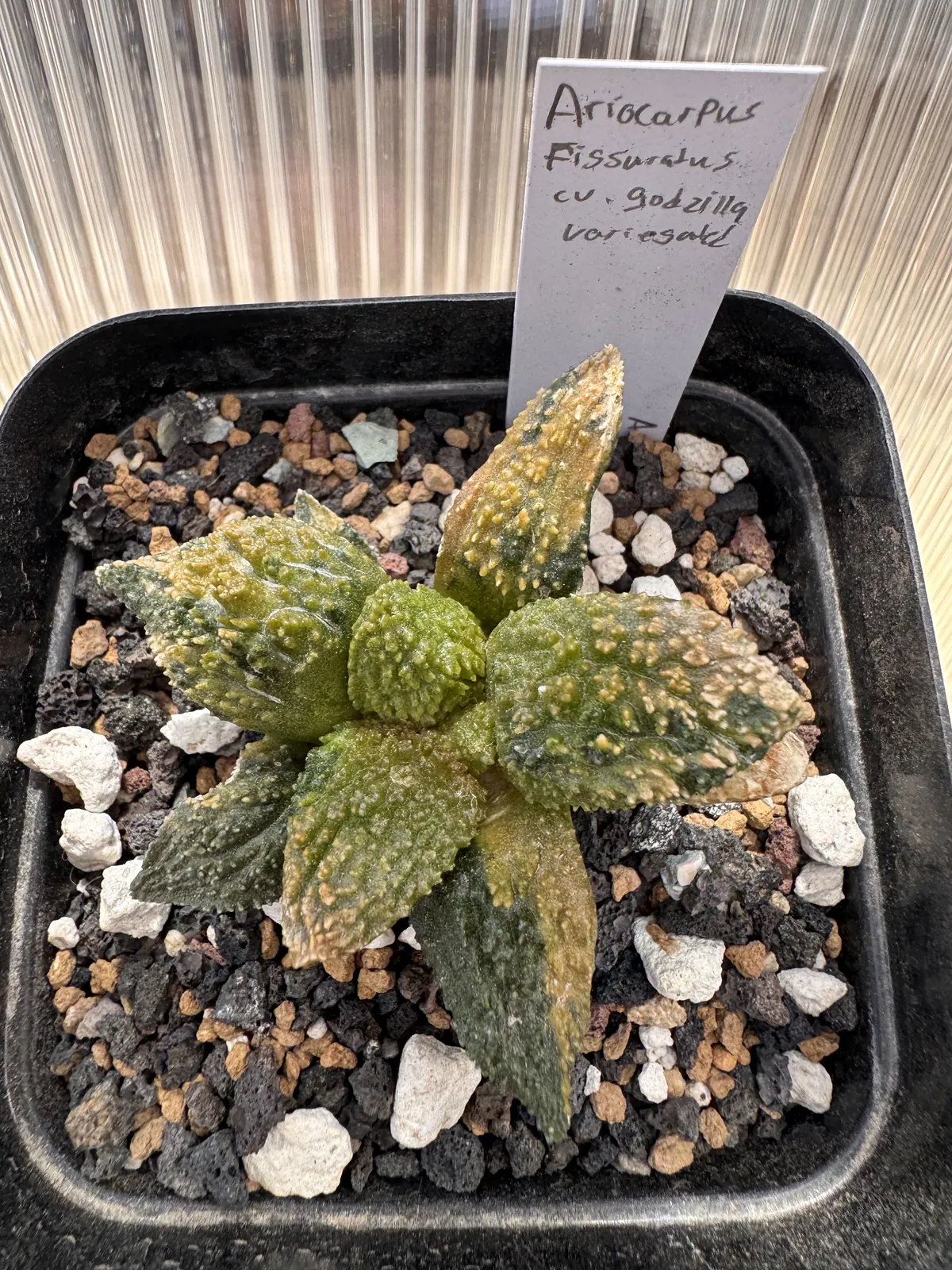
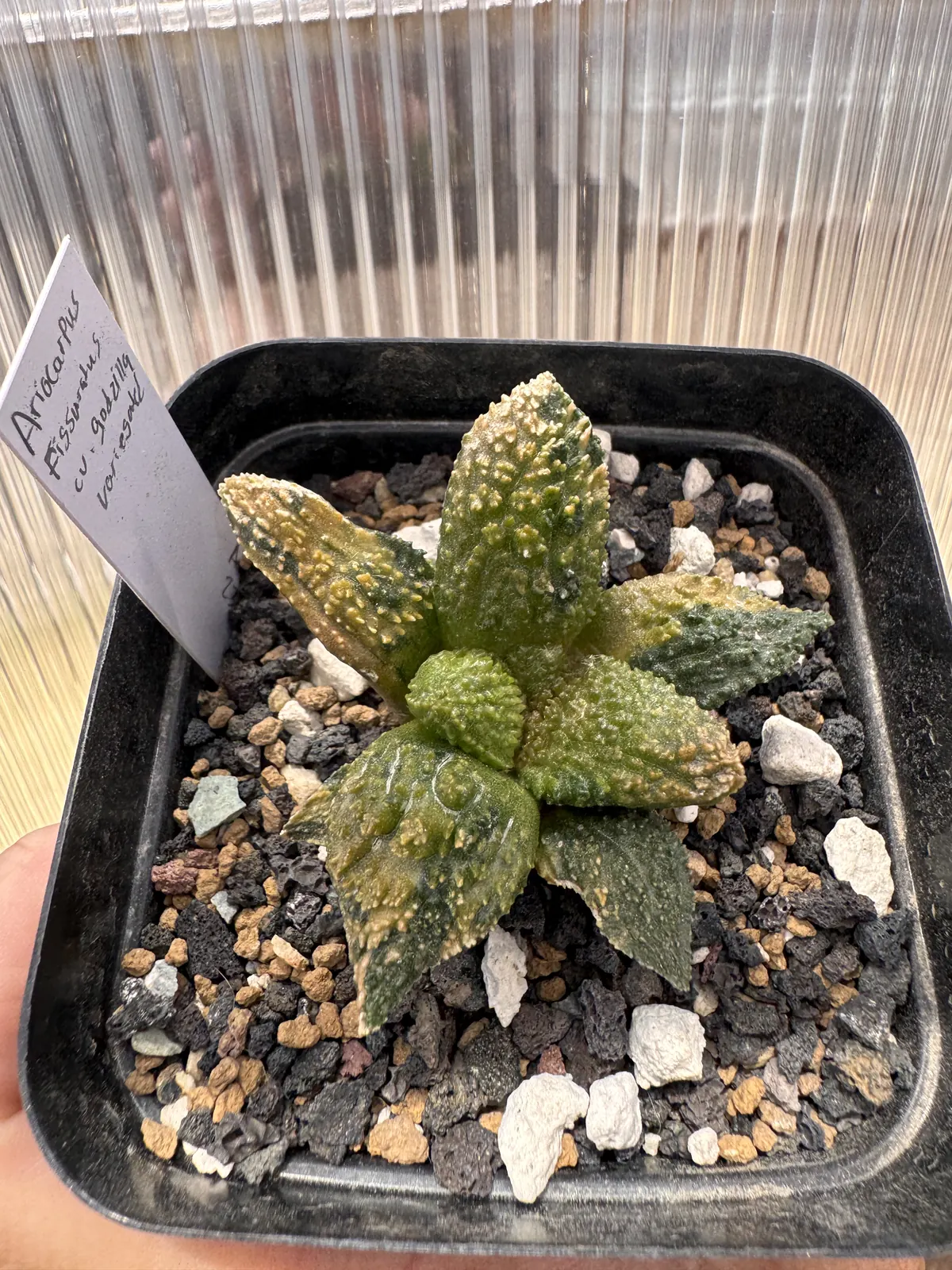
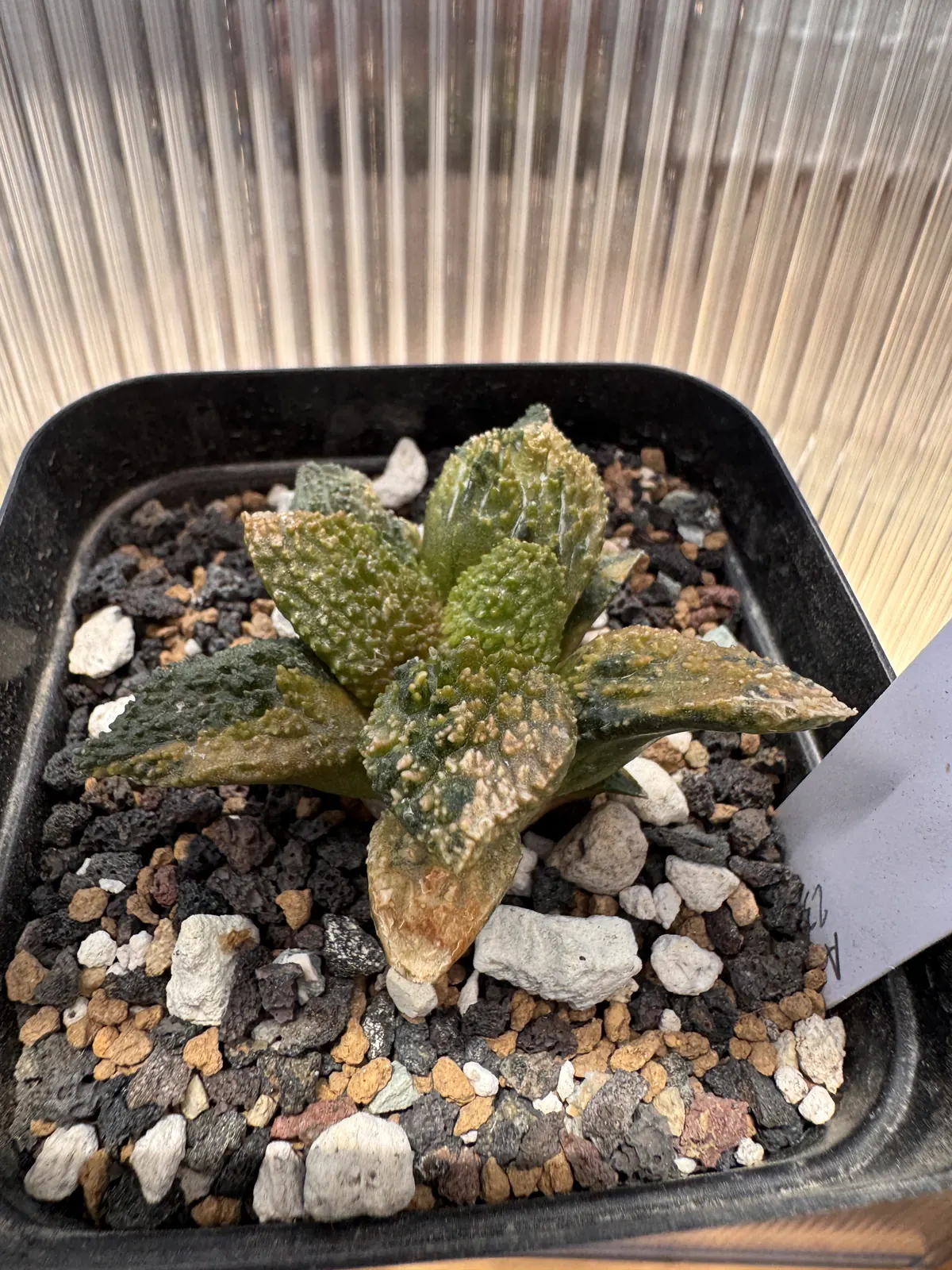
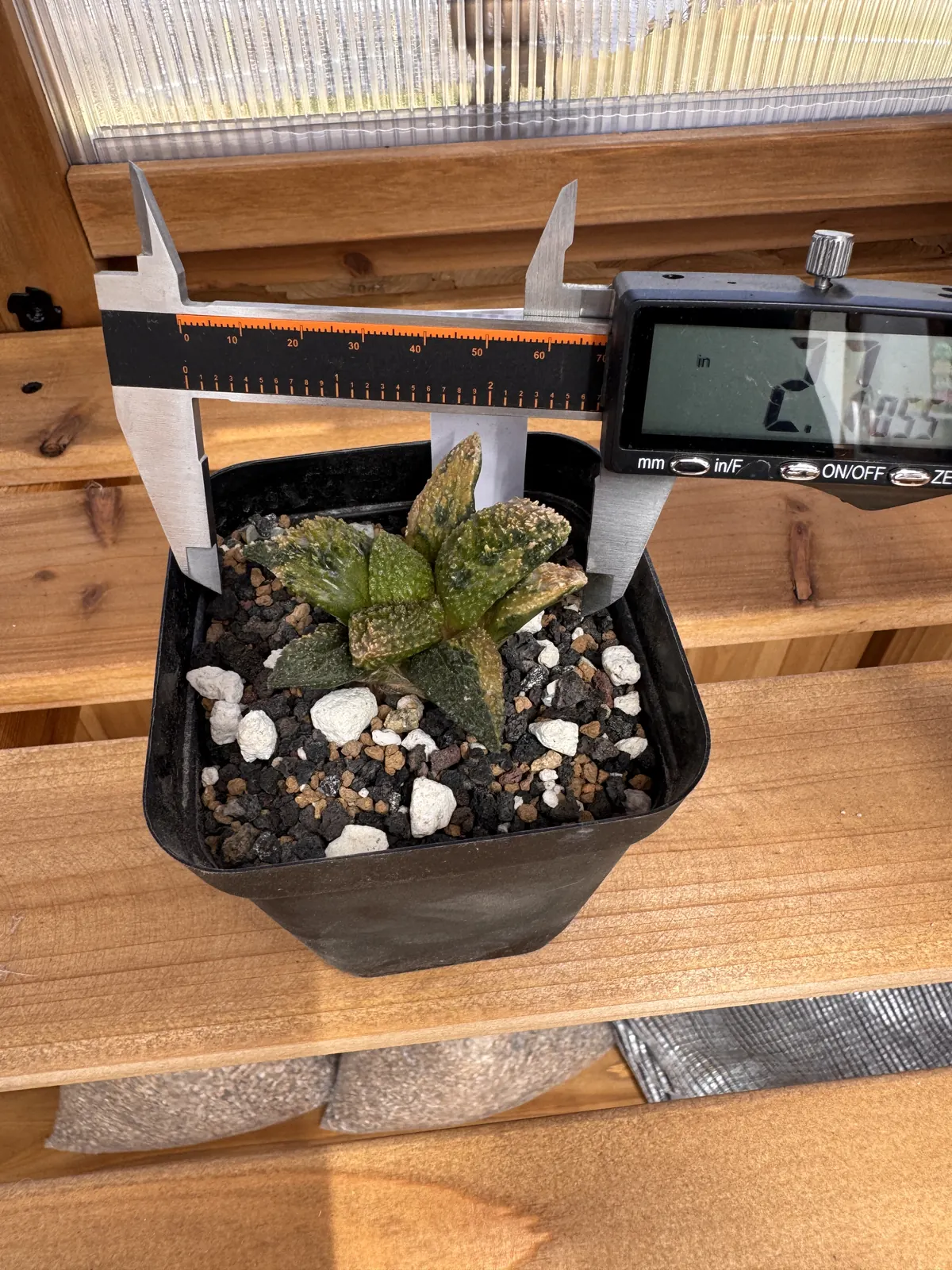
Ariocarpus fissuratus ‘Godzilla’ Variegated (Specimen B)
$1,320.00
Hurry, only 1 item left in stock!
This specimen is one of a kind. The photos show the exact plant you'll receive.
Description
Type: Seed grown · Size: about 6.9 cm (2.7 in) across · One-of-a-kind specimen, imported from Japan
Ariocarpus fissuratus Godzilla Variegated is the colour-broken form of the heavily fissured living rock cultivar, and this listing is for the exact 6.9 cm plant in the photographs. At rarecactus.com we grow our Ariocarpus from seed on the hard, lean mineral regime the genus demands, and this particular specimen was imported from Japan, where collectors have pushed the Godzilla line further than anywhere else.
What sets this Ariocarpus fissuratus Godzilla Variegated apart
The Godzilla selection takes the shallow grooves of a plain Ariocarpus fissuratus and drives them into a dense, crowded maze of fissures across the whole crown, the reptilian relief that earns the cultivar its name. Variegation layers a second rarity on top: sectors of tissue that carry less chlorophyll turn cream, gold and coral against the grey-green tubercles. On this plant the colour sits mostly on the outer tubercles and flares orange toward their tips, while a deep green heart still drives the growth, which is the balance you want. Because variegation is unstable and inherited unpredictably through seed, no two plants are marked alike, and a well-balanced variegate this size is hard to find. Our Ariocarpus fissuratus specimen page covers the botany of the species behind the selection.
Like every living rock, it grows from a swollen tuberous taproot and pulls flat to the ground, the habit that lets the species vanish into the limestone through the dry months. Variegated tissue photosynthesises less than plain tissue, so a plant like this grows slower still and needs measured light to keep the pale sectors from burning.
How we grow it
This Ariocarpus fissuratus Godzilla Variegated lives in a deep pot of sharply draining mineral mix weighted toward crushed limestone and pumice, sized to suit the taproot. It takes bright light with the fiercest summer midday sun filtered, a thorough soak only once the substrate has gone bone dry in the growing season, and a wholly dry winter rest. Restraint is the whole game: push a variegate with water or feed and you lose both the tight, sunken body and the cream sectors to scorch or rot. The Ariocarpus care guide sets out the substrate, the watering rhythm and the winter dormancy in full.
Flowering and growth
A settled plant opens a satiny magenta flower straight from the woolly crown in autumn, brief but vivid over a few warm days. Growth is counted in millimetres a year and slower again on variegated tissue, so a plant at this size already carries real age. Fresh tubercles push from the centre and shoulder the older fissured ones outward, deepening the crowded relief and slowly shifting the variegation pattern as the years pass. Patience earns the look; speed destroys it.
Choosing this plant
A variegate worth keeping shows strong, well-spread colour without so much pale tissue that the body cannot feed itself, together with the dense, disordered fissuring and the flat, ground-hugging profile this specimen carries in the photographs. Because you receive the exact plant pictured, there is no guesswork about how it furrows or how it is marked. Every Ariocarpus in our greenhouse sits on its own roots, never grafted to force size and never lifted from habitat, so it keeps the natural, slow proportions that grafted stock throws away.
When your plant arrives
Your plant ships seed grown and already well rooted, packed dry for transit. On arrival, pot it into a deep, sharply draining mineral mix sized to the taproot, settle it under bright indirect sun, and withhold water for a full 14 days before the first cautious soak. Variegated plants resent a wet root run more than plain ones, so keep it on the dry side while it settles into your conditions, then return to the usual soak-and-fully-dry cycle.
Provenance and legality
This specimen was imported from Japan and is seed grown, with no wild collection at any stage. Ariocarpus sits on CITES Appendix I, the strictest tier of international trade protection, so artificially propagated stock like this is the only lawful and ethical route to owning one. Browse the rest of the genus on the Ariocarpus encyclopedia hub.
One plant, one set of photographs. The 6.9 cm specimen shown is the exact plant that ships, seed grown, well rooted and packed dry for safe travel.
Shipping & Returns
Shipping
Flat $15 shipping anywhere in the United States, for one plant or several. Orders ship within 1 to 3 business days and usually arrive 2 to 5 business days later. Every plant is packed by hand to travel safely.
Returns
Each specimen is a living, one of a kind plant, so we do not accept general returns. We do guarantee safe arrival: if a plant arrives dead or seriously damaged, contact us within 48 hours of delivery with photos and we will replace it or refund that item.