The 12 Best Places in the World to See Rare Cacti
All ArticlesThe best places to see rare cacti are twelve destinations across four regions: three Mexican biosphere reserves, two Chilean national parks, four U.S. botanic gardens, and three European glasshouses. This guide ranks them for collectors who want to see threatened species in habitat or under glass, with addresses and current entry costs.
1. Tehuacan-Cuicatlan Biosphere Reserve, Mexico
UNESCO World Heritage Site (2018), 490,186 hectares, Puebla and Oaxaca
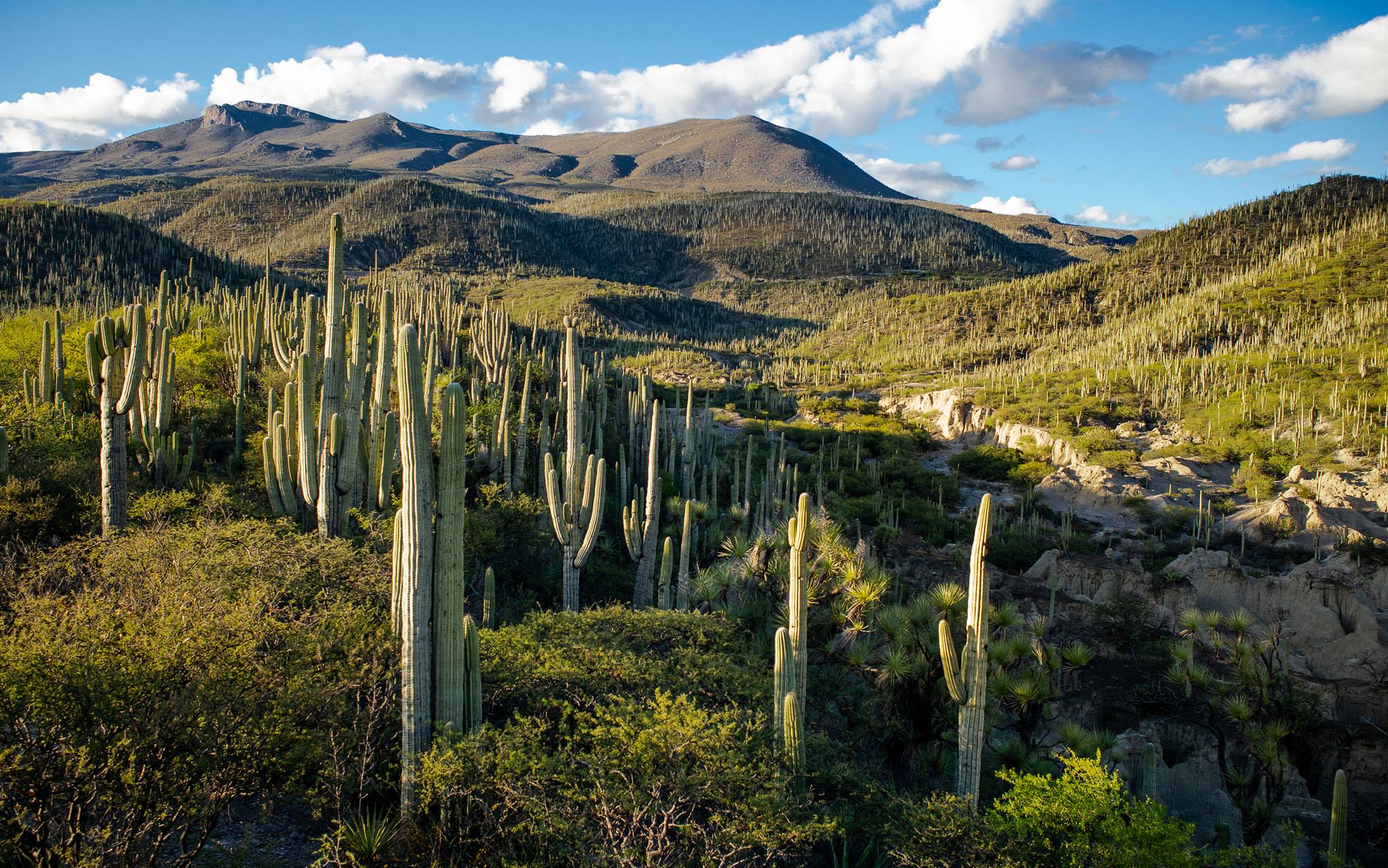
Tehuacan-Cuicatlan is the world’s largest cactus reserve, the densest concentration of columnar cacti on Earth, and the ancestral seedbed of Mesoamerican plant domestication. UNESCO inscribed the site as a World Heritage Reserve in July 2018 on the strength of those three claims. Roughly 86 cactus species are recorded within the boundary, with 21 endemic, and 45 of Mexico’s 70 columnar species grow here.
The forests of Pachycereus weberi, Neobuxbaumia tetetzo, and Cephalocereus columna-trajani dominate the Zapotitlan valley and supply the photographs that introduce most readers to the reserve. Less photographed but more ecologically significant are the populations of Mammillaria, Ferocactus, and Coryphantha threaded through the limestone soils between them. The Jardin Botanico Helia Bravo Hollis at the Zapotitlan Salinas entrance, named for Mexico’s preeminent twentieth-century cactus taxonomist, is the canonical visitor entry.
Self-guided trails work for the garden itself. Deeper reserve access requires authorized guides; only a handful of licensed tour operators work the area, and a day with one runs roughly US$200. Best season is October through March, when daytime temperatures stay tolerable.
2. The Huntington Desert Garden, San Marino, California
10-acre outdoor garden + Desert Garden Conservatory, founded 1907
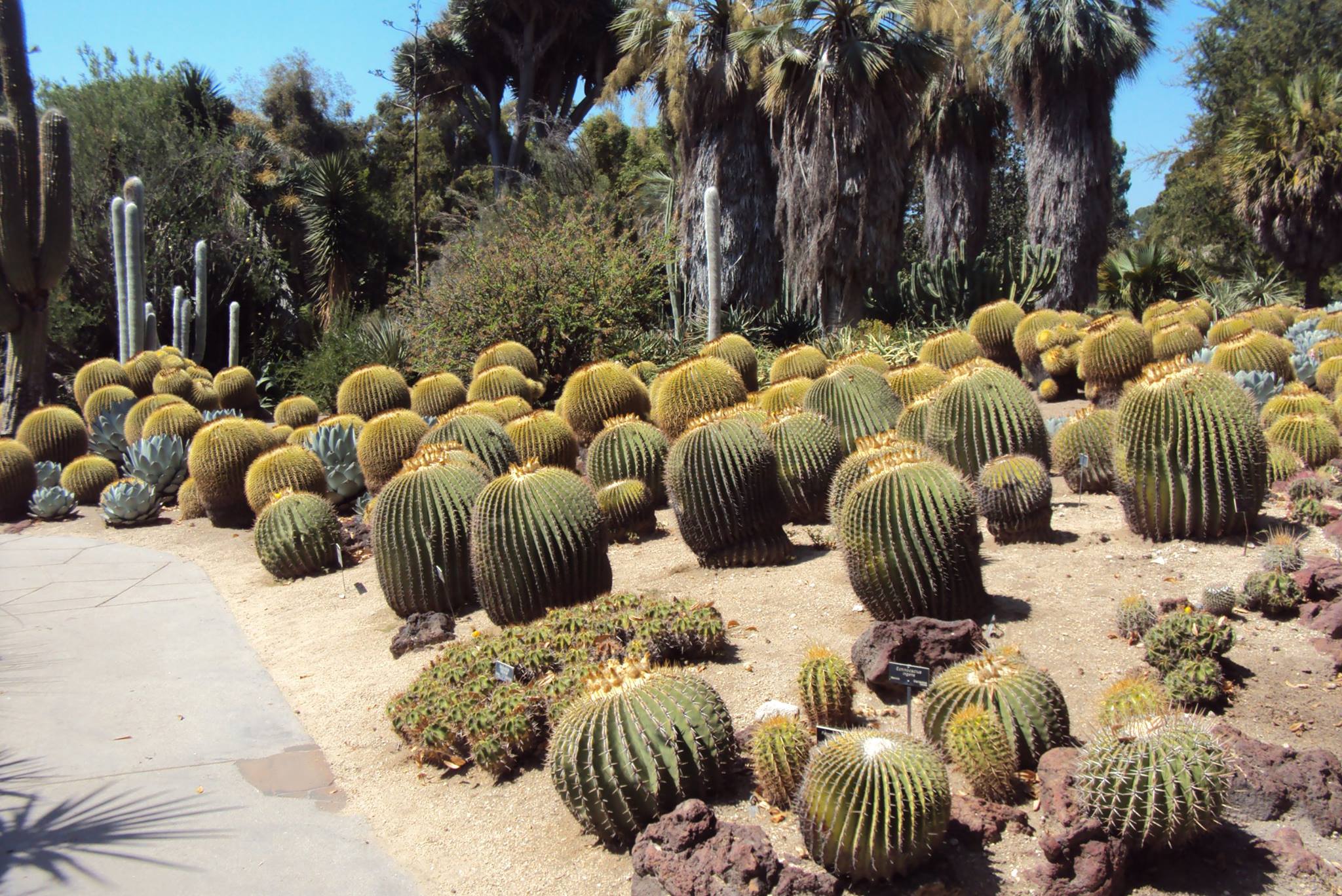
William Hertrich began the Desert Garden in 1907 on what was then a barren slope of Henry Huntington’s San Marino estate. It is now ten acres of mature cactus and succulent plantings, including the famous multi-acre stand of Echinocactus grusonii whose oldest specimens are over a century old. The 1985 Desert Garden Conservatory holds the tender and CITES-restricted material under glass: 2,200 accessions across 1,261 species and subspecies, drawn from 246 genera and 43 plant families.
The Huntington also hosts the International Succulent Introductions program, which has propagated and distributed wild-collected succulents annually since 1958. Many of the rare plants in serious collections worldwide originated as ISI distributions out of this institution. The Conservatory rooms display field-collected provenance specimens of Ariocarpus, Aztekium, Pelecyphora, and other CITES Appendix I taxa that are essentially impossible to photograph in the wild without research permits.
Open Wednesday through Monday on timed admission; the entire estate uses a single ticket. Plan a full day. The Conservatory is small but warrants its own slow visit.
3. Pan de Azucar National Park, Chile
National Park (1985), 437 km², Atacama and Antofagasta regions
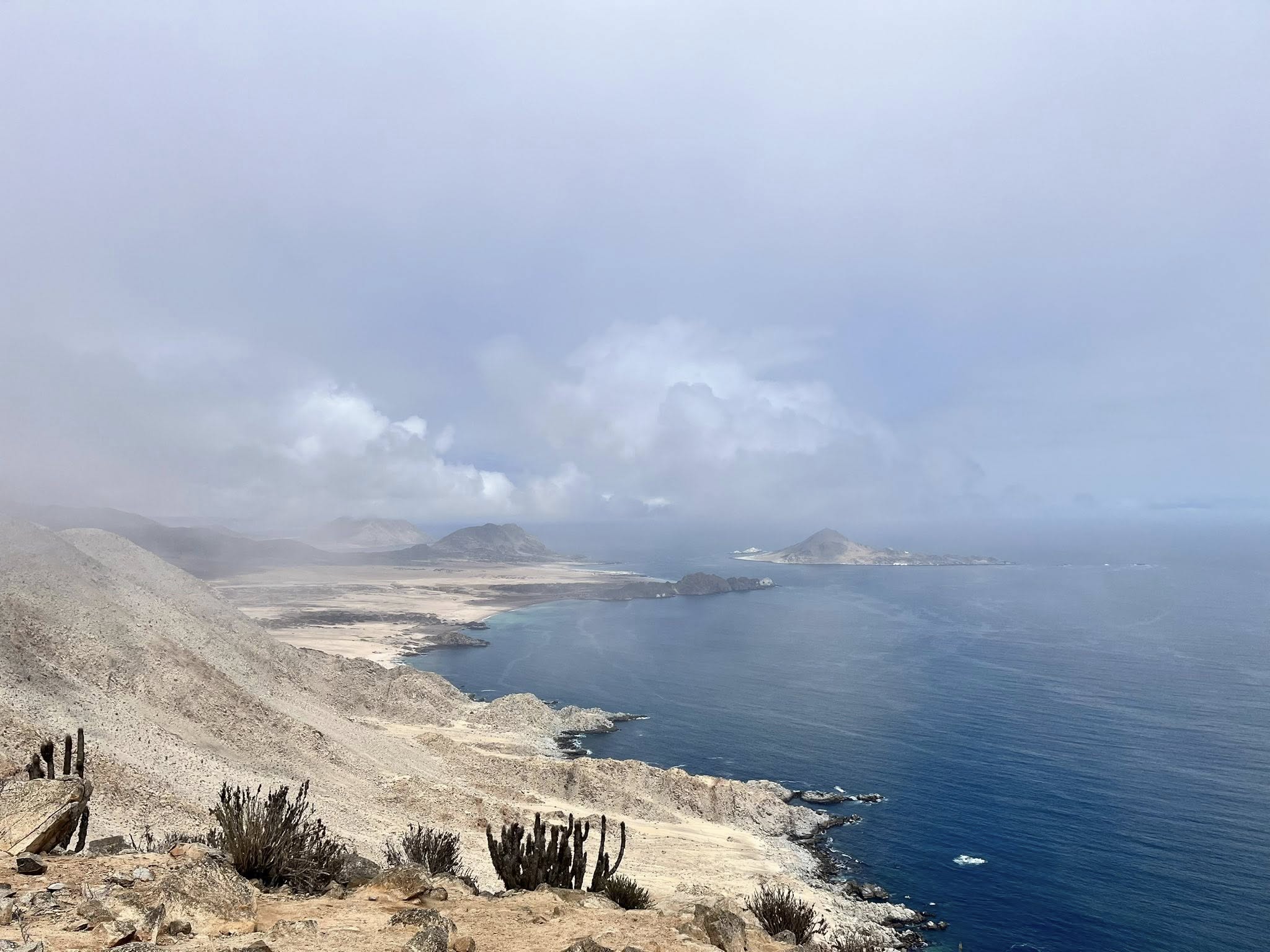
Pan de Azucar is the most important wild cactus destination in the southern hemisphere. The park protects more than twenty cactus species along the fog-fed coastal Atacama, and it is the only place on the planet where Copiapoa cinerea subsp. columna-alba grows inside a protected boundary. C. grandiflora, C. longistaminea, C. lauii, and C. cinerascens also occur here, along with tree-form Eulychnia.
These plants are not theoretical rarities. The IUCN reassessed Copiapoa in 2024 and found 82% of taxa now in a threatened category, up from 55% in 2013. Operation Atacama in 2020 seized over a thousand poached Copiapoa from a single Italian collection, with an estimated market value above one million euros. The plants in Pan de Azucar are the reference population those stolen plants were taken from.
Best season is August through November, when the camanchaca fog peaks and, in good El Nino years, the desierto florido turns the desert pink and yellow. The park is reachable from Chanaral by paved road; do not collect anything.
4. Desert Botanical Garden, Phoenix, Arizona
140-acre garden, founded 1937, Papago Park
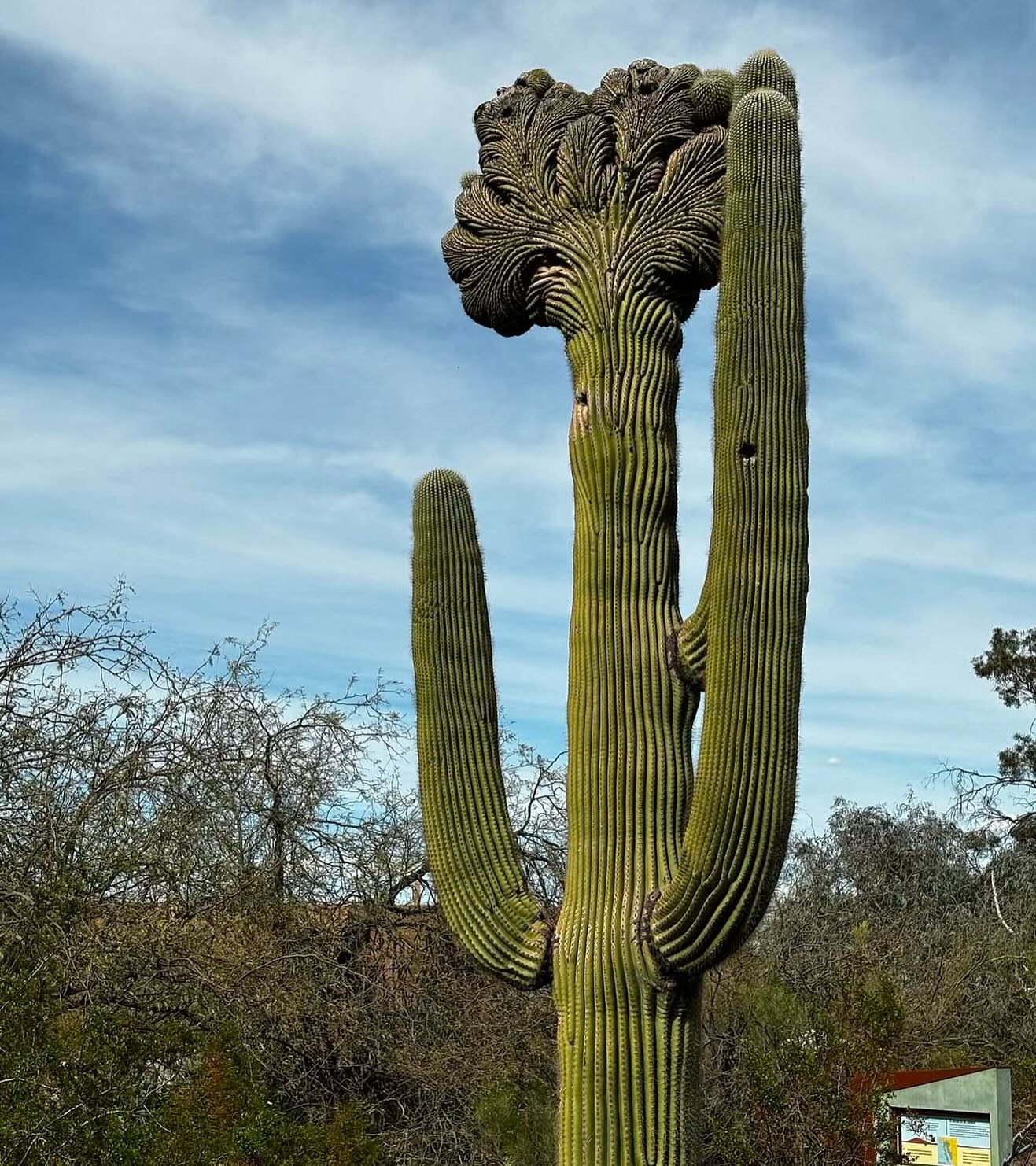
Phoenix’s Desert Botanical Garden combines collection depth with research authority more directly than any other institution in the United States. The grounds hold 13,973 accessioned cacti across 1,320 taxa, 4,026 agaves across 248 taxa, and 379 species classified as rare, threatened, or endangered. Since 2017 the garden has hosted the IUCN Cactus and Succulent Plants Specialist Group as its institutional home.
The IUCN Global Cactus Assessment co-led from this site established Cactaceae as the fifth most threatened taxonomic group on Earth. The ex-situ seed bank backstops at-risk Sonoran and Chihuahuan species, and the Conservation and Land Management internship has placed more than a thousand young professionals into conservation careers since 2001. The collections include strong holdings of Astrophytum, Lophophora, Ferocactus, and Mammillaria, with specimen labels carrying full provenance data for serious viewers.
Open daily. The Las Noches de las Luminarias evening event runs December and is the single largest annual draw, but a serious cactus visit happens at opening on a weekday morning when light is low and crowds are thin.
5. Big Bend National Park, Texas
National Park (1944), 801,163 acres, Trans-Pecos Texas
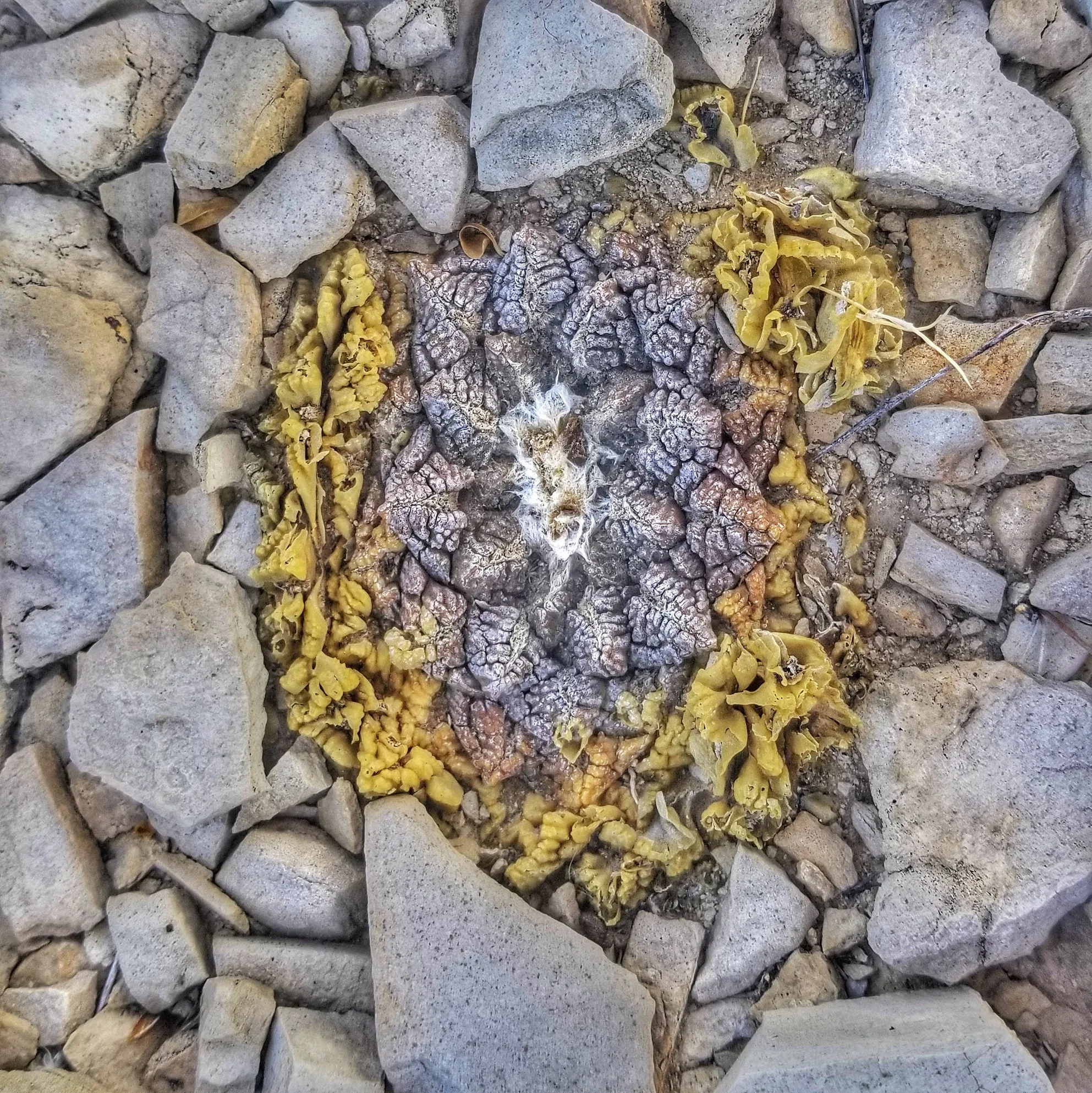
Big Bend is the largest protected tract of Chihuahuan Desert in the United States, sister-reserved with Mexico’s Maderas del Carmen under the UNESCO Man and the Biosphere program. Trans-Pecos Texas is the cactus-richest corner of the state, and Big Bend itself records around 60 to 65 species. Where it pulls ahead of any other US national park is in CITES-protected and federally listed taxa: Ariocarpus fissuratus grows on the limestone shelves above the Rio Grande, and Echinocereus chisoensis is a federally Threatened species near-endemic to the park.
Other notable holdings include Epithelantha, Coryphantha, Echinocactus horizonthalonius, and Ferocactus. Multiple Opuntia species occur in the Trans-Pecos as a whole. Ariocarpus poaching has been a documented problem here for decades, and US Fish and Wildlife Service investigations have produced multiple felony prosecutions of traffickers working Big Bend populations. Reporting suspicious activity to park rangers protects the population that makes the park worth visiting.
Backcountry permits cover deeper exploration. Best season is late October through April, with spring (March and April) for cactus bloom.
6. Sukkulenten-Sammlung Zurich, Switzerland
Founded 1931, Mythenquai lakeshore, Zurich
The Zurich Succulent Plant Collection holds approximately 25,000 plants representing 6,500 species across seven greenhouses, plus a 20,000-specimen herbarium and a research library. That covers something close to one-third of all known succulent species in cultivation in a single lakeside complex. The collection is a Class A object of national importance in the Swiss federal cultural heritage inventory and houses the secretariat of the International Organization for Succulent Plant Study, the global academic body for succulent research.
The Cactaceae holdings are deep across South American genera that collectors follow seriously, including Copiapoa, Gymnocalycium, Blossfeldia, and Echinopsis. Mexican holdings include rare Ariocarpus and Pelecyphora. The annual nighttime opening for the Queen of the Night (Selenicereus grandiflorus) bloom is one of the most atmospheric horticultural events in Europe.
There is no equivalent free-public-access deep succulent collection anywhere else on Earth. For a serious enthusiast routing through Europe, this is the single highest-value stop.
7. Cuatro Cienegas Biosphere Reserve, Mexico
UNESCO MAB Biosphere (2006), 84,347 ha core, Coahuila
Cuatro Cienegas is best known to biologists as the “Galapagos of the desert,” a relict basin of gypsum dunes and spring-fed pozas that holds more than seventy endemic plants and animals. The cactus diversity is a serious secondary draw. The reserve protects Ariocarpus fissuratus, Astrophytum capricorne (including the var. crassispinum populations near the town of Cuatro Cienegas itself), Lophophora williamsii, Turbinicarpus, Echinocactus horizonthalonius, Epithelantha micromeris, and at least seven Mammillaria species.
The basin’s gypsum substrates create unusual edaphic conditions that drive the endemism. Astrophytum capricorne var. crassispinum is locally distinctive enough that some authorities still treat it as a separate variety. The town of Cuatro Cienegas is open access; the major pozas and travertine formations now require local guides through ejido cooperatives, with day rates that fund the conservation work. Driving from Saltillo or Monclova is a few hours on paved highway.
The reserve faces severe aquifer drawdown from alfalfa irrigation, and cactus poaching is a documented problem. Best season is October through April, with March and April for flowering. Visit Poza Becerra and Rio Mezquites first, then ask local guides about the cactus-rich limestone ridges around the basin.
8. Princess of Wales Conservatory, Royal Botanic Gardens Kew
Conservatory opened 1987, Kew Gardens founded 1759, Richmond, London
Kew’s arid plant collection holds 5,000 accessions representing 2,000 taxa, with about 30% of wild origin. The material is split between the public Princess of Wales Conservatory, the historic Temperate House, and the research-only Tropical Nursery. The Conservatory’s ten climate zones include a substantial dry tropics room with mature Cactaceae and African succulents on display under glass that opened in 1987 with Diana, Princess of Wales.
The strongest holdings are African and Madagascan succulents, but the Cactaceae representation includes Ferocactus, columnar Cactaceae, and rare South American genera including Copiapoa. The Tropical Nursery, where the bulk of conservation propagation happens, is open by appointment for researchers only. A 1903 wild-collected Sansevieria kirkii var. pulchra is still alive in the collection, and an Aloidendron barberae personally collected by the Queen Mother in 1947 also lives there.
Standard Kew admission gives access to the Conservatory. The visit pairs naturally with the Temperate House and the Palm House for a full day in the gardens. Don’t skip the Alpine House, where high-altitude Andean plants relevant to South American Cactaceae habitats are grown.
9. Boyce Thompson Arboretum, Superior, Arizona
Founded 1924, opened to public 1929, 372 acres
Arizona’s oldest and largest botanical garden holds more than 2,600 species of arid land plants overall, with the Cactus and Succulents Garden carrying 300+ varieties on display. The 2014 to 2017 acquisition of the Wallace Desert Gardens collection added 5,870 plants from H.B. Wallace’s former private 13-acre Scottsdale collection, including mature specimens from Madagascar, Mexico, the Arabian Peninsula, and Australia. Many of these plants are multi-decade specimens unavailable anywhere else in cultivation.
The Cactus Pavilion houses the tender material under glass, and the open beds carry strong holdings of Mammillaria (33 species documented in the cactus garden alone), Echinopsis (21 species), and Echinocereus (10 species). The High Trail winds through native Sonoran Desert vegetation including in-place wild saguaros, so a single visit covers both managed collection and wild habitat. Picketpost Mountain rises above the property and provides the iconic backdrop.
Located off US 60 about an hour east of Phoenix, near Superior. Pair with a same-day visit to the Saguaro National Park districts in Tucson if you have a long weekend; the ecological gradient between the two sites is instructive.
10. Llanos de Challe National Park, Chile
National Park, 45,708 hectares, Huasco Province
Llanos de Challe is the second essential Chilean entry. Where Pan de Azucar protects the columna-alba subspecies of Copiapoa cinerea, Llanos de Challe protects Copiapoa dealbata and C. carrizalensis in stands described by botanists working the area as so dense that walking between them is difficult. The park also holds Eulychnia and over 220 documented plant species, with 14 endemic to Chile.
The park is one of the canonical destinations for the desierto florido, the flowering desert that occurs in El Nino years when the Atacama’s long-dormant geophyte and annual seed bank is triggered by unusual rainfall. Whole hillsides turn pink with Cistanthe and other ephemerals, framed against the dark cylindrical mass of mature C. dealbata. It is the most photographed landscape in the Chilean north outside of San Pedro de Atacama.
Self-driving from Vallenar or Huasco is a short trip. Best season is September through November, with the desierto florido peaking in late September if it occurs that year. The same poaching pressure that affects Pan de Azucar applies here. Photograph everything, take nothing.
11. Jardin Etnobotanico de Oaxaca, Mexico
Opened 1998, former Santo Domingo monastery grounds, Oaxaca
Oaxaca is a global center of cactus diversity and the Mexican state with the highest plant endemism. The Jardin Etnobotanico de Oaxaca holds 900+ species across 7,000+ specimens, representing roughly 11% of Oaxaca’s flora. The garden was established in 1998 on the former kitchen and infirmary gardens of the Santo Domingo de Guzman convent, after years of advocacy by the painter Francisco Toledo and the PRO-OAX civic group. The setting alone is worth the visit, but the holdings carry the rest of the weight.
Notable display specimens include Echinocactus platyacanthus (the giant barrel cactus, “biznaga gigante” in Spanish, whose candied stems are the source of acitrón), Lophocereus marginatus, Myrtillocactus schenckii, and substantial holdings of Ferocactus and Mammillaria from the surrounding Tehuacan and Mixteca regions. The garden runs an active rescue program for cacti and agaves displaced by construction projects across the state, which is the conservation feature that distinguishes it from a purely display collection.
Access is by guided tour only. Tours run in Spanish daily; English-language tours are limited to a few days each week, so check the schedule before traveling. The garden sits inside the Santo Domingo cultural complex, so build a half-day around the convent, the museum, and the garden as a unit.
12. Jardin Exotique de Monaco
Inaugurated 1933, vertical limestone cliff site, Monaco-Ville
The Jardin Exotique de Monaco reopened in March 2026 after six years of closure for major rock-stabilization and accessibility works costing more than €18 million. The reopening is one of the most significant events in the European cactus and succulent calendar this year. The garden was inaugurated in 1933 by Prince Louis II on a vertical limestone cliff above the Mediterranean, and it remains one of the largest succulent rockeries in the world, holding over 1,000 species and approximately 6,000 varieties.
The vertical site is the differentiator. Plants grown elsewhere as potted specimens are here on natural cliff faces in something close to in-situ growth conditions. Many of the original 1933 plantings are now ninety-plus years old, with developed habit and weathered character rarely seen in cultivation. The collection leans toward African and American succulents, with strong Copiapoa, Ferocactus, and Echinocactus on the American side.
The site also includes the Grotte de l’Observatoire, a prehistoric cave below the gardens that was occupied by humans roughly 200,000 years ago. The combined ticket gives access to both. Pair with the nearby Musee d’Anthropologie Prehistorique for a half-day at the top of the cliff.
How can you visit rare cacti responsibly?
Every wild site on this list protects taxa that are sought by international collectors. The plants persist because the protection holds. Three practical points for legitimate visitors.
Photograph everything, take nothing. All Ariocarpus, every Pelecyphora, the entire Turbinicarpus genus, Astrophytum asterias, and several Mammillaria species are on CITES Appendix I. Removing them from habitat is criminal under Mexican federal law and under US Endangered Species Act enforcement, which has produced multiple felony convictions in the last decade.
Lophophora and Wirikuta require additional care. Wild Lophophora williamsii is legally restricted at multiple jurisdictional levels. The Wirikuta sacred natural area in San Luis Potosi is a protected pilgrimage site of the Wixarika people, and both Mexican federal regulation and Wixarika cultural protocols apply. Visit as a respectful observer through Real de Catorce. Do not collect anything. The site faces ongoing threats from mining concessions, and the responsible visitor stays attentive to that fight rather than adding to its problems.
Report poaching. Park rangers at every site listed above want reports of suspicious activity. The 2020 Operation Atacama case began with field observations from researchers and visitors. Tehuacan-Cuicatlan, Cuatro Cienegas, Big Bend, and Pan de Azucar all have active enforcement that depends on visitor cooperation.
When is the best season to visit wild cactus sites?
Southern hemisphere Atacama destinations (Pan de Azucar, Llanos de Challe) peak August through November, when the camanchaca fog is heaviest and the desierto florido may bloom. Northern hemisphere desert sites (Tehuacan-Cuicatlan, Cuatro Cienegas, Big Bend, Saguaro and Organ Pipe if you extend the trip) work October through April, with cactus flowering concentrated in March and April.
Botanical gardens in temperate climates (Kew, Sukkulenten-Sammlung, Jardin Exotique de Monaco) work year-round, but rare-cactus flowering is concentrated April through July under the long European day length. The Huntington and Desert Botanical Garden flower a similar window, though the Sonoran Desert peak is shifted earlier (late March through May) than the European glasshouse peak.
For a deeper look at the genera referenced throughout this article, browse the Rare Cactus Encyclopedia.
Frequently Asked Questions
What are the best places in the world to see rare cacti in habitat?
The Tehuacan-Cuicatlan Biosphere Reserve in Mexico is the world’s largest cactus reserve, with 86 cactus species and the densest concentration of columnar cacti on Earth. Pan de Azucar National Park in Chile holds the only protected wild population of Copiapoa cinerea subsp. columna-alba. Big Bend National Park in Texas protects 60+ species including Ariocarpus fissuratus and the federally Threatened Echinocereus chisoensis. Cuatro Cienegas in Coahuila protects gypsum-endemic cacti unique to the basin.
Which botanical garden has the largest cactus collection?
By accessioned cactus count, Phoenix’s Desert Botanical Garden leads with 13,973 accessioned cacti across 1,320 taxa. Zurich’s Sukkulenten-Sammlung holds approximately 25,000 plants representing 6,500 succulent species (cacti and Old World succulents combined). The Huntington Desert Garden in California holds 2,200 accessions across 1,261 species in its Conservatory alone, plus a 10-acre outdoor garden of 2,000+ species.
Where can I see Copiapoa cacti in their natural habitat?
Coastal Atacama Chile is the only place. Pan de Azucar National Park and Llanos de Challe National Park are the two most important protected destinations, both accessible through the Pasesparques.cl ticketing system introduced in January 2024. The IUCN reassessed Copiapoa in 2024 and found 82% of taxa now in a threatened category, so visiting is observation-only. The genus is under heavy pressure in part because of poaching for European and Asian collector markets.
What UNESCO sites protect rare cactus species?
Three UNESCO designations matter most for Cactaceae. Tehuacan-Cuicatlan Valley in Mexico was inscribed as a World Heritage Site in 2018 and is the world’s largest cactus reserve at 490,186 hectares. Cuatro Cienegas in Coahuila is a UNESCO Man and the Biosphere reserve (designated 2006) with substantial gypsum-endemic cactus diversity. Maderas del Carmen in Coahuila is sister-reserved with Big Bend National Park under the same UNESCO MAB program.
Where can I see Ariocarpus or Lophophora legally?
Legal observation in habitat is possible at several Mexican biosphere reserves. Ariocarpus fissuratus grows at Cuatro Cienegas, Maderas del Carmen, and Big Bend National Park (Texas, USA). Lophophora williamsii grows in Cuatro Cienegas and the Wirikuta sacred natural area near Real de Catorce, San Luis Potosi. Both genera are CITES Appendix I (Ariocarpus) and CITES Appendix II plus NOM-059-SEMARNAT-2010 listed (Lophophora). Removing plants from habitat is criminal. Observation only.
What is the best time of year to visit Mexican cactus reserves?
October through April for daytime temperatures. March and April for cactus flowering, which coincides with comfortable shoulder-season weather and clear visibility. Avoid June through September, when summer rains make backcountry roads difficult and afternoon thunderstorms restrict access to gypsum and limestone substrates. Tehuacan-Cuicatlan, Cuatro Cienegas, and the Wirikuta region are all best between October and April.
UNESCO World Heritage List, Tehuacan-Cuicatlan Valley (inscribed 2018) · UNESCO Man and the Biosphere Programme · Goettsch et al., “High proportion of cactus species threatened with extinction,” Nature Plants (2015) · IUCN Red List, Cactaceae assessments · Guerrero et al., “Threats to Copiapoa cacti in the Atacama Desert,” Conservation Biology (2024) · IUCN Cactus and Succulent Plants Specialist Group, hosted by Desert Botanical Garden · CITES Appendices I, II, III (current) · Mexican NOM-059-SEMARNAT-2010 · Anderson, E.F., The Cactus Family (Timber Press) · Hunt, D., The New Cactus Lexicon (DH Books) · Helia Bravo Hollis, Las Cactaceas de Mexico · US National Park Service, Big Bend National Park · US National Park Service, Saguaro National Park · US National Park Service, Organ Pipe Cactus National Monument · CONAF / Pasesparques.cl, Pan de Azucar and Llanos de Challe national parks · The Huntington Library, Art Museum, and Botanical Gardens; Desert Garden Conservatory accession data · International Succulent Introductions (ISI) program archives · Sukkulenten-Sammlung Zurich, City of Zurich official site · International Organization for Succulent Plant Study (IOS) · Royal Botanic Gardens Kew, Arid Collection · Boyce Thompson Arboretum, Wallace Desert Garden acquisition records · Jardin Etnobotanico de Oaxaca · Jardin Exotique de Monaco (reopening March 2026) · Convention on Biological Diversity, Cuatro Cienegas Biosphere Reserve · US Fish and Wildlife Service, “Catching Cactus Crooks” (2019)