
Echinopsis: San Pedro Cactus & Torch Cacti
Echinopsis Species & Types



| Species (common name) | Sold as / POWO status | Native range | Growth habit | Spines | Best known for |
|---|---|---|---|---|---|
| Echinopsis pachanoi San Pedro | Trichocereus pachanoi | Ecuador & Peru (Andes) | Tall columnar, fast | Short, few | The classic fast-growing San Pedro |
| Echinopsis peruviana Peruvian torch | Trichocereus peruvianus; POWO treats this name as a synonym of Echinopsis macrogona | Peru | Tall columnar | Long, stout | Blue-glaucous skin, heavier spination |
| Echinopsis cuzcoensis Cuzco torch | Trichocereus cuzcoensis | Southern Peru (Urubamba) | Tall columnar | Long, dark | Dark-spined Cuzco form |
| Echinopsis scopulicola | Trichocereus scopulicola; POWO treats this name as a synonym of Echinopsis lageniformis | Bolivia | Tall columnar | Near-spineless | Smooth, bright-green, almost spineless |
| Echinopsis chiloensis Chilean torch | Trichocereus chiloensis; POWO accepts this plant as Leucostele chiloensis | Chile | Candelabra-branching with age | Dense | Hardiest of the group; candelabra habit |
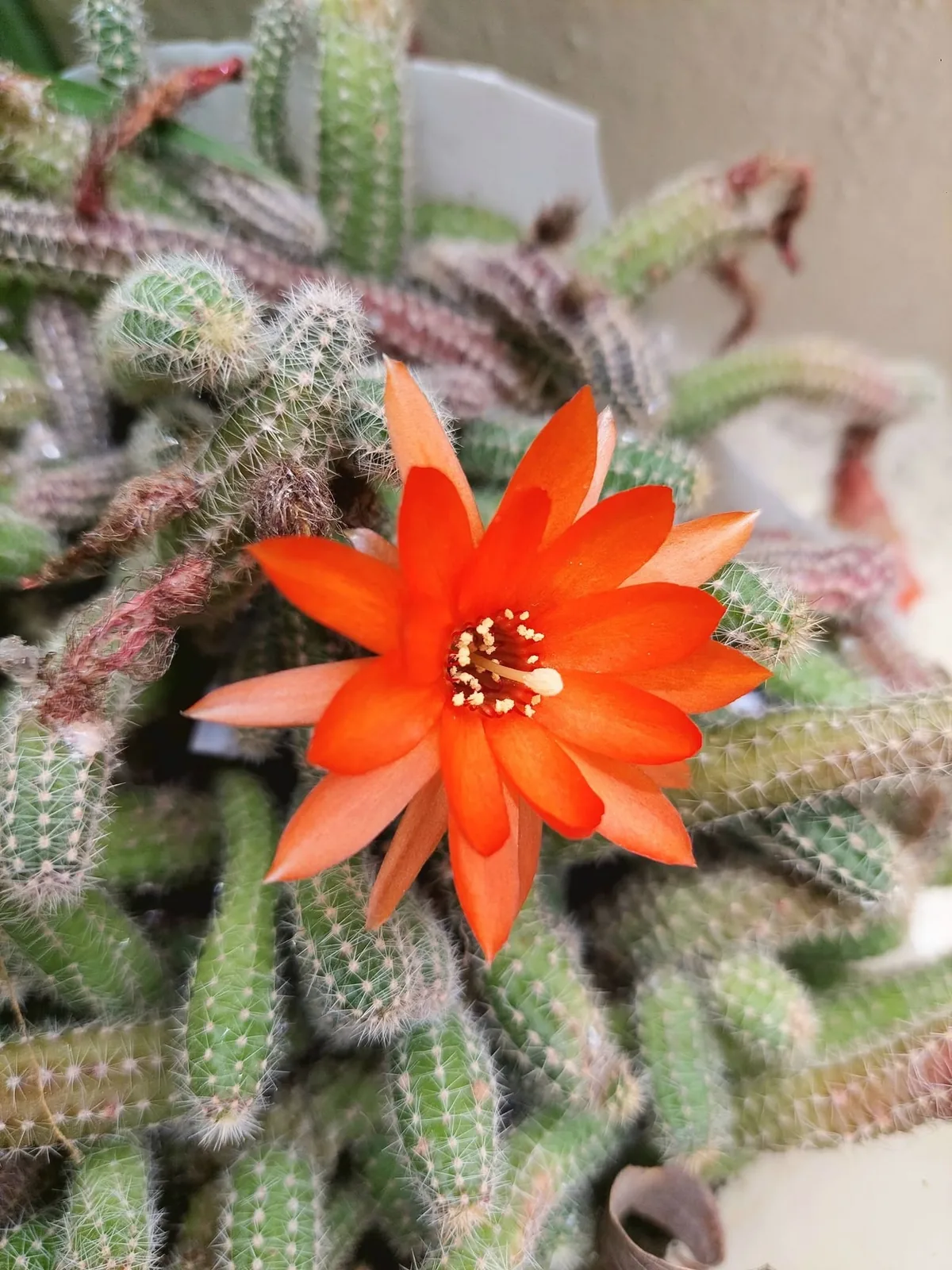
| Echinopsis chamaecereus Peanut cactus | formerly Chamaecereus silvestrii | Argentina | Miniature, clustering | Soft bristles | Free-flowering windowsill miniature |
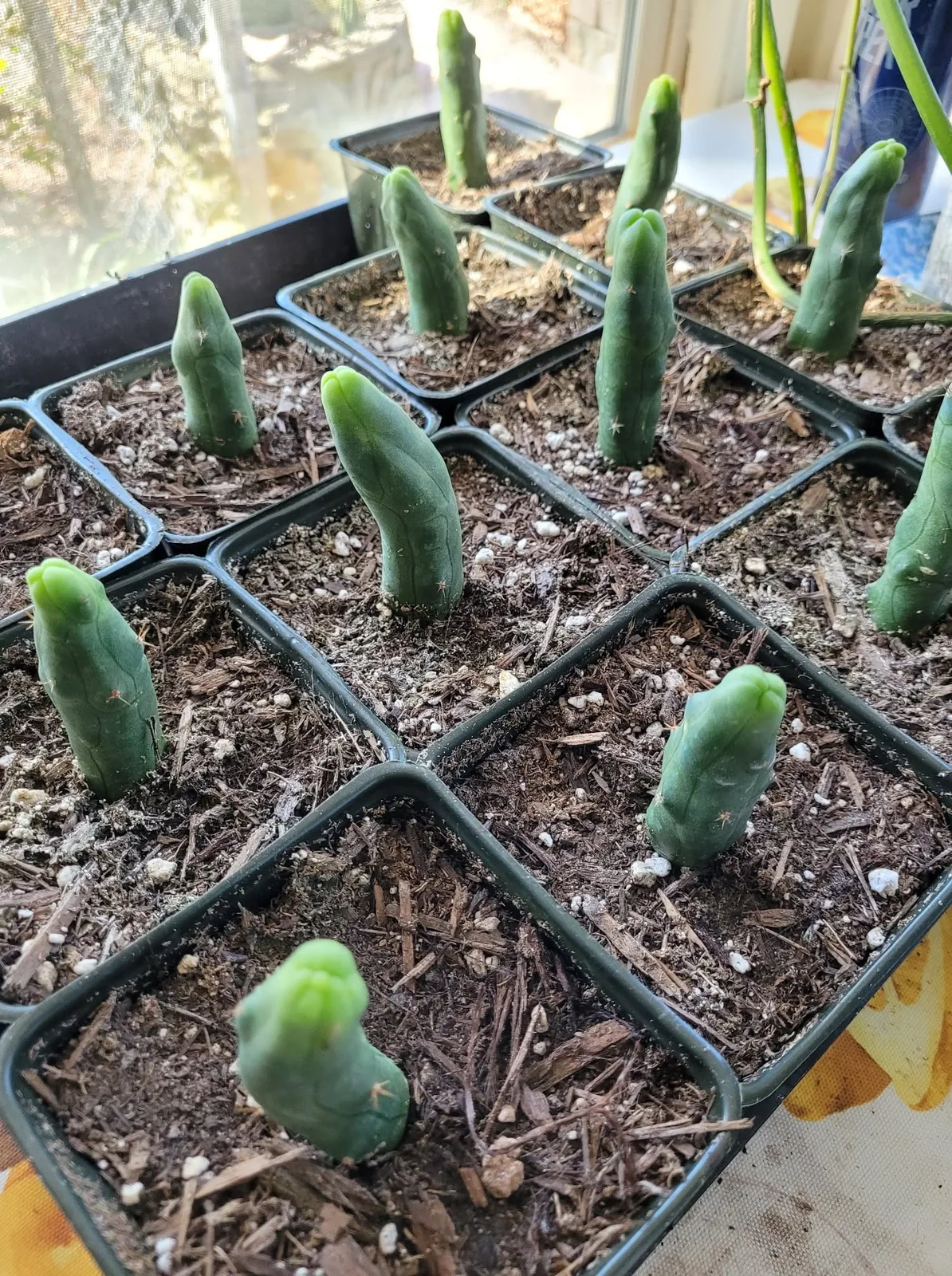
| Echinopsis lageniformis Bolivian torch | Trichocereus bridgesii | Bolivia | Tall columnar | Honey-colored | Honey spines; the monstrose is the “penis cactus” |
One plant, two labels. Kew treats Trichocereus as a synonym of Echinopsis, so a San Pedro is Echinopsis pachanoi on the checklist and Trichocereus pachanoi on most nursery tags. Neither tag is a different plant. Three entries above carry a further wrinkle: POWO files them under other names, and the crosswalk column gives the accepted one. At rarecactus.com we grow all seven from seed and shelve them under both labels, because collectors search for both. Swipe the table sideways on a phone.
What is Echinopsis, and why do nurseries still sell it as Trichocereus?
Echinopsis is a South American genus of 81 accepted species (POWO 2026), from small globose plants to columnar trees reaching 6 m. The name confusion is taxonomic. In 1974 H. Friedrich folded the old genus Trichocereus into Echinopsis on the basis of shared flower structure, so Trichocereus became a synonym. Nurseries kept using the older name anyway: it predates the reclassification, and collectors still recognize it, so the label stuck.
Where does Echinopsis grow in the wild?
The genus runs in a broad arc down South America: Ecuador, Peru, Bolivia, Argentina, Brazil, Paraguay, and Uruguay. The columnar species hold the Andean slopes between 1,000 and 3,000 m, in semi-arid shrubland and rocky grassland. Elevation sorts the two best-known torches. E. pachanoi sits high, at 2,000 to 3,000 m in the Peruvian and Ecuadorian Andes; E. peruviana takes the lower, drier ground from 1,000 to 2,500 m.
What do Echinopsis flowers look like?
Echinopsis carries some of the largest flowers in the cactus family. Each bloom is funnel-shaped and up to 25 cm long, set on a hairy tube, in white, pink, red, or yellow depending on the species. The columnar former-Trichocereus species open at night and last a single day. The globose species are smaller and tend to flower by day.
How cold-hardy is Echinopsis?
Kept dry at the roots, E. pachanoi takes brief frost down to about −5 to −7°C, which puts it in USDA zones 9a to 10. The high Andes built that tolerance: cold nights, dry soil. The catch is moisture. At the same temperature, wet cold does far more damage than dry cold.
What is the difference between Echinopsis pachanoi and Echinopsis peruviana?
E. pachanoi reads light green, usually 5 to 8 ribs, with short spines under 2 cm, and comes from the higher, wetter Andes at 2,000 to 3,000 m. E. peruviana is the bluer of the two, with larger areoles and spines reaching 4 cm, off drier slopes at 1,000 to 2,500 m. The line blurs in cultivation, though. The two hybridize freely, so a plant sold under either name can sit somewhere between them.
Is it legal to grow Echinopsis and San Pedro cactus?
As ornamentals, Echinopsis species including San Pedro, Peruvian torch and Bolivian torch are legal to buy, sell, and grow in the United States, the United Kingdom, Canada, Australia, and most other jurisdictions. The wrinkle is chemistry. The plant contains mescaline, which is Schedule I, but the cactus itself is not scheduled. You only cross a legal line if you set out to extract or consume the mescaline.
What substrate does Echinopsis need?
Give Echinopsis a fast-draining mineral mix: ordinary cactus soil cut with 30 to 50% pumice, granite grit, or lava rock. The watering is where it differs from desert cacti. The columnar former-Trichocereus species come from high-rainfall Andean country, so they take generous water through the growing season, as long as the mix drains right through within 24 hours.
Is the San Pedro cactus an Echinopsis?
Yes. San Pedro is Echinopsis pachanoi, the best-known plant in the genus. It sits alongside the Peruvian torch (Echinopsis peruviana) and the Bolivian torch (Echinopsis lageniformis), and all three used to be Trichocereus. That history is why San Pedro still shows up for sale as Trichocereus pachanoi. All are tall, fast-growing Andean columns, now filed under Echinopsis.
Trace any specimen to its wild origin in our Echinopsis field numbers.