
Is Peyote Legal? US States and Around the World (2026)
All ArticlesLophophora williamsii, the peyote cactus, is federally Schedule I in the United States under 21 CFR § 1308.11(d)(26), with a Native American Church religious-use carve-out at 21 CFR § 1307.31. Globally, peyote is illegal in roughly 30 jurisdictions and legal as an ornamental in fewer than ten. Verified September 2026.
What follows is reference content, not legal advice. Drug law moves quickly, and the answer in any specific situation depends on facts a horticultural reference cannot evaluate. This article cites the operative statute for each jurisdiction so an attorney can pull the current text. All cells reflect the law as verified on 2026-05-09.
The map covers 34 jurisdictions selected for legal-policy weight, native habitat, or large collector communities. Plant explicitly legal or decriminalized: Canada, Netherlands, Sweden, and the Czech Republic (4 countries). Live plant unaddressed in statute, mescaline scheduled: 19 countries, where ornamental possession sits in a tolerated grey zone and any preparation flips into controlled-substance territory. Plant illegal because named in the schedule: 11 countries, led by the United States, France, Italy, Switzerland, Russia, Brazil, Chile, Singapore, New Zealand, Australia (federal), and Mexico (with a constitutional ceremonial-use carve-out for Wixárika and Tarahumara peoples).
Is peyote legal in the United States?
Peyote is illegal under United States federal law. The Controlled Substances Act schedules Lophophora williamsii by binomial at 21 CFR § 1308.11(d)(26): “Meaning all parts of the plant presently classified botanically as Lophophora williamsii Lemaire, whether growing or not, the seeds thereof, any extract from any part of such plant, and every compound, manufacture, salts, derivative, mixture, or preparation of such plant, its seeds or extracts.” Mescaline, the alkaloid, is separately scheduled at 21 CFR § 1308.11(d)(24). The plant body itself is named in the statute, which makes peyote one of the few mescaline-bearing cacti where the live cactus, the seeds, and the dried buttons are all criminally controlled before any extraction occurs.
The federal Native American Church religious-use exemption at 21 CFR § 1307.31 reads: “The listing of peyote as a controlled substance in Schedule I does not apply to the nondrug use of peyote in bona fide religious ceremonies of the Native American Church, and members of the Native American Church so using peyote are exempt from registration. Any person who manufactures peyote for or distributes peyote to the Native American Church, however, is required to obtain registration annually and to comply with all other requirements of law.” The American Indian Religious Freedom Act Amendments of 1994, 42 USC § 1996a, codify a parallel statutory protection: “Notwithstanding any other provision of law, the use, possession, or transportation of peyote by an Indian for bona fide traditional ceremonial purposes in connection with the practice of a traditional Indian religion is lawful, and shall not be prohibited by the United States or any State.” The 1994 amendments were a direct congressional response to Employment Division v. Smith, 494 U.S. 872 (1990), the Oregon NAC unemployment-benefits case where Justice Scalia held that the Free Exercise Clause does not require religious exemption from neutral, generally applicable laws.
United States v. Boyll, 774 F. Supp. 1333 (D.N.M. 1991) holds that the 21 CFR § 1307.31 exemption is not race-restricted; non-Indian NAC members are protected. State v. Mooney, 2004 UT 49, 98 P.3d 420 confirmed the same posture in Utah state court, finding that the federal exemption is incorporated into state controlled-substances law regardless of tribal enrollment. People v. Woody, 61 Cal.2d 716 (1964), the California Supreme Court’s pre-Smith NAC decision, remains the surviving precedent for ceremonial possession in California, although California courts have not extended Woody to cultivation under H&SC § 11363.
Thirteen states have written religious-use exemptions broader than federal NAC alone: Arizona (any sincere religious belief), Colorado (any bona-fide religious organization), Idaho (federally enrolled tribal members on reservations), Iowa, Kansas, Minnesota, Nevada (any bona-fide religious organization, statute references the genus Lophophora), New Mexico (any bona-fide religious organization), Oklahoma, Oregon (sincere-intent defense), South Dakota, Texas (NAC + 25% Native descent), Wisconsin, and Wyoming. The remaining 37 states and the District of Columbia rely on the federal 21 CFR § 1307.31 exemption as their sole religious-use carve-out. For the broader botany of the genus and the close relatives that share its habitat, see the Lophophora encyclopedia hub.
| State | Status | Religious-use carve-out | Statute |
|---|---|---|---|
| Alabama | Illegal (peyote and mescaline named in Schedule I) | Federal NAC only | Ala. Code § 20-2-23 |
| Alaska | Illegal (Schedule IIIA hallucinogens) | Federal NAC only | AS 11.71.160 |
| Arizona | Restricted (named in statute; broad religious-use defense) | Bona-fide religious belief defense (no NAC or tribal requirement) | ARS § 13-3402 |
| Arkansas | Illegal (peyote named in Schedule I) | Federal NAC only | Ark. Code § 5-64-215 |
| California | Illegal (mescaline and peyote in Schedule I; cultivation a separate offense) | People v. Woody (1964) protects NAC ceremonial possession only | Cal. H&SC §§ 11054(d), 11350, 11363 |
| Colorado | Illegal under state CSA; peyote EXPLICITLY EXCLUDED from Prop 122 decriminalization | Bona-fide religious organization (broader than NAC-only) | Colo. Rev. Stat. §§ 18-18-203, 18-18-204(2)(d) |
| Connecticut | Illegal (Schedule I; peyote captured) | Federal NAC only | Conn. Gen. Stat. § 21a-243 |
| Delaware | Illegal (Schedule I) | Federal NAC only | 16 Del. C. § 4714 |
| District of Columbia | Illegal under federal incorporation; lowest enforcement priority for non-commercial possession under Initiative 81 (2020) | Federal 21 CFR § 1307.31 only; Initiative 81 lowest-priority covers entheogens including mescaline | DC Code § 48-902.04; DC Law 23-268 |
| Florida | Illegal (Schedule I via mescaline-content capture) | Federal NAC only | Fla. Stat. § 893.03(1)(c) |
| Georgia | Illegal (Schedule I) | Federal NAC only | OCGA § 16-13-25 |
| Hawaii | Illegal (Schedule I) | Federal NAC only | HRS § 329-14 |
| Idaho | Restricted only for federally enrolled tribal members on reservations | Native descent + tribal membership + reservation use only (narrowest in US) | Idaho Code §§ 37-2705, 37-2732A |
| Illinois | Illegal (Schedule I) | Federal NAC only | 720 ILCS 570/204 |
| Indiana | Illegal (Schedule I) | Federal NAC only | Ind. Code § 35-48-2-4 |
| Iowa | Illegal with NAC carve-out | Iowa Code § 124.204(8) exempts NAC nondrug ceremonial use | Iowa Code § 124.204 |
| Kansas | Illegal with NAC carve-out (incarcerated members excluded) | K.S.A. § 65-4116(c)(8) | K.S.A. § 65-4105 |
| Kentucky | Illegal (Schedule I) | Federal NAC only | KRS 218A.050 |
| Louisiana | Illegal (Schedule I); § 40:989.1 ornamental carve-out does NOT cover peyote | Federal NAC only (vendor-blog ornamental claim is wrong) | La. R.S. §§ 40:964, 40:989.1 |
| Maine | Illegal (Schedule W or Z by quantity) | Federal NAC only | 17-A M.R.S. § 1102 |
| Maryland | Illegal (Schedule I) | Federal NAC only | Md. Code, Crim. Law § 5-402 |
| Massachusetts | Illegal (Class C); several municipalities have lowest-priority resolutions that EXCLUDE peyote at NCNAC/IPCI request | Federal NAC only; Question 4 (statewide psychedelic decrim) failed November 2024 | M.G.L. c. 94C § 31 |
| Michigan | Illegal (Schedule I); Detroit Proposal E and other municipal resolutions EXCLUDE peyote | Federal NAC only | MCL § 333.7212 |
| Minnesota | Illegal with American Indian Church carve-out | Minn. Stat. § 152.02 subd. 8 exempts AIC nondrug ceremonial use | Minn. Stat. § 152.02 |
| Mississippi | Illegal (Schedule I) | Federal NAC only | Miss. Code § 41-29-113 |
| Missouri | Illegal (Schedule I) | Federal NAC only | Mo. Rev. Stat. § 195.017 |
| Montana | Illegal (Schedule I) | Federal NAC only | MCA § 50-32-222 |
| Nebraska | Illegal (Schedule I) | Federal NAC only | Neb. Rev. Stat. § 28-405 |
| Nevada | Illegal but with broad religious-use exemption (any bona-fide religious organization) | NRS § 453.541 exempts genus Lophophora used as sacrament by any bona-fide religious organization | NRS §§ 453.171, 453.541 |
| New Hampshire | Illegal (Schedule I) | Federal NAC only | RSA § 318-B:1-b |
| New Jersey | Illegal (Schedule I) | Federal NAC only | NJSA § 24:21-5 |
| New Mexico | Illegal but with broad religious-use exemption | NM Stat. § 30-31-6(D) exempts use by any bona-fide religious organization; Boyll (1991) rejects race restrictions | NM Stat. § 30-31-6 |
| New York | Illegal (Schedule I) | Federal NAC only | NY Pub. Health Law § 3306 |
| North Carolina | Illegal (Schedule I) | Federal NAC only | NCGS § 90-89 |
| North Dakota | Illegal (Schedule I) | Federal NAC only; AG opinions historically respect federal NAC use | NDCC § 19-03.1-05 |
| Ohio | Illegal (Schedule I) | Federal NAC only | ORC § 3719.41 |
| Oklahoma | Illegal with NAC carve-out | 63 OS § 2-402 exempts NAC nondrug ceremonial use | 63 OS § 2-204 |
| Oregon | Illegal; HB 4002 (2024) recriminalized personal possession to misdemeanor; Measure 109 psilocybin program does not cover peyote | ORS § 475.752(4) provides a sincere-religious-intent defense | ORS § 475.752; HB 4002 (2024) |
| Pennsylvania | Illegal (Schedule I) | Federal NAC only | 35 P.S. § 780-104 |
| Rhode Island | Illegal (Schedule I) | Federal NAC only | RIGL § 21-28-2.08 |
| South Carolina | Illegal (Schedule I) | Federal NAC only | SC Code § 44-53-190 |
| South Dakota | Illegal with NAC carve-out (only natural-state plant material) | SDCL § 34-20B-14(17) exempts NAC sacramental use; chemical alteration strips the exemption | SDCL § 34-20B-13 |
| Tennessee | Illegal (Schedule I) | Federal NAC only | TCA § 39-17-405 |
| Texas | Restricted; plant in Penalty Group 3 (peyote PG3, mescaline alone PG2) | § 481.111(a) requires NAC membership AND at least 25% Native American descent (strictest blood-quantum bar in US) | Tex. H&SC §§ 481.103, 481.104, 481.111 |
| Utah | Illegal but case-law expands NAC exemption | State v. Mooney (Utah 2004) holds federal 21 CFR § 1307.31 incorporated regardless of tribal enrollment | Utah Code § 58-37-4 |
| Vermont | Illegal (Regulated Drug) | Federal NAC only | 18 V.S.A. § 4202 |
| Virginia | Illegal (Schedule I) | Federal NAC only | Va. Code § 54.1-3446 |
| Washington | Illegal (Schedule I); Seattle (2021) lowest-priority resolution EXCLUDES peyote at NCNAC/IPCI request | Federal NAC only; SB 5263 psilocybin pilot does not cover peyote | RCW § 69.50.204 |
| West Virginia | Illegal (Schedule I) | Federal NAC only | W. Va. Code § 60A-2-204 |
| Wisconsin | Illegal with NAC carve-out (covers both peyote and mescaline) | Wis. Stat. § 961.115 exempts NAC nondrug ceremonial use of peyote and mescaline | Wis. Stat. § 961.14 |
| Wyoming | Illegal with NAC carve-out (membership required) | Wyo. Stat. § 35-7-1044 exempts NAC nondrug ceremonial use | Wyo. Stat. § 35-7-1014 |
Texas is the only US state with native peyote habitat and the only state with a state-licensed commercial supply chain for the Native American Church. The south Texas peyote gardens span Webb, Jim Hogg, Starr, Zapata, Brooks, and Duval counties. State-licensed peyotero distributors are the only legal commercial source for the NAC nationwide, and as of the early 2020s only three to four distributors remained operating. The Texas religious-use exemption at Tex. H&SC § 481.111(a) is the strictest in the United States: it requires both NAC membership in good standing AND at least 25% Native American descent. Tex. H&SC § 481.103 places the alkaloid mescaline in Penalty Group 2; Tex. H&SC § 481.104 places the plant Lophophora williamsii in Penalty Group 3. The plant-versus-alkaloid penalty-group split is a recurring vendor-blog error; the plant is PG3 and the alkaloid alone is PG2.
Three vendor-blog claims worth checking against the statute. First, Louisiana’s § 40:989.1 ornamental-cactus exemption does NOT cover peyote; the carve-out lists Salvia divinorum and certain other plants, and the § 40:964 Schedule I listing of peyote is untouched. Second, Idaho’s exemption is the narrowest in the United States, requiring Native descent, federally recognized tribal membership eligibility, AND restriction to use on Indian reservations; secondary guides describing it as covering “all NAC ceremonial use” are wrong. Third, the persistent CITES Appendix I claim is wrong: peyote is on Appendix II via the family-level Cactaceae listing (1975), not Appendix I.
How does Mexico treat peyote?
Mexico is peyote’s native heartland and the legal posture reflects two parallel frameworks: a controlled-substances regime that schedules the plant, and a constitutional-rights regime that protects ceremonial use by the indigenous peoples whose ancestors have used peyote in northern Mexico for thousands of years.
Under the Ley General de Salud, Article 245 classifies psychotropic substances into five groups; mescaline and peyote both fall in Group I (substances with little or no therapeutic value and high abuse potential, alongside LSD and psilocybin). Article 234 lists mescaline among controlled estupefacientes. Articles 478 and 479 set tolerance thresholds for personal and immediate use; below those thresholds the conduct is an administrative violation rather than criminal. The Código Penal Federal carries criminal liability for production, transport, and trafficking outside the personal-use carve-out.
The Constitución Política de los Estados Unidos Mexicanos, Article 2, recognizes the rights of indigenous peoples to maintain and develop their cultural identity, including religious and ceremonial practices. The Procuraduría General de Justicia de la Nación’s settled position is that harvest, transport, and consumption of peyote are criminal under the Penal Code except for indigenous communities using the plant in ceremonies as part of customary use (usos y costumbres). Federal authorities do not prosecute Wixárika (Huichol) ceremonial use along the pilgrimage route from Jalisco, Nayarit, Durango, and Zacatecas to the Wirikuta Sacred Natural Site Reserve in San Luis Potosí, nor Rarámuri (Tarahumara) ceremonial use in Chihuahua.
Lophophora williamsii is listed under category Pr (“Sujeta a protección especial”) of NOM-059-SEMARNAT-2010, the federal endangered-species standard. The draft revision PROY-NOM-059-SEMARNAT-2025, published in the Diario Oficial de la Federación on 14 April 2025, is under public consultation; several proposals consider upgrading the species risk category. The outcome was pending as of May 2026.
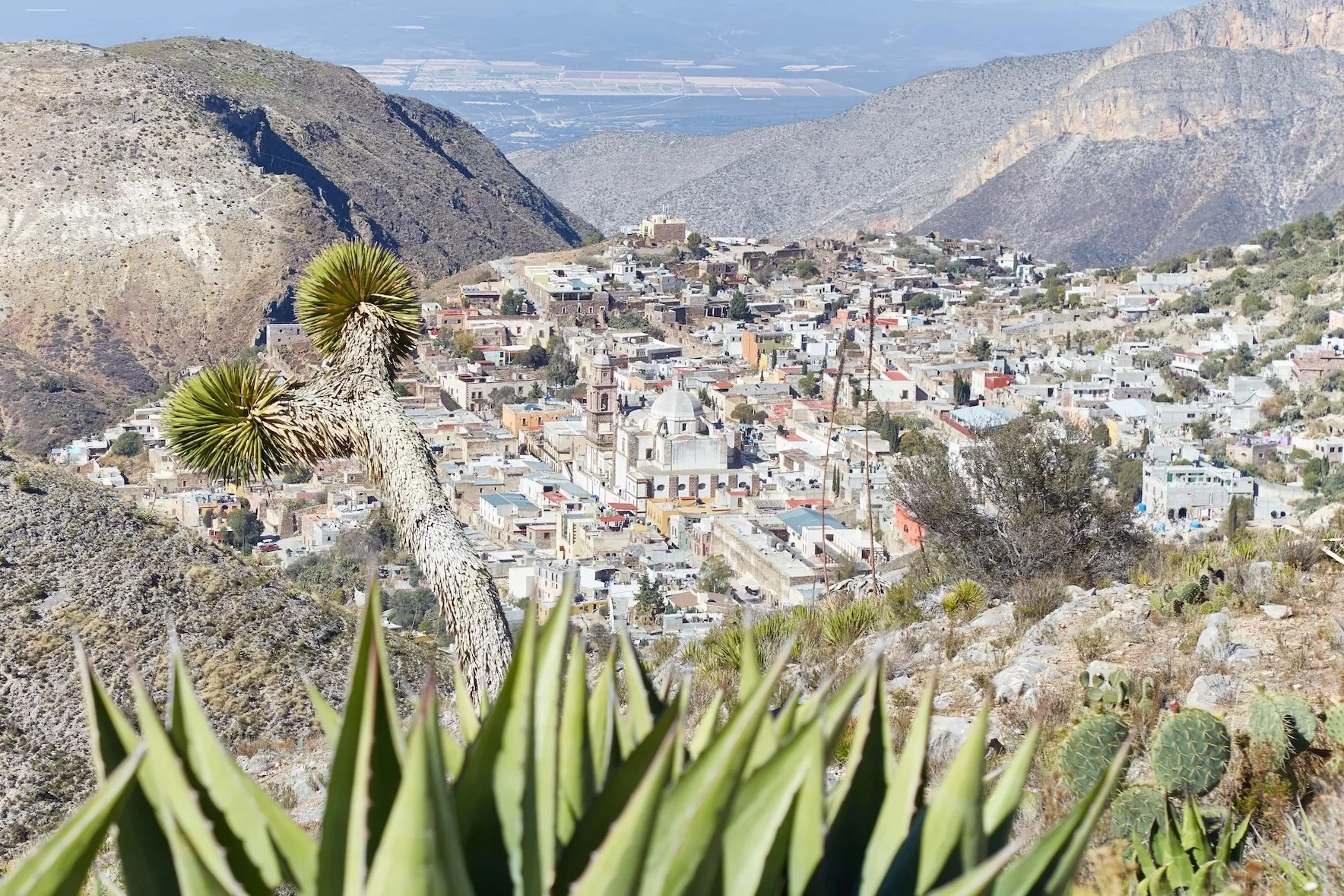
The Reserva Estatal Sagrado Natural de Wirikuta in San Luis Potosí (140,212 hectares, established 2000-2001 across the municipalities of Catorce, Charcas, Matehuala, Vanegas, Villa de Guadalupe, Villa de la Paz, and Villa de Ramos) protects the core peyote habitat zone for the Wixárika pilgrimage. UNESCO recognizes Wirikuta as one of fourteen sacred natural sites of the world. Mining concessions cover approximately 70% of the reserve area; the Wixárika legal team has led a thirteen-year battle since 2010 to nullify them. As of 2024 mining is suspended under amparo without a definitive resolution. For the deeper botany and conservation context, see our peyote botany and conservation deep-dive.
Why is Canada the most peyote-permissive country?
Canada has the most permissive peyote regime of any country. Schedule III, Item 17 of the Controlled Drugs and Substances Act, S.C. 1996, c. 19, schedules “Mescaline (3,4,5-trimethoxybenzeneethanamine) and any salt thereof, but not peyote (lophophora).” The clause “but not peyote (lophophora)” is the load-bearing exemption. The live Lophophora cactus, the seeds, the dried buttons, and any unprocessed plant material containing naturally occurring mescaline are not controlled. This is the inverse of the United States federal regime, which schedules peyote by name and exempts only NAC ceremonial use.
The legal status is uniform across all ten provinces and three territories; no province has imposed additional peyote-specific restriction beyond the federal CDSA. Plant possession, cultivation, sale, and import are all legal nationwide. Seeds are part of the exempted plant material. Isolated mescaline remains a Schedule III controlled substance: extraction or purification crosses from legal plant material into illegal controlled-substance possession. Canadian commentators treat simple ceremonial preparation (chopping, drying, brewing) as remaining within the exempt plant category, while purified or concentrated alkaloid preparations are not.
The Native American Church of Canada was founded at Red Pheasant First Nation, Saskatchewan, in 1954 (Cree, Assiniboine, Ojibwa, and Blood members) and incorporated under the Saskatchewan Benevolent Societies Act the same year. It was renamed Native American Church of North America in 1955 to allow reciprocal participation between Canadian and US peyotists. The church is active primarily in Saskatchewan, Alberta, and Manitoba. No federal Canadian statute specifically codifies the church’s status; protection flows from the CDSA Schedule III plant exemption that makes peyote legal for all Canadians.
Where in South America is peyote legal?
Peyote is non-native to South America. The legal question is cultivation, possession, and trade of imported plants. Two countries name the plant explicitly. Brazil places Lophophora williamsii Coult. on Lista E (Plantas Proscritas) of Portaria SVS/MS 344/1998, with mescaline on Lista F2 and Lei 11.343/2006 as the governing drug statute. Chile names “Cacto Peyote” in Article 5 of Decreto Supremo 867/2008 implementing Ley 20.000. The other South American jurisdictions schedule mescaline as the alkaloid without naming the plant.
Peru deserves a careful note. The Resolución Viceministerial 000252-2022-VMPCIC/MC declared traditional medicinal use of San Pedro (Echinopsis pachanoi) and Wachuma in northern Peruvian curanderismo Cultural Heritage of the Nation (Piura, Lambayeque, La Libertad, Tumbes, and parts of Cajamarca). That cultural-heritage protection is San Pedro-specific and does not extend to imported Lophophora. Peyote in Peru is regulated only through general controlled-substances law covering mescaline; the plant is not separately scheduled. For the parallel legal analysis on the other mescaline-bearing cactus, see Is It Legal to Own San Pedro? A State-by-State Guide.
| Country | Status and operative statute | Citation |
|---|---|---|
| Peru | Peyote (non-native) is not separately scheduled. The mescaline-bearing native cactus San Pedro (Echinopsis pachanoi) was declared Cultural Heritage of the Nation by Resolución Viceministerial 000252-2022-VMPCIC/MC, but that protection is San Pedro-specific and does not extend to imported Lophophora. | Resolución Viceministerial 000252-2022-VMPCIC/MC (San Pedro only) |
| Bolivia | Mescaline is criminalized under Ley 1008 (1988); the 2009 Constitution protects ancestral plant medicine but does not specifically extend to non-native peyote. | Ley 1008 (1988) |
| Brazil | Peyote is illegal as a plant; Lophophora williamsii Coult. is named explicitly in Lista E (Plantas Proscritas) of Portaria SVS/MS 344/1998, with mescaline in Lista F2 and Lei 11.343/2006 as the governing drug statute. | Portaria SVS/MS 344/1998 Lista E; Lei 11.343/2006 |
| Chile | Peyote is illegal; “Cacto Peyote” is named explicitly in Article 5 of Decreto Supremo 867/2008 (the regulation implementing Ley 20.000), and mescaline is a controlled psychotropic. | Decreto Supremo 867/2008 Art. 5; Ley 20.000 |
| Argentina | Mescaline is listed as a controlled estupefaciente in Anexo I of Decreto 560/2019 implementing Ley 23.737 (1989); the peyote plant is not separately named by binomial. | Ley 23.737; Decreto 560/2019 |
| Ecuador | Mescaline is a fiscalised substance under Article 220 COIP (2014); the live peyote plant is not separately scheduled but cultivation for trafficking is prosecutable. | Article 220 COIP (2014) |
| Colombia | Mescaline is controlled under Ley 30 de 1986 (Estatuto Nacional de Estupefacientes); peyote is not separately named in the schedule. | Ley 30 de 1986 |
How do European countries treat peyote?
Europe splits sharply by country. Four European jurisdictions name the plant explicitly in statute: France (Annexe IV of the Arrêté du 22 février 1990, plant entry added 18 août 2004), Italy (Tabella I of DPR 309/1990), Switzerland (Verzeichnis d of the BetmVV-EDI, prohibited since 1 January 2002), and Russia (Government Decree No. 934 of 27 November 2010, with mescaline in List I of Government Decree No. 681 of 30 June 1998). In these four, possession of the live cactus is a criminal offense.
The Czech Republic, Netherlands, and Sweden are the three European jurisdictions where personal cultivation of the live plant is affirmatively legal. The Czech Republic decriminalizes cultivation and possession of up to five peyote plants for personal use under Government Regulation No. 467/2009 Coll. The Netherlands smart-shop regime sells live cacti openly under the Opium Act with mescaline (the alkaloid) on List I. Sweden permits live plant possession and cultivation; only extraction and the alkaloid are criminalized under the Narkotikastrafflagen (1968:64).
The remaining European jurisdictions follow the global default: mescaline is scheduled under domestic law implementing the 1971 UN Convention on Psychotropic Substances, but the plant itself is not named. This includes the United Kingdom (live plant and seeds legal; mescaline Class A under the Misuse of Drugs Act 1971; any preparation is Class A), Ireland, Germany (live plant legal; mescaline Anlage I under BtMG), Spain (private cultivation tolerated), Portugal (personal possession decriminalized under Lei 30/2000), and the Nordic, Baltic, and Balkan jurisdictions. The plant-versus-alkaloid split is the European default; France, Italy, Switzerland, and Russia are the named-plant outliers.
| Country | Status and operative statute | Citation |
|---|---|---|
| United Kingdom | The live peyote plant and seeds are legal to possess; mescaline is Class A under the Misuse of Drugs Act 1971; any preparation of the cactus for consumption (drying, cutting buttons, brewing) is treated as Class A. | Misuse of Drugs Act 1971 |
| Ireland | The live peyote plant is legal; mescaline is scheduled under the Misuse of Drugs Act 1977; the legislature has not extended scheduling to the parent cactus. | Misuse of Drugs Act 1977 |
| Germany | The live peyote plant is legal as ornamental; mescaline (Meskalin) is in Anlage I of the Betäubungsmittelgesetz (BtMG); preparation for ingestion or extraction is illegal. | Betäubungsmittelgesetz (BtMG) Anlage I |
| France | Peyote is illegal as a plant. Annexe IV of the Arrêté du 22 février 1990 names “Peyotl ou peyote” (the plant entry was added by the Arrêté du 18 août 2004), and mescaline is separately scheduled. | Arrêté du 22 février 1990 Annexe IV (plant added 18 août 2004) |
| Italy | Peyote is illegal; Lophophora williamsii is named in Tabella I of DPR 309/1990 alongside mescaline; possession or sale of the live plant carries criminal penalties. | DPR 309/1990 Tabella I |
| Spain | Peyote is not on the controlled-plant list; mescaline is controlled under Real Decreto 1675/2012 implementing the 1971 Convention; private cultivation and possession of the live cactus is tolerated. | Real Decreto 1675/2012 |
| Portugal | Mescaline is controlled but personal possession of any drug for personal use is decriminalized under Lei 30/2000 (the 2001 framework); the live cactus is not specifically named in the schedule. | Lei 30/2000 |
| Netherlands | The live peyote plant is legal under the Opium Act (Opiumwet); mescaline (the extracted alkaloid) is on List I; the smart-shop regime sells live cacti openly. | Opiumwet (Opium Act) |
| Switzerland | Peyote is illegal; Lophophora williamsii is named on the Verzeichnis d (prohibited substances) of the Betäubungsmittelverzeichnisverordnung (BetmVV-EDI), prohibited since 1 January 2002. | BetmVV-EDI Verzeichnis d (since 1 January 2002) |
| Sweden | The live peyote plant is legal to possess and cultivate; mescaline is illegal as a narcotic under the Narkotikastrafflagen (1968:64); extraction is criminalized. | Narkotikastrafflagen (1968:64) |
| Czech Republic | Cultivation and possession of up to 5 peyote plants is decriminalized for personal use under Government Regulation No. 467/2009 Coll.; mescaline is scheduled under Act No. 167/1998 Coll. | Government Regulation No. 467/2009 Coll.; Act No. 167/1998 Coll. |
| Russia | Peyote is illegal as a plant; Lophophora williamsii is explicitly named in the List of Plants Containing Narcotic Substances under Government Decree No. 934 of 27 November 2010, and mescaline is in List I of Government Decree No. 681 of 30 June 1998. | Government Decree 934 (2010); Government Decree 681 (1998) |
Is peyote legal anywhere in Asia?
No Asian jurisdiction affirmatively legalizes peyote, but most follow the alkaloid-only scheduling pattern that leaves the live ornamental cactus in a tolerated grey zone. Japan is the clearest case: mescaline is a designated narcotic under the Narcotics and Psychotropics Control Act (Act No. 14 of 1953), but Lophophora williamsii is not named in the schedule, so the live cactus is routinely permitted as ornamental while extraction or consumption attracts narcotics liability. The same posture holds in China (State Council Decree No. 442, 2005), India (the NDPS Act 1985 schedules cannabis, opium poppy, and coca as named plants but not Lophophora), Israel, Saudi Arabia (severe Sharia-based penalties for the alkaloid), and South Korea.
Singapore is the Asian outlier. The Central Narcotics Bureau’s controlled-plants list under the Misuse of Drugs Act 1973 names Lophophora williamsii together with fifteen botanical synonyms (Anhalonium lewinii, Anhalonium williamsii, Ariocarpus williamsii, Echinocactus lewinii, Echinocactus williamsii, and others), making possession of the live cactus a Class A controlled-drug offense. Singapore’s drug regime carries the death penalty for trafficking; the explicit naming of Lophophora alongside its synonyms reflects an unusually thorough approach to closing the plant-versus-alkaloid loophole.
| Country | Status and operative statute | Citation |
|---|---|---|
| Japan | Mescaline is a designated narcotic under the Narcotics and Psychotropics Control Act (Act No. 14 of 1953); Lophophora williamsii is not named in the schedule, so the live cactus is routinely permitted as ornamental while extraction or consumption attracts narcotics liability. | Narcotics and Psychotropics Control Act (Act No. 14 of 1953) |
| China | Mescaline is listed in the Schedule of Psychotropic Drugs under State Council Decree No. 442 (2005); Lophophora williamsii is not named on the controlled-plants list, although Customs has discretion on imports of psychoactive plant material. | State Council Decree No. 442 (2005) |
| India | Mescaline is a psychotropic substance under the Schedule to the NDPS Act 1985; the Act does not name Lophophora as a prohibited plant (which it lists for cannabis, opium poppy, and coca only), so the cactus is not separately scheduled. | NDPS Act 1985 |
| Singapore | Peyote is illegal. Lophophora williamsii together with 15 named botanical synonyms is explicitly named as a controlled plant on the Central Narcotics Bureau list, making possession of the live cactus a Class A controlled-drug offense under the Misuse of Drugs Act 1973. | Misuse of Drugs Act 1973 First Schedule (CNB list) |
| Israel | Mescaline is in the First Schedule (Part A) of the Dangerous Drugs Ordinance [New Version], 5733-1973; Lophophora is not named, and live ornamental cacti are not separately scheduled. | Dangerous Drugs Ordinance [New Version], 5733-1973 |
| Saudi Arabia | Mescaline is a controlled psychotropic substance under the 2005 Law of Combating Narcotics and its 2010 Implementing Regulations; the plant is not named, but possession of any psychoactive substance carries severe Sharia-based penalties up to death for trafficking. | Law of Combating Narcotics (2005) |
| South Korea | Mescaline is a psychotropic substance under the Narcotics Control Act (2000); Lophophora is not on the prohibited-plants list, but extraction and consumption are criminal. | Narcotics Control Act (2000) |
Where does African drug law place peyote?
Across Africa, mescaline is scheduled under each country’s narcotic-drugs law implementing the 1971 UN Convention. The plant itself is not named in any African jurisdiction surveyed for this article. South Africa is the most-discussed cell: mescaline is in Schedule 2 of the Drugs and Drug Trafficking Act 140 of 1992 as an undesirable dependence-producing substance, but the live Lophophora williamsii cactus is not proscribed by name. South African commentators treat possession of the whole live plant as legal while sale of cut sections, extracts, or any preparation is criminal.
Egypt’s Law No. 182 of 1960 places mescaline in the strictest of four schedules, with the death penalty available for trafficking; the plant is not named, but possession of any psychoactive material is criminal. Morocco schedules mescaline under the Dahir of 21 May 1974 without naming the plant. Across Algeria, Tunisia, Libya, Nigeria, Kenya, Tanzania, Uganda, Ethiopia, Ghana, Senegal, Cameroon, Zimbabwe, Botswana, Namibia, and Zambia, the same pattern repeats: alkaloid scheduled under the national narcotics law, plant unnamed.
| Country | Status and operative statute | Citation |
|---|---|---|
| South Africa | Mescaline is in Schedule 2 of the Drugs and Drug Trafficking Act 140 of 1992 as an undesirable dependence-producing substance; the live Lophophora williamsii cactus is not proscribed by name, so possession of the whole plant is treated by commentators as legal while sale of cut sections, extracts, or any preparation is criminal. | Drugs and Drug Trafficking Act 140 of 1992 |
| Egypt | Mescaline is captured under Schedule 1 of Law No. 182 of 1960 on Combating Narcotic Drugs (as amended by Law 122/1989), the strictest of the four schedules; the plant is not named, and possession of any quantity is criminal with the death penalty available for trafficking. | Law No. 182 of 1960 Schedule 1 |
| Morocco | Mescaline is a controlled substance under the Dahir of 21 May 1974 on the regulation of narcotic drugs; the plant is not named. | Dahir of 21 May 1974 |
Is peyote legal in Australia and New Zealand?
New Zealand places peyote in the most restrictive category. The Misuse of Drugs Act 1975 names Lophophora williamsii AND Lophophora lewinii in Schedule 1 Part I as prohibited plants, making cultivation a criminal offense with up to seven years imprisonment, and mescaline is a Class A controlled drug under Schedule 1.
Australia splits along a federal-versus-state axis. The federal Therapeutic Goods Administration places mescaline in Schedule 9 (Prohibited Substance) of the Standard for the Uniform Scheduling of Medicines and Poisons (SUSMP). Enforcement of the live plant is delegated to the states: Western Australia (Misuse of Drugs Act 1981), Queensland (Drugs Misuse Regulation 1987 Schedule 1), and the Northern Territory (Misuse of Drugs Act 1990) all schedule Lophophora williamsii by name as a prohibited plant. New South Wales, Victoria, South Australia, Tasmania, and the Australian Capital Territory do not name the plant in their drug schedules; the live cactus exists in a possess-as-ornamental grey zone in those five jurisdictions while the alkaloid remains illegal across all of Australia.
| Country | Status and operative statute | Citation |
|---|---|---|
| Australia | Mescaline is a Schedule 9 (Prohibited Substance) under the federal Standard for the Uniform Scheduling of Medicines and Poisons (SUSMP); enforcement of the live plant is delegated to the states, and Western Australia, Queensland, and the Northern Territory schedule Lophophora williamsii by name as a prohibited plant. NSW, Victoria, South Australia, Tasmania, and ACT do not name the plant. | SUSMP Schedule 9; state Misuse of Drugs Acts (WA/QLD/NT name plant; NSW/VIC/SA/TAS/ACT do not) |
| New Zealand | Peyote is illegal as a plant. Mescaline is a Class A controlled drug under Schedule 1 of the Misuse of Drugs Act 1975, and Lophophora williamsii (and Lophophora lewinii) is named as a prohibited plant in Schedule 1 Part I, making cultivation a criminal offense with up to seven years imprisonment. | Misuse of Drugs Act 1975 Schedule 1 Part I |
Where is peyote affirmatively legal in 2026?
Four countries permit personal cultivation of the live peyote plant outright. Canada is the cleanest case: the Controlled Drugs and Substances Act, Schedule III, Item 17, explicitly carves the plant out of mescaline scheduling. The Netherlands permits open sale of live cacti under the smart-shop regime; the alkaloid is on List I but the plant is not. Sweden permits possession and cultivation; only extraction is criminalized. The Czech Republic decriminalizes cultivation and possession of up to five peyote plants for personal use under Government Regulation No. 467/2009 Coll.
Beyond those four, several jurisdictions permit ornamental possession by statutory silence rather than affirmative carve-out: the United Kingdom, Ireland, Germany, Spain, Portugal, Japan, South Africa, and several US states where the plant is captured only by mescaline-content reach rather than named. In all such cases the line everywhere is intent demonstrated by act. Drying, blending, boiling, powdering, or possessing extraction equipment alongside cactus material flips the conduct into controlled-substance territory under the alkaloid regime.
The decriminalization landscape is moving. Colorado’s Natural Medicine Health Act (Proposition 122, 2022; SB23-290, 2023) decriminalized non-peyote-derived mescaline for adults 21 and older but explicitly EXCLUDED Lophophora williamsii from the “natural medicine” definition at the request of the National Council of Native American Churches and the Indigenous Peyote Conservation Initiative. Most post-2021 municipal Decriminalize Nature resolutions follow the same NCNAC and IPCI template that excludes peyote on conservation and cultural-respect grounds; Detroit Proposal E (2021), Berkeley (2023), Seattle (2021), Portland, Maine (2023), and the Massachusetts municipal cluster all exclude peyote by name. Salem, Massachusetts’s 2023 resolution is sometimes lumped in with that cluster, but its text covers psilocybin-containing fungi only and never mentions peyote at all. Oakland (2019) and Washington DC Initiative 81 (2020) are the inclusive exceptions.
What about religious-use exemptions worldwide?
The Native American Church federal exemption at 21 CFR § 1307.31 is the largest legal religious-use carve-out for peyote in the world, with the AIRFA Amendments of 1994 (42 USC § 1996a) providing the parallel statutory backstop. NAC membership in the United States is estimated at roughly 250,000 to 400,000 across the constituent state churches. Thirteen US states layer additional state-level carve-outs on top of the federal regime, ranging from Texas’s NAC-plus-25%-Native-descent requirement to Arizona’s any-sincere-religious-belief defense and Nevada’s any-bona-fide-religious-organization protection.
Mexico’s constitutional protection for Wixárika (Huichol) and Tarahumara ceremonial use operates through Article 2 of the constitution and federal indigenous-rights doctrine rather than through a written controlled-substances exemption. The Procuraduría General’s settled position is that ceremonial use as part of customary use (usos y costumbres) is not prosecuted, even though the underlying Ley General de Salud Group I scheduling remains in effect. The Wirikuta Sacred Natural Site Reserve in San Luis Potosí protects the pilgrimage habitat zone.
The Brazilian ayahuasca regulatory model under CONAD Resolution 1/2010 (which recognizes Santo Daime and União do Vegetal ceremonial use) is DMT-specific and does NOT extend to mescaline or peyote. The United States Supreme Court’s decision in Gonzales v. O Centro Espírita Beneficente União do Vegetal, 546 U.S. 418 (2006), is a Religious Freedom Restoration Act case about ayahuasca and dimethyltryptamine, not mescaline or peyote. No reported federal case has applied an RFRA defense successfully to a non-NAC peyote prosecution. The Peruvian cultural-heritage protection for San Pedro is Echinopsis pachanoi-specific and does not extend to imported Lophophora. The peyote religious-use story is, with the narrow Mexican exception, a North American story.
Where do psychedelic decriminalization laws leave peyote?
Nearly every jurisdiction that has decriminalized natural psychedelics since 2021 excludes peyote by name, at the documented request of Native American Church leadership. The National Council of Native American Churches and the Indigenous Peyote Conservation Initiative asked, in an open letter to the psychedelic reform movement, that “Peyote not be decriminalized,” citing an existing Native-led conservation strategy already underway, the risk of disrupting the American Indian Religious Freedom Act protections already won, and peyote’s distinct cultural and religious status. Every carve-out below traces to that same request.
| Date | Jurisdiction | Peyote’s treatment |
|---|---|---|
| 2019 | Oakland, CA | The founding Decriminalize Nature resolution covers entheogenic plants broadly; peyote is included, not yet excluded. This is the pre-2021 baseline every later carve-out reacts against. |
| 2021 | Seattle, WA | City Council Resolution 32021 excludes peyote by name, citing its vulnerable ecological status and the collapse of south Texas peyote gardens. |
| 2021 | Detroit, MI | Proposal E excludes Lophophora williamsii conditionally, “until such time as peyote is no longer considered endangered by the Native American Church,” a standard tied to NAC’s own future determination rather than a fixed date. |
| 2021 | Santa Cruz, CA | Amends its January 2020 resolution to remove peyote and other mescaline-containing cacti, with a public apology from the sponsoring councilmember for the original inclusion. |
| 2022 to 2023 | Colorado (statewide) | Proposition 122, codified by SB23-290, defines mescaline to exclude peyote by binomial name. Not an NAC-named clause in the statute itself, but paired with a legislative declaration protecting tribal interests and a working group studying peyote conservation. |
| 2023 | Berkeley, CA | Excludes peyote “due to sustainability and poaching concerns raised by the National Council of Native American Churches and the Indigenous Peyote Conservation Initiative.” |
| 2023 | Portland, ME | Resolve 2-23/24 excludes peyote “in light of its vulnerable ecological status, combined with its religious and cultural significance to Indigenous peoples.” |
| 2024 | Massachusetts (statewide) | Question 4 would have excluded peyote from its natural psychedelic substance definition, using near-identical language to Colorado’s statute, but voters rejected the measure, 56.8 percent no to 43.2 percent yes. |
Not every city list agrees on who belongs on it. Salem, Massachusetts’s 2023 lowest-priority resolution is sometimes grouped with the Massachusetts peyote carve-outs; its actual text covers psilocybin-containing fungi only and never mentions peyote at all, so it belongs out of scope rather than on the exclusion list. At rarecactus.com we grow every Lophophora specimen we sell from seed and never from wild-collected stock, the same conservation logic the National Council of Native American Churches and the Indigenous Peyote Conservation Initiative cite in every carve-out above.
Frequently Asked Questions
Is peyote legal in the United States?
No. Peyote (Lophophora williamsii) is federally Schedule I under 21 CFR § 1308.11(d)(26), which schedules the plant by binomial: the live cactus, the seeds, and any extract are all controlled. Mescaline is separately Schedule I at 21 CFR § 1308.11(d)(24). The Native American Church religious-use exemption at 21 CFR § 1307.31, reinforced by 42 USC § 1996a (AIRFA Amendments of 1994), is the only federal carve-out.
Which countries permit growing peyote at home?
Four countries affirmatively permit personal cultivation of the live plant. Canada explicitly exempts “peyote (lophophora)” from Schedule III of the Controlled Drugs and Substances Act. The Czech Republic decriminalizes cultivation of up to five plants for personal use under Government Regulation No. 467/2009 Coll. The Netherlands smart-shop regime sells live cacti openly under the Opium Act. Sweden permits possession and cultivation while criminalizing extraction. Several other jurisdictions permit ornamental possession by statutory silence rather than affirmative carve-out.
Can non-Native Americans legally use peyote in the United States?
Yes, in some circumstances. United States v. Boyll, 774 F. Supp. 1333 (D.N.M. 1991) holds that the federal NAC exemption at 21 CFR § 1307.31 is not race-restricted; non-Indian NAC members are protected. State v. Mooney, 2004 UT 49, 98 P.3d 420 confirmed the same posture in Utah state court. Texas is the strictest US state: Tex. H&SC § 481.111(a) requires both NAC membership and at least 25% Native American descent. The 13 states with broader religious-use carve-outs (notably Arizona, Nevada, New Mexico, and Colorado) extend protection beyond NAC membership to other bona-fide religious organizations or to any sincere religious belief.
Is peyote on CITES Appendix I or Appendix II?
Appendix II, via the family-level Cactaceae listing in force since 1 July 1975. Not Appendix I. The current CITES annotation reads: “Cactaceae spp. (Except the species included in Appendix I and except Pereskia spp., Pereskiopsis spp. and Quiabentia spp.).” The Cactaceae family Appendix II listing covers Lophophora williamsii by default. The Appendix I myth is widespread and worth correcting at the top.
How does Mexico treat peyote legally?
Plant possession is technically illegal under Ley General de Salud Article 245 (Group I psychotropic), but ceremonial use by Wixárika (Huichol) and Tarahumara peoples is constitutionally protected under Article 2 of the Mexican Constitution and the federal indigenous-rights framework. Federal authorities do not prosecute ceremonial use as part of customary use (usos y costumbres). The Wirikuta Sacred Natural Site Reserve in San Luis Potosí (140,212 hectares, established 2000-2001) protects the pilgrimage habitat. Mining concessions cover roughly 70% of the reserve and are currently under amparo while a thirteen-year legal challenge by Wixárika legal teams continues.
Why is the peyote plant illegal but San Pedro is legal in the United States?
Because the federal regulation schedules each cactus differently. 21 CFR § 1308.11(d)(26) names Lophophora williamsii by binomial as a Schedule I plant. No federal regulation names Trichocereus, Echinopsis, or any other mescaline-bearing cactus by binomial. San Pedro (Echinopsis pachanoi) is generally legal to own as an ornamental in all 50 US states because the plant is not scheduled, even though mescaline (the alkaloid) is Schedule I. Peyote possession is criminal because the plant body is itself named in the schedule. The legal divergence is structural; both cacti contain mescaline, but only one is named by binomial in federal law.
21 USC § 812 (Schedules of controlled substances) · 21 CFR § 1308.11(d)(24) (mescaline) and (d)(26) (peyote, Lophophora williamsii) · 21 CFR § 1307.31 (Native American Church peyote exemption) · 42 USC § 1996a (American Indian Religious Freedom Act Amendments of 1994, Pub. L. 103-344) · DEA Drug Fact Sheet, Peyote and Mescaline · Employment Division v. Smith, 494 U.S. 872 (1990) · United States v. Boyll, 774 F. Supp. 1333 (D.N.M. 1991) · People v. Woody, 61 Cal. 2d 716 (1964) · State v. Mooney, 2004 UT 49, 98 P.3d 420 · Gonzales v. O Centro Espírita Beneficente União do Vegetal, 546 U.S. 418 (2006) · Texas Health and Safety Code §§ 481.103, 481.104, 481.111 · Idaho Code § 37-2732A · Nevada Revised Statutes § 453.541 · New Mexico Statutes Annotated § 30-31-6 · California Health and Safety Code §§ 11054, 11363 · Wisconsin Statutes § 961.115 · Colorado Revised Statutes § 18-18-204(2)(d); Proposition 122 (2022); SB23-290 (2023) · Oregon HB 4002 (2024) · DC Law 23-268 (Initiative 81, 2020) · Erowid Peyote Vault, Legal Status · Cactus Conservation Institute, Lophophora research · Indigenous Peyote Conservation Initiative · National Council of Native American Churches · Mexico, Constitución Política de los Estados Unidos Mexicanos, Art. 2 · Mexico, Ley General de Salud Arts. 234, 245, 478, 479 · NOM-059-SEMARNAT-2010 and PROY-NOM-059-SEMARNAT-2025 · Reserva Estatal Sagrado Natural de Wirikuta · Canada, Controlled Drugs and Substances Act, S.C. 1996, c. 19, Schedule III, Item 17 · Native American Church of Canada (incorporated under Saskatchewan Benevolent Societies Act, 1954) · United Kingdom, Misuse of Drugs Act 1971 · France, Arrêté du 22 février 1990 (plant entry added 18 août 2004) · Italy, DPR 309/1990 Tabella I · Germany, Betäubungsmittelgesetz Anlage I · Netherlands, Opiumwet · Switzerland, Betäubungsmittelverzeichnisverordnung (BetmVV-EDI) Verzeichnis d · Czech Republic, Government Regulation No. 467/2009 Coll. · Sweden, Narkotikastrafflagen (1968:64) · Russia, Government Decree No. 681 (1998) and No. 934 (2010) · Brazil, Portaria SVS/MS 344/1998 Lista E (Lophophora williamsii Coult.); Lei 11.343/2006 · Chile, Decreto Supremo 867/2008 (“Cacto Peyote”); Ley 20.000 · Peru, Resolución Viceministerial 000252-2022-VMPCIC/MC (San Pedro Cultural Heritage) · Argentina, Ley 23.737; Decreto 560/2019 · Japan, Narcotics and Psychotropics Control Act (Act No. 14 of 1953) · China, State Council Decree No. 442 (2005) · India, Narcotic Drugs and Psychotropic Substances Act 1985 · Singapore, Misuse of Drugs Act 1973 (CNB controlled-plants list) · South Africa, Drugs and Drug Trafficking Act 140 of 1992 · Australia, Standard for the Uniform Scheduling of Medicines and Poisons (SUSMP) Schedule 9; state Misuse of Drugs Acts (WA 1981; QLD Drugs Misuse Regulation 1987; NT 1990) · New Zealand, Misuse of Drugs Act 1975 Schedule 1 Part I · UN 1971 Convention on Psychotropic Substances; INCB commentary · CITES Appendices, Cactaceae family Appendix II listing (in force since 1 July 1975) · IUCN Red List, Lophophora williamsii assessment 2017 (Vulnerable) · Plants of the World Online, Royal Botanic Gardens Kew