
Cactus Pests: How to Identify and Treat Mealybugs, Spider Mites, and Scale
All ArticlesCactus pests fall into four kinds: mealybugs, white cottony insects in the areoles; spider mites, which rust-scar the apex under fine webbing; scale, immobile waxy bumps on the stem; and the hidden root mealybug, which kills on the roots unseen. Each has a distinct look and a distinct treatment.
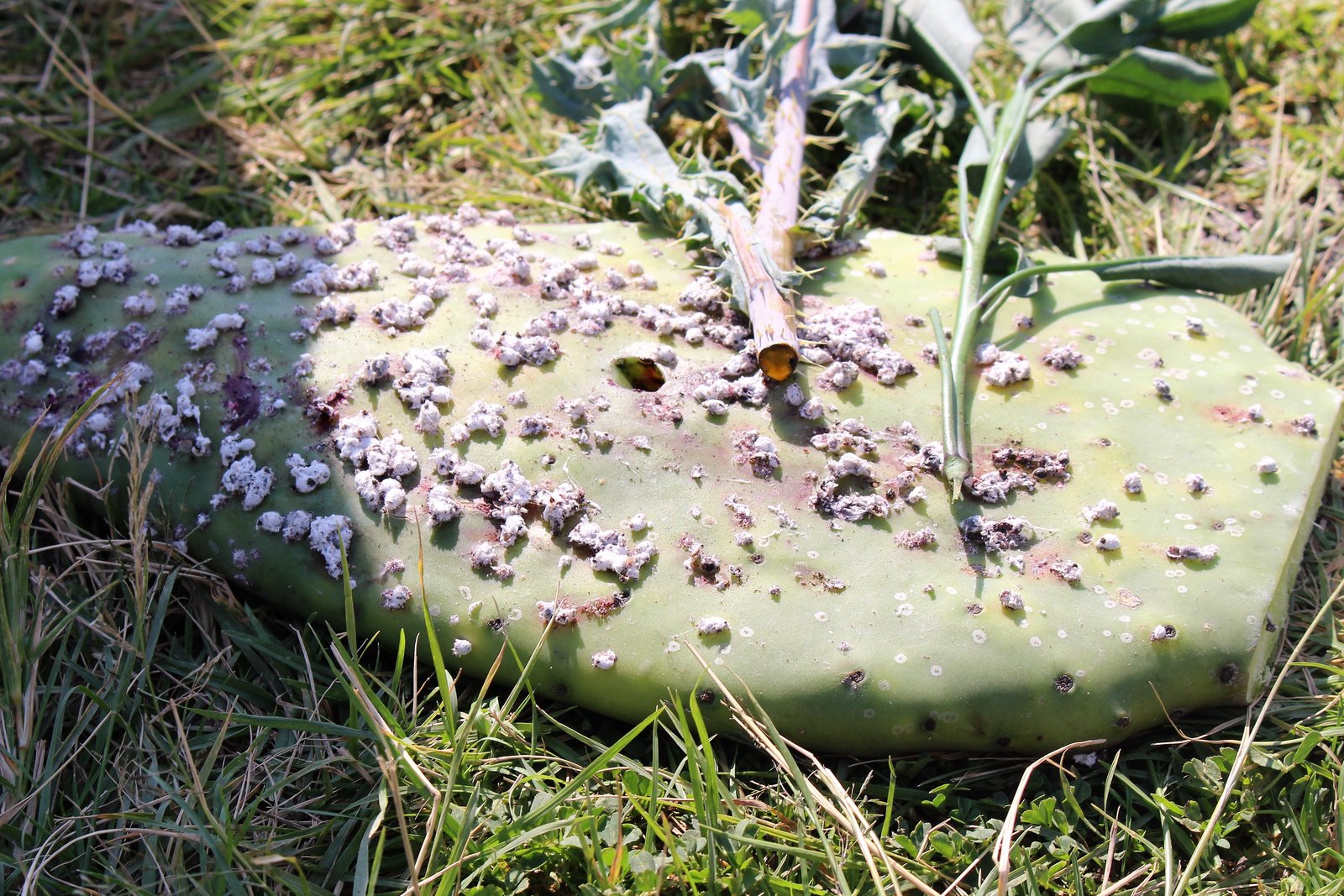
What is the white stuff on my cactus?
On most cacti, mealybugs. These are soft, oval, few-millimetre insects under a coat of white cottony wax, and they cluster in the sheltered spots of a cactus, the areoles, the axils, and the grooves between ribs, where they first show as fluffy white specks. They feed on sap and excrete sticky honeydew, which goes on to grow a black sooty mould that does not infect the plant but dims its surface. A single female lays up to six hundred eggs in a cottony sac, so a few specks become an infestation in weeks.
That waxy coat and the cottony egg sac are what make mealybugs stubborn: they shrug off a single contact spray, so treatment means repeating every ten to fourteen days until the crawlers stop appearing. One caution before reaching for a treatment: not all white fuzz is a pest. The natural farina and wool of many cacti are normal; the test is whether it moves, smears greasy, or leaves sticky honeydew, which mealybugs do and bloom does not. The dense-wool Mammillaria are the ones where pests hide most easily in plain sight. For the crawler stage, the honeydew tells, and a full quarantine protocol, see our guide to the early signs of mealybugs.
One group breaks the mealybug rule. On Opuntia and the other prickly pears, white cottony tufts sitting flat on the pads are usually not mealybugs but cochineal scale, Dactylopius, a scale insect that hides beneath its own dense wool. The fastest test in the field is to crush one: cochineal smears deep carmine red, the pigment once farmed for dye, while a mealybug smears greasy and pale. It is the most common cactus pest across much of California and the desert Southwest, and a heavy colony can yellow, weaken, and eventually kill a pad. Knock the colonies off with a hard jet of water first, then treat the survivors with insecticidal soap or horticultural oil the same way you would any scale. Garden writer Debra Lee Baldwin demonstrates the wash-off method on prickly pear step by step.
What are root mealybugs, and how do you treat them?
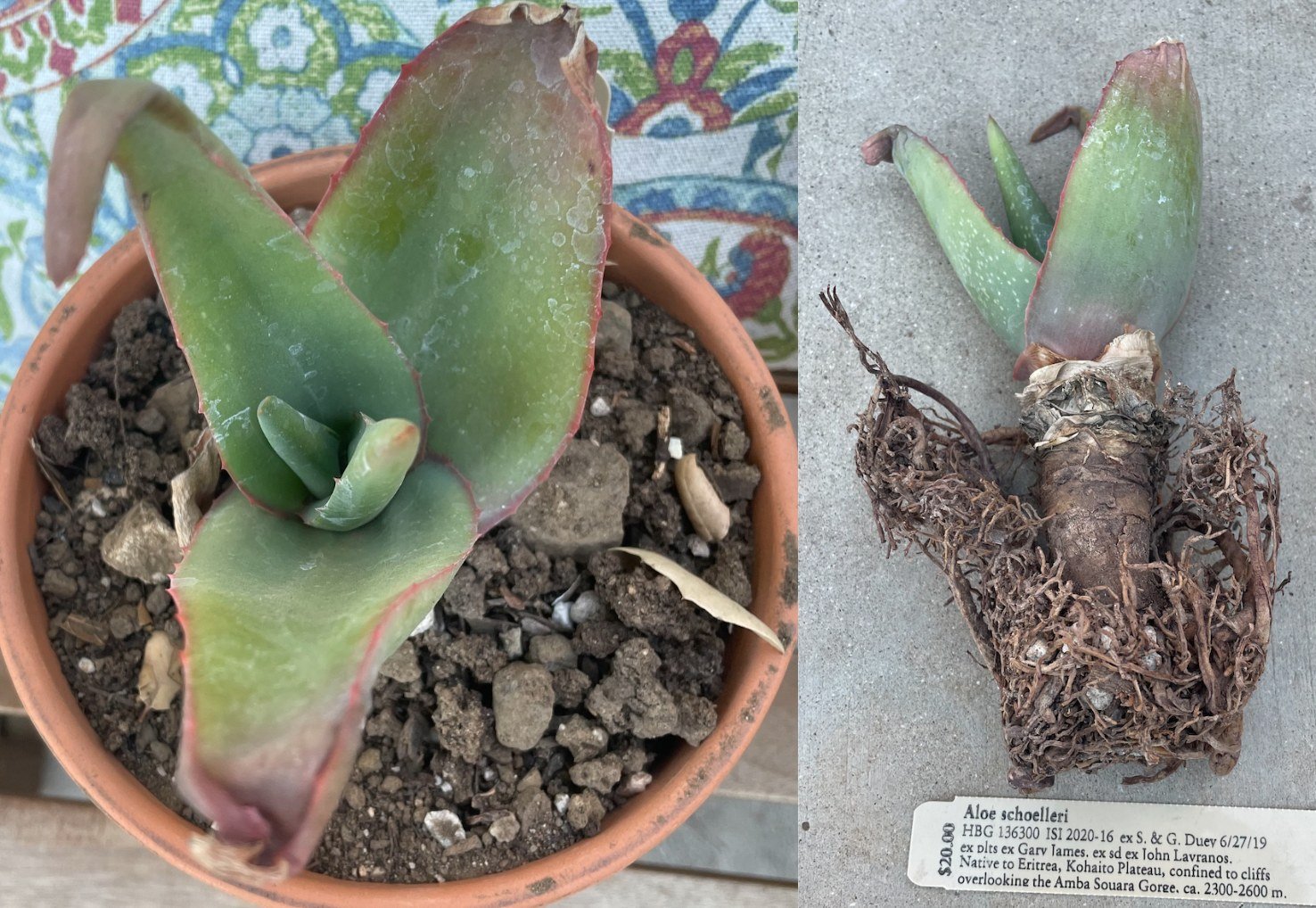
Root mealybugs are the hidden killer that generic guides skip. They live below the soil on the roots and root collar, where nothing on the stem gives them away, and they show as a white powdery or cottony wax across the rootball and the inner wall of the pot, sometimes with a bluish tint to the mix. The plant just stalls: growth slows, the body pales or yellows, it refuses to flower, and it declines for no reason you can see from above. They also raise the plant’s susceptibility to rot, and their crawlers leave through the drainage holes to infest the pots around them.
The collector species most exposed are the slow geophytes, the Ariocarpus and Turbinicarpus whose large taproots sit undisturbed in mineral mix for years, because a colony can build unseen and the resulting sulk reads as ordinary dormancy. The only reliable way to find them is to unpot and inspect the roots, which is reason enough to check a stalled geophyte rather than wait. Treatment is either a systemic soil drench or, the cleaner route for a small collection, a bare-root wash and repot.
What causes rusty scarring near the top of my cactus?
Spider mites cause rusty scarring near the top of a cactus. These are not insects but tiny eight-legged arachnids, almost too small to see, that pierce the cells of the tenderest growth and drain them, so the damage concentrates at the apex, the newest tissue at the top. It shows first as pale stippling, then as a rusty, greyish-brown scarring, often under a faint silk webbing that is the surest tell. They thrive in hot, dry, still air, and in those conditions a generation completes in under a week, so an infestation explodes fast.
The scarring matters because of where it sits. Mite feeding kills the surface cells, and on a slow-growing cactus that scar does not heal; it only grows out over years as new tissue forms below it. Specialist growers report Rebutia, Lobivia, and Coryphantha as the genera hit most often, and on woolly species the wool hides the early webbing in plain sight. Moving air and higher humidity suppress mites, since they need the opposite, so airflow and a strong water spray are the first line, with neem or a miticide for an established outbreak. It is one more brown that the browning guide helps tell apart from rot and sunburn. For the full early-detection and treatment plan, including the paper tap test that confirms mites before the first scar forms, see our guide to the early signs of spider mites.
How do you tell scale from mealybugs?
Scale sits still; mealybugs crawl. Scale insects look like immobile brown, tan, or waxy bumps stuck fast to the stem and ribs, with no obvious head or legs, and they resist being flicked off. They come in two kinds that matter for treatment. Armored scale wears a hard, separate shell, produces no honeydew, and is the harder to kill because the shell repels water-based sprays. Soft scale is larger and rounder, its cover fused to its body, and like mealybugs it weeps honeydew that grows sooty mould. Both spend their one mobile stage as tiny crawlers, which is the window when sprays land.
Two lesser pests round out the picture. Fungus gnats, small dark flies drifting up from the soil, are mostly a symptom rather than a threat: their larvae need constant moisture and decaying organic matter, so they signal a mix that is too wet and too organic, and a sharp mineral mix kept dry between waterings starves them out. And thrips and root-knot nematodes turn up occasionally, the latter producing galled roots that mimic the stalled decline of root mealybugs, which is one more reason to inspect roots when a plant fails for no visible cause, as the diagnostic guide advises.
How do you treat and prevent cactus pests safely?
Match the treatment to the pest, and to the plant. A cotton swab of seventy-percent isopropyl alcohol, or a dilute one-to-three spray, dissolves the wax on mealybugs and scale and kills on contact, but it can bleach or scar the soft, spineless skin of an Astrophytum or Ariocarpus, so test a small area first and keep it out of direct sun. Insecticidal soap and neem oil work the same contact way and need repeating every week or so, with the same spot-test caution. Horticultural oil smothers scale, including the armored kind that other sprays miss, timed to crawler emergence.
Systemic insecticides, absorbed into the sap, are the tool for root mealybugs by soil drench and for soft scale, but they do not touch armored scale, and the common one, imidacloprid, is highly toxic to bees and moves into pollen and nectar, so never apply it to a flowering plant and follow the label. For spider mites, raising humidity and airflow does much of the work, and biocontrol fits a dry collection better than its reputation suggests: the classic predator Phytoseiulus persimilis does need humid air, but Neoseiulus californicus and Galendromus occidentalis keep hunting in the hot, dry air of a cactus bench. Prevention is cheaper than any of it: quarantine and inspect every new plant before it joins the collection, keep air moving, water dense-wool species at the base rather than over the crown, grow in a mineral mix that denies fungus gnats a home, and unpot the slow geophytes now and then to catch root mealybugs early. The same dry-and-wait care that the repotting guide describes keeps a treated plant from rotting on the rebound.
Frequently asked questions about cactus pests
What is the white fuzzy stuff on my cactus?
On most cacti it is mealybugs, soft insects under white cottony wax that gather in the areoles and stem joints and leave sticky honeydew. On prickly-pear pads it is more often cochineal scale, which sits flat and crushes deep red. Harmless natural farina, by contrast, is dry and fixed and leaves no sticky residue when rubbed.
How do you get rid of cochineal scale on prickly pear?
Cochineal scale is the white, woolly pest of Opuntia pads, a scale insect that crushes deep red. Blast the colonies off with a strong jet of water, then treat any survivors with insecticidal soap or horticultural oil, repeating every week or two until the pads stay clean. Cut off and bin any badly infested pads.
How do you get rid of mealybugs on a cactus?
Dab them with a seventy-percent alcohol swab or a dilute spray to dissolve their wax, or use insecticidal soap or neem, repeating every ten to fourteen days until no new ones appear. A strong water spray dislodges them mechanically. Test any spray on a small area first, since alcohol and soap can scar spineless species. See our early signs of mealybugs guide for the full plan.
How do I know if my cactus has root mealybugs?
There is no sign above the soil, so a stalled, pale, or yellowing plant with no visible top pest is the clue. Unpot it and look: white powdery or cottony wax on the roots and the inner pot wall, sometimes with a bluish tint to the mix, confirms root mealybugs. Slow geophytes like Ariocarpus are the most commonly affected.
Why does my cactus have rusty brown marks near the top?
That is usually spider mite scarring. The mites drain cells from the tenderest growth at the apex, leaving rusty, stippled marks under fine webbing. The scar does not heal; it grows out slowly over years as new tissue forms. Raise humidity and airflow, spray off the mites, and treat with neem or a miticide for a heavy outbreak. See our early signs of spider mites guide for the full plan.
How do you tell scale from mealybugs on a cactus?
Scale insects are immobile hard or waxy bumps stuck fast to the stem, with no visible legs, and they resist being dislodged. Mealybugs are soft, cottony, and crawl. Armored scale forms no honeydew and resists sprays; soft scale and mealybugs both leave sticky honeydew that grows sooty mould. The test is whether it moves.
Missouri Botanical Garden, “Insect pests of cacti and succulents” · University of California Statewide IPM Program, ground (root) mealybugs and scales · NC State Extension, root mealybugs and twospotted spider mites · University of Wisconsin-Madison and UMass Extension, mealybugs in greenhouses · Washington State University Hortsense, spider mites · Clemson Cooperative Extension, insecticidal soaps · Royal Horticultural Society, glasshouse mealybug · Debra Lee Baldwin, prickly pear cochineal scale removal demonstration
Photos: cochineal scale on prickly pear by Emőke Dénes and a lifted succulent showing its roots by JonTheSucculentDude (both CC BY-SA 4.0), via Wikimedia Commons.