
Mammillaria Care: Growing the Pincushion Cactus
All ArticlesMammillaria care is the most beginner-friendly in the cactus world: a gritty mineral mix, full sun, and a cool, dry winter rest that brings the genus its signature ring of flowers in spring. With around 150 species, the pincushion cacti range from forgiving clustering plants to demanding taproot rarities. This guide covers both.
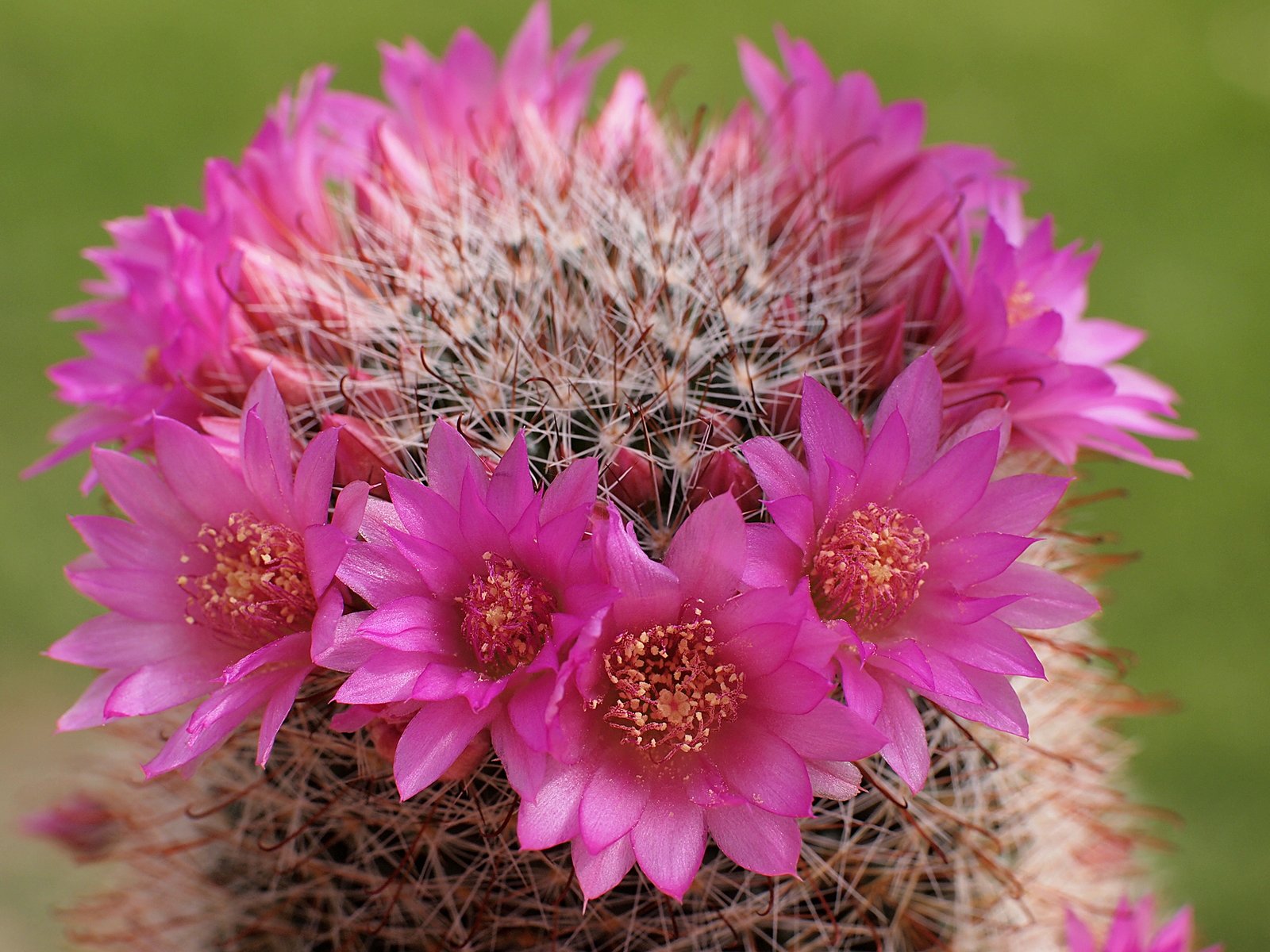
Why do Mammillaria flower in a ring?
The ring is a quirk of where the flowers come from. Unlike ribbed cacti, Mammillaria carry their growing points on tubercles, the nipple-like projections that give the genus its name, and each tubercle has two parts: a spine cluster at the tip and a separate flowering point in the axil at its base. Flowers arise from those axils on the previous season’s growth, which sits in a band just below the current crown, so the blooms emerge as a halo encircling the top of the plant.
Most species flower in spring, a few in autumn, and a healthy plant may bloom more than once in a season, often after rain. The flowers are small and funnel-shaped, in white, yellow, pink, or red, frequently with a darker midstripe, and they are followed by club-shaped fruit that is usually bright red and persists far longer than the flowers. Central spines, straight in some species and hooked in others, are a key way to tell species apart. The full set the site covers is on the Mammillaria genus hub.
How often should you water a pincushion cactus?
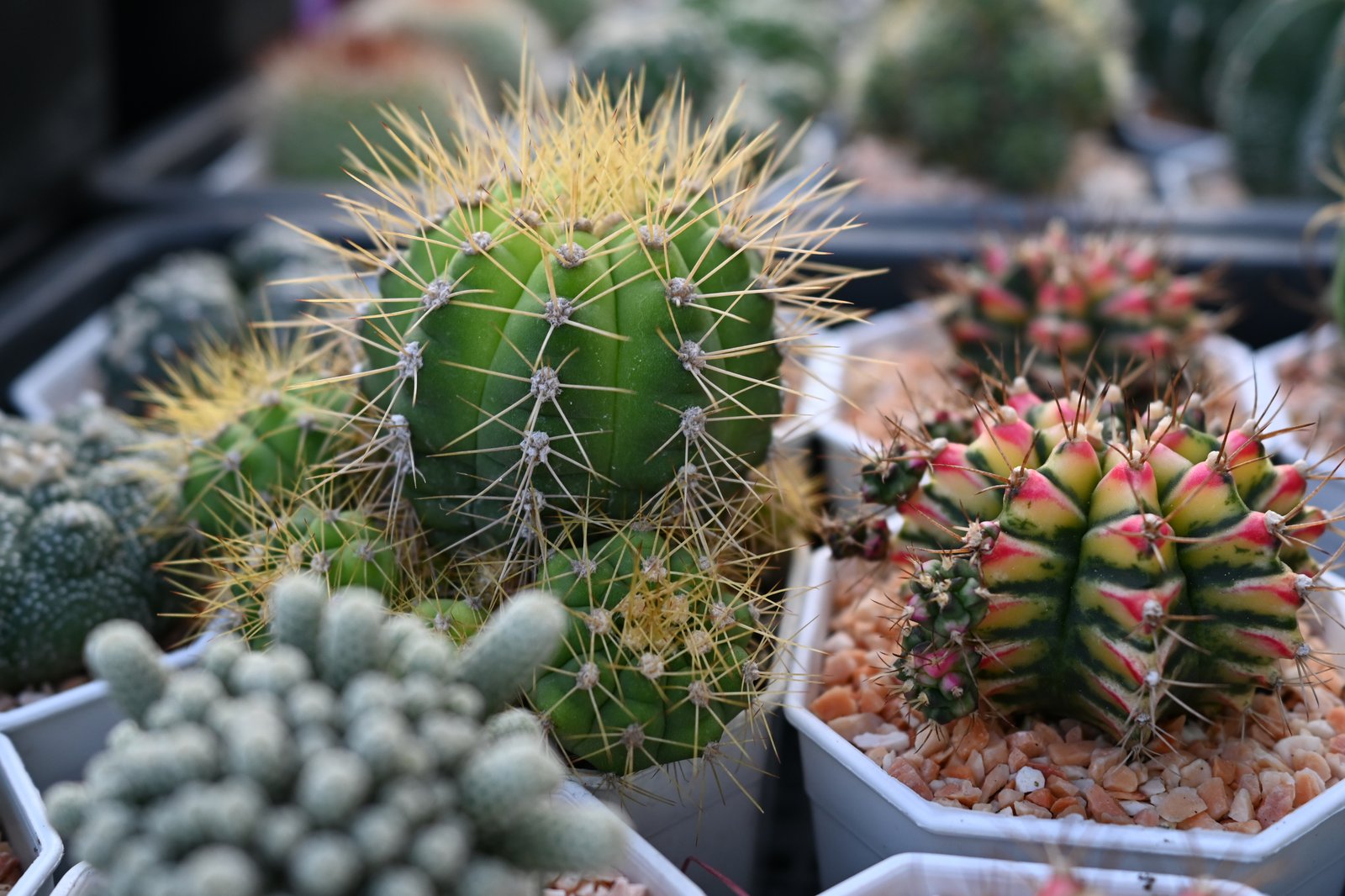
Mammillaria grow from spring through autumn and rest in winter. Through the growing season, water thoroughly and then let the substrate dry out fully before watering again, the standard soak-and-dry approach, and never leave a pot standing in water. The genus stores water in its tubercles, which plump after a drink and flatten as the plant draws them down, so the body itself tells you where it stands.
In winter the plants want a cool, dry rest, watering reduced to almost nothing once temperatures fall below about ten degrees Celsius. That dry rest is not only rot insurance; it is the cue that sets the spring flower ring, ideally a cool spell around seven to thirteen degrees for eight weeks or more. Mammillaria are not cold-hardy as a group, though dry cold is tolerated far better than wet cold, and the higher-elevation Mexican species take more cold than the lowland and Caribbean ones. A soft, discoloured base in winter is the classic sign of cold-wet rot, covered in our root rot guide.
What soil and light do Mammillaria need?
A gritty, sharply draining mineral mix with little organic matter, roughly ninety percent mineral to ten percent organic. Build the mineral fraction from pumice, granite grit, and coarse silica rather than the perlite and builder’s sand that mainstream guides still recommend, since those hold water and break down. Many Mammillaria are limestone plants and take a share of crushed limestone in the mix, but not all are, so match the species rather than adding limestone by reflex. The full recipe is in our cactus soil mix guide.
On light, Mammillaria want full sun to bright light, at least four to six hours of direct sun, with some afternoon shade only in extreme heat. Strong light is what produces dense spines, heavy crown wool, and reliable flowering; too little and the plant draws up, pales, and skips bloom. This is one of the better cactus genera for a sunny windowsill, though indoor plants still need genuine sun to flower, not just a bright room.
Which Mammillaria are easy, and which are demanding?
The genus splits, for care purposes, into vigorous clustering species and slow taproot geophytes, and the gap between them is wide. The clustering mound-formers are the classic beginner cactus: fast, forgiving, generous with offsets and flowers, and happy in the standard gritty mix. They are where anyone new to the genus should start.
The geophytes are another matter. Species like Mammillaria napina and Mammillaria pectinifera store water in a thick taproot and barely rise above the ground, so they need a leaner, deeper mineral mix and a near-total winter dry-out, with the taproot the first tissue to rot if kept wet. Mammillaria herrerae, the single-locality Querétaro calcicole that serves as the site’s template specimen page, and Mammillaria luethyi, so slow it is almost always grafted, sit at the demanding end. These are collector plants that reward the patience the clustering species do not require.
The practical rule across the genus is the same: the smallest pot that fits the roots, deep enough for the taproot where there is one, and sharper drainage the rarer and more geophytic the species. Get that right and even the demanding Mammillaria are durable.
How do you propagate Mammillaria from offsets?
Offsets are the easy way and the main one. Most clustering Mammillaria throw pups freely around the base, and these detach with a clean pull or cut, callous in dry shade for a few days, and root quickly in dry mineral mix. Seed works too but is slower, and because many, though not all, Mammillaria are self-sterile, setting viable seed usually needs two genetically different plants of the same species. The slow rarities such as luethyi are the ones most often grafted, to push them past the years it would otherwise take to reach flowering size. Our propagation guide covers seed and grafting in full.
What pests and problems affect Mammillaria?
Red spider mite is the standout pest of this genus, thriving in hot, dry, still air and stippling or bronzing the skin under fine webbing; good airflow and the occasional rinse keep it down. Mealybugs, including root mealybugs hidden in the substrate, are the other common problem and respond to a bare-root, wash, and repot. Rot is the dominant killer, driven by overwatering, an organic-heavy mix, or wet-cold winters, and in the geophyte species it begins in the taproot.
The densely woolly and bristly species, the ones grown for a thick white crown, carry one extra risk: moisture trapped in the apex wool in low light can invite fungal rot from the top down. Water at the base rather than over the crown, keep the plants bright and ventilated, and the problem does not arise. None of these threats are unusual or hard to manage, which is why Mammillaria remains the genus most often recommended to anyone starting with cacti. For a deeper look at distinguishing rot from harmless aging, see our diagnostic guide.
Frequently asked questions about Mammillaria care
How often should I water a Mammillaria?
Water Mammillaria with the soak-and-dry method through the growing season, spring to autumn: soak the mix thoroughly, then let it dry out completely before watering again, often every week or two in summer heat. In winter reduce to almost nothing, especially below ten degrees Celsius. The tubercles plump when hydrated and flatten when the plant needs water.
Why won’t my Mammillaria flower?
Most often it never had a cool, dry winter rest. Mammillaria set their spring flower ring after eight weeks or more of cool, nearly dry conditions around seven to thirteen degrees Celsius. A plant kept warm and watered through winter stays in growth and skips bloom. Too little light and immaturity are the other common causes.
Are pincushion cacti good for beginners?
The clustering Mammillaria are among the best beginner cacti: fast, forgiving, generous with offsets and flowers, and happy in a standard gritty mineral mix on a sunny windowsill. The taproot geophytes such as napina and pectinifera are demanding collector plants and are not the place to start. Begin with a vigorous clustering species.
How do you propagate a pincushion cactus?
Offsets are the easiest method. Twist or cut a pup from the base of a clustering plant, let the cut callous in dry shade for a few days, and root it in dry gritty mix, watering lightly after about a week. Seed also works but is slower, and because many Mammillaria are self-sterile, two different plants are usually needed to set viable seed.
What soil mix do Mammillaria need?
A gritty mineral mix, around 90 percent mineral to 10 percent organic. Build it from pumice, granite grit, and coarse silica rather than perlite or builder sand, which hold water and break down. Many species take some crushed limestone, but not all are limestone plants, so match the species. Geophytes with taproots want a leaner, deeper version.
Plants of the World Online (POWO), Royal Botanic Gardens Kew, Mammillaria Haw. · Haworth, A.H., Synopsis Plantarum Succulentarum (1812) · IUCN Red List, Mammillaria assessments · Pilbeam, J., Mammillaria (Cactus File Handbook) · Reppenhagen, W., Die Gattung Mammillaria · Anderson, E.F., The Cactus Family (Timber Press) · Hunt, D., The New Cactus Lexicon (DH Books) · llifle, Encyclopedia of Living Forms · Flora of North America, Mammillaria treatment
Photos: Mammillaria zeilmanniana by Dornenwolf (CC BY 2.0) and potted cacti by PattayaPatrol (CC BY-SA 4.0), via Wikimedia Commons.