Echinopsis Cactus Types: A Collector’s Identification Guide
All ArticlesEchinopsis cactus types fall into four collector groups: globose night-bloomers, day-flowering Lobivia forms, the fast San Pedro columnars, and the tree-sized cardones now placed in Leucostele. Kew POWO accepts 81 Echinopsis species (POWO 2026). This guide names every major type to current taxonomy, with photos and the traits that separate them.
What counts as an Echinopsis cactus in 2026?
Plants of the World Online, the Kew nomenclature backbone this site follows, accepts 81 species in Echinopsis and treats Trichocereus, Lobivia, Soehrensia, and Chamaecereus as synonyms folded into the genus. A plant labelled Trichocereus pachanoi, Lobivia aurea, or Soehrensia spachiana at a nursery is an Echinopsis under the current treatment. Our Echinopsis genus hub indexes the species we cover in depth.
Two groups did not get folded in, and most older lists get this wrong. Leucostele kept its genus: the giant cardones (terscheckii, atacamensis, chiloensis) that collectors still call Echinopsis are Leucostele under POWO. Setiechinopsis also stands apart following the 2025 revision. Two species-level moves matter for shoppers: POWO treats Echinopsis peruviana as a synonym of Echinopsis macrogona, and both Trichocereus bridgesii and Echinopsis scopulicola as synonyms of Echinopsis lageniformis. World Flora Online still accepts Soehrensia, so expect labels to disagree for years. The entries below give the POWO name first and every trade name a collector will actually meet.
How do you identify an Echinopsis cactus?
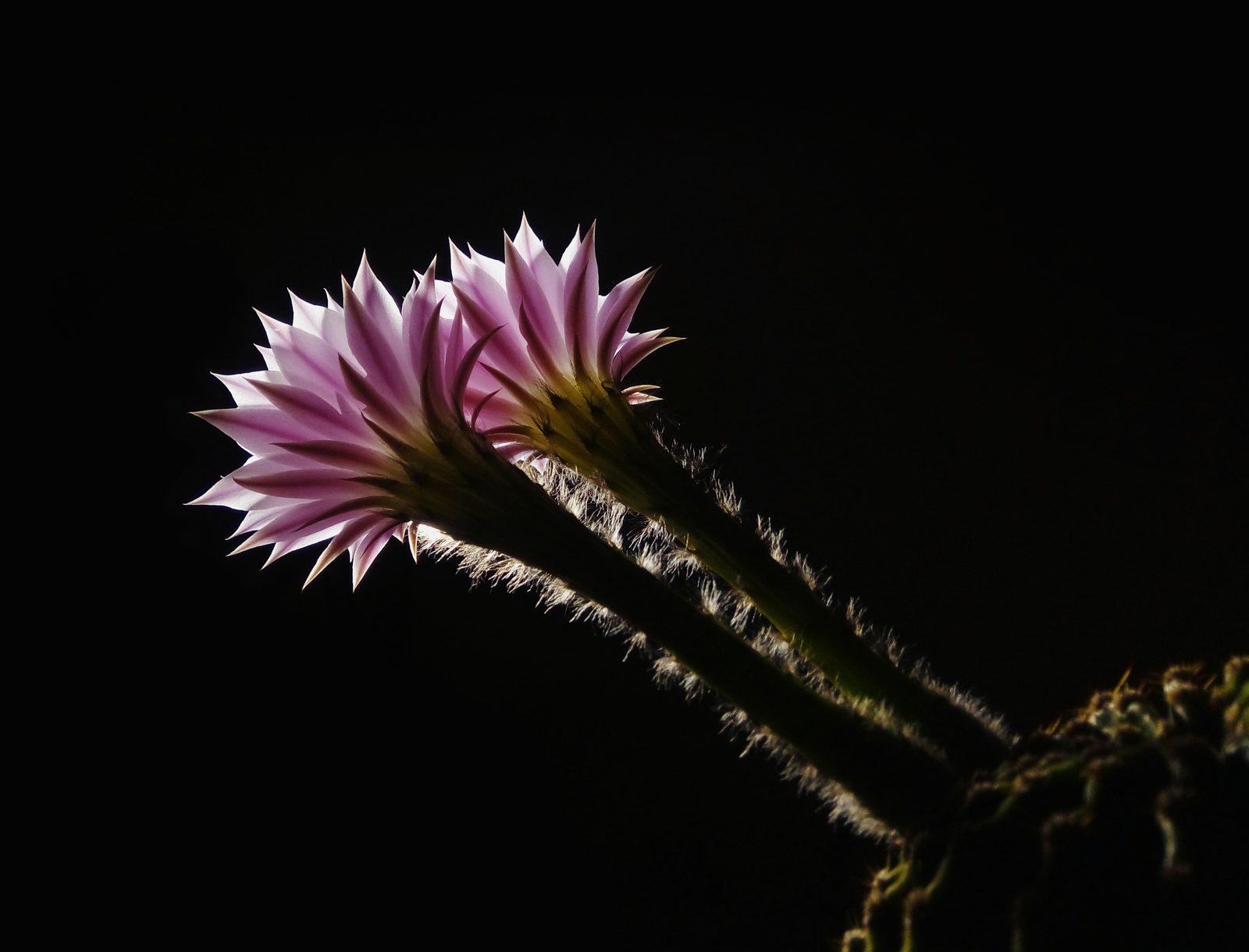
Look at the flower before the body. Echinopsis flowers are large funnels on conspicuously long tubes, 10 to 25 cm in many species, and the tube is dressed in fine hairs or wool. The classic species open at dusk, perfume the air overnight, and collapse by the next afternoon. Day-blooming types (the old Lobivia and the hybrid lines) keep the hairy tube but trade white for saturated reds, oranges, and yellows.
Bodies range from a 4 cm button to a 10 m tree, so body shape sorts the genus into the four groups this guide uses: globose night-bloomers, small day-blooming Lobivia types, the columnar San Pedro group, and the Leucostele giants. Ribs are straight and well-defined in nearly all of them, and the fruits are fleshy and hairy. If a globular cactus throws a smooth-tubed flower straight from the crown with no hair at all, look at Rebutia or Gymnocalycium instead.
Globose night-bloomers: the Easter lily cacti
The globose night-blooming Echinopsis are the windowsill classics: modest green bodies that vanish under flowers nearly as big as the plant. All of them want a dry, cool winter rest to set buds.
1. Echinopsis oxygona (Easter Lily Cactus)
The default Echinopsis, sold for a century under names POWO now lumps here: E. eyriesii, E. tubiflora, and E. multiplex. Dark green stems with 11 to 18 sharp ribs and short blackish spines, offsetting into clumps past 60 cm wide. The white to pale pink flowers run 10 to 15 cm across on tubes up to 22 cm and arrive in flushes all summer. Hardy to roughly −9 °C dry, it blooms on plants barely two years old, which is why it never left cultivation. From southern Brazil, Uruguay, and northeastern Argentina.
2. Echinopsis subdenudata (Domino Cactus)
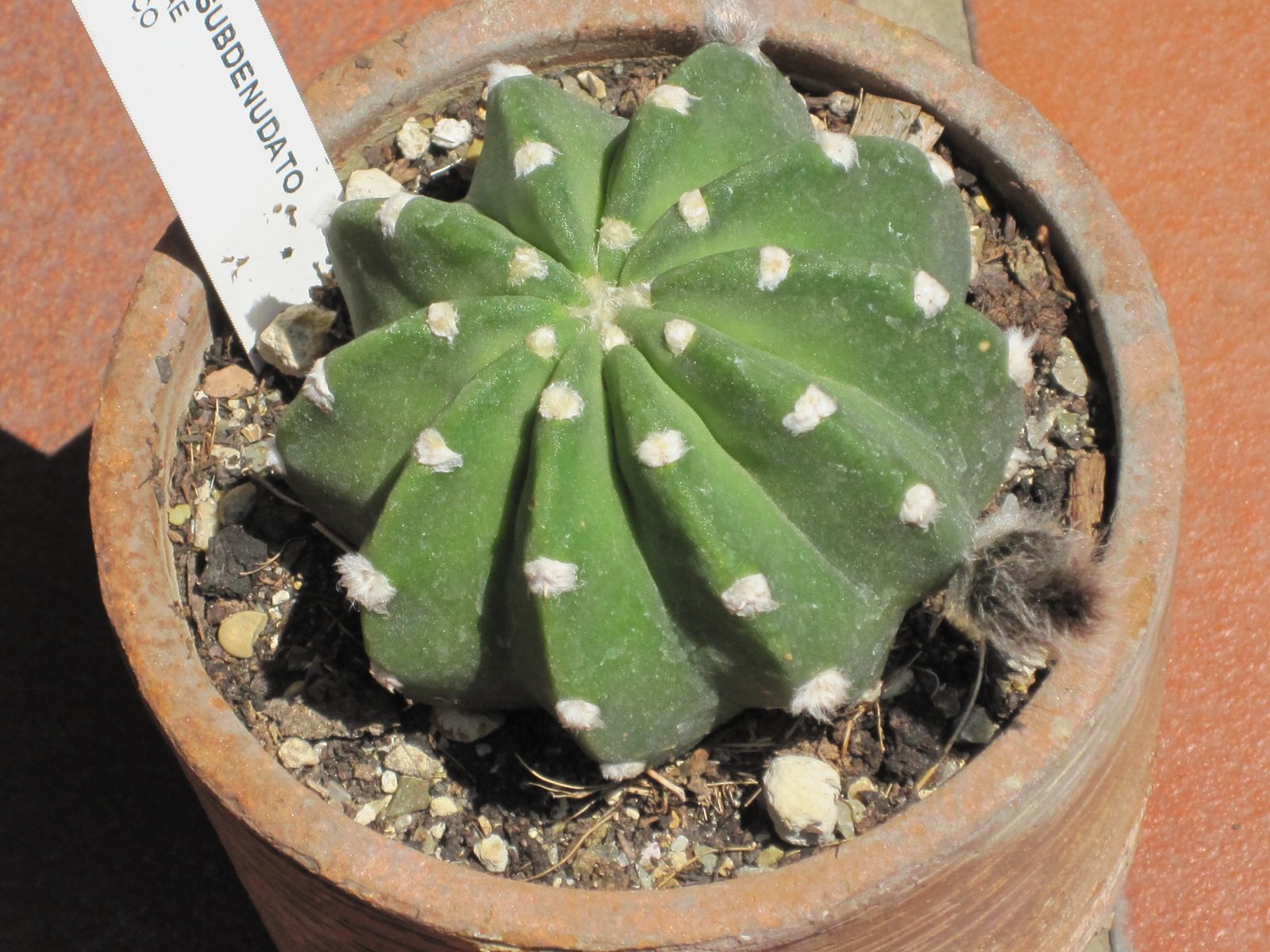
Nearly naked, as the epithet says. A grey-green sphere to about 12 cm with 8 to 12 ribs dotted by white woolly areoles and almost no spines, which makes it the safest cactus in a house with children. Fragrant white night flowers on tubes past 20 cm look absurdly large on the small body. Bolivian grasslands at 600 to 1,800 m; takes brief dips to about −7 °C dry. Slow, compact, and happiest left unrepotted.
3. Echinopsis ancistrophora
A small sphere from Bolivia and northwest Argentina with the widest flower variation in the genus: across its subspecies the tube runs from 4.5 to 24 cm and the colour from white through dark red. Collectors chase subsp. arachnacantha for its arching, spider-web spination. Keep it below 10 cm tall and let it cluster. Safe to about −5 °C dry.
4. Echinopsis calochlora
The odd lowlander. Bright glossy green, under 12 cm, freely clustering, with tiered white fragrant flowers. Unlike its Andean relatives it comes from warm lowland Bolivia and southern Mato Grosso in Brazil at around 600 m, so it sulks in cold and prefers a warmer, slightly more humid summer than the rest of this page. Treat it as frost-tender.
5. Echinopsis mamillosa
Named for its ribs, 13 to 17 of them broken into nipple-like tubercles, on a body that reaches an unusually large 30 cm for a globose species. Flowers are white tipped rose-pink, up to 18 cm long; the carmine-flowered var. kermesina is the form most often traded. High country from Jujuy and Salta into southern Bolivia, comfortable to about −9 °C dry.
6. Echinopsis obrepanda
A flattened, hatchet-ribbed disc to 20 cm across that hugs the ground at 2,500 to 3,500 m in Peru and Bolivia. The night flowers run pink-violet to magenta and carry a scent growers compare to parsley. The flat profile plus comb-set marginal spines make it easy to pick out of a mixed bench. Give it sharp drainage and a cold dry winter; published cold floors are thin, so test cautiously.
Day-blooming Lobivia types: small bodies, loud flowers
The old genus Lobivia (an anagram of Bolivia) holds the small-bodied, day-flowering species. Everything here blooms in daylight, which is what most buyers actually want from a flowering cactus.
7. Echinopsis chamaecereus (Peanut Cactus)
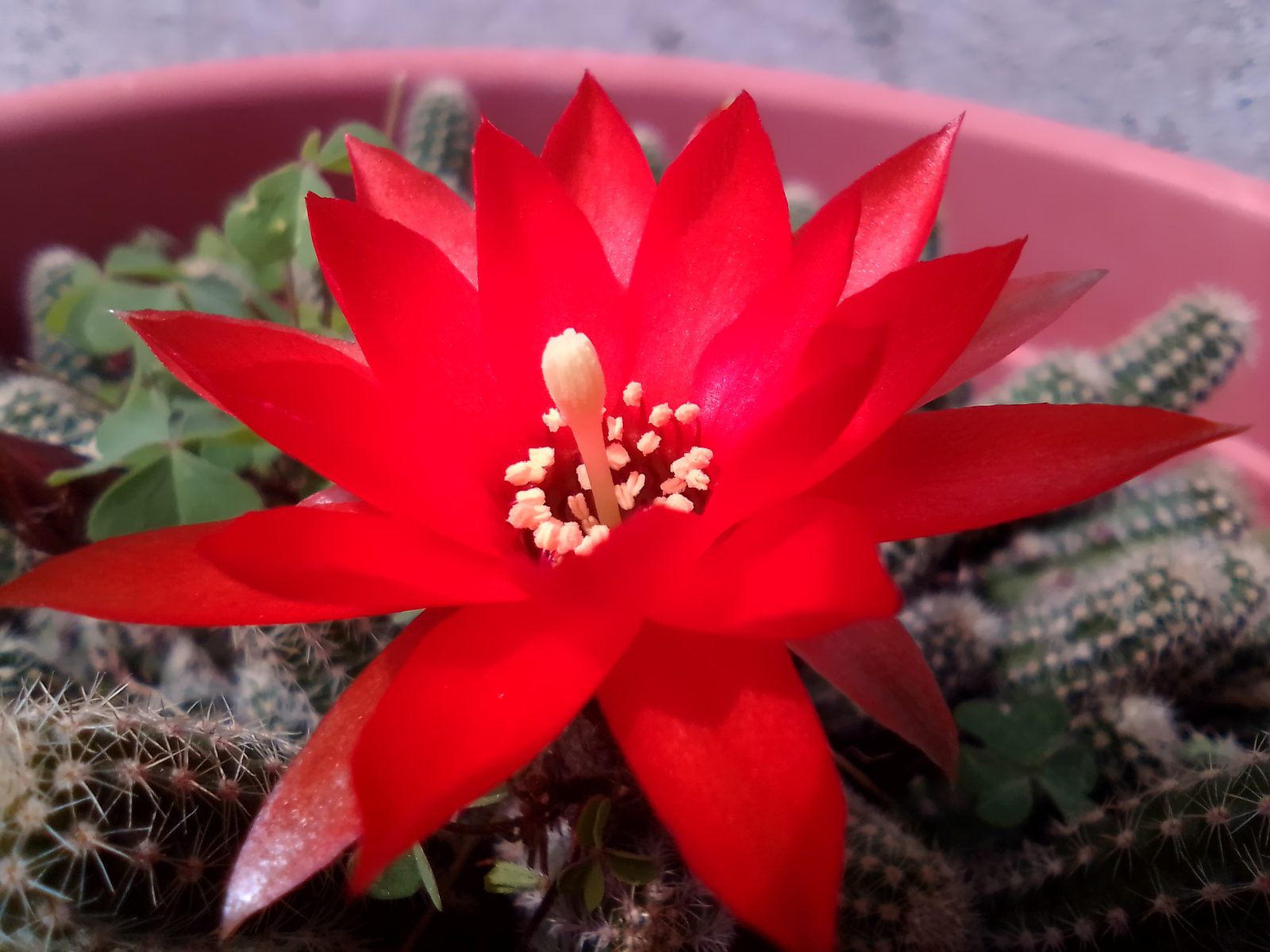
Finger-thin, peanut-shaped stems under 2 cm wide that sprawl into a 30 cm mat and detach at a touch, each fragment rooting where it falls. Vivid scarlet 4 to 6 cm flowers open wide in daylight. Sold everywhere as Chamaecereus silvestrii, a name World Flora Online still accepts even as POWO folds it in. From Tucumán, Argentina; tougher than it looks, with documented survival to −8 °C dry. Overwatering is the only way most people kill it.
8. Echinopsis aurea (Golden Easter Lily Cactus)
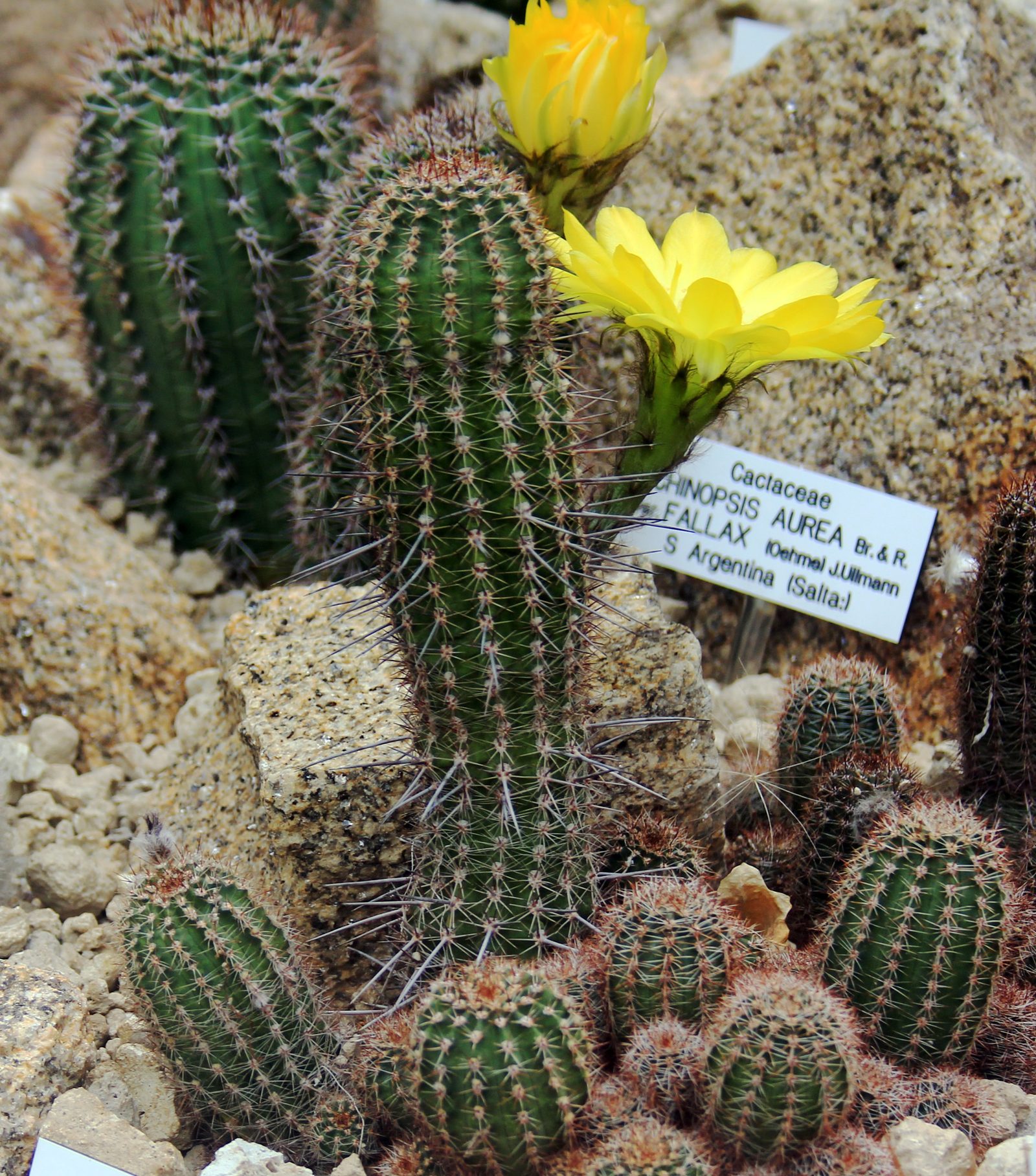
The reliable yellow. A dark green, sharp-ribbed body under 15 cm carrying lemon-yellow funnels to 10 cm in late spring, open through the day. Formerly Lobivia aurea, from 500 to 1,500 m across northwest Argentina, and the founding parent of most yellow hybrid lines. Handles light frost; keep it bone dry in winter.
9. Echinopsis huascha (Red Torch)
A low thicket of 5 cm stems to a metre tall, 14 to 17 ribbed, that erupts in bell-shaped day flowers in red, orange, yellow, or pink, each to 10 cm across. Trade tags still read Trichocereus huascha or Soehrensia huascha. From Catamarca and La Rioja, Argentina, and good to about −7 °C dry. The large-flowered var. grandiflora feeds the showiest hybrid crosses.
10. Echinopsis hertrichiana
A shiny green sphere under 12 cm with about 11 grooved ribs and a single up-curved straw central spine per areole. Bright red day flowers with a whitish throat open wide at 6 to 7 cm. A Huntington ISI introduction with real altitude behind it: 3,000 to 3,500 m in the Cusco region, western Bolivia, and northern Chile, so give it the cool dry winter it expects.
11. Echinopsis famatimensis (Orange Cob)
The miniature. A solitary oval body 3 to 4 cm wide packed with 24 to 40 tiny tubercled ribs, the highest rib count in the genus and the fastest way to confirm an ID. Day flowers in yellow through bright red dwarf the plant. From the Famatina ranges of La Rioja, Argentina. Grown hard and dry it stays a tidy button for decades; treat it as frost-tender in cultivation.
12. Echinopsis jajoiana
Collectors keep this one for a single feature: var. nigrostoma opens a clean yellow day flower around a near-black throat, the most photographed small flower in the old Lobivia group. Bodies stay under 10 cm, bluish green, lightly spined. From the Bolivia-Argentina border country. Catalogues sell it almost exclusively as Lobivia jajoiana.
The San Pedro group: fast Andean columnars
The former Trichocereus columnars: fast, fragrant, night-flowering, and the backbone of every torch-cactus collection. Several contain mescaline, which makes the live plants legal ornamentals and anything else a legal problem; the full jurisdiction-by-jurisdiction picture is in our San Pedro legality guide.
13. Echinopsis pachanoi (San Pedro)
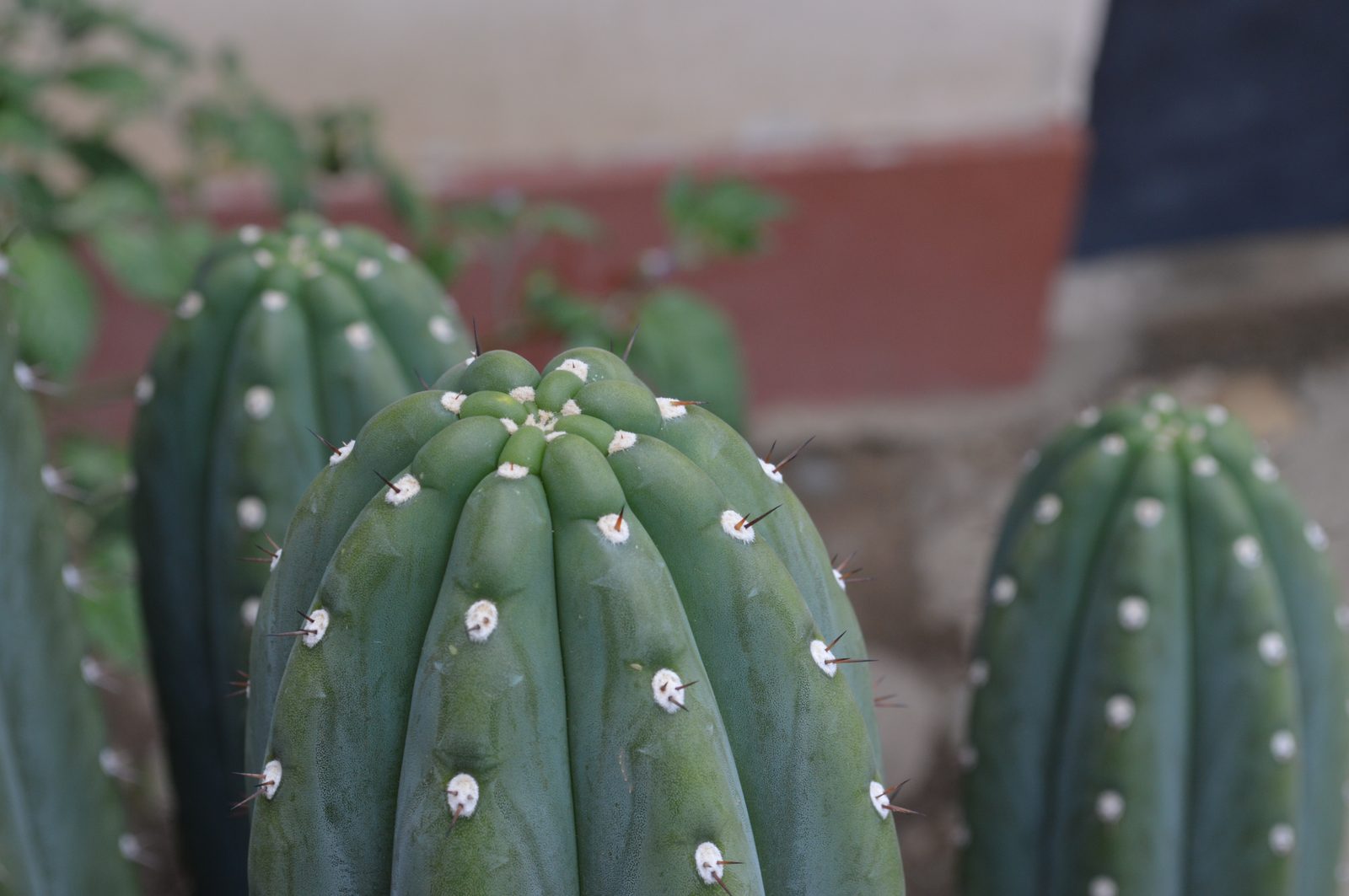
The fastest and most forgiving columnar in the genus, adding 30 cm a year to an eventual 5 m. Six to eight broad, rounded ribs, white areoles, spines short to absent in cultivated lines. Huge white night flowers perfume a whole greenhouse. Andean Ecuador and Peru at 2,000 to 3,000 m, hardy to about −9 °C dry. Still sold almost universally as Trichocereus pachanoi; our Echinopsis pachanoi specimen page and the full San Pedro article cover it in depth.
14. Echinopsis macrogona (Peruvian Torch)
The Peruvian torch of the trade, and the entry where labels diverge hardest from POWO: Echinopsis peruviana and Trichocereus peruvianus are both treated as synonyms of E. macrogona. Expect a more glaucous, bluer column than San Pedro, with broader-spaced areoles and stiffer honey-brown spines to 4 cm. Western and southern Peru into Bolivia at 2,000 to 3,000 m, hardy near −9 °C dry. Our Echinopsis peruviana specimen page keeps the collector name and explains the synonymy.
15. Echinopsis lageniformis (Bolivian Torch)
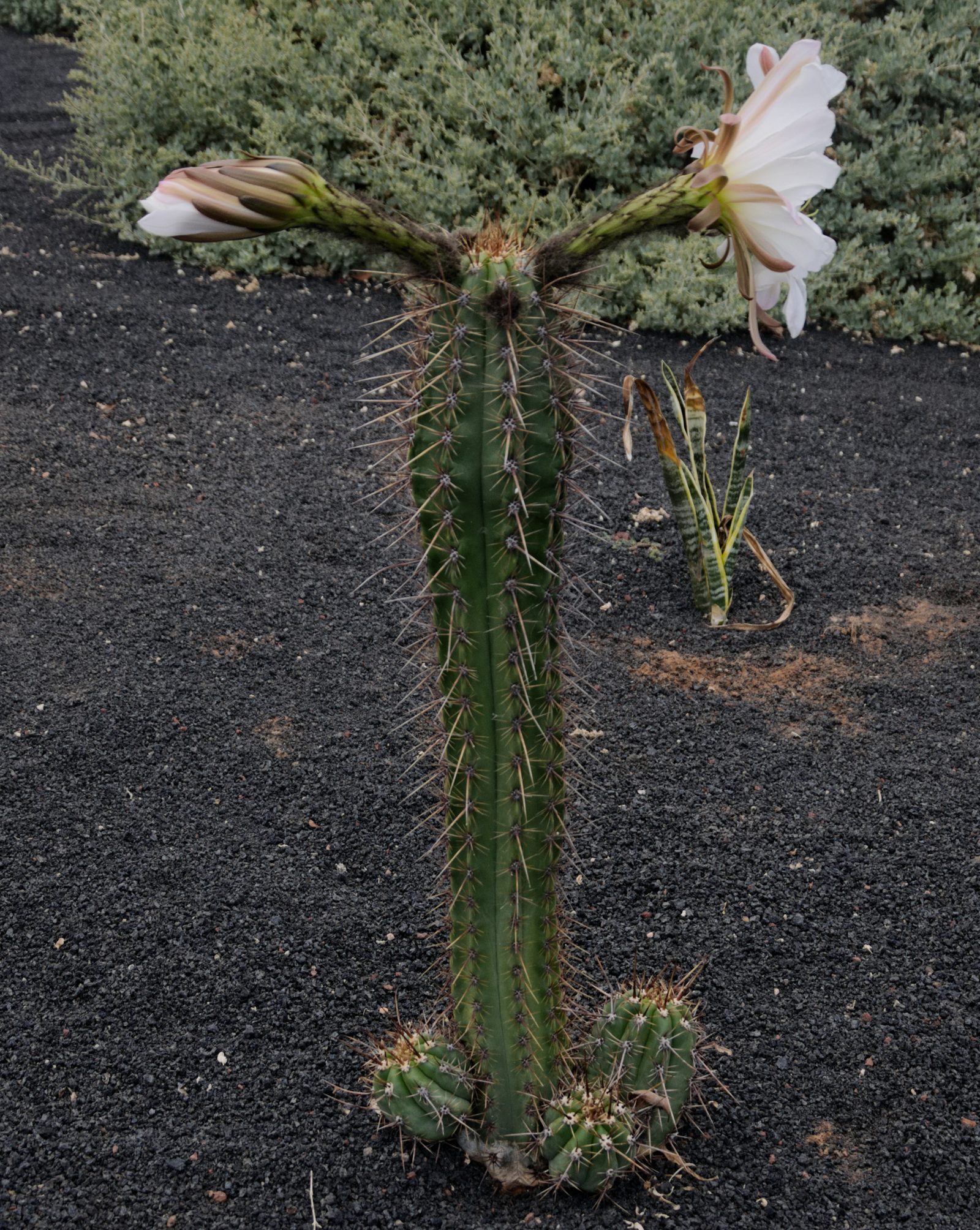
Here is the genus’s worst naming trap. The Bolivian torch of the trade, Trichocereus bridgesii, is E. lageniformis under POWO, and the smooth, nearly spineless E. scopulicola is folded into the same species; our scopulicola page covers that form. Meanwhile Echinopsis bridgesii proper is a different, shrubby Bolivian species entirely. The Bolivian torch itself is a fast 5 m column with only 4 to 8 pronounced ribs, blue-green skin, and long honey spines from widely spaced areoles. Its brain-like monstrose form is among the most traded oddball cacti in the world.
16. Echinopsis cuzcoensis (Cuzco Torch)
A tree-form torch to 6 m from the Cusco region alone, at 3,100 to 3,600 m the highest-elevation species in the group and with the cold tolerance to match, near −9 °C dry. Around a dozen stiff, basally swollen spines to 7 cm per areole distinguish it from its smoother cousins. Slower than San Pedro, which is the only reason it is less common in collections; details on our Echinopsis cuzcoensis specimen page.
17. Echinopsis spachiana (Golden Torch)
The working cactus. A basally branching column to 2 m with 10 to 15 rounded ribs, curly golden wool in the areoles, and white 15 cm night flowers that last about ten hours. Its real career is underground: spachiana is the most widely used grafting rootstock for slow rarities, vigorous, easy from cuttings, and willing to hold a graft for decades. Labels still read Soehrensia or Trichocereus spachianus.
18. Echinopsis candicans (Argentine Giant)
Not tall but wide: 60 cm stems that pile into mounds 3 m across on Argentine plains from Buenos Aires to Catamarca. The payoff is the flower, white, intensely fragrant, and up to 19 cm wide on a tube past 20 cm, the largest bloom among the night-flowering columnars. Hardy to about −8 °C dry. Plant it where the evening scent can reach a window.
The cardones: giants that moved to Leucostele
Three trees every collector still calls Echinopsis. POWO moved them to Leucostele, and no nursery label has caught up. They appear here because the trade will hand them to you as Echinopsis, and because two of them are among the hardiest large cacti anyone can plant; see our cold-hardy cactus ranking for how they compare beyond the genus.
19. Leucostele terscheckii (Argentine Saguaro)
The cardon grande: a 10 to 12 m tree with a trunk to 45 cm, golden 8 to 10 cm spines, and a silhouette close enough to a saguaro that photographs fool Arizonans. White night flowers stud the upper stems. Northwest Argentina into southern Bolivia at 800 to 1,400 m, and documented to −8 °C, remarkable for something this size. In a pot it grows slowly enough to stay a houseplant for a decade. Sold as Echinopsis or Trichocereus terscheckii.
20. Leucostele atacamensis subsp. pasacana (Pasacana Tree Cactus)
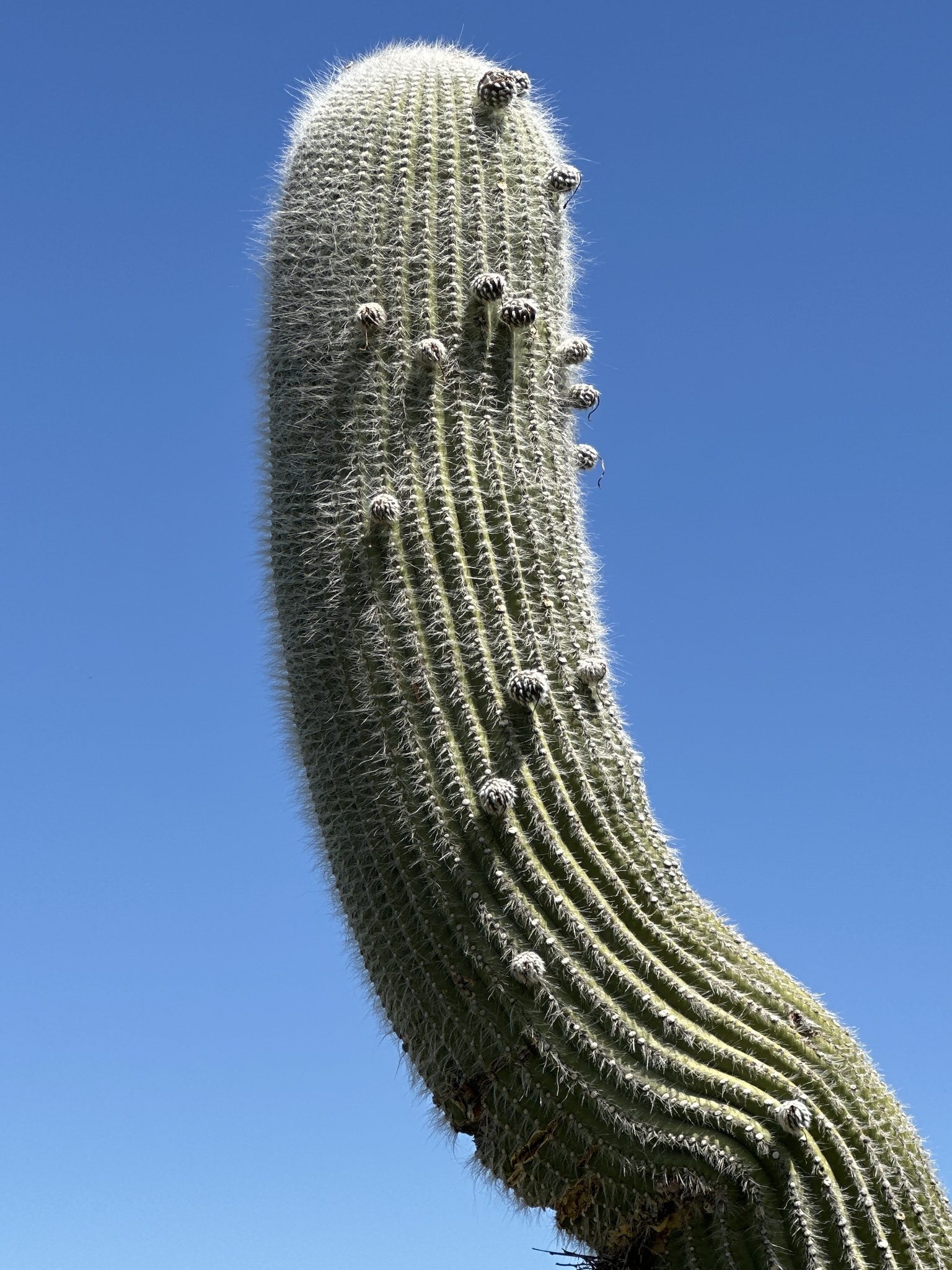
The cardon of the high Puna, to 10 m with 20 to 30 ribs and mature plants wearing 50 to 100 maroon spines per areole, some past 25 cm. Native to 2,000 to 3,500 m in Bolivia and Argentina and hardy to roughly −12 °C, the toughest plant on this page. Wild trees live for centuries; the light, strong dead wood still frames furniture and roofs across the Puna, and the pasacana fruit is eaten locally. Trade names: Echinopsis atacamensis subsp. pasacana or Trichocereus pasacana.
21. Leucostele chiloensis (Chilean Quisco)
Chile’s defining columnar, a candelabra to 6 m with 16 or 17 low ribs and bright yellow spines that grey with age, the long centrals reaching 20 cm in subsp. panhoplites. It lines hillsides from the coast to 1,800 m in the Andean foothills. Still sold as Trichocereus chiloensis; our Echinopsis chiloensis specimen page carries the collector name and the habitat detail.
Schick and Paramount hybrids
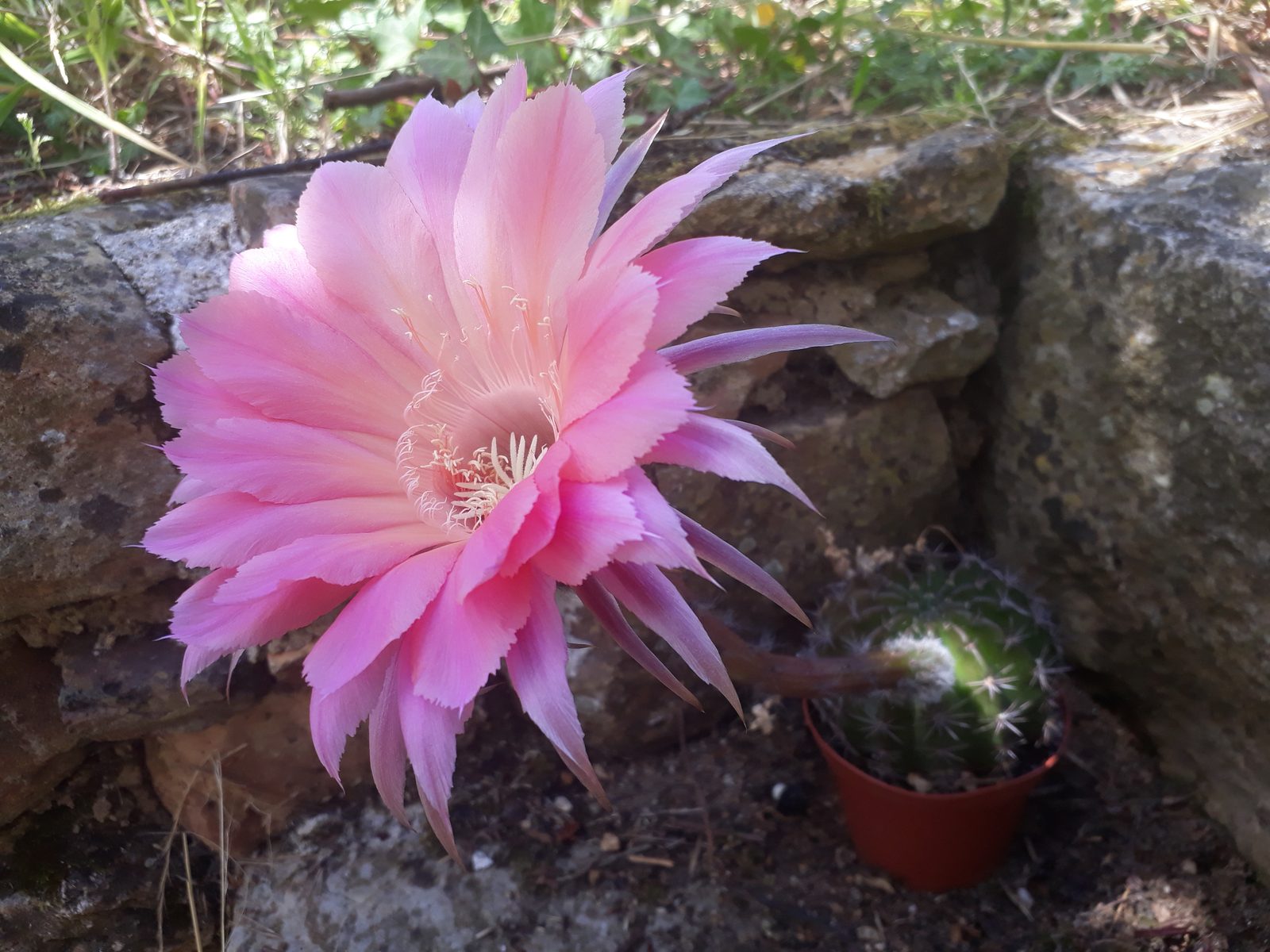
22. Echinopsis hybrids: the Schick and Paramount lines
Harry Johnson crossed Echinopsis, Lobivia, and Trichocereus at his Paramount, California nursery from 1954 to 1968 and released 26 named Paramount hybrids, including ‘Red Paramount’ and ‘Scarlet O’Hara’. Working at the Huntington from the 1980s, Bob Schick built on that base and pushed flower diameter to 20 cm in saturated reds, oranges, violets, and picotee bicolours, all day-opening and repeat-blooming; more than 129 Schick cultivars have been released through the Huntington’s International Succulent Introductions program, each numbered by cross and clone. They rank among the easiest cacti to flower indoors. One caution: much commercial stock sold as “Schick hybrid” is open-pollinated seedling offspring, not the named clone, so buy named cultivars from sources that state the ISI lineage.
Which Echinopsis types are easiest to grow?
For a first Echinopsis, E. oxygona and the Domino cactus E. subdenudata flower young, shrug off neglect, and stay pot-sized. The peanut cactus is the easiest to propagate, since every detached finger roots. Outdoors in mild-winter ground, San Pedro grows faster than any of them, and the Schick hybrids give the most flower per windowsill inch. All of them want the same regime: a fast mineral substrate, full water in summer heat, and a cold, completely dry winter rest that does the bud-setting for you.
Frequently Asked Questions
What is the difference between Echinopsis and Trichocereus?
Under the current Kew POWO treatment there is none: Trichocereus is a synonym of Echinopsis, and the columnar species sold as Trichocereus pachanoi, peruvianus, and bridgesii sit in Echinopsis as E. pachanoi, E. macrogona, and E. lageniformis. Some references, including the CITES Cactaceae Checklist, still keep Trichocereus separate, so both names remain in honest use on nursery labels.
How many species of Echinopsis are there?
Kew POWO accepts 81 Echinopsis species (POWO 2026), with the former genera Trichocereus, Lobivia, Soehrensia, and Chamaecereus folded in. The giant cardones (terscheckii, atacamensis, chiloensis) are not part of that count; POWO places them in the separate genus Leucostele.
How do you identify an Echinopsis cactus?
Check the flower tube. Echinopsis flowers are large funnels on long tubes, often 10 to 25 cm, and the tube is covered in fine hairs or wool. Classic species open white, fragrant flowers at dusk that collapse by the next afternoon; the old Lobivia types and modern hybrids open coloured flowers in daylight. Bodies are straight-ribbed, from 4 cm buttons to 10 m trees.
What is the easiest Echinopsis to grow?
Echinopsis oxygona and the Domino cactus, Echinopsis subdenudata, are the easiest indoors: both flower within two or three years, tolerate ordinary neglect, and stay compact. The peanut cactus, Echinopsis chamaecereus, is the easiest to multiply because every detached stem segment roots. In mild-winter gardens, San Pedro is the fastest and most trouble-free columnar.
Why do Echinopsis flowers only last one day?
Most classic Echinopsis are night-pollinated. The flower opens at dusk, runs on stored water and sugar overnight for moths and bats, and wilts by the following afternoon because maintaining a 25 cm tube costs more water than a desert plant can spare. Healthy plants compensate by opening flowers in repeated flushes through summer, and the day-blooming hybrid lines hold individual flowers for one to three days.
Plants of the World Online, Royal Botanic Gardens Kew: Echinopsis genus and per-species pages (accepted-name and synonymy treatments cited throughout) · Plants of the World Online: Leucostele, Setiechinopsis · Schlumpberger & Renner, “Molecular phylogenetics of Echinopsis (Cactaceae),” American Journal of Botany 99(8) (2012) · Anderson, The Cactus Family (2001) · Hunt, The New Cactus Lexicon (2013) · Hunt, The CITES Cactaceae Checklist, 3rd ed. (Kew, 2016) · World Flora Online (Soehrensia and Chamaecereus alternative treatments) · Huntington Botanical Gardens, International Succulent Introductions: Schick hybrid catalogue and programme notes · Johnson Cactus Gardens Paramount hybrid records (1954–1968) · llifle Encyclopedia of Living Forms: Echinopsis ancistrophora, E. spachiana · cactusinhabitat.org: E. huascha, E. obrepanda · trichocereus.net cultivation notes on the San Pedro group · Mountain Crest Gardens and Gardenia.net horticultural data (cold floors as cited per entry) · Images via Wikimedia Commons: Rouibi Dhia Eddine Nadjm (CC BY-SA 4.0) · Dnmr-mx (CC BY-SA 4.0) · Petar43 (CC BY-SA 3.0) · Karelj (CC BY-SA 3.0) · Cbrescia (CC BY-SA 4.0) · Santamarcanda (CC BY-SA 4.0) · Rosario (CC BY 4.0) · Ethyle64 (CC BY-SA 4.0)