
The 15 Rarest Cacti in the World, Ranked
All ArticlesThe rarest cacti in the world have wild populations under 500 plants and ranges measured in single square kilometres. This ranking lists fifteen, ordered by population count, IUCN extent of occurrence, and Red List category, drawn from peer-reviewed conservation literature, IUCN assessments, Kew POWO, and Mexican, Chilean, Brazilian, and U.S. census data.
How is rarity ranked for these cacti?
Three criteria order the list, applied in this priority. First, wild population count from a published census or peer-reviewed estimate. Second, range size measured by IUCN extent of occurrence (EOO) and area of occupancy (AOO). Third, the IUCN Red List category, with a note on assessment year because IUCN categories shift as fieldwork accumulates. A species with 430 wild plants in 0.87 km² outranks a species with 5,000 plants in 50 km², and both outrank a species that survives only in cultivation. Where IUCN categories conflict between secondary sources we have used the best-available evidence and noted the year of assessment. All fifteen are protected under one or more legal frameworks (CITES Appendix I or II, the U.S. Endangered Species Act, the Mexican NOM-059-SEMARNAT-2010 listing, or Chilean CONAF designation), and wild collection is illegal in every range country represented here. The cultivation side is covered separately in our guide to mature cultivated specimens.
1. Mammillaria herrerae
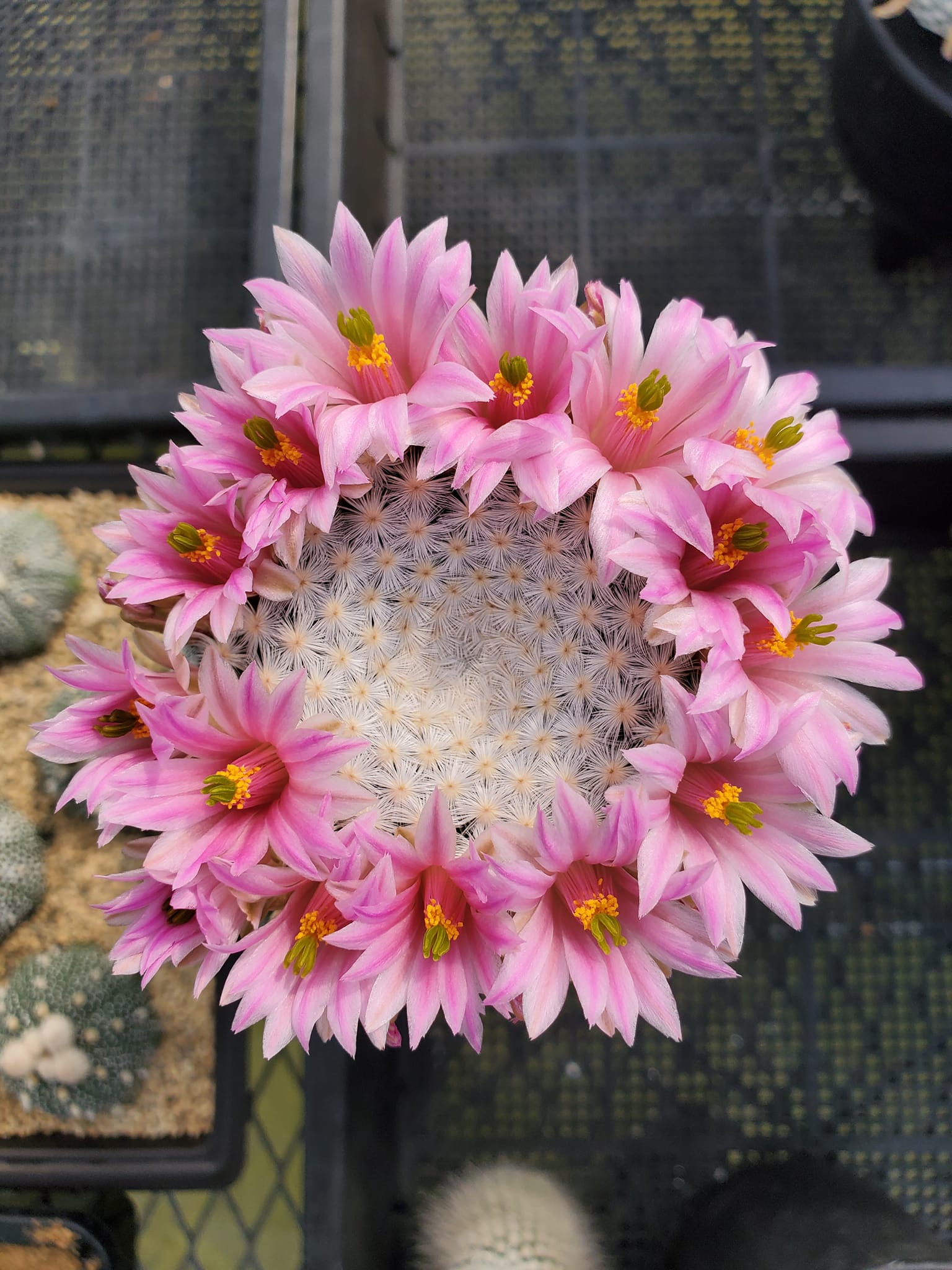
Critically Endangered (IUCN 2013) · ~430 wild individuals · EOO 3.4 km², AOO 0.87 km² · Cadereyta de Montes, Querétaro, Mexico
The rarest cactus in the world by published census. Mammillaria herrerae occupies a single canyon system in central Querétaro and almost nothing else. The 2012 in-situ analysis published in Bradleya 30 counted approximately 430 mature individuals across two subpopulations, down from a 2002 estimate of 50 plants at a single site (the lower 2002 figure reflected limited survey coverage; the 2012 number is the more accurate baseline). Both figures represent a population collapse exceeding 95% from 1980s levels, attributable almost entirely to commercial collection.
The species was rediscovered in the field by Alfred Lau in June 1974 under collection number L 711, after Werdermann’s original 1931 description from Vista Hermosa. It is CITES Appendix I, prohibits commercial international trade, and the remaining wild populations sit on private land outside any biosphere reserve. Plants form dense white-spined clusters of up to 100 heads with carmine flowers, which is the visual reason it was poached so aggressively.
2. Turbinicarpus alonsoi
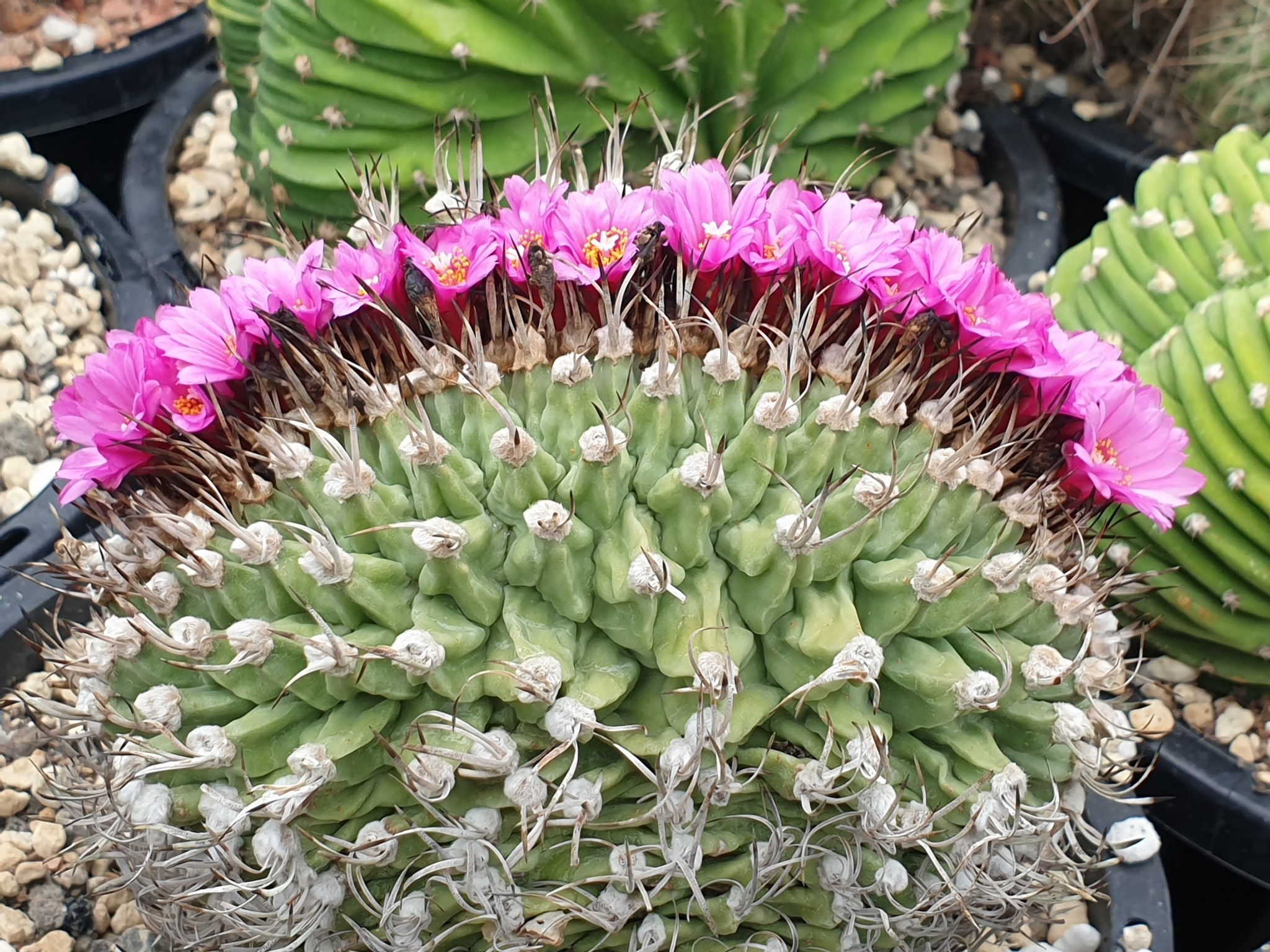
Critically Endangered (IUCN 2013) · fewer than 5,000 mature individuals · AOO under 10 km² · Xichú, Guanajuato, Mexico
Glass and Arias described Turbinicarpus alonsoi in 1996 from a single canyon near Xichú in Guanajuato. Within a decade the species was listed as Critically Endangered, a trajectory that captures exactly what happens when a newly described Mexican cactus enters specialist collector circulation before any conservation infrastructure can catch up. Total range remains under 10 km² on steep calcareous slopes around 1,900 metres elevation.
The species honours Alonso García Luna, who first found it. CITES Appendix I, NOM-059-SEMARNAT-2010 listed. The dark olive body with white woolly apex is the diagnostic that drew collector attention in the first place; that same body shape combined with the canyon-cliff microhabitat is what makes ex-situ propagation by legitimate growers the only path forward. The 1996 description authority is in Kakteen Sukk. 47(2):26.
3. Uebelmannia buiningii
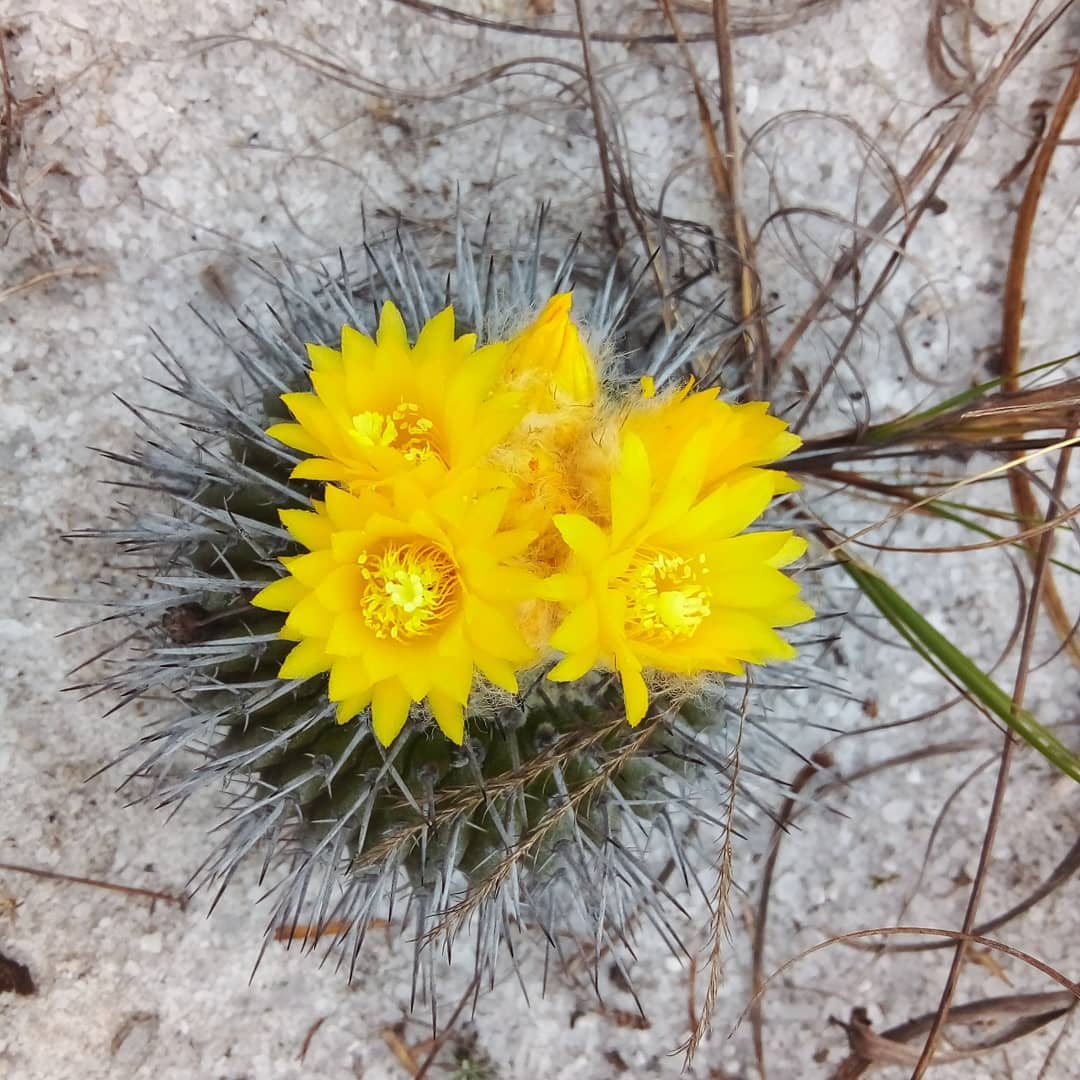
Critically Endangered (IUCN 2020) · ~1,272-1,896 individuals across surveys · EOO 40 km² · Serra Negra, Minas Gerais, Brazil
Donald described Uebelmannia buiningii in 1968 from a single mountain massif in Minas Gerais. The species occupies quartzitic rock slabs at 1,000 to 1,200 metres elevation and nothing else; quartzite-obligate substrates this narrow are rare even in Brazilian Cactaceae. Conservation surveys published by Ribeiro-Silva and collaborators in 2021 recorded 1,272 individuals in 2014, 895 in 2019, and 1,896 in 2020, with the year-to-year variation reflecting survey effort more than real population swings. Several historic subpopulations including the type locality have disappeared entirely.
The species is self-incompatible, documented in 2018 work in Folia Geobotanica, which means reproduction depends on visiting native bees. Fire, cattle trampling, and illegal collection are the named threats in IUCN documentation. Cultivation is exceptionally difficult on seed grown plants, and most material in collections is grafted; this is one of the few Cactaceae species where legitimate ex-situ conservation depends on cultivation infrastructure that almost no hobbyist can replicate.
4. Astrophytum caput-medusae
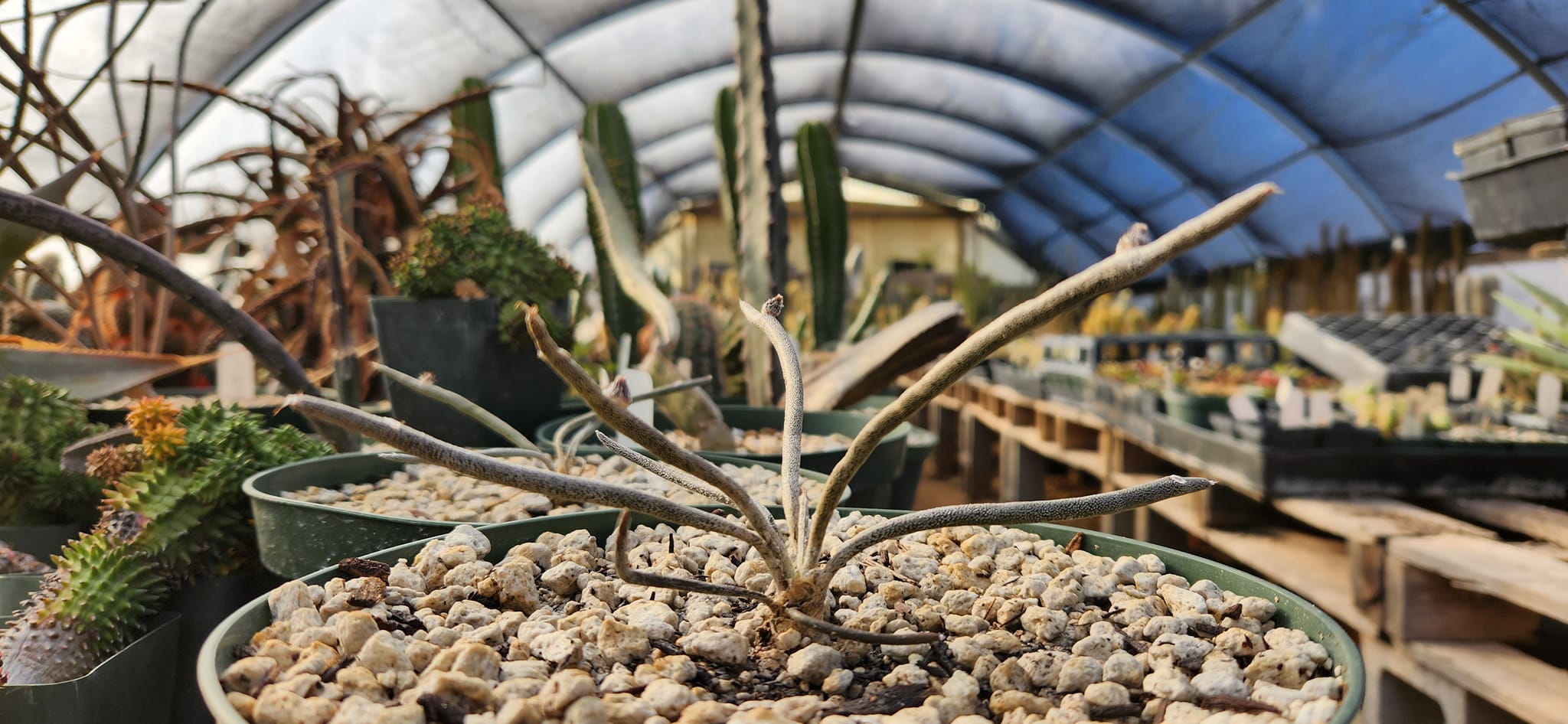
Critically Endangered (distribution under 100 km²) · single Nuevo León locality (coordinates withheld) · described 2002
Originally Digitostigma caput-medusae Velázco & Nevárez (Cactáceas y Suculentas Mexicanas 47(1), 2002); transferred to Astrophytum by D.R. Hunt in 2003. The holotype was collected on 28 August 2001. The species occupies a single confirmed wild locality in Nuevo León; coordinates are deliberately withheld from public databases including iNaturalist to slow the poaching that began on the day the species was described.
Morphology that explains the entry: this is the only Astrophytum without ribs. The body produces elongated tubercle-like protrusions resembling the snakes of a Medusa head, a habit found in no other species in the genus. CITES Appendix I and a USFWS species profile classify the species under the strictest international protection. Population numbers within the single locality have not been published; the location withholding is itself the conservation policy.
5. Ariocarpus bravoanus

Endangered (IUCN 2013) · no more than a few thousand individuals · primary site under 1 km² · three sites in San Luis Potosí, Mexico
H. M. Hernández and E. F. Anderson described Ariocarpus bravoanus in 1992, naming it for botanist Helia Bravo Hollis. Two subspecies are recognised: subsp. bravoanus at one primary site near Charcas, and subsp. hintonii at two additional sites near Matehuala (about 25 km apart). All three sites sit on Chihuahuan Desert limestone at roughly 1,400 to 1,500 metres. Anderson’s monograph classifies this as the smallest distribution of any species in the genus.
The discovery story matters: the species was first found in 1984 while a researcher was removing soil to collect a different herbarium specimen. The geophyte body sits almost flush with gravel surface, blending into the substrate so completely that expert collectors can walk past without seeing it. CITES Appendix I, NOM-059-SEMARNAT-2010 listed. Field number AL 212 (El Núñez, SLP) is the standard collector provenance reference; the IUCN 2013 EN category reflects Anderson and Fitz Maurice’s field counts of “no more than a few thousand individuals” across the three sites. The microsatellite paper by Hughes and collaborators (2008) describes the species as critically endangered in its natural habitat; the IUCN category remains EN pending official reassessment.
6. Copiapoa solaris
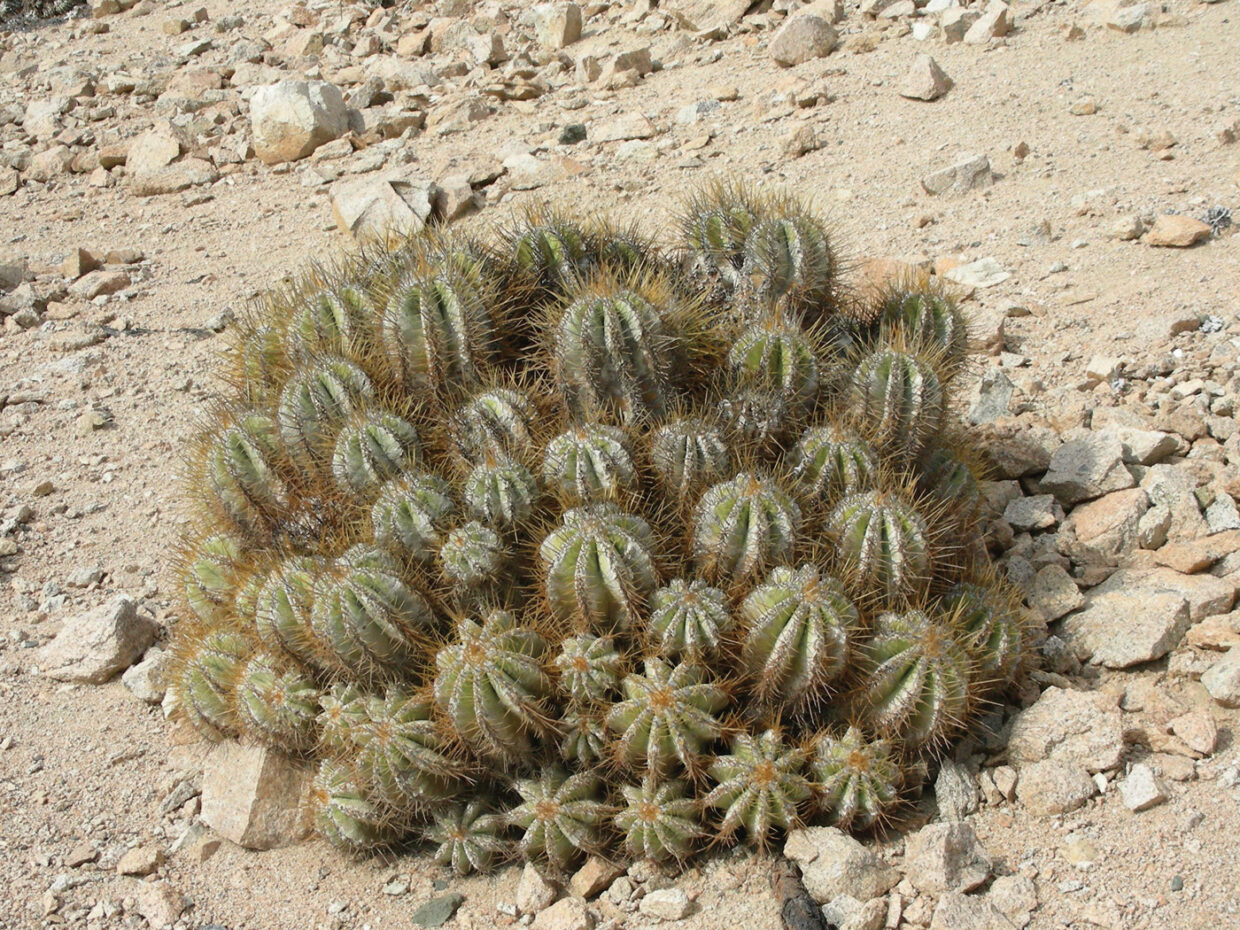
Critically Endangered (IUCN 2013, reassessed 2024) · EOO 1,500 km², AOO 100 km² · two populations · Antofagasta region, Chile
Friedrich Ritter described Copiapoa solaris in 1980 (originally Pilocopiapoa solaris). Two known wild populations: Blanco Encalada and El Cobre, both in the coastal mountains south of Antofagasta. The species is the dominant vascular plant in a hyper-arid fog corridor receiving 4 mm of annual rainfall, where survival depends entirely on coastal camanchaca fog and dew. The 2024 IUCN reassessment by Guerrero, Villalobo López and Peña confirmed Critically Endangered status.
Population structure tells the story. Mature plants are abundant within the two locality footprints; seedlings are not. The seedling cohort that should be replacing the mature plants is missing from most patches, so the population is structurally ageing without recruitment. Mining activity, dust pollution, and fog instability associated with regional climate change are the documented threats. Chilean national seed banking through INIA captures the genetic material against the population trajectory. The 2024 IUCN reassessment was published alongside the wider Copiapoa work that placed 82% of the genus in a threatened category.
7. Copiapoa cinerea subsp. krainziana
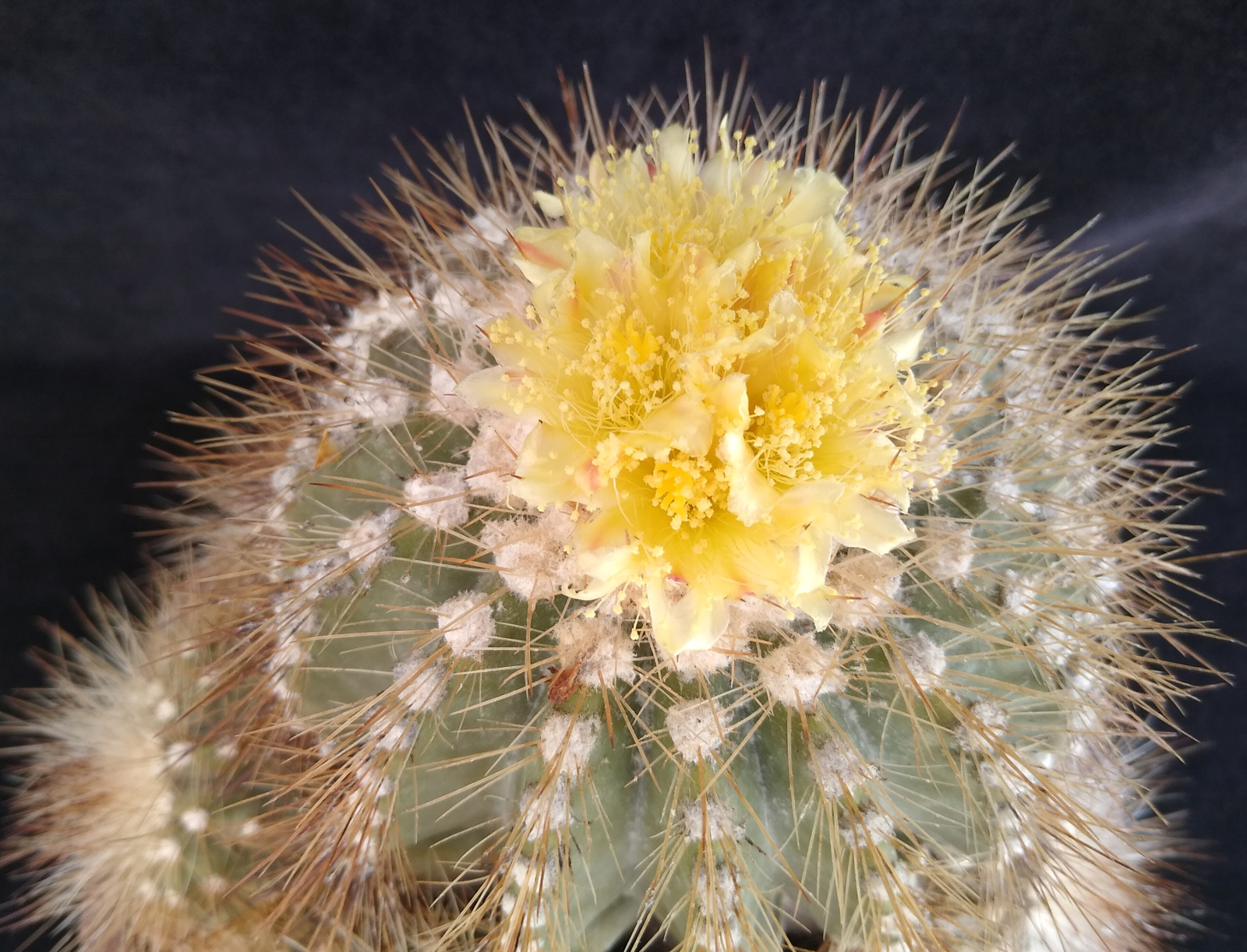
Critically Endangered (IUCN 2013, reassessed 2024) · EOO ~60 km² · single-canyon endemism · Quebrada San Ramón, Antofagasta, Chile
Originally Copiapoa krainziana Ritter (Taxon 12:30, 1963); now treated as subsp. krainziana of C. cinerea following Slaba 1997 and confirmed by Saldivia and collaborators in the 2018 Kew Bulletin molecular study using chloroplast DNA. The taxon’s entire wild existence is tied to a single canyon system north of Taltal, on north-facing slopes between 400 and 1,200 metres elevation. Distribution is the narrowest of any Copiapoa.
The plant is visually unmistakable: long, thin, cream-white to grey curving spines that distinguish it across decades of collector literature, forming clumps with age. The specific morphology made it a target for poaching from the 1960s onward, and the single-canyon endemism amplifies the impact of any collection pressure. Fog retreat associated with regional mining activity is the documented secondary threat. CITES Appendix II. The 2018 Saldivia paper used the genetics work to validate that this is a real distinct lineage worth conserving, even after the wider Copiapoa cinerea complex was lumped into a single species.
8. Mammillaria pectinifera
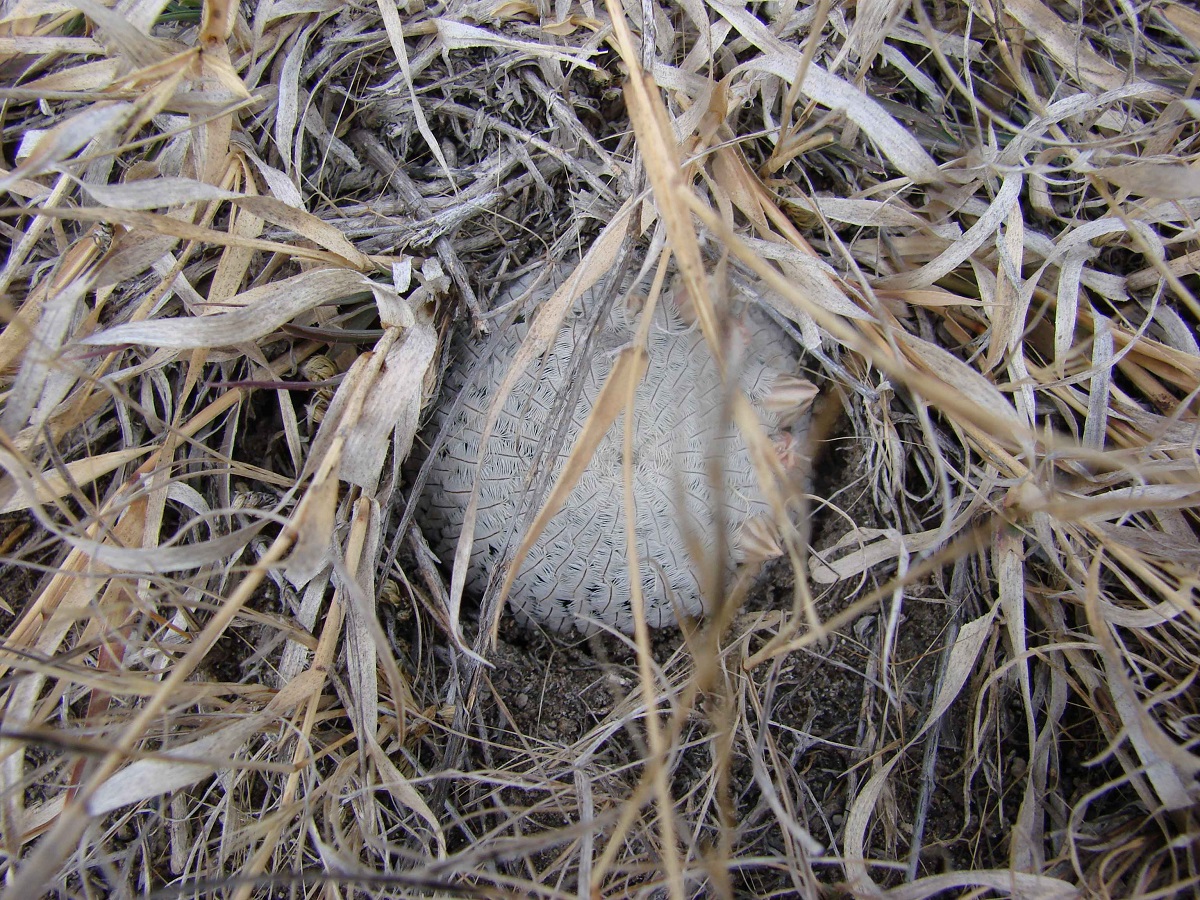
Threatened (Mexican NOM-059, IUCN listed) · 18 populations · EOO 16 km², AOO 2.5 km² · Tehuacán-Cuicatlán Valley, Mexico
Weber described this species in 1898. The geophyte habit is what makes it remarkable in the field: the body sits with its apex barely visible above the calcareous gravel, comb-like (pectinate) radial spines flush against the surface. The 2009 Scielo Mexico extinction risk assessment by Valverde and collaborators measured the EOO at 16 km² and the AOO at 2.5 km² across 18 fragmented populations in southeastern Puebla and northern Oaxaca.
The 2017 Plant Diversity microsatellite study by Fragoso-Martínez and collaborators measured effective population sizes between roughly 90 and 455 individuals per population cluster, evidence of deep genetic bottlenecks consistent with severe historical fragmentation. Forty-five percent of populations sit outside the Tehuacán-Cuicatlán Biosphere Reserve and have no formal protection. CITES Appendix I. Commercial collection has been the dominant decline driver across the documented record. A subspecies solisioides is sometimes recognised separately.
9. Aztekium ritteri
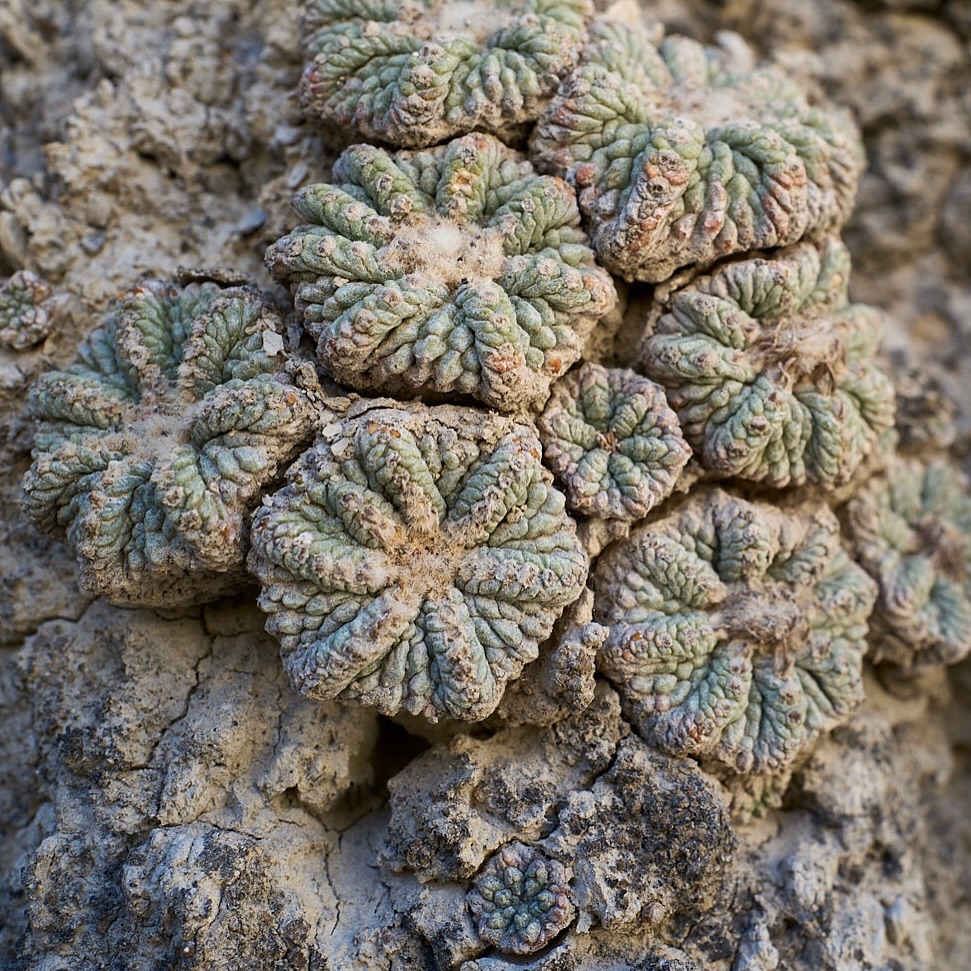
Least Concern (IUCN 2013) · multiple subpopulations on inaccessible cliffs · Rayones, Nuevo León, Mexico
Bödeker described Aztekium ritteri in 1929, the only species in its genus until A. hintonii joined it in 1992. Friedrich Ritter collected the type. The species was historically listed as Endangered, then downgraded to Least Concern after surveys uncovered multiple subpopulations on near-vertical limestone and gypsum cliffs through the Rayones valley, most of them in terrain that humans and browsers cannot reach. This entry ranks on collector scarcity and growth rate rather than IUCN category.
Growth rate is the differentiator. Wild plants add roughly one millimetre of body diameter per year. A four-centimetre wild specimen is forty years of growth on its anatomy. Cultivated seedlings reach half a centimetre after five years; seed germination runs under 5%; even grafted plants take seven to ten years to flower. The genus name references the appearance of an Aztec ruin (deep horizontal grooves giving the corky body the look of weathered stone). CITES Appendix I. The slowest cactus genus on Earth.
10. Aztekium hintonii
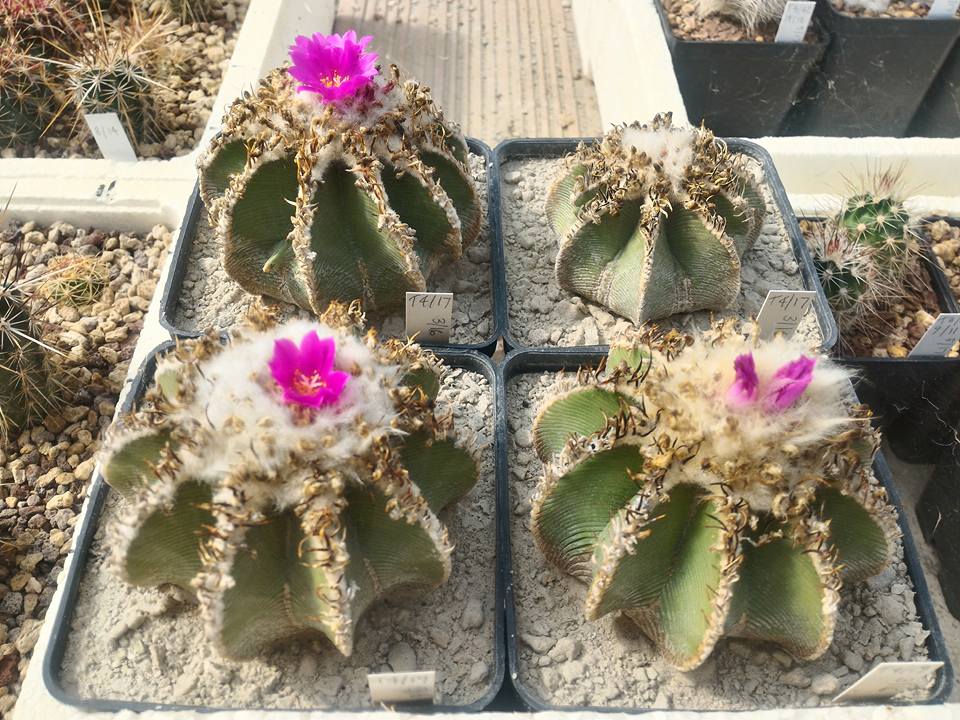
Near Threatened (IUCN 2022.2) · EOO ~50 km² · tens of millions of plants · Galeana, Nuevo León, Mexico
Glass and W. A. Fitz Maurice described Aztekium hintonii in 1992 in Cactáceas y Suculentas Mexicanas 37:4, naming the species for George Sebastian Hinton, who discovered it. The locality is a single area of gypsum cliffs at Galeana in Nuevo León, between 1,100 and 1,200 metres elevation, in association with Selaginella gypsophila. The IUCN estimate of tens of millions of plants is correct; the population narrowly misses Critically Endangered under criterion B1ab(v) because most of those plants sit on near-vertical cliff faces that human activity cannot reach.
The cultivation challenge is the gypsum-obligate substrate (calcium sulfate) which most growers cannot replicate accurately. Seed germination runs under 5%. CITES Appendix I. The discovery in 1990 made global cactus news because the genus had been monotypic for sixty-three years before hintonii joined ritteri; the same field expedition produced Geohintonia mexicana, covered at entry 14.
11. Discocactus horstii
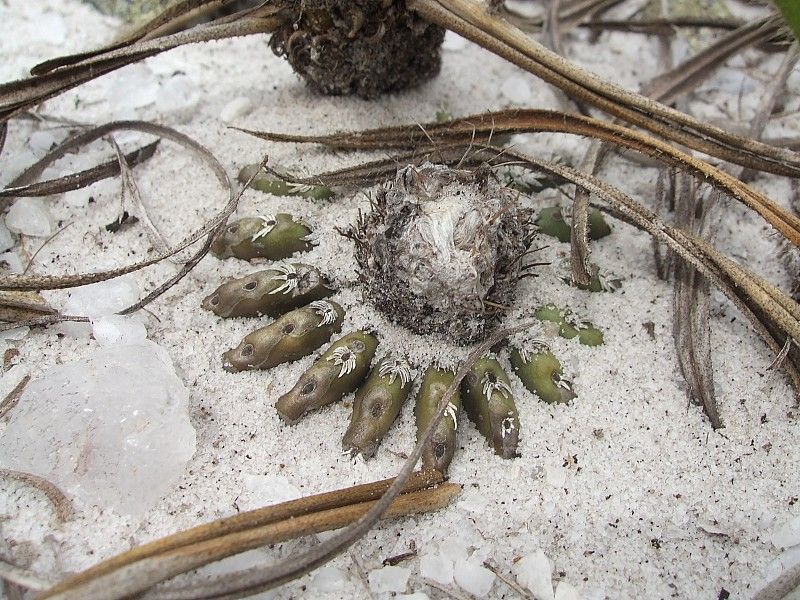
Vulnerable (IUCN 2010, EN in 2002) · restricted single locality · Serra do Barão, Minas Gerais, Brazil
Buining and Brederoo described Discocactus horstii in 1973, naming it for Leopoldo Horst (1918-1987), the German-Brazilian collector who found the plant in 1971. The wild population is restricted to Serra do Barão near Grão Mogol in northern Minas Gerais, on quartz-gravel substrate at roughly 1,000 metres. Plants are tiny (maximum 6 centimetres diameter) and depressed-globular, growing under shrubs in seasonally dry tropical biome. The 2002 IUCN assessment classified the species as Endangered; the 2010 reassessment downgraded to Vulnerable on improved survey data, though some Brazilian national lists treat the species as Critically Endangered.
Conservation pressure comes from agricultural conversion and from historic collector pressure (Horst himself exported specimens before Brazilian export controls tightened). The night-blooming, fragrant white flowers emerging from the cephalium are the species’ visual hook and the moth-pollinated reproductive mechanism. CITES Appendix I. The species is grafted in most cultivation collections; establishing seed grown plants of meaningful size is exceptionally difficult.
12. Mammillaria napina
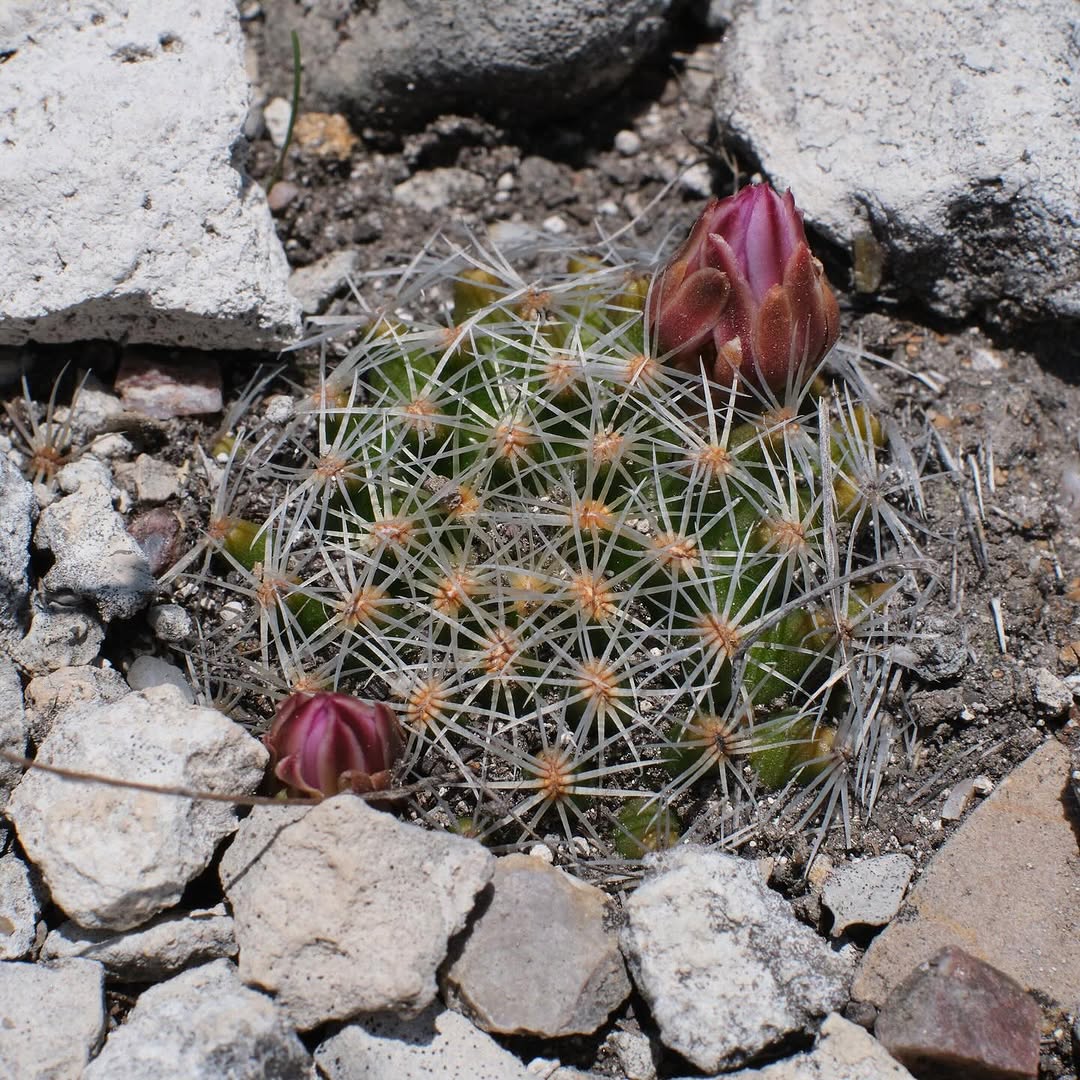
Near Threatened (IUCN 2013) · 13 populations · mountains west of Tehuacán, Puebla, Mexico
J. A. Purpus described Mammillaria napina in 1912 from the mountains west of Tehuacán. The species shows the geophyte habit at its extreme: a deep taproot system holds most of the plant’s biomass underground, while only a flat rosette of pectinate spines emerges above the soil surface. Thirteen wild populations are documented, eight inside the Tehuacán-Cuicatlán Valley and five outside, between 1,700 and 2,350 metres elevation.
Most populations sit outside any protected area. Continuing wild collection by tour groups and individual collectors is documented in the conservation literature; the taproot system makes successful transplantation almost impossible, so most collected plants die in transit or shortly after. CITES Appendix II, NOM-059-SEMARNAT-2010 listed under special protection. The peer-reviewed genetics literature (Redalyc Unidades Genéticas, 2018) describes the species as critically endangered in real-world condition; the formal IUCN category remains NT pending the next reassessment cycle.
13. Mammillaria luethyi
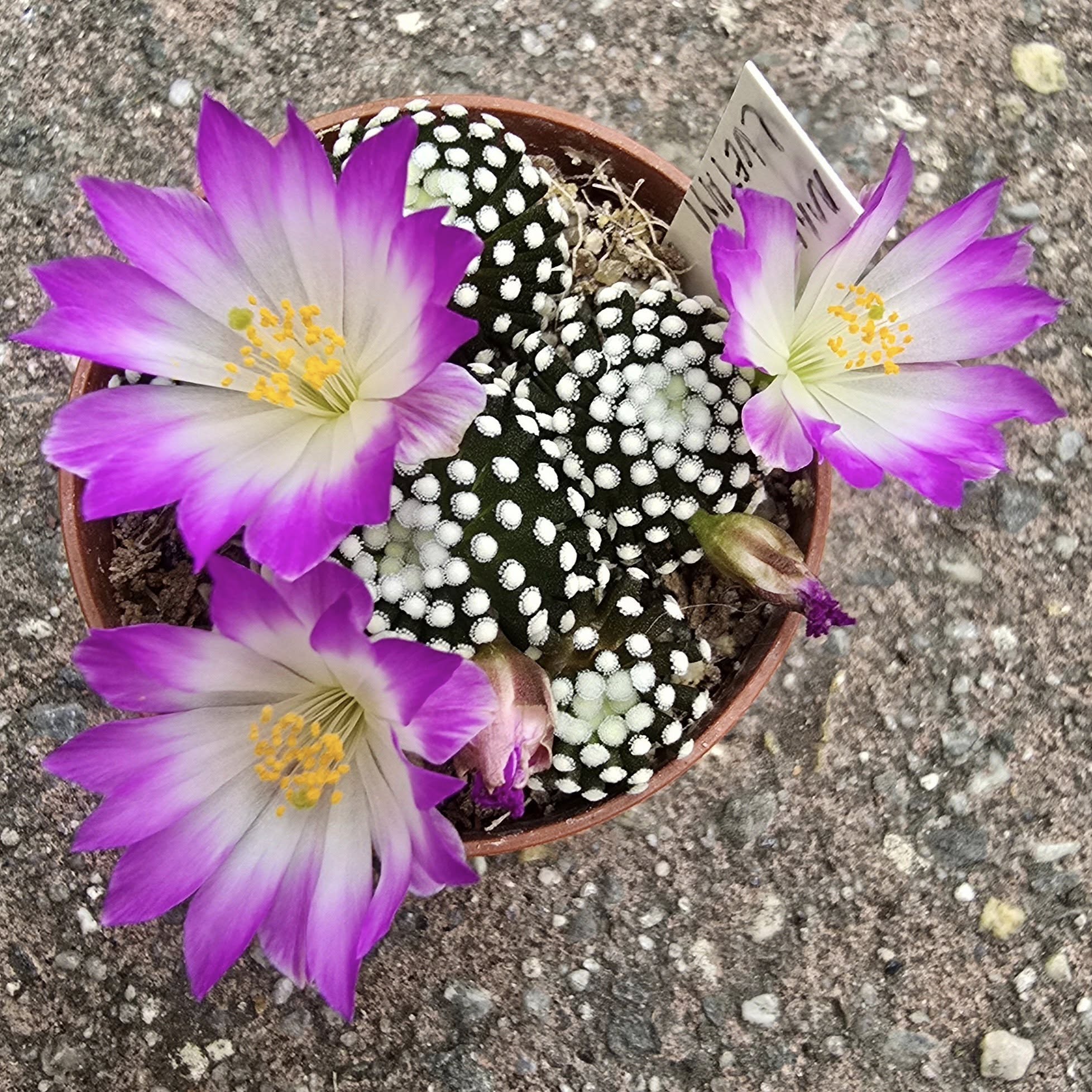
Vulnerable (IUCN) · original site <200 m² · three populations now known (locations withheld) · northern Coahuila, Mexico
George S. Hinton described Mammillaria luethyi in 1996, naming it for Jonas Lüthy who identified the rediscovery locality. The species had been known only from a 1952 Kodachrome slide taken by Norman Boke at Oklahoma University, who photographed an unidentified dwarf cactus on a windowsill in Ciudad Acuña; live plants died in transit during border fumigation, and the species disappeared from field knowledge for forty-four years.
The original rediscovery site, on horizontal limestone slabs in northern Coahuila at roughly 800 metres, was under 200 square metres in extent and contained fewer than 200 plants. A second population discovered in 2006 several kilometres distant runs to many thousands of individuals; a third has since been located. Exact localities are kept secret. The species moved from a presumed extinction to mass propagation in South Korean nurseries within a decade of rediscovery; current cultivated specimens routinely sell for $10 to $40, documenting how quickly the cultivation market can break a scarcity story. CITES Appendix I.
14. Geohintonia mexicana
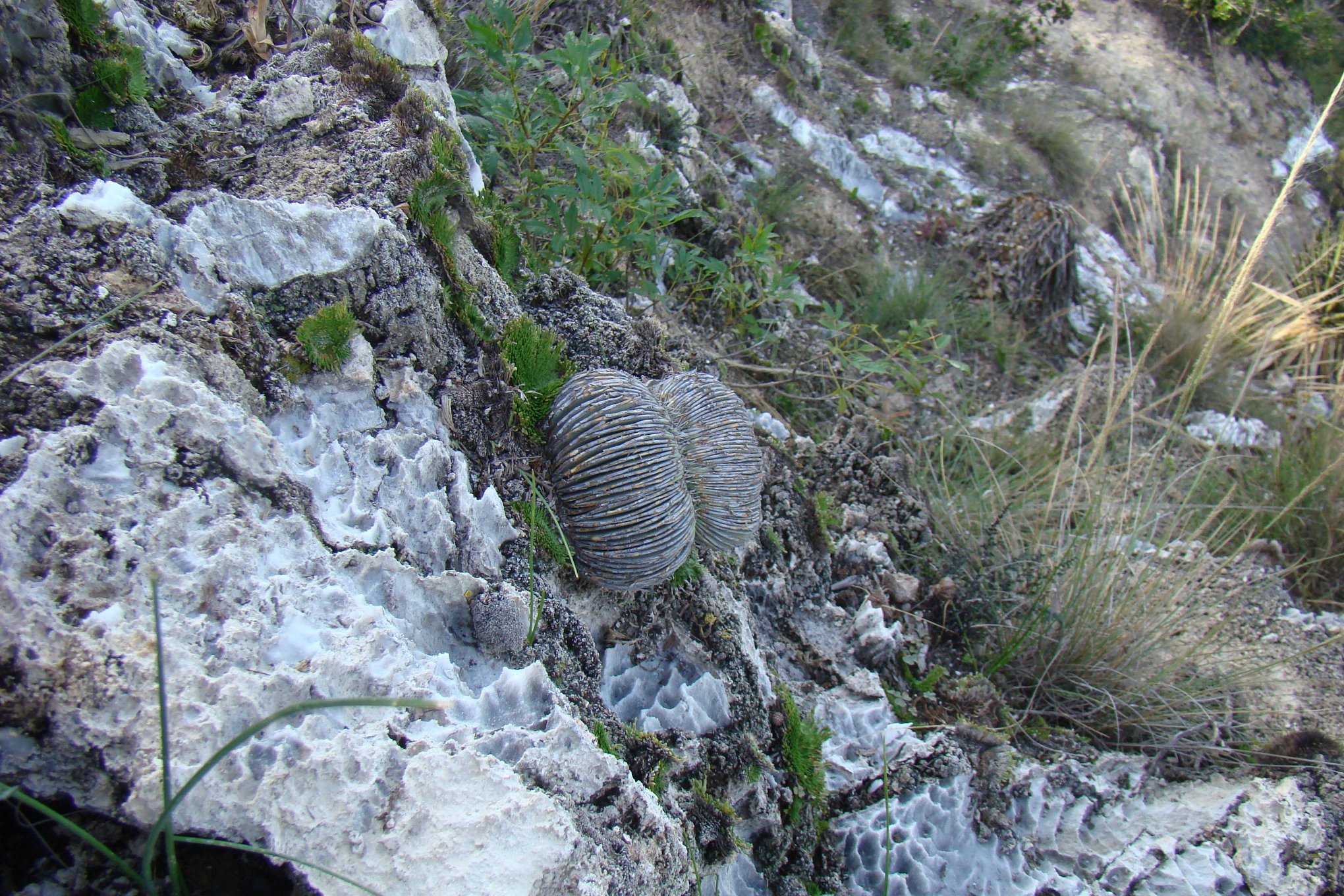
Least Concern (IUCN 2013) · EOO ~25 km² · 100,000-1,000,000 individuals · Rayones, Nuevo León, Mexico
Glass and W. A. Fitz Maurice described Geohintonia mexicana in 1992, the only species in its monospecific genus. The 1990 Hinton field expedition that produced Aztekium hintonii also produced this plant; both grow on gypsum substrates near Rayones at roughly 1,200 metres. Estimated population is between 100,000 and one million individuals. The Least Concern category reflects population size; the entry on this list reflects the monospecific genus status and the 25-km² effective range.
Visually the species reads as a blue-grey Aztekium-relative, ribbed and short-bodied, but it occupies an entirely separate genus. The two genera (Aztekium and Geohintonia) sympatric on the same gypsum cliff system represent one of the most concentrated assemblages of monotypic-or-near-monotypic genera anywhere in Cactaceae. CITES Appendix I. Cultivated material is almost exclusively grafted because seed grown plants grow at Aztekium rates.
15. Sclerocactus brevihamatus subsp. tobuschii
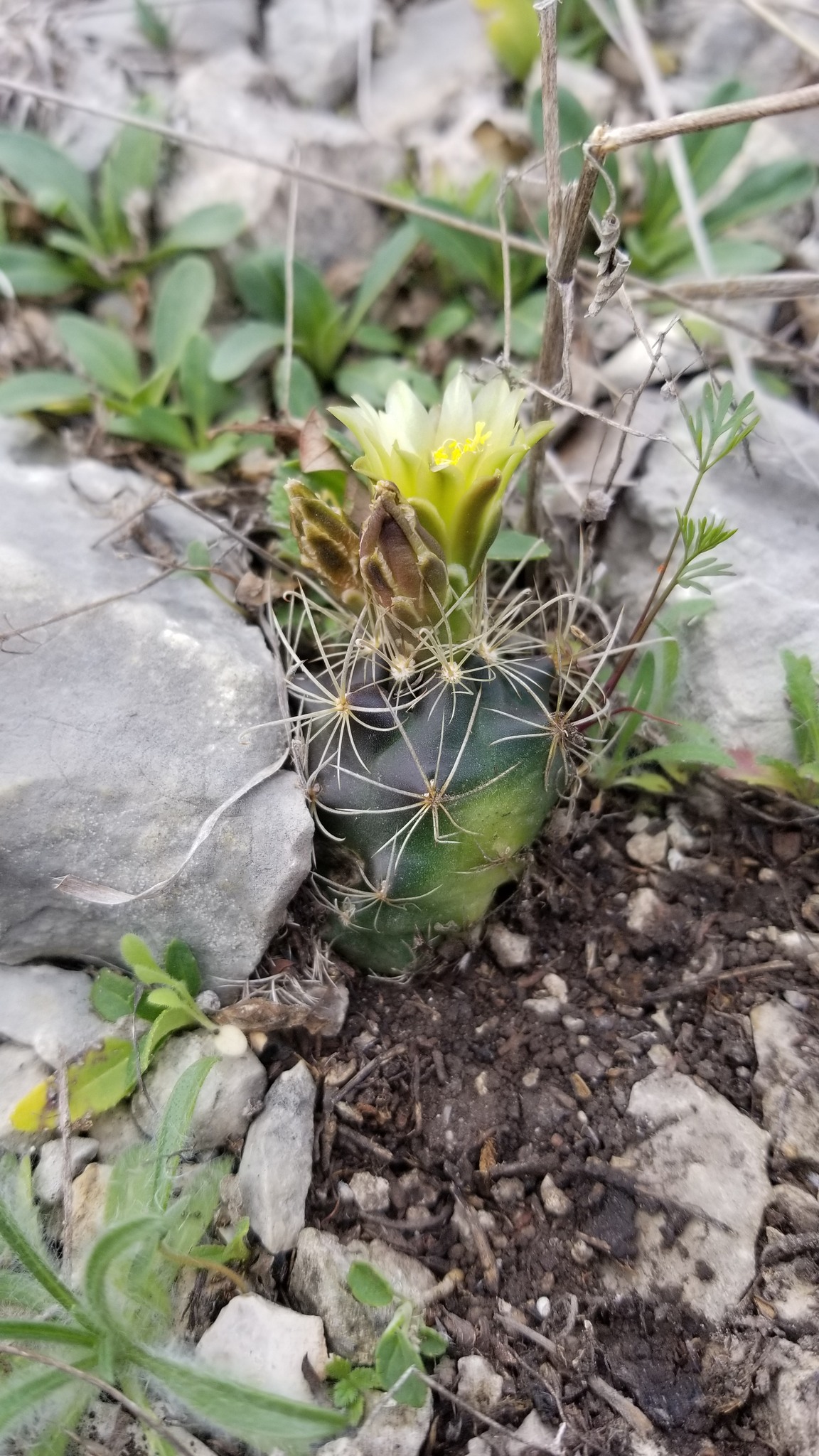
U.S. ESA Threatened (downlisted from Endangered 2018) · 3,300+ individuals at 105 sites · Edwards Plateau, Texas, USA
Originally Sclerocactus tobuschii Marshall; transferred to subspecies rank within S. brevihamatus by N. P. Taylor in 1998. The species is the only U.S. endemic on this list and the only entry where the conservation story trends positive. At ESA listing in 1979, fewer than 200 individuals were known across four sites. The 2017 USFWS Species Status Assessment recorded over 3,300 individuals across 105 sites in nine Edwards Plateau counties: Bandera, Edwards, Kerr, Kimble, Kinney, Real, Uvalde, and Val Verde.
The 2018 Federal Register downlisting from Endangered to Threatened (effective 15 May 2018) was based on improved survey methodology and habitat protection rather than on population growth alone. The species occupies shallow rocky limestone soils in cedar-oak scrubland, with substrate specificity that historically restricted the range. The common name (Tobusch fishhook cactus) honours Joseph Tobusch, the rancher on whose land the species was first found. Wild collection remains a federal crime under the ESA.
What keeps these cacti on the edge of extinction?
Four drivers recur across the fifteen entries. Narrow endemism is the foundation: most of the list occupies a single canyon, cliff system, or gypsum outcrop, with no other known wild population to fall back on if the primary site is degraded. Extreme habitat specificity stacks on top: gypsum cliffs, quartzite slabs, calcareous gravel, fog-fed coastal corridors, and limestone shelves are not interchangeable substrates, and the fungal and bacterial communities each one supports do not transplant.
Slow growth and low recruitment compound the structural risk. Aztekium at one millimetre of body diameter per year, Copiapoa solaris with mature populations and almost no seedling cohort, Mammillaria pectinifera with effective population sizes in the dozens to low hundreds, and Mammillaria duwei at around 500 mature plants in two Guanajuato canyons: these plants cannot rebuild fast after a setback. And legal status is the fourth lever. CITES Appendix I prohibits commercial international trade in most of the list; the U.S. ESA, Mexican NOM-059, and Chilean CONAF protect the rest. Where conservation law has held the line (Sclerocactus tobuschii on the Edwards Plateau), the trend reverses. Where enforcement is weaker, the trend continues downward.
For the genera most often confused as “rare in the wild” versus “rare in cultivation,” see our analysis of cultivation-market values and the encyclopedia hubs for Copiapoa, Ariocarpus, Aztekium, Astrophytum, Turbinicarpus, and Mammillaria.
Which of the rarest cacti can still be saved?
The recovery story is real for some entries on this list. Sclerocactus brevihamatus subsp. tobuschii moved from 200 wild individuals at four sites in 1979 to over 3,300 at 105 sites at the 2018 ESA downlisting. Mammillaria luethyi was thought lost for forty-four years between Boke’s 1952 photograph and Hinton and Lüthy’s 1996 rediscovery; today the species is abundant in cultivation worldwide. The Tehuacán-Cuicatlán Biosphere Reserve protects 45 of the 70 columnar cactus species in Mexico and provides legal cover for several Mammillaria on this list.
Three things move the needle. Habitat protection inside biosphere reserves and national parks is the foundation. Ex-situ conservation through botanical gardens and seed banks (the Huntington’s International Succulent Introductions programme since 1958, INIA in Chile, the Cante Botánico in Mexico) preserves genetic material against population trajectories. Legitimate seed grown propagation in specialist nurseries reduces the demand pressure that drives wild collection. The plants on this list are not theoretical concerns; they are the canaries for the family as a whole, documented further in our analysis of how field photography reshaped Cactaceae.
Frequently Asked Questions
What is the rarest cactus in the world?
By published census data, Mammillaria herrerae is the rarest cactus in the world. The 2012 in-situ analysis in Bradleya 30 counted approximately 430 mature individuals across two subpopulations in Cadereyta de Montes, Querétaro, Mexico, with an extent of occurrence of 3.4 km² and an area of occupancy of 0.87 km². The species is listed as Critically Endangered (IUCN 2013), CITES Appendix I, and protected under Mexican NOM-059-SEMARNAT-2010.
Are any cacti extinct in the wild?
Several historic cactus species have not been observed in the wild for decades and may be extinct, but extinction is difficult to confirm conclusively for cryptic geophytes that spend most of their life invisible above the soil surface. Mammillaria luethyi was treated as extinct for 44 years between Norman Boke’s 1952 photograph and Hinton and Lüthy’s 1996 rediscovery. Several subpopulations of Uebelmannia buiningii at Serra Negra have disappeared since the 1968 type description; whether the species as a whole survives long term depends on the remaining 1,200 to 1,900 individuals.
What percentage of cactus species are threatened with extinction?
The 2015 Nature Plants assessment by Goettsch and collaborators classified 31% of all cactus species as threatened with extinction, ranking Cactaceae as the fifth most threatened taxonomic group on Earth. The 2024 IUCN reassessment of Copiapoa alone placed 82% of the genus in a threatened category, up from 55% in 2013. Habitat loss and illegal collection are the two dominant drivers across the family.
Why is Aztekium ritteri so rare in cultivation if it is Least Concern?
Aztekium ritteri sits at IUCN Least Concern because the wild population includes multiple subpopulations on near-vertical Rayones cliffs that humans cannot reach. Cultivation rarity is a different question. Wild plants add approximately one millimetre of body diameter per year, seedlings reach half a centimetre after five years, seed germination runs under 5%, and even grafted plants take seven to ten years to flower. The genus is the slowest in Cactaceae, which makes legitimate seed grown specimens of any meaningful size scarce in the cultivation market regardless of wild population status.
How many wild Mammillaria herrerae plants are left?
Approximately 430 mature individuals across two subpopulations in Cadereyta de Montes, Querétaro, based on the 2012 census published in Bradleya 30. An earlier 2002 IUCN assessment recorded 50 plants at a single site; the lower 2002 number reflected limited survey coverage rather than a different population, and the 2012 figure is the more accurate baseline. Both represent a population collapse exceeding 95% from 1980s levels, almost entirely from commercial collection.
Why are these cacti so expensive when they are this rare?
Wild collection of every species on this list is illegal under one or more legal frameworks (CITES Appendix I or II, the U.S. Endangered Species Act, Mexican NOM-059-SEMARNAT-2010, Chilean CONAF protections). The cultivation market for these species runs through legitimately propagated material: decades-old seed grown specimens that command four-figure to five-figure prices because the time cost of cultivation is non-compressible. A 30-year seed grown Copiapoa cinerea represents 30 years of careful growing, not 30 years of risk to a wild population.
IUCN Red List, Cactaceae assessments (Mammillaria herrerae 2013; Turbinicarpus alonsoi 2013; Uebelmannia buiningii 2020; Astrophytum caput-medusae; Ariocarpus bravoanus 2013; Copiapoa solaris 2013, reassessed 2024; Copiapoa cinerea subsp. krainziana 2013, reassessed 2024; Mammillaria pectinifera; Aztekium ritteri 2013; Aztekium hintonii 2022; Discocactus horstii 2002 EN, 2010 VU; Mammillaria napina; Mammillaria luethyi; Geohintonia mexicana 2013) · Goettsch, B. et al., “High proportion of cactus species threatened with extinction,” Nature Plants 1, 15142 (2015) · Bradleya 30 (2012), In situ analysis of the current conservation status of Mammillaria herrerae · Valverde, T. et al., “Assessing the ecological status of Mammillaria pectinifera,” Biological Conservation 124 (2005) · Martínez-Ramos, M. et al., “Evaluación del riesgo de extinción de Mammillaria pectinifera,” Revista Mexicana de Biodiversidad 80(1), 2009 · Fragoso-Martínez, I. et al., “Landscape genetics reveals inbreeding and genetic bottlenecks in Mammillaria pectinifera,” Plant Diversity 39(2), 2017 · Ribeiro-Silva, S. et al., “Conservation Status of Uebelmannia Buining (Cactaceae) in a Brazilian Global Biodiversity Hotspot” (2021) · Santos-Gally, R. et al., floral and reproductive biology of Uebelmannia buiningii, Folia Geobotanica (2018) · Saldivia, P., Guerrero, P.C. et al., Copiapoa subsection Cinerei, Kew Bulletin (2018) doi:10.1007/s12225-018-9780-3 · Hughes, M. et al., microsatellite loci for Ariocarpus bravoanus, Molecular Ecology Resources (2008) · Anderson, E.F., Ariocarpus Revisited, Haseltonia 5 (1997) · Anderson, E.F., The Cactus Family, Timber Press (2001) · Hunt, D., Taylor, N. and Charles, G. (eds.), The New Cactus Lexicon, DH Books (2006) · Hernández, H.M. and Gómez-Hinostrosa, C., Mapping the Cacti of Mexico, Parts I and II (DH Books, 2011-2015) · Royal Botanic Garden Edinburgh, Endemic Plants of Chile · Plants of the World Online, Royal Botanic Gardens Kew · US Fish & Wildlife Service, Sclerocactus brevihamatus subsp. tobuschii Species Status Assessment (2017) · Federal Register 2018-10206, ESA downlisting rule (effective 15 May 2018) · CITES Appendices I, II, III · Mexican NOM-059-SEMARNAT-2010 · CONAF Chile, protected species designations