Copiapoa — Complete Collector’s Guide
Encyclopedia
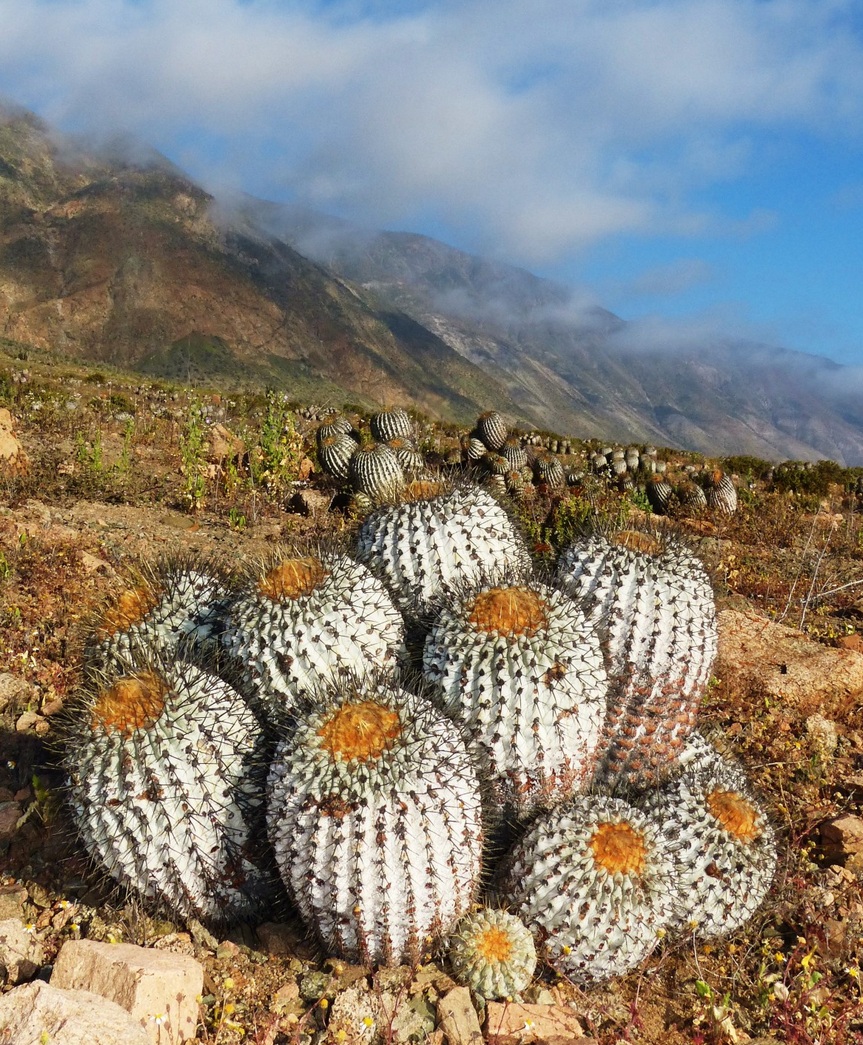
~32 accepted species
- C. cinerea
- C. gigantea
- C. laui
- C. krainziana
- C. hypogaea
- C. humilis
- C. solaris
- C. esmeraldana
- C. dealbata
- C. coquimbana
5 accepted subspecies
- C. cinerea subsp. cinerea
- C. cinerea subsp. columna-alba
- C. cinerea subsp. krainziana
- C. humilis subsp. humilis
- C. humilis subsp. tenuissima
No cactus genus is more inseparable from its geography than Copiapoa. Every species grows in the Atacama Desert of northern Chile and nowhere else on Earth — a narrow strip of hyper-arid coast and inland ranges that is, depending on how you measure it, the driest non-polar desert on the planet. Some sites within Copiapoa’s range receive virtually no measurable rainfall across decades. The plants do not survive despite this. They evolved for it.
The genus was formally established by Nathaniel Britton and Joseph Rose in 1922, separating it from Echinocactus and recognising it as an exclusively Chilean lineage adapted to the fog desert. But the plants themselves are far older than the name. Their morphological diversity — spanning porcelain white to near-black, miniature globes to towering columnar giants, smooth ribs to ferociously spined ridges — reflects adaptation pressures operating over tens of thousands of years of geological and atmospheric change along the Atacama’s coast.
For collectors, Copiapoa occupy a category of their own. They are slow, demanding, and increasingly rare in habitat. A well-grown specimen with documented provenance represents years of patience and, increasingly, a contribution to conservation. This guide draws on current taxonomy, field ecology, and cultivation science to give you a complete picture of the genus.
Contents
The Atacama — Where They Live
The Atacama stretches roughly 1,000 km along the Pacific coast of Chile, bounded by the Andes to the east and the ocean to the west. Its extreme aridity results from a combination of the cold Humboldt Current running northward offshore, a persistent subtropical high-pressure system, and the rain-shadow effect of the Andes. Together these factors create a desert where some interior sites have no reliable rainfall record at all.
Yet Copiapoa thrive. The reason is fog. The cold Humboldt Current chills the marine air layer, generating dense coastal fog — known locally as the camanchaca — that advances inland from the coast, often reaching elevations of 1,000 m or more before dissipating. Copiapoa have evolved to intercept this moisture directly: fog condenses on spines and epidermis, runs down the stem, and is absorbed through the root zone. The plants do not need rain. What they need is the nightly marine inversion layer that the Humboldt delivers reliably year-round.
The fractured geology of the Atacama exposes raw mineral substrates with almost no topsoil — pale granites, dark volcanic massifs, iron-rich belts, and gypsum-laced flats. These substrates drain instantly, have minimal organic content, and are hostile to most plant life. Copiapoa not only tolerate this but appear to require it. Field evidence from recent GPS-integrated population surveys suggests certain morphological forms recur predictably in association with specific substrate types, reinforcing the link between geology, chemistry, and plant form.
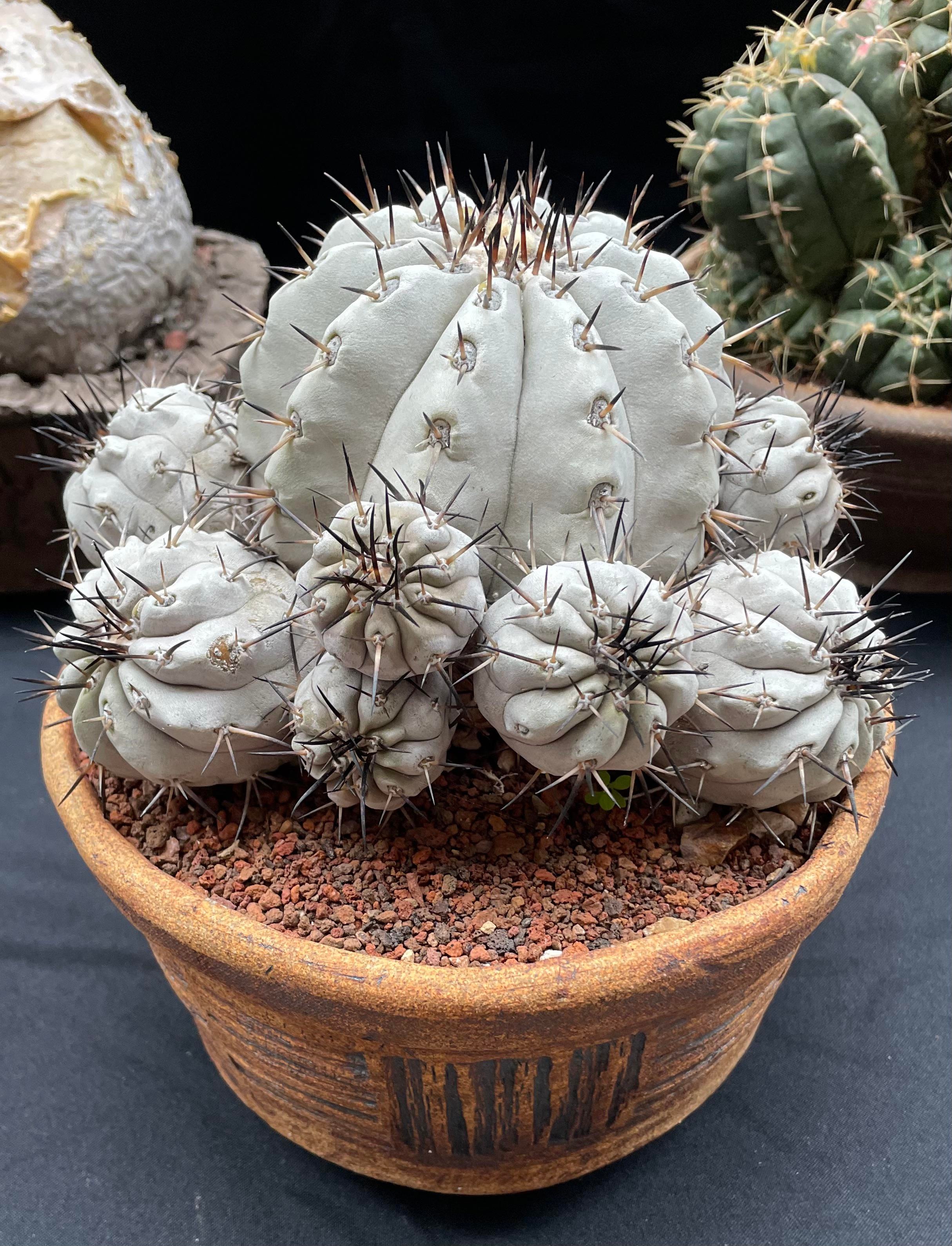
Fog Ecology and CAM Physiology
Copiapoa use Crassulacean Acid Metabolism (CAM) photosynthesis — a strategy that separates gas exchange and carbon fixation in time rather than space. Unlike most plants, which open their stomata during the day, Copiapoa open theirs primarily at night. Cooler temperatures and higher nocturnal humidity sharply reduce transpirational water loss while allowing CO₂ uptake. This CO₂ is fixed as malic acid and stored in cellular vacuoles. During daylight hours, stomata remain closed. Stored CO₂ is released internally and fed into the Calvin cycle, allowing photosynthesis to proceed under intense solar radiation without exposing the plant to severe water loss.
This metabolic rhythm aligns precisely with the Atacama’s diurnal structure. Coastal and inland habitats routinely experience night-to-day temperature swings of 10 to 15°C, creating a predictable window for nocturnal gas exchange and surface condensation. The same nighttime conditions that favor CAM activity also coincide with fog interception and vapor condensation on spines and epidermis. Gas exchange, moisture acquisition, and thermal reset occur together as a single nighttime operating regime.
A critical nuance for cultivation: water uptake and visible growth are not simultaneous in CAM plants. Hydration initiates nocturnal gas exchange and internal metabolic recovery before any measurable tissue expansion occurs. In Copiapoa, nighttime fog or minor hydration events restore cellular water status and metabolic balance, but growth remains restrained until sufficient carbon fixation and internal repair have occurred. When bulk water is supplied repeatedly under warm nights, this latency is overridden. The plant shifts prematurely into hydraulic expansion before metabolic stabilization is complete — the visible result being softened tissue, diluted pigmentation, loss of farina integrity, and erosion of the compact armored morphology seen in habitat plants.
This explains something puzzling to new growers: Copiapoa tolerate months without water yet decline quickly under frequent watering in warm conditions. They evolved for high-frequency, low-volume moisture from fog — not for the boom-and-bust cycles of a rain-adapted desert. Practices that work for saguaros or ferocacti often produce soft, unstable plants in Copiapoa.
The Four Ecotype Zones
The most useful framework for understanding Copiapoa — both in habitat and in cultivation — is the four ecotype zones defined by fog frequency, elevation, UV intensity, and substrate chemistry along the Atacama gradient. Nearly every difference in cultivation response, including light tolerance, watering needs, heat sensitivity, farina behavior, and pest resistance, traces directly to a plant’s native ecotype zone.
Zone 1 — Coastal Littoral Fog Belt. Immediately coastal, under persistent dense fog influence. Plants here (classic C. cinerea coastal forms, C. esmeraldana) develop heavy white farina as a direct physiological response to constant fog hydration and UV load. In cultivation, these plants respond well to cool, filtered conditions that approximate dense fog. They cannot be “hard grown” into dark inland forms — their chalk-white coat is genetic, not induced by stress. Pushing them too hard causes grey-out and etiolation.
Zone 2 — Mid-Elevation Transitional. The fog belt thins here. Plants experience greater UV and more pronounced temperature cycles. Farina is present but less dense. C. coquimbana, many C. humilis forms, and C. dealbata occupy this zone. In greenhouse conditions these develop attractively, though often slightly greener than habitat equivalents. They respond to moderate stress with improved pigmentation.
Zone 3 — Inland Fog Shadow. Fog penetrates only episodically. Plants here are adapted to intense UV, wide thermal cycling, and almost no liquid water. Dark epidermis and dense, often black spination characterise this zone. C. hypogaea, certain inland C. cinerea ecotypes, and several smaller species occupy this zone. In cultivation they respond well to stress — mineral substrates, restricted water, full sun — developing dense spination and dark skin. Greenhouse conditions produce soft, green, uncharacteristic plants.
Zone 4 — High Montane. The most extreme conditions: thin air, intense UV, cold nights, minimal moisture. Plants from this zone are typically compact, bronze to golden in coloration, and heavily armored. They perform poorly in greenhouses without strong UV, cold nights, and restricted soil moisture. This is also where collector rarity peaks — high-elevation populations are often extremely restricted in range and slow-growing even by Copiapoa standards.
A Century of Taxonomy
The taxonomic history of Copiapoa is a case study in the tension between observational precision and biological reality. The genus was established in 1922 by Britton and Rose. Over the following decades, particularly through Friedrich Ritter’s intensive fieldwork in the 1950s through 1980s, the species count ballooned to over 50 published names. Ritter described narrowly defined species based on localized morphology — an approach that predated both ecological synthesis and molecular analysis.
Despite the inflation, Ritter’s work retains lasting value. His field photography provides some of the earliest in-situ visual documentation of Copiapoa populations, often predating widespread collecting pressure. His locality records, while lacking GPS precision, align closely with later fieldwork and remain useful for correlating historical and present-day distributions. Labels he introduced — such as the melanohystrix “black porcupine” designation — are best understood today as descriptions of recurring morphological phenotypes rather than distinct evolutionary lineages.
The modern synthesis began with Graham Charles’s 1998 Cactus File treatment, which substantially reduced accepted species and emphasized morphological continuity across the genus. The definitive molecular shift came in 2015 when Larridon and colleagues applied three plastid DNA markers across 39 Copiapoa taxa. The result was striking: genetic divergence across much of the genus is low, and plastid markers alone cannot resolve boundaries between many historically named taxa. Within the cinerea complex, samples representing C. cinerea subsp. cinerea, subsp. columna-alba, and subsp. krainziana showed no plastid sequence variation across any of the three markers. The forms are morphologically distinct and geographically structured, but not separately evolved lineages in any molecular sense.
A 2018 follow-up study added nuclear microsatellite evidence. More than 92% of genetic variation was distributed within taxa rather than between them. Bayesian clustering found no statistically supported population structure at the level of the four named taxa — a single undifferentiated gene pool was the most parsimonious result. The 2025 Sarnes monograph, drawing on GPS-integrated population mapping across hundreds of field sites visited between 2020 and 2024, represents the most data-intensive treatment to date, framing Copiapoa diversity as geographically structured morphological continuity rather than a collection of separately evolved species.
The Cinerea Complex
Copiapoa cinerea is the anchor species of the genus and the most widely recognised. Its globular to short-cylindrical stems are coated in silver-white farina that reflects sunlight and reduces water loss. Mature specimens reach 30 to 50 cm in diameter, occasionally more, and can live over two centuries. The species ranges across the Antofagasta and Atacama regions from sea level to above 2,000 m, with markedly different ecotypes at each elevation band.
Three subspecies are currently accepted. Subsp. cinerea is the coastal fog-belt form — densely pruinose, broad-ribbed, with heavy apex wool and dark spination. Subsp. columna-alba is the tall, columnar form with brilliant white farina, found in transitional elevations around Taltal; molecular data show no plastid differentiation from subsp. cinerea, confirming it as a geographically structured ecotype within the same lineage. Subsp. krainziana is the most restricted and arguably most threatened, limited to the hillsides of the San Ramón Valley near Taltal; it is characterized by distinctive white, hair-like spines and has been assessed as potentially Critically Endangered given its extremely small area of occupancy.
The historical tendency to treat plants within the cinerea complex as separate species — particularly columna-alba and krainziana — reflects the ecological interpretation problem that runs through all of Copiapoa taxonomy. These forms look different enough that early observers naturally named them as separate taxa. Modern molecular and population data show they are better understood as geographically structured expressions of a single lineage, shaped over geological timescales by fog frequency, substrate, and thermal regime. The names function as geographic phenotype labels — useful for provenance tracking and collector reference — rather than as indicators of separate evolutionary branches.
Species Profiles
Copiapoa cinerea
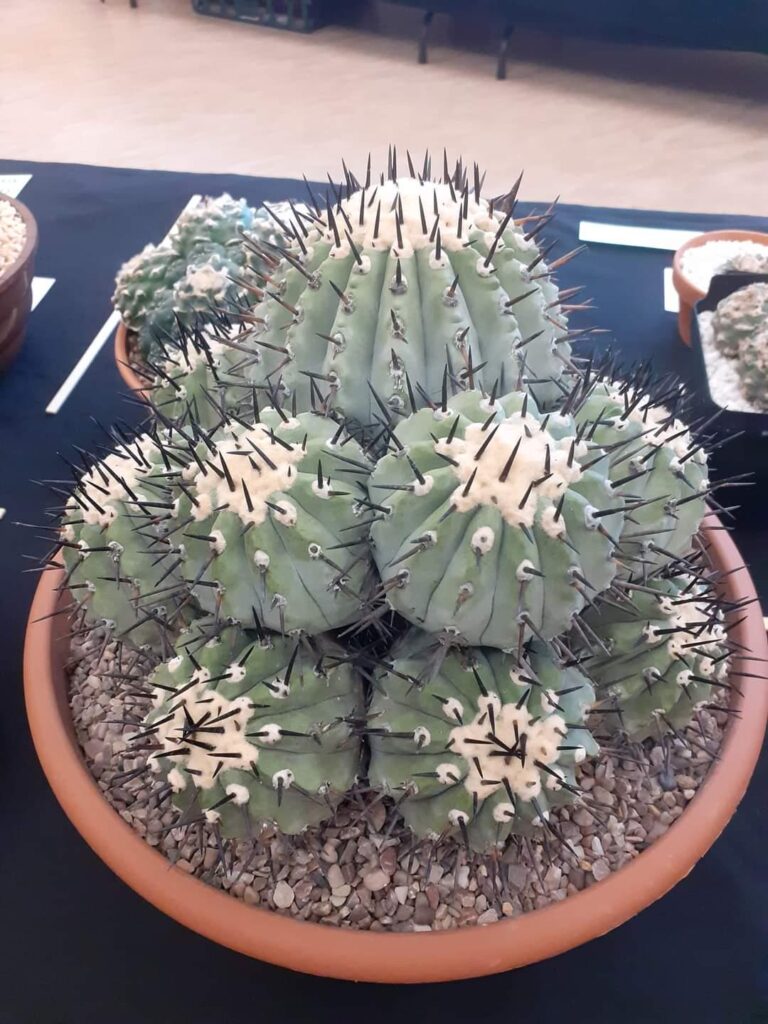
The type anchor of the genus. Silver-white pruinose stems, 30–50 cm diameter at maturity, reaching over a metre in the largest clumping specimens. Grows from sea level to above 2,000 m across the Antofagasta and Atacama regions. Three accepted subspecies: cinerea (coastal fog belt), columna-alba (tall columnar transitional form near Taltal), and krainziana (extremely restricted, white-spined, San Ramón Valley).
Copiapoa gigantea
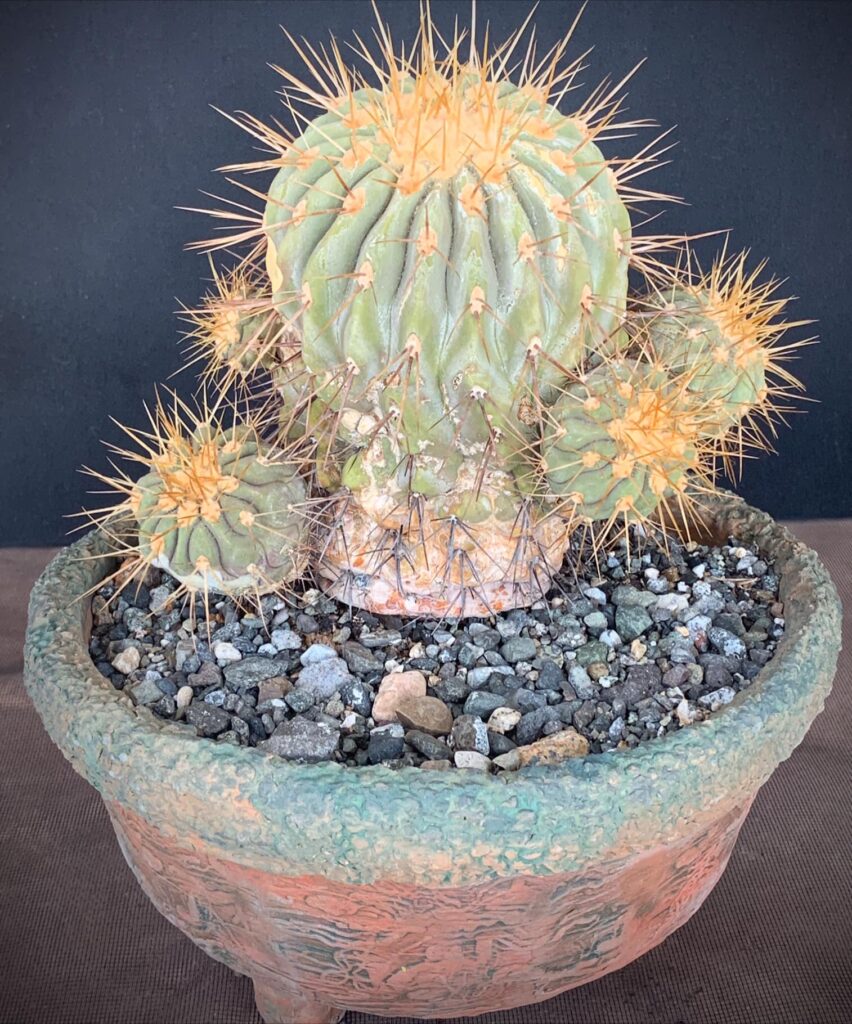
The largest species in the genus, capable of forming massive single-stemmed columns to 1 m+ in diameter and significant height, or dense clustering colonies spreading several metres across. Coarser-ribbed than C. cinerea, with less farina and more prominent spination. C. haseltoniana, long treated as a separate species, has been shown by molecular work to be nested within the gigantea lineage. Found across the coastal and mid-elevation Atacama.
Copiapoa laui
One of the most sought-after species in the genus. Compact, globular stems with exceptional white farina, dense white to pale-grey wool at the apex, and relatively short, light-coloured spines. Named after Alfred Lau. Found in a restricted range in the Antofagasta region at mid to high elevations. The combination of compact form, heavy pruina, and limited natural range makes well-grown C. laui among the most valuable specimens in the collector market.
Copiapoa krainziana
Treated here as a full species rather than a subspecies of C. cinerea following collector convention, though molecular data support subspecies rank. Distinguished by its dramatic white, bristle-like spines — longer and more hair-like than any other species in the genus — and its extremely restricted range in the San Ramón Valley near Taltal. Assessed as potentially Critically Endangered given that the entire known population occupies a very small area of occupancy. This conservation urgency holds regardless of whether it is treated as a species or subspecies. Wild specimens command premium prices; seed-grown plants from documented lineage are increasingly available.
Copiapoa hypogaea
The most unusual growth form in the genus. C. hypogaea grows with the stem largely buried below the soil surface, exposing only the apex. This subterranean strategy minimises surface area exposed to extreme solar radiation and reduces water loss. The exposed apex is typically grey-green to brownish, with a rough, tuberculate texture and short, pale spines. An inland fog-shadow specialist. Two forms are recognised — the typical form and the more sought-after var. barquitensis, which has flatter, more distinctly tuberculate stems.
Copiapoa humilis
A small, clustering species forming tight mounds of globular stems, each typically 5–8 cm in diameter. Highly variable across its range — the reason it harbours so many historical synonyms. Two subspecies are currently accepted: subsp. humilis and subsp. tenuissima, the latter characterised by finer, more numerous spines. A mid-elevation transitional species, generally more forgiving in cultivation than high-elevation specialists and a reasonable entry point for collectors new to the genus.
Copiapoa solaris
Among the rarest and most range-restricted species in the genus. C. solaris is currently assessed as Critically Endangered by the IUCN, restricted to just a few fragmented populations in the Antofagasta region. Distinguished by its strongly angular ribs, yellow to amber spination, and relatively small size. Horticultural demand driven by its rarity has made it a target for illegal collection, exacerbating an already precarious wild status. Seed-grown plants with verified provenance are the only ethical source.
Copiapoa esmeraldana
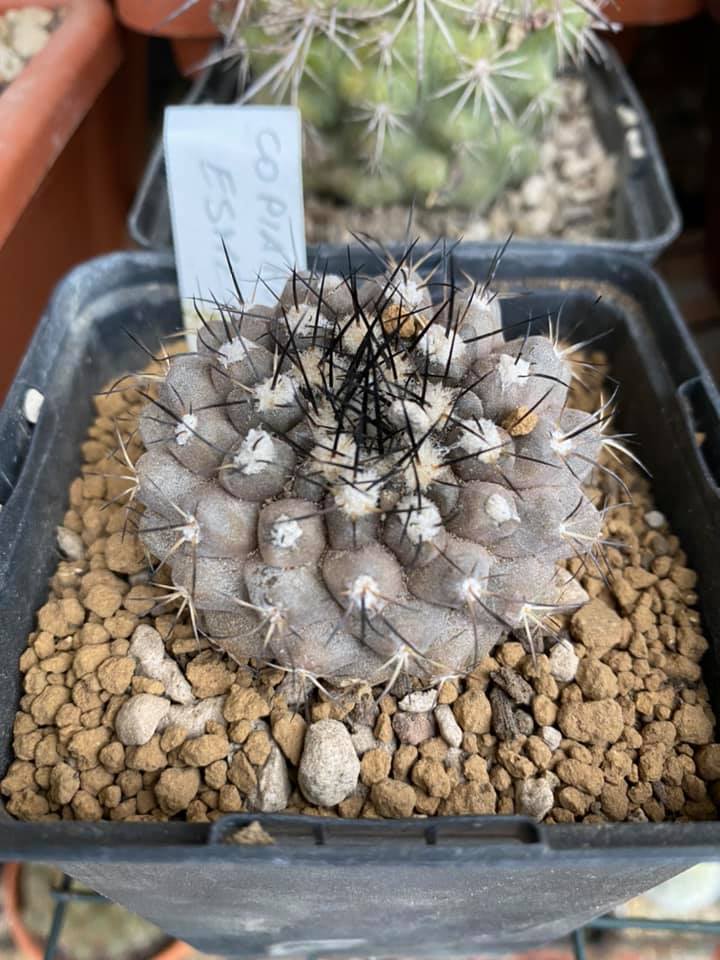
Named for the town of Esmeralda in the Antofagasta region, near which the type population was documented. A coastal to mid-elevation species with affinities to the cinerea complex, characterised by pruinose stems and dense apical wool. Treated by some authorities as a form or ecotype within the broader C. cinerea lineage; the Sarnes monograph documents it as a geographically anchored phenotype with consistent morphology across its known populations. An attractive but relatively rarely seen species in cultivation, with the provenance-documented plants being the most desirable to serious collectors.
Copiapoa dealbata
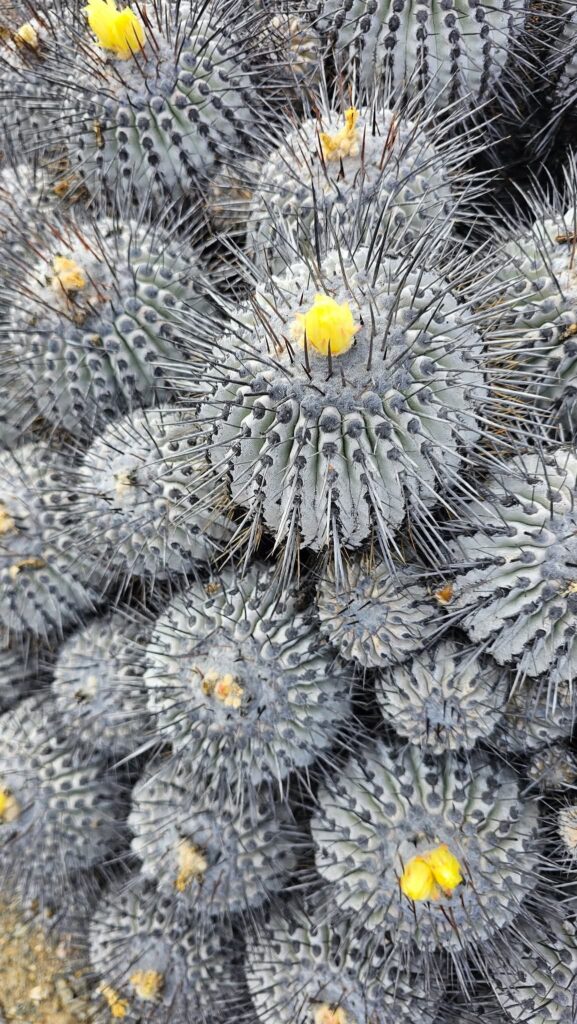
One of the more heavily pruinose small-to-medium species in the genus. C. dealbata (from the Latin dealbare, to whitewash) produces a striking whitish to pale grey farina over the stem surface, with prominent ribs and dark spines that create a strong visual contrast. A mid-elevation transitional species occupying the zone between dense coastal fog and the inland fog shadow. In cultivation it responds well to bright light and moderate watering, developing attractive pale colouring without the extreme demands of the high-elevation Zone 4 specialists. A good intermediate choice for collectors building toward the more demanding species.
Copiapoa coquimbana
The southernmost species in the genus, reaching into the Coquimbo region at the lower edge of the Atacama. Less extreme in its ecological demands than the northern species, and accordingly more forgiving in cultivation — it tolerates slightly higher moisture and lower light than true Atacama specialists. Variable in form, with globular to short-cylindrical stems and moderately developed spination. An accessible entry point to the genus for collectors in more temperate climates.
Conservation Status
All Copiapoa species have been listed under CITES Appendix II since 1975, which regulates but does not ban international trade. No species currently appear under Appendix I. In Chile, the genus is protected under Ley Nº 20.283 (2008), which prohibits unauthorized collection of native vegetation. The IUCN Red List assessments, conducted primarily between 2009 and 2013, are increasingly outdated — not all recognized species have been formally reviewed, and recent population surveys suggest some assessments underestimate threat levels.
C. solaris is currently Critically Endangered, restricted to a few fragmented populations in Antofagasta. C. krainziana (treating it as a full species) is assessed as potentially Critically Endangered given its single known wild colony. C. laui is Endangered. C. cinerea, C. gigantea, and C. hypogaea are Vulnerable. C. coquimbana and C. humilis are Least Concern, though even these face ongoing habitat pressure from illegal collection and climate stress.
The major threats across the genus are interconnected. Illegal collection for the horticultural market remains the most acute immediate driver of population decline for rare species. Habitat loss from mining and road construction affects several northern populations. Climate stress — particularly the documented decline in frequency and inland reach of the camanchaca fog — destabilises coastal and mid-elevation colonies that depend on fog as their primary moisture source. Fire ant predation of seedlings has been documented in southern Texas populations of related genera and may be emerging as a factor in some Chilean populations as invasive species expand.
An important conservation nuance highlighted by the 2018 population genetics study: conservation status assessments depend directly on taxonomic circumscription. When taxa are grouped under broader species concepts, geographic range increases and extinction risk may appear lower than it actually is. When treated separately, range size decreases and threat categories may rise under IUCN criteria. C. cinerea subsp. krainziana, for example, carries Critically Endangered-level extinction risk regardless of whether it is counted as a subspecies or species, because the actual area of occupancy is extremely small in either case.
Growing Them
Know your ecotype zone first
Every cultivation decision for Copiapoa should begin with identifying which of the four ecotype zones your plant comes from. Conditions that suit a Zone 1 coastal C. cinerea will produce fundamentally wrong results when applied to a Zone 3 inland specialist. Provenance determines outcome. If you do not know the provenance of a plant, label it accordingly and treat it conservatively until you observe its response.
Soil Composition
Native Atacama soils are coarse, fast-draining, and geologically exposed — primarily gravel and fractured volcanic material including rhyolite, basalt, andesite, pumice, and decomposed granite. Clay and fine silt are almost absent. Replicate this as closely as possible: a mix of 70–85% inorganic material (coarse pumice, perlite, decomposed granite, or grit) with 15–30% cactus compost. The mix should drain instantly with no standing water. For Zone 3 and Zone 4 plants, lean further toward inorganic content.
Watering
Copiapoa evolved under high-frequency, low-volume moisture from fog — not rain. This distinction matters enormously in cultivation. Water infrequently but not always sparingly: when you water, water thoroughly so the entire root zone is wetted. Then allow the substrate to dry completely before watering again. In growing conditions (spring through early autumn in temperate climates), this typically means watering every 2–4 weeks depending on temperature and pot size. In winter, reduce to once every 6–8 weeks at most, or withhold entirely if temperatures drop below 10°C. Never water Zone 3 or Zone 4 plants on warm evenings — nocturnal warmth prevents proper CAM function and increases rot risk.
Light
Zone 1 coastal plants need bright but filtered light — they evolved under persistent dense fog that diffuses direct radiation. Full unfiltered sun will grey them out and may cause stress. Zone 2 and Zone 3 plants tolerate and benefit from strong direct sun. Zone 4 high-montane plants require intense UV and full sun to express proper compact form and dark pigmentation; greenhouse conditions produce green, oversized, uncharacteristic specimens. In the UK and northern Europe, supplemental lighting is often necessary for Zone 4 plants to express habitat character.
Temperature
The Atacama’s night-to-day temperature swings of 10–15°C are not incidental to Copiapoa survival — they drive CAM function. Cool nights (ideally below 15°C) are essential for full nocturnal gas exchange and the consolidation of habitat character in Zone 3 and Zone 4 plants. Keep winter minimums above 5°C for most species. Frost tolerance varies: coastal Zone 1 plants are the least frost-tolerant; some high-elevation Zone 4 plants can handle brief light frosts if completely dry.
Farina
The white farina on coastal forms is a physiological response to their native conditions and cannot be fully replicated in cultivation — but it can be preserved. Avoid touching the stem surface, which removes wax deposits. Keep spray water off the stem. High light and good air movement help maintain farina density. The near-black pigmentation of Zone 3 and Zone 4 specialists requires low-albedo thermal environments (dark top dressings that increase surface temperature), high UV, restricted water, and cool nights. It cannot be induced in true coastal forms, regardless of conditions.
Collector Notes
Provenance is everything in Copiapoa. A plant without documented locality data has limited value for serious collectors, regardless of how visually impressive it is. This is not snobbery — it reflects the biological reality that locality determines ecotype, and ecotype determines how to grow the plant correctly and what it will look like at maturity. A mislabelled or unlabelled plant cannot be grown to its potential, cannot contribute to conservation documentation, and cannot be reliably assessed for authenticity.
Hybrids occur in cultivation and are worth being aware of. Natural hybridisation in habitat is uncommon and geographically restricted — well-documented examples exist in narrow contact zones between C. humilis and C. solaris complexes. In cultivation, however, cross-pollination is common, and unlabelled seed lots frequently represent mixed parentage. When origin is uncertain and traits are anomalous, label the plant as “uncertain origin” or “suspected hybrid” rather than assigning it to a pure species. Reciprocal hybrids can differ subtly depending on which species served as the seed parent, since Copiapoa inherits chloroplast and mitochondrial DNA exclusively from the mother plant.
Collector valuation in the genus has increased dramatically over the past decade, driven by shrinking wild populations, improving grower knowledge, and growing international demand for documented specimens. The rarest forms — C. krainziana with documented San Ramón Valley provenance, C. laui from verified Antofagasta populations, large multi-headed C. cinerea subsp. columna-alba grown from locality seed — command prices that reflect both their rarity and the years required to produce a representative specimen. Large, single-provenance, seed-grown plants from respected sources have appreciated significantly and are increasingly treated as long-term botanical investments.
Questions Collectors Ask
How many species are there really?
Somewhere between 20 and 40 depending on the authority, and this is a legitimate scientific question rather than a matter of preference. Molecular data from 2015 and 2018 support treating many historical names as ecotypes or geographic forms within broader species complexes. The 2025 Sarnes monograph, the most data-intensive field treatment to date, maps continuous morphological variation across hundreds of GPS-documented populations. The most defensible current position is approximately 20–25 species with several geographically structured subspecies or forms, plus a number of historical names that have been synonymised or are awaiting formal revision.
Why does my plant look nothing like habitat photos?
Almost certainly a cultivation mismatch for the ecotype zone, or provenance uncertainty. Zone 3 and Zone 4 plants grown in warm, moist greenhouse conditions undergo the phase shift described above — transitioning from stress-regulated compact growth to hydraulic bulk expansion. The result is a green, soft, fast-growing plant that looks like a different species from the same plant grown correctly. Identifying the ecotype zone, correcting the growing conditions (more light, cooler nights, drier substrate, restricted water), and giving the plant time to consolidate will gradually restore habitat character — though some structural decisions the plant made during the wrong phase cannot be reversed.
Is the farina on my cinerea going grey?
Several possibilities. If the plant has been touched repeatedly, the epicuticular wax has been mechanically removed and may not fully regenerate on existing tissue — new growth will be pruinose again. If the plant is being grown with too much water under warm nights, the phase shift described above suppresses wax production. If the plant is from an inland ecotype rather than a true coastal form, it may simply have less genetic capacity for dense pruina regardless of conditions. Provenance clarity resolves most confusion here.
Should I graft?
Grafting accelerates growth significantly and allows small seedlings of otherwise very slow species to reach display size faster. The trade-off is that grafted plants look and behave differently from own-root specimens — faster, taller, often softer and greener. Serious collectors growing for long-term habitat character generally prefer own-root plants from verified seed. Grafting is most defensible for conservation propagation of critically rare species, for rehabilitation of struggling seedlings, or for growers primarily interested in flowering performance rather than habitat form.