Lophophora williamsii — Peyote, The Sacred Cactus
Encyclopedia · Lophophora
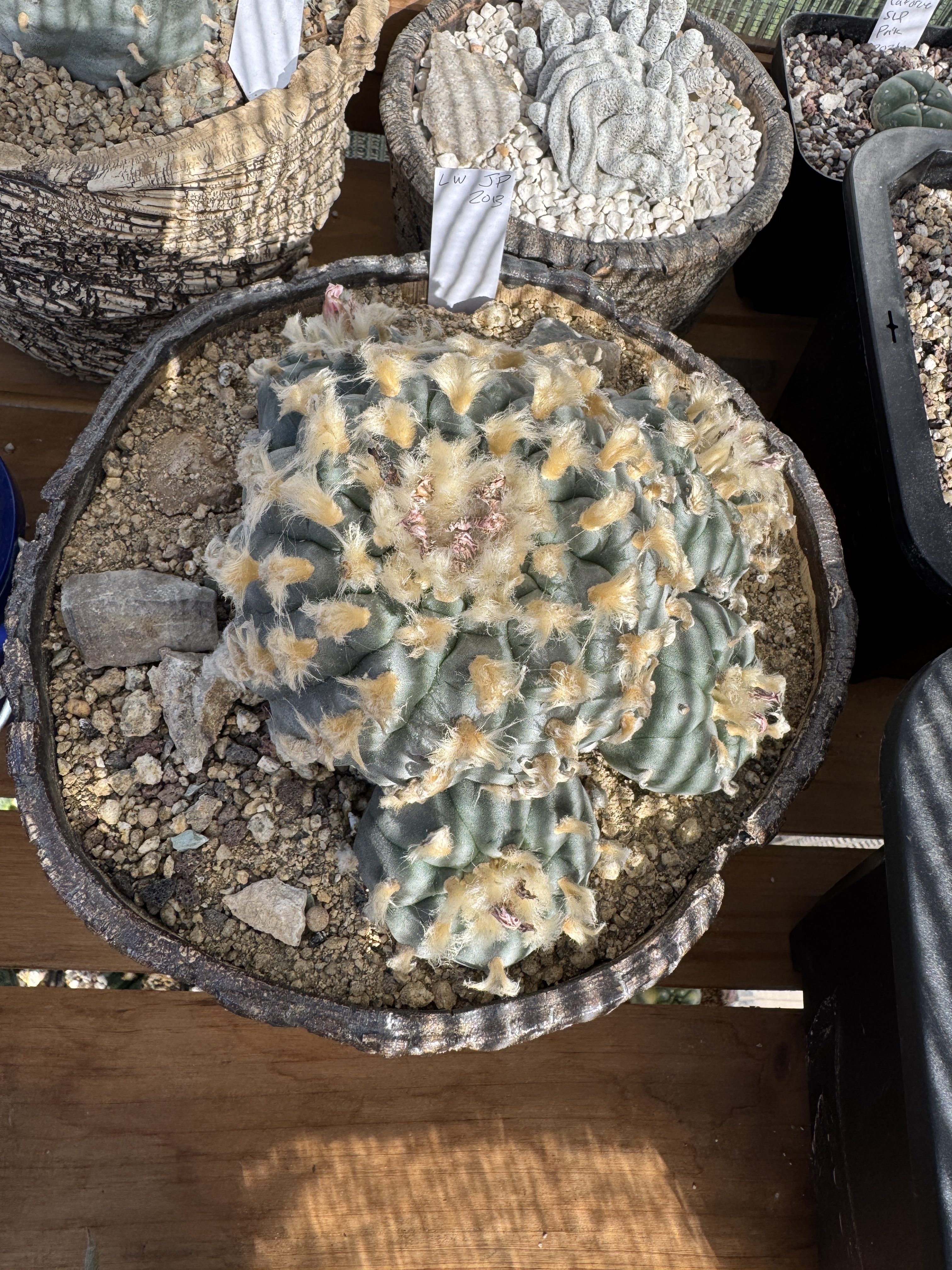
| Family | Cactaceae |
| Named by | Lemaire (1839) → Coulter (1894) |
| Native range | S. Texas south through N. & C. Mexico |
| Altitude | 100–1,900 m |
| Stem diameter | 2–8 cm; flat-topped |
| Ribs | 5–13 (typically 8) |
| Flowers | Pink to white; spring through autumn |
| Fruit | Small, clavate, pink-red |
| IUCN status | Vulnerable |
| CITES | Appendix II |
| Alkaloids | 63+ confirmed; mescaline primary |
Peyote · Mescal Button · Hikuri · Ubatama
Lophophora williamsii is one of the most studied cacti on Earth and also one of the most misrepresented. Strip away a century of mythology and controversy, and what remains is a small, spineless, slow-growing desert cactus with a blue-grey-green body, a crown of white wool, and an unusually complex alkaloid profile that has made it a subject of botanical, pharmacological, and anthropological inquiry for well over a hundred years. It grows across a broad sweep of the Chihuahuan Desert, from the dry limestone hills of southern Texas to the sacred high-desert basins of San Luis Potosí. It is not particularly large, it is not especially dramatic in form, and in its natural habitat it blends into pale desert soil with a skill that makes most observers walk right past it. The flower, when it opens, is a different matter: a bloom of clean pink emerging from a woolly center, disproportionate to the body beneath it, sitting in the middle of bare rocky ground with no explanation other than itself.
What distinguishes Lophophora williamsii from every other cactus covered on this site is its chemical complexity. The plant produces more than 60 confirmed alkaloids, of which mescaline is the primary psychoactive compound. That chemical profile has shaped the species’ entire relationship with human civilization, from its role at the center of some of the oldest recorded ritual plant use in North America to its status today as one of the most intensively studied secondary-metabolite producers in the plant kingdom. For botanists and collectors, it is a genuinely interesting subject: variable across its range, slow to mature, and rewarding to grow well. This page covers the species in full, including its taxonomy, ecology, morphology, alkaloid chemistry, the remarkable diversity of documented localities, cultivation, and a dedicated section on the closely related Lophophora jourdaniana.
Because this is a reference and educational page, it should be noted that Lophophora williamsii is listed on our site strictly for scientific and horticultural documentation. No commercial specimens are offered here.
Contents
Taxonomy & Nomenclature
The taxonomic history of Lophophora williamsii is long, contested in places, and anchored to a plant that attracted scientific attention earlier than most. The species was first formally described by Charles Lemaire in 1839 as Echinocactus williamsii, the specific epithet honoring Colonel Oswald J. P. Williams, who supplied the original specimens. That name placed the plant in the large and unwieldy catch-all genus that housed numerous round, ribbed cacti of the time. In 1894, John Merle Coulter transferred it to the newly established genus Lophophora, which he created to accommodate the distinctly spineless, woolly-areolate flat cacti of the Chihuahuan Desert region. That transfer has held, and the name Lophophora williamsii (Lem.) J.M.Coult. remains the accepted designation under current nomenclatural rules.
The genus name Lophophora derives from the Greek lophos (crest) and phorein (to bear), a reference to the tufted wool carried on each areole. It is apt: no other character of the plant announces itself quite so consistently across the entire range. The genus currently contains between two and six species depending on the taxonomic treatment followed. Kew’s Plants of the World Online accepts four: L. williamsii, L. diffusa, L. fricii, and L. alberto-vojtechii. Lophophora koehresii appears in some treatments as a fifth species; its status remains debated. Lophophora jourdaniana, covered in a dedicated section below, is variously treated as a species, a variety of L. williamsii, or a geographic color form depending on the author.
The synonymy of L. williamsii is substantial, reflecting decades of European collector enthusiasm for naming distinctive forms and populations as new taxa. Names encountered in older literature include Anhalonium williamsii (Lem.) Lem. ex Hennings, Anhalonium lewinii Hennings, Lophophora lewinii (Hennings) Rusby, and Lophophora texana Croizat, among others. The name A. lewinii deserves particular mention: it was the name attached to material that became the basis for early European pharmacological work on the plant, including Heffter’s landmark alkaloid isolation studies in the 1890s. Several infraspecific names have been proposed, including var. caespitosa, var. decipiens, var. pluricostata, and var. texensis, though none are accepted as formal taxa by POWO. They persist in collector use, and several correspond to real and recognizable morphological or geographic forms.
Common names for Lophophora williamsii are numerous. Peyote is the most widely used and derives from the Nahuatl word péyotl. Hikuri is the Huichol (Wixáritari) name, used in the context of their pilgrimage to Wirikuta in San Luis Potosí. Mescal Button describes the dried, disc-shaped crown that results after the above-ground portion is harvested and desiccated. Ubatama is the Japanese trade name for the species in cultivation. Divine Cactus, Whiskey Cactus, and Dry Whiskey appear in older American vernacular accounts. The name Peyote is standard in the scientific and horticultural literature in English and is used throughout this page.
Habitat & Native Range
Lophophora williamsii has one of the widest natural distributions of any cactus in this genus, spanning from the Trans-Pecos region of southern Texas in the north all the way to the high desert basins of Querétaro and Guanajuato in central Mexico, a north-south extent of over 1,500 kilometers. Within that range it occurs across Chihuahua, Coahuila, Nuevo León, Tamaulipas, Zacatecas, San Luis Potosí, Durango, and Nayarit, with isolated populations documented in several additional states. The core of its distribution is the Chihuahuan Desert, the largest desert in North America, which provides the combination of conditions this species depends on.
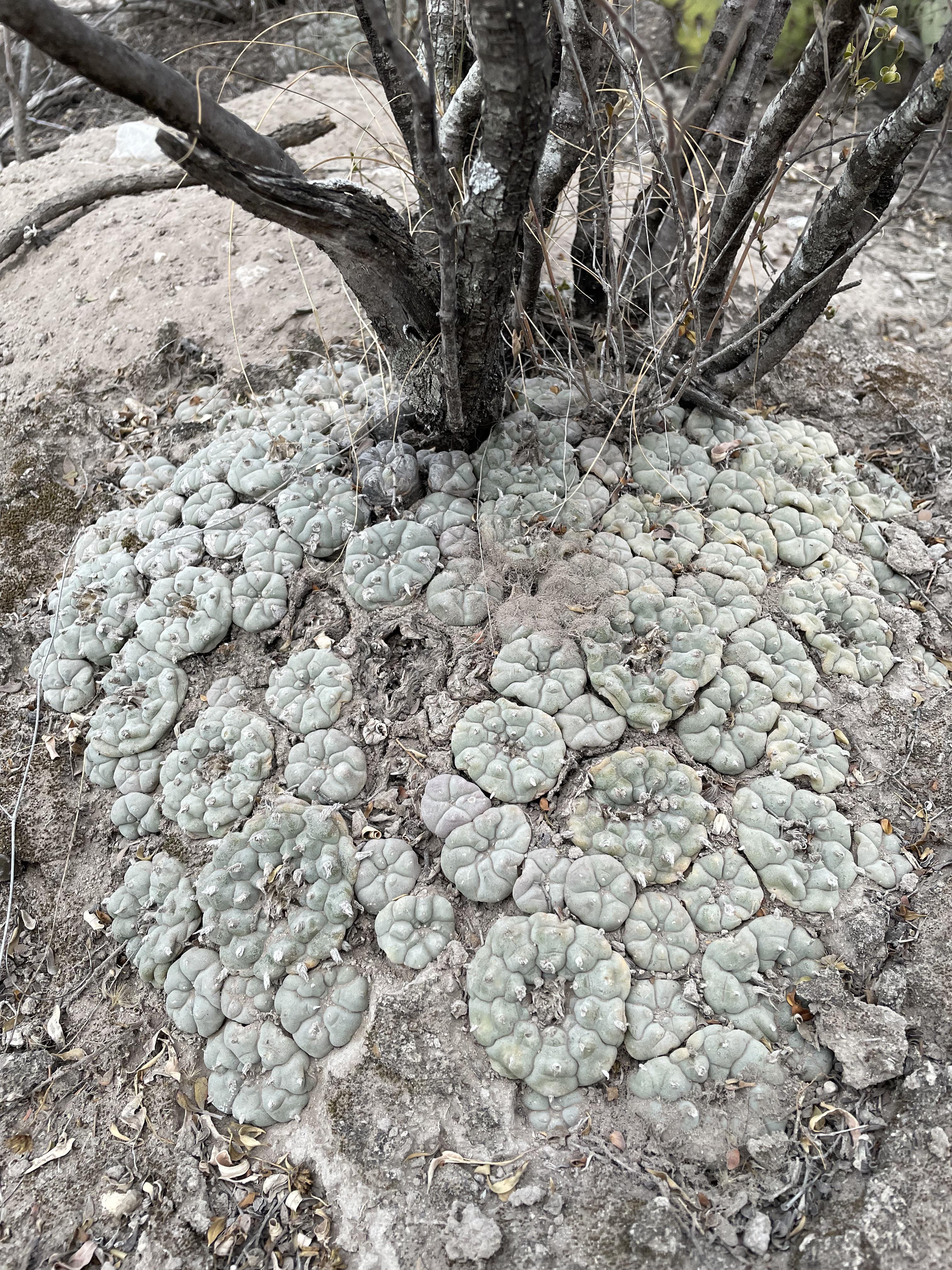
The substrate requirements of Lophophora williamsii are broad compared to many of the other cacti covered on this site. It tolerates both limestone-derived and gypsum-derived soils. It grows on flat alluvial plains, on low rocky hills, on bajadas, and on the bases of escarpments. Soil chemistry must be alkaline, drainage must be adequate, and the surface mineral content is typically high. The one consistent requirement across all populations is good drainage. The massive taproot of this species is the first thing to rot under sustained wet conditions, so any substrate that holds water around the root zone for extended periods is unsuitable.
Elevation across the range spans from approximately 100 meters in the lower Rio Grande Valley populations of southern Texas to nearly 1,900 meters at some of the more southerly high-desert localities in San Luis Potosí, including the celebrated Wirikuta region. That altitudinal spread has meaningful implications for the cold hardiness of different populations. Lowland Texas plants and those from the warmer Tamaulipas lowlands experience winters that are mild and rarely frosty. The high-altitude San Luis Potosí and Zacatecas populations endure cold nights and occasional frost, and plants from these localities tend to be more cold-tolerant in cultivation than their lowland counterparts.
The plant community surrounding Lophophora williamsii varies somewhat across the range but typically includes Larrea tridentata (creosote), Fouquieria splendens (ocotillo), various Agave and Dasylirion species, Opuntia, Mammillaria, Ferocactus, and Ariocarpus kotschoubeyanus. In the central Mexican portion of the range, it frequently shares habitat with Ariocarpus kotschoubeyanus on gypsum flats, and with Turbinicarpus species on limestone. The Huichol pilgrimage route to Wirikuta in San Luis Potosí traverses some of the densest known peyote populations on Earth, though these populations have experienced significant pressure from both traditional harvest and illegal collection over recent decades.
Across its entire range, Lophophora williamsii is classified as Vulnerable by the IUCN Red List, with the primary threats documented as over-collection (both ceremonial harvest and illegal trade), habitat degradation from livestock grazing and agricultural conversion, and poaching for the international cactus trade. Population recovery after harvest is extremely slow given the species’ growth rate. Studies from the Texas peyote gardens found that crowns harvested for ceremonial use required four or more years to regenerate usable regrowth, and that regrowth crowns showed substantially lower alkaloid concentrations compared to mature plants.
Morphology
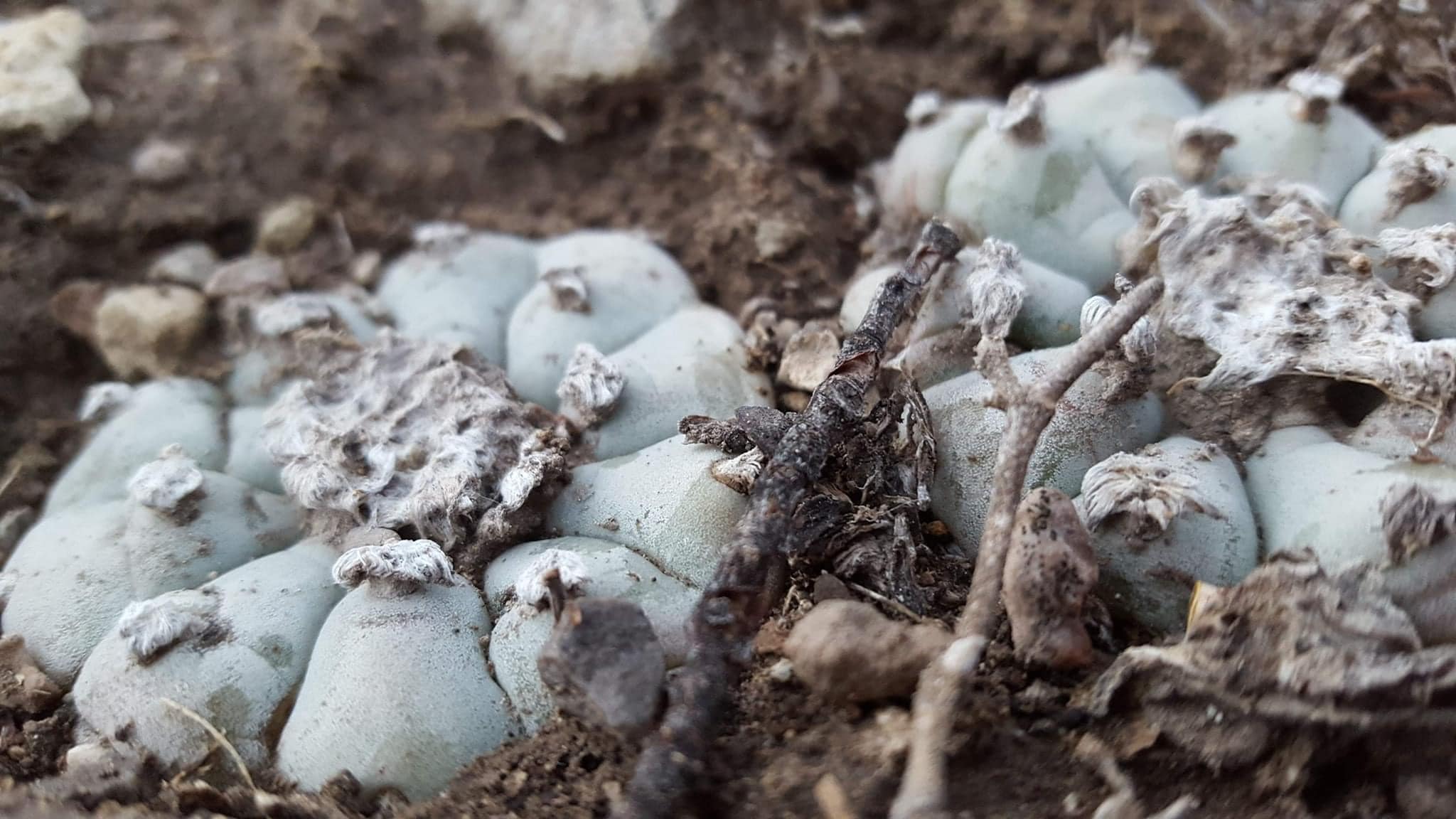
Lophophora williamsii is small, soft, and spineless. The above-ground body is a flat to slightly domed disc, typically 2 to 8 centimeters in diameter and 2 to 4 centimeters tall, though plants at the upper end of this range represent decades of growth in optimal conditions. The body color is blue-grey to grey-green, with a slight glaucous waxy bloom that becomes more pronounced in full sun. In deeply shaded or greenhouse-grown plants the body takes on a softer, more saturated green. Drought-stressed plants pull their crowns slightly below the soil surface and become so pallid they can be mistaken for small stones.
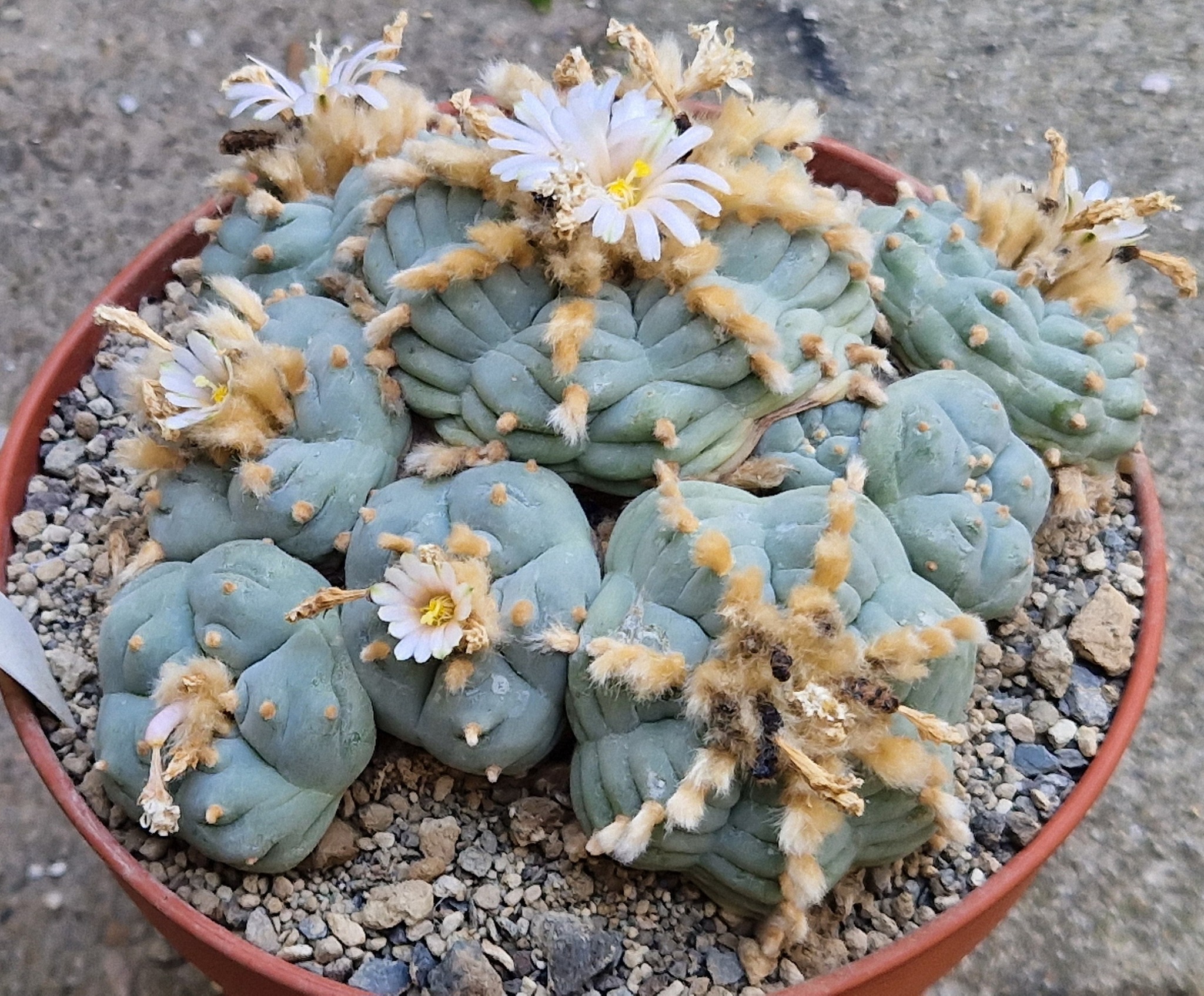
The broad, rounded ribs carry areoles of tufted white to cream wool. No spines appear on mature plants. Juvenile plants may show rudimentary spine structures that disappear entirely as they age.
The ribs are the most structurally variable character across the range. Most plants carry 8 ribs, though counts of 5 through 13 are documented, and individual plants can fluctuate over time as new growth sometimes redistributes the rib count. The ribs are low and broadly rounded, not sharp-crested, with the woolly areoles sitting in a row along each rib’s apex. Between ribs, the flesh is smooth and slightly depressed. The number of ribs has no reliable correlation with geographic origin, though some collector populations historically labeled var. pluricostata show a tendency toward higher rib counts.
The areoles carry tufted bundles of white to creamy white wool and nothing else. No spines appear at any stage in adults. Juvenile plants carry tiny rudimentary spine primordia visible on very young seedlings, but these disappear entirely as the plants transition to their adult form, typically within the first year or two of growth. This is a character shared across the genus and distinguishes Lophophora from all other ribbed cacti in its range at a glance.
The taproot is substantial, often carrot-like in form in young plants, expanding to a broad and deeply fleshy structure in older specimens. The above-ground portion of the plant constitutes only a fraction of its total mass. In a well-grown own-root plant that is ten or more years old, the root may reach 15 to 20 centimeters in depth and several centimeters in diameter at its widest point. That root mass is the plant’s primary water and nutrient reserve, and it explains both the species’ drought tolerance and its susceptibility to rot when drainage is inadequate.
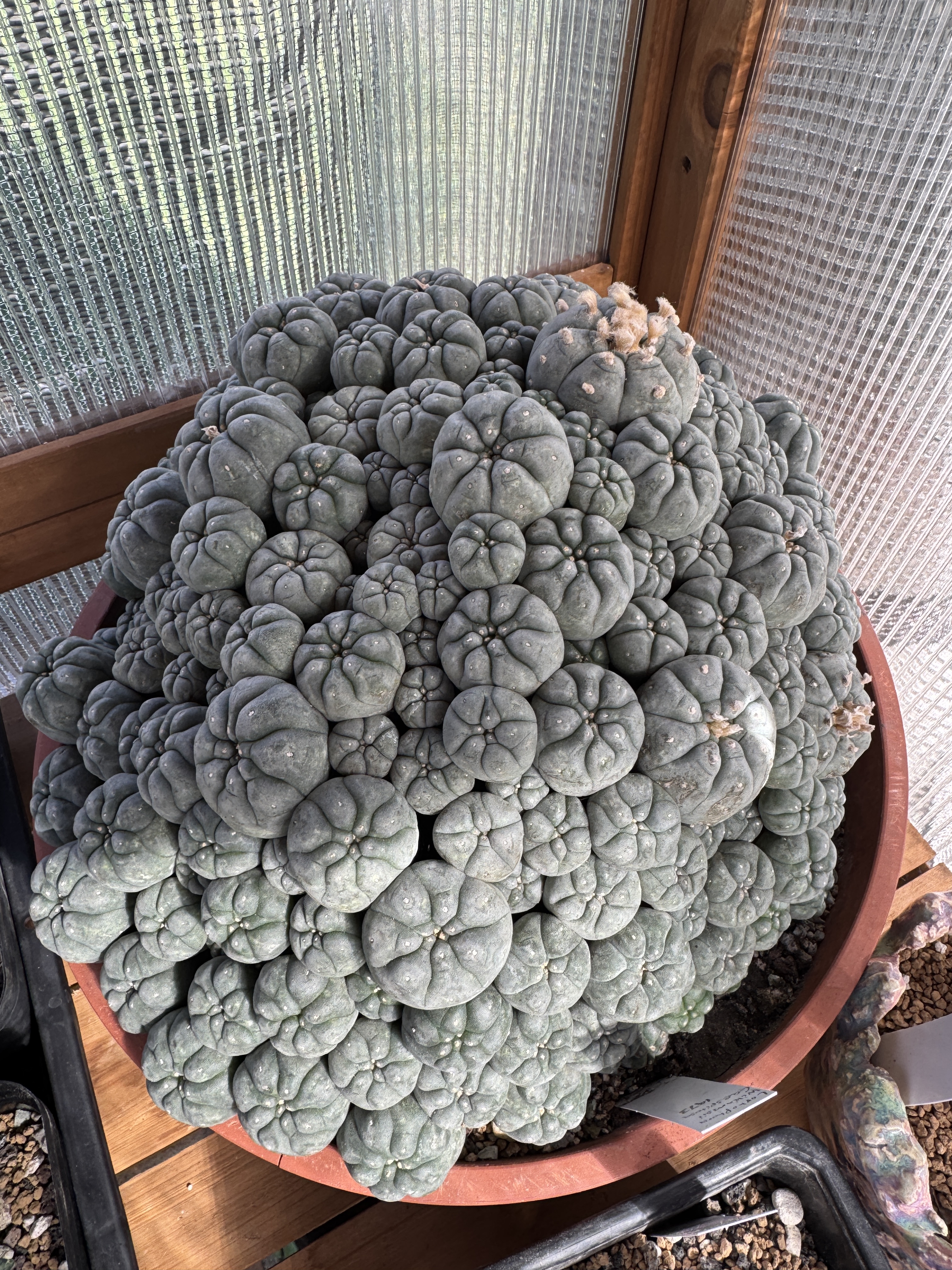
var. caespitosa is worth a special mention here. Under natural conditions and in cultivation, some plants of L. williamsii produce multiple crowns from a single root system, forming dense clusters of closely packed heads. This multi-headed habit is referred to as caespitose. In some populations, notably those from certain San Luis Potosí localities, caespitose plants are common enough to be considered a regional characteristic. In others they appear only rarely. A cluster plant of 20 or more heads on a single root system, grown over many years, is one of the more impressive sights in a peyote collection.
Alkaloid Chemistry & Mescaline Content
Lophophora williamsii produces one of the most complex alkaloid profiles documented in any cactus. The number of compounds that have been published in the chemical literature reaches over 70, though some of those are considered errors or remain unconfirmed. Around 63 alkaloids are now regarded as established. Of that total, mescaline (3,4,5-trimethoxyphenethylamine) is the primary compound of pharmacological significance, comprising roughly 30 percent of the total alkaloid content in dried material. The remaining alkaloids consist primarily of substituted phenethylamines and tetrahydroisoquinolines, the majority of which are present in trace quantities and are pharmacologically inactive or of uncertain activity.
The mescaline content of peyote varies considerably depending on the individual plant, its geographic origin, its growing conditions, the season of harvest, and which part of the plant is analyzed. Published values range from a minimum of 0.10 percent to a maximum of 6.3 percent by dry weight, with the commonly cited working range being 0.9 to 6.0 percent. Arthur Heffter, who first isolated and identified mescaline in 1896 through a series of personal bioassays, reported a maximum recovery of 6.3 percent in his original work. More recent analytical studies on wild Texas populations found values of 2.77 percent in Starr County, 3.2 percent in Jim Hogg County, 3.5 percent in Val Verde County, and 3.52 percent in Presidio County, using batched samples to represent population averages rather than individual plant extremes.
Distribution within the plant is not uniform. The aerial crown carries substantially more mescaline than the subterranean root. Klein et al., analyzing 13 individual plants divided into crown, stem, and root sections, found mescaline concentrations of 1.82 to 5.50 percent by dry weight in crown tissue, 0.125 to 0.376 percent in the subterranean stem, and only 0.0147 to 0.0520 percent in the root. That is roughly an order-of-magnitude decrease at each step from crown to root. The figures from Rouhier, cited in earlier literature, similarly show dried upper slices at 3.70 percent, fresh heads at 0.41 percent, dried roots at 0.73 percent, and fresh roots at 0.244 percent.
Growing conditions influence mescaline content. Siniscalco Gigliano, working with cultivated plants in Italy, found that keeping plants under arid conditions for six months increased mescaline content from 0.10 percent in well-irrigated plants to 2.74 percent by dry weight in drought-stressed ones. That is a 27-fold difference, considerably more than can be explained by simple concentration through water loss. It suggests that drought conditions actively stimulate alkaloid biosynthesis. Grafted plants in the same study reached 0.93 percent under standard conditions. The practical implication for collectors is clear: a dry winter rest is not just good cultivation practice, it is part of what the plant’s chemistry is designed around.
Seasonal variation is also documented. Lophophorine and other N-methylated alkaloids appear to be highest during summer months, while the pharmacologically important N-demethylated compounds, including mescaline, are present in higher proportions during autumn through early spring. Todd’s 1969 study, which sampled plants from Coahuila and San Luis Potosí in June, found lophophorine to be the dominant alkaloid rather than mescaline at that time of year. This pattern corresponds with the traditional harvest timing of indigenous groups, who historically gathered plants between November and April or mid-May, a period when mescaline content is higher relative to the total alkaloid fraction.
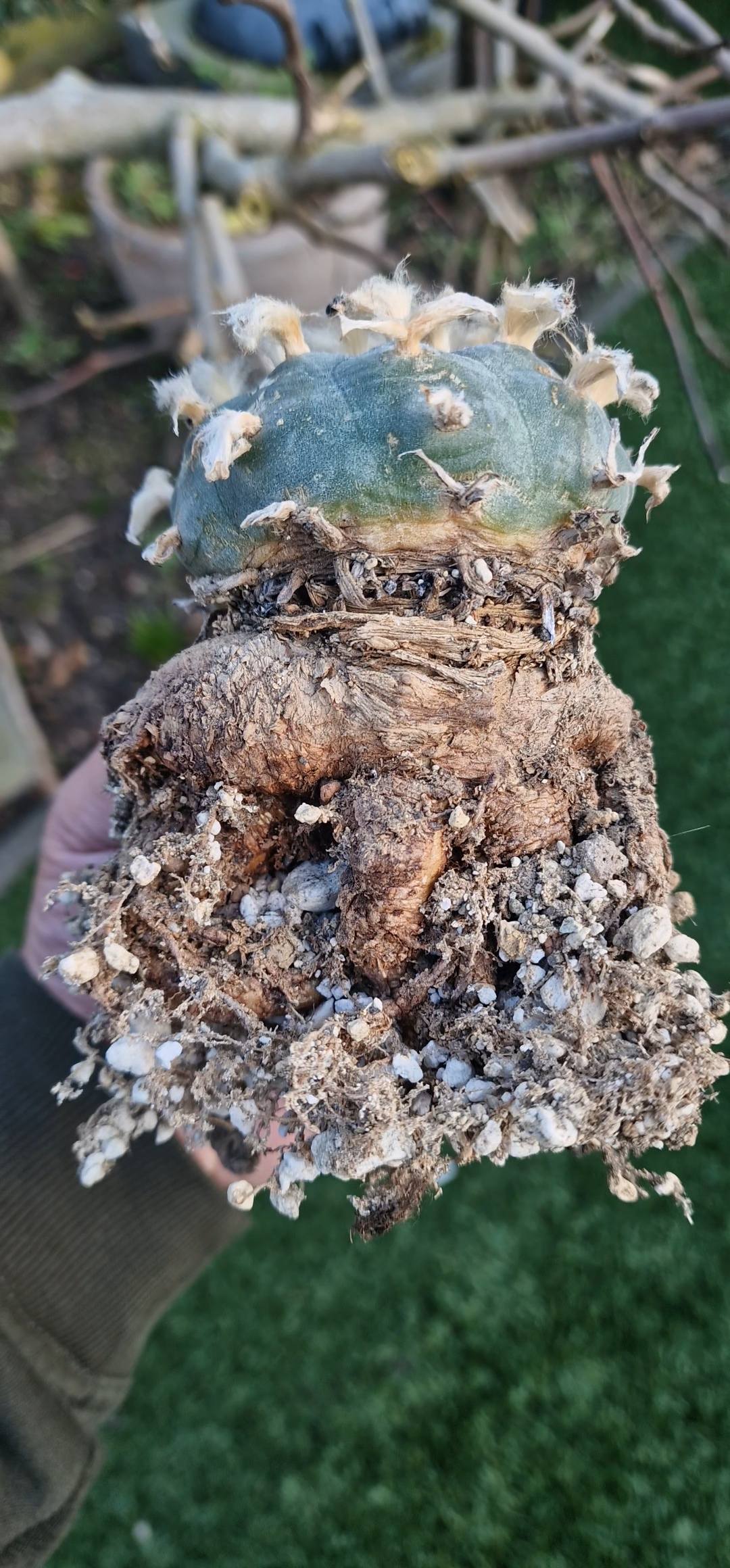
Beyond mescaline, the alkaloid picture is complex. Total alkaloid content in dried buttons averages around 8 percent by weight, with mescaline accounting for roughly 30 percent of that total. Pellotine accounts for approximately 17 percent, anhalonidine 14 percent, anhalamine 8 percent, hordenine 8 percent, and lophophorine 5 percent. The remaining alkaloids are present in smaller fractions, down to trace levels. Hordenine, found primarily in the roots by Todd’s analysis, has demonstrated antibacterial properties in laboratory studies. McCleary and Walkington identified peyote as the most broadly effective of the cacti they tested against antibiotic-resistant strains of Staphylococcus aureus, and subsequent work by Rao established that peyocactin, the active compound identified in McCleary’s work, was identical to hordenine. No hallucinogenic activity has been demonstrated for any peyote alkaloid other than mescaline, despite decades of study.
Geographic differences in alkaloid profile between populations have been noted but are difficult to generalize from the available literature. Todd’s comparison of Coahuila and San Luis Potosí plants found higher mescaline concentrations in the Coahuila population, and a more even distribution of mescaline between crown and root in those plants. The San Luis Potosí plants showed a sharper concentration gradient, with mescaline largely confined to the crown and only traces in the root. The Coahuilan population has been suggested by some researchers to merit recognition as a chemically distinct variety or even a separate species, though this has not been formalized.
Locality Diversity Across the Range
Among collectors, Lophophora williamsii has become one of the most locality-tracked cacti in cultivation. The practice of growing and trading plants under specific geographic provenance data serves a genuine scientific purpose: it preserves information about where wild seed-source material originated, allows growers to document morphological and chemical variation between populations, and helps trace lineages back through the collector chain. The localities documented below represent the range of confirmed collection points from Texas south through the major Mexican states within the species’ natural range. They are presented here for reference and documentation.
Documented Lophophora williamsii localities by region
Texas, USA
- Starr County SB 854
- Jim Hogg County
- Big Bend County
- Rio Grande City
- Rio Pecos
- Rio Grande Del Sol
- Webb County (Mirando City)
- Presidio County VZD 338
- El Paso County
Coahuila, Mexico
- Parras
- Parras Tanque Menchaca
- Saltillo-Monclova
- Sierra Santa Rosa, Melchor Múzquiz
- Hipolito (Mountain Form)
- La Casita
- El Amparo
- El Oso
- Cuatro Ciénegas
- Cuatro Ciénegas Kapelle
- La Cuchilla
- Sierra de la Paila (Las Coloradas)
- Estación Marte
Nuevo León, Mexico
- Rinconada
- San Antonio de Castillo
- La Norias del Jesús
- San Pablo
- Mina
- El Carmen (2,070 m)
- Icamole
- KKR 382 Ejido La Soledad to La Trinidad
San Luis Potosí, Mexico
- Wirikuta (Huichol sacred site)
- Real de Catorce
- Estación Catorce
- El Huizache (El Huizache)
- El Huizache El Coyote
- El Huizache Entronque
- Moctezuma
- El Milagro de Guadalupe
- Menchaca
- Sandia El Grande
Zacatecas, Mexico
- Mazapil
- La Cardona
- San Tiburcio
Chihuahua, Mexico
- Camargo
- Santa Lucía
- Rancho El Negro
Other States & Collector Forms
- Tamaulipas (Reynosa)
- Durango
- var. caespitosa (La Perdida)
- var. decipiens
- var. grandiflora
- var. pluricostata Croizat
- Weisse Blüte (white-flowered)
- var. texensis
Locality names reflect documented collector provenance designations and field collection records. Informal names and collector codes are used as found in the horticultural literature. Localities marked in italic represent recognized morphological or collector-designated forms rather than strict geographic populations.
The significance of locality data goes beyond simple geography. Plants from Coahuila, for instance, have been observed to differ from San Luis Potosí material in body color, rib count tendencies, cold tolerance, and, as Todd’s analytical work suggests, alkaloid distribution. The high-altitude El Carmen locality in Nuevo León, documented at 2,070 meters, produces plants with notably greater cold hardiness than lowland Tamaulipas material. Cuatro Ciénegas in Coahuila is itself a globally significant biodiversity hotspot for endemic species, and the peyote population there has been documented alongside numerous other endemic cacti and succulents. The Texas county populations represent the northernmost extent of the species’ range and the only wild peyote populations in the United States.
Flowering & Fruit
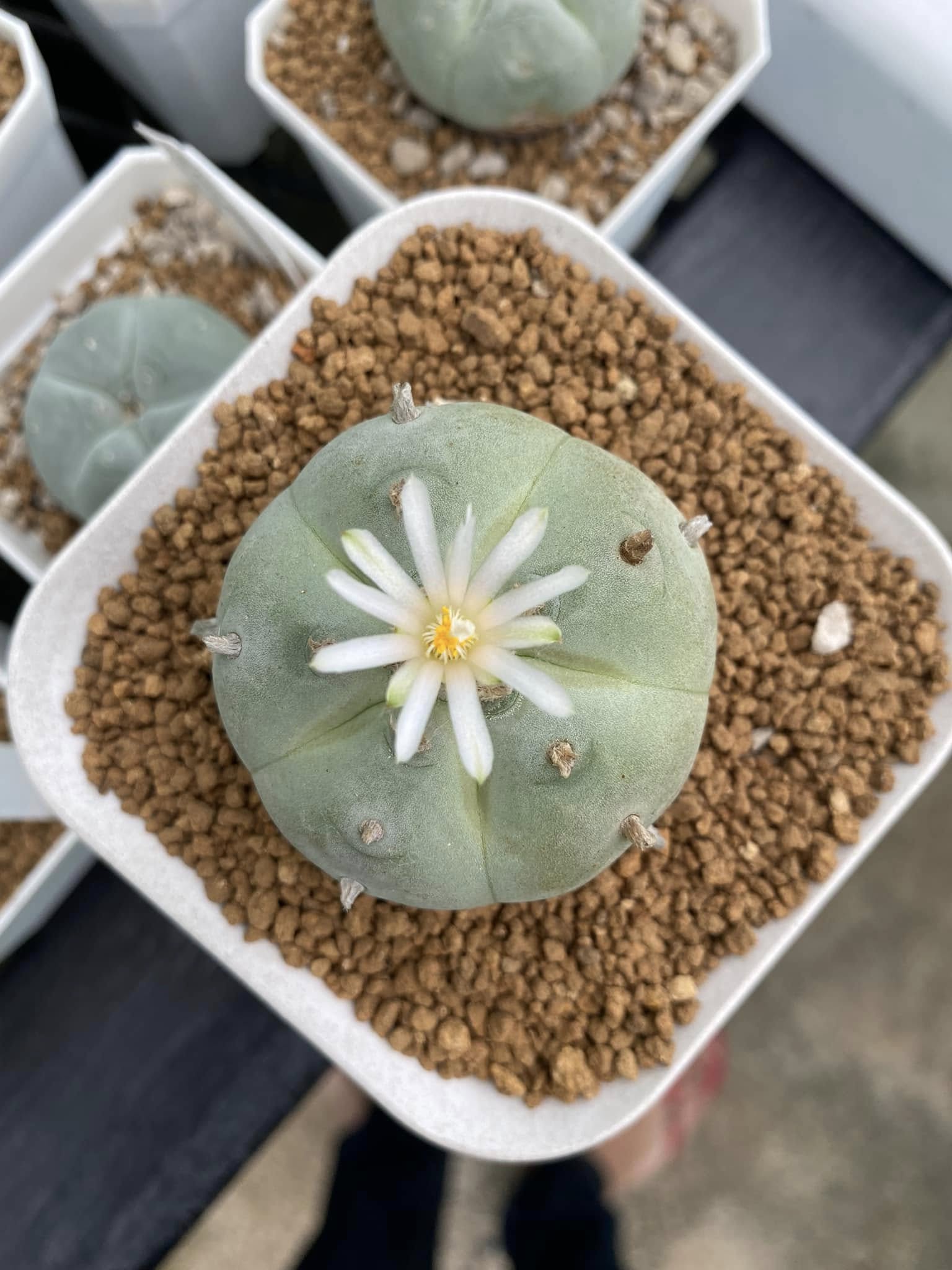
Lophophora williamsii is a reliable bloomer in good growing conditions. Flowers emerge from the youngest areoles at the center of the woolly crown and are broadly funnel-shaped when fully open. The petals are lanceolate and taper to a softly pointed tip. Color in the type form is pale to mid pink, with a lighter to white central stripe running along each petal. White-flowered plants exist and occur naturally within some populations; they are designated var. ‘Weisse Blüte’ in the German collector tradition.
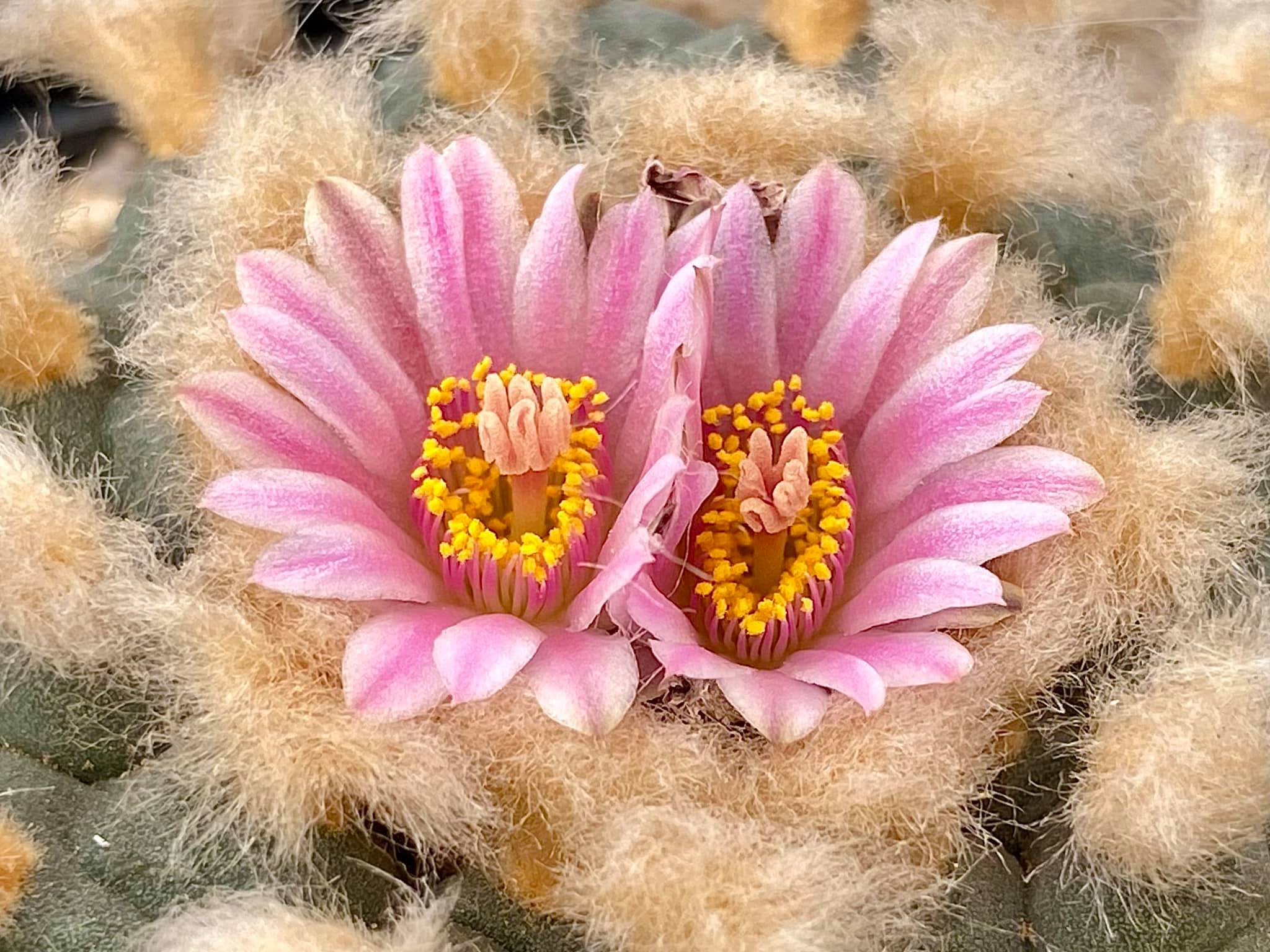
Individual flowers are 1.5 to 2.5 centimeters across when fully open. Each bloom remains open during daylight hours and closes at night, lasting two to four days. A healthy, established plant may produce multiple flowers sequentially, extending the blooming period across several weeks. In the wild, blooming can occur at almost any time of the growing season in response to rainfall, though it is most concentrated from spring through mid-autumn. In cultivation under a controlled watering regime, flowers typically appear after summer watering resumes following the winter dry period.
Fruit development follows pollination. The fruit is small, clavate (club-shaped), and pink to pale red when ripe, typically 1.5 to 2.5 centimeters long and 5 to 8 millimeters in diameter. It ripens slowly over several weeks after pollination, becoming apparent as it extends beyond the central wool of the crown. Each fruit contains a small number of black, finely pitted seeds. Seed viability declines with storage age. Fresh seed sown immediately after harvest shows excellent germination; seed that has been stored for more than a year may show markedly reduced germination rates, particularly if storage conditions were warm or damp.
Hand pollination between simultaneously flowering plants is straightforward and achieves good seed set. Within a single clone, self-pollination is possible but typically produces fewer seeds and lower germination rates than cross-pollination between unrelated individuals. In habitat, pollination is carried out primarily by small bees and other insects attracted to the flower.
From Seedling to Specimen
Lophophora williamsii grows slowly. This is not a qualification or a caveat; it is the central fact of growing the species well, and understanding it changes how you approach the plant at every stage. A plant that reaches blooming size on its own roots will typically be ten to twenty years old. One that has had good conditions its entire life and is showing a body diameter of 6 to 8 centimeters is likely older than that. The slowness is not a flaw; it is part of what makes a large, well-grown, documented own-root specimen such a significant object in a collection.
Germination, however, is one of the more pleasant aspects of working with this species. Fresh seed germinates readily under warm, humid conditions. Sowing in a closed propagator or sealed plastic bag over a bottom-heated germination mat, with daytime temperatures between 25 and 35 degrees Celsius and a modest night drop, typically produces visible sprouts within three to seven days. The seedlings emerge as a small green hypocotyl with paired cotyledons, followed by the first true growth that will show the characteristic woolly areoles. Early seedlings carry tiny spine primordia that vanish within the first year as the plants transition to adult form.
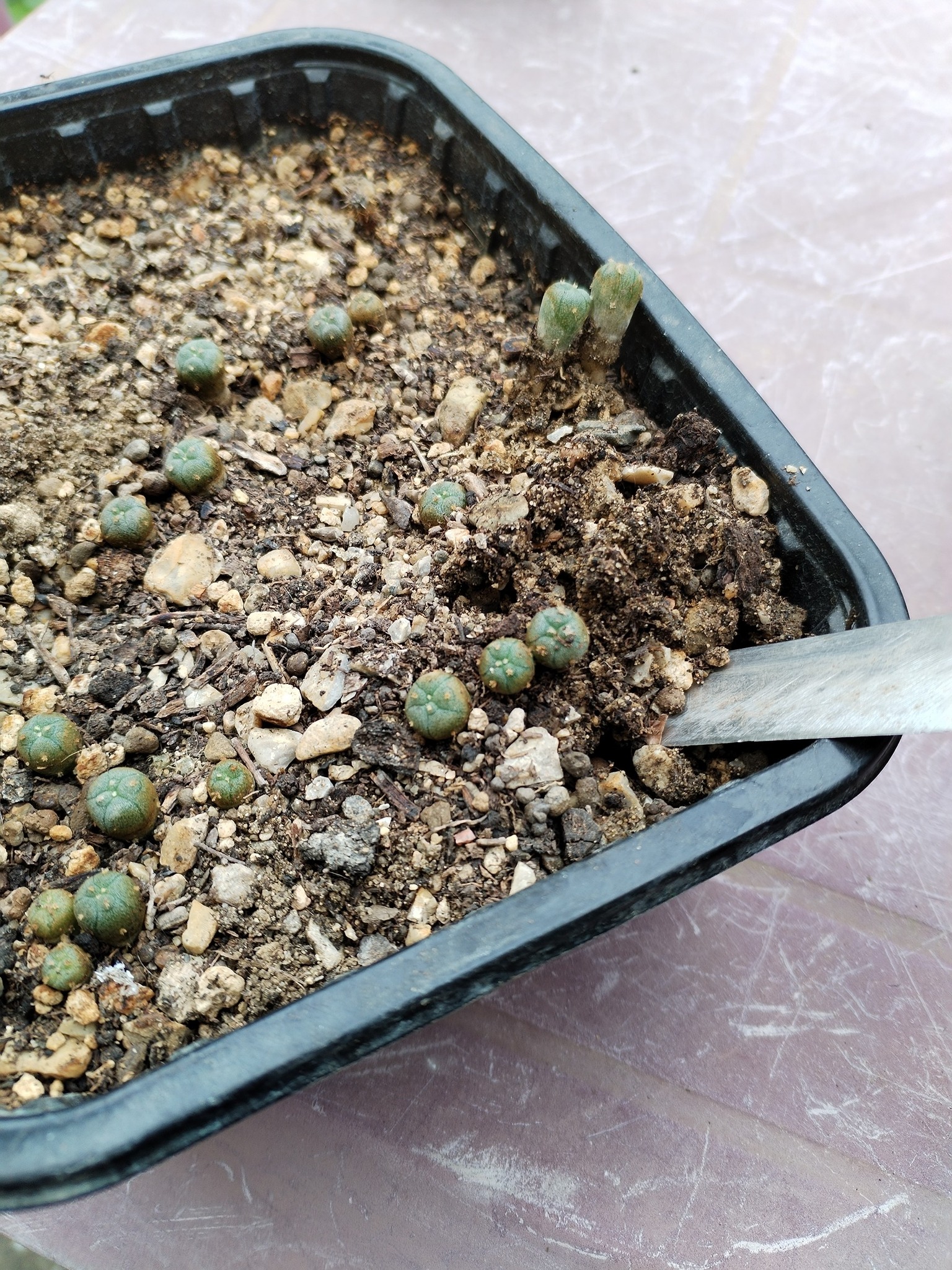
Growth in years one through three is the most demanding period for the grower. Young plants are considerably more sensitive to overwatering than adults. They also require more shade than mature plants; placing first-year seedlings in direct summer sun often causes bleaching and can kill small plants quickly. A bright but diffuse light during the first two to three growing seasons, combined with careful attention to watering frequency, is the correct approach.
By year five to eight, a well-grown own-root seedling will have developed an identifiable adult body of 1.5 to 3 centimeters and will be building the taproot that defines the mature plant’s form. By year ten, a plant under good conditions may reach 3 to 5 centimeters in diameter. Flowering on own roots tends to begin somewhere between years ten and twenty, with the exact timing depending on locality, growing conditions, and individual plant vigor. Grafted plants can be brought to flowering size in three to five years and are useful for seed production and observing flowers, though grafted specimens do not develop the flat, soil-hugging profile of long-term own-root material.
The largest own-root specimens encountered in experienced collector collections are typically 5 to 8 centimeters across and represent twenty-five or more years of careful cultivation. These old plants, properly potted in deep vessels and grown through consistent seasonal cycles, are the benchmark. They carry the taproot, the tight adult body, and the quiet authority of something that has been alive and slowly growing since before most people thought to start a cactus collection.
Cultivation
Soil and substrate
Lophophora williamsii in habitat grows on alkaline, mineral-dominant, fast-draining substrates. The cultivation mix needs to approximate that combination. A practical starting point is 90% percent inorganic material, composed of pumice, lava rock, decomposed granite, limestone, zeolite and oyster shell, with the remainder 10% being a low nutrient cactus mix. Target a pH of 7.0 to 8.0. Limestone chips or crushed dolomite added in small quantities are beneficial, particularly for plants from known limestone localities, and do not harm plants from gypsum-associated populations.
The critical point is drainage speed. Water applied to the surface should pass through the substrate and exit from the drainage hole within minutes, not pool. Any substrate that holds moisture around the root collar for more than 24 hours after a full watering represents a rot risk, particularly at lower temperatures. When in doubt, add more pumice.
Deep pots are not optional for this species. The taproot needs room to develop, and a root-bound plant will not perform well during the dry periods it depends on. Long tom or rose-style pots with a height-to-diameter ratio of at least 1.5 to 1 are appropriate. Unglazed terracotta provides additional airflow through the pot walls, which helps the substrate dry between waterings. Plastic pots work but dry more slowly and require even more cautious watering frequency.
Watering through the growing season
During the active growing season, typically late spring through early autumn, the correct approach is to water thoroughly and then wait. Each watering should saturate the substrate completely, with water running freely from the drainage hole. The interval before the next watering should be long enough for the substrate to dry fully, which under warm conditions with a good inorganic mix might be every ten to sixteen days in summer. The plant’s body is a useful guide: a firm, slightly turgid crown is well-watered; a crown that feels slightly soft or looks deflated is ready. A crown that looks actively shrunken or has begun to retract toward the soil has been dry too long, though established plants tolerate this better than you might expect.
Reduce watering sharply from early autumn. Once nighttime temperatures fall reliably below 10 degrees Celsius, stop watering entirely. The winter dry period typically runs four to five months in most temperate cultivation situations. Plants that have been kept bone dry during a cold winter tolerate mild frost with little difficulty. Plants that were watered recently and have wet roots when temperatures drop are a different situation entirely.
Resume watering in spring when nights have settled above 10 degrees and the crown shows signs of new growth. The first watering after dormancy should be modest; a thorough drench followed by a longer-than-usual dry interval before the second. This allows the root system to reactivate gradually rather than receiving a sudden flood after months of dormancy.
Light
Mature plants benefit from full sun through the growing season. Direct light produces the tightest body form, the best blue-grey coloration, and the most compact rib structure. Plants grown in insufficient light produce pale, elongated bodies with a looser, more open form that experienced growers recognize immediately as suboptimal. That said, L. williamsii is more sun-sensitive than most cacti of similar size, and plants that have been recently received, recently repotted, or have been grown in shade need gradual acclimatization to full sun rather than immediate exposure. A plant pushed into intense direct sun without hardening can bleach severely, and young plants are particularly vulnerable.
In extremely hot summer conditions above 38 degrees Celsius, some light shade during peak afternoon hours reduces the risk of bleaching without meaningfully compromising growth. Watch the plants rather than following a fixed rule. A healthy, hardened peyote in full summer sun will be compact, firm, and a good grey-green; a plant that is showing bleached patches or has gone very pale needs more shade or less water, or both.
Temperature and cold tolerance
The cold tolerance of Lophophora williamsii varies significantly by locality. Texas border-region plants and lowland Tamaulipas material are less hardy than plants from high-altitude San Luis Potosí or Nuevo León localities. As a general rule, established plants with completely dry roots tolerate brief dips to approximately minus 5 to minus 7 degrees Celsius without damage. Wet roots will rot at temperatures well above freezing. In USDA zone 9b or warmer, established plants in well-drained ground can often remain outdoors year-round. In zones 8 and below, reliable winter protection is required.
Seed-grown vs. grafted or degrafts
Grafted plants reach blooming size much faster and are entirely appropriate for growers whose primary interest is flowering, seed production, or simply growing larger plants in less time. The horticultural trade-off is that grafted specimens grow upright rather than flat and do not develop the low, soil-level profile of a long-term own-root plant. Degrafted plants can be grown on to their own roots, but the resulting root system is different in character from one that developed from seed in the ground. Own-root from seed, maintained over years with consistent seasonal cycles, is the standard that experienced collectors hold as the benchmark for the species.
Lophophora jourdaniana
Lophophora jourdaniana occupies an interesting and unresolved position in the genus. It was described by Habermann in 1974, based on material observed in cultivation, and named in honor of the French cactus collector Jean-Jacques Jourdan. The description focused primarily on the flower color: a deeper, more saturated lilac-pink compared to the pale pink of the L. williamsii type, with a more pronounced dark midstripe on each petal and a flower that opens to a slightly different overall shape. Habermann considered these characters sufficient to justify species status. The majority of subsequent taxonomists have not agreed, and most current treatments regard L. jourdaniana either as a variety of L. williamsii or as a color form within the natural variation of the species.
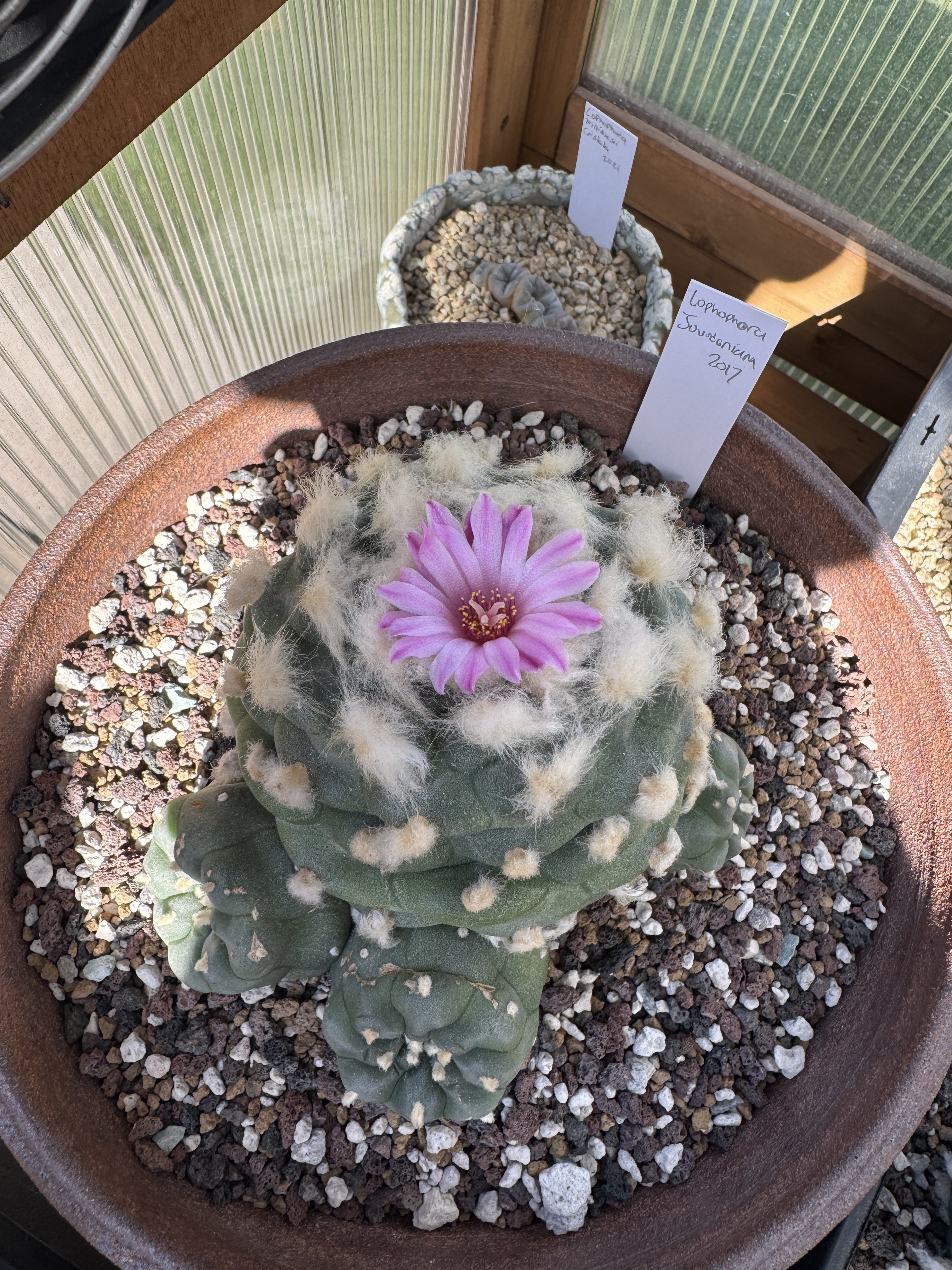
The practical problem with distinguishing L. jourdaniana from L. williamsii is that flower color in peyote varies considerably across populations and even between individual plants within a single population. The pale pink of the standard type grades, through various intermediate shades, toward the deeper lilac that Habermann used to define jourdaniana. Without a consistent geographic or genetic boundary, this color variation is difficult to treat as a reliable species-level character. Kew’s POWO does not currently recognize L. jourdaniana as a distinct species, listing it as a synonym of L. williamsii. Anderson’s treatment in his 2001 monograph similarly declined to accept it at species level.
In the collector world, however, Lophophora jourdaniana has a clear identity and a dedicated following. Plants grown and distributed under this name tend to be from a lineage traceable to Habermann’s original cultivated material or from similar deep-flowered wild selections, and they reliably produce that deeper color when they bloom. Whether the flower character breeds true from seed across generations under varied growing conditions is the key question, and the collector literature does not yet provide a clear answer. Plants grown side by side with L. williamsii type show consistent flower color differences in many observations, which suggests at least some heritable basis for the distinction.
Vegetatively, jourdaniana is essentially indistinguishable from L. williamsii by any character other than flower color. The body, ribs, areoles, taproot, growth rate, and cultivation requirements are all identical. It is grown the same way, at the same pace, under the same conditions. For collectors who value it, the deeper flower color is reason enough. For taxonomists, the case for full species recognition has not yet been made compellingly enough to carry the consensus.
Alkaloid data for jourdaniana specifically is sparse. What exists suggests that the alkaloid profile closely mirrors that of L. williamsii, which is consistent with its treatment as a form rather than a separate species. The genetic work of Sasaki and Aragane, cited in the alkaloid section, focused their identification on morphological classification from Anderson rather than on jourdaniana directly, and no targeted chemical comparison between jourdaniana and the type form of L. williamsii appears to have been published as of the time this page was written.
In cultivation, plants marketed as L. jourdaniana are available from specialist Czech, German, Spanish, and Japanese growers, and the material in circulation is generally reliable in producing the flower color attributed to the name. If you are building a comprehensive Lophophora collection, it deserves a place, both for the flower and for the taxonomic interest of watching the question play out in future genetic work.
Related Taxa in the Genus
Lophophora diffusaThe false peyote from Querétaro, notable for its absence of mescaline and its pale yellow-white to cream flowers. Genetically and chemically distinct from L. williamsii, it offers a fascinating comparison for anyone studying the genus’ alkaloid chemistry.Lophophora friciiA distinct, mescaline-free species from the southeastern portion of the genus’ range, recognized by its grey body color and larger surface protuberances. Long misidentified as a form of L. williamsii in both taxonomic and chemical literature.Lophophora alberto-vojtechiiThe most recently described species in the genus, from Aguascalientes. Named in honor of botanist Alberto Vojtěch Frič, it represents the southernmost extent of the genus’ documented range and remains one of the least-studied members of Lophophora.
Sources & References
Lemaire, C. (1839). Echinocactus williamsii. Cact. Gen. Nov. Sp. · Coulter, J.M. (1894). Preliminary revision of the North American species of Cactus. Contr. U.S. Natl. Herb. 3(2): 91–132. · Heffter, A. (1896). Ueber Cacteenalkaloïde. Ber. Dtsch. Chem. Ges. 29: 216–227. · Habermann, V. (1974). Lophophora jourdaniana sp.n. Kaktusy 10: 3–4. · Anderson, E.F. (1980). Peyote: The Divine Cactus. University of Arizona Press. · Bruhn, J.G. & Holmstedt, B. (1974). Early peyote research. Econ. Bot. 28: 353–390. · Lundström, J. (1971). Biosynthesis of mescaline and tetrahydroisoquinoline alkaloids in Lophophora williamsii. Acta Chem. Scand. 25: 3489–3499. · Todd, J.S. (1969). Thin-layer chromatographic analysis of alkaloids in Lophophora williamsii. Lloydia 32: 395–398. · Hulsey, M.G. et al. (2011). Alkaloid profiles of Lophophora williamsii from several Texas counties. Cactus & Succulent J. · Klein, T. et al. (2013 & 2015). Distribution of mescaline in Lophophora williamsii. J. Nat. Prod. · Kalam, U. et al. (2012 & 2013). Regrowth alkaloid profiles, Jim Hogg County. Cactus & Succulent J. · Royal Botanic Gardens, Kew. Plants of the World Online. Lophophora williamsii (Lem.) J.M.Coult. Retrieved 2026. · Gómez-Hinostrosa, C. et al. (2013). Lophophora williamsii. IUCN Red List of Threatened Species. Version 2022-2.