Pseudolithos — The rock-like “weirdos” of the plant world
Encyclopedia · Pseudolithos
| Family | Apocynaceae |
| Subfamily | Asclepiadoideae |
| Tribe | Ceropegieae |
| Subtribe | Stapeliinae |
| Named by | P.R.O. Bally, 1965 |
| Native range | Somalia, Yemen, Oman, Ethiopia |
| Accepted species | 8 (Kew POWO 2025) |
| Stem form | Leafless; spherical to cuboid; tessellated |
| Flowers | Star-shaped; carrion-scented; maroon to yellow |
| Pollination | Fly-mediated (saprophilous) |
| USDA zones | 11a to 11b |
False Stone · Cube Cactus · Dinosaur Egg
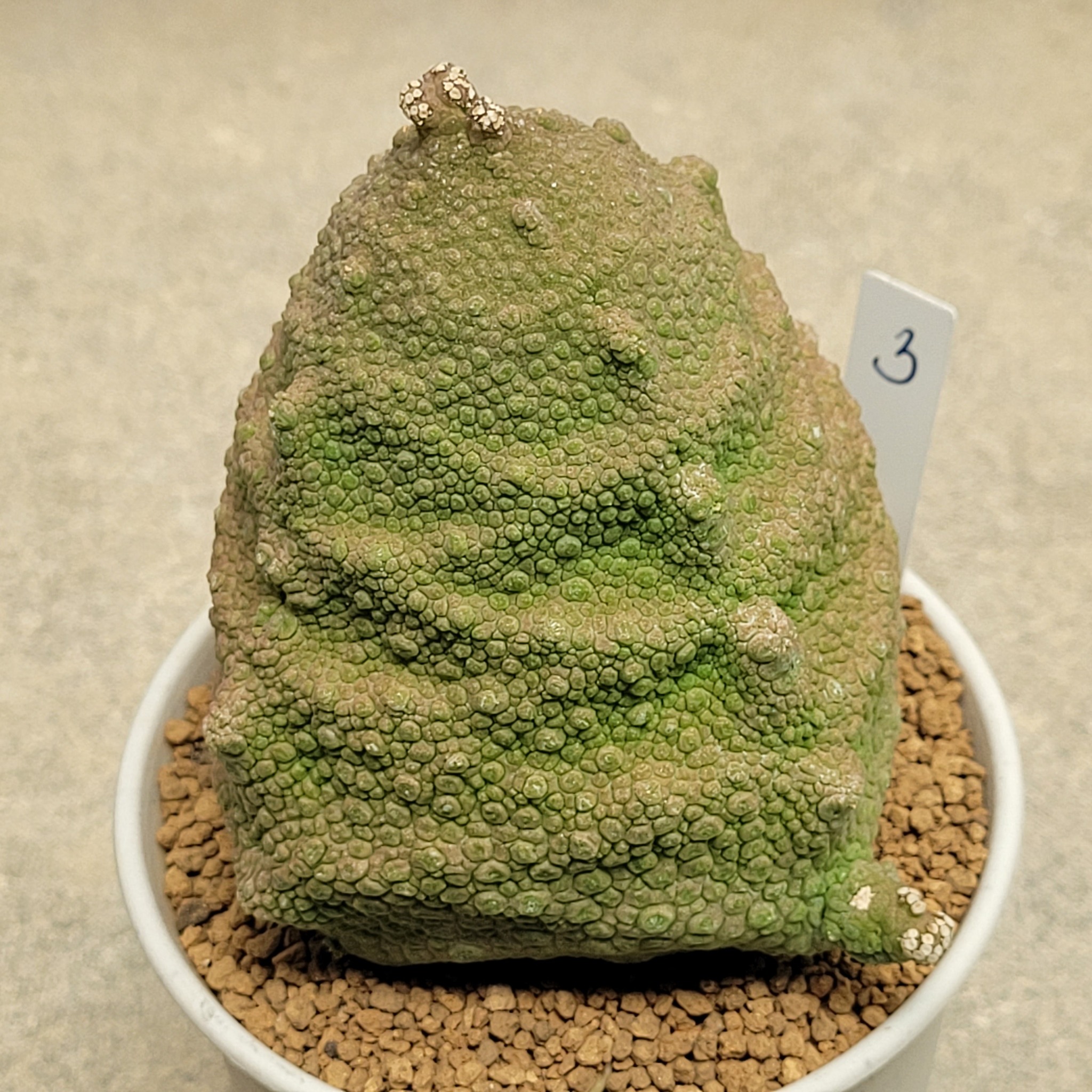
Pseudolithos is a genus of eight species of stem succulents in the family Apocynaceae, native to the arid limestone landscapes of northeastern Somalia, Yemen, Oman, and parts of Ethiopia. Despite turning up frequently in cactus collections and being sold under cactus labels, this genus has no evolutionary relationship to the Cactaceae whatsoever. It is a stapeliad: a member of the same subfamily that contains Stapelia, Huernia, Orbea, and Caralluma. The resemblance to cacti, and more specifically to the stone-mimicking mesembs of the genus Lithops, is purely convergent. Both Pseudolithos and the groups it resembles faced the same extreme selective pressures in hot, minerally rich desert environments and arrived at similar architectural solutions through entirely different lineages.
What distinguishes Pseudolithos from every other stapeliad, and from most succulents of any family, is the tessellated surface of the stem. All eight species carry this character: an interlocking pattern of convex, tile-like units covering the entire exterior of the body. The pattern is regular enough to look manufactured. No other genus in the Asclepiadoideae produces it. Combined with a compact, leafless body that sits flush against pale gravel and takes on the color of its substrate under sun exposure, this tessellation makes Pseudolithos among the most convincing plant-stone mimics on Earth. In the field, finding one requires knowing that certain stones have flowers.
Contents
Taxonomy and Nomenclature
The genus has a nomenclatural history that took several decades to resolve. The first scientific encounter with a Pseudolithos was made by Italian botanists working in the former Italian Somaliland during the early twentieth century. Chiovenda described the type species in 1937 as Whitesloanea migiurtina, placing it in a genus he had erected and named for a British colonial official. That placement was not widely adopted. Peter Rene Oscar Bally, the Swiss botanist based at the Coryndon Museum in Nairobi who described a substantial fraction of East African succulents during the mid-twentieth century, encountered these plants during field expeditions and recognized that they formed a natural group meriting their own genus.
In 1959, Bally proposed the name Lithocaulon, from the Greek for stone-stemmed, publishing it in the Swiss botanical journal Candollea. The name was already occupied. Lithocaulon had been used by the Italian paleobotanist Giuseppe Meneghini in 1857 as the name of a genus of fossil algae. Under the International Code of Nomenclature, any name pre-occupied in any kingdom is invalid for a new taxon. Bally was required to rename the genus. In 1965, again in Candollea, he published Pseudolithos, false stone, as the replacement name, simultaneously transferring the species he had described under Lithocaulon into the corrected genus.
The two species Bally transferred at that point were Pseudolithos cubiformis and Pseudolithos sphaericus. The latter is now treated as a synonym of Pseudolithos migiurtinus, the combination that correctly credits Chiovenda’s earlier name. Subsequent fieldwork by John Lavranos, the South African botanist who collected extensively in the Horn of Africa and southern Arabia from the 1960s through the 1990s, produced Pseudolithos horwoodii, Pseudolithos caput-viperae, Pseudolithos mccoyi, and Pseudolithos dodsonianus. The Italian botanist Maurizio Dioli added Pseudolithos gigas and Pseudolithos harardheranus from Somali material. Kew Plants of the World Online currently accepts eight species.
A taxonomic note worth flagging for serious collectors: Peter Bruyns, in a 2017 revision published in the South African Journal of Botany, transferred the entire genus to Ceropegia on the basis of molecular phylogenetics showing that Ceropegia as traditionally circumscribed is paraphyletic. Under Bruyns’s treatment, Pseudolithos cubiformis becomes Ceropegia cubiformis. This transfer is followed by some herbaria and some literature. Kew POWO retains Pseudolithos as an accepted genus, and this page follows the Kew treatment. Both names may appear in different sources and refer to the same plants. The synonym Anomalluma, erected by Darrel Plowes in 1993 in the Cactus and Succulent Journal to accommodate some species with elongated bodies, including what is now Pseudolithos mccoyi, is not recognized by current authorities.
Phylogenetically, Pseudolithos is confirmed as monophyletic, meaning all species within it share a single common ancestor. Its closest relatives are the Caralluma stapeliads, a widespread African group. Slightly more distant is a sister branch comprising Echidnopsis and Rhytidocaulon, both of which share the same northeastern African and Arabian distribution. All of these genera belong to the subtribe Stapeliinae within the tribe Ceropegieae, the most florally specialized group in the Apocynaceae, defined primarily by the way pollen is packaged into coherent masses called pollinia rather than as free grains.
Habitat and Native Range
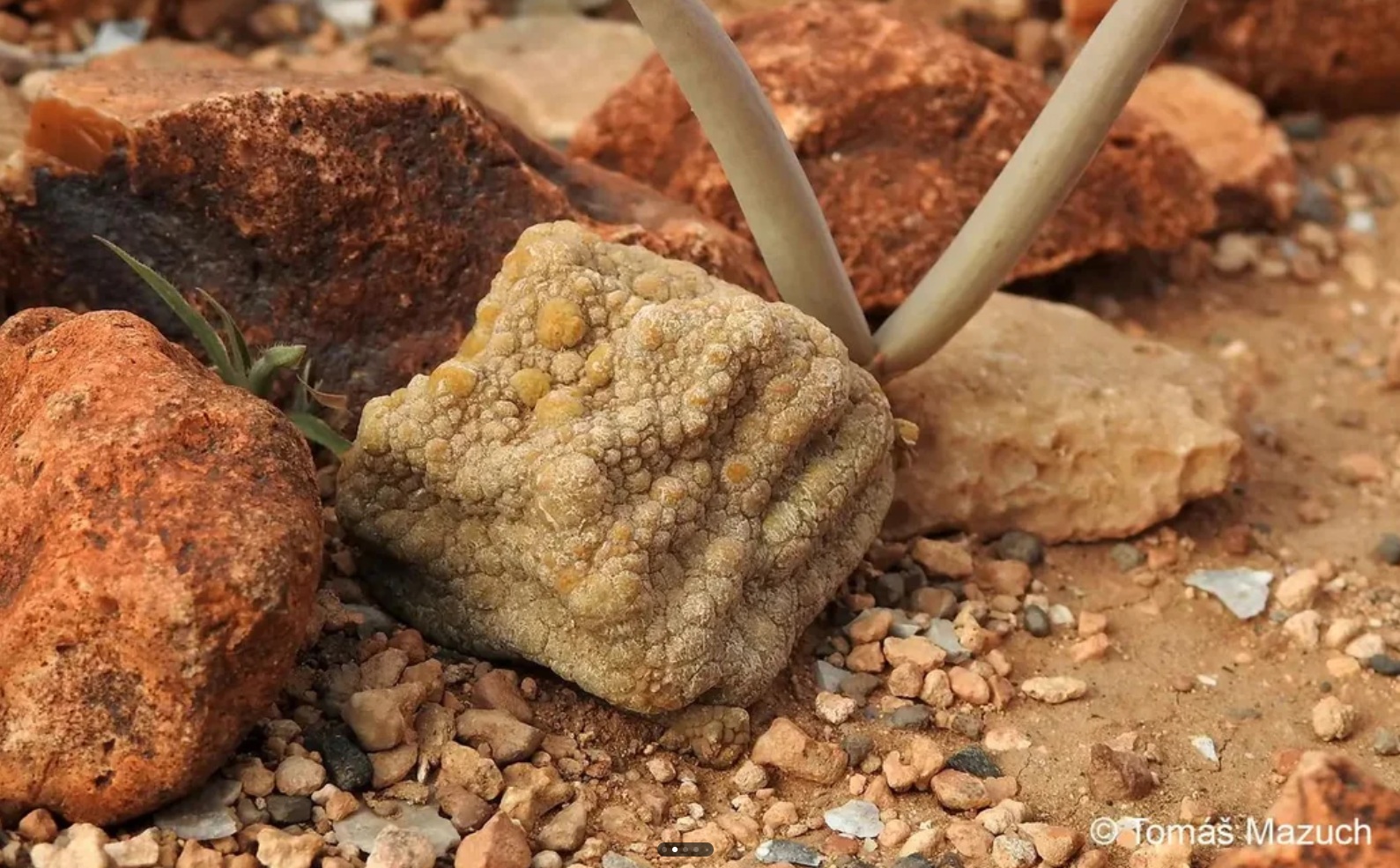
The core distribution of Pseudolithos is the Puntland region of northeastern Somalia, historically termed the Migiurtinia, which gives Pseudolithos migiurtinus its specific epithet. This is the Horn of Africa, the easternmost projection of the continent into the Indian Ocean, a landscape of pale limestone escarpments, gravel plains, and seasonal dry riverbeds under a bimodal monsoon climate delivering highly variable and often minimal annual rainfall. Two species extend beyond Somalia: Pseudolithos mccoyi and Pseudolithos dodsonianus are found across the Gulf of Aden in Yemen and Oman, where the same limestone and gypsum substrates continue the geological formation on the Arabian side.
Elevation across the range spans from coastal lowlands at near sea level to approximately 800 meters in the inland hill ranges of Puntland. Bally collected his type material from the Al Madu Range in northeastern Somalia, at an inland locality named Baditir. These inland elevations experience more pronounced day-to-night temperature swings than the coastal lowlands and are subject to occasional cooler periods during the northeast monsoon from November through March. The Omani and Yemeni populations of Pseudolithos mccoyi occur in the low mountains and coastal escarpments of southern Arabia, in some of the driest terrain documented anywhere in the world.
The substrate throughout the range is overwhelmingly mineral. Limestone-derived gravel and compacted calcareous sedimentary deposits with very low organic matter content are the typical growing medium. The surface layer of the soil dries to powder within hours of any rainfall event, and the water-holding capacity of the substrate at depth is close to zero. Plants growing in this environment cannot rely on soil moisture persisting between rain events. They must capture moisture from rain or dew rapidly through a wide-spreading, shallow root system, process it into the stem tissue, and survive on internal reserves until the next rainfall. The stem body is the water tank. There is no buried taproot reserve of the kind that buffers Lophophora or Ariocarpus through drought periods.
The broader plant community of Pseudolithos habitat is characteristic Somali-Masai xeric bushland. Low, thorny shrubs of the genera Commiphora, the source of myrrh resin, and Boswellia, the source of frankincense, define the general character of the landscape alongside occasional taller trees on dry riverbeds. Succulent relatives in the Asclepiadoideae grow in the same or adjacent habitats: Echidnopsis, Rhytidocaulon, and Whitesloanea species are all present in overlapping distribution. The ground between shrubs is open gravel and is where Pseudolithos occurs. Field observations indicate that these plants frequently grow in fully open, unshaded positions in direct equatorial sun rather than sheltering beneath nurse plants, as is common in several other succulent groups that grow in similarly extreme environments. Their surface coloration in full sun in habitat approaches the color of surrounding limestone almost exactly.
The primary natural threat to plants in the field is browsing by livestock. A spineless, juicy-bodied succulent the size of a large stone is a convenient and easily consumed source of water for any goat investigating open ground. Unlike spiny cacti or thorny Euphorbias, Pseudolithos has no physical defense against browsing. Camouflage is its only protection, and in areas of heavy grazing pressure the effectiveness of that camouflage is clearly tested.
Morphology and Tessellation
Every Pseudolithos species shares the same fundamental architecture: a highly succulent, completely leafless stem that carries across its entire outer surface a pattern of interlocking geometric units called tessellations. The word comes from the Latin for tile, and it precisely describes what you are looking at. Each unit is a slightly convex or raised polygonal pad, bounded by shallow furrows, repeated across the body in a regular geometric arrangement. The pattern does not appear anywhere else in the Asclepiadoideae and is considered the most reliable diagnostic character for the genus at a glance.
The tessellations are not merely decorative. They serve at least two well-supported functions. First, the convex geometry of each individual pad creates microshade within the furrows between pads, reducing the effective solar radiation load on the tissue at the base of the furrows. In full equatorial sun on reflective pale limestone, any reduction in absorbed heat is biologically meaningful. Second, the tessellated structure allows the stem to change volume without the epidermis cracking. As the plant becomes more or less hydrated, the stem swells or contracts. The geometric flexibility of the tessellated pattern accommodates this dimensional change in ways that a smooth or ribbed epidermis would not tolerate. A well-watered plant has visibly more pronounced, slightly more convex tessellations than a drought-stressed one. A plant deep into drought stress shows tessellations that appear slightly flattened or sunken, with the furrows between them narrowing as the underlying tissue compresses.
The tessellation pattern is produced by a regular geometric arrangement of meristematic cells in the stem epidermis during development. Each tessellation unit develops from a localized cluster of cells that expand coordinately, pushing the surface outward and producing the convex pad shape, while the boundaries between adjacent units remain as the shallow furrows. The regularity of this pattern across the entire stem surface reflects the precision of the underlying developmental program. It is comparable in determinism to phyllotaxis, the mathematically regular spiral arrangement of leaves or scales in many plants, which is also the product of deterministic meristematic programming rather than random growth. The result in Pseudolithos is a surface geometry selected both for its functional advantages and for its incidental resemblance to the fractured surface geometry of limestone and compacted mineral gravel.
Body shape varies substantially between species and, within some species, between age classes. Pseudolithos cubiformis produces the most geometrically distinct adult form: a four-sided, approximately cuboid stem with four pronounced cardinal angles from which the flower-bearing lateral shoots arise. Young plants of this species begin broadly spherical, and the cubic geometry sharpens over years of growth, making body shape an unreliable identification character in juvenile material. Pseudolithos migiurtinus remains more rounded to gently pyramidal throughout its development. Pseudolithos mccoyi departs most dramatically from the compact forms of the Somali species, producing elongated, finger-like or cylindrical stems bearing no resemblance to a stone. Stem diameter across the genus spans from approximately 3 centimeters in the smallest-bodied species to more than 12 centimeters in mature specimens of Pseudolithos gigas and Pseudolithos cubiformis.
Color is strongly influenced by light intensity and is not a fixed species character. The same individual plant will be a soft green in shade and a grey-brown to reddish-brown under prolonged high-intensity sun. The coloration shift is driven by protective pigmentation, primarily anthocyanins, which increase under elevated UV and visible light exposure. In cultivation, plants kept in filtered or indirect light remain green. The green form is healthy but does not show the plant’s full character. All aspects of body form, the coloration, the tightness of the tessellations, and the overall flatness of the profile against its substrate, are most accurately represented under high light conditions that approximate the full-sun equatorial exposure of the native range.
The roots of all species are fibrous and wide-spreading rather than deeply penetrating. There is no fleshy taproot. The stem body is the primary water reservoir and the root system is a rapid-uptake rather than long-term-storage structure. This has direct consequences for cultivation: a Pseudolithos with a damaged or restricted root system has no backup water reserve to draw on, and the stem tissue will visibly deflate within days if root function is compromised. Conversely, a plant with a healthy but limited root system and fully turgid stem tissue can survive a surprisingly long drought by drawing on the stored stem reserves, which is precisely what the plant does through the natural dry season in Somalia.
Species Profiles
Pseudolithos migiurtinus
The type species of the genus, originally described by Chiovenda as Whitesloanea migiurtina in 1937 from material collected near the mouth of the Nogal Valley in northern Somalia. Endemic to Somalia, distributed across central and southern Puntland on limestone gravel flats and low rocky slopes. The stem begins subspherical in juvenile plants, becoming obscurely pyramidal to four-angled with age, reaching up to 12 centimeters in height and approximately 6.5 centimeters in diameter in mature cultivated specimens. The surface carries rows of rounded tessellations that are particularly prominent along four vertical lines coinciding with the stem angles, with smaller tessellations between them. Color runs from soft green in low light through grey-green to reddish-brown in full sun. Flowers are produced in clusters at the apex of abbreviated lateral shoots along the stem angles, dark red to dark maroon, approximately 6 to 7 millimeters in diameter, appearing in late summer through early autumn in cultivation. Each cluster contains 8 to 10 individual flowers opening simultaneously. The corolla lobes carry dense hair-like papillae on their inner surface and club-shaped cilia at the tips. Fruit consists of paired follicles up to 8 centimeters long, each containing 10 to 20 wind-dispersed seeds. The synonymy runs through Lithocaulon sphaericum Bally (1959) and Pseudolithos sphaericus (Bally) Bally (1965), both reduced to synonymy under the combination that credits Chiovenda’s earlier description.
Pseudolithos cubiformis
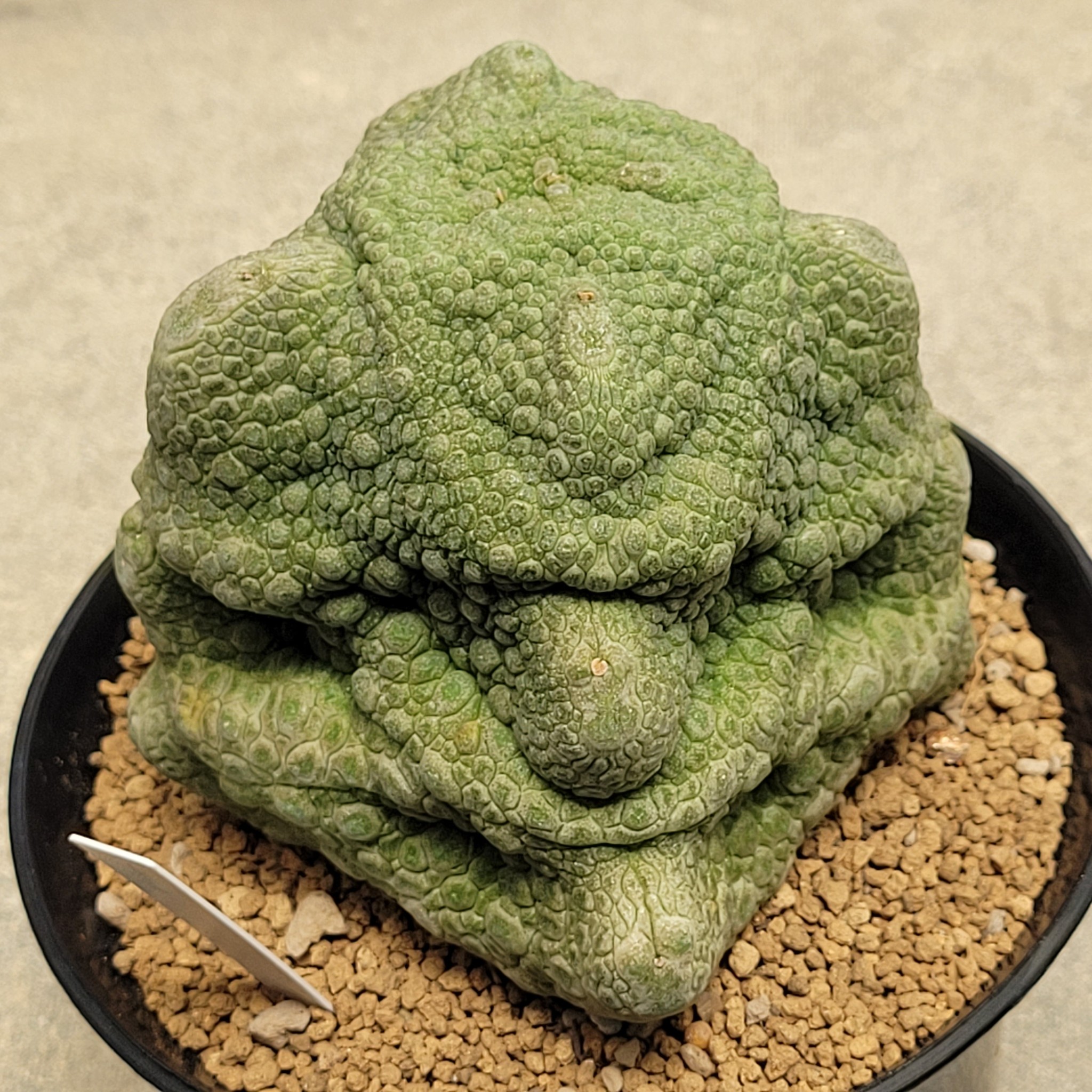
Endemic to northeastern Somalia, concentrated in the arid coastal and sub-coastal lowlands of northern Puntland. Originally described by Bally as Lithocaulon cubiforme in his 1959 Candollea paper and transferred to Pseudolithos in 1965. The cubic body form develops progressively: juvenile plants are broadly spherical, and the four-cornered geometry sharpens over years to produce the fully characteristic adult form. Mature specimens reach up to 12 centimeters in diameter and height, making this among the largest-bodied species in the genus. The surface carries small irregular tessellations of 2 to 5 millimeters in diameter across most of the body, with a consistent line of larger, shield-shaped tessellations running along each of the four cardinal angles. These angle-lines are the structural zones from which the abbreviated lateral shoots arise. Flowers are somewhat larger than those of Pseudolithos migiurtinus, with entire clusters reaching approximately 5 centimeters across. Individual flower color ranges from pale yellow to pale maroon. A variety, Pseudolithos cubiformis var. viridiflorus, was described by Horwood in the National Cactus and Succulent Journal in 1975 for green-flowered plants; this variety appears in some horticultural references but is not consistently accepted in current taxonomic treatments. Cross-pollination between multiple plants flowering simultaneously is easily achieved in cultivation, and seed pods develop reliably, each containing up to 20 seeds.
Pseudolithos caput-viperae
Described by Lavranos from Somali material. The specific epithet translates as viper head, referring to the triangular or kite-shaped profile of the stem when viewed from above. The body consists of conjoined irregular sections that together produce a form unlike any other species in the genus, more strongly angular and irregular than the symmetric geometry of Pseudolithos cubiformis. Body color is predominantly grey-green to brown. The tessellations are present throughout but less geometrically regular than in the cube-bodied species, giving the surface a naturalistic, knobbly texture that reads convincingly as rock debris. Flowers are star-shaped, ranging from yellow to pale maroon.
Pseudolithos horwoodii
Native to northern Somalia. Described by Bally and Lavranos together, and named for the British succulent botanist and collector C.E. Horwood, who was involved in the collection of type material. The species is smaller than Pseudolithos cubiformis, with stems that remain comparatively compact and rounded throughout their development rather than developing a pronounced angular adult form. Cultivation behavior is assumed to broadly mirror that of the other Somali species, though detailed first-hand accounts are sparse relative to the more widely grown Pseudolithos migiurtinus and Pseudolithos cubiformis.
Pseudolithos mccoyi
Native to Yemen and Oman, making this and Pseudolithos dodsonianus the two representatives of the genus outside Africa. Described by Lavranos and Mies, with the specific epithet honoring the American botanist and succulent explorer C.J. McCoy. Pseudolithos mccoyi is morphologically the most distinctive species in the genus: it produces elongated, cylindrical stems that are finger-like or sausage-shaped rather than compact and stone-like. Stem color runs grey-green to brown. Flowers are star-shaped in the typical Pseudolithos pattern, ranging from yellow to pale maroon. The elongated body form makes this species a morphological bridge between the compact Somali Pseudolithos and the more typically cylindrical stapeliads of Arabia. Its placement in Pseudolithos is supported by the tessellated surface, the flower structure, and molecular phylogenetic data despite its aberrant vegetative form. It has previously appeared in horticultural literature under the synonym Anomalluma mccoyii, a name no longer accepted.
Pseudolithos dodsonianus
Distributed across parts of both Somalia and Oman. Originally described by Lavranos and transferred to Pseudolithos by Bruyns and Meve following phylogenetic revision. The specific epithet honors the American botanist and orchid systematist Calaway H. Dodson. Body form is intermediate in character between the compact sphere of Pseudolithos migiurtinus and the elongated cylinder of Pseudolithos mccoyi. Detailed cultivation documentation is sparse relative to the two most commonly grown species.
Pseudolithos gigas Dioli
Described by Maurizio Dioli from material collected in northern Somalia. The epithet gigas, Latin for giant, refers to the comparatively large stem diameter of mature specimens, which exceeds that of Pseudolithos cubiformis in fully mature individuals. The body is broadly rounded to subspherical, with tessellations consistent with the genus throughout. The flower structure was reviewed by specialist Mike Gilbert, who supported recognition of this species as distinct from Pseudolithos cubiformis based on documented differences in floral morphology.
Pseudolithos harardheranus
Also described by Dioli, from a specific locality in the Mudug region of central Somalia. The specific epithet references the Harardhere district of that region. Confirmed as distinct from Pseudolithos cubiformis based on differences in flower structure and body morphology. Gilbert reviewed the floral morphology and concurred with species-level recognition. Detailed cultivation experience with this species is not documented in the accessible grower literature.
Flowers, Pollination, and Seed Dispersal
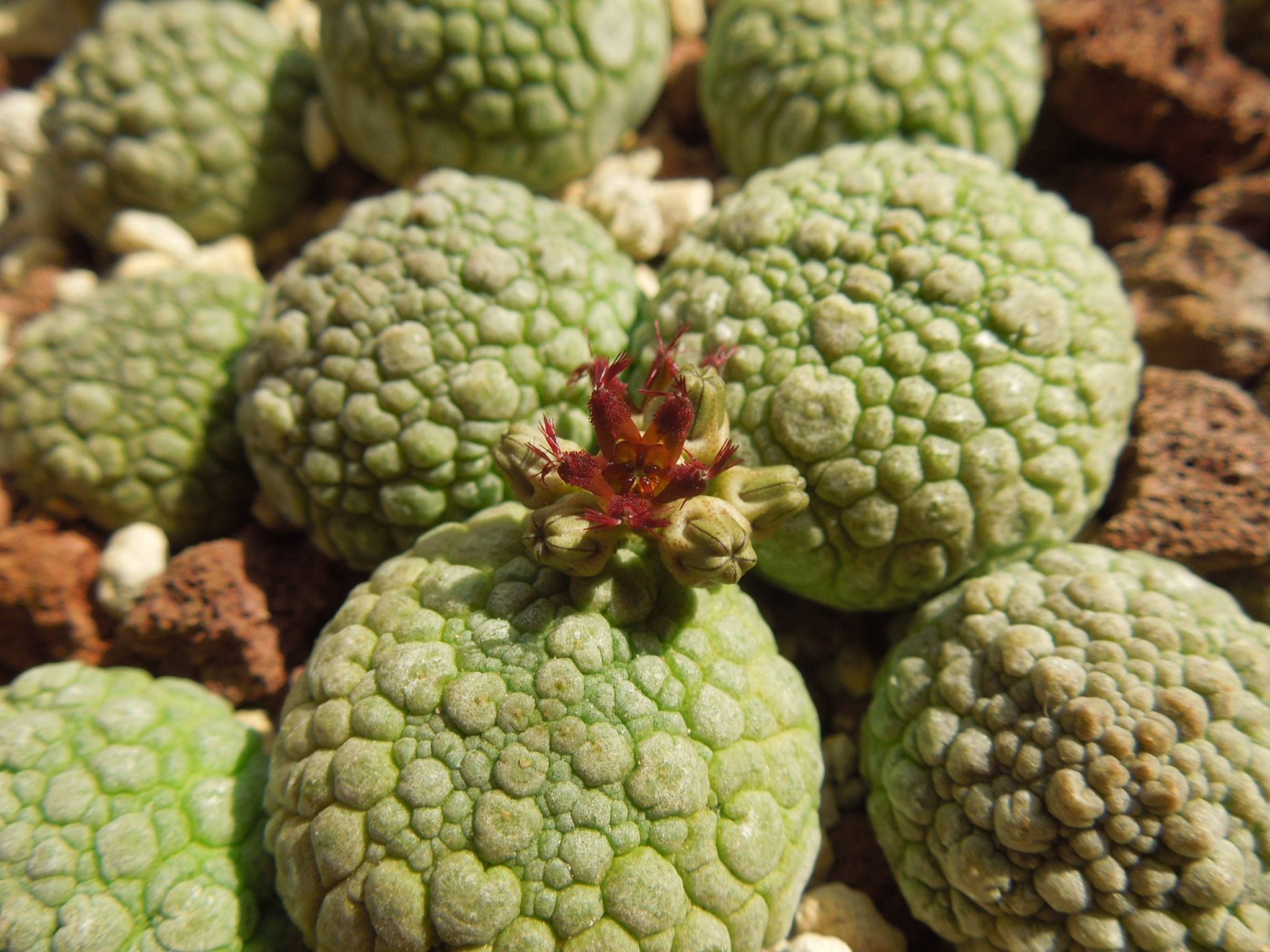
The flowers of Pseudolithos are architecturally complex, functionally specialized, and small enough that their full detail requires magnification to appreciate. Individual flowers in most species are between 6 and 10 millimeters across: extremely small relative to the stem body from which they emerge. The corolla is rotate to shallowly cup-shaped at the base, opening into five spreading triangular lobes. The inner surface of each lobe is covered with dense, short, hair-like papillae that give it the texture of living organic tissue. At the tip of each lobe, a tuft of club-shaped cilia extends outward. These cilia are motile: they respond to the slightest air movement and tremble continuously in any ambient current. This movement, combined with the papillose surface texture and the carrion-mimicking odor produced by glands within the flower, constitutes a multi-channel deception targeting flies that locate egg-laying sites by chemical, visual, and textural signals simultaneously.
The odor is not subtle. Descriptions in the literature and from growers are consistent: the flowers smell of rotten meat, decomposing organic matter, or the contents of an uncleaned animal enclosure. This is chemically deliberate. The flowers produce volatile amines and sulfur-containing organic compounds similar in chemical profile to the volatiles released during early protein decomposition. Certain fly species, particularly blowflies and flesh flies that oviposit on carrion or decaying organic material, navigate toward these signals to locate suitable egg-laying sites. A fly following the signal to a Pseudolithos flower encounters a surface that matches its sensory expectations: the right smell, the right texture, the right movement of surface features. It investigates thoroughly and in doing so is recruited as an unwilling pollinator.
The pollination mechanism is structurally analogous to that of orchids. In the center of each flower, the stamens and carpels are fused into a single structure called the gynostegium. Pollen is not shed as free grains but is packaged into waxy, coherent masses called pollinia. Each pollinium is attached to a clip-like structure called a corpusculum that adheres mechanically to the leg or body of a visiting fly. When the fly visits a second flower, the transported pollinium is guided into the stigmatic cavity of the gynostegium by a set of rails in the floral architecture and deposits its pollen mass, completing fertilization. The geometry of the guide rail and stigmatic cavity is precise enough that only a correctly positioned pollinium will insert cleanly. This precision is the basis for the cross-incompatibility or reduced self-fertility seen in many stapeliads: the architecture makes selfing mechanically unlikely even when a plant is in flower without a cross partner nearby.
In cultivation without the relevant fly species, hand pollination between two separate plants is the standard method and consistently achieves good seed set. A fine brush, toothpick, or fingertip pressed to the gynostegium of one flower and transferred to another is sufficient to transport the pollinium. Flowers remain open for two to four days. Within a single clone, self-pollination is possible in some species and produces viable seed, though typically in smaller quantities and with somewhat lower germination rates than cross-pollination between genetically distinct individuals. Multiple plants flowering simultaneously are therefore useful both for cross-pollination and for selection of seed with broader genetic diversity.
Successful pollination leads to fruit development over several weeks. The fruit, as in all stapeliads, is a pair of follicles: dry, elongated pods that split along the inner seam when fully ripe. Each follicle of Pseudolithos migiurtinus reaches up to 8 centimeters in length and contains 10 to 20 seeds. Each seed carries a tuft of fine, silky white hairs called a coma that functions as a parachute. When a follicle opens, any available air movement carries the seeds immediately. This dispersal is rapid and can cover significant distances in a greenhouse or indoor space. Collectors intending to harvest seed must monitor ripening follicles attentively and either keep the plant in still air during the final stages of ripening or loosely bag the follicles with a paper or cloth bag before they split. Seed viability is best when fresh. Sowing within a few weeks of harvest consistently produces better germination than storing seed for months.
Cresting and Fasciated Forms
Fasciated or crested forms of Pseudolithos are documented in cultivation. Fasciation results from an abnormal broadening of the apical meristem, the zone of active cell division at the growing apex of the stem. A normal Pseudolithos maintains a single compact point of meristematic growth that produces the characteristic spherical or cuboid body. In a fasciated individual, this point elongates into a line or arc of active growth, generating tissue across a broader front rather than concentrating it at a single location. The result in a compact-bodied species like Pseudolithos cubiformis is visually dramatic: the normally tight, stone-like body opens out into an undulating, brain-coral-like or fan-shaped crest carrying the same geometric tessellations across an entirely aberrant architecture.
The cause of fasciation in any given specimen is not always determinable after the fact. Mechanical injury to a very young growing tip, bacterial or fungal infection of meristematic tissue, insect damage to new growth, and spontaneous genetic mutation in the apical meristem cells have all been proposed as triggers in different succulent groups. Whether Pseudolithos crests observed in cultivation represent developmental accidents, heritable genetic mutations, or both, has not been resolved. The genus is too sparsely represented in collections and the specimens too precious to have been subjected to systematic propagation experiments to test heritability. What can be said is that crested tissue in principle contains the fasciated meristem throughout its length, meaning cuttings taken from crested sections may continue crested growth, but this has not been verified in published reports specifically for Pseudolithos.
Grafting crested material onto robust stapeliad rootstock is the most practical approach to preserving a crested specimen while it establishes, or if its root system has been compromised. Caralluma speciosa is the generally preferred rootstock for this purpose. The crested architecture changes the distribution of water-storage tissue relative to the original body geometry, which may affect optimal watering intervals differently from a type-form plant of the same species. Erring toward less frequent watering during the establishment of a grafted crested specimen is the conservative position until the grower has established how the specific plant behaves.
Convergent Evolution and Stone Mimicry
The stone-mimicking morphology of Pseudolithos is one of the most thoroughly documented examples of convergent evolution in botany. The genus arrived, through its own lineage in the Apocynaceae, at a body plan that closely parallels both the mesemb genus Lithops in the Aizoaceae and the compact body architecture of certain cacti, without sharing a recent common ancestor with either. All three groups evolved leaflessness, extreme stem succulence, minimal above-ground profile, and cryptic coloration matching surrounding substrate. In each case, the same selective pressures, intense solar radiation, near-zero water availability during prolonged dry seasons, and persistent herbivore pressure, drove convergent solutions through unrelated genetic and developmental pathways.
The comparison with Lithops is instructive because both genera occupy the same ecological niche, stone mimics on pale mineral substrates in extreme desert, yet differ in almost every biological detail. Lithops is native to southern Africa and is a leaf succulent: two heavily modified, fused leaves form the visible body. Its flowers are large, showy, and bee-pollinated. Its seeds are released by a hygroscopic mechanism activated by rainfall. Pseudolithos is a stem succulent with no leaves at any life stage. Its flowers are small and complex, pollinated by flies via carrion deception. Its seeds are dispersed by wind via a silky coma. The vegetative bodies of the two genera look similar from a distance. Everything about their biology from floral architecture to pollination mechanism to seed dispersal is different. This is convergent evolution in its most instructive form: similar phenotype, radically different genotype and functional biology, arrived at independently on opposite sides of Africa.
Within its own subfamily, Pseudolithos is also a morphological outlier. The typical stapeliad body plan is a cylindrical, four-angled or many-angled stem that branches from the base to form a clump of upright columns. This is the architecture of Stapelia, Huernia, Orbea, and the majority of the Stapeliinae. Pseudolithos abandoned this architecture almost entirely in favor of a compact, non-branching, stone-shaped form. The tessellated surface, unique within the subfamily, is a morphological innovation that evolved once within a specific geographic and ecological context. Close relatives such as Echidnopsis and Rhytidocaulon share the same northeastern African and Arabian distribution but retain the cylindrical stem architecture typical of the broader group. The transition to compact, tessellated, stone-mimicking bodies appears to have been driven by the particular combination of open gravel plain habitat, intense browsing pressure from large herbivores, and the absence of structural shelter that characterizes the specific environments where Pseudolithos evolved.
Cultivation
Understanding the failure mode before starting
The reputation Pseudolithos carries for being difficult to grow is accurate but not insurmountable. The failure mode is rapid, complete, and unrecoverable: a plant that succumbs to rot from excess moisture or cold turns to translucent gel within 24 to 48 hours with no possibility of rescue. This is not an exaggeration drawn from anecdote. It is the consistent experience of growers across different climates and growing setups, and it reflects the plant’s origin in an environment where the combination of moisture and cool temperatures essentially never occurs. In northeastern Somalia, ambient temperatures during the growing season do not fall to levels where moisture on stem tissue becomes dangerous. In a European greenhouse in September, they very much do.
Collectors who succeed with Pseudolithos over multiple years consistently describe a plant that is ultimately rewarding once the core requirements, warmth and precise watering, are consistently provided. The plants flower within one to two years from germination in some reports under ideal conditions, grow steadily during the warm months, and maintain themselves well through a dry winter rest. The margin for error is smaller than with most succulents, but the margin exists. Starting with Pseudolithos migiurtinus or Pseudolithos cubiformis before attempting less documented species is sensible.
Soil and substrate
The grower community has not converged on a single substrate formula, and the range of documented approaches is wider than for most succulent groups. At one end, experienced growers report consistent success with pure pumice or pure inorganic grit with no organic component. The reasoning is that any organic matter introduces moisture retention and biological activity that increases rot risk, and that the plants’ natural substrate is essentially 100 percent mineral. At the other end, some growers use a lean cactus compost with a high inorganic fraction, arguing that a small organic component supports root development and provides trace nutrition that a fully inert substrate cannot.
What is consistent across all successful accounts is that drainage must be immediate. Water applied to the surface should exit the drainage hole within seconds to minutes. Any substrate that pools or slow-drains is a rot risk, particularly at lower temperatures. Particle size matters as much as composition: coarse-grade materials of 3 to 6 millimeters drain more freely and dry more thoroughly than fine-grade materials that compact and retain capillary moisture. The specific inorganic material, whether pumice, perlite, crushed granite, or another aggregate, is less important than the drainage behavior it produces in your specific growing environment. Test your mix by watering a pot and observing how long it takes to drain and dry at the surface. If it is still damp 24 hours later in warm conditions, it needs reformulation. The practical consequence of getting the substrate wrong is not just slow growth or poor flowering: it is dead plants.
Pot selection is part of the drainage system. Unglazed terracotta with an unobstructed drainage hole dries faster than plastic through evaporation from the pot walls. A deep, narrow pot allows the substrate to dry more uniformly than a wide shallow one where moisture can persist in the center while the surface appears dry. Underpotting, using a smaller pot than intuition suggests for the plant’s size, keeps substrate volume low and ensures complete drying between waterings rather than maintaining a persistently moist core zone around the roots.
The temperature threshold for watering
The single most important rule in Pseudolithos cultivation is the temperature threshold for watering. Applying water when ambient temperatures are below approximately 23 degrees Celsius is the most consistently documented immediate cause of fatal rot. At temperatures above this threshold, the plant is in active physiological mode: roots take up moisture, the stem transpires, and any excess substrate moisture cycles through within days. At temperatures below this level, the plant’s metabolic activity slows substantially, but the bacterial organisms responsible for the characteristic gel-rot of Pseudolithos tissue remain active. The result is substrate moisture persisting around the root zone in conditions that favor decomposition while the plant is physiologically unable to process it. Do not water a Pseudolithos when temperatures are below 23 degrees. This is not a guideline but a constraint.
During the active growing season, broadly late spring through late summer in the northern hemisphere, water when the substrate has dried completely and temperatures are within the safe range. The visual signal from the plant is a slight softening or flattening of the tessellations and a minor reduction in stem diameter. A correctly watered plant returns to full turgidity within one to two days. The interval between waterings under warm summer conditions with a fast-draining inorganic substrate is typically 14 to 30 days, varying with temperature, pot size, light intensity, and the specific substrate. Avoid wetting the stem surface during watering; apply water directly to the substrate at the pot edge rather than over the plant.
As temperatures drop in autumn, begin reducing watering frequency well before stopping entirely. Do not abruptly halt watering as the season ends; taper off over two to four weeks, allowing the plant to process any residual substrate moisture before conditions become too cool for safe watering. Once nighttime temperatures are consistently below 20 degrees, stop watering entirely and maintain a completely dry rest through winter. Plants will look noticeably deflated during this period. This is expected and correct. Resume watering in spring only when nighttime temperatures have settled reliably above 15 degrees and daytime temperatures consistently exceed 23 degrees. The first watering after dormancy should be modest, followed by a longer than usual dry interval before the second application, to allow the root system to reactivate gradually.
Light
Direct sun through the growing season promotes the compact body form, the correct grey-brown to reddish-brown coloration, and reliable flowering. Plants grown in insufficient light remain green, elongate slightly, and may not flower. However, plants that are newly received, recently repotted, or have been growing in shade need gradual acclimatization to full sun rather than direct exposure. Moving a shaded plant into intense direct sun can bleach the surface permanently. Harden plants to higher light levels over two to four weeks. In temperate climates, the limiting factor is typically too little sun rather than too much, and south-facing greenhouse placement with maximum available light is the correct approach throughout the growing season.
Temperature and winter rest
The minimum safe temperature for winter storage is cited variously in the literature, with most experienced growers recommending a target minimum of 15 degrees Celsius rather than the absolute lower bound of 10 degrees that some accounts suggest is survivable. At 10 degrees and completely dry, established plants survive in some reports. The risk at lower temperatures is compounded by humidity: ambient humidity rises in most enclosed growing environments as temperatures fall, and a plant kept at 10 degrees in a damp greenhouse faces a greater threat than one kept at 15 degrees in a dry, well-ventilated space. Targeting 15 degrees as the minimum is the more conservative and reliably successful approach. These plants experience no frost in any part of their natural range and have no physiological mechanism for cold hardening. Even brief frost at any moisture level is lethal.
Propagation from seed
Seed is the primary and most reliable propagation method. Fresh seed germinates readily under warm, humid conditions. Sowing in a small closed propagator or sealed clear container over a bottom-heat source, maintaining temperatures of 25 to 32 degrees Celsius, typically produces germination within 7 to 14 days. The seedling emerges as a small, pale green hypocotyl that quickly develops its first tessellated surface tissue. Seedlings are considerably more tolerant of partial shade than adults and should not be placed in intense direct sun during their first growing season. They also tolerate slightly higher substrate moisture than mature plants during establishment, though the same warm temperature constraint for watering applies from the outset.
Growth in the first two years is steady rather than fast. A seedling of Pseudolithos cubiformis may reach 1 to 2 centimeters in diameter during its first growing season under good conditions, with body diameter increasing measurably through each subsequent season. Flowering from seed can occur within one to two years in consistently warm conditions in some accounts, though three to four years is more typical. The first winter is the most critical period for seedling survival: a small plant with limited stored reserves is more vulnerable to the combination of cool temperatures and residual substrate moisture than an established adult.
Vegetative propagation and grafting
Most grower literature states that seed is the only propagation method, which reflects the non-branching form of most species rather than a biological impossibility. If a plant produces a lateral shoot, or if a stem section is taken as an emergency response to basal rot, rooting in very dry inorganic substrate under warm conditions has been reported to work in a proportion of cases. The cut surface should dry for longer than you would rest a cactus cutting before attempting establishment, given the high tissue moisture content and the rot risk at the cut surface. This approach does not have a high success rate and should be treated as an emergency measure rather than a standard technique.
Grafting onto stapeliad rootstock is the more reliable vegetative propagation route and is the standard approach for preserving crested forms, unusual variants, or plants whose root system has been compromised. Caralluma speciosa is the most consistently recommended rootstock on the basis of its structural compatibility with Pseudolithos as a close relative and its comparatively robust root system. Hoodia species have been used but show their own sensitivity to root problems, partially negating the benefit of grafting. Ceropegia woodii and Ceropegia linearis tubers have served as emergency rootstock with some success. The grafted plant grows faster than an own-root specimen and can flower sooner, but develops an upright profile that differs from the pressed-flat form of a well-grown own-root plant of the same species.
Questions Collectors Ask
Is Pseudolithos actually a cactus?
No. Pseudolithos is a member of the Apocynaceae, specifically the subfamily Asclepiadoideae, which was formerly treated as the separate family Asclepiadaceae. It is a succulent milkweed, related to Stapelia, Huernia, Caralluma, and ultimately to oleanders, periwinkles, and milkweeds. The resemblance to cacti and to Lithops is purely the result of convergent evolution under similar desert conditions. The flowers are the definitive diagnostic: the gynostegium with its pollinia is a structure found in no cactus and immediately identifies the plant as Asclepiadoideae to anyone familiar with the subfamily.
Why do the flowers smell so bad?
The flowers use a carrion mimicry pollination strategy. Rather than offering nectar rewards to bees or butterflies, Pseudolithos deceives flies that lay eggs on decomposing animal matter. The flower produces volatile organic compounds, including amines and sulfur-containing molecules, that are chemically similar to the volatiles released during early protein decomposition. Flies navigating toward these signals investigate the flower as a potential oviposition site, contact the pollinium in the gynostegium, and carry it to the next flower they visit. The plant produces no reward whatsoever and offers no benefit to the fly. It is pure deception. The odor is only detectable in proximity to an open flower and dissipates quickly in moving air, so it is not a persistent problem in a growing space unless flowers are actively open and the space is enclosed.
My plant turned to mush overnight. What happened?
This is the characteristic bacterial rot that is the most common cause of Pseudolithos death in cultivation. It is almost always triggered by watering when ambient temperatures were below approximately 23 degrees Celsius, or by a plant being in a humid environment where stem moisture could not evaporate. Once rot has progressed to visible tissue collapse, the affected tissue is not recoverable. If rot has not yet reached the base of the plant, cutting away all soft tissue cleanly with a sterile blade and allowing the cut surface to dry completely before attempting to root the remaining tissue has been reported to succeed in a minority of cases. If rot originated at the base and the entire plant body is affected, the plant is lost. The practical lesson for future plants is strict adherence to the temperature threshold: know the ambient temperature before watering, maintain ventilation in the growing space, and accept that when there is doubt about whether conditions are warm enough, the correct action is not to water.
How do I tell the species apart in cultivation?
Body shape is the most practical first character but is unreliable in young plants where species-level differences have not yet developed. Pseudolithos cubiformis develops its four-cornered cubic form clearly in mature plants and is identifiable from that character alone once fully expressed. Pseudolithos migiurtinus remains more rounded to gently pyramidal throughout its development. Pseudolithos mccoyi produces elongated, finger-like stems that look nothing like the compact Somali species. Pseudolithos caput-viperae has an irregular, conjoined body form that does not produce the symmetric geometry of the other species. Flower color is a useful secondary character: the very dark maroon flowers of Pseudolithos migiurtinus are distinctive, while Pseudolithos cubiformis shows more variation toward yellow and pale maroon. In practice, for plants obtained through the horticultural trade, the supplier label and documented provenance are the most reliable identification sources, and maintaining clear records from the point of purchase is more useful than attempting to identify unlabeled material by morphology alone.
Can I grow Pseudolithos outdoors?
In USDA zone 11 and warmer, outdoor cultivation under a covered structure that prevents rain contact is possible and has been done successfully. The critical requirement for outdoor growing is protection from uncontrolled rainfall. A single downpour on a plant during a cooler period, or a heavy dew event leaving moisture on the stem surface overnight, can trigger fatal rot with no warning. Covered patios, shadehouse structures with overhead roofing, or greenhouses with open sides for ventilation are all used successfully in warm climates. In these protected conditions, with manual watering under full temperature control, outdoor growing in zone 11 climates is viable. In cooler climates, outdoor growing is not appropriate at any time of year.
Is Pseudolithos related to Lithops?
No. Lithops is a genus in the Aizoaceae, native to southern Africa. Pseudolithos is in the Apocynaceae, native to the Horn of Africa and southern Arabia. The two families are not closely related, and their similarity in gross appearance is entirely convergent. Lithops is a leaf succulent with two modified, fused leaves forming the visible body. Pseudolithos is a stem succulent with no leaves at any life stage. Lithops flowers are large and bee-pollinated. Pseudolithos flowers are small and fly-pollinated via carrion deception. Seed dispersal mechanisms differ completely. The resemblance of the bodies is genuine but superficial, a product of the same selective pressures producing similar solutions through entirely different evolutionary histories.
What is the best rootstock for grafting?
Caralluma speciosa is the most consistently recommended rootstock across the grower literature, based on its structural compatibility as a close relative in the Asclepiadoideae and its comparatively robust root system under cultivation conditions. Hoodia species have been used but present their own sensitivity to overwatering, which partially negates the purpose of grafting. Ceropegia woodii tubers and Ceropegia linearis are cited as emergency options that work in some situations. The fundamental requirement is that the rootstock is healthy, actively growing, and suited to the same warm, controlled-watering regime that Pseudolithos demands. A rootstock with the same temperature requirements as the scion will perform more consistently over the long term than one whose cultural needs diverge from those of the plant being grafted onto it.
Why does the tessellated surface look so manufactured?
The geometric regularity of the tessellation pattern is produced by a deterministic developmental program in the stem epidermis. Each tessellation unit develops from a localized cluster of meristematic cells that expand coordinately, pushing the surface outward, while boundaries between adjacent units remain as the shallow furrows. The process is comparable to phyllotaxis, the mathematically regular spiral arrangement of leaves or scales in many plants, which also produces its geometric precision through deterministic meristematic programming rather than random variation. In Pseudolithos, this regularity has been selected because it produces functional advantages: thermoregulation through microshade in the furrows and dimensional flexibility of the epidermis during hydration changes. The incidental result is a surface that looks nothing like a conventional plant and everything like a geological specimen, which is precisely what its environment selected for.
Sources & References
Bally, P.R.O. (1959). Lithocaulon. Candollea 17: 55–58. · Bally, P.R.O. (1965). Pseudolithos. Candollea 20: 41–46. · Chiovenda, E. (1937). Whitesloanea migiurtina. Malpighia 34: 542. · Lavranos, J.J. (various). New species descriptions. Cactus and Succulent Journal and Haseltonia. · Dioli, M. (various). Pseudolithos gigas and P. harardheranus. Specialist literature. · Horwood, C.E. (1975). Pseudolithos cubiformis var. viridiflorus. National Cactus and Succulent Journal 30: 88. · Plowes, D.C.H. (1993). Anomalluma. Cactus and Succulent Journal (Los Angeles) 65: 167. · Bruyns, P.V. (2017). Transfer to Ceropegia. South African Journal of Botany 112: 413. · Albers, F. & Meve, U. (eds.) (2002). Illustrated Handbook of Succulent Plants: Asclepiadaceae. Springer, Berlin. · Thulin, M. (ed.) (2006). Flora of Somalia, Vol. 3. Royal Botanic Gardens, Kew. · Royal Botanic Gardens, Kew. Plants of the World Online. Pseudolithos P.R.O.Bally. Retrieved 2026. · Henry Shaw Cactus and Succulent Society (2009). Pseudolithos: plant of the month. HSCSS Newsletter. · Endress, M.E., Liede-Schumann, S. & Meve, U. (2014). An updated classification for Apocynaceae. Phytotaxa 159(3): 175–194.