Cactus vs Succulent: The 60-Second Areole Test
All ArticlesEvery cactus is a succulent, belonging to the family Cactaceae, but not all succulents are cacti. The difference is a single structure: the areole, a felted growth point unique to cactus stems and found on no other plant family on Earth. The 60-second test takes one look at any spine cluster. Once you can confirm a plant is a cactus, see how the family breaks down into the different types of cactus.
The Taxonomic Difference
The phrase “cactus vs succulent” is fundamentally a category error, much like asking the difference between a golden retriever and a dog. In botanical taxonomy, “succulent” is not a family classification. It is simply an ecological descriptor for any plant that has adapted to store water in its fleshy stems, leaves, or roots to survive extended drought.
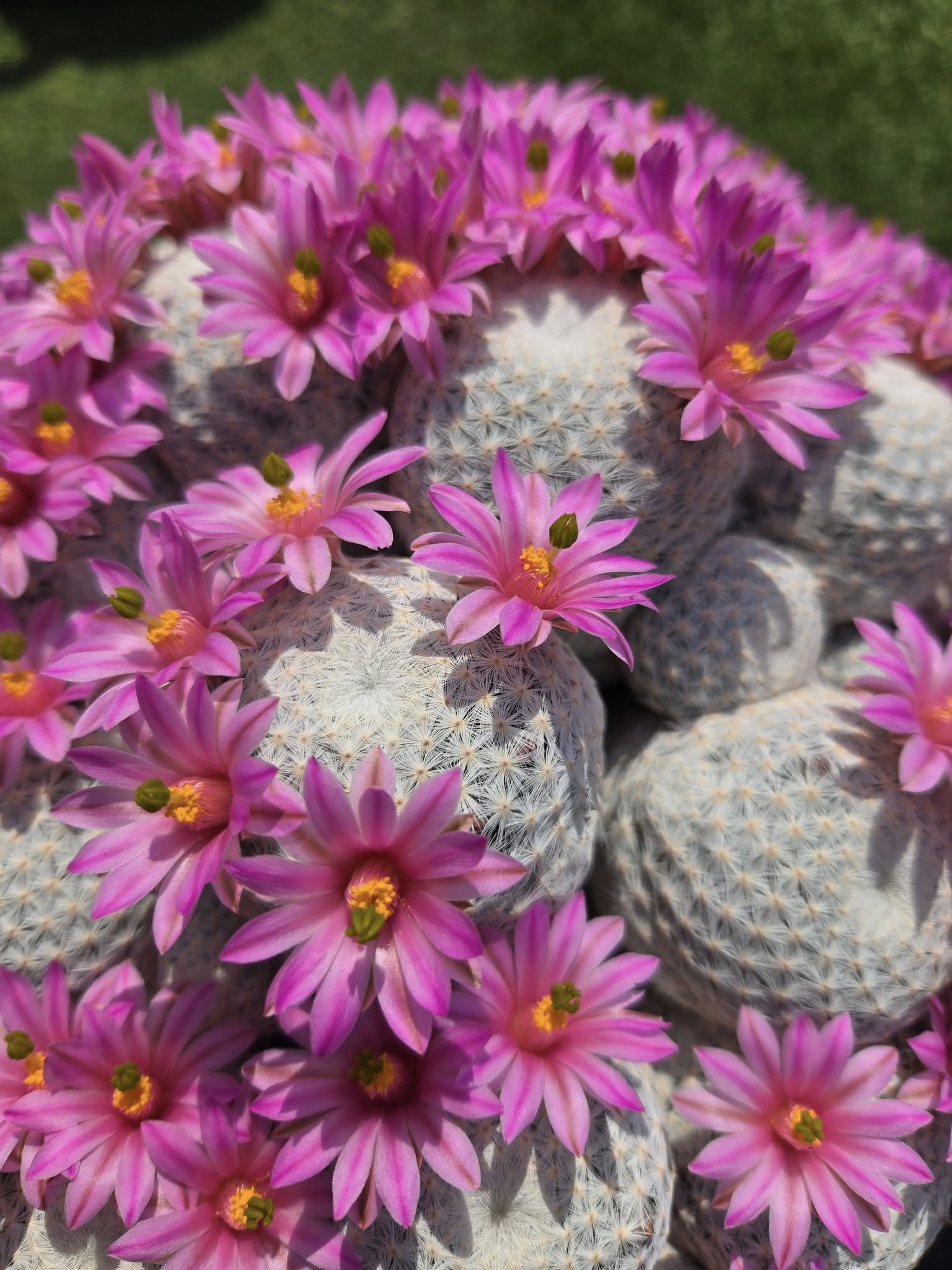
Succulent plants have evolved independently across more than forty different plant families. The family Cactaceae (the cacti) is just one of those families, situated within the order Caryophyllales. The current accepted botanical consensus places the cactus family at roughly 1,750 to 1,870 individual species. Across all plant families, there are an estimated 10,000 to 12,500 total succulent species. Because nearly all cacti are stem succulents (and the remaining leafy Pereskia/Leuenbergeria lineage still has succulent leaves), the rule holds: all cacti are succulents.
What Is an Areole?
All cacti are succulents, but only cacti carry areoles. You look for an areole. The areole is a highly modified, compressed branch system that functions like a vegetative and reproductive meristem. Every true cactus has them, and no other plant family in the world possesses them.
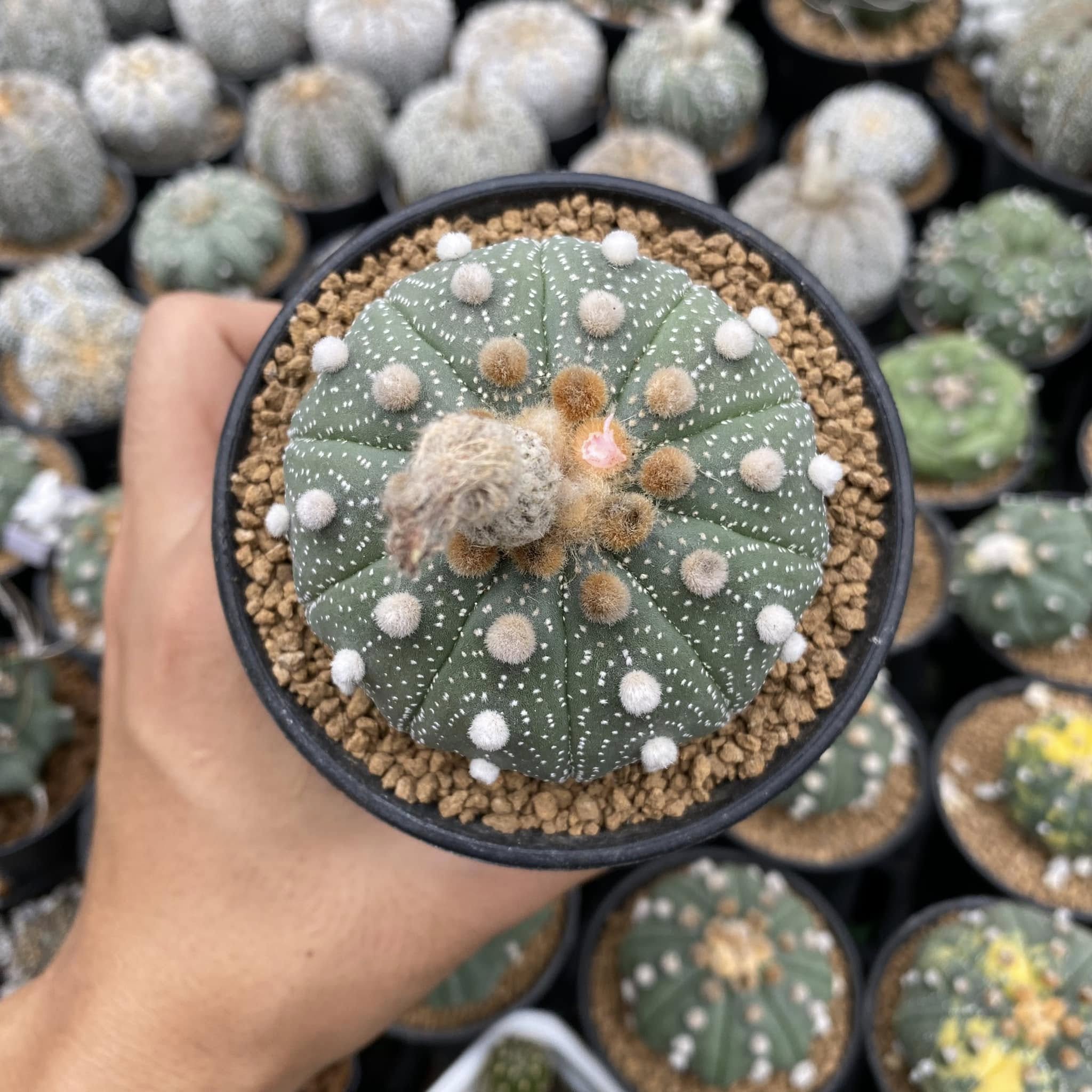
To the naked eye, an areole looks like a small, discrete, cushion-like pad on the surface of the plant’s stem. They are typically round or oval and range from one millimeter to over ten millimeters in diameter depending on the species. They are frequently covered in trichomes, which appear as white, tan, or gray wool or felt. You will find them situated along the ribs of a columnar cactus, on the raised tubercles of a Mammillaria, or on the flat surfaces of a prickly pear pad.
The areole is the central node of a cactus. Everything the plant produces emerges from it. If a cactus has spines, they arise from the areole in a cluster. If it produces branches, the new lateral growth begins at the areole. Most importantly for identification, one hundred percent of cactus flowers originate from an areole.
The 60-Second Identification Test
You can perform a definitive cactus identification check in under a minute using a simple visual decision tree. To be walked through it question by question, try our interactive Is It a Cactus? identifier.
Step 1: Look for areoles. Examine the surface of the stem. Look for the small, round, cushion-like spots. If the plant has spines, trace them back to their origin. Do they emerge in a cluster from a distinct, woolly pad? If they do, the plant is a cactus. If they emerge individually or in pairs directly from the hard green skin of the plant, it is not a cactus.
Step 2: Check the flower origin. If the plant is currently blooming, trace the base of the flower. A true cactus flower will always erupt from an areole. If the flower emerges from between a pair of spines at the very tip of the stem, or if it grows out of a leaf axil, it is not a cactus.
Step 3: The latex scratch test. If you remain unsure, make a tiny nick in the skin of the plant with a pin. If thick, milky white sap immediately bleeds from the wound, the plant is likely a Euphorbia. Be careful, as Euphorbia latex is toxic and highly irritating to the skin and eyes. Note that a number of Mammillaria species also produce milky sap, so always re-run the areole check to confirm.
How do you tell a cactus from a euphorbia?
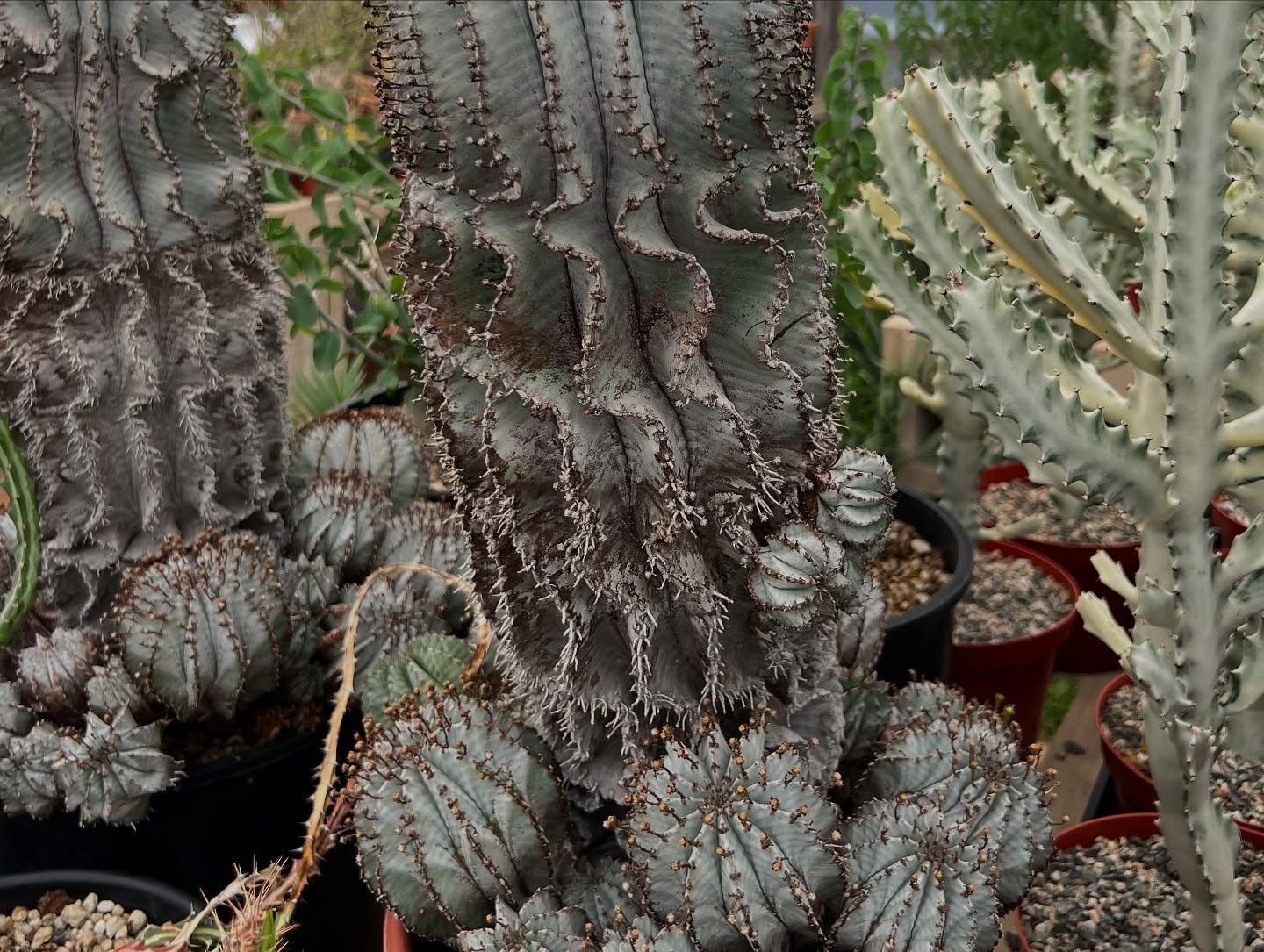
The most frequent misidentification happens between the Cactaceae family and the Euphorbiaceae family. Over seven hundred species of succulent euphorbias exist, primarily native to Africa and Madagascar. Many of them look exactly like classic ribbed, spiny desert cacti.
This is a textbook example of convergent evolution. The two plant lineages split over a hundred million years ago, long before either evolved succulence. However, because both faced identical selective pressures in arid environments, they evolved near-identical body plans independently. A South African Euphorbia horrida looks astonishingly like a North American Ferocactus barrel cactus.
The areole test separates them instantly. Euphorbias have no areoles. Their “spines” are typically modified stipules that emerge in pairs, flanking a growing point, without any woolly cushion. They also produce the telltale milky white latex when damaged, confirming their identity.
What If the Cactus Has No Spines?
A lack of spines does not mean a lack of areoles. Several highly evolved cactus lineages have abandoned spines entirely, relying instead on camouflage or chemical defenses to survive. The most famous examples are the North American Lophophora genus and the limestone-mimicking Ariocarpus.
Even on these spineless plants, the areole test holds true. On Lophophora williamsii, the areoles appear as prominent tufts of white fuzz running along the ribs. On Ariocarpus, the areoles are often pushed to the very tips of the flattened tubercles or hidden near the woolly apex of the plant, from which their massive, showy flowers still emerge.
Exceptions and Edge Cases
Botany is full of edge cases that defy beginner expectations. If you rely on the general shape of a plant instead of the areole test, these three true cacti will fool you.
Pereskia and Leuenbergeria (Leafy Cacti): The roughly seventeen species in these two genera have woody stems, bark, and broad, flat, persistent leaves. They look like tropical shrubs or wild rose bushes. Yet, if you examine their woody stems, you will find distinct areoles from which cluster spines and flowers emerge. They are true cacti, with Leuenbergeria representing the oldest, most basal lineage of the family.
Rhipsalis (Mistletoe Cacti): These epiphytic cacti grow hanging from tree branches in humid tropical forests. Their stems are thin, stringy, or ribbon-like, and they lack visible spines. They possess tiny, reduced areoles along their stem margins that produce small white flowers. Notably, Rhipsalis baccifera is the only cactus species on Earth native outside the Americas, found wild in Africa and Sri Lanka.
Schlumbergera (Christmas Cacti): The holiday cacti sold in grocery stores feature flat, segmented green pads with serrated edges and no spines. The areoles are located at the tips and margins of these segments, serving as the launch point for their famous, vibrantly colored tubular flowers.
Frequently Asked Questions
Is a cactus a succulent?
Yes, every cactus is a succulent. Cacti are members of the Cactaceae family, which is just one of over forty plant families that have evolved succulent tissues to store water in arid environments.
How do you tell a cactus from a succulent?
You look for an areole, which is a small, cushion-like pad from which spines and flowers grow. If the plant has areoles, it is a cactus. If it lacks areoles, it is a succulent belonging to a different plant family.
What is an areole on a cactus?
An areole is a highly modified branch node unique to the cactus family. It looks like a small, fuzzy or woolly bump on the skin of the plant, and it serves as the single origin point for all spines, new branches, and flowers.
Can succulents have spines?
Yes, many non-cactus succulents have spines or sharp teeth. Euphorbias often produce paired spines along their ribs, while Agaves and Aloes feature sharp marginal teeth on their fleshy leaves.
Do all cacti have areoles?
Yes, all cacti have areoles, even the species that do not grow spines. On spineless cacti, the areoles appear as distinct tufts of wool or felt on the surface of the plant.
Anderson, E.F., The Cactus Family (Timber Press, 2001) · Gibson, A.C. and Nobel, P.S., The Cactus Primer (Harvard University Press, 1986) · Eggli, U. (ed.), Illustrated Handbook of Succulent Plants: Cactaceae (Springer-Verlag, 2001) · Angiosperm Phylogeny Group IV, Botanical Journal of the Linnean Society (2016) · Plants of the World Online (POWO), Kew Royal Botanic Gardens · Hunt, D., The New Cactus Lexicon (DH Books, 2006)