Cactus Field Numbers Explained: What FR, SB, L and Other Collector Codes Mean
All ArticlesA cactus field number is a code a collector assigns when gathering a plant or seed in the wild, combining the collector’s initials with a sequential number, such as FR 207 or SB 370. It records where the plant was found, and often when, and stays with that plant no matter how the species is later renamed.
What is a cactus field number?
A field number encodes three things: who collected the plant, a sequential collection number, and, through a lookup, where and often when it was found. The format is a collector acronym followed by a number, sometimes with a decimal or a trailing letter for a sub-collection, as in L 1013, KK 2005, or ISI 93-3. Some collectors used dots, some dashes, some slashes, but the structure is always initials plus number.
What makes a field number useful is that it is not a name. A plant’s accepted species name can change every time the taxonomy is revised, but its field number never does, so the number is a stable anchor that ties a plant to a documented wild population across decades of reclassification. That is why serious growers record the field number on the label even when they are confident of the species.
Two cautions matter. A field number applies to the seed from the original collection and to all of its offspring, assuming careful, controlled pollination, so a numbered plant in cultivation is usually a documented seed-grown descendant rather than a wild plant in your hands. And a number is a record of lineage, not a certificate of legality; it tells you where a line was collected, not whether the individual plant was produced responsibly. The link between provenance and seed grown stock is exactly why collectors track these codes.
Where did field numbers come from?
The practice belongs to the great twentieth-century field collectors who documented the cacti of the Americas. Friedrich Ritter, a German geologist turned botanist, travelled the Atacama, the Andes, and the Brazilian highlands between 1952 and 1971, and his FR numbers are among the foundational series. Ritter’s discoveries reached the hobby through his sister Hildegard Winter, whose Frankfurt seed business distributed his South American collections under their field numbers from the early 1950s onward.
That seed-list channel is how field numbers became the provenance standard. Steven Brack’s Mesa Garden in New Mexico built a decades-long reputation on documented SB seed; German and Czech nurseries circulated their own series; and institutional programs gave the practice a formal backbone. The International Succulent Introductions program, founded in 1958 and run by the Huntington Botanical Gardens since 1989, assigns ISI accession numbers to verified introductions, many of them drawn from original field collections.
What FR, SB, L, KK and other codes mean
Dozens of collectors have assigned field numbers, and the site’s field-number database indexes thousands of records across more than a hundred collectors. The codes below are the ones you will meet most often. Every example is drawn from that database.
| Code | Collector and focus |
|---|---|
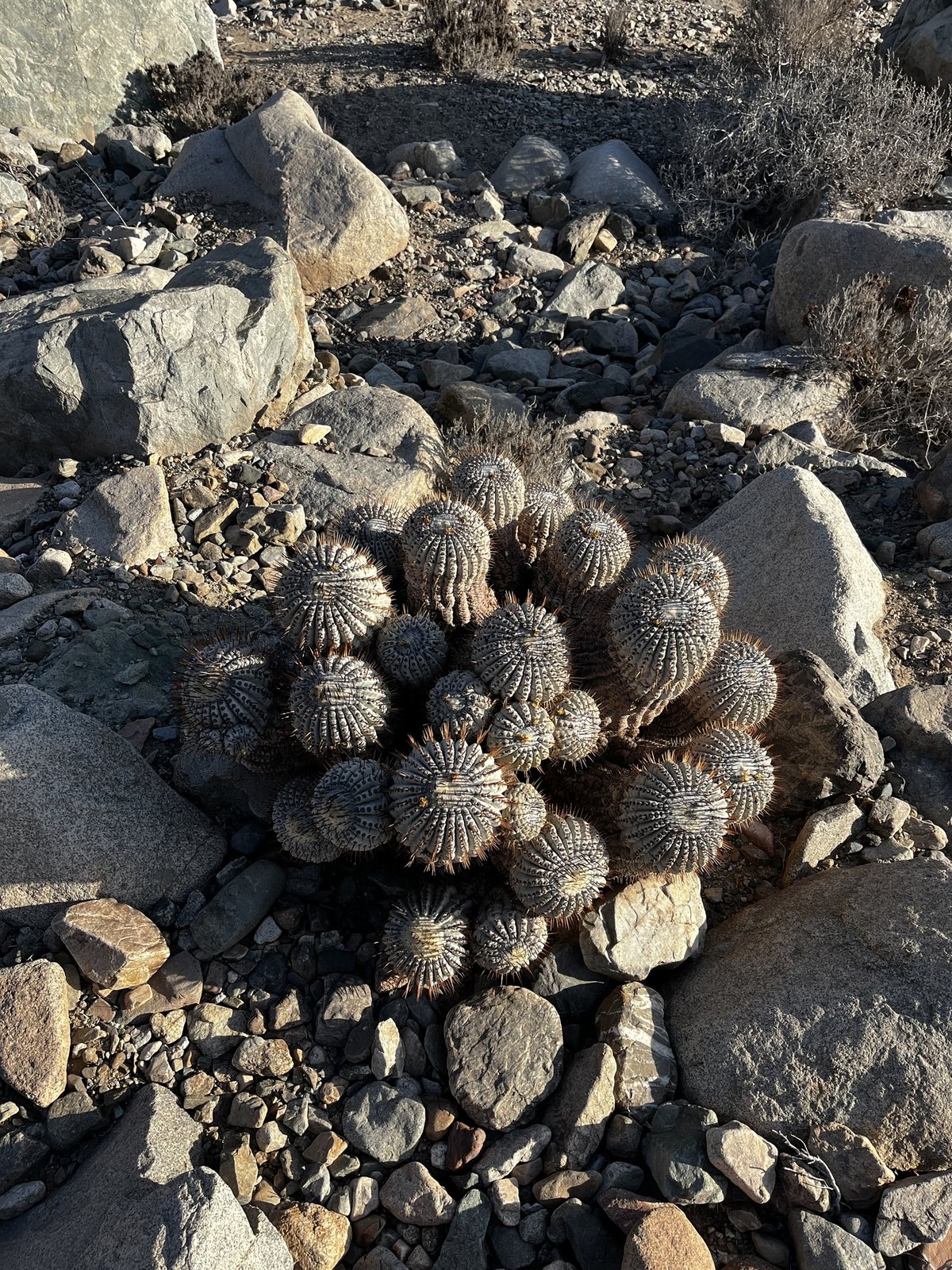
| FR | Friedrich Ritter German; collected 1952 to 1971. Chile, Bolivia, Peru, Brazil; Copiapoa, Eriosyce, Trichocereus. Example: FR 207, Copiapoa cinerea near Taltal, Chile |
| L / LAU | Alfred Bernhard Lau German-Mexican; Mexico 1972 to 1992. Mexican Mammillaria, Ariocarpus, Turbinicarpus, Lophophora. Example: L 1013, Ariocarpus agavoides, Tula, Tamaulipas, 1974 |
| SB | Steven Brack (Mesa Garden) American; from the mid 1970s. US Southwest and Mexico; documented seed. Example: SB 370, Ariocarpus agavoides, Tula, Tamaulipas |
| KK | Karel Kníže Czech, based in Lima; from the 1960s. Peru, Chile, Bolivia; large but uneven series. Example: see the reliability note below |
| ISI | International Succulent Introductions Huntington-run since 1989. verified accessions, many from field collections. Example: ISI 349, Ariocarpus fissuratus, south of Alpine, Texas, 1960 |
| PH | Paul Hoxey British; from the 1990s. Chile, Mexico, Argentina; detailed GPS field reports. Example: PH 49.1, Ariocarpus agavoides, south of Tula, Tamaulipas, 1996 |
| GC | Graham Charles British; Copiapoa monograph author. Chile, Argentina, Bolivia, Brazil. Example: GC 109.01, Copiapoa fiedleriana, east of Huasco, Chile |
| LRM | Living Rocks of Mexico project from the 1990s. Ariocarpus, with GPS and habitat photos. Example: LRM 159, Ariocarpus bravoanus, Guadalcázar, San Luis Potosí |
One code needs a caution. Karel Kníže’s KK numbers are widely encountered, especially in Trichocereus and Echinopsis, but they are used differently: a single KK number often denotes a locality or region rather than one collection, so the same number can cover several populations and even several species. Kníže also published a number of names without proper descriptions. KK material is worth having but should be treated as a locality pointer rather than a precise single-collection record. For the genus where field numbers are most deeply documented, see our Copiapoa field numbers guide, which traces FR, KK, and Lau collections across the Copiapoa populations of the Atacama.
How do you look up a cactus field number?
Read the code first: the letters are the collector, the number is the collection, and a trailing letter or decimal marks a sub-collection. Watch for collectors who appear under more than one acronym, since L and LAU are both Alfred Lau. Then look the number up in a database to recover the locality, the altitude, the date, and the name as recorded.
The long-standing reference is Ralph Martin’s field-number database, hosted by the British Cactus and Succulent Society, which lets you search by number, by species, or by locality. Other large indexes exist alongside it. Our own field-number database holds more than eleven thousand records cross-referenced against the encyclopedia, so you can move from a code straight to the species page. A lookup of ISI 349, for example, returns Ariocarpus fissuratus collected thirty miles south of Alpine, Texas, in March 1960, a record that survives every change to the plant’s name since.
Why do field numbers matter to collectors?
The first reason is locality form. Many cactus species look different from one population to the next, and a field number is what lets a grower keep those wild forms distinct rather than blending them into a generic species label. The second is science: because the number outlives every name change, it anchors a cultivated plant to a real wild population, which matters for taxonomy and for relocating populations in the field.
The third reason is conservation, and it cuts two ways. Documented, seed-grown numbered material is the ethical alternative to wild collection, and a collector who can show a seed lineage has a defensible plant. At the same time, collectors often withhold precise localities for rare or newly described species, because fine locality data is exactly what poachers use; a species described in recent years can be stripped from the wild within months of its locality becoming known. Field numbers preserve provenance while the sharpest coordinates are deliberately held back, a tension our feature on the cactus black market examines in full.
All of which gives numbered plants a premium. Collectors pay more for documented, locality-verified material, which is also why the codes are sometimes applied loosely or wrongly. A field number is only as good as the record behind it, and the Kníže case is the standard reminder to check the source rather than trust the label alone.
Frequently asked questions about cactus field numbers
What does FR mean on a cactus?
FR stands for Friedrich Ritter, the German botanist who collected across Chile, Bolivia, Peru, and Brazil between 1952 and 1971. The number after FR identifies the collection and its locality. FR 207, for example, is a Copiapoa cinerea collected near Taltal in Chile. Any plant labelled FR traces to Ritter’s field records.
What does SB mean on a cactus plant?
SB designates Steven Brack, founder of Mesa Garden in New Mexico, who supplied documented seed from the US Southwest and Mexico from the mid 1970s. SB numbers are among the most common codes on North American cacti in circulation, especially Ariocarpus, Escobaria, and Mammillaria. SB 370, for instance, is an Ariocarpus agavoides from Tula, Tamaulipas.
What does L or LAU mean on a cactus?
L and LAU both stand for Alfred Bernhard Lau, a German-Mexican collector who worked across Mexico from 1972 to 1992 and described many new taxa. His collections are especially important for Mammillaria, Ariocarpus, and Turbinicarpus. Both prefixes refer to the same series; L 1013 is an Ariocarpus agavoides from Tula, Tamaulipas, collected in 1974.
Does a field number mean a cactus was collected from the wild?
Not the plant in your hands. A field number records the original wild collection of seed and applies to all the seed-grown offspring of that collection, so a numbered plant in cultivation is almost always a documented descendant, not a wild-dug plant. The number tracks lineage and locality, not the individual plant’s origin.
Are Knize (KK) field numbers reliable?
Treat them with care. Karel Knize’s KK numbers often denote a locality or region rather than a single collection, so one number can cover several populations or even species, and he published some names without full descriptions. KK material is useful as a locality pointer but is less precise than a single-collection record. Verify the species against a database.
Ralph Martin’s Field Number Database, hosted by the British Cactus and Succulent Society · rarecactus.com field-number database · llifle / cactus-art.biz, Dictionary entry “Field number” · International Succulent Introductions, Huntington Botanical Gardens, catalogue archives · Friedrich Ritter, Kakteen in Südamerika (1979 to 1981) · Hildegard Winter seed catalogues (H. Winter Kakteen, Frankfurt) · Mesa Garden seed lists (Steven Brack) · Graham Charles, Copiapoa (Cactus File Handbook, 1998) · Trout’s Notes and Trichocereus.net on Karel Kníže collection numbers · Royal Botanic Gardens Kew, CITES and Cacti
Photo: Copiapoa cinerea by Pablo Silva (CC BY 4.0), via Wikimedia Commons.