
The Cactus Black Market: How $300,000 Smuggling Operations Threaten Wild Populations
All ArticlesThe illegal cactus trade moved 1,035 wild-poached Copiapoa from Chilean habitat to Italian warehouses between 2013 and 2019, valued at one million euros at black-market prices. Operation Atacama ended with a January 2025 conviction in Ancona, Italy, the first verdict to recognise “moral injury to nature” under biodiversity law.
How big is the illegal cactus trade?
The 2015 IUCN assessment by Goettsch and collaborators, published in Nature Plants, classified 31% of all 1,480 assessed cactus species as threatened with extinction. That figure ranked Cactaceae as the fifth most threatened taxonomic group on Earth, more threatened than mammals (25%) and birds (13%). Illegal trade in live plants and seeds affected 47% of threatened cactus species; 86% of threatened cacti used in horticulture had been taken directly from wild populations. Barbara Goettsch, IUCN Cactus and Succulent Plants Specialist Group co-chair, stated at the time that the scale of illegal trade was much greater than previously thought.
The 2024 IUCN reassessment of Copiapoa in Chile confirmed the trend has accelerated. Eighty-two per cent of taxa in the genus are now in a threatened category according to the IUCN Red List, up from 55% in 2013. Fourteen taxa are Critically Endangered, fourteen Endangered, six Vulnerable, three Least Concern. A separate 2024 paper by Pablo Guerrero and collaborators in Conservation Biology using broader analytical parameters reported 92% of Copiapoa threatened. The official IUCN Red List figure is 82%; the Guerrero academic figure of 92% reflects different methodology. Both point in the same direction.
South Africa added a parallel front. Between 2019 and May 2024, South African authorities seized more than 1.16 million Conophytum and related succulent plants from poaching operations, drawn from over 650 species. According to South African National Biodiversity Institute and Global Initiative monitoring, 97% of Conophytum species are now threatened with extinction; at least eight species are functionally extinct in the wild. The poaching surge mapped to a Chinese collector demand spike that took off through Douyin and other social media platforms during 2020-2022 COVID lockdowns.
Who buys wild cacti, and why do they pay so much?
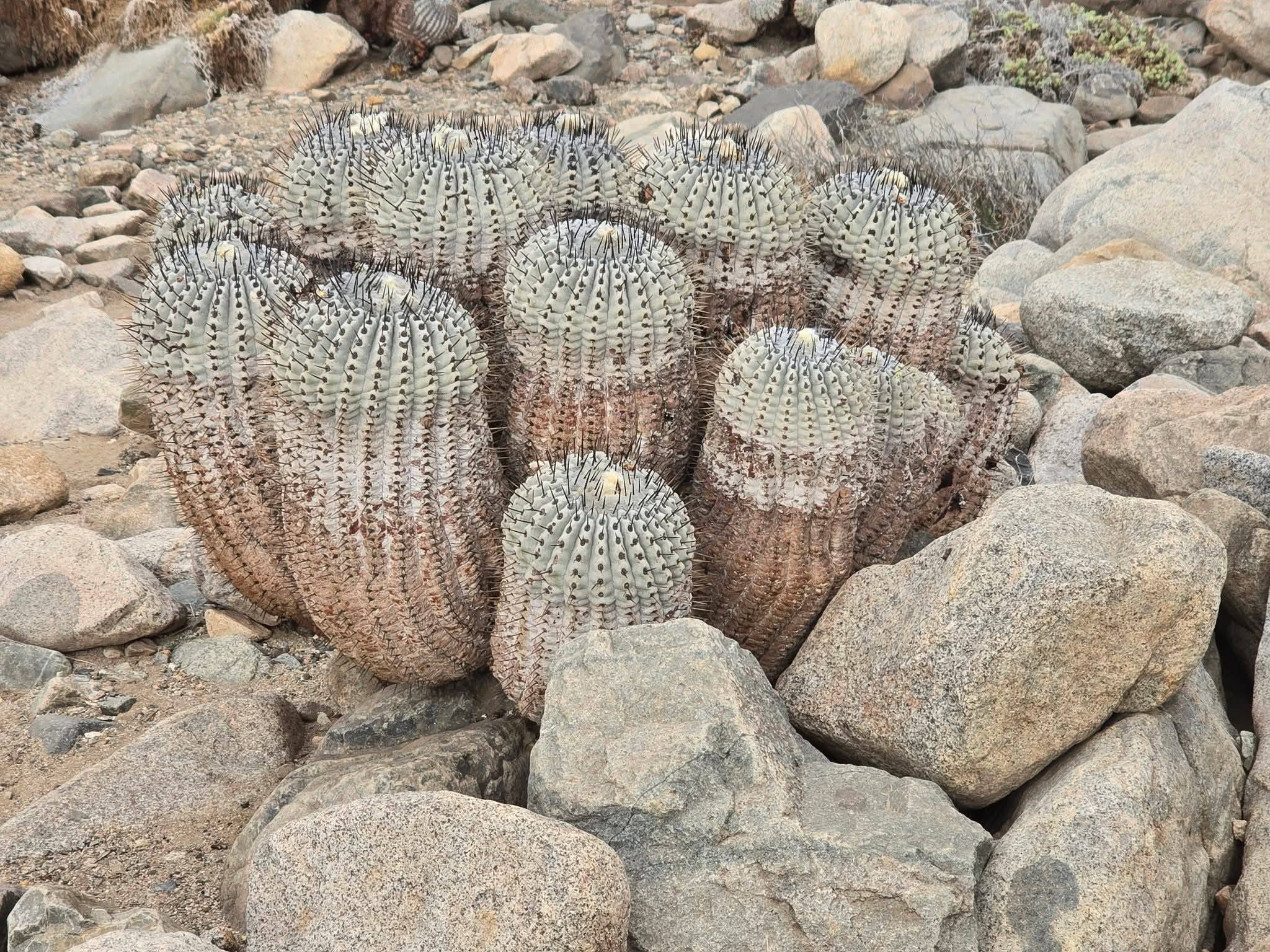
The collector market driving the illegal trade concentrates in identifiable countries. Italy is the European hub on the criminal record: Operation Atacama centred on Senigallia and Rimini, and the seizure remains the largest in European cactus trafficking history. The Czech Republic carries a deep historical collecting tradition stretching back to A. V. Frič in the late nineteenth century; Jared Margulies describes Czech networks in The Cactus Hunters (University of Minnesota Press, 2023) as the post-1989 epicentre of the illegal succulent trade in Eastern Europe. Germany, with cactus nurseries dating to 1822 (Kakteen-Haage in Erfurt), supplies both legitimate cultivation infrastructure and a documented buyer pool for Big Bend Ariocarpus fissuratus.
South Korea drove the Dudleya California crisis through 2018-2021 and the South African Conophytum seizures in 2020. Japan’s established collector culture sustains demand for Copiapoa locality variants, with Instagram hashtags tracking specific wild populations. China became the dominant Conophytum destination market between 2019 and 2022; according to South African monitoring, 98.7% of plants seized in the Western Cape during that window were destined for Chinese buyers.
A 2023 prevalence study published in Conservation Biology surveyed 441 collector-community members internationally. Twelve per cent self-reported engagement in some form of illegal trade. Seventy-four per cent said illegal collection is a very serious problem in the community. The researchers reported that rule-breaking tended to be done knowingly, with some respondents justifying their actions as beneficial to conservation. The internal ambivalence inside the collector community is itself one of the documented obstacles to enforcement.
How does the illegal cactus trade move plants from desert to doorstep?
The mechanics of the trade follow a small number of recurring patterns documented across the prosecution record. Local poachers extract plants directly from wild habitat, often using GPS coordinates supplied by overseas buyers through social media. Plants are stripped of substrate, wrapped in newspaper or tissue, and packed in nondescript boxes labelled in coordinated language: U.S. Fish and Wildlife Service investigators noted that all shippers in the Big Bend Living Rock case labelled boxes “in pretty much the same way,” suggesting buyer-side instructions. Mail and courier shipping using the U.S. Postal Service, international express delivery, and air cargo carry the bulk of moved plants.
Mislabelling is standard. Boxes shipped from California during the Dudleya farinosa case were marked “Rush / Live Plants” in coordinated boxes; one cargo shipment intercepted in 2018 contained 3,715 individual plants. Saguaro shipments from Arizona to Austria documented in the 2010-2015 Kenneth Cobb prosecution moved as personal export without phytosanitary certificates. Chilean Copiapoa bound for Italy in the Operation Atacama case routed through Romania and Greece to gain EU customs entry before final distribution. Each route exploits different gaps in customs and phytosanitary enforcement.
Social media accelerates everything. Facebook groups named “Copiapoa friends,” “Chile-Copiapoa,” and similar are documented venues where poachers post live video from habitat and buyers select specific specimens remotely. Instagram hashtags track named locality variants down to specific canyons. eBay and Etsy provide legitimate open-listing infrastructure that USFWS agents now actively monitor; the agency has sent warning messages to sellers of CITES-protected listings as part of its enforcement posture.
Why do online platforms make cactus poaching easier?
The Knight Center for Environmental Journalism in 2019 documented eBay as a primary marketplace for Chilean Copiapoa in the United States, with hand-sized specimens listed at approximately $900 and rare colour variants reaching $5,000-plus. The 2022 Arizona-Nevada ring prosecution centred on eBay sales of plants stolen from Lake Mead National Recreation Area; defendant Jerrid Maloy admitted selling to buyers in 18 countries. Paragraph by paragraph the court record is the same: the platform is the marketplace, the buyers are international, and the supply chain runs back to wild populations.
Chinese platform Douyin is the documented driver of the South African Conophytum crisis. Influencer-driven demand surged during 2020-2022 lockdowns, with peak prices in the hundreds of dollars per specimen at the height of the trend. In January 2020 a Cape Town court convicted South Korean nationals Byungsu Kim and Young IL Sunwoo, in a case built by the South African Police Service and CapeNature, for stealing more than 60,000 Conophytum plants; each received a two-and-a-half-million-rand fine (roughly $170,000 USD) and a six-year suspended sentence. Subsequent arrests in 2021 included a twelve-defendant operation at a Western Cape farm holding more than 4,000 Conophytum acutum.
Goettsch told PBS NewsHour in 2024 that social media has played a very important role in the trade. The IUCN specialist group has written to Instagram requesting platform action; she noted that international rules treat illegal fauna trade differently from illegal flora trade, and most platform terms of service do not prohibit advertising of trafficked plants the way they prohibit advertising of trafficked animals.
What does CITES actually do about cactus trafficking?
Almost all Cactaceae are listed under CITES Appendix II, which requires permits for international commercial trade. A subset sit on Appendix I, which prohibits commercial international trade entirely. Per the CITES Secretariat, Appendix I covers entire genera including Ariocarpus, Discocactus, Pediocactus, Pelecyphora, Sclerocactus most species, Strombocactus, Turbinicarpus, and Uebelmannia. Individual species on Appendix I include Astrophytum asterias, Aztekium ritteri, Mammillaria pectinifera, Obregonia denegrii, and Sclerocactus brevihamatus subsp. tobuschii. For the full current list see our CITES Appendix I cacti reference.
Within the United States, the Endangered Species Act protects 28 named cactus species and subspecies across 13 genera, almost all from the Chihuahuan, Sonoran, or Great Basin deserts. The U.S. Fish and Wildlife Service classifies ESA take penalties at up to $50,000 civil and $100,000 criminal per violation, plus up to one year imprisonment. Mexico applies NOM-059-SEMARNAT-2010, which lists Ariocarpus, Aztekium, Pelecyphora, Turbinicarpus, and Mammillaria pectinifera in its highest-threat category (P, threatened with extinction). Chile regulates cactus export through SAG and CONAF; Brazil through Ibama. Each framework operates under different penalties and enforcement capacity.
What the legal framework does well: it creates a clear criminal-law basis for prosecutions when seizures happen, as Operation Atacama, the Big Bend cases, and the South African Conophytum convictions all demonstrate. What it does less well: it does not interdict shipments at scale, because customs and postal services lack the botanical expertise to identify species under high-volume shipping conditions, and online platforms have only recently begun coordinating with enforcement agencies. The Italian court’s January 2025 recognition of moral injury to nature in the Operation Atacama civil claim is the clearest legal innovation in the field; whether it generalises beyond Italy remains an open question. For the permitted side of the ledger, the reported cactus trade figures, including confiscations, chart every CITES record for cacti since 1976.
Case File: The Big Bend Living Rock Prosecutions
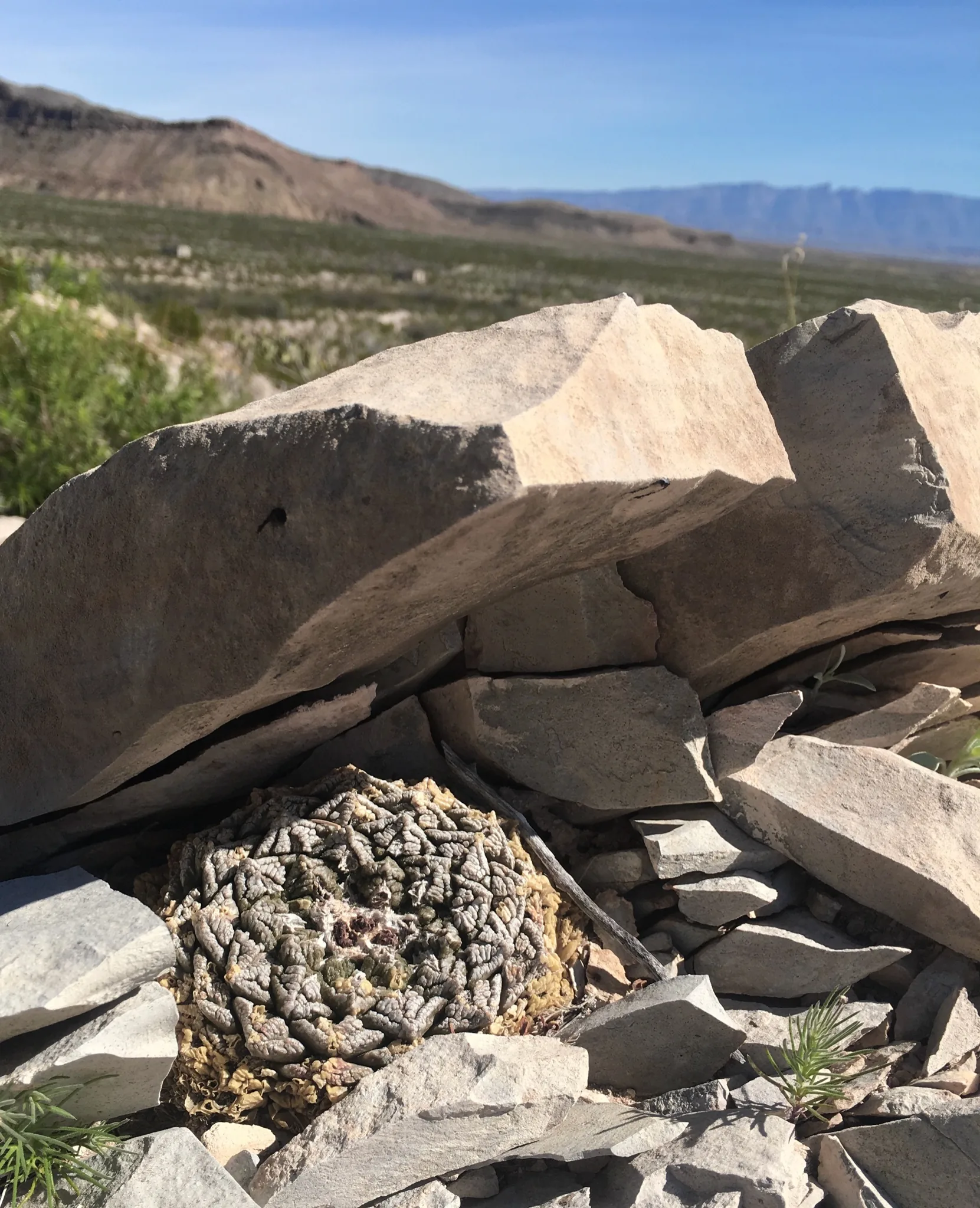
Between 2012 and 2020, U.S. Fish and Wildlife Service investigators prosecuted seven defendants in a Texas trafficking ring targeting Ariocarpus fissuratus from the Big Bend region. The case, named Operation Living Rock by USFWS, originated when Homeland Security Investigations executed an immigration warrant on a rancher and discovered large quantities of the CITES Appendix I species in the rancher’s possession. Investigators estimated the full ring had removed 10,000 to 15,000 plants from Big Bend habitat across the operational period. A single offender shipped several thousand plants in six to seven months, grossing more than $300,000.
The seven defendants were sentenced between 2016 and 2020 to a combined nine years of probation plus $118,804 in fines and restitution. Seventeen firearms were forfeited. None served prison time. The named defendants on the public court record: Paul Arthur Armstrong, Mark William Rehfield, Morris Ray Carter, Troy Layton Baker, Harry George Bock II, William Howard Gornto II, and additional defendants in pending cases. Sul Ross State University’s greenhouse received approximately 3,500 confiscated plants from the seizures and supports ongoing recovery work.
Botanist Michael Eason, interviewed by Marfa Public Radio in February 2022, described the per-plant economics: Ariocarpus fissuratus can sell for upwards of $1,000 to overseas buyers. Domestic eBay listings for cultivated plants run $200 to $350. The wild-provenance premium is the structural force pulling plants out of habitat. Eric Jumper, a former USFWS special agent on the case, told the same outlet that the demand was so strong he did not believe supply could keep up. The investigation also documented shippers labelling boxes in identical patterns, suggesting coordination from overseas buyer networks.
Case File: Operation Atacama and the Italian Verdict
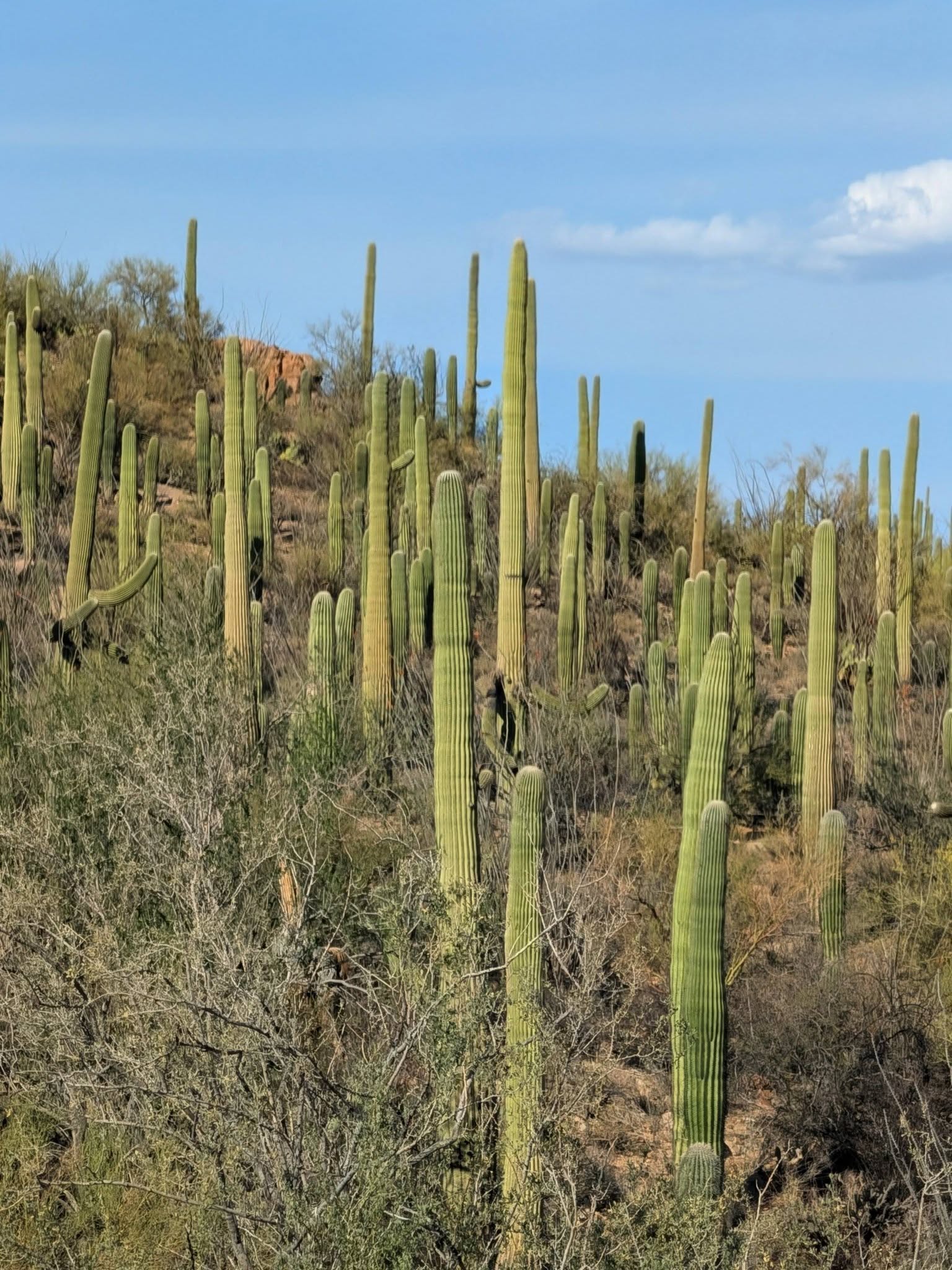
The landmark European prosecution. Between 2013 and 2019, an Italian network led by Andrea Piombetti, a Senigallia-based cactus dealer, extracted at least 1,035 wild-poached Copiapoa from the Atacama Desert in Chile’s Huasco region and shipped them through Romania and Greece into Italy for distribution to European and Asian collectors. The seizures came in two waves: 1,019 plants in Senigallia in February 2020, then 171 more (80 Chilean, 89 Mexican, 2 from the United States) in Rimini in November 2020.
The IUCN press release accompanying the April 2021 repatriation valued the seizure at approximately one million euros. Per-plant black-market valuations reported by Italian Carabinieri Forestali ran from 500 to 1,500 euros depending on species and size. Of the 1,035 Chilean plants seized, 844 (roughly 81.5%) were repatriated to Chile on 19 April 2021; 107 plants died in custody before the return shipment, and 84 were retained for research at the Città Studi Botanical Garden in Milan.
On 31 January 2025 the Criminal Court of Ancona convicted Piombetti and co-defendant Mattia Crescentini at first instance. Piombetti received an 18-month suspended prison sentence and a 25,000-euro fine. The court ordered both defendants to pay 20,000 euros to Associazione per la Biodiversità e la sua Conservazione, the Italian NGO whose president Andrea Cattabriga had originally provided intelligence to the Carabinieri, plus 4,500 euros in legal fees. The civil award was framed as compensation for “moral injury to nature.” The decision was the first Italian biodiversity prosecution to recognise that civil claim type, an environmental-law precedent that specialists are now testing in adjacent cases.
Piombetti was reportedly arrested at Santiago airport in September 2024 on landing in Chile, where authorities had filed a separate wildlife trafficking complaint, while his Italian trial was still pending. According to Chilean authorities, the cumulative cooperation between Italian Carabinieri Forestali, Chilean SAG and CONAF, and the IUCN Cactus and Succulent Plants Specialist Group made the prosecution possible at the scale and speed it occurred.
The Collector Community’s Internal Debate
The 2023 prevalence study in Conservation Biology documented that the cactus and succulent collector community is not unified on illegal trade. Twelve per cent of surveyed members admitted to participating in the trade in some form. Seventy-four per cent identified illegal collection as a very serious problem. A measurable minority, however, justified rule-breaking on conservation grounds, arguing that ex-situ collection by serious collectors was a hedge against habitat loss. Goettsch and Guerrero, the named conservation scientists most engaged with this debate, have publicly rejected that framing.
Pablo Guerrero of Universidad de Concepción stated to GreaterGood that society as a whole could no longer afford a naïve view of the problem. Andrea Cattabriga of ABC told Euronews that the collection of even a few specimens from a small wild population can affect the species’ extinction risk. The empirical evidence supports the scientists. Mammillaria herrerae, Ariocarpus bravoanus, several Turbinicarpus species, and the Chilean Copiapoa taxa documented above all show population trajectories that decline alongside collector demand, and stabilise or recover where enforcement holds.
What Seed Grown Cultivation Offers as an Alternative
The legitimate cultivation infrastructure is real and extensive. The Huntington Botanical Gardens has run the International Succulent Introductions programme since 1958, distributing scientifically and horticulturally significant succulents propagated under nursery conditions without detriment to wild populations. Mesa Garden in Belen, New Mexico, has supplied seed grown cacti with documented geographic provenance since the 1970s under collector Steven Brack’s SB field-number system. Kakteen-Haage in Erfurt, Germany has been propagating cacti since 1822 and remains the oldest continuously operating cactus nursery in the world, with more than 3,500 species in cultivation. Specialist EU nurseries (CactusMania, Giromagi, Botanical Archive) and CSSA / BCSS society auctions offer further legitimate channels.
The field-number provenance system provides the audit trail. A plant carrying an FR (Friedrich Ritter), L (Alfred Lau), SB (Steven Brack), or HU (Horst and Uebelmann) field number ties the specimen to a documented wild collection event, a seed lot, and propagation records. The number stays with the plant and its descendants, providing the same provenance function for cacti that ISI accession codes provide for institutional collections. We cover the system in detail in our analysis of how field photography reshaped Cactaceae and we have a searchable Field Number Database with current accepted-name linking. The comparison with the wild-collected market is direct: every field-numbered legitimately propagated specimen on the cultivation market displaces some fraction of demand for wild-poached material. The case for specialist collectors is that they are the conservation alternative if they buy through legitimate channels. See our analysis of mature cultivated specimen pricing for what those channels actually look like at the upper end of the market.
Frequently Asked Questions
How does the illegal cactus trade work?
Local poachers extract plants from wild habitat using GPS coordinates often supplied by overseas buyers through social media. Plants are stripped of substrate, packed into nondescript boxes (typically labelled in coordinated language across shipments), and moved through mail and courier services. Major routes documented in prosecutions include Big Bend Texas to Europe and Asia (Operation Living Rock), Atacama Chile to Italy via Romania and Greece (Operation Atacama), California to South Korea (Dudleya farinosa), and South Africa to China (Conophytum). U.S. Fish and Wildlife Service prosecutions document the per-plant economics: Ariocarpus fissuratus sells for upwards of $1,000 to overseas collectors versus $200-$350 on domestic eBay.
What percentage of cactus species are threatened by illegal trade?
According to the 2015 IUCN assessment by Goettsch and collaborators in Nature Plants, illegal trade in live plants and seeds affects 47% of threatened cactus species, and 86% of threatened cacti used in horticulture have been taken directly from wild populations. The 2024 IUCN reassessment of Copiapoa placed 82% of taxa in a threatened category, up from 55% in 2013, with illegal collection a primary driver alongside habitat loss. South African Conophytum taxa show 97% threatened with extinction per South African National Biodiversity Institute monitoring; at least eight species are functionally extinct in the wild.
How do trafficking networks disguise cactus shipments, and how do investigators catch them?
U.S. Fish and Wildlife Service documented in the Big Bend Living Rock prosecutions that all shippers in the network labelled boxes in similar patterns, suggesting buyer-supplied instructions. Mislabelling included “Rush / Live Plants” (the California Dudleya case, 3,715 plants in a single cargo interception), generic horticultural product descriptions, and routing through transit countries to gain customs entry under different documentation. The Operation Atacama network routed Chilean plants through Romania and Greece into Italy. Customs and postal services rarely have the botanical expertise to identify protected cactus species under high-volume shipping conditions, which is the central enforcement gap.
What is the role of eBay and online platforms in illegal plant trafficking?
eBay is documented as a primary marketplace in multiple prosecutions including the Arizona-Nevada ring (defendant Jerrid Maloy admitted selling stolen Lake Mead cacti to buyers in 18 countries) and the 2019 Knight Center for Environmental Journalism investigation into Chilean Copiapoa sales. USFWS agents now actively monitor eBay for CITES-protected cactus listings and send warnings to sellers as part of routine enforcement. Chinese platform Douyin drove the South African Conophytum demand surge in 2020-2022. Facebook groups specifically named for trafficked species (“Copiapoa friends,” “Chile-Copiapoa”) are documented venues where poachers post live habitat video and overseas buyers select specimens remotely.
What CITES appendix covers most cacti?
Almost all Cactaceae are listed under CITES Appendix II, which requires permits for international commercial trade. A subset of high-priority genera and species sit on Appendix I, which prohibits commercial international trade entirely. Appendix I covers all Ariocarpus, Discocactus, Pediocactus, Pelecyphora, Strombocactus, Turbinicarpus, Uebelmannia, and most Sclerocactus species, plus individual species including Astrophytum asterias, Aztekium ritteri, Mammillaria pectinifera, and Sclerocactus brevihamatus subsp. tobuschii. The full current list is in our CITES Appendix I cacti reference.
What does seed grown cultivation offer as an alternative to wild collection?
The legitimate cultivation infrastructure displaces demand for wild-poached material. Institutional programmes (the Huntington’s International Succulent Introductions since 1958), specialist nurseries (Mesa Garden in New Mexico, Kakteen-Haage in Germany since 1822, CactusMania and Botanical Archive in the EU), and society auctions (CSSA, BCSS, Deutsche Kakteengesellschaft) provide cacti with documented provenance through field-number systems (FR, L, SB, HU prefixes). A field-numbered legitimately propagated specimen ties to a documented wild collection event and subsequent propagation; it carries the same provenance function for cacti that ISI accession codes provide for institutional collections. Specialist collectors who buy through these channels are the conservation alternative to wild collection.
Goettsch, B. et al., “High proportion of cactus species threatened with extinction,” Nature Plants 1, 15142 (2015) · IUCN press release, “Illegal trade contributes to placing cacti among world’s most threatened species” (2015) · IUCN press release, “Over a thousand illegally poached Copiapoa return to native Chile” (April 2021) · IUCN press release, “Conservationists joining forces to plan to save highly threatened cacti” (March 2025) · Guerrero, P.C. et al., Conservation Biology, doi:10.1111/cobi.14353 (2024) · The Revelator, “A Cactus in Court” (2025) · Euronews, June 2024 coverage of Operation Atacama civil suit · Live Science, Operation Atacama repatriation coverage · Phys.org, Italian Carabinieri Forestali Operation Atacama coverage · USFWS “Catching Cactus Crooks” (Medium and FWS public-affairs versions) · Sul Ross State University, Operation Living Rock case summary · Marfa Public Radio, Michael Eason interview on Big Bend trafficking (February 2022) · Big Bend Sentinel, USFWS 2019 report coverage · CBS Austin, Big Bend trafficking defendants pleas (2020) · DOJ District of Arizona, Kenneth Brian Cobb saguaro export sentencing · DOJ Central District of California, Dudleya farinosa trafficking prosecutions · KJZZ and Fronteras Desk, Arizona-Nevada smuggling ring (2022) · LAist and KTLA, Korean Dudleya smuggling case coverage · Yale E360, “A Plant Poaching Crisis in South Africa” (May 2024) · Global Initiative Against Transnational Organized Crime, “The Growing Illicit Trade in South Africa’s Ornamental Plants” (2024-2025) · National Geographic, Conophytum trafficking coverage · Daily Maverick, South African succulent triage coverage (May 2023) · Times Live, Cape Town Korean nationals 5-million-rand fine (February 2020) · Knight Center for Environmental Journalism, Chilean cactus social-media smuggling (January 2019) · Conservation Biology prevalence study (2023), doi:10.1111/cobi.14030 · PBS NewsHour, Goettsch interview on cactus trafficking (2024) · GreaterGood, Pablo Guerrero quotes · Margulies, J., The Cactus Hunters: Desire and Extinction in the Illicit Succulent Trade, University of Minnesota Press (2023) · CITES Appendices I, II, III · USFWS, Endangered Species Act and 28 listed cactus species · Mexican NOM-059-SEMARNAT-2010 · Chilean SAG and CONAF protections · The Huntington, International Succulent Introductions catalogue (since 1958) · BCSS Field Number Finder · TRAFFIC reports on Wildlife Trade in Central and Eastern Europe