
Cactus Winter Care: How Dormancy Works and How to Overwinter Cacti
All ArticlesCactus winter care comes down to three things: cold, dry, and bright. Most desert cacti go dormant in winter, stop growing, and survive cold far better dry than wet, because waterlogged roots rot and freeze well above a plant’s true cold limit. This guide covers dormancy, winter watering, frost protection, and overwintering setups.
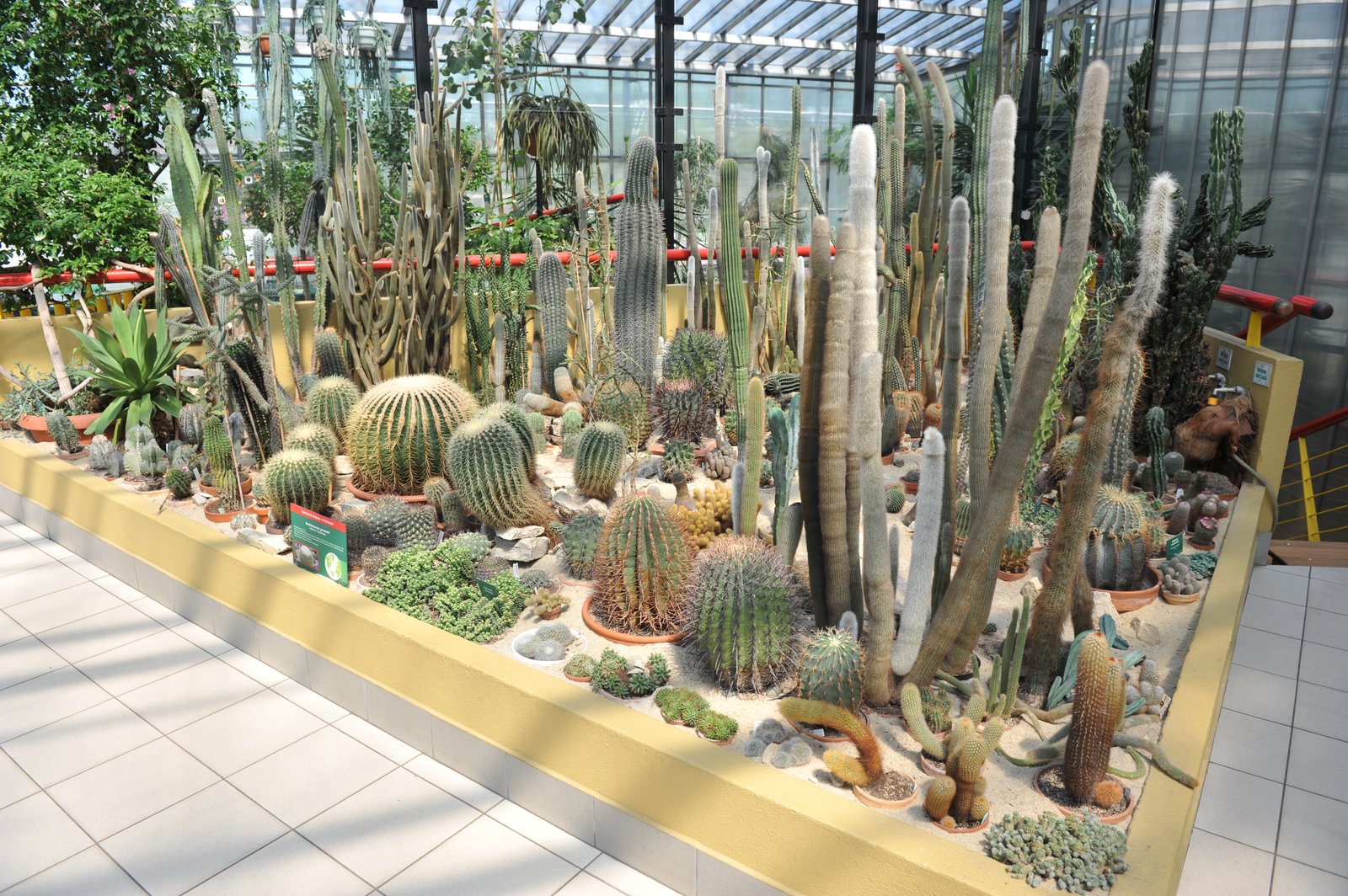
Do cacti go dormant in winter?
Most cacti go dormant in winter. As days shorten and temperatures fall, the great majority of desert cacti slow or stop growing and enter a winter dormancy, conserving water and energy through the lean season exactly as they would in habitat. Growth largely halts, though the roots keep absorbing small amounts of water while the soil stays above about ten degrees Celsius.
Underneath the pause is real cold-survival chemistry. As a cactus acclimates to cold it lowers the water content of its cells and builds up sugars, which raises the internal osmotic pressure and lets the tissue supercool, avoiding the ice crystals that would rupture its cells. That is why a slightly shrunken winter cactus is a safe one. Two groups break the pattern: the tropical and epiphytic cacti such as Christmas cactus and Rhipsalis grow or bloom in winter and keep being watered, and the mesembs like Lithops, which are not cacti at all, invert the calendar entirely and grow in winter.
How cold can a cactus survive?
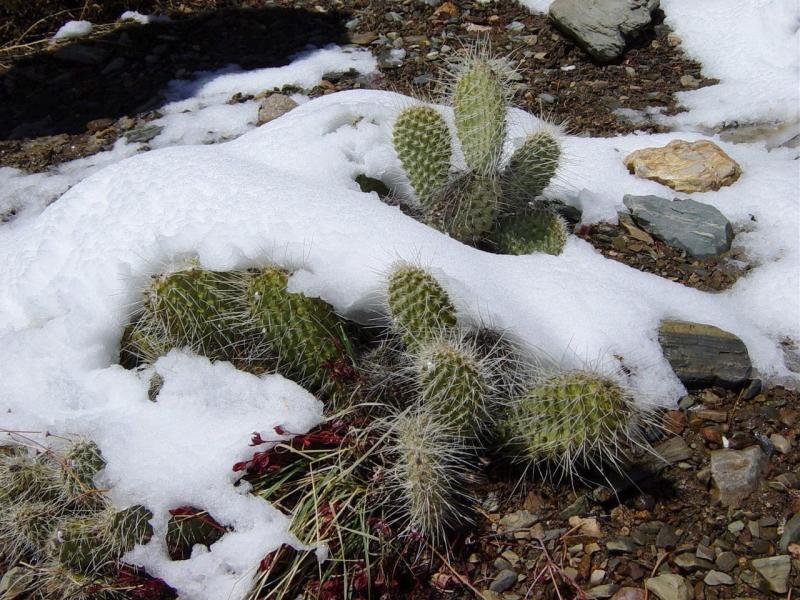
How cold a cactus survives depends entirely on the species, and on one rule: dry cold is survivable, wet cold is not. The range across the family is enormous. The cold-hardy genera, Echinocereus, Opuntia, Escobaria, and Pediocactus, survive deep freezes well below minus twenty degrees Celsius when bone dry, and a few Opuntia take lower still. At the other end, most tropical and common houseplant cacti want a winter minimum near ten degrees and suffer below about four.
What unites the range is the moisture rule. Every one of those cold floors assumes dry roots; the same plant in wet soil rots and freezes at far milder temperatures, because water in the substrate both feeds rot and forms the ice that splits tissue. So the single most useful thing to know is not a temperature at all but a principle: identify your species, find its dry-cold floor, and keep it dry to get anywhere near it. Our cold-hardy cactus guide covers the species that take frost outdoors, and some Mammillaria are hardy to remarkable lows when kept dry.
How often should you water a cactus in winter?
Very little, and the right amount depends on how cold you can keep the plant. For a cactus given a genuine cold rest at five to ten degrees Celsius, water almost nothing, or nothing at all, from mid-autumn until spring; many growers withhold water completely for that whole stretch. In the cold, the plant is not absorbing or transpiring, so any water sits in chilled soil and turns to rot.
The exception is the plant you cannot keep cold. If a cactus has to winter in a heated room, a tiny sip of water every four to six weeks, only if it is shrivelling hard, keeps it from desiccating, but this is damage control, not the goal. The goal is cold and dry together. Wet, cold soil is the classic route to the soft, black basal rot covered in our root rot guide, and a free-draining mineral mix is the best insurance a plant has against it.
The winter rule is a special case of the year-round method; our guide to how often to water a cactus carries the checks that hold in every season.
Where should you overwinter cacti?
The best winter spot is cold, dry, and bright, which is why an unheated but frost-free greenhouse is the grower’s ideal. A cold garage, cellar, or porch works too, and can even be dark, because a truly cold plant is so deeply dormant that it needs no light; the one rule there is to reintroduce it to light gradually in spring. The place that causes trouble is the warm, lit windowsill of a heated home, where the plant never gets cold enough to rest, keeps growing weakly in low winter light, and etiolates into pale, stretched growth.
Outdoors, a cold-hardy species comes through winter on the same principle: plant it in a fast-draining mineral soil that stays dry in the cold and it survives lows that would kill a wet plant. Cold and wet together is the danger, and it has a specific failure mode. A hard freeze can split frozen tissue, and those freeze cracks become the entry wound for the bacterial soft rot, often called Erwinia, that turns a frosted cactus to black mush. Drainage and dryness are what keep the cold from becoming fatal.
Is my cactus shrivelling in winter normal?
Yes, a little winter shrivel on a cactus is normal and healthy. As a cactus dehydrates slightly through its dry rest, the body wrinkles or shrinks, but the tissue stays firm, and it plumps back up when spring watering resumes. That controlled water loss is part of how the plant survives the cold. Firm brown, woody tissue creeping up from the base over months is corking, the natural aging of the skin, and is also nothing to worry about.
What is not normal is soft, mushy, darkening tissue that gives way under a finger and spreads over days rather than months, usually where wet and cold met. That is rot, not shrivel, and it needs the surgery in our diagnostic guide. The other winter warning sign is pale, stretched new growth, which means a plant kept too warm and too dark, growing when it should be resting. The cool, dry winter rest does double duty: it keeps the plant safe, and it sets the next year’s flowers, the payoff covered in our guide to getting cacti to bloom.
Frequently asked questions about cactus winter care
Do cacti go dormant in winter?
Most desert cacti do. They slow or stop growing as days shorten and temperatures fall, conserving water and energy through winter. Tropical and epiphytic cacti such as Christmas cactus and Rhipsalis are exceptions and may grow or bloom in winter instead, and mesembs like Lithops, which are not cacti, invert the calendar and grow in winter.
How cold can a cactus tolerate?
It depends on the species and on staying dry. Cold-hardy genera such as Echinocereus, Opuntia, and Escobaria survive deep freezes well below minus twenty degrees Celsius when bone dry, while most tropical and houseplant cacti want a minimum near ten degrees and suffer below about four. Wet cold kills well above any dry-cold floor.
How often should I water a cactus in winter?
For a cactus given a genuine cold rest around five to ten degrees Celsius, water almost nothing or nothing at all from mid-autumn until spring. Cold, wet soil causes rot because the dormant plant is not absorbing water. The only exception is a plant forced to winter in a heated room, which can take a tiny sip every few weeks if it shrivels badly.
Why is my cactus shrivelling in winter?
Light wrinkling with firm tissue is normal dormancy dehydration and reverses when spring watering resumes. It is part of how the plant survives the cold. Soft, mushy, darkening tissue that spreads over days is rot, not shrivel, and needs cutting back. Pale, stretched new growth means the plant is too warm and too dark to rest properly.
Can I overwinter cacti in an unheated garage or greenhouse?
Yes, and it is ideal. Cold, dry, and bright is what most desert cacti want for winter, so a frost-free unheated greenhouse is the gold standard. A cold garage or cellar works too, and can even be dark, because a truly cold plant is fully dormant and needs no light. Reintroduce it to bright light gradually in spring.
Goldstein & Nobel, “Water relations and low-temperature acclimation for cactus species varying in freezing tolerance,” Plant Physiology · Nobel et al., “Water relations and mucopolysaccharide increases for a winter-hardy cactus during acclimation to subzero temperatures,” Oecologia · Henry Shaw Cactus and Succulent Society, “Cactus in the Cold” · Royal Horticultural Society, cacti and succulents under glass · Anderson, E.F., The Cactus Family (Timber Press) · llifle, Encyclopedia of Living Forms
Photos: glasshouse cacti by Jaroslaw Roland Kruk (CC BY-SA 4.0) and Opuntia in snow by Daniel Mayer (CC BY-SA 3.0), via Wikimedia Commons.