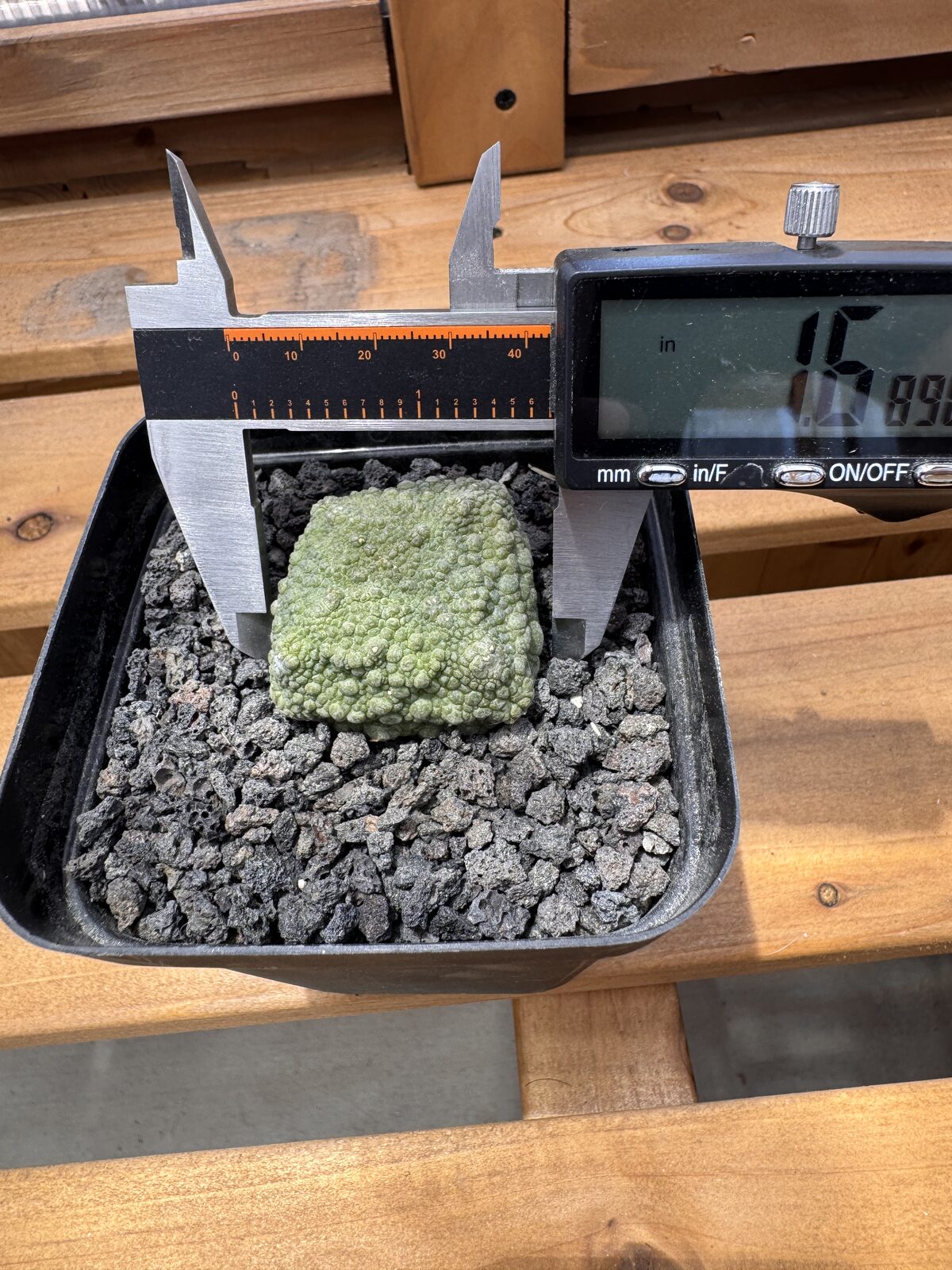
Pseudolithos cubiformis
Lot PSEU-CUB-01 sold
$82.00
- Plant: Pseudolithos cubiformis
- Cultivation: greenhouse cultivated
- Size: about 4 cm (1.6 in) across
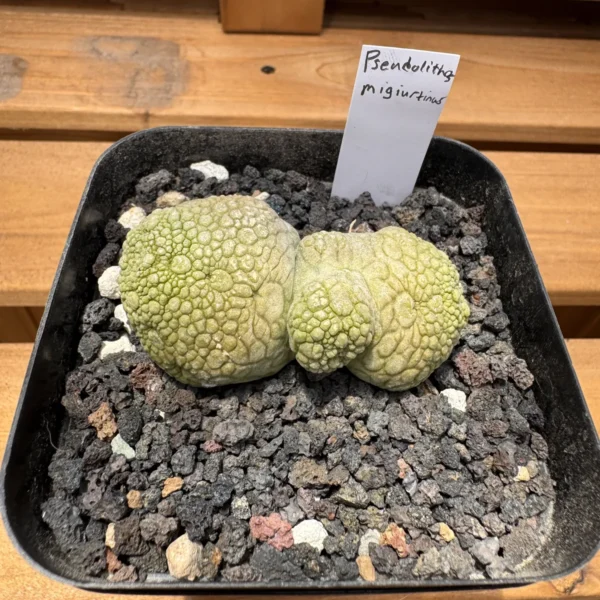
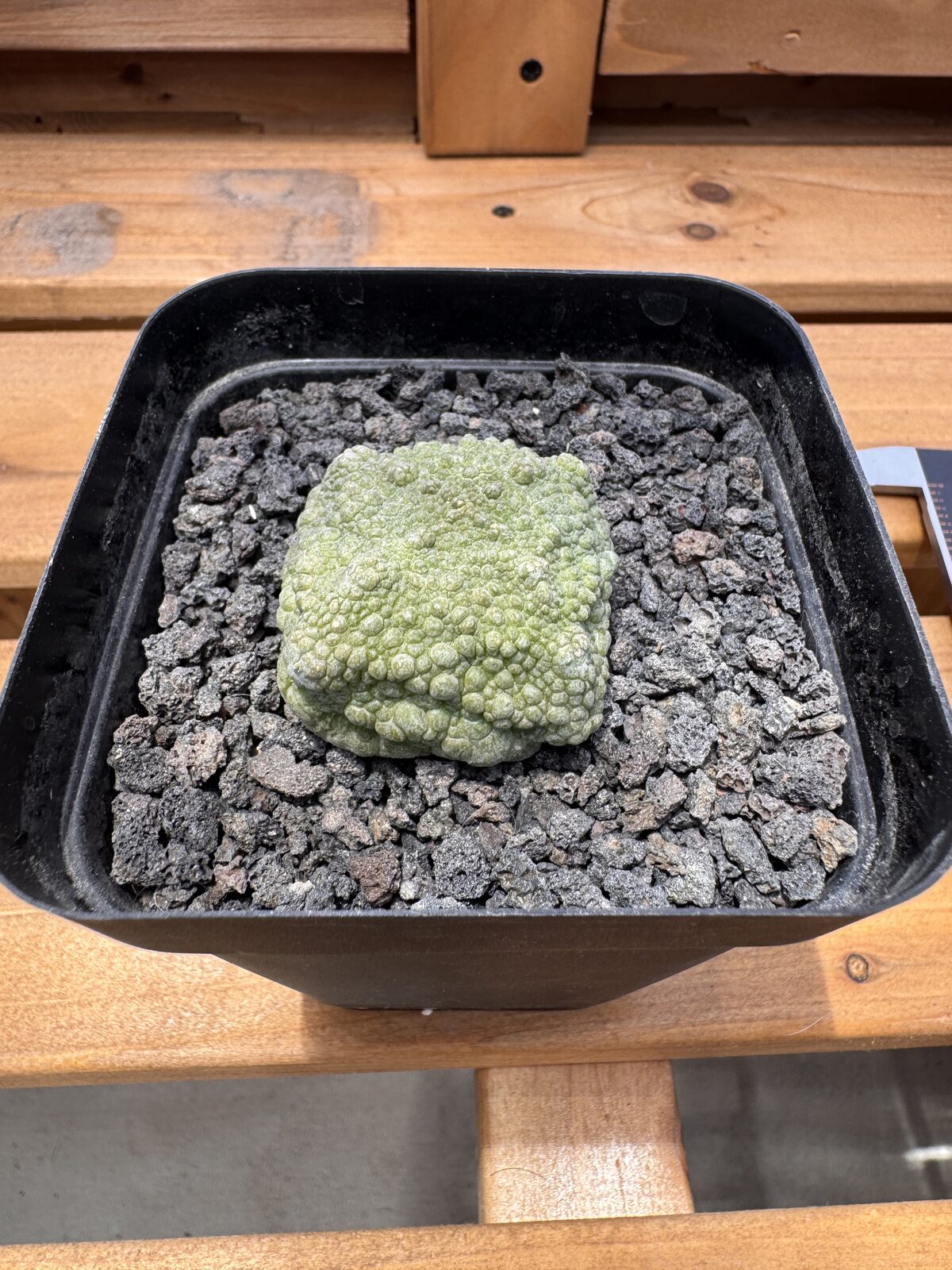
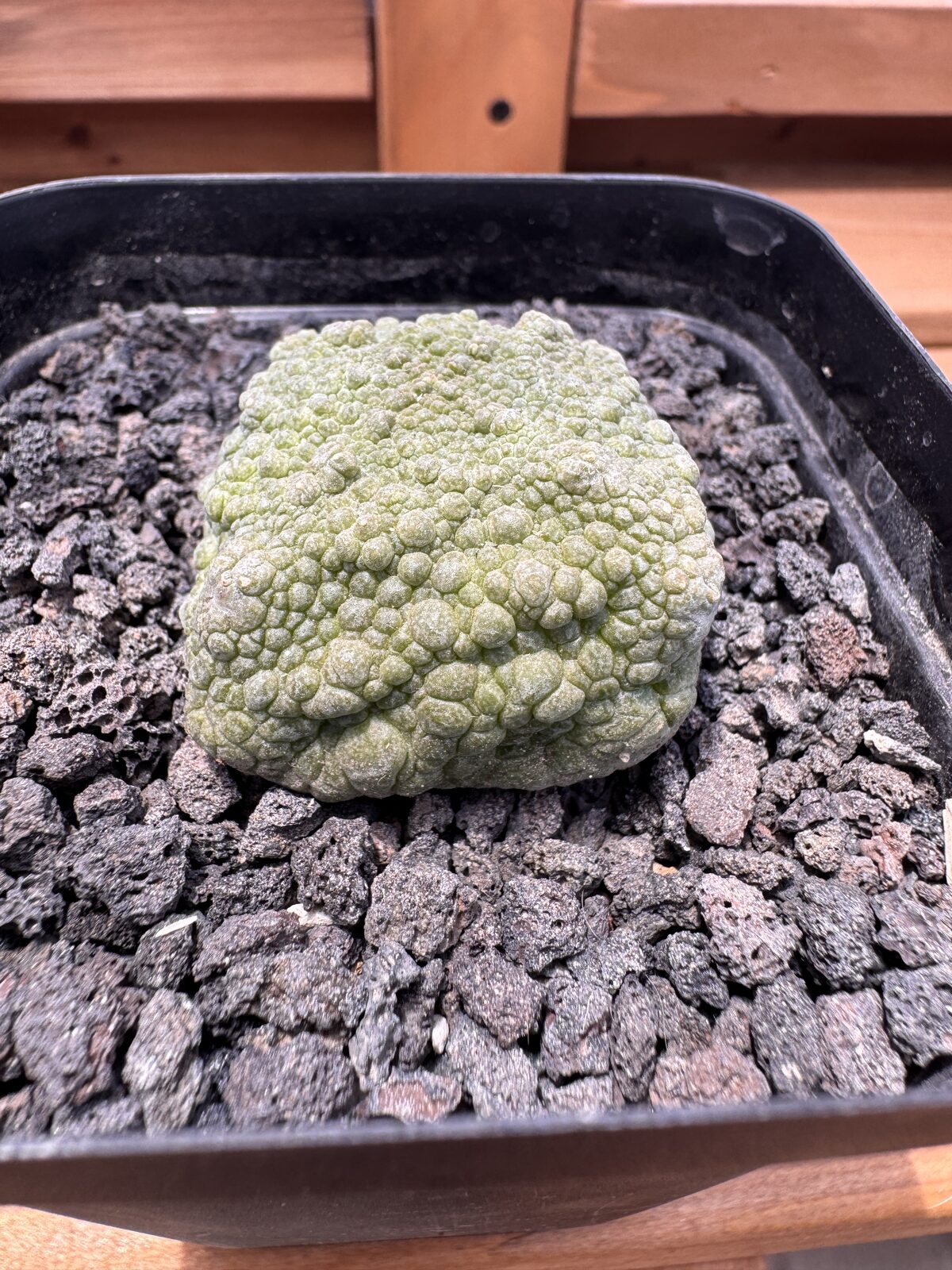
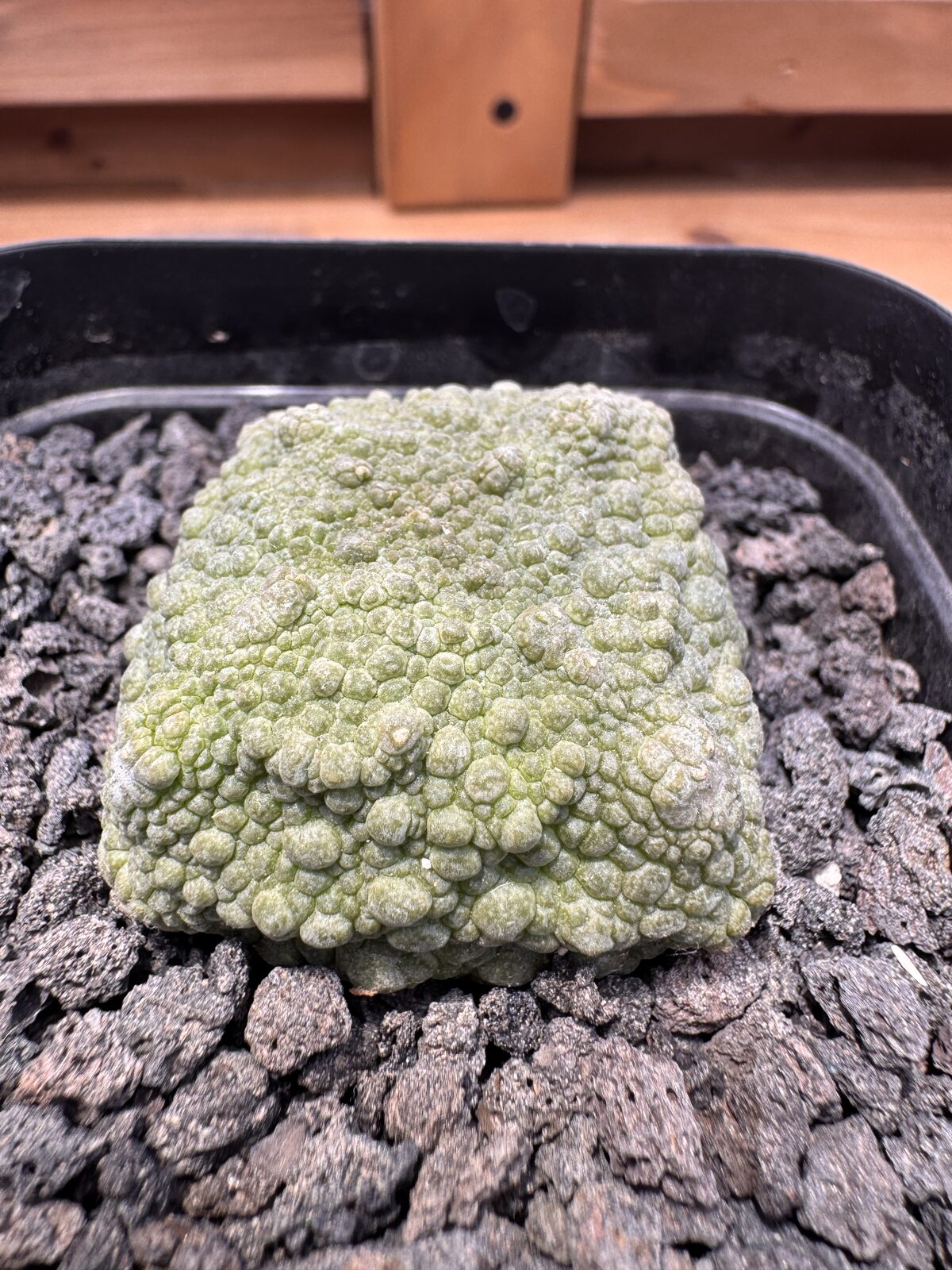
- Listing: one-of-a-kind, the exact plant in the photographs
Sold out
This specimen is one of a kind. The photos show the exact plant you'll receive.
Description
Type: Greenhouse cultivated · Size: about 4 cm (1.6 in) across · One-of-a-kind specimen
Pseudolithos cubiformis is the cube-shaped stone-mimic of the milkweed family, and this listing is for the exact 4 cm plant in the photographs, grown in our own greenhouse. At rarecactus.com we grow these stapeliads slow and lean on the hard mineral regime the species demands, and this one has come through with the dense, warty surface and squared body that make the species worth chasing.
What makes Pseudolithos cubiformis different
Despite the rock-like looks, Pseudolithos cubiformis is not a cactus at all. It belongs to Apocynaceae, the same family as the carrion-flowered stapeliads, and it survives on the grit plains of northeastern Somalia by pretending to be a stone. The solitary stem thickens into a four-sided, almost cuboid body covered in a tessellated mosaic of low warty tubercles, grey-green to olive depending on light, and it carries no spines anywhere. Set against a tray of lava grit it all but disappears, which is exactly the point in habitat. The accepted botany is held at Kew, where you can read the record for Pseudolithos cubiformis, and we cover the species in full on our Pseudolithos cubiformis specimen page.
This particular plant shows the beautiful form and texture the species is collected for: a compact, well-squared body with crisp tessellation across every face. It is seed grown, with a strong fibrous root system, and never grafted, as all members of the genus in cultivation are, since these plants are not grafted the way many rare cacti are.
How we grow it
We keep this Pseudolithos cubiformis in a purely mineral mix of pumice and lava grit with no organic fraction, in a pot that dries fast, under bright light with shelter from the fiercest summer midday sun. The single rule that matters most is temperature-gated watering: the plant takes water only when it is warm, above roughly 23°C, and is held bone dry whenever it is cooler than that. A drink at the wrong temperature is the classic way these plants are lost, because rot moves through the soft stem within hours. Grown on this discipline it stays firm, compact and well coloured. Our full Pseudolithos care guide walks through the watering rule, the substrate, and the winter rest in detail.
Flowering and growth
In late summer a settled Pseudolithos cubiformis pushes clusters of small star-shaped flowers from the corners and flanks of the body, hairy and maroon to greenish, carrying the faint carrion scent that draws the flies that pollinate them in the wild. They are the largest flowers in the genus, strange and worth the wait. Growth is slow and the plant stays a single solitary body for years rather than clumping, so a specimen at this size already carries real age behind it. Warmth, patience and restraint with water are what thicken the body and deepen the surface over time.
When your plant arrives
Your specimen ships well rooted and kept dry for transit. On arrival, pot it up if needed into a sharply draining mineral mix, give it bright light out of harsh direct sun, and hold off watering for about two weeks while it settles into your conditions. After that, water only on warm days and keep it bone dry whenever it is cool. Cold and wet together are the one combination that reliably kills this species, so when in doubt, keep it dry and warm.
Provenance and legality
This Pseudolithos cubiformis was grown in our greenhouse and never wild collected. Unlike the cacti we sell, the genus is not listed on any CITES Appendix and carries no international trade restriction, so a nursery-grown plant like this moves freely and lawfully. Wild collection has shadowed the species in the trade for years, which is exactly why growing it on from cultivated stock is the only responsible way to keep one. Browse the rest of the group on our Pseudolithos encyclopedia hub.
One plant, one set of photographs. The 4 cm specimen shown is the exact plant that ships, packed dry for safe travel.
Shipping & Returns
Shipping
Flat $12 shipping anywhere in the United States, for one plant or several. Orders ship within 1 to 3 business days and usually arrive 2 to 5 business days later. Every plant is packed by hand to travel safely.
Returns
Each specimen is a living, one of a kind plant, so all sales are final and we do not accept returns or exchanges. If a plant arrives dead, take clear photos of the plant and the packaging within a couple of days of delivery and email brian@rarecactus.com. If anything else about your order is not right, tell us and we will help where we can.