
Pseudolithos Care: The Collector’s Guide to Stone Plants
All ArticlesPseudolithos care turns on a single rule: water only when warm. These stone-mimic succulents from Somalia and southern Arabia belong to the milkweed family, not the cactus family, and rot within hours if watered below about 23 degrees Celsius. Give them a pure mineral mix, bright warmth, and a bone-dry winter.
What makes Pseudolithos different to grow?
Pseudolithos are stapeliads, not cacti. The genus sits in Apocynaceae, the milkweed family, alongside the carrion-flowered Stapelia and Caralluma, and the rock-like body is a case of convergent evolution rather than any relationship to Cactaceae. Bally erected the genus in 1965, and Kew POWO currently accepts eight species, all confined to the dry Horn of Africa and southern Arabia.
The body is the whole plant. A Pseudolithos thickens into a solitary or sparingly branched stem, tessellated and spineless, that stores its water internally and mimics the surrounding grit so closely that grazers walk past it. There is no swollen taproot and no caudex; the roots are fine and fibrous. That matters for care, because the tissue most likely to rot is the stem itself, not a buried storage organ, and rot in a soft stapeliad stem moves fast.
The second difference is temperature. Unlike a desert cactus that simply wants water in its growing season, a Pseudolithos ties water to warmth. It will take a drink on a hot day and rot from the same drink on a cool one. Get that single relationship right and the rest of the routine is calm. The full species list and identification notes live on the Pseudolithos genus hub.
When should you water a Pseudolithos?
Water only when it is warm. The working threshold growers use is around 23 degrees Celsius: above it the plant can take water, below it the plant stays bone dry. During warm spells in active growth, water thoroughly, then let the mineral mix dry out completely before watering again, which usually means roughly every two to four weeks. The pace is set by warmth and how fast the pot dries, not by the calendar.
Whenever temperatures drop below that threshold, stop. A Pseudolithos held cool and wet at the same time is the single reliable way to kill one, because rot spreads through the soft stem within hours and is usually past saving by the time it shows. Through winter the plant takes no water at all. Keep it warm and dry, give it a minimum around 10 degrees Celsius, and treat any brief dip toward 5 to 8 degrees as something it survives dry, never wet.
The plant reads as firm and full when it is hydrated and slightly shrunken when it is drawing on its reserves. A faintly contracted body on a warm day is the safe moment to water; a soft or discoloured patch is not contraction, it is rot starting, and it calls for a clean cut back into firm tissue rather than more water.
What substrate does Pseudolithos need?
A pure mineral mix and nothing else. In habitat Pseudolithos grow on grit plains of coarse, fast-draining mineral soil with almost no organic content, and cultivation should copy that exactly. The aim is a medium that wets through, then dries within a day, so water never lingers around the stem base.
A working blend is pumice, lava grit, and granite grit in roughly equal parts, with an optional handful of crushed limestone or gypsum chip, and a zero organic fraction. Skip the ingredients popular care guides still list: perlite floats and breaks down, builder sand packs and holds water, and peat collapses into an airless mush that rots roots. Pot into a medium-depth clay or terracotta container that breathes and dries fast, and set the stem at or just above the surface with a top dressing of grit so the collar never sits damp.
How much light and warmth do Pseudolithos need?
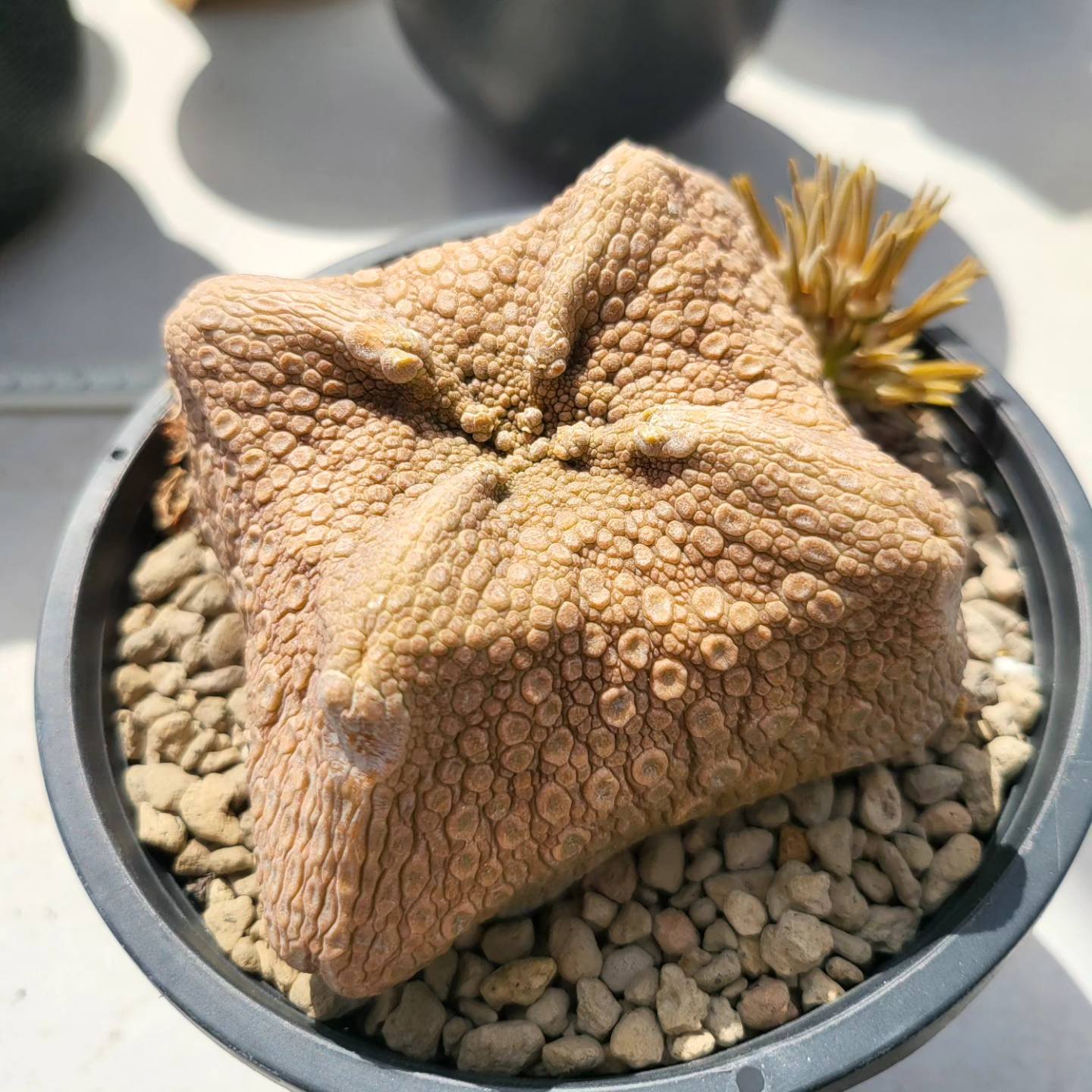
Give Pseudolithos bright light, with shelter from the fiercest summer midday sun. The body is built for open, high-light desert, so a sunny greenhouse bench or the brightest windowsill suits it, but the hardest direct glass in high summer can scorch or bleach an unhardened plant, so a little diffusion through the peak weeks is sensible. Too little light, and the body softens, pales, and loses its tight habit.
Body colour shifts with the light and none of it is a problem. A plant runs light green in shade, olive or granite grey in moderate light, and reddish-brown under intense sun, all of them normal responses. Warmth matters as much as light. These are tropical-desert plants that want heat in the growing season and a frost-free, dry winter, with that minimum around 10 degrees Celsius. Cold on its own, kept dry, is survivable; cold plus damp is not.
Is Pseudolithos legal to own, and where do you buy it?
Pseudolithos is not listed on any CITES Appendix. Unlike the cacti, where whole genera such as Ariocarpus sit on Appendix I, the Apocynaceae carry no blanket CITES regulation and no stapeliad has been individually listed, so a Pseudolithos crosses borders without the permits a living rock cactus needs. No member of the genus has a formal IUCN Red List assessment either, a gap that reflects how little fieldwork has been possible in northeastern Somalia for decades.
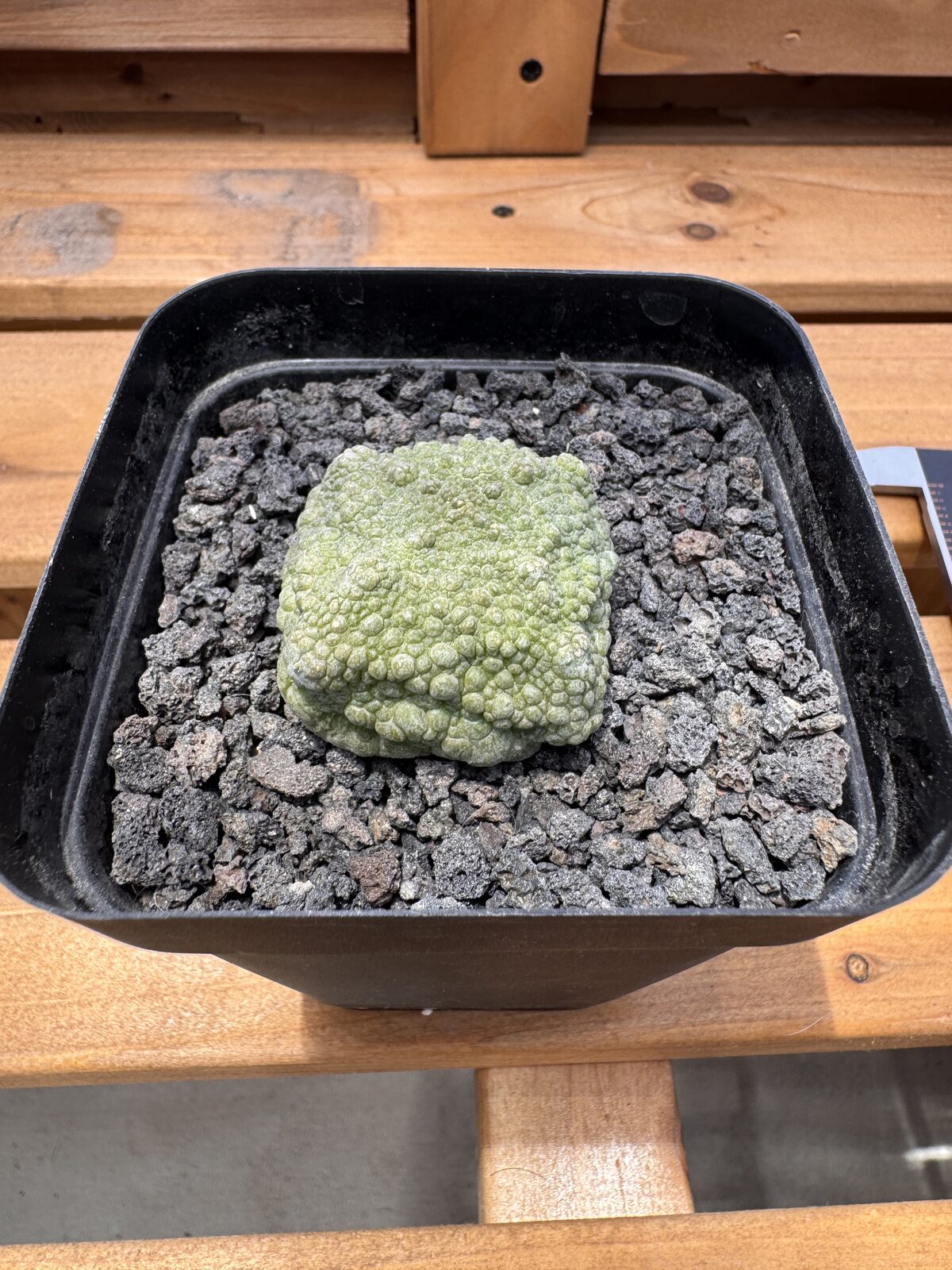
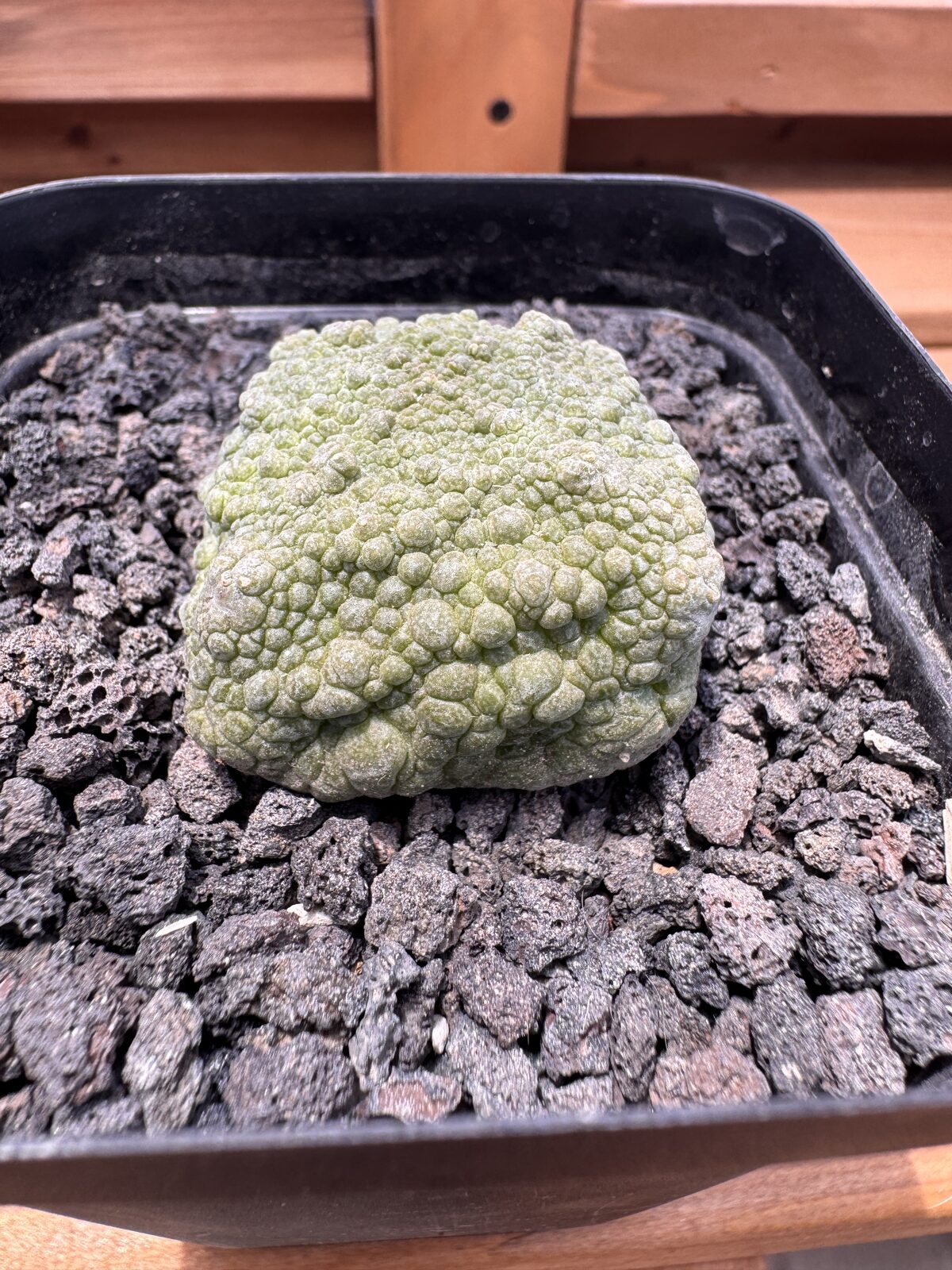
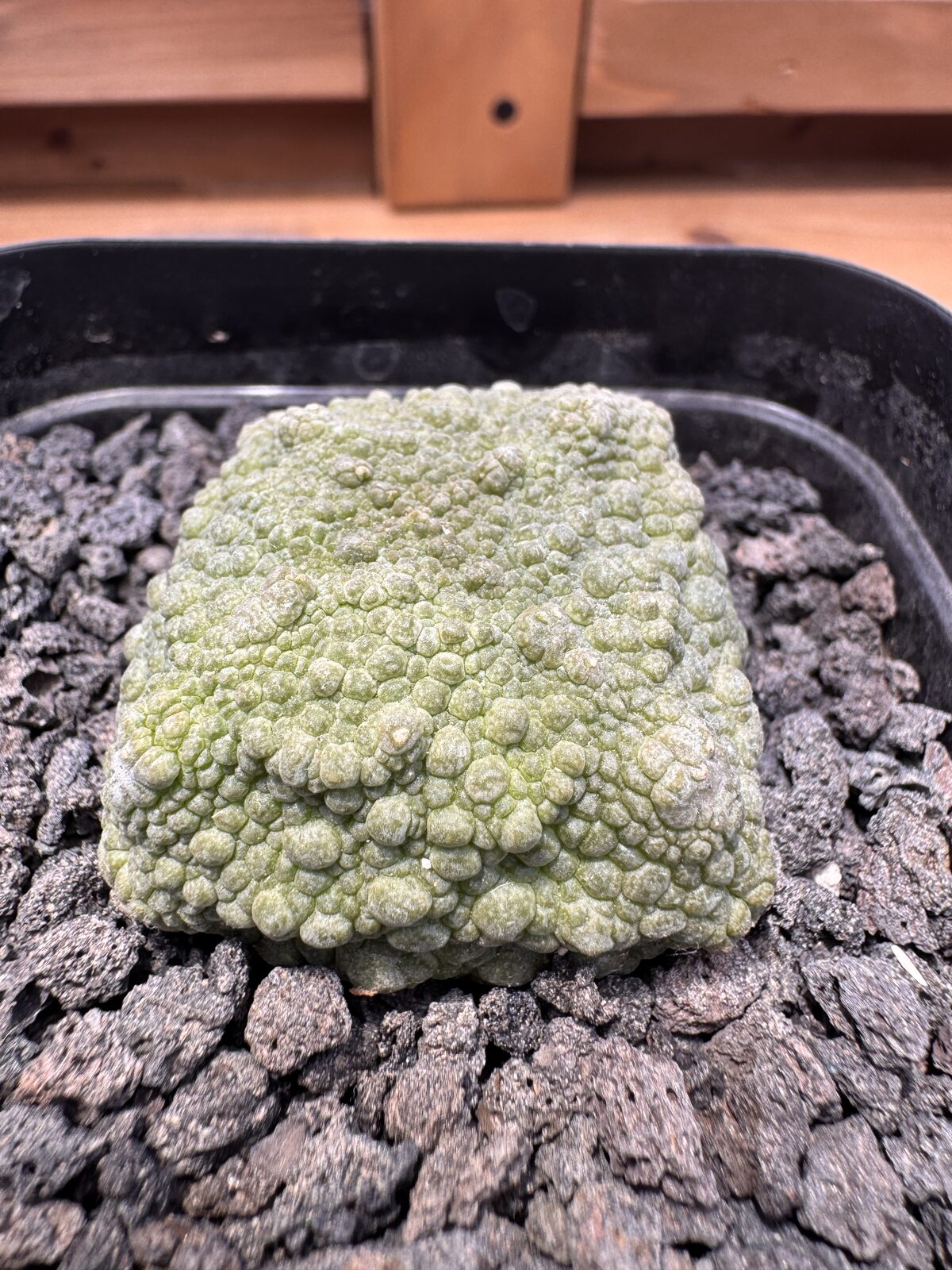
The absence of a listing is not a reason to relax about sourcing. The genus is micro-endemic, wild collection has shadowed it in the ornamental trade for years, and plants of unstated origin appear regularly online. The responsible plant is a nursery-grown one. At rarecactus.com we grow our Pseudolithos in our own greenhouse on the warm, lean, mineral regime described above, and we sell the exact plant pictured rather than a stand-in. You can see what that looks like on the current Pseudolithos cubiformis specimen in the shop.
Pseudolithos species, and how their care differs
Care is shared across the genus: the warm-water rule, the mineral mix, and the dry winter apply to every species. What changes is body shape and how freely each one branches. The site covers each taxon in depth on its own page; the notes below cover the care-relevant differences.
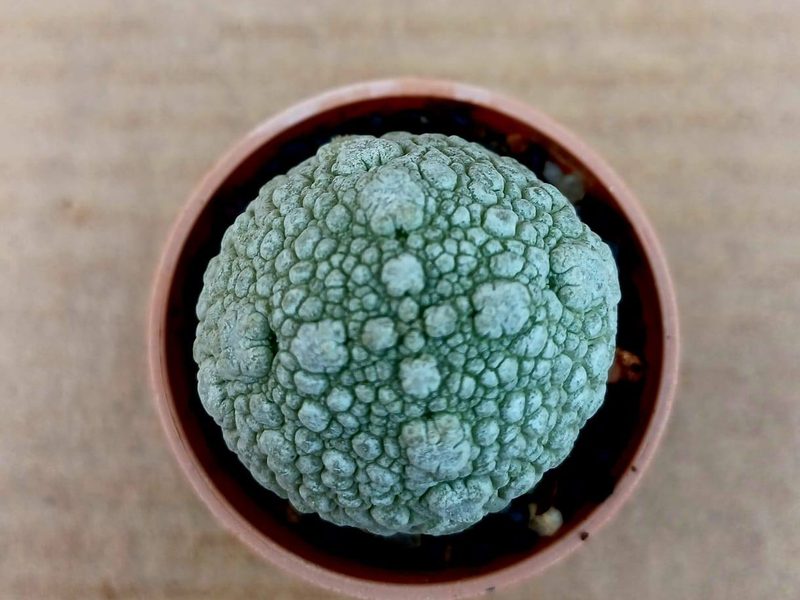
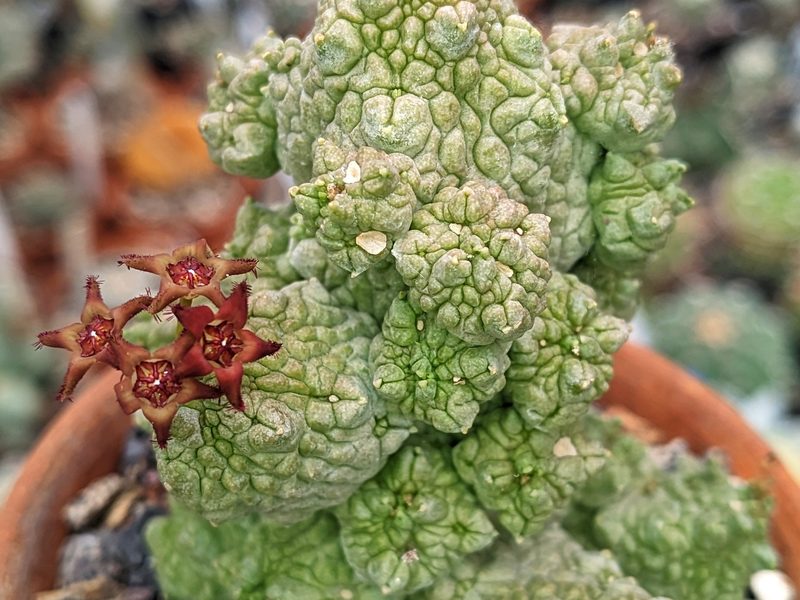
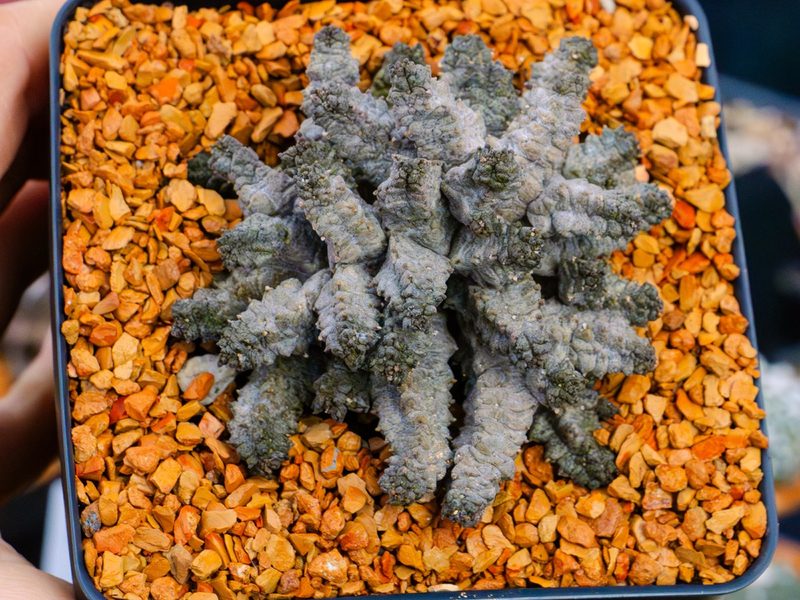
Pseudolithos migiurtinus is the type species and the one most often seen in cultivation, with a rounded to flattened greyish body and clustered maroon flowers. It is the usual entry point to the genus and behaves like the genus default.
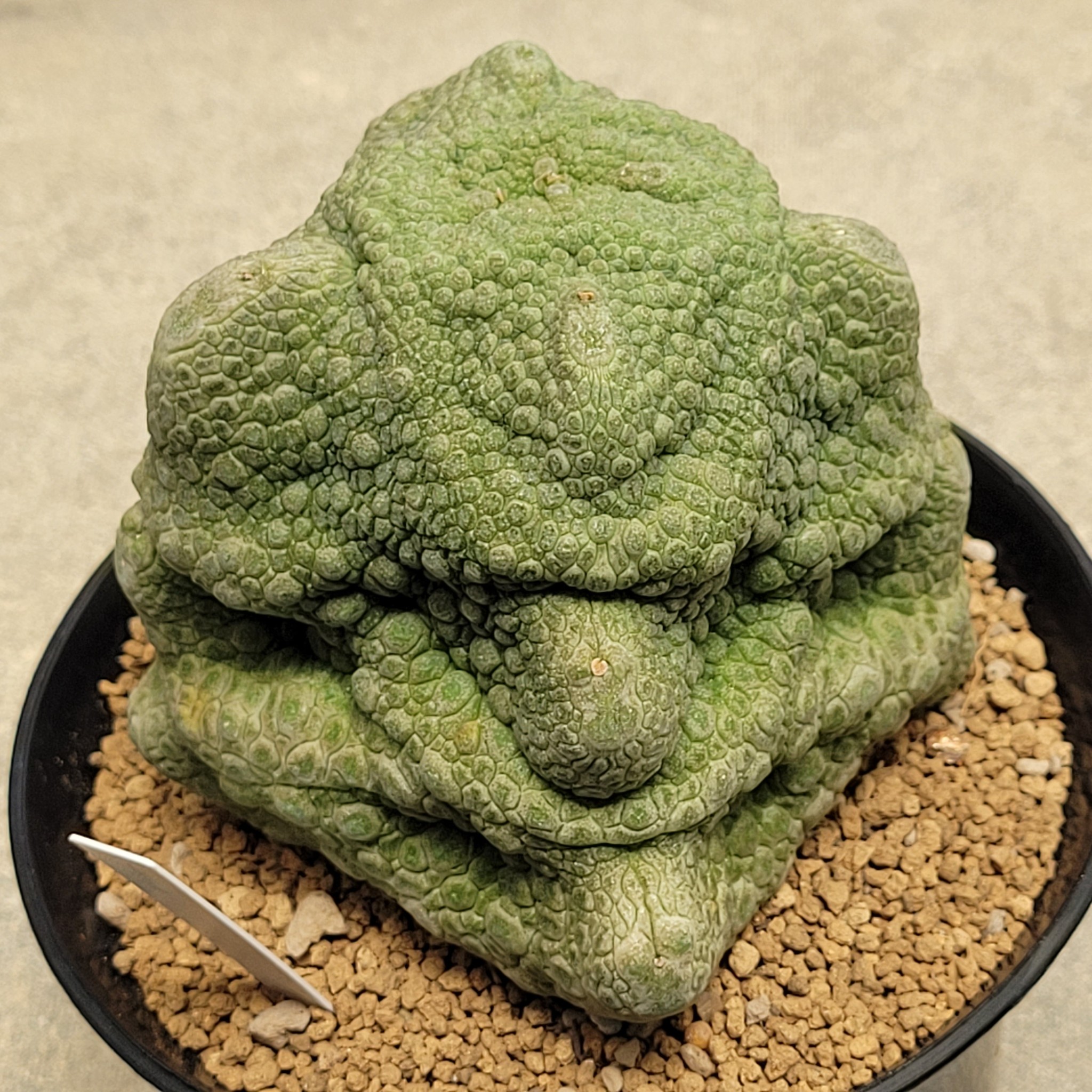
Pseudolithos cubiformis is the largest-bodied species and the architectural one, its solitary stem squaring into a near-perfect cube up to about 12 cm across. It rarely branches, so it is grown as a single showpiece and wants the same lean, warm, mineral routine; it simply takes longer to fill out its geometry.
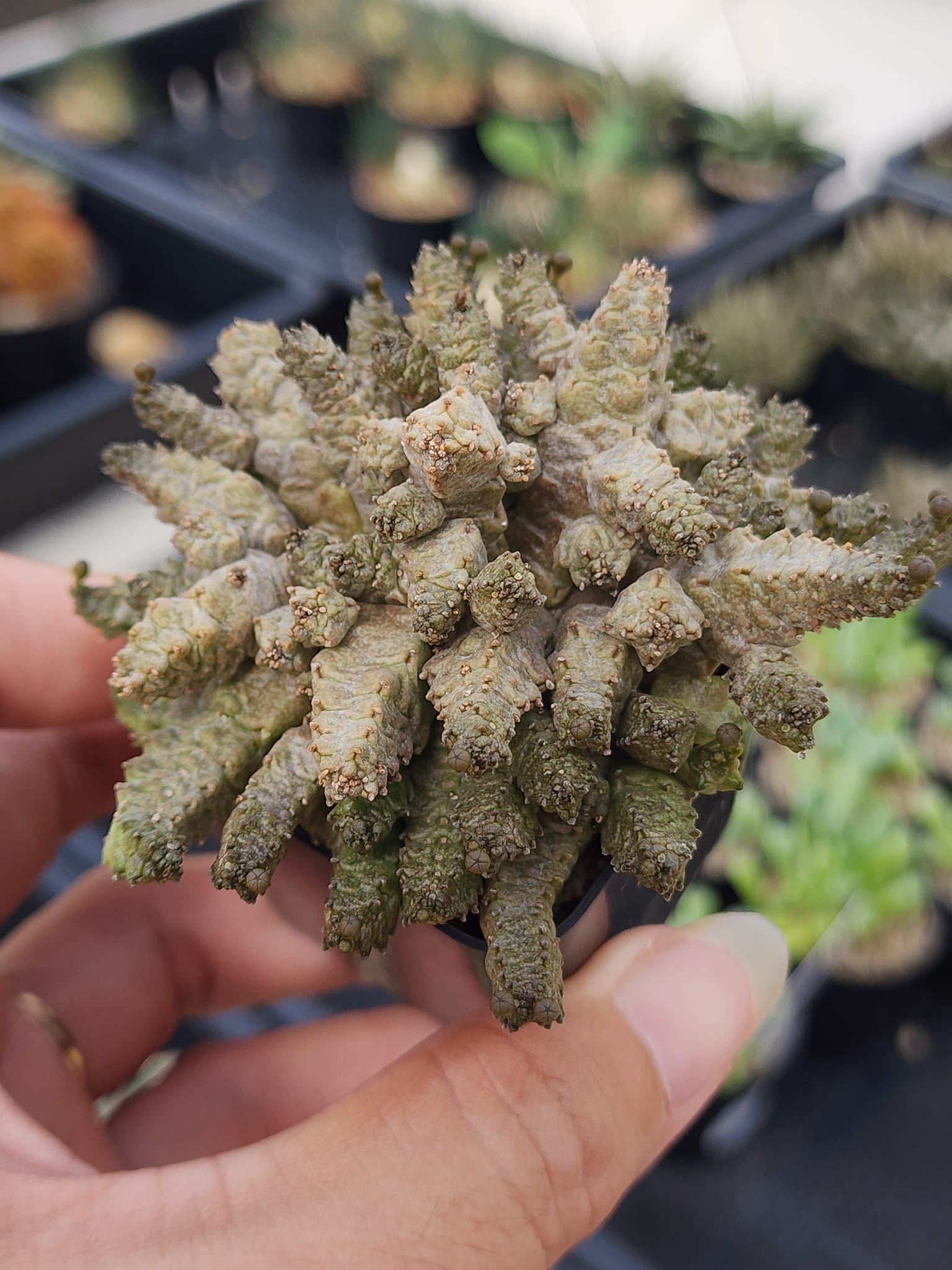
Pseudolithos caput-viperae is the compact, viper-head species, with shorter elongated stems that cluster, while Pseudolithos mccoyi branches freely into quadrangular stems quite unlike the solitary cube. The clumping species dry a touch faster between the stems, so they are even less forgiving of water trapped in a still, cool pot, which is the one care nuance worth holding in mind.
When and how do Pseudolithos flower?
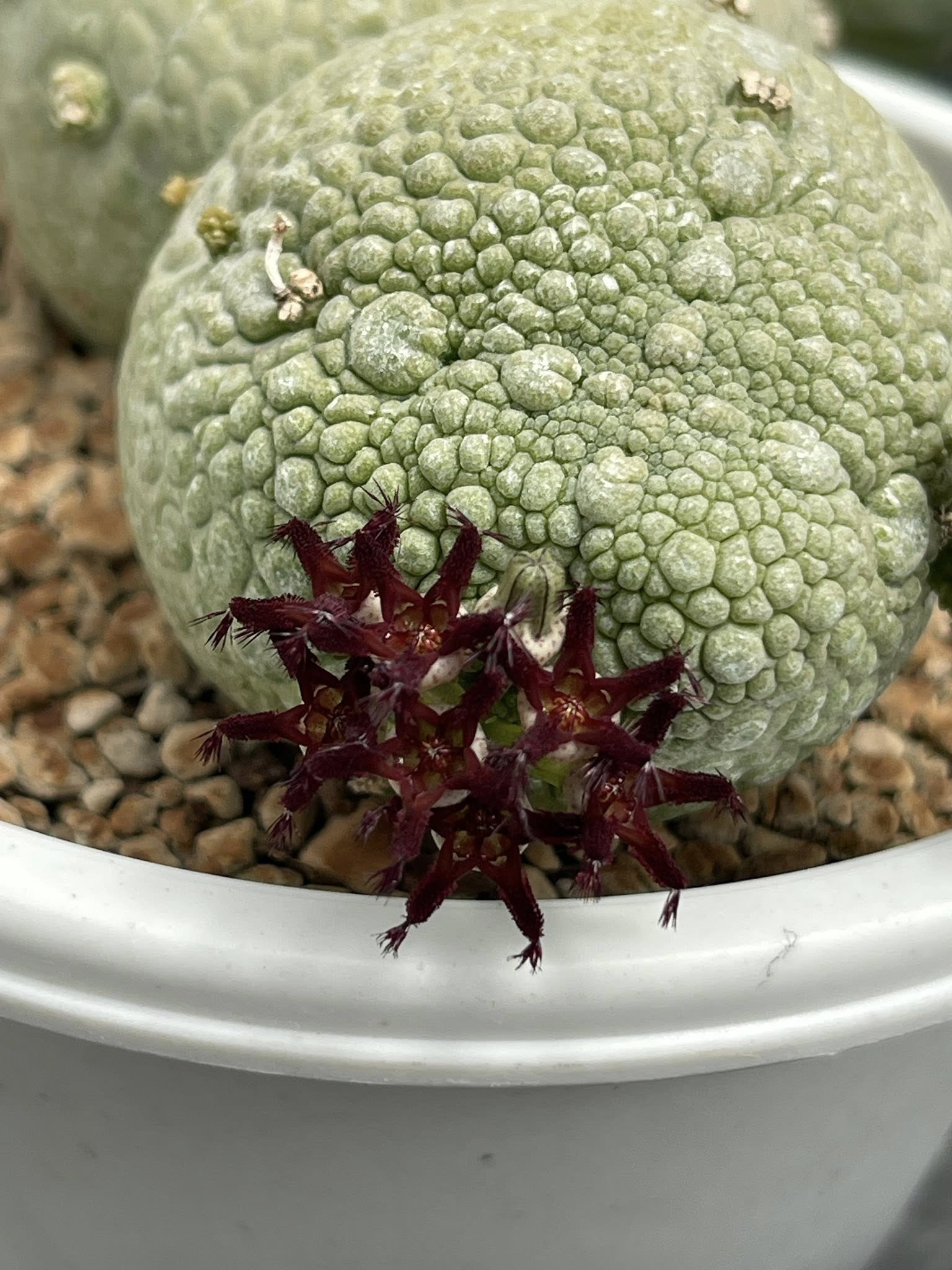
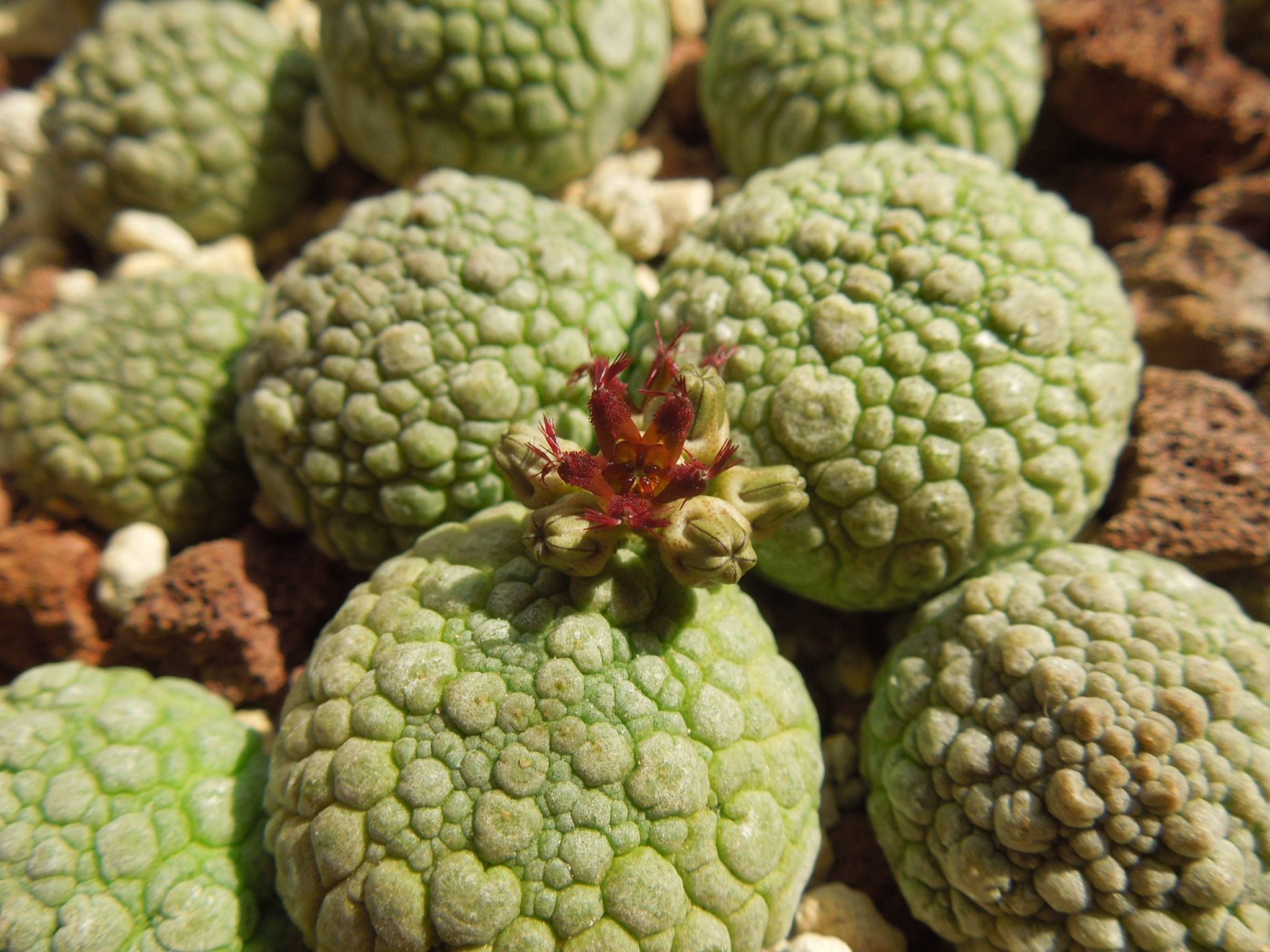
Pseudolithos flower in late summer, pushing clusters of small star-shaped, hairy flowers straight from the corners and flanks of the stem. The colour runs from greyish-green through maroon to reddish-brown depending on species and form, and the scent is faintly of carrion across all of them, which is the point: the flies that pollinate the plant in the wild are drawn to decay. Cultivated plants will sometimes flower more than once in a year.
Of the genus, Pseudolithos cubiformis carries the largest flowers. Pollinated flowers set paired follicles holding comose seed, the silky-haired seed of the milkweed family that drifts on the wind when the pod splits. Flowering is a sign of a settled, well-grown plant rather than something to force, and the warm growing season that produces it is the same regime that keeps the body firm.
What kills a Pseudolithos, and how do you prevent it?
Stem rot is the leading cause of death, and it almost always traces to water sitting on or around the stem while the plant is cool. Because the stem is the water store, rot here is not a slow taproot decline but a fast collapse, often soft and discoloured before a grower notices. If you catch it early, cut back into clean, uniform tissue, because any stained tissue left behind keeps spreading, then dry the cut hard and re-root the firm section in dry mineral mix. The prevention is the whole routine: warm-only watering, a mix that dries fast, and a breathable pot.
Mealybugs are the other common threat, hiding in the fine roots and in the creases of the stem where they are easy to miss until the plant stalls. Bare-root, inspect, treat, and repot into fresh sterile mineral mix at the first sign. Good airflow does much of the work on its own, removing the still, humid conditions that both rot and pests need. None of this is demanding once the warm-water rule is second nature; it is the one habit that keeps the plant alive.
Frequently asked questions about Pseudolithos care
How often should you water a Pseudolithos?
Water a Pseudolithos only when temperatures are above about 23 degrees Celsius, soaking the mineral mix and then letting it dry out completely before the next watering, which usually means every two to four weeks in warm growth. Below that threshold, and right through winter, keep the plant bone dry. Cold plus damp rots the stem within hours.
Is Pseudolithos a cactus?
No. Pseudolithos is a stapeliad in the family Apocynaceae, the milkweed family, related to Stapelia and Caralluma rather than to the cacti. Its stone-like body and spineless surface are convergent evolution, an independent solution to the same arid conditions, not evidence of any relationship to Cactaceae.
Is Pseudolithos CITES protected?
No. Pseudolithos is not listed on any CITES Appendix, and no stapeliad has been individually listed, so nursery plants move without CITES permits. The genus also has no formal IUCN assessment. Even so, it is micro-endemic and targeted by wild collectors, so buying nursery-grown stock of known origin is the responsible choice.
Why does my Pseudolithos keep changing colour?
Body colour in Pseudolithos tracks light, not health. The plant runs light green in shade, olive or granite grey in moderate light, and reddish-brown under intense sun, and all three are normal. A soft or sunken patch, by contrast, is rot rather than a colour shift and needs cutting out, not more light.
How big does Pseudolithos cubiformis get?
Pseudolithos cubiformis is the largest-bodied species in the genus, with a solitary cube-shaped stem reaching up to about 12 cm across on a well-grown, mature plant. It branches only rarely, so it grows as a single geometric body, and it is slow, so a plant of any size already represents years of careful growing.
Plants of the World Online (POWO), Royal Botanic Gardens Kew, Pseudolithos cubiformis and Pseudolithos P.R.O.Bally · Bally, P.R.O., original description in Candollea 17: 58 (1959) and the replacement genus in Candollea 20: 41 (1965) · Bruyns, Klak & Hanacek, stapeliad phylogeny, South African Journal of Botany 112: 413 (2017) · CITES Appendices I, II, III (current) · IUCN Red List (no assessment published for the genus) · llifle, Encyclopedia of Living Forms · cactus-art.biz cultivation notes on Pseudolithos · British Cactus and Succulent Society, cultivation notes on stapeliads
Photos: the Pseudolithos cubiformis in lava grit is grown and photographed at rarecactus.com. Remaining images come from the Pseudolithos genus hub and its species pages on this site.