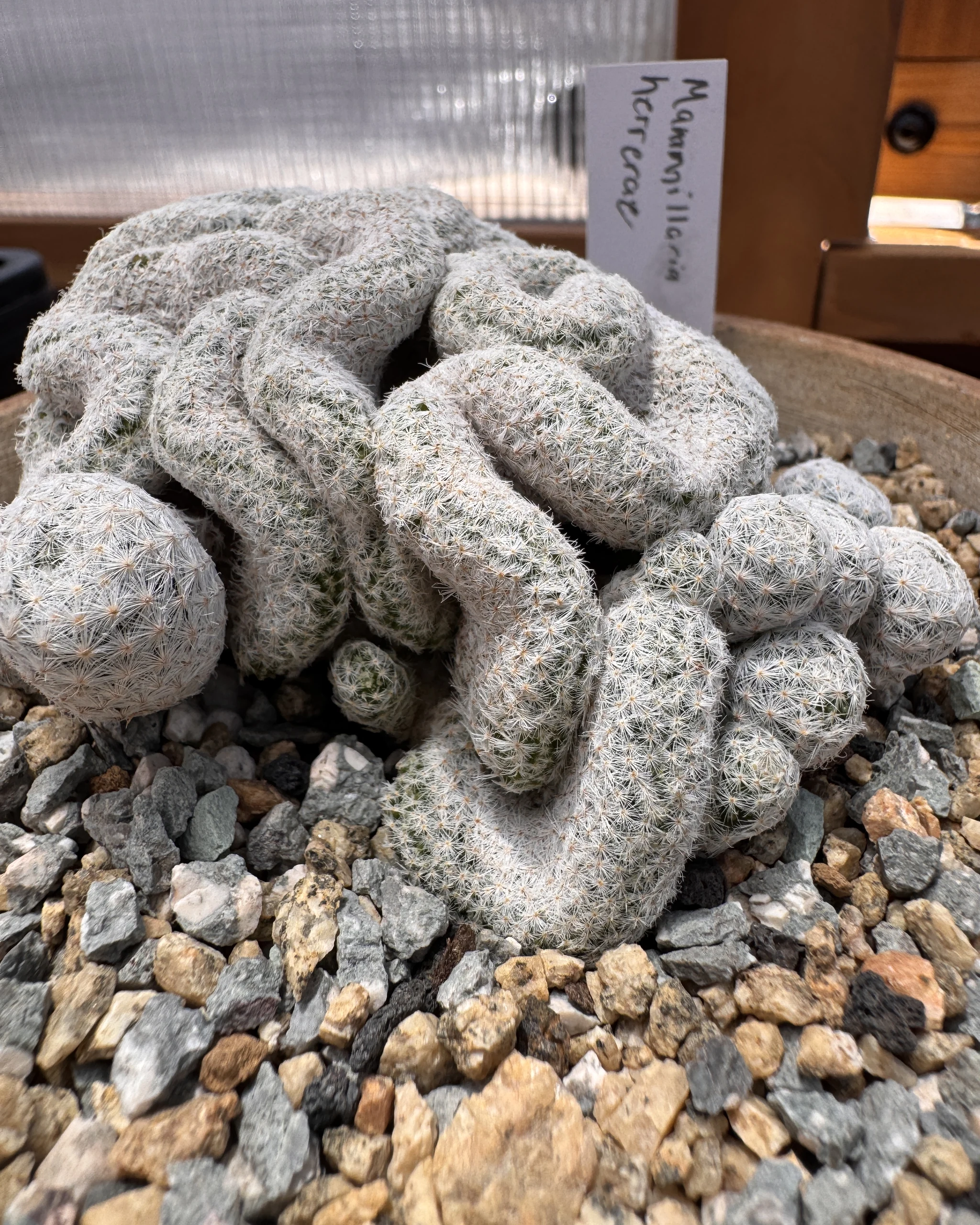
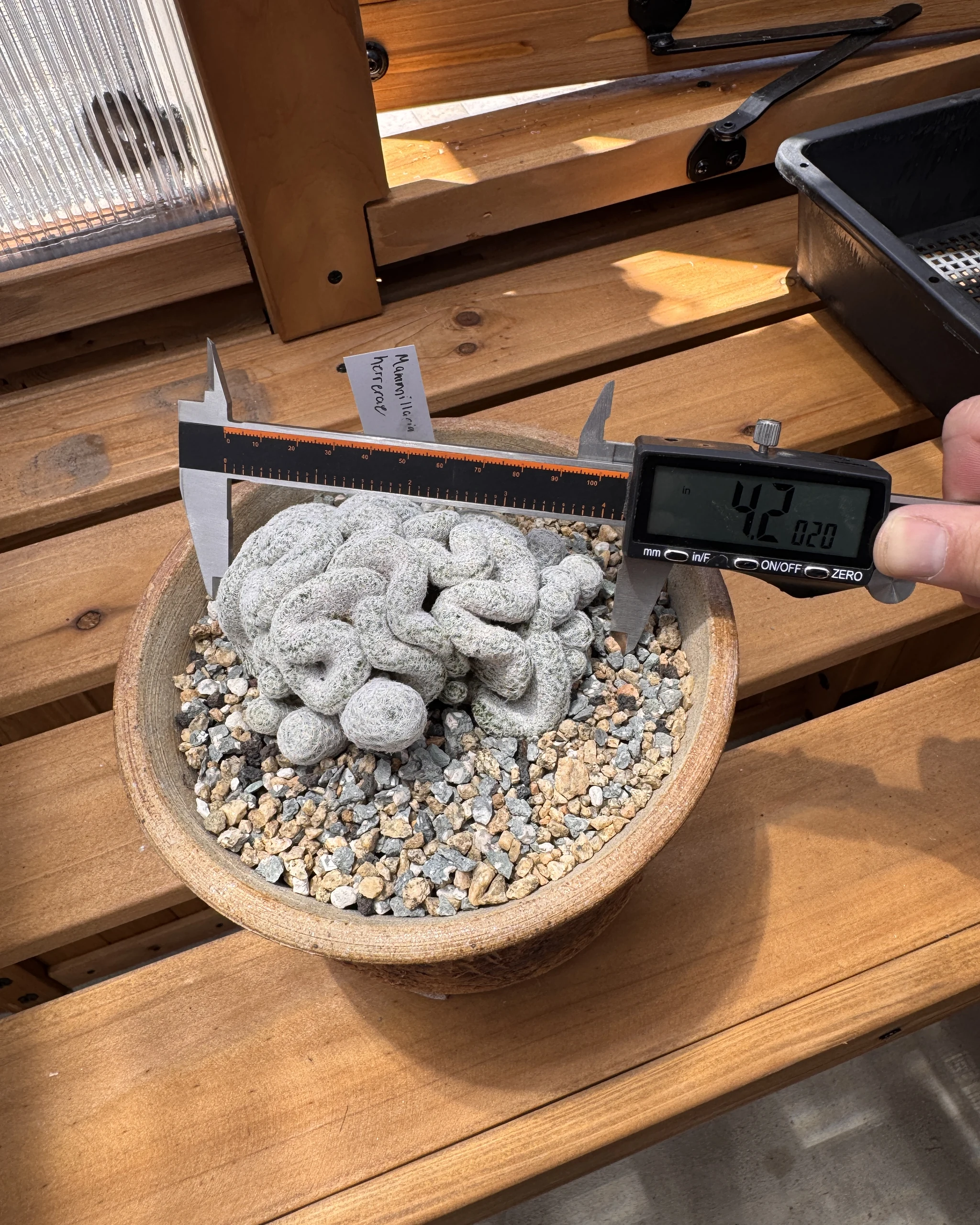
Mammillaria herrerae f. cristata (Specimen B)
$520.00
- Plant: Mammillaria herrerae f. cristata (Specimen B)
- Cultivation: seed grown, with a strong root system
- Size: about 4.1 in (10.5 cm) across
- Listing: one-of-a-kind, the exact plant in the photographs, imported from Japan
- Grown: cultivated in our greenhouse
Hurry, only 1 item left in stock!
This specimen is one of a kind. The photos show the exact plant you'll receive.
Description
Type: Seed grown · Size: about 4.1 in (10.5 cm) across · One-of-a-kind crested specimen, imported from Japan
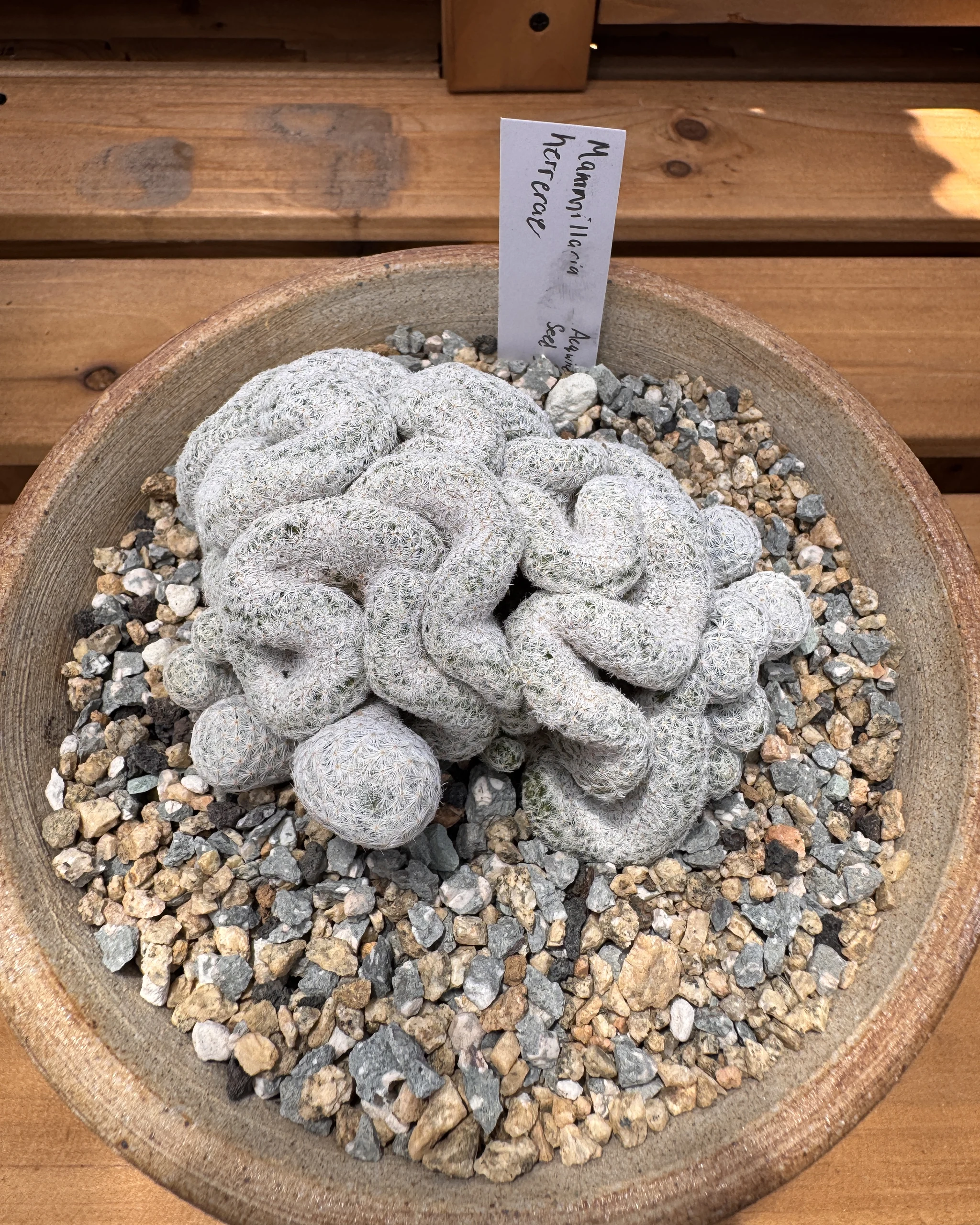
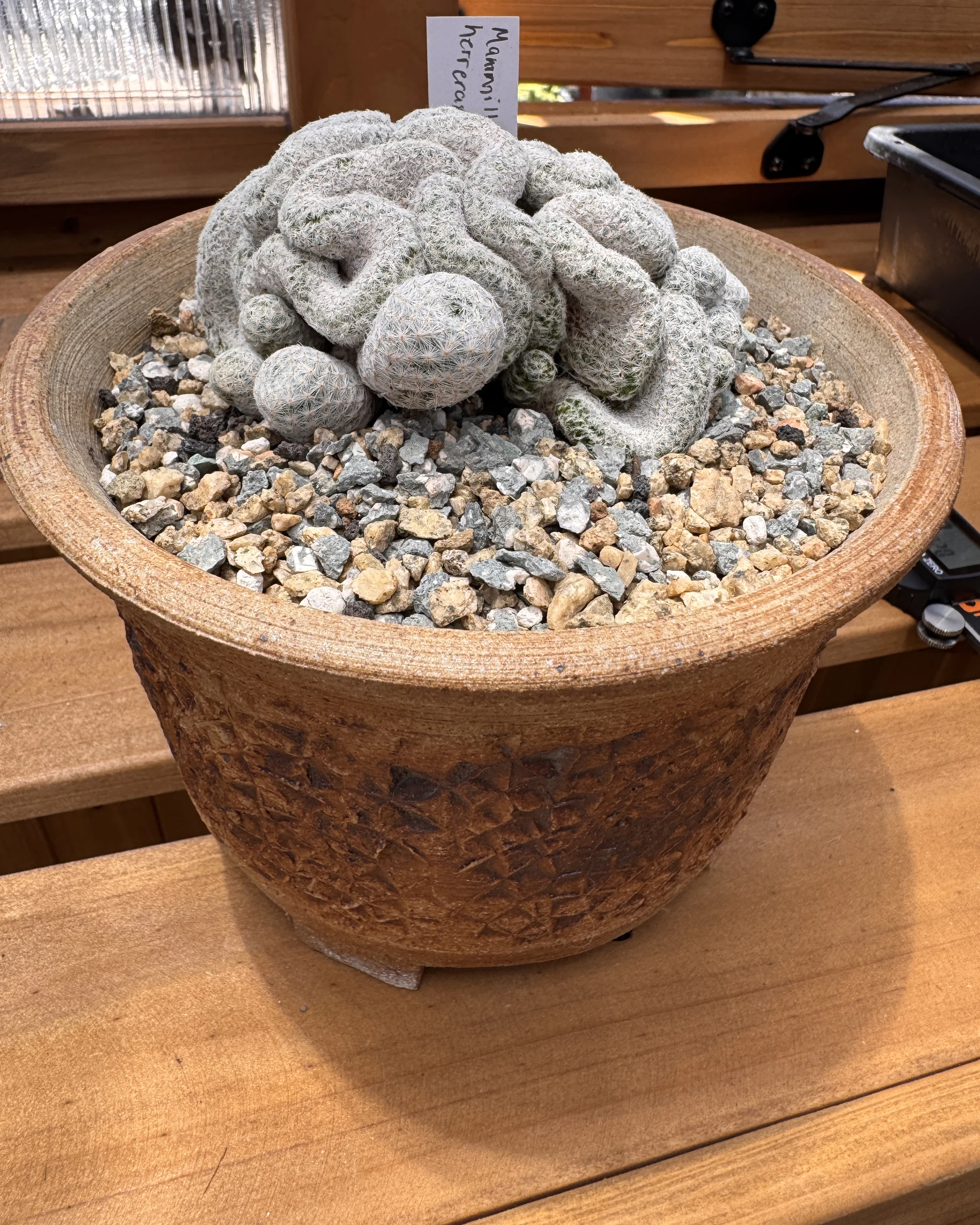
Mammillaria herrerae cristata is the crested form of the Querétaro golf ball cactus, and this listing is for the exact 4.1 in plant in the photographs. At rarecactus.com we grow our Mammillaria in a substrate that runs about 90 per cent inorganic to 10 per cent organic, and we give every plant the nutrients and balanced fertiliser it needs to stay as healthy and strong as possible. This particular specimen was imported from Japan, seed grown rather than cut from a graft, which is the form serious collectors hold out for.
What makes Mammillaria herrerae cristata different
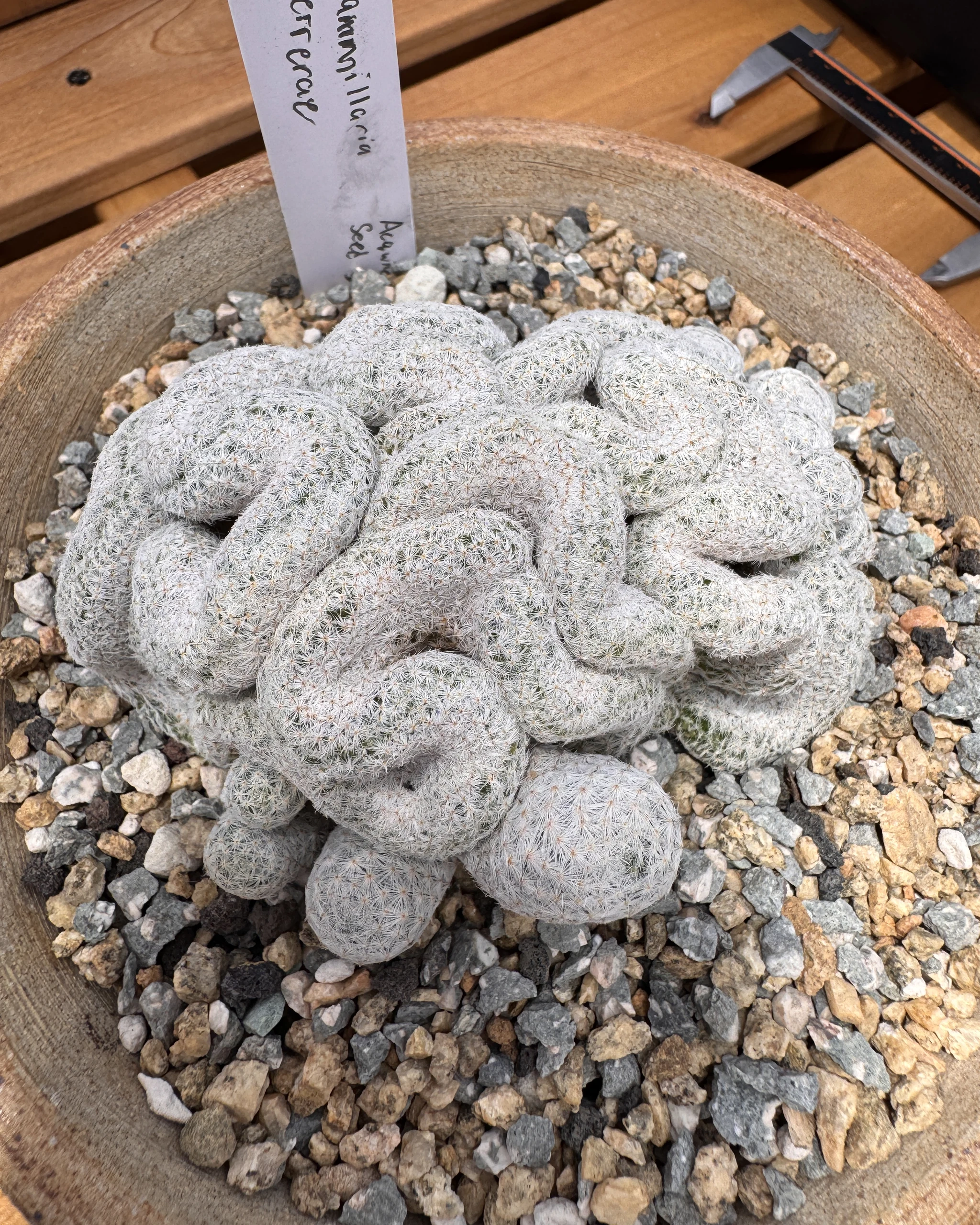
An ordinary Mammillaria herrerae is a solitary white globe barely 3 cm across, wrapped in a hundred or more fine bristly radial spines with no central spines at all, so the green body vanishes under what looks like wound white thread. The crest changes the geometry entirely. In a crested plant the growing point mutates from a single dome into a continuous line, so instead of a ball the stem piles up into the folded, convoluted, brain-like ridges you see here, every fold still sheathed in that same dense white spination. The result is a sculptural mound of pure white that no normal plant of the species can match. For the accepted botany of the species behind the crest, see the Kew record for Mammillaria herrerae, and our own deep dive on the Mammillaria herrerae specimen page.
The species is a single-location endemic from the calcareous slopes east of Cadereyta de Montes in Querétaro, Mexico, and one of the most restricted cacti in the genus. That scarcity, and the dense white coat that makes it so collectable, are exactly why a seed grown crested plant of this size is worth owning.
How we grow it
This Mammillaria herrerae cristata sits in a gritty, fast-draining mineral mix built on pumice, granite grit and lava rock with a little crushed limestone to track the calcareous ground the species evolved on, and no peat. It takes bright light with shelter from the fiercest summer midday sun, since the pale crest can scorch where a green body would shrug it off, a thorough soak only once the substrate has gone bone dry through the warm months, and a completely dry winter rest. The dense spine coat holds moisture against the body, so restraint with the watering can is everything. Our full Mammillaria care guide walks through the substrate, the watering rhythm and the winter rest in detail.
Flowering and growth
A settled plant can push the small pale pink to red-violet funnel flowers the species is loved for, opening along the line of the crest in spring rather than from a single crown. Growth is slow and the reward is the crest itself, thickening and folding more tightly over the years into an ever more sculptural mound. A plant at this size already carries real age behind it. Strong light and a lean, dry regime are what keep the spines dense and brilliantly white and the body firm rather than soft and stretched.
When your plant arrives
Your specimen ships seed grown and already well rooted, packed dry for transit. On arrival, pot it up into a sharply draining mineral mix, settle it under bright indirect sun, and withhold water for a full 14 days while it settles in before the first cautious soak. After that, water only on the soak-and-fully-dry cycle through the growing season and keep it dry and above 5°C in winter. The narrow neck between root and stem is the rot-prone point on this species, so err toward dryness, give it good airflow, and never leave water sitting in the spines overnight.
Choosing this plant
A crested Mammillaria worth keeping shows a dense, evenly folded crest with clean white spination and no scarring or rot in the folds, which is exactly what this specimen offers in the photographs. Because you are buying the exact pictured plant, there is no guesswork about how it has crested or how heavily it is spined. Every plant we offer is seed grown, with a strong root system, never cut from a graft to force size, so it keeps the natural, slow character that grafted stock loses.
Provenance and legality
This specimen was imported from Japan and is seed grown, with no wild collection at any stage. Mammillaria herrerae sits on CITES Appendix II and is federally protected in Mexico under NOM-059, and with a wild population this small, nursery-propagated stock like this is the only lawful and responsible way to own one. Browse the rest of the genus on our Mammillaria encyclopedia hub.
One plant, one set of photographs. The 4.1 in crested specimen shown is the exact plant that ships, seed grown, well rooted and packed dry for safe travel.
Shipping & Returns
Shipping
Flat $15 shipping anywhere in the United States, for one plant or several. Orders ship within 1 to 3 business days and usually arrive 2 to 5 business days later. Every plant is packed by hand to travel safely.
Returns
Each specimen is a living, one of a kind plant, so all sales are final and we do not accept returns or exchanges. If a plant arrives dead, take clear photos of the plant and the packaging within a couple of days of delivery and email brian@rarecactus.com. If anything else about your order is not right, tell us and we will help where we can.