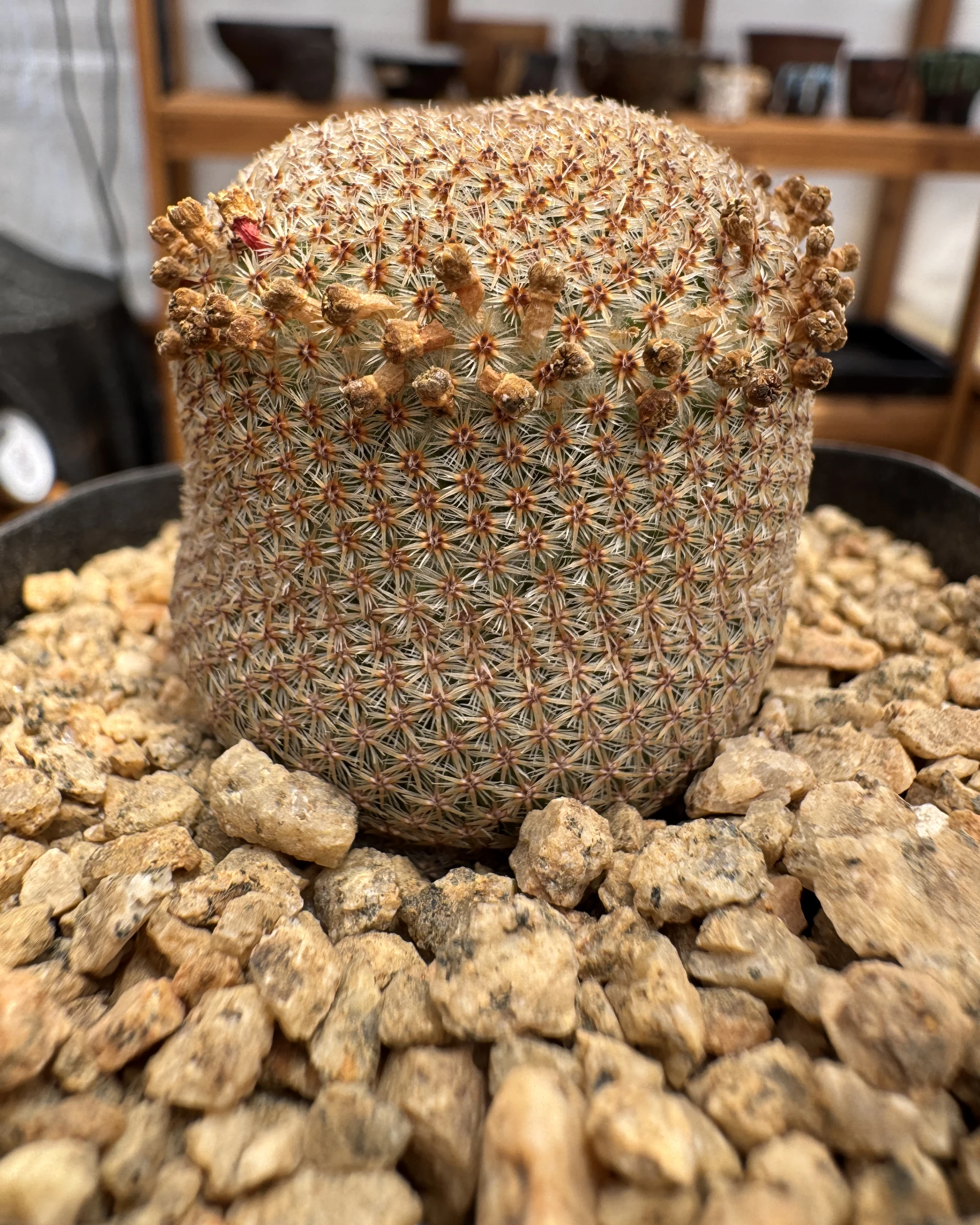
Mammillaria crucigera
$175.00
- Plant: Mammillaria crucigera
- Cultivation: seed grown, with a strong root system
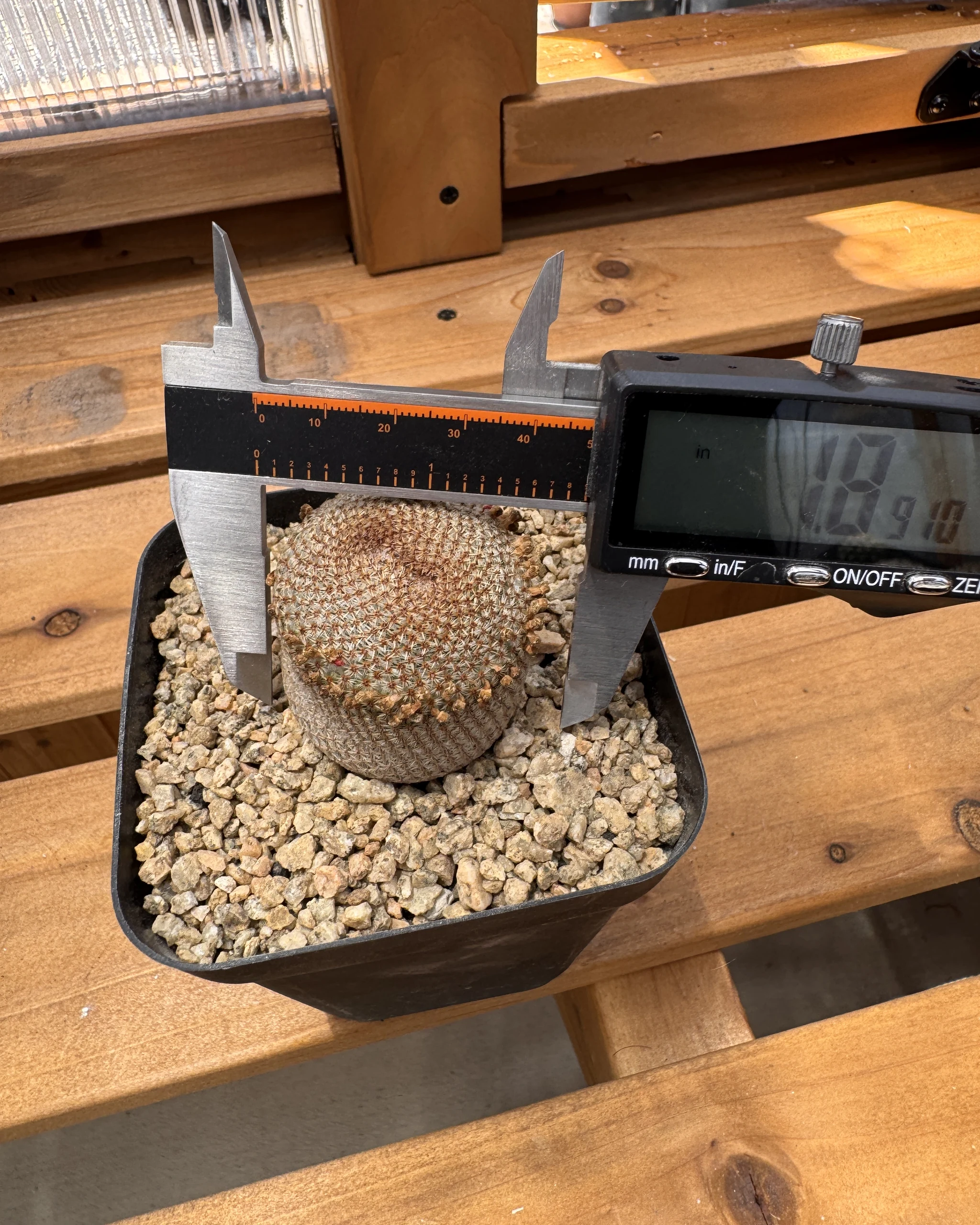
- Size: 1.7 in (4.3 cm) across
- Listing: one-of-a-kind, the exact plant in the photographs
- Grown: cultivated in our greenhouse
Sold out
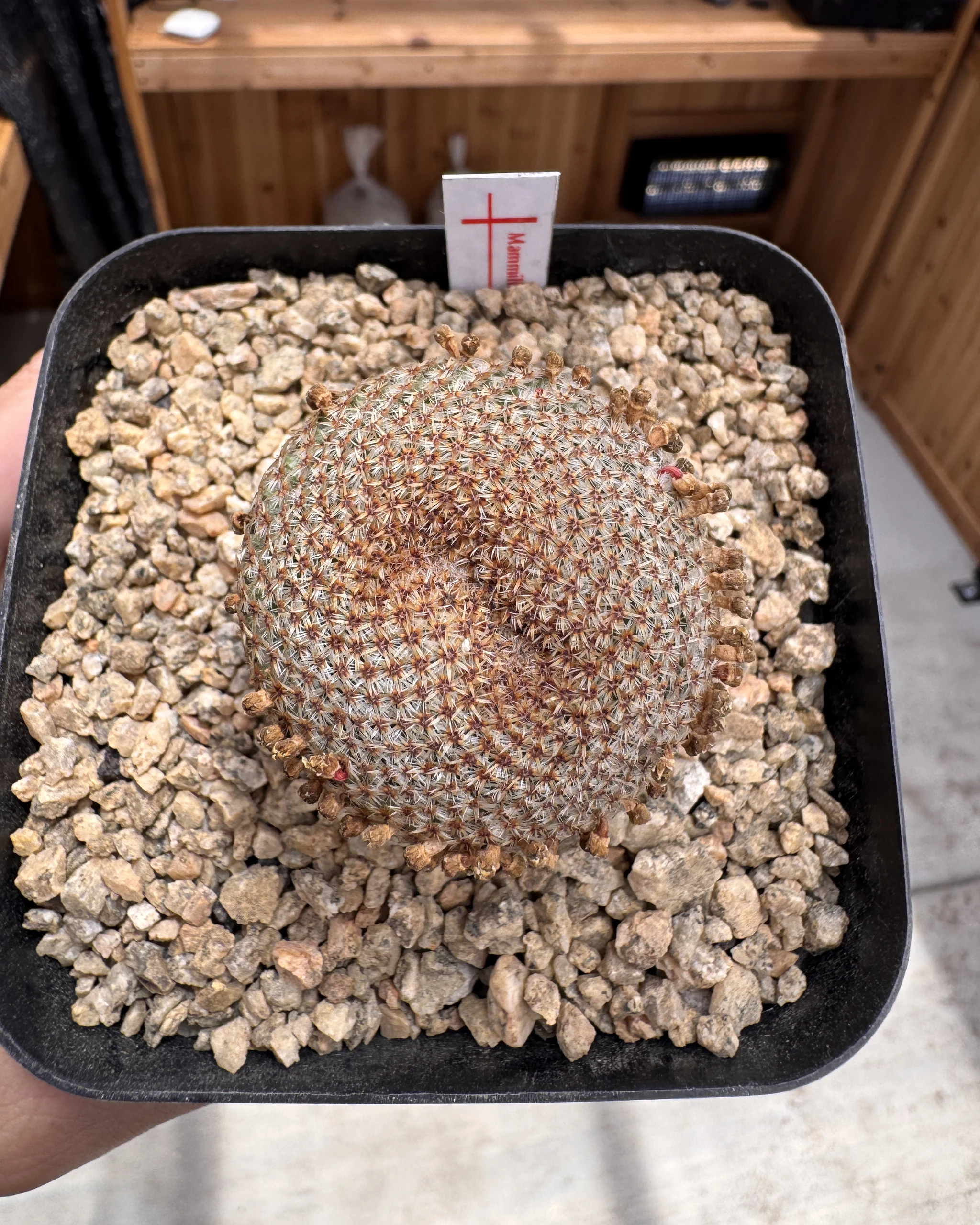
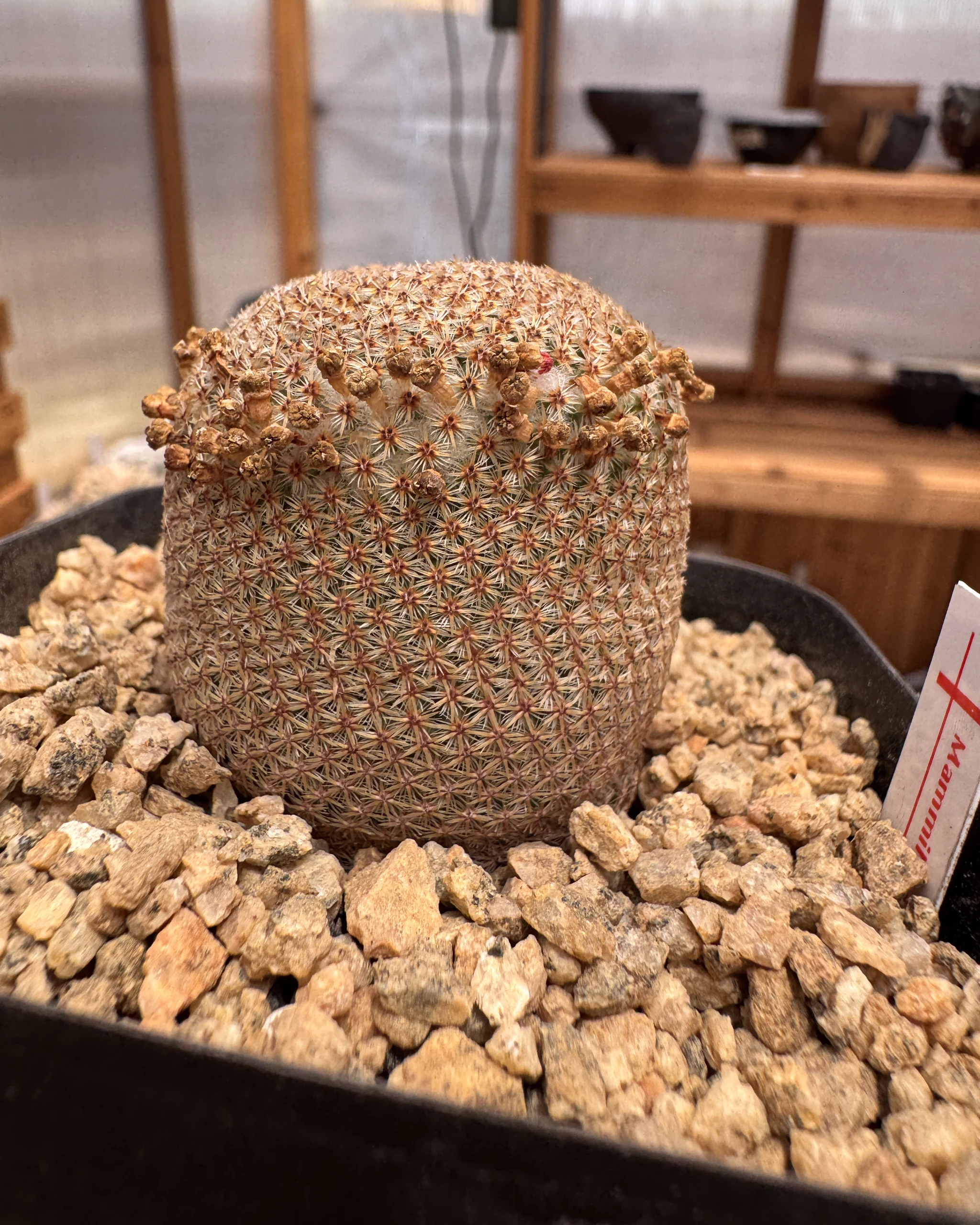
This specimen is one of a kind. The photos show the exact plant you'll receive.
Description
Type: Seed grown · Size: 1.7 in (4.3 cm) across · One-of-a-kind specimen
Mammillaria crucigera is the tiny, tightly geometric living jewel of the Tehuacán valley, and this listing is for the exact 1.7 in plant in the photographs. At rarecactus.com we grow this species from seed on the lean, sharply drained mineral regime it demands, and this one has come through with the dense cruciform spines and netted, almost woven surface that make the species so sought after.
What makes Mammillaria crucigera different
Most Mammillaria show you their tubercles. Mammillaria crucigera hides them under one of the finest spine patterns in the genus. The minute pyramidal tubercles are packed so tightly that the short radial spines from neighbouring areoles interlock into a continuous lattice, and the four little central spines on each areole sit in a cross, which is where the name crucigera, cross-bearing, comes from. The effect is a pale geometric net laid over a grey-green body, flushed rust and copper where the spine tips catch the light. The plant stays small for life, slowly building a low domed head and offsetting only sparingly, so even an old specimen keeps its compact, sculptural proportions.
This is a narrow endemic. It grows on eroding gypsum and limestone cliffs in a handful of localities in the Tehuacán-Cuicatlán region between Puebla and Oaxaca in southern Mexico, at around 700 to 1,000 metres, and almost nowhere else. Its wild populations are small and in slow decline as habitat is cleared for grazing and farming, which is exactly why every plant in the trade should be nursery raised rather than dug. The accepted botany is held at Kew, where you can read the record for Mammillaria crucigera, and our own deep dive on the Mammillaria crucigera specimen page.
How we grow it
We keep this Mammillaria crucigera in a gritty, fast-draining mineral mix with crushed limestone, in a small pot that dries quickly, under bright light with a little shelter from the fiercest summer midday sun. The dense spine coat traps moisture against the body, so the species is unusually prone to rot, and the rule that matters most is restraint: water only once the substrate has gone completely dry through the warm growing months, sparingly even then, and hold the plant bone dry through winter above roughly 8°C. A pinch of limestone in the mix is not cosmetics; it visibly improves the wool and the density of the spines. Our full Mammillaria care guide walks through the substrate, the watering rhythm and the winter rest in detail.
Flowering and growth
In late winter and early spring a settled plant opens a ring of small funnel-shaped flowers around the crown, soft pink to purplish and seldom rising far above the spines, followed by the slim red berries you can see ringing the apex of this specimen in the photographs. Growth is slow, measured in millimetres a year, so a plant at this size already carries real age behind it. Strong light and a spare hand with the watering can are what keep the body tight, the new spines dense and the cross-pattern crisp rather than loose and dull.
When your plant arrives
Your specimen ships seed grown and already well rooted, packed dry for transit. On arrival, pot it up into a sharply draining mineral mix, settle it into bright indirect sun, and withhold water for a full 14 days while it settles in before the first cautious soak. After that, water only on the soak-and-fully-dry cycle through the growing season and keep it dry and above 8°C in winter. The fine spine coat is slow to dry, so err toward dryness and good airflow, and never leave water standing in the wool overnight.
Potting and position
Give the plant a small pot rather than a large one. The root system is modest, and a big volume of wet substrate sitting around the neck is what rots these cacti, so a snug container, a grit top dressing and fast drainage matter more than depth. Offer the brightest position short of scorching summer glass: a bright windowsill, a ventilated greenhouse shelf, or a sheltered spot outdoors in warm months all suit it. In good light the body stays compact and the spines colour up; in shade it softens, pales and loses the tight geometry that makes it worth growing.
Choosing this plant
A good Mammillaria crucigera shows an even, undamaged dome with dense, regular spination and no scarring or corking on the show face, which is what this specimen offers in the photographs. Because the plant you see is the plant that ships, you can judge its quality directly rather than trusting a generic catalogue image. Every plant of this species in our greenhouse is seed grown, with a strong root system, never grafted to force size and never lifted from the wild, so it keeps the natural, slow proportions and tight character that grafted stock loses.
Provenance and legality
This Mammillaria crucigera was grown from seed in our greenhouse and never wild collected. The whole genus sits on CITES Appendix II, so nursery-propagated plants like this are the lawful and ethical way to own one, and with a wild population this small and this localised it is the only responsible way. Browse the rest of the genus on our Mammillaria encyclopedia hub.
One plant, one set of photographs. The 1.7 in specimen shown is the exact plant that ships, seed grown, well rooted and packed dry for safe travel.
Shipping & Returns
Shipping
Flat $15 shipping anywhere in the United States, for one plant or several. Orders ship within 1 to 3 business days and usually arrive 2 to 5 business days later. Every plant is packed by hand to travel safely.
Returns
Each specimen is a living, one of a kind plant, so all sales are final and we do not accept returns or exchanges. If a plant arrives dead, take clear photos of the plant and the packaging within a couple of days of delivery and email brian@rarecactus.com. If anything else about your order is not right, tell us and we will help where we can.