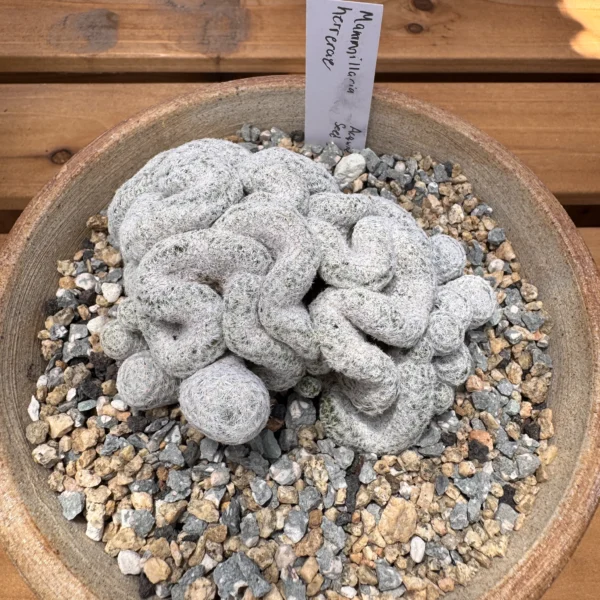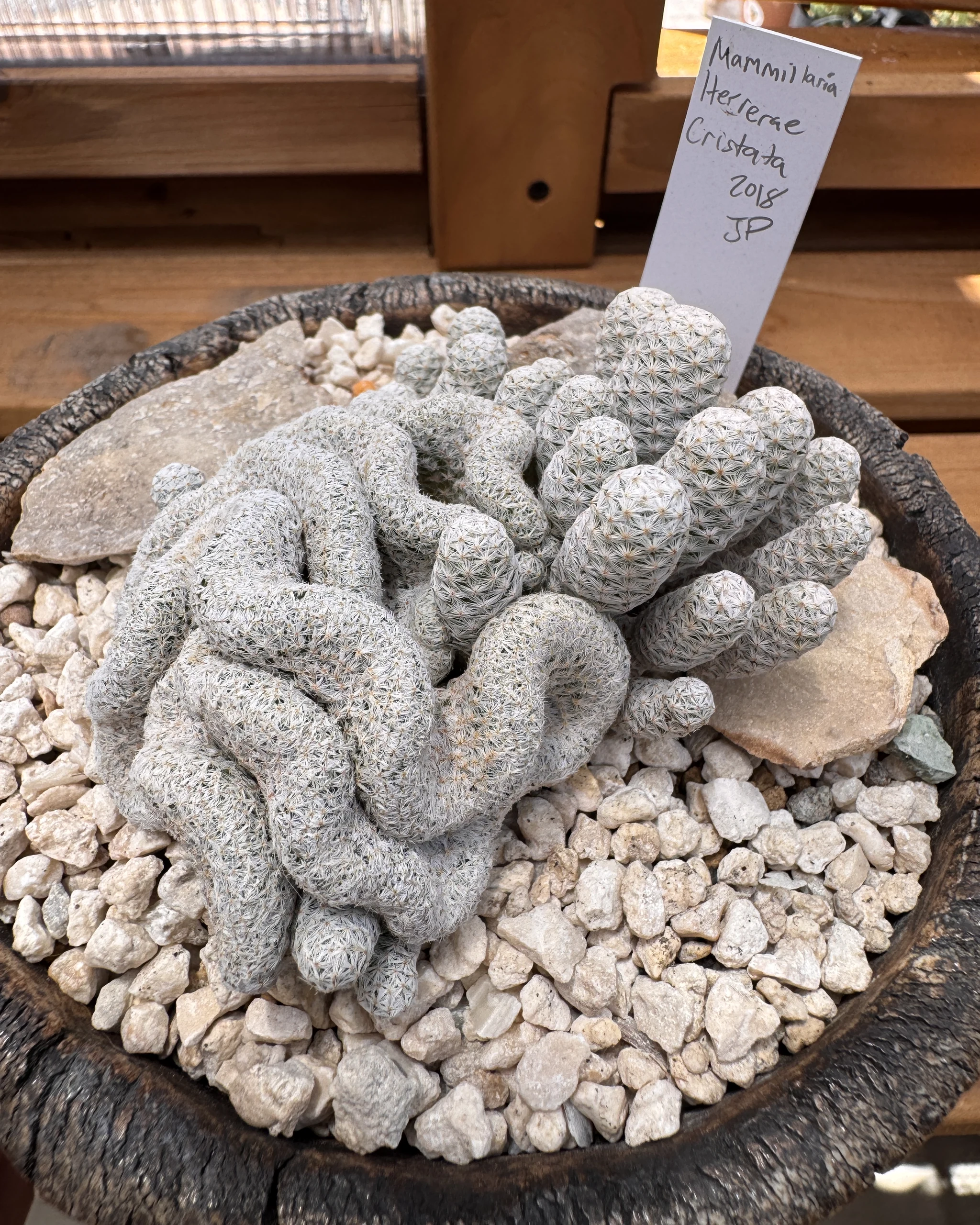
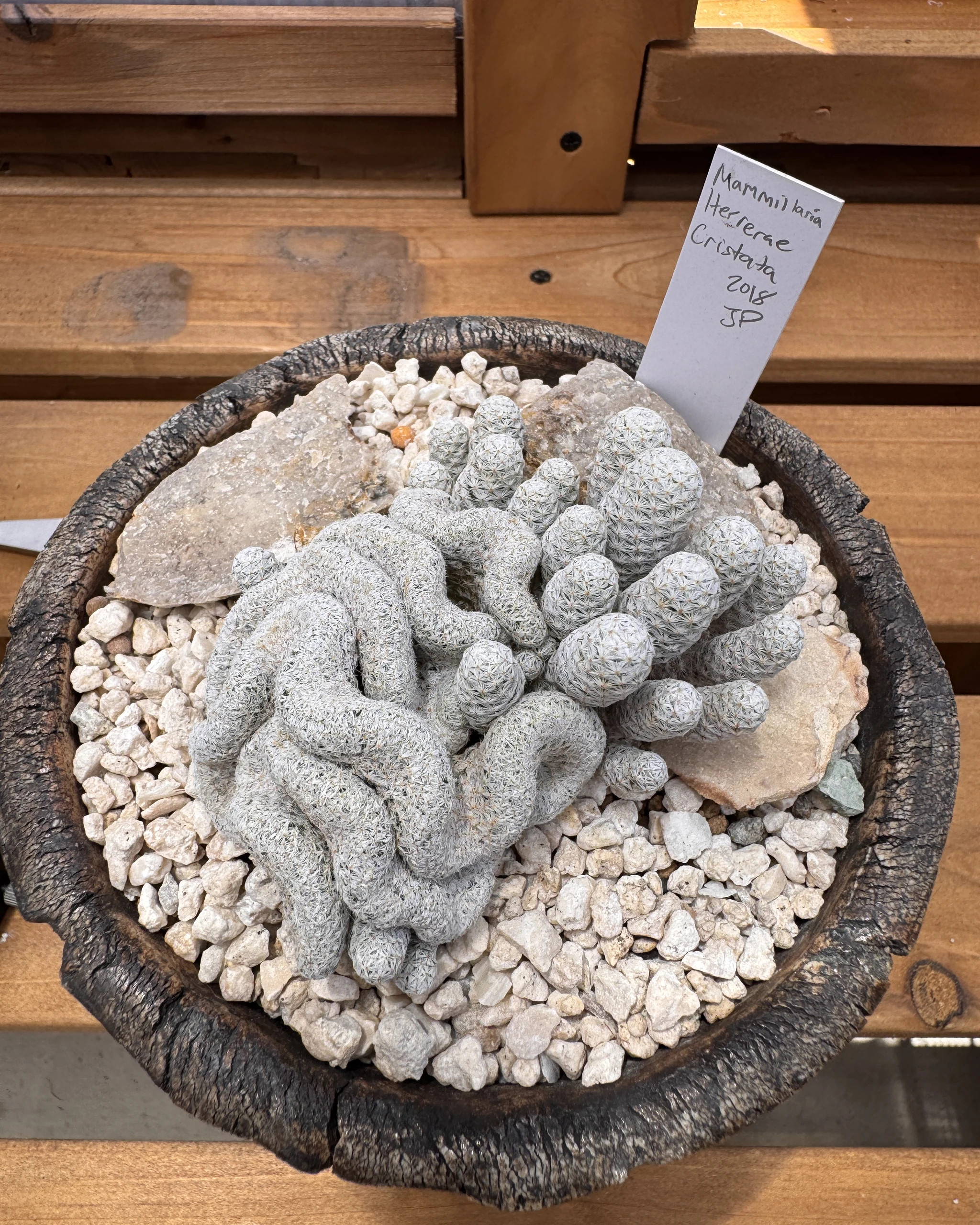
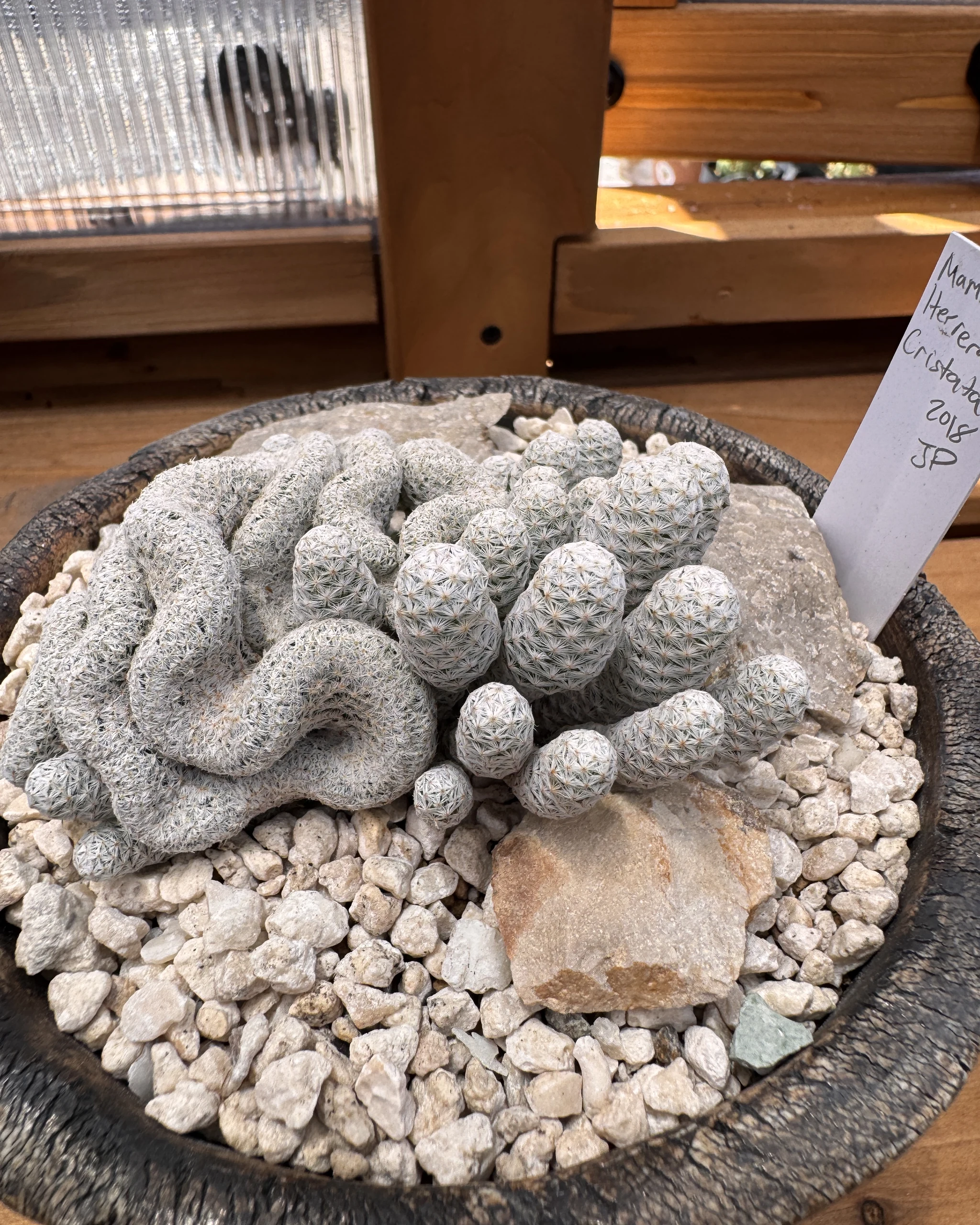
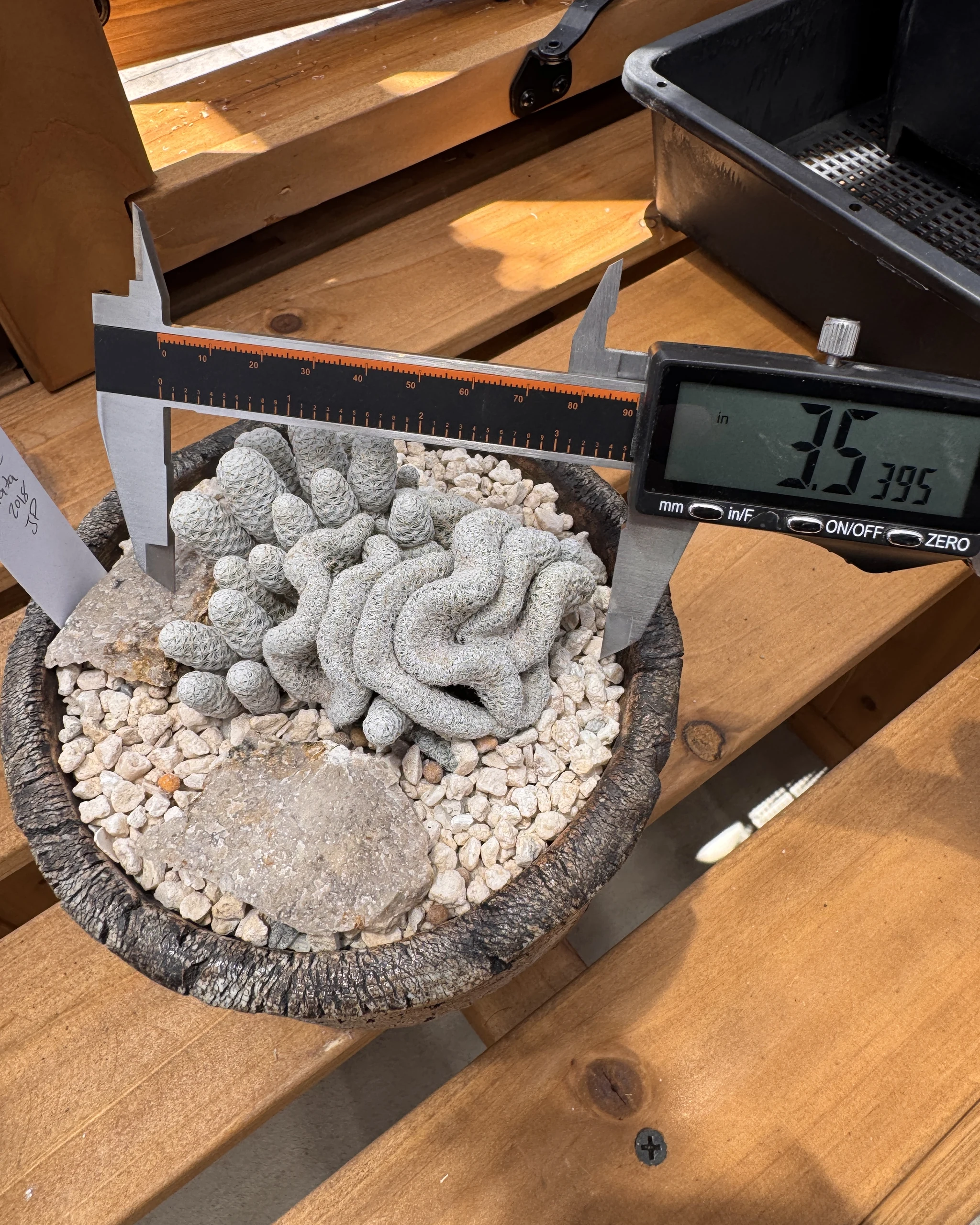
Mammillaria herrerae cristata (Specimen A)
$370.00
- Plant: Mammillaria herrerae cristata (Specimen A)
- Cultivation: seed grown, with a strong root system
- Size: about 3.5 in (8.9 cm) across
- Listing: one-of-a-kind, the exact plant in the photographs, imported from Japan
- Grown: cultivated in our greenhouse
Hurry, only 1 item left in stock!
This specimen is one of a kind. The photos show the exact plant you'll receive.
Description
Type: Seed grown · Size: about 3.5 in (8.9 cm) across · One-of-a-kind specimen, imported from Japan
Mammillaria herrerae cristata is the fasciated, fan-forming version of the white golf ball cactus, and the plant in these photographs, about 3.5 in across, is the exact one you will receive. At rarecactus.com we raise our Mammillaria from seed on a hard, mineral-lean regime, and this crest came in from Japan, where growers have led the world in oddity and crested cacti for generations. It has piled up into a knot of twisting coral-like fans set among a few normal columnar heads, the whole thing sheathed in the fine white spines that give the species its name.
What makes this Mammillaria herrerae cristata special
A normal plant of the species is a single small ball carrying well over a hundred fine, comb-like white radial spines per areole and not one central spine, so the body disappears beneath a soft white fleece. A crest is what you get when that one growing point fasciates, stretching from a dot into a line so the plant builds in waves and folds instead of a sphere. Because the mutation is unique to the individual, every crested plant grows into a different shape, and a dense, well-proportioned crest like this one is far harder to come by than a normal head. The straight species is documented at Kew, where the accepted botany for Mammillaria herrerae is held, and we cover it in full on our Mammillaria herrerae specimen page.
In the wild the species holds on in a single small area of Querétaro in central Mexico, on open limestone, and the IUCN lists it as critically endangered after illegal collecting stripped the habitat over decades. A nursery-raised crest like this one carries none of that cost.
How we grow it
We keep this Mammillaria herrerae cristata in a sharply draining mineral mix heavy on pumice and grit, in a small pot that dries fast, under bright light with steady airflow and a screen over the harshest summer midday sun. The thick white spine coat traps moisture against the body, so the species rots easily, and the single rule that matters is to water only after the mix has dried out completely in the warm months and to keep it bone dry all winter. A crest folds far more surface into the same space than a round head does, so it traps even more water in its valleys; airflow and a dry winter rest matter more here than on almost any other plant we grow. Treated lean it stays hard, tight and snow white. Our full Mammillaria care guide sets out the substrate, the watering rhythm and the winter rest.
Flowering and growth
Settled and well lit, the plant opens its small pink to red-violet flowers in spring, scattered along the ridge of the crest rather than ringing a single crown. Growth is slow and, on a crest, completely unpredictable: the fans thicken and curl tighter each year, and now and then a fold reverts to a normal head, which is simply trimmed off to keep the crest in charge. A specimen already this size and this densely folded has years of careful growing behind it. Bright light and a dry, lean hand are what hold the spines white and the body firm instead of soft and drawn.
When your plant arrives
Your specimen ships seed grown and already well rooted, packed dry for transit. On arrival, settle it into a sharply draining mineral mix, give it bright indirect sun, and hold off water for a full 14 days while it settles in before the first careful soak. After that, water only on the soak-and-fully-dry cycle through the growing season and keep it dry and above freezing in winter. The spine coat is slow to dry, so lean toward dryness, keep the air moving, and never let water stand in the folds of the crest overnight.
Choosing this plant
The crests worth keeping show dense, even fanning, a clean white spine coat with no scarring or rot caught in the folds, and a balanced outline that is not collapsing back into single heads, all of which this plant shows in the photographs. Since you receive the exact specimen pictured, nothing about its shape or spination is left to chance. Every Mammillaria in our greenhouse is seed grown, with a strong root system, and never taken from the wild.
Provenance and legality
This crest was imported from Japan and is seed grown, with no wild collection at any point. The genus is listed on CITES Appendix II, so artificially propagated plants like this are the lawful way to own one, and given how little of the wild population remains it is also the only responsible one. Browse the rest of the genus on our Mammillaria encyclopedia hub.
One plant, one set of photographs. The 3.5 in crested specimen shown is the exact plant that ships, seed grown, well rooted and packed dry for safe travel.
Shipping & Returns
Shipping
Flat $15 shipping anywhere in the United States, for one plant or several. Orders ship within 1 to 3 business days and usually arrive 2 to 5 business days later. Every plant is packed by hand to travel safely.
Returns
Each specimen is a living, one of a kind plant, so all sales are final and we do not accept returns or exchanges. If a plant arrives dead, take clear photos of the plant and the packaging within a couple of days of delivery and email brian@rarecactus.com. If anything else about your order is not right, tell us and we will help where we can.