
Aztekium ritteri var. rotundum VM 1079
Lot AZTE-RIT-02 5 available, sold individually
$235.00
- Plant: Aztekium ritteri var. rotundum
- Cultivation: seed grown, with a strong root system
- Size: about 0.5 in (1.3 cm) across
- Field data: VM 1079
- Listing: one plant from the batch pictured, sold individually
- Grown: cultivated in our greenhouse
In stock
The photos show a representative plant from this batch. Yours matches it in size and character.
- Flat $12 shipping anywhere in the United States, for one plant or several.
- Ships within 1 to 3 business days and usually arrives 2 to 5 business days later.
- All sales are final. If a plant arrives dead, email photos of the plant and packaging within a couple of days. Shipping and returns
- 237 plants sold
- Grown in Orange County, California
- Artificially propagated, never wild-collected
Description
Type: Seed grown · Field number: VM 1079 · Size: about 0.5 in (1.3 cm) across · 5 available, sold individually
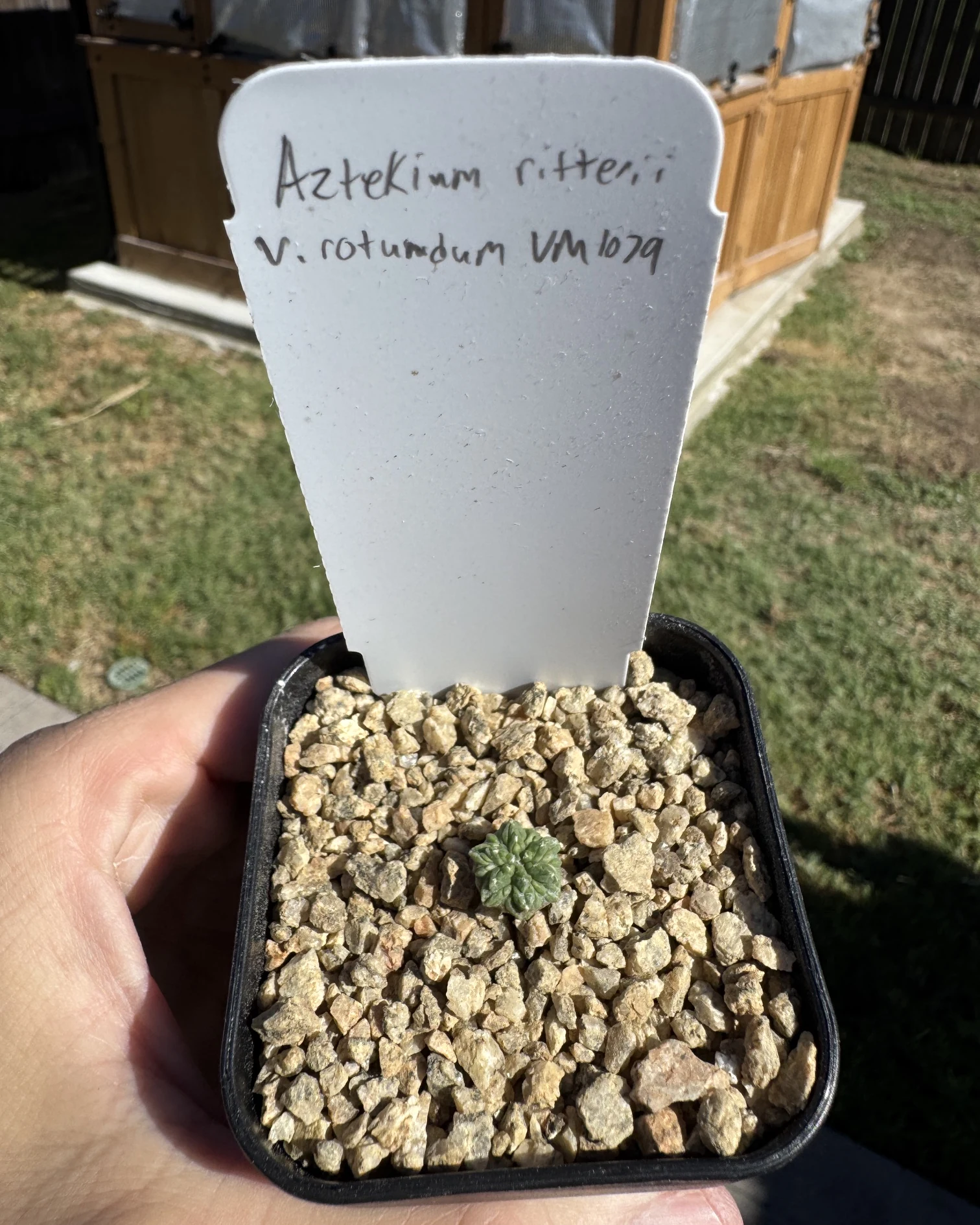
Aztekium ritteri rotundum VM 1079 is the carved-stone cactus of the Nuevo León cliffs with one thing our other Aztekium listing lacks: a collector’s field number that ties the line to a recorded wild locality. Five plants of about half an inch are for sale here, sold individually, and the photographs show representative plants from the batch. At rarecactus.com we raise our Aztekium from seed in our Orange County, California greenhouse, and this batch has grown on under the VM 1079 label you can read in the photograph of the potted plant.
What sets Aztekium ritteri rotundum VM 1079 apart
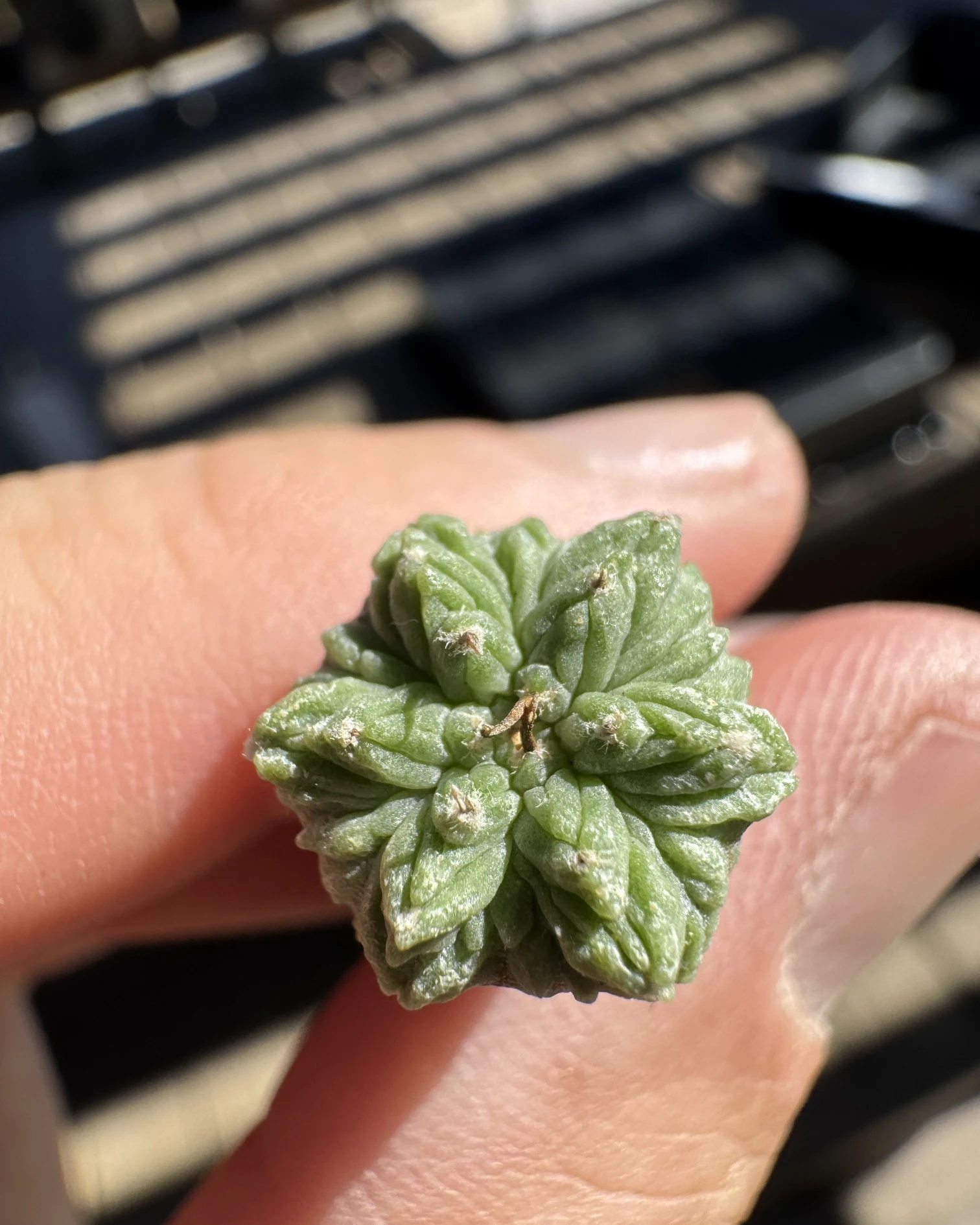
In habitat, Aztekium ritteri clings to near-vertical gypsum and limestone canyon walls, rooted in clay-filled crevices and shaded for most of the day. Its grey-green body is ribbed like a carving: the primary ribs are crossed by fine transverse wrinkles, and a second set of fold-like false ribs runs between them, the detail behind the Aztec name of the genus. The close-up shows a young crown at this stage, a tight star of folded ribs with small tufts of white wool at the areoles.
The name var. rotundum was published in 2019 by Libor Kunte and Jaroslav Šnicer in their monograph on the genus, which appeared in Czech as the first special issue of the journal Kaktusy. Kew does not treat it as a separate taxon: Plants of the World Online lists Aztekium ritteri var. rotundum as a synonym of Aztekium ritteri. Botanically, then, this is Aztekium ritteri. Collectors keep the rotundum name on their labels to follow the line, and so do we. Our Aztekium ritteri specimen page covers the species in depth.
Field data and provenance
VM 1079 is a collector’s field number. A number like this ties a seed line to one wild population at one recorded locality, which is how serious growers keep the natural variation of a species straight across generations in cultivation. Our other Aztekium ritteri listing has no field data; this batch was grown under the number, as the label in the photograph of the potted plant shows. You can browse collector numbers across the genera we grow in our Field Number Database.
The plants themselves are greenhouse raised from seed. Nothing here was taken from the wild.
How we grow it
We grow these in a small, deep pot of about 95 per cent mineral mix with a little limestone, in bright light kept off the harsh midday sun. From spring through summer they get water only once the mix is completely dry, which can take anywhere from ten days to three weeks depending on the heat. Watering tapers in autumn and stops entirely from November to February, with a winter minimum of 5°C. Every plant in the batch is seed grown, with a strong root system, and none has been grafted to push it faster.
Growth runs to about a millimetre a year. A half-inch plant represents years of patience.
Below the surface
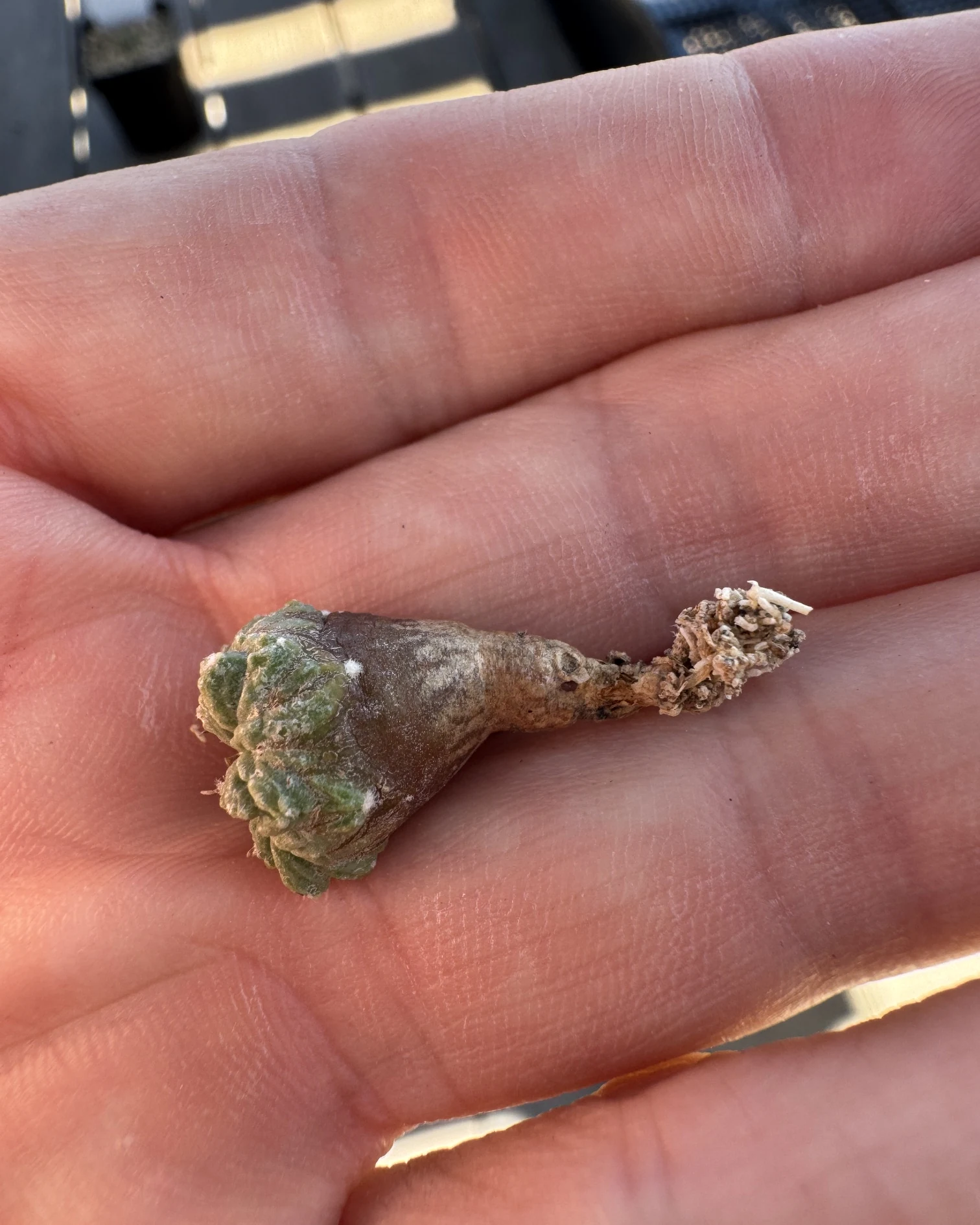
The third photograph shows a plant out of its pot. The green crown sits on a firm lower stem that narrows into a slim taproot, and the brown, bark-like skin there is the corking these plants form at the base. That taproot is why the species wants a deep pot rather than a wide one: it grows down, and the tiny root zone should never sit in wet mix.
Flowering
Aztekium ritteri flowers through summer from the woolly crown, with small white to pale pink blooms under a centimetre across. Plants usually need seven to ten years from seed to reach flowering size, so for now the show is the slow sharpening of the wrinkled ribs and a crown that grows a little woollier each year.
When your plant arrives
Your plant ships rooted and dry, in its pot with the surface held in place, inside a box far larger than the plant. When you move it into a pot of your own, choose a small, deep, narrow one and a lean mineral mix with a little limestone, set the plant in bright indirect light, and give no water for about fourteen days while it settles in. After that, follow the dry-between-soaks rhythm above, and keep it completely dry and frost-free through winter, when cold combined with wet roots does the real damage.
Provenance and legality
Aztekium ritteri is listed on CITES Appendix I and protected in Mexico under NOM-059. CITES governs international trade, so a plant shipped within the United States needs no permit, and artificially propagated stock like this batch is the lawful way to own one. We ship to US addresses only. The Aztekium care guide sets out the full year, and the Aztekium encyclopedia hub covers all three species.
Five Aztekium ritteri rotundum VM 1079 plants are offered, each about half an inch across, and you will receive one of comparable size and form.
Questions before you buy
What exactly arrives?
A plant from this batch, matching the one pictured in size and character. The lot line under the title shows how many remain, and the listing states the size.
How does it ship?
From our greenhouse in Orange County, California, within 1 to 3 business days, for a flat $12 anywhere in the United States. It usually arrives 2 to 5 business days later.
Is it legal to own?
Yes. Every plant we sell is artificially propagated, seed grown, with no wild collection at any stage. CITES rules apply to international trade, and we sell within the United States only, so no export permit is involved.
What if it arrives dead?
All sales are final, because each plant is a living one of a kind. If it arrives dead, take clear photos of the plant and the packaging within a couple of days of delivery and tell us. If anything else about the order is not right, say so and we will help where we can.
Growing Aztekium
Aztekium are cliff-dwelling miniatures and among the slowest cacti in cultivation. They want bright light without harsh midday sun, a lean mineral mix, careful summer watering and a winter kept completely dry.
- Sun exposure
- Bright, no midday sun
- Bright indirect light or morning sun, like the north-facing canyon walls they grow on. Shield plants from peak midday sun, which bleaches the tightly furrowed body.
- Watering
- Every 10–14 days
- Spring through summer, water thoroughly once the mix is completely dry, roughly every 10 to 14 days. Taper in autumn and give no water at all from November to February.
- Soil
- 95% mineral
- A 95 per cent mineral mix of pumice, granite grit, lava, zeolite, silica and limestone, with 5 per cent worm castings. On hard tap water, the limestone share can drop.
- Cold tolerance
- 5°C minimum, dry
- Hold a winter minimum of 5°C with the plant completely dry, and keep it at 10°C or warmer while it is actively growing. Wet cold kills.
- Container
- Small, deep, narrow
- A small, deep, narrow pot suits the taproot that follows rock crevices in habitat. Oversized pots hold wet mix around the tiny root zone and invite rot.
- Growth rate
- A millimetre a year
- Extremely slow. Aztekium ritteri gains about a millimetre a year from seed, and plants usually need seven to ten years to reach flowering size.
Shipping & Returns
Shipping
Flat $12 shipping anywhere in the United States, for one plant or several. Orders ship within 1 to 3 business days and usually arrive 2 to 5 business days later. Every plant is packed by hand to travel safely.
Returns
Every plant we sell is alive, so all sales are final and we do not accept returns or exchanges. If a plant arrives dead, take clear photos of the plant and the packaging within a couple of days of delivery and email support@rarecactus.com. If anything else about your order is not right, tell us and we will help where we can.
