
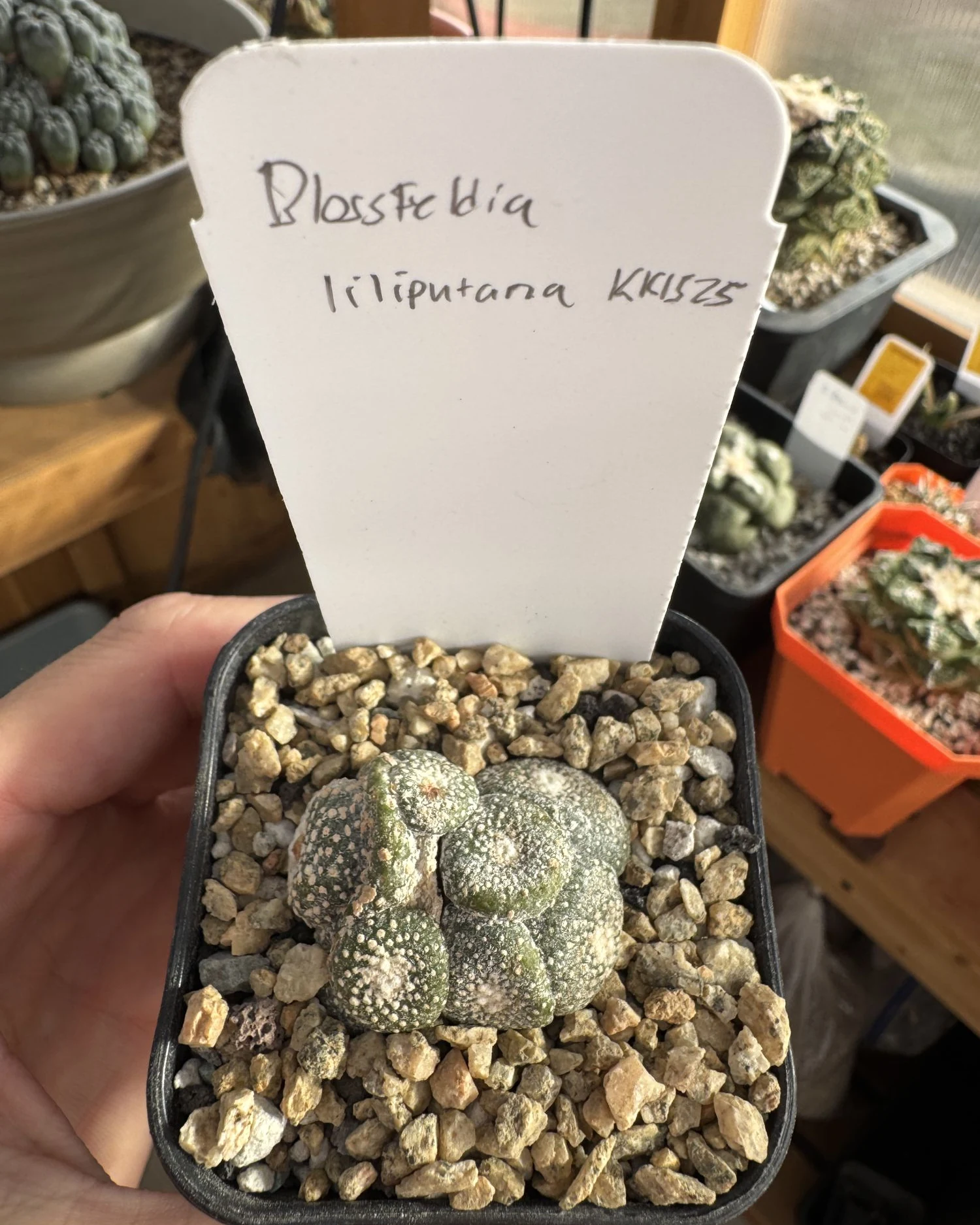
Blossfeldia liliputana KK 1525 Seed Grown
Lot BLOS-LILI-03 1 of 1 the exact plant pictured
$810.00
- Plant: Blossfeldia liliputana, the smallest cactus in the world
- Cultivation: seed grown, with a strong root system; never grafted
- Age: 24 years, sown in 2002
- Size: about 1.4 in (3.5 cm) across, a cluster of about eight heads
- Field data: KK 1525, Tomina, Bolivia, 2,200 m (Karel Kníže)
- Listing: one-of-a-kind, the exact plant in the photographs
- Grown: cultivated in our greenhouse
In stock
- Flat $12 shipping anywhere in the United States, for one plant or several.
- Ships within 1 to 3 business days and usually arrives 2 to 5 business days later.
- All sales are final. If a plant arrives dead, email photos of the plant and packaging within a couple of days. Shipping and returns
- 237 plants sold
- Grown in Orange County, California
- Artificially propagated, never wild-collected
Description
Type: Seed grown, never grafted · Sown: 2002 · Size: about 1.4 in (3.5 cm) across · Field data: KK 1525, Tomina, Bolivia
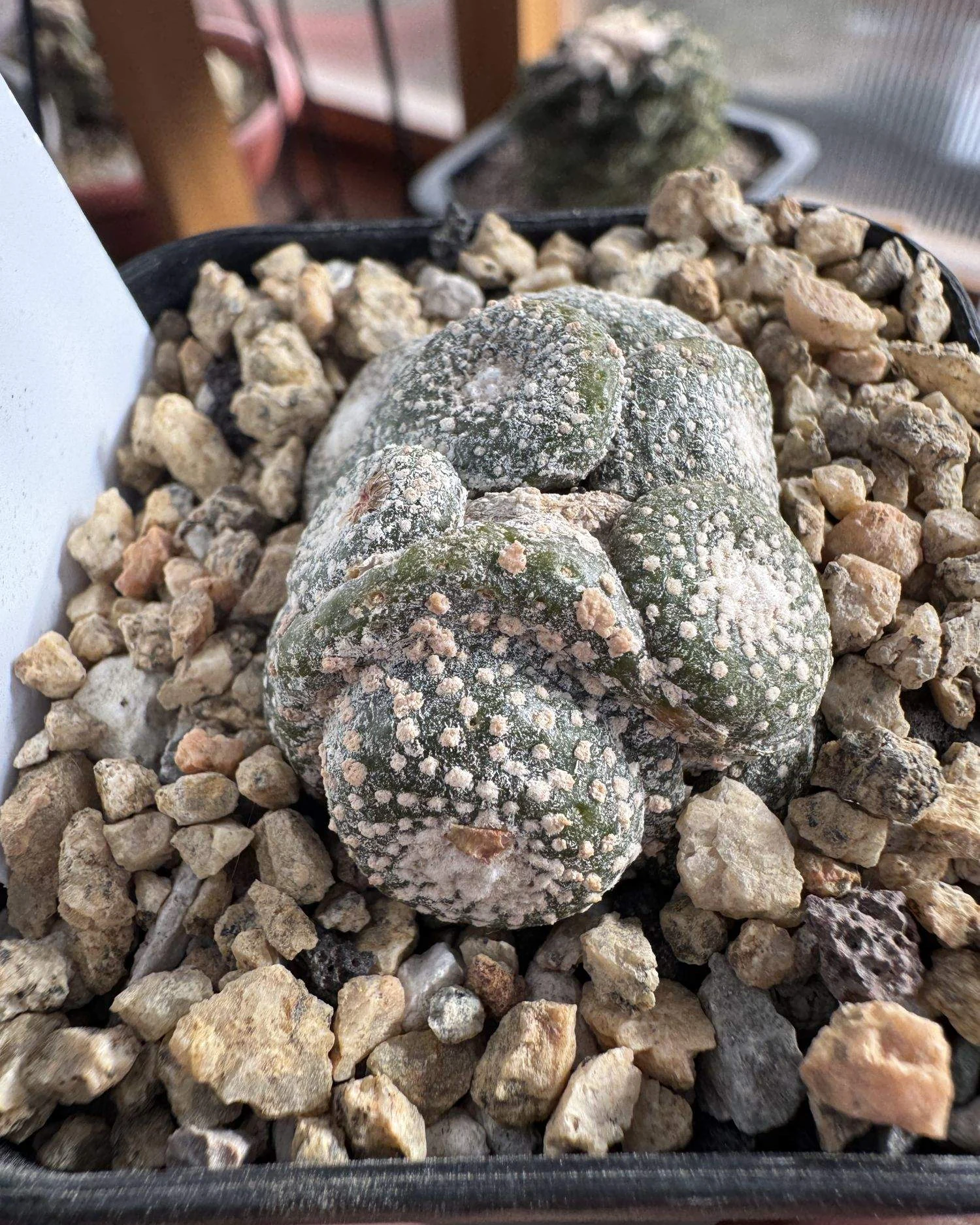
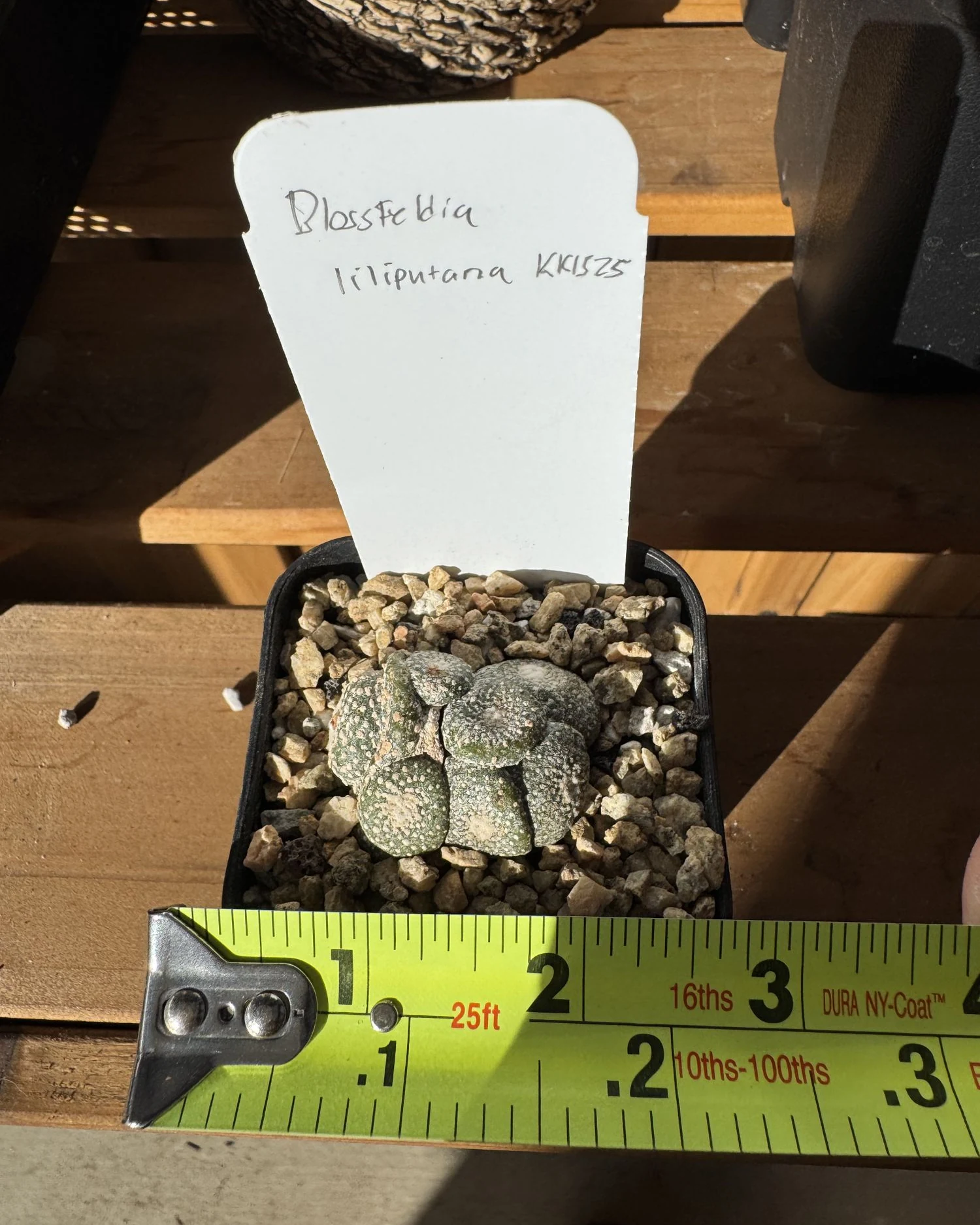
Blossfeldia liliputana KK 1525 is for sale here as a single plant: a 24 year old cluster of the smallest cactus in the world, sown in 2002, never grafted, and still carrying the field number of the wild population its seed line came from. The plant in the photographs, tag and all, is the exact one you will receive.
At rarecactus.com we grow our Blossfeldia from seed in our Orange County, California greenhouse and never graft them. With this species that is the slow road by a wide margin. Most Blossfeldia in cultivation has spent at least part of its life on a Pereskiopsis or Echinopsis rootstock, because seedlings the size of a pinhead are hard to keep alive ungrafted. A plant that has stayed ungrafted for more than two decades, with its locality still attached, rarely comes up for sale.
What makes Blossfeldia liliputana KK 1525 different
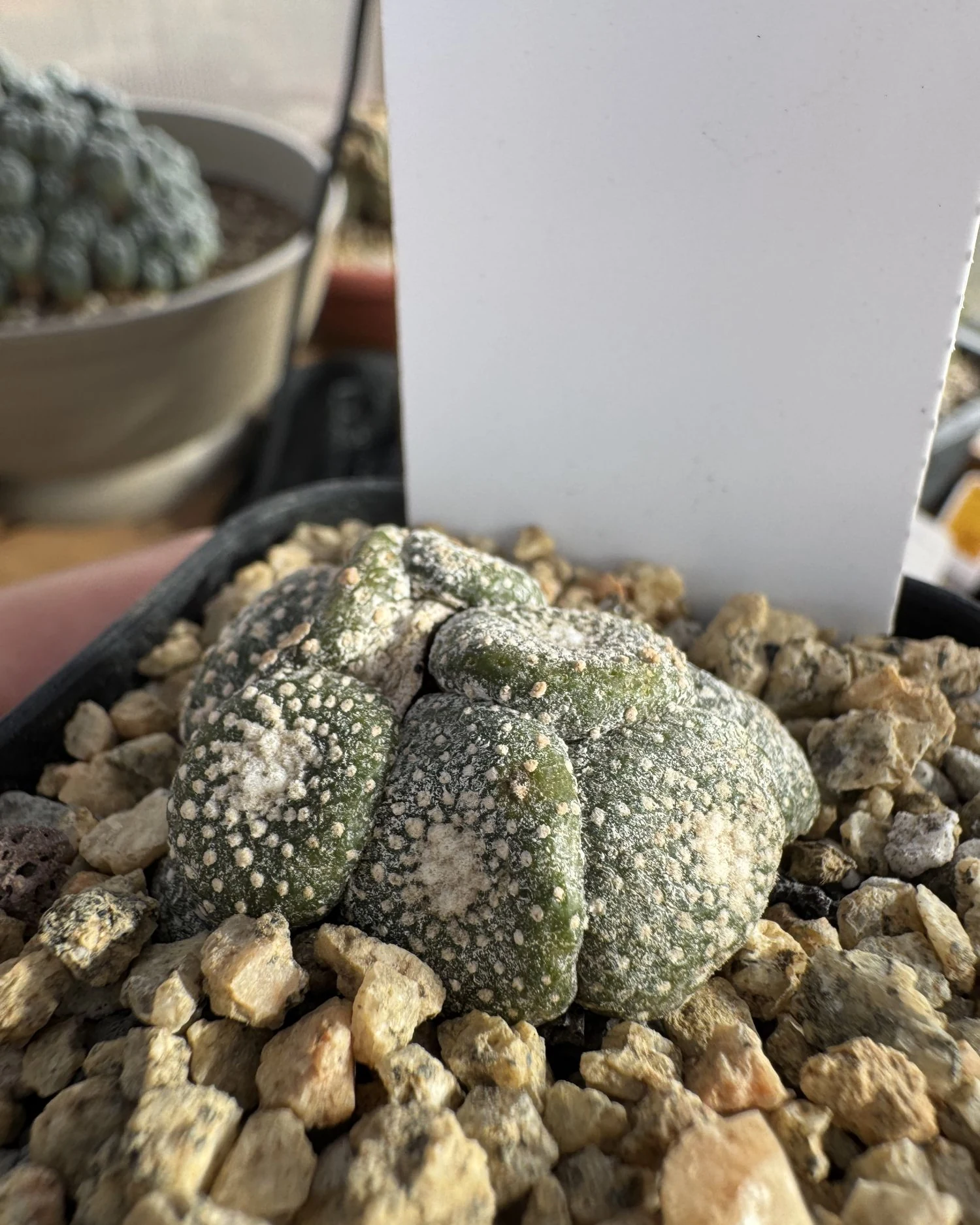
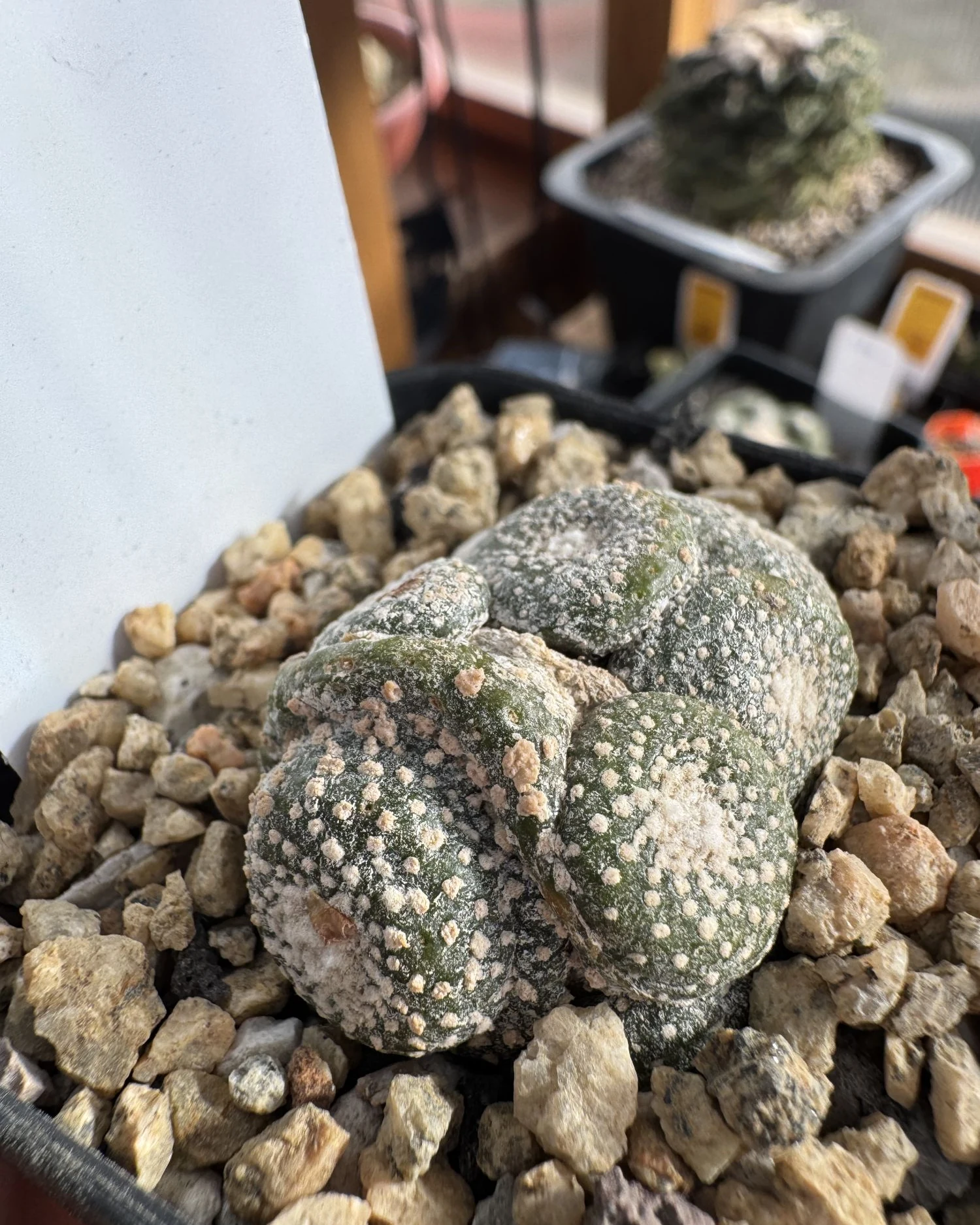
A single head of Blossfeldia liliputana stops at about 10 to 12 mm: a flat, grey-green disc with no ribs, no tubercles and no spines, its areoles reduced to tiny tufts of wool set in a spiral. This plant has built about eight of those heads into one tight clump. The close view from above shows the detail collectors look for, every head peppered with cream wool dots and a whiter tuft at each growing point. Where the oldest heads meet at the centre, the skin has turned pale and corky, which is how age shows on a plant this small.
The species is a physiological oddity as well as a small one. It carries about 0.6 stomata per square millimetre, the lowest density recorded for any vascular land plant, and in habitat it can dry down by up to 80 per cent of its weight and revive when moisture returns, more like a moss than a cactus. Kew accepts a single species, Blossfeldia liliputana, and treats the other names published in the genus as synonyms. Our Blossfeldia liliputana species page covers the plant in depth, and the Blossfeldia genus hub explains where it sits in the cactus family.
Field data: KK 1525, Tomina, Bolivia
KK 1525 is a field number of the Czech nurseryman and collector Karel Kníže, who supplied European growers with seed from his South American trips from the 1960s onward. The number records a population at Tomina, in the Chuquisaca department of southern Bolivia, at about 2,200 m. Kníže listed it as Blossfeldia tominense, and it also circulates as B. liliputana var. tominensis. Botanically it is Blossfeldia liliputana; the old name tells you where the line came from.
That number is what separates this plant from the anonymous Blossfeldia in the trade. It ties the seed line to one wild population at one recorded place, so plants from Tomina can be kept apart from those of Jujuy or Tarija. You can browse Kníže’s KK numbers, and those of the other collectors behind our plants, in our Field Number Database.
How we grow it
We keep Blossfeldia in a small pot of fine, extremely free-draining mix: pumice, lava, zeolite, granite grit and silica, with about 10 per cent worm castings and no limestone, top-dressed with granite grit so the heads sit dry. It gets shade and steady airflow rather than the hard direct sun a globular cactus takes. Water goes on sparingly through the warm months, only once the mix is completely dry and never onto the body in sun, and stops for a dry winter rest between 5 and 15°C.
This plant is seed grown, with a strong root system, and has never sat on a rootstock. Grafted Blossfeldia swells fast and loses the flat, tight habit of the species; seed grown plants keep it, and at this pace a clump of eight heads is many years of growth.
Flowering
Flowers open at or near the apex of a head, white and rarely pink, 6 to 15 mm long, and a single flower can be as wide as the head that carries it. At 24 years this cluster is old enough to flower. For most of the year the show is the dotted, spineless heads themselves.
When your plant arrives
Your Blossfeldia liliputana KK 1525 ships well rooted and dry, in its pot, packed so the heads cannot rub. When you pot it up, choose a small pot with sharp drainage and a fine mineral mix, set it in bright indirect light out of harsh direct sun, and give no water for about 14 days while it settles in. After that, follow the sparing, fully-dry-between-waterings routine above, and keep it dry and above 5°C through winter.
Provenance and legality
Blossfeldia sits on CITES Appendix II through the family-wide listing of the Cactaceae. CITES governs international trade, so a plant shipped within the United States needs no permit, and artificially propagated, seed grown stock like this is the lawful way to own one. We ship to US addresses only.
One Blossfeldia liliputana KK 1525 is offered: the 24 year old cluster in the photographs, about 1.4 in across against the tape measure.
Questions before you buy
What exactly arrives?
This plant. One-of-a-kind listings show the exact plant and sell once; the lot number under the title is its record, and the listing states its measured size.
How does it ship?
From our greenhouse in Orange County, California, within 1 to 3 business days, for a flat $12 anywhere in the United States. It usually arrives 2 to 5 business days later.
Is it legal to own?
Yes. Every plant we sell is artificially propagated, seed grown, with no wild collection at any stage. CITES rules apply to international trade, and we sell within the United States only, so no export permit is involved.
What if it arrives dead?
All sales are final, because each plant is a living one of a kind. If it arrives dead, take clear photos of the plant and the packaging within a couple of days of delivery and tell us. If anything else about the order is not right, say so and we will help where we can.
Growing Blossfeldia
Blossfeldia is an Andean cliff-crevice cactus that wants some shade with good airflow, a lean, fast-draining mineral mix, sparing summer water and a cool, bone-dry winter kept above 5°C.
- Sun exposure
- Some shade, moving air
- Some shade and plenty of moving air. The common advice of bright direct light close to a window misreads the crevice habitat and will cook the plant.
- Watering
- Sparingly, warm months
- Water sparingly through the warm months while the plant is growing, never onto the body in direct sun. Keep it bone dry through winter.
- Soil
- 90% mineral, fine
- A 90 per cent mineral mix, fine and extremely free draining: pumice, granite grit, silica, lava and zeolite, with 10 per cent low-nutrient organic matter and no limestone.
- Cold tolerance
- Dry rest at 5–15°C
- Rest it dry at 5 to 15°C in winter and never below 5°C. Reports of survival far colder describe bone-dry plants, not a care target.
- Container
- Small, sharp drainage
- A small pot, deep enough for roots several times the volume of the body. Sharp drainage at the neck, where this plant dies, matters more than width.
- Growth rate
- Extremely slow
- Extremely slow. Seedlings need two to five years before they can take normal watering, and longer still to flower; most cultivated plants are grafted for that reason.
Shipping & Returns
Shipping
Flat $12 shipping anywhere in the United States, for one plant or several. Orders ship within 1 to 3 business days and usually arrive 2 to 5 business days later. Every plant is packed by hand to travel safely.
Returns
Every plant we sell is alive, so all sales are final and we do not accept returns or exchanges. If a plant arrives dead, take clear photos of the plant and the packaging within a couple of days of delivery and email support@rarecactus.com. If anything else about your order is not right, tell us and we will help where we can.
