The Best Cactus and Succulent Collections to Visit in the United States
All ArticlesThe Huntington Library cactus garden in San Marino, California is the best US destination for rare-cactus collectors, with 5,000+ species across 10 acres and CITES Appendix I material under glass in the 1985 Conservatory. Seven more US institutions round out a national tour, from Phoenix’s Desert Botanical Garden to family-run Moorten in Palm Springs.
What makes a US cactus garden worth a weekend trip?
Three things separate a destination collection from a city botanical garden with a small cactus bed. Curated provenance, climate-controlled conservatory holdings, and bloom-season timing.
The first is what serious collectors travel for. The Huntington Desert Garden Conservatory holds CITES Appendix I material (Ariocarpus, Aztekium, Pelecyphora) that you cannot legally photograph in habitat without a research permit. The Wallace Desert Gardens at Boyce Thompson hold 5,000+ specimens from a former private collection. Lotusland’s cactus garden was redesigned by Eric Nagelmann in 2004 and reads as architecture.
The second is what protects the rare stuff. Almost every cactus on this list that you would actually fly to see lives under glass. Outdoor displays drive volume and bloom-season visits, but the conservatory rooms are where the genus-level rarities sit.
The third is timing. Sonoran outdoor bloom peaks mid-March to mid-April for genus diversity, late May to early June for saguaro. California Mediterranean gardens (Huntington, Moorten, Lotusland) hit peak March through May. The east coast option (US Botanic Garden, DC) is climate-controlled and works year-round.
This list is ordered by collector value. Each entry includes the address, current admission, and reservation requirements so you can plan an actual visit.
1. The Huntington Library Cactus Garden, San Marino, California
10-acre outdoor garden + Desert Garden Conservatory, founded 1907
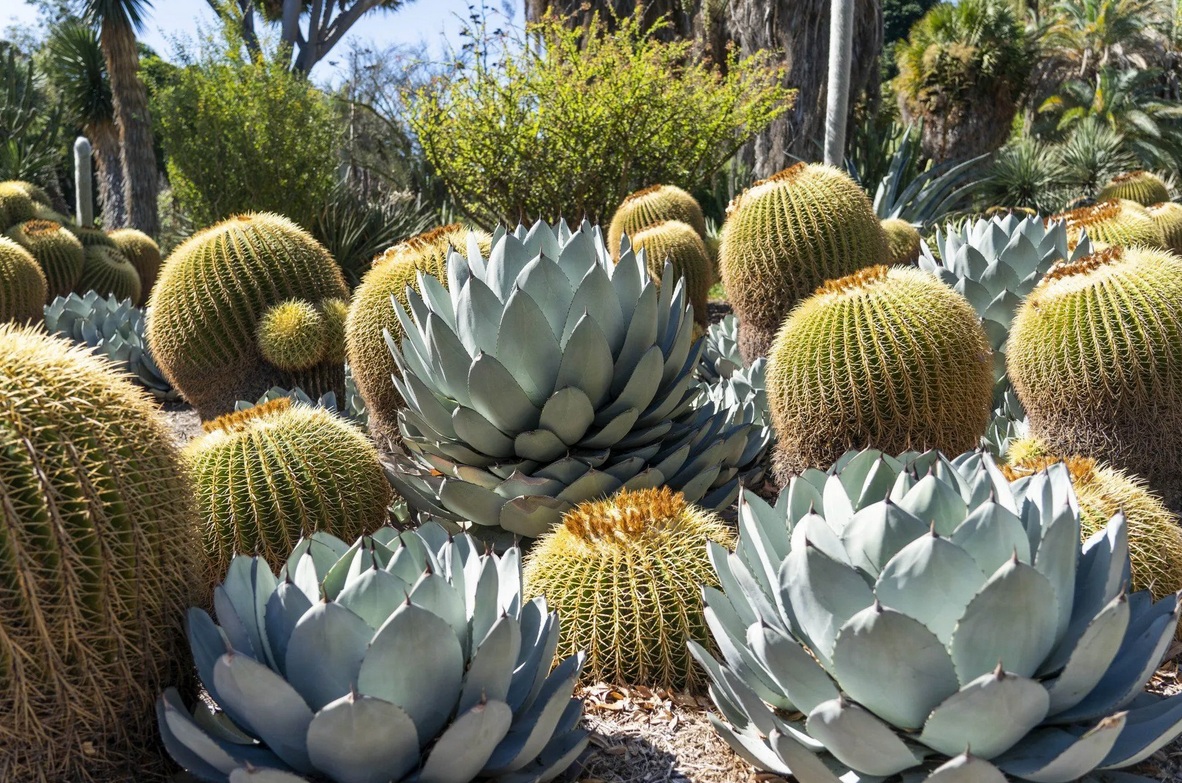
The Huntington Desert Garden is the lead destination. William Hertrich began planting in 1907 on what was then a barren slope of Henry Huntington’s San Marino estate. The outdoor garden now covers 10 acres and roughly 5,000 species. The famous golden barrel cactus (Echinocactus grusonii) bay holds about 500 specimens, with the oldest plantings dating to roughly 1940.
The 1985 Desert Garden Conservatory is what most collectors come for. It holds 2,200 accessions across 1,261 species, drawn from 246 genera and 43 plant families. Ariocarpus, Aztekium, Pelecyphora aselliformis, and other CITES Appendix I taxa sit in glass-fronted cases. None of these plants are legally photographable in habitat without a research permit. The conservation context for some of them is covered in our peyote conservation piece; seeing them in person here is the point of the visit.
The Huntington also runs the International Succulent Introductions program, founded 1958. ISI distributes roughly 30 ethically propagated taxa per year by mail-order catalog. It is the only succulent-exclusive plant introduction program operating from any botanic garden in the world. Many of the rare specimens in serious collections globally originated as ISI distributions.
2. Desert Botanical Garden, Phoenix, Arizona
140 acres, founded 1937 / Papago Park site 1939, 50,000+ plants
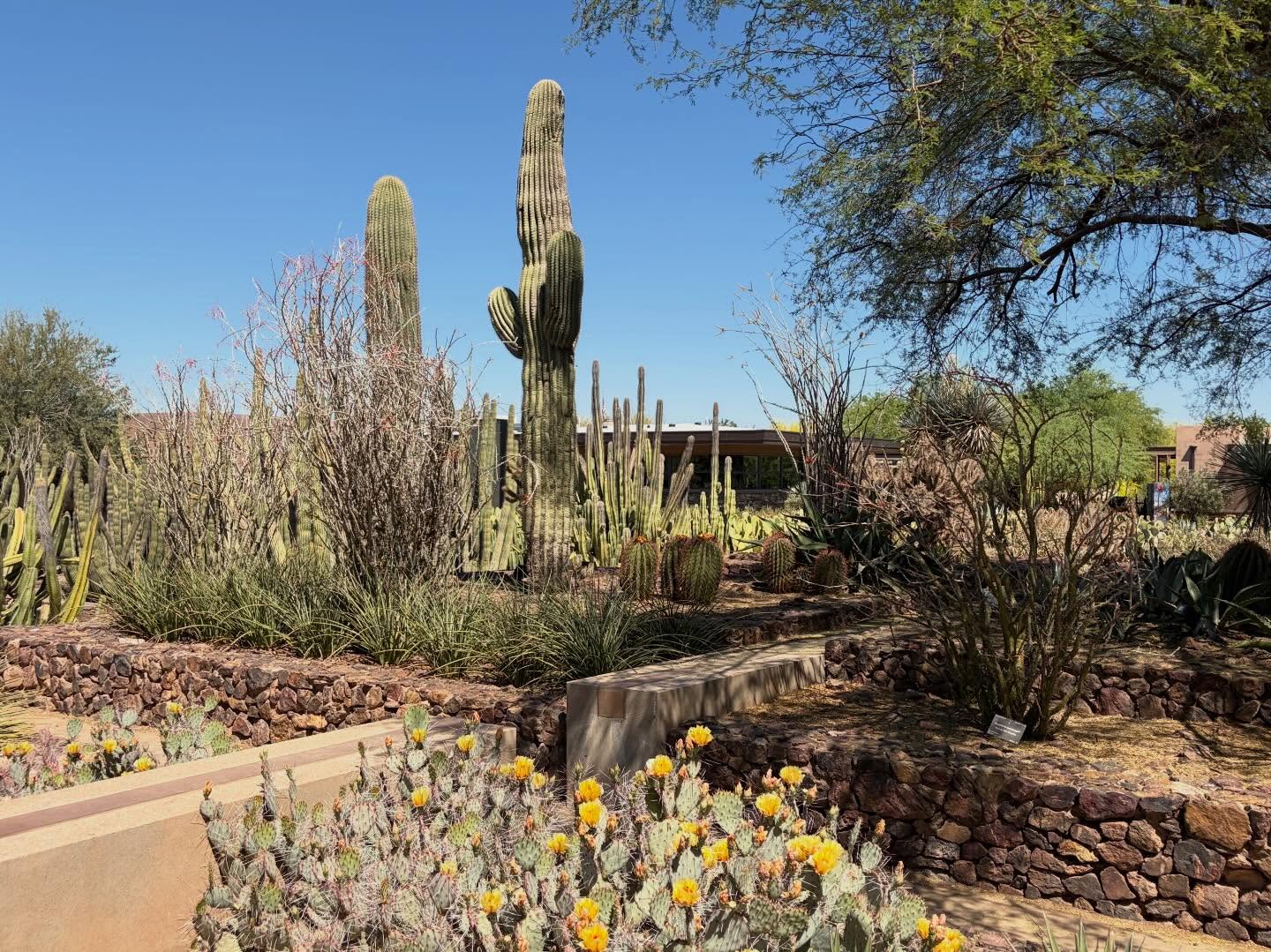
Founded 1937 by the Arizona Cactus and Native Flora Society, established at the Papago Park site in 1939. 140 acres, 50,000-plus plants, 4,300-plus taxa. The cactus collection alone is 13,973 plants in 1,320 taxa, the deepest single-institution Cactaceae holding in North America. Saguaros, Ferocactus, Mammillaria, Cereus, and the Boojum Tree (Fouquieria columnaris) anchor the outdoor displays.
The Judith Kimerling Lehmann Cactus and Succulent Gallery is the under-glass anchor. It is the largest single-roof Cactaceae display in North America. The Desert Wildflower Trail in late March puts blooming Ferocactus, Echinocereus, and Mammillaria side by side outdoors, which makes DBG the easiest place in the country to photograph living references for genera you grow at home.
3. Boyce Thompson Arboretum, Superior, Arizona
392 acres, founded 1924, ~3,900 desert plant species
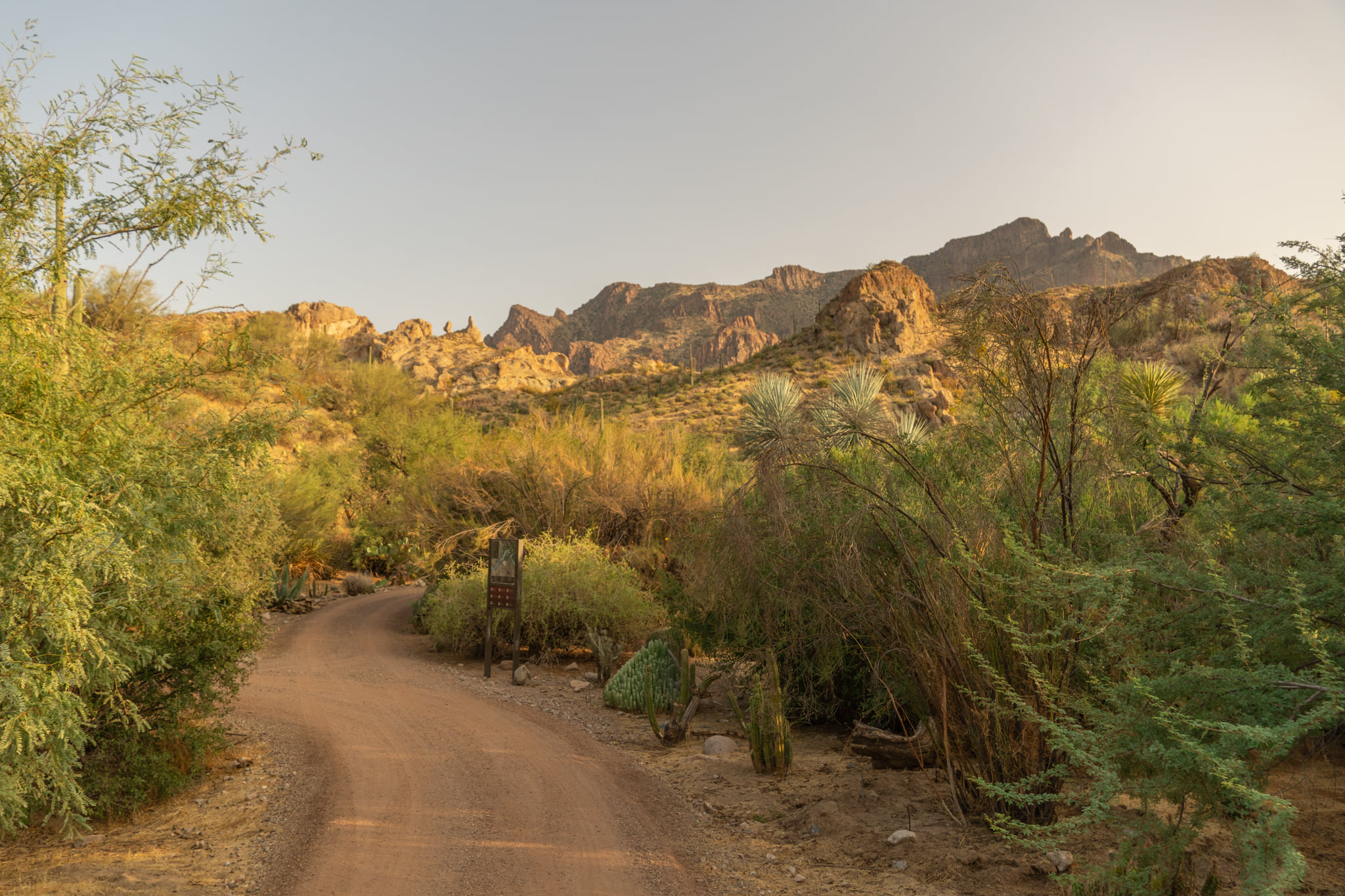
Founded 1924 by mining magnate William Boyce Thompson, the oldest botanical garden in Arizona. 392 acres, three miles of trails, roughly 3,900 desert plant species.
The marquee draw is the Wallace Desert Gardens. Boyce Thompson acquired the H.B. Wallace Scottsdale collection between 2014 and 2017 and incorporated 5,000-plus new plantings into a 13-acre garden with 1.5 miles of trails. Wallace was a private collector for decades. Walking through the garden is the closest a public US institution gets to a serious private collector’s plot at full mature scale.
4. United States Botanic Garden, Washington, DC
Free admission, year-round climate-controlled, federal collection
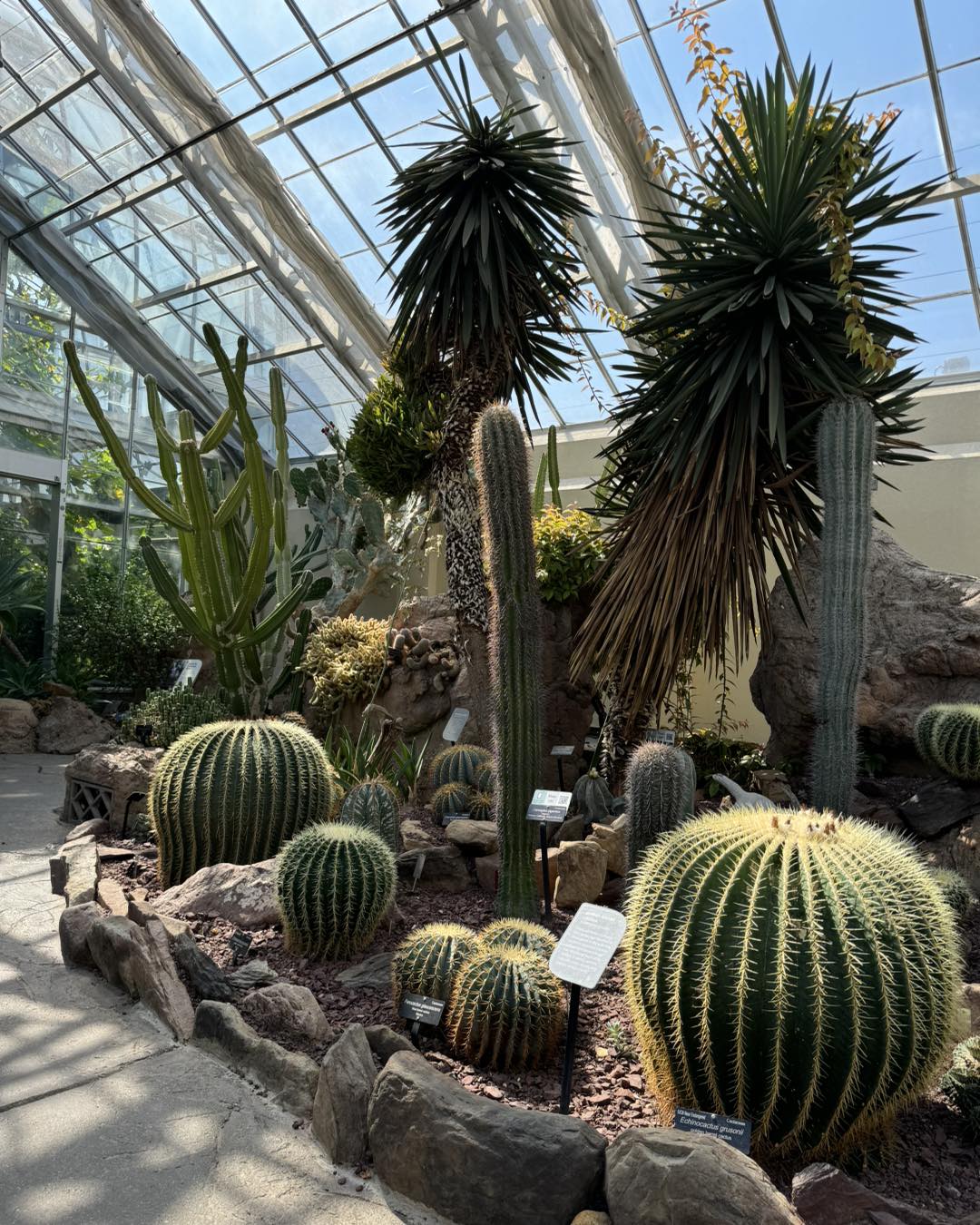
The federal cactus collection. Free admission, no tickets. Sits at the foot of the US Capitol, reachable by Metro.
The World Deserts room in the conservatory holds cacti, succulents, and other arid-zone plants under glass. The collection is smaller than Huntington or DBG but it is the only major federally-operated cactus display on the East Coast and the only entry on this list at zero cost.
5. Tucson Botanical Gardens, Tucson, Arizona
5.5 acres, 20 specialty gardens, founded 1968
Bernice Porter donated her home and gardens to Tucson in 1968; the site was previously the Porter family’s Desert Gardens Nursery from 1931. 5.5 acres, 20 specialty gardens including the Cactus and Succulent Garden.
Smaller and more domestic-feeling than DBG Phoenix or Boyce Thompson. The Porter-era plantings give the cactus garden the texture of a long-tenured private collection rather than a curated museum. Worth combining with the Arizona-Sonora Desert Museum for a full-day Tucson loop.
6. Moorten Botanical Garden, Palm Springs, California
1 acre, family-run since 1938, 3,000+ specimens
Family-run since 1938 by Chester “Cactus Slim” Moorten and Patricia Moorten, currently by their son Clark Moorten. About one acre, 3,000-plus specimens grouped geographically (Arizona, Baja, California, Colorado Desert, Mojave, Sonoran, South Africa, arid South America, Texas).
The Moortens coined the term “Cactarium” for the world’s first cactus greenhouse open to the public. The greenhouse holds rarities not on the open lot. Provenance is family collecting trips through Baja and Mexico to Guatemala. This is the closest a public US garden gets to walking through a private serious-collector’s plot.
7. Arizona-Sonora Desert Museum, Tucson, Arizona
21 acres, 16 desert botanical gardens, zoo + plants + natural history
Combined zoo, botanical garden, natural history museum, and art gallery on 21 acres with 2 miles of walking paths and 16 individual desert botanical gardens. 1,200 plant varieties plus 230 animal species.
Different value proposition from a pure botanical garden. You see Sonoran cacti in the same trip as native pollinators, hummingbirds, and lesser long-nosed bats. The framing is ecology, not horticulture, which is the missing context for collectors who only know plants out of habitat.
8. Ganna Walska Lotusland, Montecito, California
37 acres, opened to public 1993, reservation-only
Polish opera singer Ganna Walska bought the Montecito estate in 1941 and spent forty years building the gardens. Opened to the public 1993. 37 acres total.
The Cactus Garden, originally designed by Merritt Dunlap in 1929 and redesigned by Eric Nagelmann in 2004, contains 500-plus columnar cacti representing roughly 300 species in geographically organized groupings. The Aloe Garden holds 160 species. The Euphorbia collection is 85 species. This is the only entry on this list where the cactus garden itself is a designed art piece. Landscape architects study Nagelmann’s redesign.
When is the best season to visit a US cactus garden?
A regional cheat sheet:
- Sonoran outdoor bloom (DBG Phoenix, Boyce Thompson, Tucson Botanical, Arizona-Sonora Desert Museum): mid-March to mid-April for diversity; late May to early June for saguaro flower.
- California Mediterranean (Huntington, Moorten, Lotusland): March through May.
- Year-round, climate-controlled (USBG Washington DC): any time.
If you can plan one trip per year, late March anywhere on the Sonoran is the highest-yield window.
How should you plan a multi-garden cactus trip?
Two natural loops.
Southern California in three to four days. Start at the Huntington (full day), Moorten (half day), then north to Lotusland (book 6 weeks ahead, half day). The drive between San Marino and Palm Springs is 2 hours; Palm Springs to Montecito is 4 hours via the coast.
Arizona in four days. Phoenix to DBG (full day), Boyce Thompson the next morning, then Tucson (Tucson Botanical, Arizona-Sonora Desert Museum, both half days). The drive between Phoenix and Tucson is 90 minutes.
For an east-coast collector, the USBG fits a DC weekend at zero cost and is the only collection on this list reachable without a flight if you live in the northeast.
Frequently Asked Questions
Which US garden has the best Ariocarpus display?
The Huntington Desert Garden Conservatory. CITES Appendix I material including Ariocarpus, Aztekium, and Pelecyphora is held under glass and is part of the standard visitor route.
Are any US cactus collections free to enter?
Yes. The United States Botanic Garden in Washington DC is free year-round. Desert Botanical Garden Phoenix is free on the second Tuesday of the month. The Huntington offers free first-Thursday admission with advance reservation; tickets are competitive.
What is the best month to visit a US cactus garden?
Late March to mid-April for the Sonoran sites (Phoenix, Tucson, Superior). March through May for California (Huntington, Moorten, Lotusland). Avoid July through August in Arizona unless you only plan to visit the indoor conservatories.
Do I need a reservation?
Required at Lotusland (book 4 to 8 weeks ahead, two daily slots). Required at the Huntington on weekends, holidays, and peak windows. Walk-up at most other entries on this list, though weekend afternoons at DBG Phoenix in spring can hit capacity.
What is the difference between this list and your global ranking?
Our 12 best places in the world to see rare cacti article ranks destinations by world-class authority, including biosphere reserves and European institutions. This US-only list is a weekend-trip planner with current admission, hours, and what to look for as a collector visiting today.
Can I see Lophophora williamsii (peyote) at any of these gardens?
Yes, but rarely on the public route. The Huntington Conservatory and a handful of other US institutions hold L. williamsii in scientific collections. For the conservation context behind why wild peyote is hard to see in habitat, see our peyote botany and conservation article.
Plan one trip per year
Most US collectors live within a day’s drive of at least one institution on this list. Most do not visit. The plants reward the trip. A flowering Ferocactus in person, a 100-year-old Echinocactus grusonii mass planting, or a Pelecyphora aselliformis under conservatory glass anchor your understanding of the genera you grow at home.
For a global perspective, the 12 best places in the world to see rare cacti covers biosphere reserves and the major European institutions. Stay close to home this year and pick one US trip. If you can only do one in 2026, make it the Huntington in late March.
The Huntington Botanical Gardens, huntington.org/desert-garden · Desert Botanical Garden, dbg.org · Boyce Thompson Arboretum, btarboretum.org · United States Botanic Garden, usbg.gov · Tucson Botanical Gardens, tucsonbotanical.org · Moorten Botanical Garden, moortenbotanicalgarden.com · Arizona-Sonora Desert Museum, desertmuseum.org · Ganna Walska Lotusland, lotusland.org · International Succulent Introductions catalog, media.huntington.org/ISI