
Early Signs of Mealybugs: Catch Them Before the Outbreak
All ArticlesThe early signs of mealybugs are white cottony flecks in sheltered crevices, sticky honeydew on the tissue below them, and ants working a plant they have no other reason to visit. A female lays 100 to 200 eggs or more, and indoors every stage can be present year-round. Below: the loupe check, the cactus hiding spots, and the treatment plan.
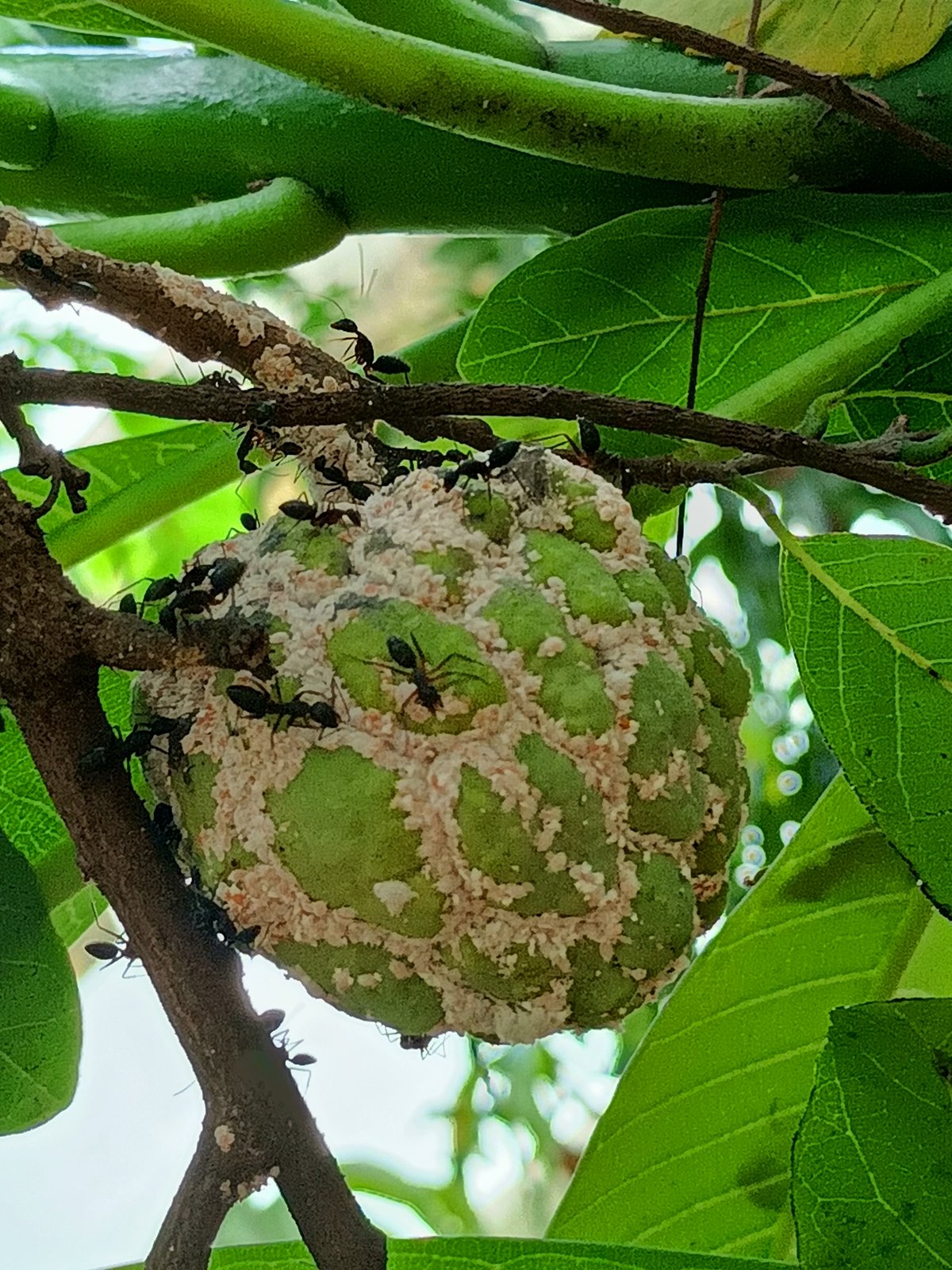
What are the earliest signs of mealybugs?
Kansas State University’s greenhouse guide states the problem in one sentence: mealybugs seem almost invisible during the early stages of an infestation, and then suddenly populations become noticeable, at which point it is usually too late to manage them cheaply. Everything in this article is aimed at that invisible stage, because the difference between week two and week eight of a mealybug colony is the difference between a cotton swab and a lost plant.
The first visible sign is almost never an insect. It is a small tuft of fluffy white wax in a sheltered spot: a leaf axil, a stem fold, the crown, the crevice where two plant bodies touch, or the stem right at the soil line. The Royal Horticultural Society describes exactly this as the usual first find, and extension scouting guides add white flecks along midribs, at stem tips, and on the undersides of leaves. The colony builds where you do not look, which is why the flecks read as dust or lint until the day they read as an outbreak.
One test separates a mealybug fleck from harmless plant fuzz, and it needs nothing but a toothpick. Lift the fluff. Under mealybug wax you will find the insects themselves or their orange-pink eggs; under a plant’s own wool or wax you find clean tissue and nothing else. The University of California’s IPM program gives the general rule behind it: judge by the animal beneath the wax, never by the wax.
Honeydew arrives with the first settled feeder. Mealybugs excrete the sugar they cannot use as a clear, sticky film that lands on the tissue and the pot rim below the colony, and crawlers begin producing it as soon as they settle to feed, so a faint tack on the plant can predate any visible cotton. Black sooty mould is the opposite of an early sign. The fungus grows only where honeydew has had time to accumulate, so by the time a plant wears grey-black soot, the colony above it is weeks old.
Ants are the tell most growers ignore. Ants farm mealybugs for honeydew, and the relationship is one-sided in the pest’s favour: ants carry crawlers between plants, build shelters over colonies, remove the honeydew that would otherwise foul them, and physically drive off the parasitoids and predators that would end the infestation. In one field study, parasitism dropped from 47.7 percent to 34.5 percent on plants where ants tended the colonies. A steady ant trail up a greenhouse or patio plant with no nectar to offer deserves a loupe before it deserves a shrug.
How do you confirm mealybugs before an outbreak?
Start with the fact that saves you from a false sense of security: yellow sticky cards do not catch mealybugs. Only the short-lived winged males fly, so the cards that reliably flag thrips and fungus gnats stay clean while a mealybug colony grows three shelves away. Kansas State and University of Connecticut extension both draw the same conclusion: visual inspection is the only way to detect an early mealybug infestation. There is no trap, no card, and no shortcut. There is a lens and a habit.
The lens should be a 10x, and not more. University of New Hampshire extension recommends against stronger magnifiers because higher power means a shorter focal distance and a tiny field of view, which makes the lens harder to use, not better. Technique matters more than power: hold the lens an inch from your eye, brace that hand against your cheekbone, and bring the plant to the lens until it snaps into focus. Then work the sheltered geography: the growing point, every crevice and fold, the stem at the soil line, under the pot rim, and along any stake or tie, since mealybugs hide under the tape on a plant stake and lay eggs in bench cracks and empty pots. They can survive off the plant for two weeks, adult females for up to 19 days, and crawlers can keep emerging for up to 45 days.
Know what the mobile stage looks like, because it is the one that spreads and the one that sprays actually kill. A crawler is a newly hatched nymph: yellow to orange or pink, wingless, and still without the white wax, a moving fleck where everything else on the plant sits still. Only crawlers and the winged males travel; the waxed adults barely move. A ring of double-sided sticky tape around an infested stem is a documented way to time treatments, since crawlers crossing the tape tell you the vulnerable stage is active. And if a tiny two-winged insect with trailing tail filaments turns up on the plant, that is the adult male mealybug, not a gnat; he lives a day or three, does not feed, and means a breeding colony is nearby.
Then make it a habit with a scouting rhythm. Commercial growers tag five to ten plants per susceptible species and inspect those on a schedule, on the logic that early detection on the sentinels buys the whole crop time. A collection can do the same: a weekly loupe pass over the plants that have been hit before, and a monthly pass over everything, costs minutes. Give extra attention to old grandmother plants that have been around for years; extension guidance singles them out as standing reservoirs that quietly reseed every new infestation.
Do mealybugs attack cacti and succulents?
Yes, mealybugs attack cacti and succulents, and the authorities agree in writing. Cactus appears on the University of California’s lists of commonly infested woody ornamentals and houseplants alike, the Royal Horticultural Society names succulents including cacti among the plants mealybugs are most commonly found on, Colorado State puts cactus on its houseplant list, and Connecticut extension names succulents on its. A warm room removes the off season: indoors, all stages can be present throughout the year, and under glass breeding continues in winter, just at a slower rate.
Where they hide on a cactus is knowledge that lives with specialist growers rather than extension bulletins. Growers report three separate niches on one plant: colonies tucked between ribs and tubercles, root mealybugs below the soil, and, less commonly, mealybugs settled on the spines themselves, where their wax cocoons pass for lint. The practical rule the CactiGuide community draws from that: find mealybugs on the spines or in the joints, and the same plant earns an immediate root inspection, because the niches are rarely occupied alone.
The taxonomy even nods at the camouflage problem. The cactus mealybug is Spilococcus mamillariae, named for Mammillaria, the genus whose woolly axils hide it best. On a woolly or hairy species, the tuft test is the whole diagnosis: plant wool sits where the plant put it, one tuft per areole in the regular spiral, while mealybug wax ignores that grid and pools in the shaded creases. Lift anything white that sits where wool should not be.
Susceptibility within the family is grower knowledge too. British nursery experience ranks cluster-forming cacti such as Rebutia, Mammillaria, Chamaecereus, and Echinopsis as the most frequently attacked, with the offsets and touching bodies supplying exactly the sheltered contact points mealybugs prefer, and on other succulents the crown and stem base of Echeveria, Crassula, Faucaria, and Pleiospilos.
The crush test: mealybug or cochineal?
On a prickly pear, white and woolly does not mean mealybug. Cochineal scale, Dactylopius, feeds only on cacti and sits in woolly white mounds around the spine bases of Opuntia and its relatives, and it announces itself the moment it is crushed: the body fluid is a deep carmine red that stains the wax around it.
The University of California documents the crush colours across the look-alikes, and one toothpick sorts them. Cochineal crushes bright carmine. The cactus mealybug crushes grey. The spinose mealybug is reddish but nothing like cochineal’s dye. A poked grape mealybug releases a reddish-orange defensive bead, and the obscure mealybug’s is clear. No other white-wax pest on a cactus gives you a one-second chemical answer this cheaply.
The distinction matters for triage. Growers regard cochineal as disfiguring rather than lethal and rare on indoor plants, while a mealybug colony compounds quietly and moves. Carmine means a cosmetic campaign on the Opuntia bed; grey means the full early-detection protocol on everything nearby.
What are the early signs of root mealybugs?
Root mealybugs, Rhizoecus species, show nothing above the soil until the plant itself fails. The documented above-ground picture is stunted growth and pale or yellowing tissue with no visible pest, and the University of California is blunt about the consequence: they are generally not seen until the plant is unpotted. Cactus growers have sharpened that trigger into something more useful than yellowing, which a cactus expresses poorly. The tell they report is a plant that fails to plump after regular spring watering, or aborts its buds while its neighbours flower, because the roots that should be drinking are being drunk from.
The unpot check is fast because the pest is lazy about geography. Root mealybugs concentrate on the outer portion of the root ball, between the roots and the pot, so slide the pot off and read the outside face of the root ball before teasing anything apart. White powdery wax there, or on the soil surface at the stem, is the sign; a heavy population can give the soil a bluish tint, and after a thorough watering the insects sometimes crawl out of the drainage holes. The animal itself is easy to separate from its aboveground cousins: it has no skirt of marginal wax filaments at all, just a segmented, powdery-white, orzo-shaped body moving slowly through the root zone.
Confirm with the animal, never the white alone, because root zones are full of innocent white specks. At rarecactus.com the growing mix is pumice-based with no perlite in it, which removes the commonest false positive before the loupe comes out; in mixes full of bright white mineral grains, every speck is a decoy, and the difference is that a grain never walks. Slow-moving, oval, whitish insects on the root ball are the confirmation.
Specialist growers rank root mealybugs among the worst pests of cactus collections, with incident reports on Gymnocalycium, Parodia, Eriosyce, and Discocactus among them, and nursery experience holds that they multiply fastest in the dry substrate of winter dormancy. Treatment is a rebuild, not a spray. The documented option is heat: submerging the pot in 49°C water until the root ball core reaches about 46°C, held there for ten minutes, is the university-tested disinfestation protocol. The practical collection version, bare-rooting, washing, discarding the mix, and sanitizing the pot, is the route our cactus pests guide takes, and either way the old substrate leaves the building.
Is it mealybugs, wool, farina, or something else?
White on a succulent has more innocent explanations than guilty ones, so the differential is worth learning. Farina, the natural powdery bloom on glaucous species, is an even film that follows the whole epidermis and wipes away to a smooth bare fingerprint; mealybug wax is three-dimensional, clumped, and local to crevices, and it lifts as a tuft with an insect or eggs beneath it. Plant wool obeys the areole grid. Mealybug cotton does not. Those are observations from the growing bench rather than a bulletin, but the confirming test, the animal under the wax, is the documented one and it settles the case.
Two insect look-alikes carry wax of their own. Woolly aphids wear a similar coat, but the body underneath is pear-shaped with long legs and antennae and a pair of cornicles at the rear, where a mealybug is a segmented oval with a fringe of short wax filaments; their documented hosts are trees and shrubs, so they are a garden confusion far more than a windowsill one. Cottony cushion scale and some soft scales also produce white egg masses, and the answer is the same loupe view: judge the animal, not the fluff. Armored scale on a cactus reads differently again, as a flat, frosted crust that growers note often favours the shaded side of the plant, with nothing cottony about it.
The other white that panics collectors is silk. Fine sheeting or strands between spines, with pinprick pale stippling on the tissue and no stickiness anywhere, is spider mite work, not mealybugs; mealybugs never spin, and they always leave honeydew. The two pests run on different clocks and different treatments, so the split matters: our guide to the early signs of spider mites covers that diagnosis, down to the paper tap test that mites answer and mealybugs do not.
How do you get rid of mealybugs?
Isolate the plant first, then start with the cheapest chemistry that works: isopropyl alcohol. A cotton swab of 70 percent or weaker alcohol dabbed on each insect dissolves the wax and kills on contact, and the University of California endorses a dilute spray at 10 to 25 percent, while Colorado State’s range runs 25 to 50 percent; the two overlap at 25, which is the sensible spray strength if you want one number. Alcohol has no residual action and never reaches root-feeding stages, so it is a weekly campaign, not an event. Spot-test one small area a day or two ahead, because alcohol can burn tissue, and keep it off the plant at large; the target is the insect. British readers will notice the RHS never recommends alcohol at all, a genuine transatlantic split in the official advice.
Insecticidal soap, horticultural oil, and neem occupy the honest middle: the University of California credits them with some suppression, especially against younger nymphs, and no authority promises more. They kill by stripping wax and suffocating, which is why timing beats volume: crawlers and early instars are the susceptible stages, and sprays landed during crawler activity cut the number of rounds the campaign needs. Clemson and Colorado State agree exactly on the repeat interval for soap, every four to seven days, per the label, until clean. The ceilings matter on a sun bench: no soap above 32°C, in full sun, or on a water-stressed plant, while horticultural oil runs 7 to 32°C on Clemson’s card and 4 to 38°C in the classic arboriculture reference, which also allows oils hotter where humidity sits below 50 percent, the condition of a dry-run cactus bench. Two quieter failure modes: hard water precipitates the fatty acids out of soap and quietly neutralises it, and a plant that wilts or browns within hours of a soap spray should be rinsed with clean water at once.
Every contact option shares one wall: the eggs. North Carolina State describes the ovisac as relatively waterproof, and the standard soaps-and-oils reference is explicit that soap does not touch the egg stage, so nymphs hatch behind every spray and the label’s repeat schedule is load-bearing, not optional. Plan on two or more rounds minimum. The one partial exception is the longtailed mealybug, which has no visible egg stage to wait out; its young hatch at laying, which shortens the campaign a tight spray series has to run.
Systemics divide the authorities, and the honest move is to print the disagreement. The University of California calls neonicotinoids less reliable against mealybugs than against other sap feeders, crediting imidacloprid houseplant spikes mainly with reducing crawler numbers, while North Carolina State argues systemics may be the most reliable control precisely because they poison the sap instead of chasing waxed insects. Both are true to their evidence; a soil drench is also the one chemical route to root mealybugs. The hard limits are ecological: systemic insecticides move into pollen and nectar, can persist in the plant into the next season, and have no place on anything that will flower for bees, which in a cactus collection is nearly everything, so a drench belongs on the rare plant whose flowers you are prepared to cut for a season, applied exactly per label. UK gardeners have a shorter menu: the RHS lists lambda-cyhalothrin, deltamethrin, cypermethrin, flupyradifurone, and acetamiprid as the home-use actives for indoor sap feeders, and leads with non-chemical control anyway.
Two more entries complete the kit. A forcible water spray knocks colonies off sturdy plants and is worth repeating at several-day intervals, within the obvious limits of wool, spines, and winter wet. And disposal is a documented, legitimate endpoint, not an admission of failure: the RHS says plainly that it can be simpler to dispose of a heavily infested plant, and the University of California agrees. A collection is a portfolio; the worst plant in it is the purchase price of protecting the rest.
Biocontrol for mealybugs: warm-season help, honestly framed
The famous option is the mealybug destroyer, Cryptolaemus montrouzieri, an Australian lady beetle whose larvae eat mealybug eggs and young by the hundreds; a single larva can consume up to 250 small mealybugs. Know your ally before you squash it: the larvae wear woolly white wax and look like nothing so much as giant mealybugs, twice the size of an adult female pest. Killing the biggest white insects on the plant is the classic self-inflicted defeat.
Its limits are thermal and economic. Reproduction slows sharply below about 20°C, Koppert gives a working floor of 16°C with an optimum of 25 to 28°C, searching stops above 33°C, and the beetle does not survive cold winters. Releases into a light infestation are wasted money: there is little point releasing them when mealybug numbers are low, because the adults need dense prey and egg sacs to stay and breed, and they disperse or turn cannibal once the food runs out. For a collection that catches infestations early, which is the point of this article, the beetle is therefore a poor fit; it is a rescue tool for a warm greenhouse that is already losing.
The parasitoid wasps run finer but warmer. Leptomastix dactylopii prefers hosts in warm, sunny, humid conditions, and the University of California’s own pages disagree on its reach, one stating it kills only the citrus mealybug and another crediting it with at least 50 mealybug species, so buy it for citrus mealybug and treat anything wider as a bonus. Anagyrus vladimiri, the commercial standard against citrus and vine mealybug, works from 13 to 38°C. The RHS positions the wasps as the low-density tool and the beetle as the high-density one, and rates the whole biological toolkit as a May-to-September play under glass.
Here the mealybug story diverges from spider mites. Dry-adapted predatory mites exist and make biocontrol workable over a desert bench; no equivalent dry-air specialist is documented for mealybugs, and none of the major references states any humidity envelope for the mealybug destroyer at all. What the sources support is temperature: in a cool-rested cactus house, mealybug biocontrol is a summer tool at best. Whatever you release, deal with the ants first, because ants actively defend mealybug colonies against exactly these agents; for a potted plant with ants in the root ball, the documented fix is to carry the pot outside and stand it for 20 minutes or more in a solution of insecticidal soap and water.
What does not work against mealybugs?
One-shot treatments top the list, whatever the bottle says. The ovisac sheds sprays, the eggs inside it survive contact chemistry, and nymphs hatch into a plant you have stopped watching; every failed mealybug campaign in a collection is some version of declaring victory one spray early.
The schedule is the treatment.
Dish soap is not insecticidal soap. Colorado State is direct about both halves: household detergents can injure plants, and homemade spray recipes are neither consistently formulated nor tested, so there is no evidence they control anything. The same discipline applies down the folk-remedy shelf, garlic, cinnamon, and diatomaceous earth stirred into potting mix included: untested is the accurate label. Household bleach belongs to pot sanitation, where a one-to-nine dilution is documented against pathogens on containers and tools; no source documents it against mealybugs themselves, so it earns no place on a living plant.
Reaching for a broad-spectrum pyrethroid trades little gain for real damage. The University of California notes that pyrethroids may not be much more effective against mealybugs than soaps and oils, while being devastating to the natural enemies that were quietly doing part of the job, which is how a bad mealybug month becomes a worse spider mite season. The harsh option does not outperform the gentle one here; it just costs more ecology.
And do not budget on winter doing the work. Development stalls below roughly 8.5°C in the best-studied species and slows nearly threefold between 25°C and 15°C, but the RHS records that breeding continues under glass in winter, just slower, and a cold rest idles the predators at the same time as the pest. A cool winterhouse buys you time to inspect; it does not clean the collection for you.
How do you keep mealybugs out of a collection?
Nearly every infestation arrives on wheels you provided. New plants are the main door, with contaminated pots, tools, stakes, and hands close behind, crawlers riding air currents within a greenhouse, and ants carrying them plant to plant.
Close those doors and the pest has to walk.
Quarantine is the cheapest treatment ever devised, and the authorities disagree only on how long: the University of Minnesota says one to two weeks, Colorado State at least three, the RHS at least a month, and Clemson six weeks. The long end is the safe end, since crawlers can keep emerging for up to 45 days. At rarecactus.com every incoming plant spends three weeks in a quarantine bay away from the collection and is unpotted for a loupe check of the root ball before it earns a bench spot, because root mealybugs ride in on plants that look immaculate at the door; that unpot check has caught arrivals a surface inspection passed.
Inspect at purchase like you own the problem already, roots included; Minnesota’s scouting note adds a spot most people never check, the main stem below the soil surface. Keep the growing area clean: dead leaves and prunings can carry mealybugs and eggs, reused pots deserve washing and a one-to-nine bleach soak, and a rebuild after any root infestation means fresh media in a sanitized pot, with the dry-and-wait discipline from our repotting guide protecting the roots you just saved.
Culture is the last door. Heavy nitrogen feeding raises mealybug egg production on the plant receiving it, and Kansas State adds that water-stressed plants may be more susceptible, so the same lean, steady regime that keeps a cactus in character also keeps it a poor host. Keep ants off the benches as standing policy, retire the grandmother plants that quietly reseed every outbreak, and let the scouting rhythm carry the winter: monthly with the loupe in the cold months, weekly wherever it is warm.
The collector’s takeaway
Mealybugs win by being boring for six weeks. So the response is mechanical: white in a crevice triggers the toothpick lift; an insect or orange-pink eggs underneath triggers isolation the same day; a stalled or unplumped cactus triggers the unpot check at the pot wall; treatment means alcohol or soap repeated on the hatch cycle, or a labelled drench where flowers are off the table; and the environment fix, three-week quarantine with a root check, clean pots, lean feeding, and no ants, is what makes it the last outbreak instead of the first of many.
Frequently asked questions
How long does it take mealybugs to spread on a houseplant?
Fast enough that one female matters. She lays 100 to 200 eggs or more, crawlers hatch within days in a warm room, and a generation completes in under a month at summer temperatures. Indoors every stage can be present year-round, and crawlers walk to touching plants or ride air currents in a greenhouse.
What does the crawler stage of a mealybug look like?
A crawler is a newly hatched nymph: yellow to orange or pink, wingless, and still without the white wax of the settled stages. It is the only stage that walks to new plants and the most vulnerable to contact sprays, so treatments are timed to crawler activity rather than to the waxed adults.
How soon does honeydew appear after mealybugs infest a plant?
From the first settled feeder. Crawlers begin secreting wax and excreting honeydew as soon as they settle to feed, so a faint sticky film can predate any visible cotton. Black sooty mould arrives later, growing only where honeydew has had time to accumulate, which makes soot a late sign, not an early one.
Does the mealybug destroyer beetle work indoors?
Only warm and only against a real infestation. Cryptolaemus montrouzieri reproduction slows below about 20°C, Koppert gives a 16°C working floor with an optimum of 25 to 28°C, and the beetles disperse or turn cannibal once prey runs low. Release at high pest density in warm months; a cold or lightly infested collection defeats them.
How long should a new plant be quarantined for mealybugs?
Authorities span a sixfold range: the University of Minnesota says one to two weeks, Colorado State at least three weeks, the RHS at least a month, and Clemson six weeks. The long end is the safe end, since crawlers can keep emerging for up to 45 days, and the check must include the roots.
Sources