
Early Signs of Spider Mites: Catch Them Before the Webbing
All ArticlesThe early signs of spider mites are fine pale stippling on new growth, a dulled bronze cast, and dust-like specks that move when tapped onto white paper; webbing only appears once the colony is large. At 30°C a generation completes in about seven days. Below: the tap test, the cactus damage picture, and the treatment plan.
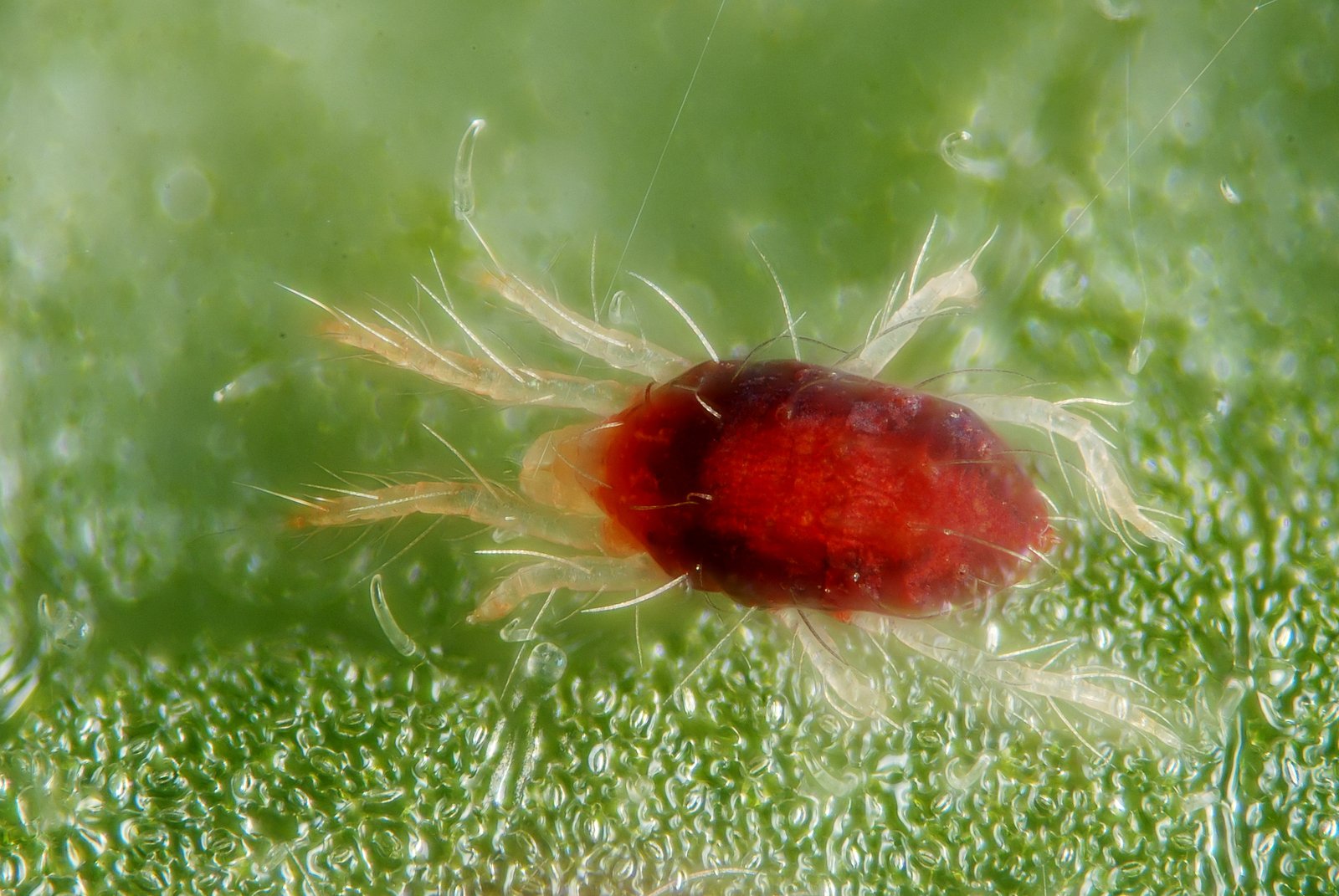
What are the earliest signs of spider mites?
The first sign is stippling: a scatter of tiny pale dots where individual cells have been drained, concentrated on the newest, softest growth. Each mite feeds by piercing one cell at a time, so early damage reads as a fine speckle rather than a patch. On a leafy plant the stipple sits on the upper leaf surface while the mites work from below; on a cactus it shows up close to the growing point.
Left alone, the speckle merges. The tissue takes on a dull grey, yellow, or bronze cast and the plant loses its healthy surface sheen, a stage growers often misread as sun stress or a watering problem. By the time silk webbing stretches between spines or leaf edges, the population is already dense. Webbing is the late sign, not the early one.
Speed is what makes the early window matter. Egg-to-adult development takes about eight days at 28°C (82°F) and four weeks at 16°C (60°F); at 21°C it is twelve days. A female lays roughly two to seven eggs a day, around one to two hundred in her lifetime, and the eggs hatch in about three days in warm weather. A light speckle on Friday can be a colony with webbing by the end of the month.
Heat and dry air stack the odds further. Low humidity lets the mites shed excess water from the plant sap they drink, so they feed harder in dry conditions, and warm climates carry many overlapping generations in a season. Indoors there is no off season at all; a heated room keeps the cycle turning through winter.
One naming note saves confusion. The species behind almost every indoor outbreak is the two-spotted spider mite, Tetranychus urticae, which British growers call the glasshouse red spider mite. Despite that name it is yellowish green through the growing season and only turns orange-red in its mated overwintering form, which shelters in bark cracks and litter until spring. So do not wait to see something red before acting, and treat a scatter of orange specks in autumn as next spring’s outbreak filing into winter quarters. The name red spider mite also gets applied to fruit-tree and citrus mites of the genus Panonychus, neither of which troubles a cactus collection.
How do you confirm spider mites before you can see them?
An adult female is about 0.4 mm long, at the edge of unaided eyesight, so confirmation runs on two cheap tools: a sheet of white paper and a 10x hand lens.
The tap test comes first. Hold the paper under the suspect growth and tap the plant sharply. Mites fall onto the paper as tiny specks that look like dust until they start to crawl. Give the sheet ten seconds in good light; moving dust is a positive result. University extension entomologists describe this same method from Pennsylvania to Maryland, and it works as well over a globular cactus as over a tomato leaf.
The loupe settles the identification. Under 10x magnification a two-spotted spider mite shows an oval, eight-legged body with a dark blotch on each side. Check the sheltered spots where colonies start: between ribs and tubercles, in the spine bases, on the underside of leaves, and around the growing point. A soft artist brush wiped through a suspect area and inspected under the lens works on plants too spiny to tap cleanly.
Test the neighbours while you are at it. Mites walk between touching plants, and inseminated females ride air currents to plants nowhere near the first victim, so one positive tap test means the whole shelf gets checked.
Cactus growers add a third trick for bodies too armoured to tap cleanly: draw a strip of white paper towel gently across the suspect surface. Crushed mites leave thin greenish to rust-brown streaks on the white, a strong positive even though motion on the tap test remains the cleaner proof, and the streak test doubles as a quick post-treatment audit a week after spraying.
Make the check a habit rather than an event. Through the hot months a weekly pass with the loupe over the watchlist species takes minutes; in winter, monthly is enough unless the plants sit near a heat source. Commercial growers scout on a schedule precisely because the difference between week one and week four of an infestation is the difference between a wipe-down and a season of scars.
Spider mite damage, from first stipple to webbing
Spider mite damage follows a fixed sequence, and knowing the order lets you date an infestation at a glance. Stage one is the fine stipple of drained cells. Stage two is coalescence: the stippled area turns chlorotic, then silvery or bronze, and growth slows as the plant loses photosynthetic surface. Stage three adds cast skins and egg shells, a pale grit that collects in sheltered angles of the plant. Stage four is visible silk.
Spider mite webbing: what it means when you see it
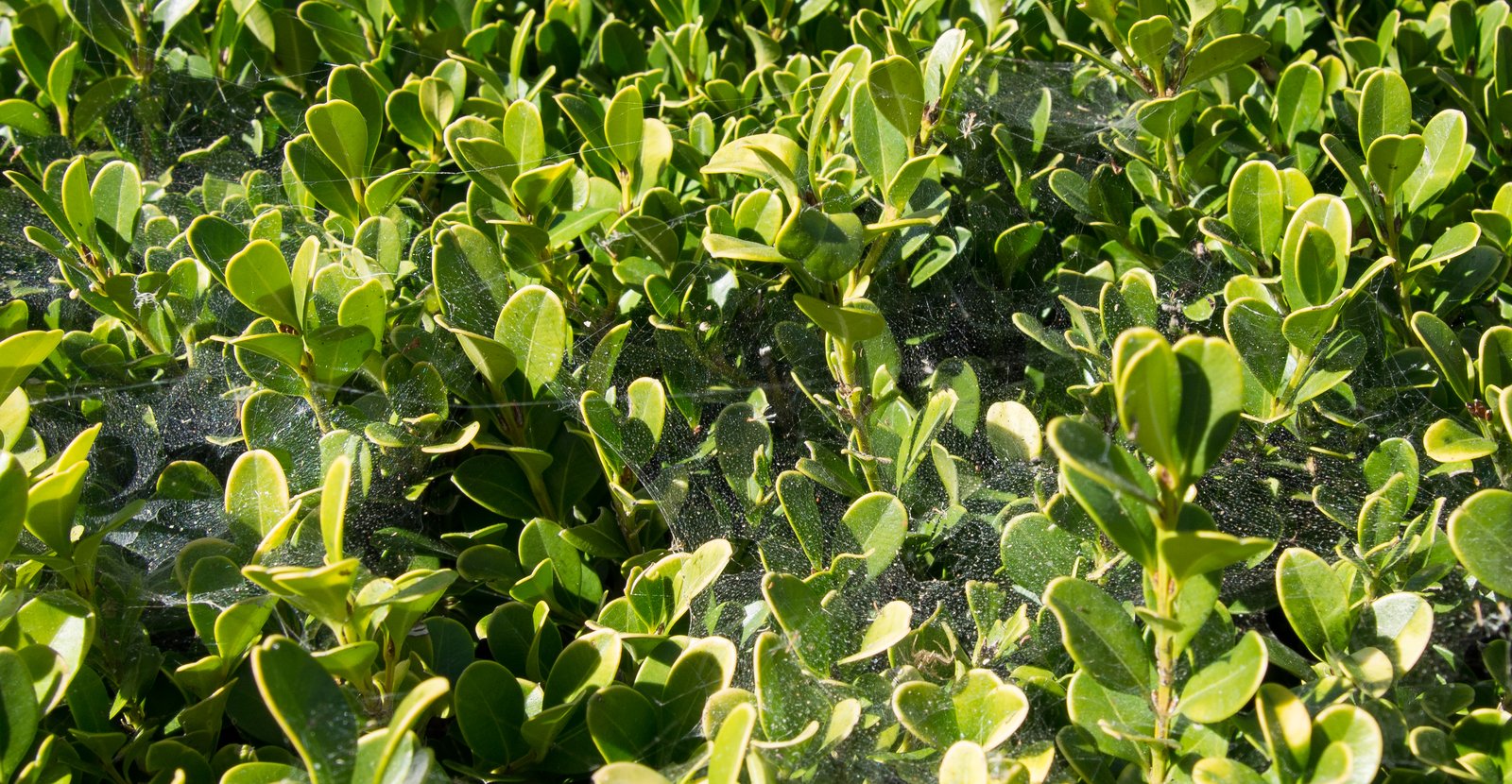
Silk webbing across spines, leaf axils, or the crown means the colony has reached high density; by the time webs cover parts of a plant the population is already very large. The webbing itself holds eggs, cast skins, and live mites, and it sheds water, which is one reason a casual misting does nothing at this stage.
Webbing also signals that the colony is preparing to move. Crowded mites gather at the highest point of a plant and spin a communal silk mass that the wind can carry to a new host, a documented dispersal behaviour in Tetranychus urticae. A heavily webbed plant is not just sick; it is a launch pad aimed at the rest of your collection.
Do spider mites attack cacti and succulents?
Yes, and the damage costs more here than on any houseplant. The Royal Horticultural Society lists succulents, cacti included, among the indoor plants most commonly hit by sap-feeding pests, and the hot, dry, still air of a cactus windowsill or a closed summer greenhouse is exactly the climate the two-spotted spider mite prefers.
On a cactus the damage concentrates where the tissue is youngest: at and just below the growing apex. It reads as fine pale speckling that dries into rusty tan patches, and because the mites are so small you will usually see the damage before you ever see the animal. Missouri Botanical Garden guidance for cacti notes small brown dots and webbing on young growth as the usual first find, the two signs arriving together on a small plant body.
Here is the part every collector needs to internalise: a cactus never replaces its skin. A leafy plant sheds damaged foliage and moves on, but mite scarring on a cactus body is permanent. The plant grows clean tissue above the scar and the mark rides slowly down the body over the years, still visible a decade later. On show plants and slow species, one missed month of mites does damage that no recovery ever erases. That is why this whole article is tuned to the early signs.
Susceptibility is not even across the hobby. Specialist growers report Rebutia, Lobivia, and Coryphantha as the most frequently attacked cacti, with Melocactus, Sulcorebutia, woolly Mammillaria (where dense wool hides early webbing in plain sight), and the small, soft-skinned Mexican globulars close behind: Lophophora, Turbinicarpus, and Pelecyphora. On Lophophora, growers often find the scarring low on the body rather than at the crown, so a sunburn-like mark near the base deserves a tap test, not a shrug. On mesembs such as Faucaria the mites present black rather than red.
Where the plant lives sets the risk. In an unheated greenhouse the Royal Horticultural Society puts the danger window at March to October, with damage possible at other times in a heated house; poor ventilation in a closed house concentrates the hot, still air mites love, which is why a stuck roof vent in July can cost more than the repair would have. A windowsill collection faces the opposite calendar, with winter central heating recreating desert summer around dormant plants. Outdoors the picture is better: rain, moving air, and the small predators that patrol an open garden suppress colonies. Dusty conditions and water-stressed plants are the two outdoor invitations that flip the balance back toward the mites.
The cactus flat mite: the lookalike that never spins silk
Not every mite on a cactus is a spider mite. The flat mites, family Tenuipalpidae, include a species so associated with our plants that its old name was Tenuipalpus cactorum, literally the flat mite of cacti; it is known today as Brevipalpus russulus and is recorded in the acarology literature as a severe pest of ornamental cacti. Flat mites are even smaller than spider mites, reddish, and slow, and North Carolina State University extension notes two diagnostic differences: they never spin silk, and their damage builds more slowly. At roughly 0.28 mm an adult flat mite is smaller than a two-spotted spider mite, and its clock runs far slower too, on the order of 17 to 25 days egg to adult at 25°C and around two months at ordinary room temperature, which is why a flat mite problem creeps where a spider mite problem gallops.
The practical split is simple. Rusty scarring plus webbing, or moving dust on the tap test, points to spider mites and the fast treatment clock below. Slowly spreading scabby rust with no webbing ever, and a loupe view of flat, sluggish red specks pressed tight to the skin, points to flat mites: a smouldering infestation that can run for months unnoticed. Isolation and the same contact treatments are the standard starting point in both cases, but the identification is worth making because a flat mite problem will not announce itself with silk no matter how bad it gets.
Is it spider mites, sunburn, corking, or edema?
Rusty marks on a cactus have several unrelated causes, and treating the wrong one wastes the early window. Four checks separate them.
Location and direction. Mite damage starts at or near young growth and spreads with the colony. Natural corking starts at the base of an ageing plant and advances upward, slowly and evenly, over years; the tissue is firm and bark-like, not sunken or speckled. Sunburn follows the light: it is most severe, or present only, on the south and west sides of a plant, and it appears after an exposure event rather than creeping week by week.
Texture. Edema, a watering-physiology disorder, raises wart-like blisters and crusty bumps above the surface. It happens when roots take up water faster than the plant can transpire it, the classic case being warm moist soil under cool humid air, and cells burst under the pressure. Mite stipple sits flat or slightly sunken. Run a fingertip over the mark: raised crust suggests edema, not an animal, and the fix is watering practice, not a spray.
Frass. Thrips leave a silvery scabbing that mimics mite bronzing, but thrips damage carries black varnish-like specks of excrement. Mites leave pale grit (cast skins and egg shells) instead.
The tap test. Whatever the mark looks like, moving dust on white paper ends the debate. No moving dust on several tests, no webbing, and a stable mark argue for one of the non-pest causes; our guide to why a cactus turns brown walks the full brown-mark differential, rot and fungus included.
One look-alike involves no damage at all: new growth that comes in narrow, pale, and stretched is cactus etiolation, a light shortage, and no spray of any kind will fix it.
How do you get rid of spider mites?
Treatment is a sequence, not a single spray, because no home remedy kills the eggs. Plan on isolation, a physical knock-down, a contact treatment repeated on the hatch cycle, and an environment fix, in that order. A plant already sheathed in webbing may be past economic rescue; the standard extension advice is that seriously infested houseplants are often best discarded, and with a heavily scarred common cactus that is honest advice. For anything rare, treat.
First, isolate. Move the plant away from every other pot, no shared trays, no touching spines. If the specks on your paper turned out to be cottony tufts or brown shells instead, you have a different problem; our cactus pests guide covers mealybugs, scale, and the root mealybug that hides in the pot.
Second, knock the population down with water. A forceful spray physically removes and kills mites and strips the dust they favour, a control the extension literature endorses outright, and University of Arizona work on succulent-family plants recommends periodic washing specifically. On a cactus, do it on a warm, bright morning, hit the spine bases and the underside overhangs, and make sure the body is dry by nightfall. Water alone will not finish the job, but it resets the clock and clears webbing so the next step can reach the skin.
Oils and soaps on cacti: effective, with cautions
For home treatment, horticultural oil at the 2 percent summer rate is the strongest option; Colorado State University rates it the most effective miticide available for home use. Insecticidal soap is rated only marginally effective against the two-spotted spider mite, and hard tap water degrades it further, so oil is the default and soap the backup. Neem oil works here as a horticultural oil, with the same rules.
Cacti add three cautions. Heat first: labels put the danger zone for oil and soap sprays in the mid-80s Fahrenheit (about 29°C) and up, with different universities drawing the line anywhere from 85 to 100°F, so treat in the cool of the morning and keep a treated plant out of full sun for a few days. Water status second: never spray a drought-stressed plant, which for a cactus collection kept dry means watering a few days before you treat. Wax third: oil dissolves epicuticular wax, the documented reason blue and grey foliage loses its colour after oil sprays, and the same mechanism should be assumed to lift the farina from pruinose and glaucous cacti and succulents. On any powdery-skinned species, test one spot and wait a week, or rely on water sprays and predators instead. Clemson University lists succulents among the plants most sensitive to soap sprays, so the caution runs family-wide.
Whatever you spray, contact materials only kill what they wet and leave no residue behind, while the eggs sit protected and hatch in about three days. The standing recommendation is two or more applications at five-day intervals in summer, seven in winter. Treat, wait five to seven days, treat again, and inspect with the loupe before declaring victory; two to three cycles is normal, and stopping after one is the classic way to be back where you started in a month.
Miticides and the resistance trap
The dedicated miticides that make outbreaks easy for nurseries, abamectin, hexythiazox, spiromesifen and their relatives, are labelled for commercial use only in the United States, so they are mostly off the table at home. Sulfur is a consumer option on plants that tolerate it, with two label rules: never above 32°C, and never within 30 days of an oil spray. Resistance is the standing threat with every chemical route; the two-spotted spider mite develops resistance to most acaricides after prolonged use, which is why commercial growers rotate modes of action and use no product more than twice a season.
The ovicides that break the egg-survival problem, hexythiazox, clofentezine, and etoxazole, sit behind the same commercial wall, which is why the home answer to eggs is repetition rather than chemistry.
Predatory mites: biocontrol that fits a dry collection
Predatory mites clear infestations without touching the epidermis, which makes them attractive for farina-skinned plants, but the standard species is the wrong one for us. Phytoseiulus persimilis, the classic red predator, out-reproduces its prey in warm, humid air, but the exact combination that defines a cactus bench breaks it twice over. Cornell University biocontrol data show only 7.5 percent of its eggs hatch at 40 percent relative humidity against 99.7 percent at 80 percent, and University of Connecticut trials found that in hot conditions it can no longer keep pace with the pest’s reproduction. Released over a bone-dry cactus bench in summer, it dies faster than the problem.
Two relatives fit the desert bench. Neoseiulus californicus tolerates 40 to 80 percent humidity and stays effective to about 32°C, survives short prey gaps on pollen, and suits preventive release. Galendromus occidentalis, the western predatory mite, is the true hot-dry specialist, working in 30 to 60 percent humidity at high temperatures. For predatory mite releases in general, University of California guidance is to knock a heavy infestation down first with a soap spray, then release roughly one predator for every ten remaining pest mites. Release at first detection rather than at crisis, concentrate sachets at the hot spots, and expect visible control in two to three weeks, not two days. In the UK, where the Royal Horticultural Society’s guidance for this pest recommends only cultural and biological control, predators plus water sprays simply is the treatment plan.
Appetite is not the limiting factor; conditions are. A single P. persimilis eats five to twenty mite eggs or mites a day, and these specialists starve or disperse once prey runs out, so a predator colony that vanishes after cleaning up an outbreak is the system working, not failing. Order fresh predators per outbreak rather than expecting a standing population.
Two footnotes on the catalogue. The predatory midge Feltiella acarisuga, often bundled into spider mite programmes, wants 80 percent humidity and is effectively ruled out over a dry bench. And P. persimilis still earns its reputation anywhere you can give it humid, moderate conditions, a propagation tent or a shaded tropical corner; it clears colonies faster than any of the dry-air species when the climate suits it.
What does not work against spider mites?
Knowing the dead ends saves plants, because two of them make an outbreak worse.
Broad-spectrum pyrethroid sprays such as bifenthrin are documented mite-outbreak triggers: they wipe out the predators that eat mites, irritate the survivors into dispersing across the collection, and treated surfaces measurably raise mite egg-laying. Kansas State University extension work reports females laying more eggs on pyrethroid-treated surfaces than on untreated ones.
The houseplant standby imidacloprid fails for a simpler reason: mites are arachnids, not insects, and the systemic insect killers do not touch them. Peer-reviewed work goes further: imidacloprid-treated plants raised two-spotted spider mite egg-laying by 10 to 26 percent, and in a landmark elm study the treatment lifted spider mite fecundity by almost 40 percent while predators fed on treated prey survived less than a day. If a product label says insect killer, it is not a mite plan, and it may be a mite invitation.
The gentler myths just waste the early window. A one-shot spray of anything fails on egg biology alone, since the eggs sit out the treatment and hatch in three days. Misting alone reduces risk but will not control an established colony, a point the Royal Horticultural Society makes explicitly. And the alcohol swab that works plant-by-plant on mealybugs has no documented record against whole-plant mite infestations, while carrying a real risk of epidermis damage on soft-skinned species; extension guidance that recommends it for mealybugs warns you can do as much damage as the pest. Skip it here.
One winter measure deserves its correct label. South Dakota extension agents suggest bagging a hopeless, heavily infested houseplant and setting it outside at around −12°C so the mites die with the discard instead of migrating off it. That is sanitation for a plant already written off, not a treatment, and it would kill a hydrated cactus just as surely as the mites.
How do you keep spider mites from coming back?
Almost every outbreak in a collection walks in through one of three doors: a new plant; air kept hot, dry, dusty, and still; or your own hands and tools.
Quarantine closes the first door. University guidance runs from one to two weeks of isolation for new houseplants up to at least three weeks, and the long end is the safe end, since a light infestation can sit below noticing for a full mite generation. At rarecactus.com every incoming plant spends three weeks in a quarantine bay away from the collection and passes two tap tests before it earns a bench spot, and that discipline has caught arrivals that looked perfectly clean at the door.
Managing the air closes the second. Mites feed harder and breed faster in dry heat, and dusty, water-stressed plants suffer most, so the standing preventives are airflow, periodic washing of dust off the plants, and a humidity bump around high-risk species in the hottest weeks. Indoors, the danger season inverts: heated winter rooms recreate summer drought around a dormant plant, so the watchlist species deserve a monthly loupe check even in January. A cold, properly run winter rest works in your favour here; see our cactus winter care guide for the setup that keeps plants dormant and mites uninterested.
Hands and tools are the third, quieter door. Mites practice phoresy, hitching rides on larger moving objects, and that includes sleeves, gloves, and the tweezers that just groomed an infested plant. When an outbreak is active, handle the quarantine bay last, wipe tools between plants, and work from the clean end of the collection toward the suspect end, never the reverse.
Finally, do not spray your way into a problem. Routine preventive hits of broad-spectrum insecticide remove the tiny predators that eat mite colonies before you ever see them; University of California guidance is explicit that persistent broad-spectrum sprays are a cause of mite outbreaks, not insurance against them. Monitor weekly through the hot months, trust the tap test, and keep the chemicals for confirmed problems.
The collector’s takeaway
Spider mites run on a one-week clock in summer heat, and a cactus keeps every scar for life. So the response is mechanical: stipple or dullness on young growth triggers the tap test; moving dust triggers isolation the same day; treatment means a water knock-down plus a contact spray repeated twice at five to seven day intervals, or predators matched to dry air; and the environment fix, moving air and clean plants and a real quarantine bay, is what makes it the last outbreak instead of the first of many.
Frequently asked questions
What are the earliest signs of spider mites on a plant?
Fine pale stippling on the newest growth, a dulled grey or bronze cast to the tissue, and specks that move when the plant is tapped over white paper. Silk webbing between spines or leaves is a late sign that means the colony is already large.
How can you tell if a cactus has spider mites?
Look for pale speckling that dries into rusty tan patches at or near the growing point, then hold white paper under the plant and tap sharply: moving dust confirms mites. A 10x hand lens shows the 0.4 mm two-spotted mites between ribs and around spine bases.
What does spider mite damage look like on a cactus?
It starts as fine pale stipple near young growth, merges into dry rusty tan scarring, and may add webbing once the colony is dense. The scars are permanent: a cactus never replaces its skin, so old damage rides slowly down the body as clean tissue grows above it.
How do you get rid of spider mites without chemicals?
Isolate the plant, spray it forcefully with water on a warm morning and repeat weekly, raise humidity and airflow, and wash dust off neighbouring plants. For lasting control in dry collections, release predatory mites suited to low humidity, such as Neoseiulus californicus or Galendromus occidentalis, at first detection.
Do spider mites live on cacti and succulents?
Yes. The two-spotted spider mite thrives in the hot, dry, still air cactus collections provide, and a dedicated flat mite, Brevipalpus russulus, attacks cacti specifically without ever spinning silk. Growers see the most attacks on Rebutia, Lobivia, Coryphantha, and soft-skinned globulars such as Lophophora and Turbinicarpus.
Sources