
Cactus Etiolation: Why Cacti Stretch and How to Fix It
All ArticlesCactus etiolation is the stretched, pale, narrow growth a cactus puts on when it gets less than the ten or more hours of strong daily light most desert genera need. The stretched tissue is permanent and never thickens back, but new growth comes in normal once you fix the light. This guide covers the fix and grow lights.
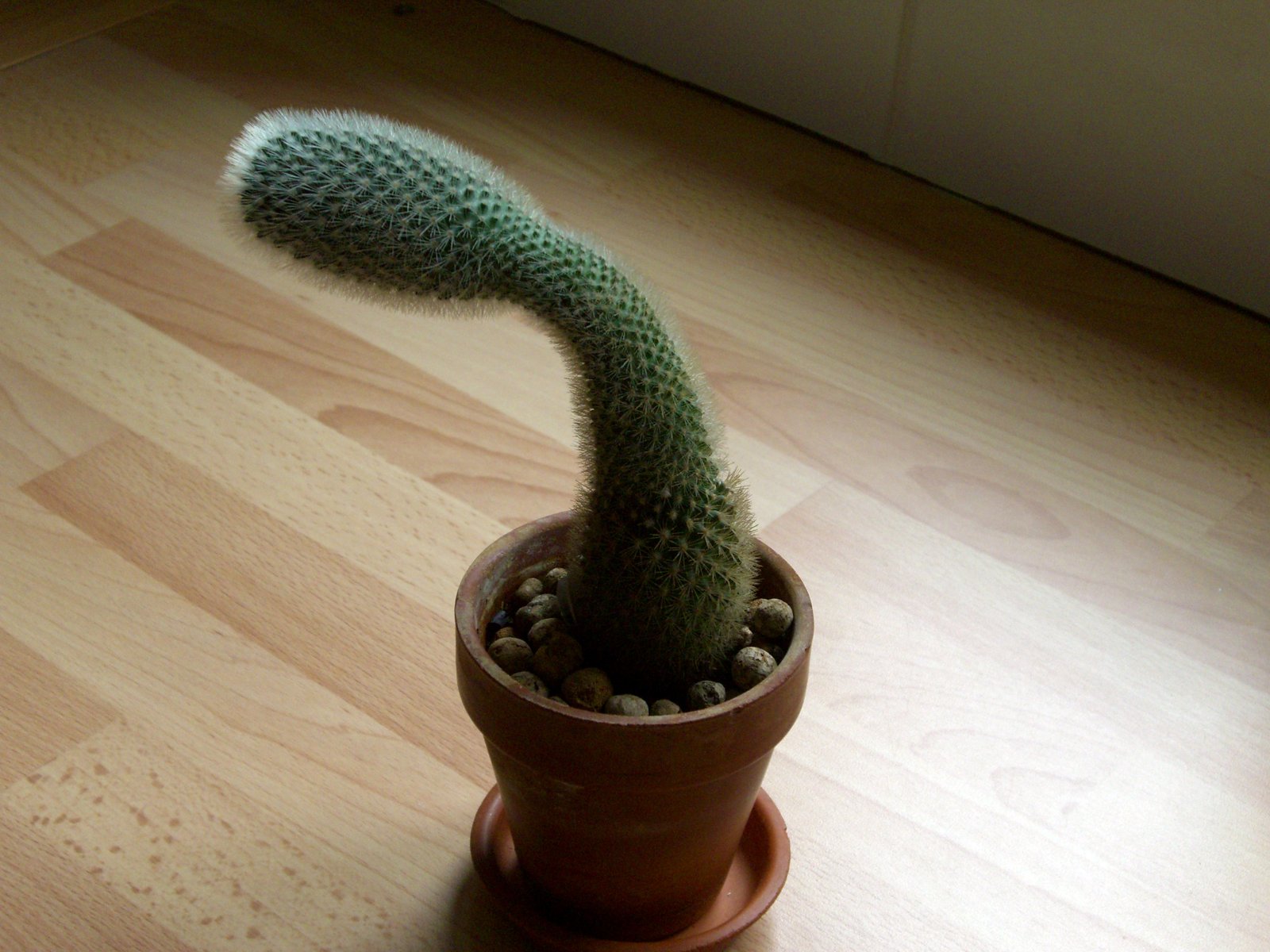
What does etiolated mean?
Etiolated means grown long, pale, and weak from lack of light. The botanical dictionaries define etiolation in two registers: strictly, the growth of a plant kept in darkness, with little or no chlorophyll, very long internodes, and rudimentary leaves; more broadly, the same abnormal growth in severely reduced light. On a cactus it reads as narrow, pale new growth at the crown.
The word itself comes from French étioler, to blanch, traced back to an Old French word for straw or stubble, and back further to the Latin stipula. The sense is a plant gone the colour of straw. Horticulture still does it on purpose and calls it blanching. Belgian endive is forced in the dark at 13 to 22°C for 20 to 25 days so the chicon stays white; the pale head on your plate is deliberate, controlled etiolation.
Botany gives the stretch a purpose. A shoot that cannot see light gambles its reserves on reaching some, whether up through soil or out from under leaf litter, and the response switches off the moment real light arrives. The greening that follows is called de-etiolation, and it builds normal, compact tissue only from that point forward.
Why is my cactus growing tall and thin?
A cactus grows tall and thin because it is not getting enough light and is stretching to find more. Etiolation is a shade-escape response: in low light the plant pushes elongated, thinner, paler growth in an attempt to reach a brighter source before its reserves run out. On a cactus it shows as a stem that grows faster but emerges narrower and more tapered, with spines that come in shorter, weaker, and more widely spaced, and a growing tip that turns pointed rather than round or flat.
The mechanism is light-quality sensing. A pigment called phytochrome reads how much strong, direct light the plant is receiving; in bright light it suppresses the elongation hormones, and in shade or dim conditions it releases them, driving the cells to stretch. The plant is doing exactly what it evolved to do under a competing canopy. Indoors, where even a bright window falls far short of desert sun, that same response produces a drawn, weak plant.
Rule out the look-alikes before blaming the bulb. Spindly, pale, reaching growth is an environment problem, filed apart from pests and disease, and the distinction holds on the bench: fine pale stipple near the growing tip, drying to rusty tan scarring, is spider mite feeding, covered in our guide to the early signs of spider mites; white cottony flecks and sticky honeydew belong to the sap-suckers in the cactus pests guide; and a plant wilting or shrivelling on a bone-dry root ball is short of water, not light. A cactus that leans to the window on normal, full-width growth is showing simple phototropism, not etiolation.
Is cactus etiolation reversible?
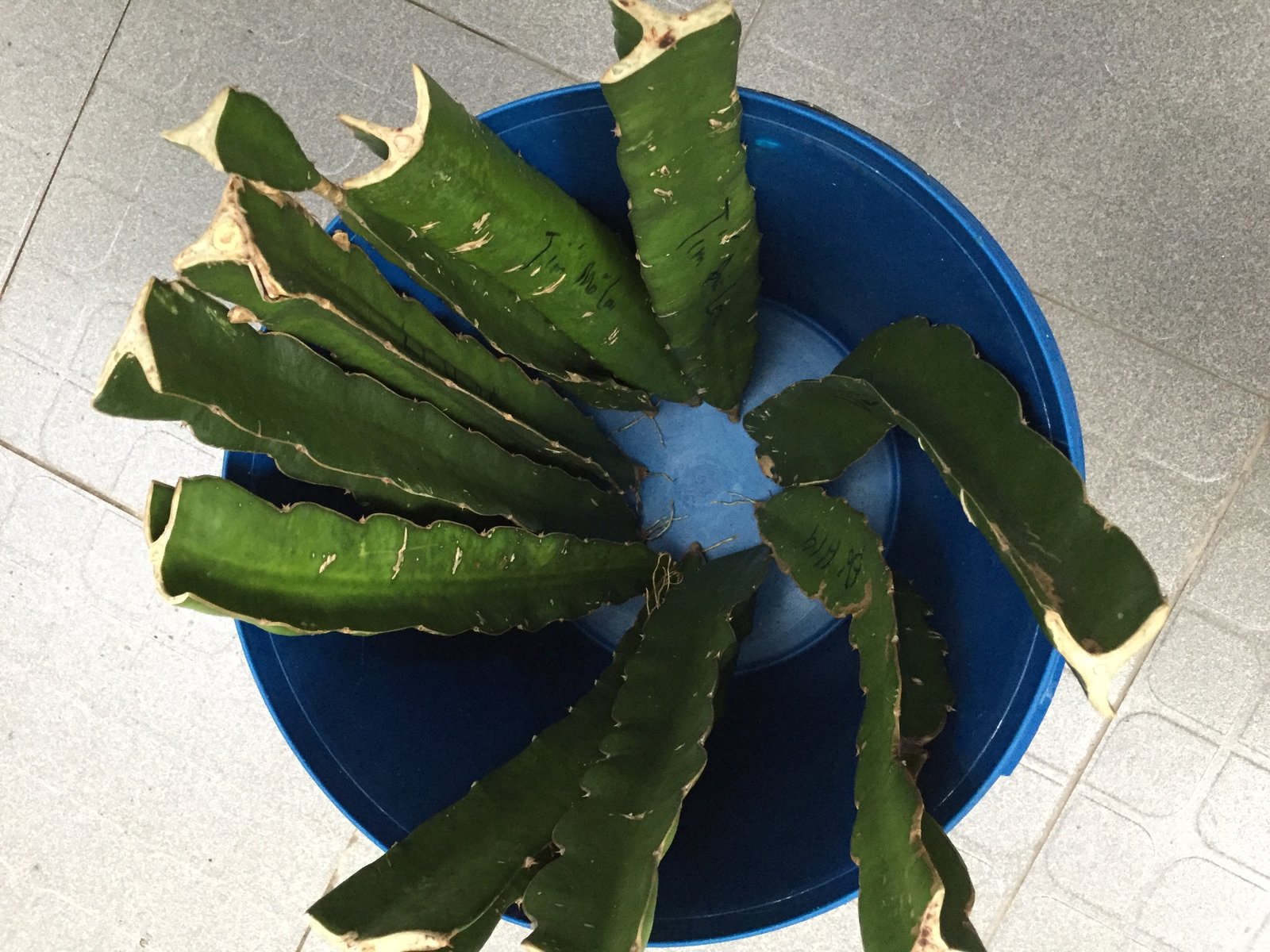
No, cactus etiolation is not reversible: the stretched growth is permanent. Once a section of a cactus has etiolated, that tissue never fills back out, and the narrowing stays visible for the life of the plant. This is the single most important thing to understand about etiolation, and it is where most advice gets it wrong: you cannot un-stretch a cactus.
What you can do is stop it going further. Correct the light and the new growth comes in normal, round, and properly spined, leaving a permanent narrow waist where the etiolation happened. If the look bothers you, the cosmetic options are mechanical: once the newest growth is coming in tight again, behead the plant below the good top and re-root the healthy crown, which usually roots within a few weeks, while the stretched base often pups from lower down. Our diagnostic guide covers telling a stretched but healthy plant from one that is actually failing.
The rule is general, not a cactus quirk. University of New Hampshire extension states it plainly for every plant: once a stem is stretched, adding light will not shrink it back down; it can only prevent further stretch. What varies is the exit. A leggy jade or a flattened, gappy Echeveria can be cut back or beheaded and re-rooted, a technique extension guides document for rosette succulents and growers routinely apply to stretched ones, so a leafy collection rebuilds its compact form on the plant it already has. A cactus gets no such regrowth. Beheading rescues the good top, as described above, but the stretched section is removed rather than repaired, and Iowa State records that many barrel-type cacti carry the narrow, misshapen growth permanently even after the light improves. That asymmetry is why etiolation matters more to cactus growers than to anyone else.
How do you fix a leggy cactus without burning it?
The fix is more light, added gradually. The trap is that a cactus grown in low light has not built the protective pigments and waxes its skin needs for strong sun, so moving an etiolated plant straight into full sun scorches it. Acclimate it over a couple of weeks instead, then hold it at the brightest level it can take, ideally ten or more hours of strong light a day, with good airflow to help the new stems thicken.
What grow light settings does a cactus need?
Indoors, a grow light is usually the only way to reach the intensity that keeps a cactus compact, since most windows fall short. Use a full-spectrum white LED in the daylight range, around 5000 to 6500 Kelvin, which covers the whole spectrum a cactus uses rather than the narrow red-and-blue of cheaper panels.
Intensity is the part that matters, and the most reliable target is daily light integral, the total light delivered over a day. For cacti and succulents that figure sits around thirty to fifty moles per square metre per day, and supplemental light is worth adding once the daily total drops below about twenty. In instantaneous terms, a maintenance level that keeps a plant alive runs in the low hundreds of micromoles per square metre per second, while the tight, well-spined growth that prevents etiolation is a grower target up around six hundred to a thousand or more in the growing season. The principle is simple even where the exact ceiling is not: more light, up to a point, means more compact growth.
Two settings round it out. Run the light for roughly twelve to fourteen hours a day in the growing season, dropping to eight to ten to cue a winter rest, and never leave it on around the clock, because a cactus needs a dark period. Keep a cool-running LED about a foot to a foot and a half above the plants, closer only if it does not throw heat. None of this replaces a genuine cold, dry winter, which is what stops the warm-and-dark indoor stretch covered in our guide to the cold, dry winter rest.
Which cacti etiolate the fastest?
The high-light desert genera stretch the fastest and show it the most clearly. Astrophytum wants almost full sun and draws up quickly indoors, losing its tight flat geometry; Ariocarpus and the columnar Echinopsis and Trichocereus types, the San Pedro group, are classic etiolation cases that elongate into pale narrow columns under glass. These are the plants to watch, and the ones whose care depends most on strong light.
The shade-tolerant genera are more forgiving but not immune. Gymnocalycium, which grows among grasses and shrubs in the wild and takes a brighter-shade position happily, still stretches in genuine low light, as its care guide notes. No cactus is truly a low-light plant; the difference between genera is how fast they punish you for getting the light wrong, and how visibly. Overwatering a plant that is already short on light compounds the problem, since the extra water fuels soft growth the light cannot support, which is one more reason to grow lean in a sharp mineral mix.
Seedlings are where this starts. A leggy seedling is this same physiology under its common name; extension guides define legginess as elongated internodes from absent or weak light, with crowding compounding it as neighbours race for the same lamp. University guidance for seedlings runs the lights 16 to 18 hours a day, longer than an established plant needs, kept within a few inches of the tops, with early thinning so no cell holds a crowd. A cactus seedling that stretches in its first season keeps that pinched start on display for decades, so the light has to be right from germination.
The non-cactus succulents on the same bench stretch on the same trigger with a kinder exit: a rosette that flattens open to catch more light is showing the first sign, and those plants keep the escape route the reversibility section describes. At rarecactus.com every specimen is raised from seed in our own greenhouse, and this is the flaw we guard against hardest, because a cactus wears its whole light history in its body. A compact, evenly grown specimen is years of correct light made visible.
Frequently asked questions about cactus etiolation
Why is my cactus growing tall and thin?
It is not getting enough light and is stretching to find more, a process called etiolation. In low light a cactus grows faster but thinner and paler, with weak, widely spaced spines and a tapered, pointed tip. Most cacti need at least four to six hours of direct sun, and far more to stay tight and compact.
Is etiolation reversible, and can a leggy cactus be saved?
The stretched growth is permanent and never thickens back, but the plant is fine. Correct the light and new growth comes in normal, leaving a narrow waist where it stretched. For a cleaner look, behead the plant below the stretched section once it is growing tightly again, callous the top, and re-root it; the base often pups.
How do I fix a stretched cactus without sunburn?
Increase the light gradually. A cactus grown dim has no sun protection built into its skin, so move it to gentle morning sun first and lengthen the exposure over two to three weeks before it sees full sun. Aim for ten or more hours of strong light a day, with good airflow to help new stems thicken.
What is the best grow light for a cactus?
A full-spectrum white LED in the daylight range, around 5000 to 6500 Kelvin. Aim for a daily light integral of about thirty to fifty moles per square metre per day, and add supplemental light when the daily total drops below about twenty. Run it twelve to fourteen hours a day, never around the clock, and keep it roughly a foot above the plants.
Will a cactus de-etiolate on its own?
No. A cactus does not un-stretch existing tissue, even in perfect light. The stretched section stays for the life of the plant, and only the new growth that follows good light comes in normal. The best you can do is correct the light to stop further stretching, then remove or re-root the stretched part if you want a tidier plant.
Biology LibreTexts, “Etiolation and Shade Avoidance” (phytochrome, PIF signalling) · Cole & Kuziw, “Succulent combinations,” Greenhouse Product News (2017), daily light integral targets · Royal Horticultural Society, cacti and succulents under glass · Henry Shaw Cactus and Succulent Society, cultivation notes · Anderson, E.F., The Cactus Family (Timber Press) · llifle, Encyclopedia of Living Forms · University of New Hampshire Extension, growing seedlings under lights · Iowa State University Extension, common problems of succulents and succulent propagation · Illinois Extension, supplemental lighting for seed starting · University of Minnesota Extension, lighting for indoor plants · Purdue University, witloof chicory forcing · Oxford reference dictionaries of biology, ecology, and plant sciences, etiolation · Etymonline, etiolate
Photos: etiolated cactus by Sloman (public domain) and cactus cuttings by Zenyrgarden (CC BY-SA 4.0), via Wikimedia Commons.