Hedgehog Cactus Care: The Collector’s Guide to Echinocereus
All ArticlesHedgehog cactus is the common name for Echinocereus, a genus of 85 species of small, hard-spined cacti from the western United States and Mexico, per Kew POWO. Give them strong sun, water from March to October, and a cold, bone-dry winter rest that sets the flowers. Below: care by species, including the rainbow cactus.
What makes a hedgehog cactus different from other small cacti?
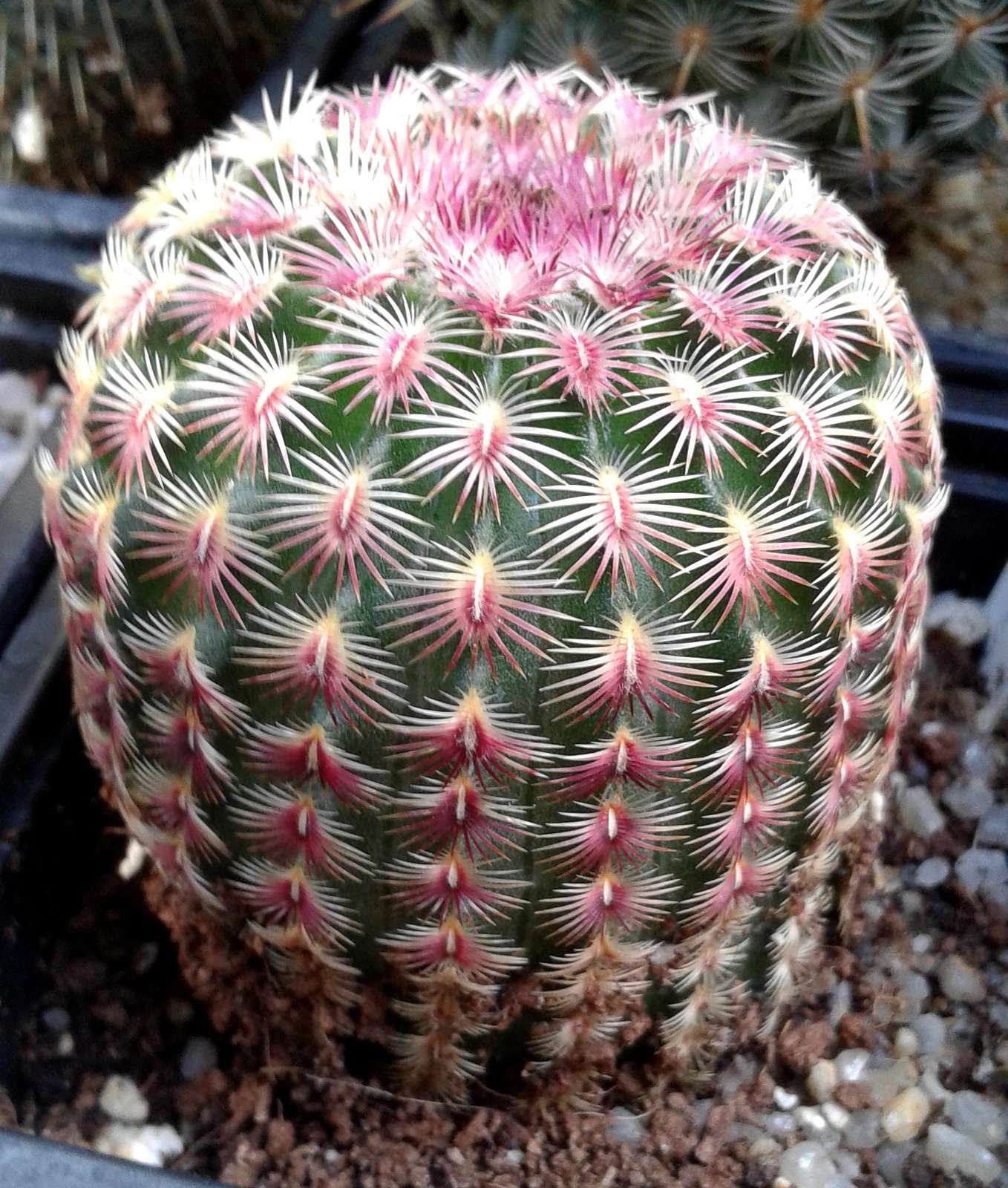
One trait settles identification: in many hedgehog species the flower buds form inside the stem and burst out through the skin, leaving a small scar where each bloom tore free. No other commonly grown cactus genus flowers this way. Pair that erumpent flowering with a green stigma in the centre of most flowers and a compact, ribbed, densely spined body, and you can separate Echinocereus from every lookalike on the bench.
The name needs one clarification, because three different genera get called hedgehog cactus in casual use. Echinocereus is the North American genus this guide covers. Echinopsis, also sold under the name, is South American. Pediocactus, small ball cacti of the US Intermountain West, borrow the name too, and Flora of North America lists it among that genus’s common names. If the plant has comb-like spines, a ribbed body, and flowers that erupt through the stem, it is an Echinocereus.
The genus runs from the shortgrass prairie of South Dakota and Wyoming south to Oaxaca, from near sea level to about 3,000 m in the Sierra Madre. That range is why care advice must be species-aware: a plant from a Wyoming ridgeline and a plant from a Sonoran oak woodland want the same summer but very different winters. Species profiles, habitat data, and field-number provenance for the genus live in our Echinocereus encyclopedia hub.
Size expectations are part of the appeal. Most species stay between 10 and 30 cm tall and 5 to 15 cm across, so a representative collection fits on a single bench. The clumping species build from there, piling stems into mounds over decades, but no hedgehog cactus ever becomes a barrel; individual stems top out at the scale of a small football even when a clump fills a square metre. Several species add a bonus most cacti never offer: juicy, edible fruit that earned E. enneacanthus and E. stramineus the name strawberry cactus across their Texas and Chihuahuan range.
How much water does a hedgehog cactus need?
Water a hedgehog cactus on a soak-and-dry rhythm from March through October: drench the pot until water runs from the drainage holes, then let the mix dry out completely before the next watering. In warm weather and a fast mineral mix that works out to roughly every ten to fourteen days. In a cool or humid spell, wait longer. The roots handle drought without complaint; they do not handle standing moisture.
From late October the plant shuts down, and so should the watering can. Keep the pot completely dry from November until spring. Hold the first watering of the new season until the flower buds are already visible and well advanced, usually March; watering earlier, before the plant has restarted, invites rot into inactive roots and can abort the bud set.
The winter drought is not neglect. It is the single most important input in the whole calendar, because bud initiation in this genus depends on the combination of cold and dryness. A hedgehog cactus watered through a warm winter grows soft, stretches, and skips flowering.
Pot choice feeds directly into the watering rhythm. An unglazed clay pot breathes and pulls the mix dry faster, which forgives an over-eager hand; plastic holds moisture longer and suits growers who water on the sparse side. Either way, keep the pot shallow and wide rather than deep, since the roots run sideways, and never let a saucer hold standing water under the drainage holes. Plants summered outdoors can take natural rain freely in warm weather; the discipline only starts when the nights cool in autumn.
How much sun and heat does a hedgehog cactus need?
Full sun, or as close to it as your growing space allows. Strong light keeps the body compact, the ribs tight, and the spines dense and saturated in colour; the banded display of the rainbow cactus in particular only develops under high light. Summer heat is no problem. These are desert and grassland plants that shrug off 40°C afternoons in habitat.
The exception is E. knippelianus, a soft-bodied, nearly spineless alpine species that can scorch behind glass. Give it bright light with protection from the hottest midday hours and it stays glossy dark green instead of bronzing.
An unshaded south-facing windowsill can carry a hedgehog cactus through winter, but a heated living room cannot give it the cold rest it needs, and indoor light is weaker than it looks. A plant kept warm and dim stretches into a pale column within a season. If you grow indoors, find the coldest bright spot in the house for winter: an unheated porch, a garage window, a cold frame.
Transition light gradually in spring. A plant that spent five months behind glass or under a winter sky can scorch in its first week of unfiltered June sun, and a scorch scar, like a mite scar, is permanent. Move plants outside on a run of overcast days or shade them with a screen for the first fortnight, then let them take everything the season offers. By high summer a well-placed hedgehog cactus should be sitting in more direct sun than almost anything else you grow.
What soil does a hedgehog cactus need?
A hedgehog cactus needs a fast-draining mineral soil in the 90 to 10 inorganic-to-organic range. The genus baseline we use is 40% pumice, 20% lava rock, 15% granite grit, 10% zeolite, 5% silica grit, and 10% worm castings. Whatever you mix, the test is the same: water should drain through and the surface should be dry to the touch within half an hour.
Geology splits the genus, and the mix should follow it. E. pectinatus and E. knippelianus grow on limestone in habitat and take a 5 to 10% crushed limestone supplement in the pot. E. rigidissimus is the opposite case, a plant of igneous-derived soils that resents lime: for it we drop the limestone and zeolite entirely and raise the granite share to push the mix slightly acidic.
At rarecactus.com we pot every Echinocereus on that 90 to 10 mineral framework, adjusted per species as above, and the per-species substrate tables on our specimen pages are read off those benches rather than off a supplier’s care card. Repot every two to three years in spring, and give clumping species width rather than depth; the root systems are shallow and spreading.
How cold-hardy is a hedgehog cactus?
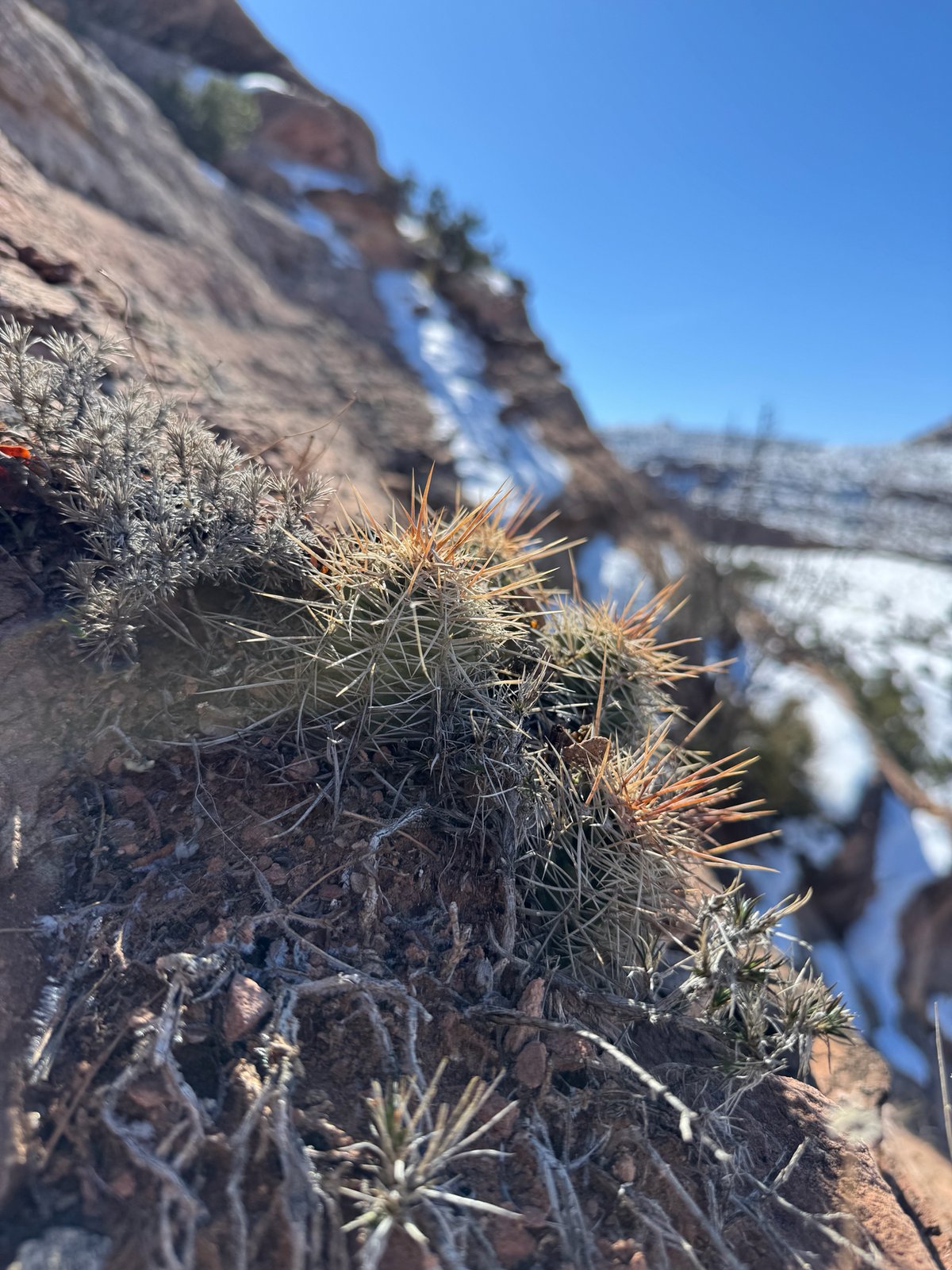
Cold tolerance is the most species-dependent fact in the genus, spanning a good 15°C between species, and the reason hedgehog cacti anchor outdoor cactus gardens far north of any saguaro. The US plains and intermountain species, E. viridiflorus and E. triglochidiatus, survive winters of −20°C and colder when kept dry, and hardened northern-provenance plants are grown in the ground in USDA zone 4 and 5 gardens. E. reichenbachii sits close behind, with northern strains documented through −23°C dry.
The Mexican highland and Sonoran species are hardy plants by houseplant standards but not by prairie standards. E. rigidissimus, E. pectinatus, and E. knippelianus take brief drops to somewhere between −5 and −12°C and need protection from hard, sustained frost.
Every figure above carries the same footnote: dry. Wet cold kills at any temperature on that list, because water in the tissue and in the pot is what freezes and ruptures. Provenance matters too; seed from a northern population outperforms seed of the same species collected at the southern end of its range. For overwintering setups, minimum-temperature planning, and what to do with plants that must stay outside, see our cactus winter care guide.
Growers in zones 4 to 6 who want hedgehog cacti in the ground should plant the hardy species on a slope or raised bed of pure mineral soil, with a rock or an eave shedding winter rain off the crown. The plants shrivel and flush purple through a hard winter, which looks alarming and is normal; they rehydrate and green up within weeks of the spring thaw. What they cannot survive is a winter spent sitting in wet ground.
Why is a rainbow cactus called a rainbow cactus?
The rainbow cactus is one particular hedgehog cactus, Echinocereus rigidissimus of the Arizona, New Mexico, Sonora, and Chihuahua borderlands, and its name records a real botanical mechanism. Each year the plant produces one flush of new spines at the growing tip, and each flush carries that season’s pigment: new spines emerge ruby red to magenta, fade through pink, and age toward cream and near-white.
Because the spines lie pressed flat against the body in dense combs, those annual flushes read as horizontal colour bands stacked down the stem. The plant wears its growth history as rings you can count from the outside. Band intensity tracks light: a rainbow cactus grown soft under weak light greys out, while one grown hard in full sun keeps the display that made the species famous.
The spines themselves are pectinate, meaning comb-like: 16 to 22 short radials per areole, arranged like the teeth of a comb and pressed flat against the body, with no long central spines to break the surface. The result is a plant you can handle with bare hands, wrapped in a spine coat that reads as texture rather than armament. In habitat it grows on rocky hillsides in semidesert grassland and along oak-woodland margins at 1,200 to 2,000 m, higher and cooler country than most people picture for a Sonoran cactus.
The most saturated form is subspecies rubispinus from the Sierra Oscura of western Chihuahua, with 30 to 35 ruby-and-white comb spines per areole. Rubispinus is the POWO-accepted spelling; rubrispinus persists in the trade and in some database records of the original 1982 name under E. pectinatus.
How do you grow Echinocereus rigidissimus successfully?
Three rules carry Echinocereus rigidissimus. First, sun: the banding is light-dependent, so give it the brightest position you have. Second, a gritty mineral mix: cut limestone and zeolite from the mix and let granite dominate. Third, a dry winter at cool temperatures; it tolerates brief drops to about −12°C but sits happiest resting between 0 and 10°C.
Know what the plant will and will not do. It grows as a solitary column, 6 to 30 cm tall, and it branches only very rarely, so pups are not a practical propagation route. Propagation is by seed, which is why a large, evenly banded specimen represents years of patient growing.
Water it a notch more cautiously than the rest of the genus. The dense spine coat hides the early signs of stress in both directions, so go by the calendar and the weight of the pot rather than by appearance, and err dry. A rainbow cactus that spends a week too wet in autumn is usually a dead rainbow cactus by February, and the loss only shows when the banding dulls and the base softens.
Flowers come in May to July: bright pink funnels with a white throat, 6 to 9 cm across, large for the size of the body. Habitat data, the full substrate table, and field-number provenance for the species live on our Echinocereus rigidissimus specimen page.
Which hedgehog cactus species are worth growing?
Kew POWO accepts 85 species of Echinocereus, a number worth citing precisely because older treatments count anywhere from 49 to about 70. These six cover the range of what the genus offers a collector, from zone-4 hardiness to the finest spine displays in the cactus family, and five of the six carry full profiles with substrate tables and habitat data in the encyclopedia.
Echinocereus rigidissimus (rainbow cactus)
The banded showpiece covered above. Solitary, pectinate, seed-only, and unbeatable in full sun. If you grow one Mexican-borderlands hedgehog, grow this one.
Echinocereus triglochidiatus (claret cup)
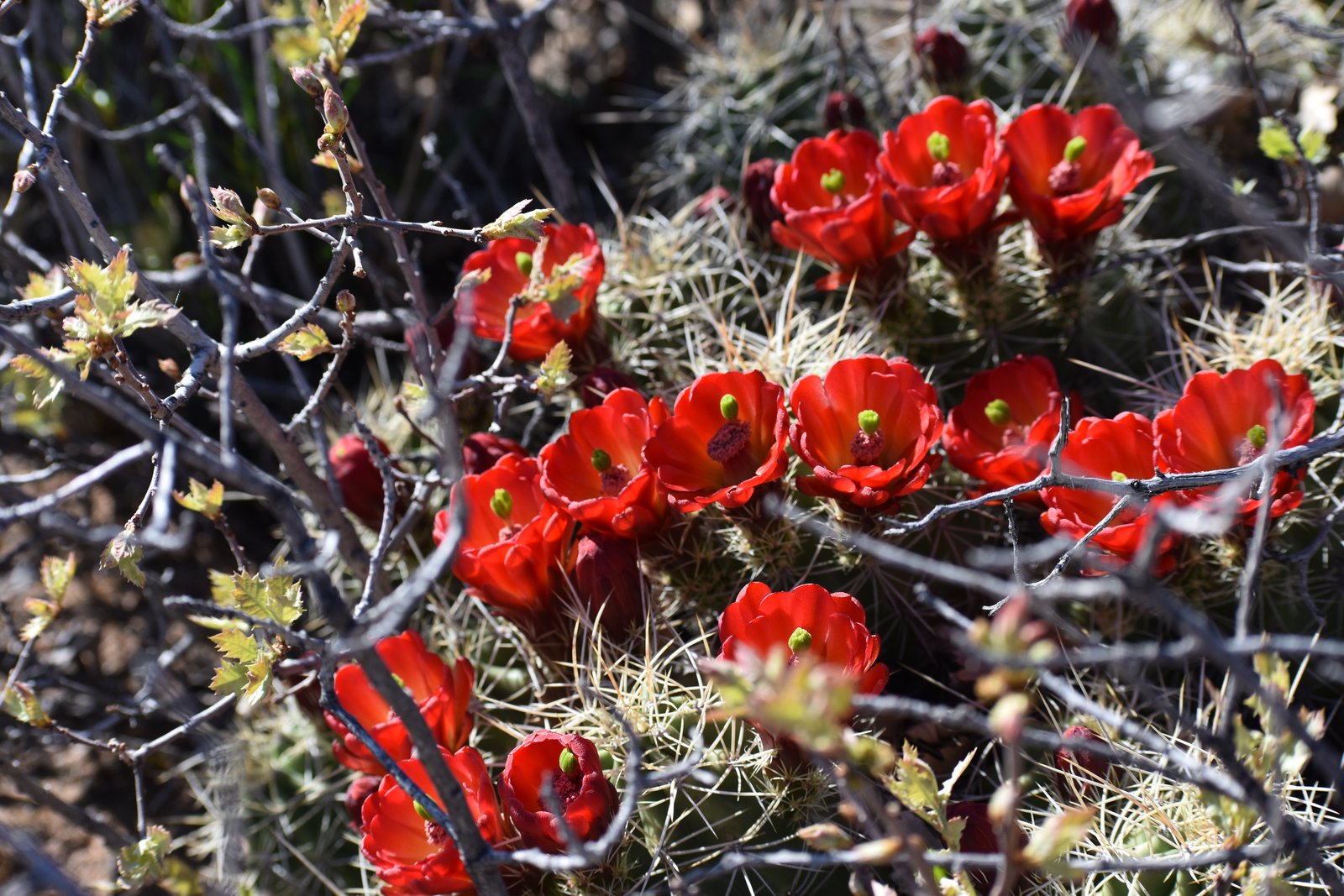
The mound-builder. Individual stems stay modest, but a happy plant piles up dozens to hundreds of them over decades and then covers the mound in scarlet, hummingbird-pollinated cups that stay open two to three days. Hardy through prairie winters when dry. One trap for buyers: under the current POWO treatment many hardy garden claret cups are the tetraploid E. coccineus, a separate accepted species; the label matters more to taxonomists than to your garden, but a field number settles it.
Echinocereus pectinatus (comb hedgehog)
The classic comb-spined hedgehog of the central Mexican Plateau limestone country, usually solitary, with pink to magenta flowers that reach 8 cm and beyond. The sugary, edible fruit explains the affection Mexican field botanists hold for it. Give it the limestone supplement.
Echinocereus viridiflorus (green-flowered hedgehog)
One of the smallest species and the northernmost, reaching South Dakota and Wyoming, with the coldest hardiness rating in this guide at USDA zone 4. The yellow-green 2.5 cm flowers carry a clean lemon scent, the only scented flower among the six here. A windowsill-sized plant with expedition-grade toughness.
Echinocereus knippelianus
The oddball: soft, dark green, nearly spineless, riding a tuberous root that pulls the body down to soil level in drought. It grows at 2,000 m and above in the Sierra Madre Oriental, flowers pink at a few centimetres of body, and wants midday shade where every other species on this list wants blast furnace sun.
Echinocereus reichenbachii (lace cactus)
The finest spination in the genus: tight, interlacing combs that read as lace over the whole body, topped by silky pink flowers. Northern provenance plants documented through −23°C dry make it a serious rock-garden cactus, not just a pot subject.
Honourable mention to the strawberry hedgehogs, E. enneacanthus and E. stramineus, grown across their native range as much for the strawberry-flavoured fruit as for the flowers.
Whichever species you choose, apply the same buying checklist. Look for a compact body with evenly spaced areoles from base to tip, which tells you the plant grew in honest light its whole life. Check the apex for mite scarring and the base for corking that hides softness underneath. Ask how the plant was raised and where the line came from; a seller who can answer with a sowing year and a provenance, ideally a collector field number, is selling a different class of plant than one who cannot.
When and why does a hedgehog cactus bloom?
Hedgehog cacti flower from April to July, species-dependent, and the flowers repay the winter discipline: from 2.5 cm lemon-scented cups on E. viridiflorus up to 12 cm funnels on the pink species, each lasting two to five days, a long run by cactus standards. Watch the stems in early spring and you can see the buds swell under the skin, then tear through it.
The trigger is the winter itself. Cold plus total drought is what initiates buds; a plant rested cool, ideally below 10°C and no lower than the limits in the cold-hardiness section, and kept bone dry will load with buds that a coddled plant never forms. From seed, expect first flowers inside five years for most species, sooner for E. viridiflorus.
Pollination biology explains the two colour camps. The scarlet species, claret cups above all, are built for hummingbirds: stiff, rounded tepals that serve as a perch, tubular form, daytime opening, and no need for scent. The pink and magenta species court bees instead, with wider, silkier flowers and, in E. viridiflorus, that lemon fragrance. In a greenhouse none of this matters for fruit set unless you hand-pollinate with a brush between two unrelated plants, which is also how you start a seed line of your own.
If a mature plant refuses to bloom, the diagnosis is nearly always a winter that was too warm, too wet, or too dark. The general mechanics of bud initiation, and the fixes, are covered in how to get a cactus to flower.
How do you propagate a hedgehog cactus?
Seed is the main road, and for the solitary species it is the only practical road. Sow on the surface of a sterile mineral mix at 25 to 30°C with a cooler night drop, and germination runs one to three weeks. Keep the seedlings in high humidity under a vented cover for the first months, in bright light short of direct sun, and prick them out once they are large enough to handle. They are unfussy compared to the difficult Mexican miniatures; a first-time seed grower could do far worse than starting here.
The clumping species offer a shortcut. E. triglochidiatus, E. stramineus, E. enneacanthus, and E. pentalophus all produce stems that can be cut in late spring, dried for two weeks until the wound calluses, and set on dry mineral mix to root. A cutting draws on decades of stored energy and establishes fast. The solitary species, the rainbow cactus first among them, rarely or never offer this option.
The two routes produce different plants. A plant raised from seed builds the dense, evenly spaced spination and compact habit the species shows in habitat, because it develops on its own schedule from day one. That is why collectors pay a premium for them, and why every specimen we sell is raised from seed.
What kills a hedgehog cactus, and how do you prevent it?
Winter moisture is the number one killer, and it is not close. A hedgehog cactus that goes into a cold winter with water in the pot rots from the roots up, and the damage is usually done weeks before the stem shows it. The fix costs nothing: stop watering in October and do not start again until buds show.
Spider mites come second, especially on plants overwintered in dry indoor air. They feed at the growing tip and leave a tan, scabby scar that the plant never sheds, so inspect the apex monthly through winter and knock an infestation down early. Mealybugs hide at the stem base and among the ribs; the dense comb spination of the pectinate species gives them cover, so check with a lens, not a glance.
Etiolation rounds out the list. A stretching, pale tip on a windowsill plant means the light is a fraction of what the spines were built for. Move the plant, because the stretched growth is permanent; the plant can only grow compactly above it once conditions improve.
Learn to tell damage from age before reaching for a knife. Corking, the tan, woody skin that climbs the base of an old stem, is normal maturity and no cause for action. Rot is different: soft, dark, and wet, usually starting at the base or at the roots. A rotting plant can sometimes be saved by cutting the stem well above the damage into clean tissue, drying the cut for two weeks, and re-rooting it on dry mix, but prevention through a dry winter beats surgery every time.
Is a hedgehog cactus legal to own and collect?
Nursery-grown hedgehog cacti are legal to buy and grow. Like nearly all cacti, the genus sits on CITES Appendix II under the family-level listing, which regulates international shipment, not ownership. Two taxa sit on the stricter Appendix I: E. ferreiranus subsp. lindsayorum, long circulated under its older name lindsayi, and E. schmollii, both Mexican rarities that should only ever change hands as documented seed-raised plants.
In the United States, four varieties carry Endangered Species Act protection: the black lace cactus, E. reichenbachii var. albertii, listed Endangered in 1979; the Arizona hedgehog, E. triglochidiatus var. arizonicus, Endangered since 1979; Davis’s hedgehog, E. viridiflorus var. davisii, an Endangered single-site Texas endemic; and the Kuenzler hedgehog, E. fendleri var. kuenzleri, downlisted from Endangered to Threatened in 2018 after decades of recovery work. Digging any hedgehog cactus from habitat is illegal on public land without a permit and pointless everywhere: collected plants re-establish poorly, and the genus grows readily from seed.
Buy seed grown plants with stated provenance, ideally a field number that ties the line back to a documented wild population, and the legal questions answer themselves.
Frequently asked questions about hedgehog cactus care
How often should you water a hedgehog cactus?
Water deeply and then let the mix dry out completely, which in warm weather means roughly every ten to fourteen days from March through October. Taper off in autumn and keep the plant totally dry from November until the flower buds are visible in spring. The winter drought is what sets the buds.
Why does a rainbow cactus show colour bands on its spines?
Each year the rainbow cactus, Echinocereus rigidissimus, produces one flush of new comb spines at its tip, and each flush emerges ruby red before fading through pink to near-white. The annual flushes stack as horizontal colour bands down the stem, one ring per year, and the display intensifies under strong light.
How cold-hardy is a hedgehog cactus?
It depends on the species. The US plains species E. viridiflorus and E. triglochidiatus survive −20°C and colder when bone dry, and northern strains grow in USDA zone 4 and 5 gardens. The Mexican highland species, including the rainbow cactus, tolerate brief drops between −5 and −12°C. Every figure assumes a completely dry plant; wet cold kills all of them.
What is the difference between a hedgehog cactus and a rainbow cactus?
A rainbow cactus is one particular hedgehog cactus. Hedgehog cactus is the common name for the whole genus Echinocereus, 85 species strong, while rainbow cactus names a single banded species, E. rigidissimus. Every rainbow cactus is a hedgehog cactus; almost no hedgehog cactus is a rainbow cactus.
When does a hedgehog cactus bloom?
April to July, depending on species, after a cold and completely dry winter rest. The buds form inside the stem and burst out through the skin, the signature trait of many species in the genus, opening into flowers from 2.5 to 12 cm across that last two to five days each. A warm or wet winter is the usual reason a mature plant fails to bloom.
Sources