
How Often to Water a Cactus (Not on a Schedule)
All ArticlesHow often to water a cactus depends on the mix, the pot, the light, and the temperature, never on a calendar; Maryland extension says plainly that plants should be watered when they need it, not on a schedule. Most potted cacti in growth land between weekly and every three weeks. Below: the checks that decide it.
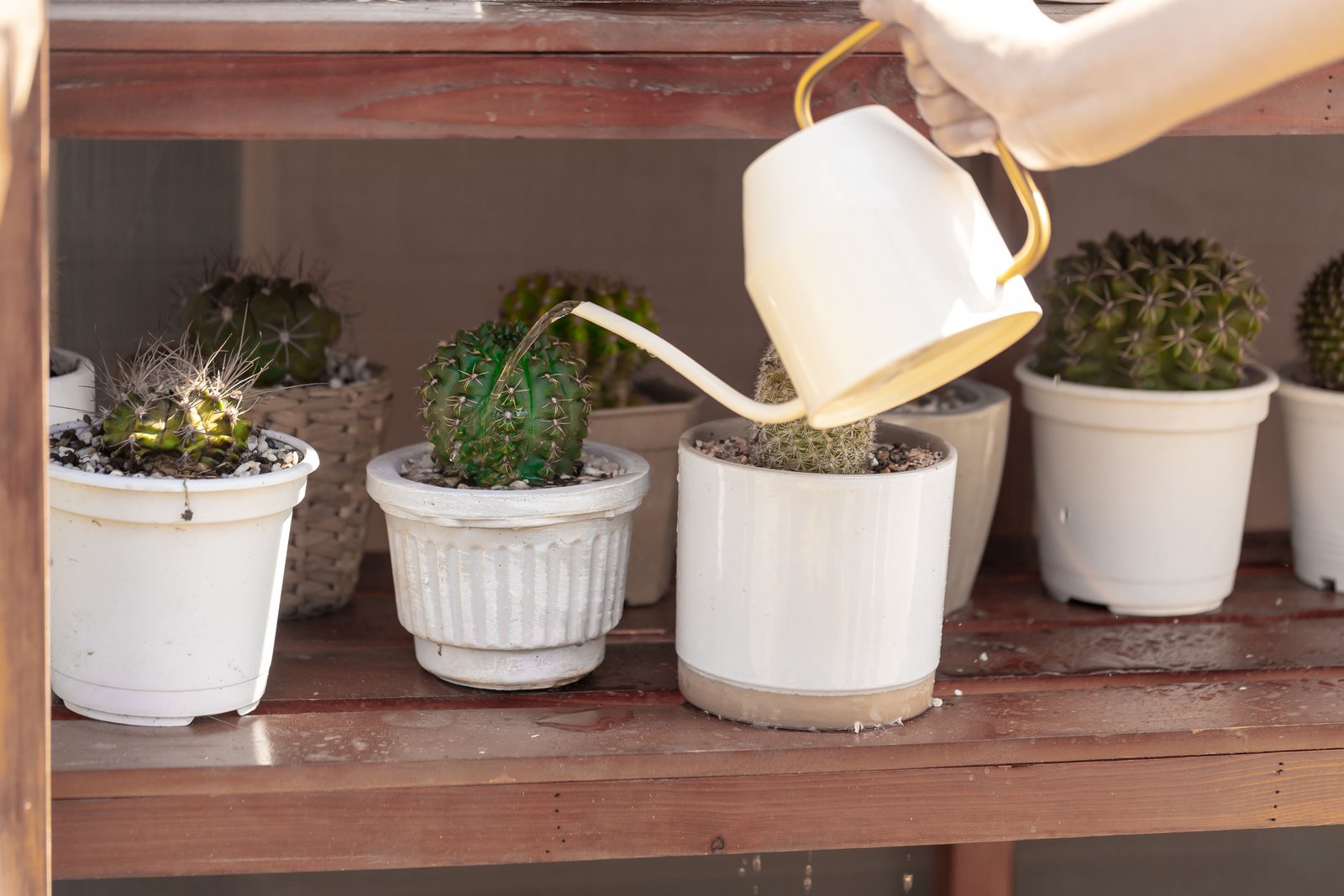
How often should you water a cactus?
Ask the authorities and the honest answer is a spread, not a number. For an indoor pot in the growing season, Colorado and South Dakota extension both say once a week or less, Iowa State says once every two or three weeks, and Missouri Botanical Garden says to check the moisture every two to three weeks and let the pot dry out thoroughly in between. For plants in the ground, Arizona extension puts a well-drained desert landscape at a 10 to 14 day summer interval and says an established native cactus may need no irrigation at all outside prolonged drought. Same plants, same season, and the documented range runs from a week to a month.
That spread is not sloppiness. It is the answer. Every one of those sources conditions its number on the same four things: the substrate, the container, the light, and the temperature. Iowa State attaches the caveat in the same sentence as its figure, and New Hampshire extension refuses a number entirely, naming the potting mix, the container size, the sunlight, and the ambient warmth as the deciders. Arizona extension is blunter still: unless you know the plant is short of moisture, do not water it, and if in doubt, do not.
Two head-on contradictions in the extension literature prove the point better than any argument. Clemson tells you to let a cactus dry slightly between waterings in the growing season; Minnesota extension says to always let the soil dry out completely. American extension guidance says to water until it runs from the drainage hole; the Royal Horticultural Society says to stop just before it does. These are careful institutions reading different pots, different mixes, and different climates, and the lesson is the one Missouri Botanical Garden draws: match the soil mix to the plant and water when the plant needs it, rather than trying to match a watering schedule to the wrong mix.
So this guide will not hand you a calendar. It hands you the checks that replace one.
How do you know when a cactus needs water?
A cactus needs water when the mix is dry at depth, and the classic check is a finger in the mix. Even here the authorities split five ways on depth: to the first knuckle, one inch, two inches, several inches, or, in the RHS version, a third of the way down the pot, which is the only rule that scales with pot size. Missouri Botanical Garden adds the endpoint that makes the test objective on a gritty mix: dry soil particles do not cling to the finger. Deep beats shallow for a cactus; Arizona extension probes the root zone 5 to 7.5 cm down and gives the hard rule this article would keep if it could keep only one: if the soil is even slightly damp, wait.
A spined plant defeats fingers, and the best replacement comes from Mississippi State: an unpainted wooden dowel, used exactly like a toothpick in a cake. Slide it to the bottom of the pot, draw it out, and read it; soil crumbs clinging to the wood mean moisture is still there. It reaches root depth in any pot, it costs nothing, and on a mineral mix the clinging read works where feel does not.
The third check is weight, and three sources teach it the same way: learn what your pot weighs dry, and the difference will tell you everything after that. Lift the pot after a full watering, lift it again when the mix has dried, and the two hands-worth of memory become a moisture meter that never needs batteries. The plant itself casts the deciding vote. Desert Botanical Garden describes wilting in a cactus as shrinkage and wrinkling of the surface, the go signal, while yellowing tissue and a soft, weak body are the too-wet signal and mean the watering can stays down.
What about moisture meters? The extension literature neither endorses nor warns against the handheld kind; it simply teaches the finger, the dowel, and the pot weight instead, with one Georgia extension page allowing that a battery meter can help. Use one if you like, calibrated against the dowel until you trust it. Do not trust the surface: on our own mineral mixes the top layer goes pale within hours of a soak while the root zone below is still wet, which is exactly the trap the deep checks exist to avoid.
Every check has the same failure direction, so the tie-breaker is fixed: when the tests disagree, wait.
A cactus that waits an extra week shrivels a little and refills on the next soak. The opposite error does not reverse so kindly.
What is the right way to water a cactus?
The right way to water a cactus is soak and dry. Iowa State states the whole method in one sentence: water thoroughly, wetting the entire root ball until it drains, then let the soil dry completely before watering again. Minnesota extension adds why the timid alternative fails: a series of repeated shallow sprinklings often results in distorted growth, wetting the top inch again and again while the root zone below stays dry. When you water, water like rain; then stop like a drought.
Water until it runs from the drainage hole. Clemson gives the two reasons: the runoff carries excess salts out of the pot, and a full soak guarantees the bottom two-thirds of the pot, which holds most of the roots, actually receives water. The RHS takes the opposite line for water conservation, stopping just as the first drainage appears, and the disagreement is worth knowing about; on a lightly fertilised mineral mix either discipline works, but a partial sip that never reaches the lower roots satisfies neither. For a mix so dry it sheds water, Clemson documents the fix: water once, wait half an hour, and water again.
Then empty the saucer. This is the one instruction with no dissent anywhere in the literature: a cactus must never stand in water, because, in Minnesota extension’s words, trapped excess water rots roots in a very short time. The documented grace periods run from a few minutes to a few hours; the safe habit is to drain the runoff as part of the same session that poured it.
Water quality matters less than frequency, with three documented exceptions. Never use softened water; four extension sources agree it has no place on a container plant, and California’s is bluntest, warning the salt kills them quickly. The RHS recommends tepid rainwater for cacti specifically, because tap-water minerals build up in the pot over time; the matching maintenance habit is an occasional deliberate leach, flushing at least twice the pot’s volume of clean water through the mix, every two to three months by California’s reckoning or every four to six by Maryland’s. And water at room temperature; Clemson’s figure is 17 to 22°C.
Bottom watering and misting: where they fit
Bottom watering, standing the pot in water until moisture wicks to the surface, is documented for houseplants generally rather than for cacti in particular, and it works for a plant whose crown you would rather keep dry. One cost is documented: water that drains and is then reabsorbed carries its dissolved salts straight back into the mix. The practical consequence is that a pot watered only ever from below never gets a cleansing rinse. If bottom watering is your habit, keep the sessions bounded, on the order of the 20 to 30 minutes Wisconsin extension allows when bottom watering a hairy-leaved houseplant, and let an occasional thorough top-watering flush the pot through.
Misting is not watering. Penn State extension is blunt about the mechanism: the humidity bump from a misting lasts only until the droplets evaporate, a matter of minutes, and a cactus in any case does its drinking through roots that respond to a real wetting of the root zone. A mist that dampens the surface and the spines delivers nothing where it counts. Skip it, and put the same effort into one proper soak when the checks say go.
Why do the pot and the mix change the schedule?
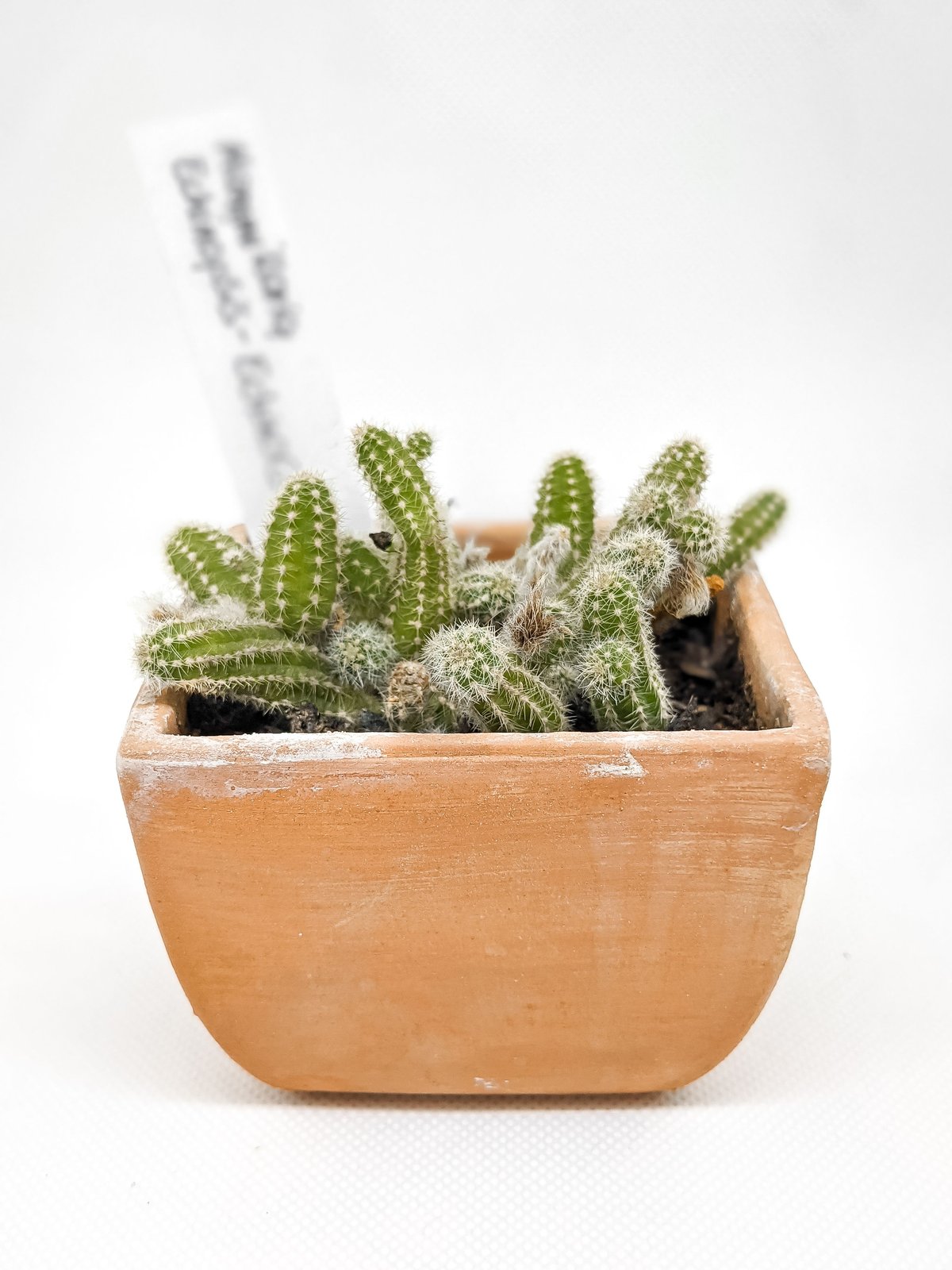
Because the pot, not the plant, controls how long the roots stay wet. After any pot drains, a layer of saturated substrate remains at the bottom; greenhouse scientists call it the perched water table, and its height is set by the substrate, not by the container. Purdue and Massachusetts extension both document the consequence: the taller the column of mix, the more of it drains and fills with air, while the same mix in a shallow pan holds a proportionally larger share of its volume as standing wetness. A deep pot is a drier environment than a bowl of the identical substrate, which is one reason shallow dish gardens drown cacti so reliably.
The numbers from greenhouse research make the point concrete, with the caveat that they were measured on a standard nursery mix, not a mineral cactus blend. In a drained six-inch pot of greenhouse substrate, Massachusetts extension reports roughly 65 percent of the pore space still holds water, and only about 70 percent of that water is actually available to roots. A freshly watered pot is far wetter for far longer than it looks from above, and a 2025 container study confirmed the corollary: the same medium holds a greater share of its volume as water in a shallower container. Pot shape is a watering decision.
The container walls are the second dial. Unglazed clay breathes and dries the mix from the sides, which is why Iowa State calls terracotta ideal for succulents, while plastic and glazed pots hold moisture longer; no source puts a number on the difference, but every source agrees on its direction. Size is the third: an oversized pot surrounds the roots with substrate they cannot drink dry, and the RHS names the result a soggy ring around the rootball. The rule against it is documented three times over: step up one to two inches in diameter, no more. And drainage holes are not negotiable in any source, ever.
The mix itself sets the baseline the other dials adjust. Iowa State’s ratio for succulents, one-third organic material to two-thirds mineral, is the only extension figure that points the right way at all; our own cactus soil mix runs far leaner, closer to one part organic in ten, and the point of a sharply mineral blend is precisely that it shortens the wet phase after every soak instead of hoarding it. Light and heat finish the equation: Missouri Botanical Garden notes a plant in full sun dries out far faster than one in filtered light, so the same pot on a different windowsill is on a different schedule. Change any dial, the interval changes with it, which is why the checks beat the calendar.
How does watering change with the seasons?
Watering follows light, not the date on the wall. Minnesota extension puts it simply: as light increases in spring, so does the plant’s need for water, and as light falls away in autumn the need declines with it. For most desert cacti on a northern windowsill that means a long ramp up from March, full soak-and-dry rhythm through summer, and a deliberate wind-down as the days shorten.
Winter is where the authorities agree on direction and differ on degree, and the spread deserves honest reporting. Clemson, Minnesota, and the RHS all say to water a dormant cactus only enough to keep it from shrivelling; Missouri Botanical Garden sets a hard ceiling of once a month; the RHS pairs its cool 8 to 10°C winter rest with minimal or no water at all; and the temperature-trigger school splits within itself, Arizona extension stopping irrigation once nights drop below 16°C (60°F) while Boyce Thompson Arboretum waits until nights near 4°C (40°F). Cold and wet together is the combination every source fears: Arizona documents that wet soil promotes rot most readily in the cool dormant season, and that autumn watering or feeding softens a cactus against the first freeze. The full winter setup, temperatures included, lives in our guide to how dormancy changes the schedule.
Two clocks run against the main one. Epiphytic cacti, the holiday and jungle group, want substantially more moisture than the desert genera and take their rest at different times, a documented exception rather than a rule violation, though even for those the RHS keeps a drying pause between waterings. And a handful of collector plants run the year backwards or sideways: a fog-belt Copiapoa sits at the driest extreme of the climate dial, while an autumn-growing Lithops wants its water when the desert genera are going dry. For those, the species page outranks any general rule, ours included.
Do outdoor and landscape cacti need watering?
Outdoor and landscape cacti mostly do not need watering. Arizona extension’s landscape guidance says irrigation is typically not necessary for an established cactus in the ground; during extended drought, watering roughly once every two to three weeks through summer enhances growth and flowering, and over-irrigating risks the same root rot as any soggy pot. Desert Botanical Garden runs a slightly more generous garden regime, watering established succulents every 14 to 21 days, and adds the only rainfall rule anyone documents: if it rains, skip the watering.
New plantings are the exception on both counts. Desert Botanical Garden waters fresh plantings every three to four days and stretches the interval as temperatures cool, always deeply and broadly so the root system builds outward. Site matters more than schedule here too: cactus roots run shallow, mostly in the top 15 to 30 cm, spreading far beyond the body to harvest light rain, so a deep, occasional soak over a wide circle serves them better than a frequent dribble at the stem, and a heavy clay soil that stays saturated is a site problem no schedule can fix.
What happens if you water a cactus wrong?
The two errors are not symmetrical, and the plant’s own design explains why.
Why cacti are built for gaps, not for damp
The physiology stacks every card on the dry side. A cactus runs crassulacean acid metabolism: its stomata open for carbon dioxide mostly at night, when the desert air costs least water, storing the carbon as malic acid for the next day’s photosynthesis. The peer-reviewed water-use figures run from 4 to as much as 100 millimoles of carbon fixed per mole of water spent, against roughly 1 to 3 for ordinary plants. Under real drought the system idles entirely, stomata shut around the clock, re-fixing its own respired carbon while the stem lives on storage. A plant engineered this thoroughly for episodic water treats your missed watering as weather. It has no comparable machinery for a pot that never dries.
Missouri Botanical Garden puts the stakes plainly: the most frequent cause of problems with cacti is overwatering. The pathway is documented step by step. Water fills the pore spaces of a constantly wet mix and oxygen availability drops, so roots stop growing and begin to die; the saturated, weakened root zone then invites the soil-borne rot organisms, and Arizona extension names the internal soft rot of barrel cacti caused by Pythium as a signature example. California’s IPM program adds the cruel twist that makes the error so expensive: unlike drought-stressed plants, rot-stressed plants do not recover when watered, so the instinct to pour more makes everything worse.
The symptom pictures overlap at exactly the wrong spot. Virginia Tech documents, for container houseplants generally, that wilting is the first symptom of both overwatering and underwatering, which is why the checks in this guide read the substrate and the pot first and treat the plant as the confirming vote, not the opening one. Past the overlap the pictures separate: too wet reads as yellowing tissue and a soft, weakening body on a mix that will not dry, and by then our guide to what root rot actually looks like is the page you need. Too dry reads as shrivelling, wrinkling, and a plant visibly deflating on a bone-dry mix, and it is the better error to make.
That asymmetry is documented, not folklore. Arizona extension states that most desert plants tolerate too little moisture far better than too much, and New Hampshire extension turns it into the standing rule: when in doubt, err on the side of underwatering. The RHS dissents in part, calling underwatering equally problematic over the long run, and the honest synthesis is that both injuries cost you, but only one of them reverses. A shrivelled cactus rebuilds; its roots are built for the cycle, throwing out new feeder roots within about eight hours of rain after drought and refilling the stem from storage. A rotted core does not rebuild. When a plant is already failing and you cannot tell which error you made, work through the full diagnostic flowchart before touching the watering can.
The machinery behind that recovery is documented in the cactus root literature, and it explains why the whole soak-and-dry method works. During drought a cactus sheds its fine feeder roots and the remaining roots shrink, by roughly a fifth to a quarter in diameter, opening air gaps that seal the plant off from the drying soil around it. Rewetting reverses all of it: new lateral roots measure 2 to 4 mm within a day of watering and extend nearly a centimetre a day after that, total root length can jump by more than a quarter, and the root system’s water-carrying capacity recovers to meet or beat its pre-drought values. One caution rides along: the same literature notes that gradual drying gives roots time to adjust while rapid drying kills the growing tips, so a gritty mix that dries over days is the plan, and a small pot flash-drying on a baking windowsill is not.
Do seedlings and fresh repots follow the same rules?
No, seedlings and fresh repots do not follow the same watering rules, and the exceptions are documented. A germinating cactus is the one life stage that must not dry out completely: Arizona extension’s propagation guide keeps seed trays under a humidity cover and holds the medium between the two extremes, neither totally dry nor waterlogged, while seedlings establish. The soak-and-dry rhythm is earned later, as the plant builds the storage tissue that makes drought survivable.
A fresh repot runs the other way: dry first, water later. Clemson says to wait several days after repotting before the first watering; Desert Botanical Garden says one to two weeks for newly planted succulents; Arizona extension, dealing with dug plants whose roots were cut, waits until new growth shows at the apex, which can take several weeks. The dry pause lets damaged roots callus instead of rotting in moist mix. At rarecactus.com every repot on the bench waits seven to ten days dry before its first watering, a house number that sits inside that documented range, and the full sequence, from bare-rooting to the first cautious soak, is in our guide to repotting a cactus.
Everything else in cactus care bends toward the same discipline this page teaches: check, then water, then let the pot argue for itself. The rest of the care library, light, soil, seasons, and the problem pages, is collected on our plant care hub.
The collector’s takeaway
A cactus is not watered on a schedule; it is watered on evidence. The probe or the dowel says the root zone is dry, the pot lifts light, the season says grow, and only then does the water go on, thoroughly, until it drains, with the saucer emptied after. Between waterings the pot dries completely, in winter it barely sees the can at all, and when any check disagrees with your itch to water, the check wins. Master that loop once and every pot on the bench sets its own perfect interval.
Frequently asked questions
How often should you water a cactus?
As often as the pot dries out, which is the honest version of the documented range: extension guidance for potted cacti in the growing season runs from once a week to once every three weeks, depending on substrate, container, light, and temperature. Check the root zone for dryness and the pot for lightness rather than following a calendar.
How do you know when a cactus needs water?
Probe the root zone, not the surface: a finger or an unpainted wooden skewer pushed deep should come out clean and dry, with no clinging soil crumbs. The pot should feel light against its known wet weight, and slight shrinkage or wrinkling of the plant body confirms it is drawing on stored water.
How long can a cactus go without water?
Far longer than it can go wet. A cool, dormant cactus routinely passes an entire winter on little or no water under extension guidance, established desert cacti in the ground often need no irrigation outside prolonged drought, and Missouri Botanical Garden notes detached stem sections can survive, slowly desiccating, for over a year.
Is it better to underwater or overwater a cactus?
Underwater. Arizona extension states that desert plants tolerate too little moisture far better than too much, and New Hampshire extension advises erring on the dry side when in doubt. Both errors cost growth, but a shrivelled cactus refills from storage on the next soak, while a rotted root system does not come back.
Does an indoor cactus need water more or less often than an outdoor one?
Neither reliably; the pot sets its own schedule. A container dries by its size, material, mix, and room, and needs checking either way, while Arizona extension notes an established landscape cactus in native soil may need no irrigation at all beyond rainfall except in prolonged drought.
Sources