
How to Propagate Cactus: Seed, Cutting & Graft Guide
All ArticlesCactus propagation works by one of three methods: seed for any species, cutting for columnar and clustering genera, or grafting for slow-growing rarities. Each method has a different timeline. Mammillaria reaches first flower in three to five years from seed. Aztekium ritteri can take twenty or more. This guide covers the substrate, technique, and ethics behind each.
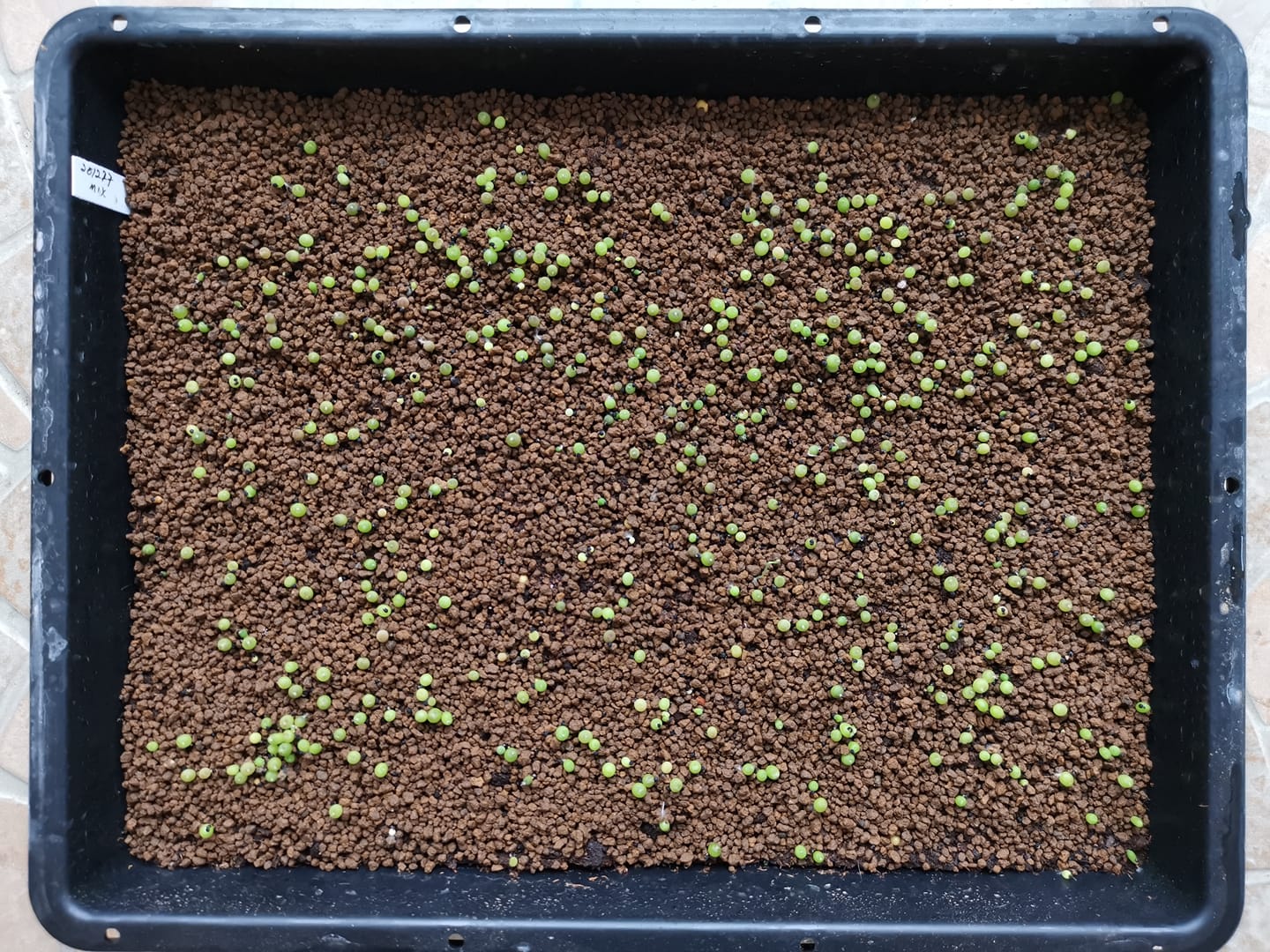
Which propagation method should you use?
The method is dictated by the species, not by grower preference. Seed works for every cactus species; nothing else does. Cuttings work only for genera with stem segments that can be removed cleanly without killing the plant: columnar cacti (Trichocereus, Cleistocactus, Cereus, Pachycereus), clustering globulars where individual heads can be detached (Mammillaria, Echinopsis, Rebutia, Gymnocalycium), and the pad-segmented Opuntioideae (Opuntia, Cylindropuntia, Pereskiopsis). Solitary globulars including Astrophytum, Lophophora, Ariocarpus, Aztekium, and Lithops cannot be propagated from cuttings at all. Grafting exists for cases where seed propagation is prohibitively slow or where mutant forms cannot survive ungrafted.
Time scale is the second filter. Mammillaria from seed reaches first flower in three to five years. Astrophytum in four to seven. Ariocarpus in seven to fifteen. Aztekium ritteri takes twenty years or more from seed; the species exists in cultivation at collector-relevant volumes only because the Pereskiopsis seedling-graft compresses that timeline to twelve to eighteen months. The grafting section below treats this technique as a conservation tool rather than a shortcut. Browse our cactus encyclopedia for the per-species data behind these timelines.
For the long-term collector position on cultivation type, the rarecactus.com standing argument is that seed-grown specimens carry the curator value while grafted stock serves the supply chain and the conservation use case. The two are not in conflict. Most collectors graft to reach flowering size, then degraft, then keep the seed grown sister plant as the show specimen.
Seed propagation: the universal method
Seed is the universal method and the only one that produces the collector-grade specimens the encyclopedia documents. Every genus in cultivation reaches the trade as seed-grown stock from specialist nurseries (Koehres, the Cactus and Succulent Society of America Seed Depot, Mesa Garden archive distributions, Ethical Desert, Specialty Cactus Nursery). Reputable sources sell seed from cultivation-propagated parent plants. Wild-collected seed is ethically problematic and often illegal for CITES Appendix I species; the cactus black market piece covers the practical limits.
What substrate do cactus seeds need?
The rarecactus.com position is 100 percent inorganic substrate at fine grain (1-2 mm). The recipe: 40 percent sifted pumice fines, 25 percent fine silica sand, 20 percent fine zeolite, 15 percent decomposed granite fines. No peat, no coir, no perlite, no coarse sand. The retail “cactus seed mix” sold at most garden centres contains peat or coir, which stays wet at germination humidity levels and produces the fungal damping-off that kills most home-grow seed trays. For the full substrate logic across all rarecactus.com cultivation guidance, see the five-mineral cactus soil recipe.
Most European commercial nurseries (Koehres included) use a mix with a small organic fraction (5-10 percent peat or fine bark) for speed of germination. The trade-off is moisture management: organic mixes germinate slightly faster but require more discipline to avoid damping off. For the home grower without daily inspection capacity, 100 percent mineral is the safer position.
How long does it take to grow a cactus from seed?
Germination is fast for most genera. Time to first flower is not. The table below pairs the seed-grown timeline with the Pereskiopsis seedling-graft timeline. The graft column is provided for context, not because it is the recommended path for collectors.
| Genus | Seed-grown to first flower | Pereskiopsis graft to flower |
|---|---|---|
| Mammillaria | 3-5 years | 12-18 months |
| Astrophytum | 4-7 years | 18-24 months |
| Echinocereus | 3-5 years | 12-18 months |
| Lophophora | 5-10 years | 18-24 months |
| Ariocarpus | 7-15 years | 2-4 years |
| Echinocactus grusonii | 20+ years | 3-5 years |
| Turbinicarpus | 3-6 years | 12-18 months |
| Aztekium ritteri | 20+ years | 12-18 months |
The Aztekium row is the headline number. A seed-grown Aztekium ritteri reaches first flower in roughly two decades; the same plant on a Pereskiopsis rootstock reaches first flower in a year. The species exists in the trade because of the graft path, not despite it. The graft section below treats Pereskiopsis seedling-grafting as the conservation technology that made this supply chain possible.
Common seed-tray failures
Damping off is the dominant failure mode. Mineral substrate plus fungicidal seed treatment plus careful humidity reduction prevents it. Etiolation is the second failure: seedlings stretch toward an inadequate light source and never recover their compact form, even with later correction. Provide 14-16 hours of bright light through germination and the first year. Mineral salt buildup on substrate and seedling collars appears after 12-18 months of constant humidity; flush periodically with distilled or rainwater. For the broader rot and decline pathology that touches every method on this page, see why is my cactus dying.
How do you propagate cactus from cuttings?
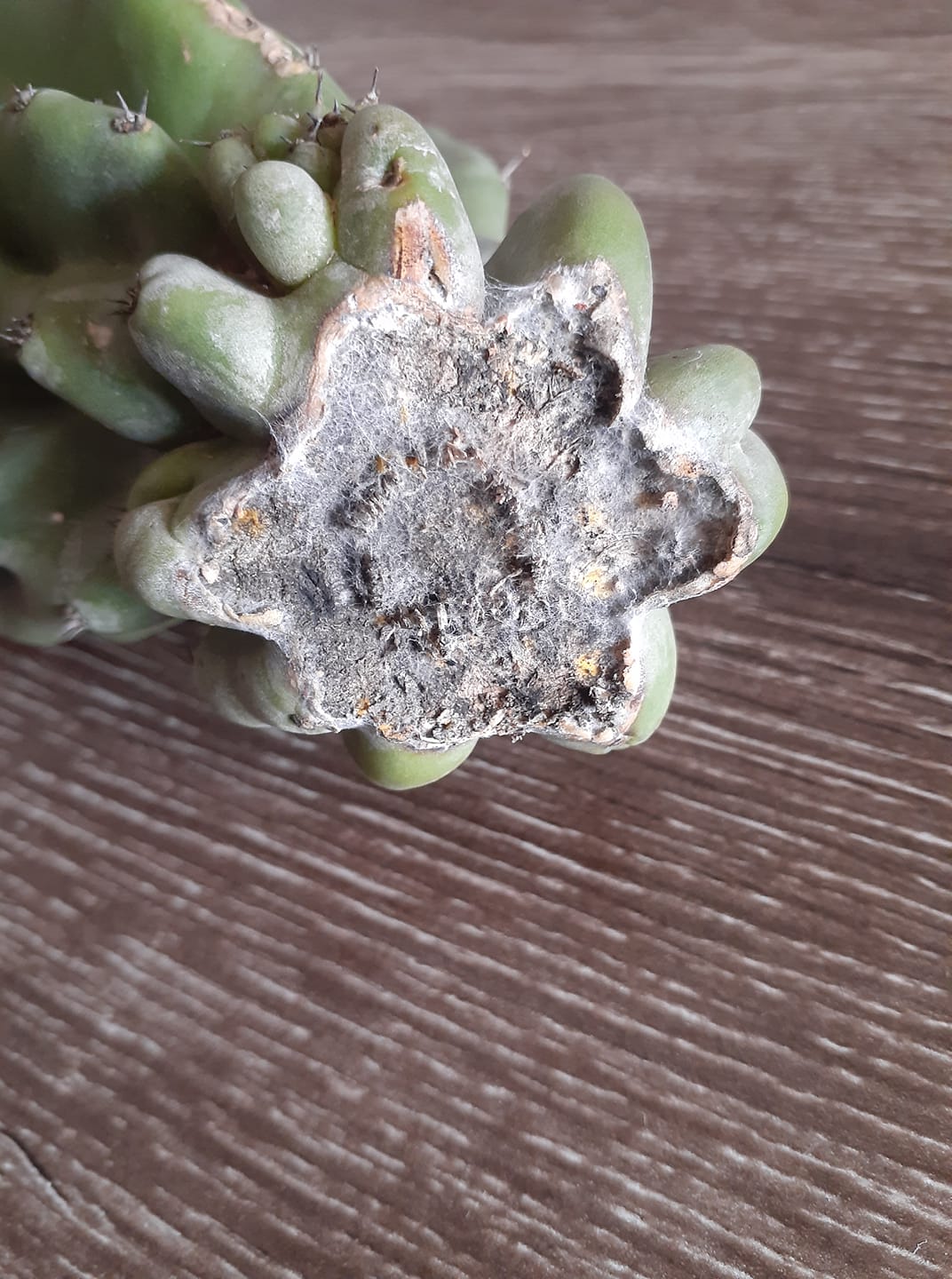
Cuttings are the fastest path to a flowering-size clone of an existing plant, but only for genera that produce removable stem segments. The split is clean: columnar cacti (Cleistocactus, Trichocereus, Echinopsis section Trichocereus, Cereus, Pachycereus, Stenocereus, Pereskia) root readily from stem sections; pad-segmented Opuntioideae propagate from a fallen pad pressed against any substrate; clustering globulars (Mammillaria, Rebutia, Echinopsis section Lobivia, Gymnocalycium offsets) produce pups that detach at a natural constriction and root within weeks. Solitary globulars including Astrophytum, Lophophora, Ariocarpus, and Aztekium do not root from stem cuttings. Seed or graft are the options for those genera.
The callous step is non-negotiable. A cutting planted with a wet or fresh-cut surface introduces fungal pathogens directly into the vascular column; rot proceeds upward from the cut and the entire cutting fails. The papery dry skin that forms on the cut surface during the 5-14 day dry rest is what seals the vascular tissue and prevents pathogen entry. Larger cut surfaces need longer callous time, not less.
Offset and pup propagation
Many clustering cacti produce pups (vegetative offsets) at the base or sides of the main stem. The mature pup eventually develops root initials at the attachment point, even before separation. Mammillaria is the prototypical offsetting genus and the most beginner-friendly source of cuttings. Mammillaria gracilis fragilis takes this to an extreme: pups detach at the slightest touch and root within days of contact with substrate. Echinocereus species cluster less aggressively but produce branching cuttings that root cleanly when callous-planted in mineral substrate. The cutting protocol above applies; the only modification is callous time, which can be as short as 3-5 days for small offsets with minimal cut surface area.
What is the best rootstock for cactus grafting?
Grafting is the cactus-propagation technique that exists for cases where seed is too slow or where the scion cannot survive ungrafted. The technique becomes routine once vascular alignment is understood. What separates a working graft from a failed one is the rootstock choice. Five rootstocks dominate the market, each with distinct use cases.
| Rootstock | Use case | Cold tolerance | Longevity |
|---|---|---|---|
| Pereskiopsis spathulata | Seedling speed-grafts; Appendix I rarities | Not cold-tolerant (Zone 11) | 3-5 years; transfer scion before frost |
| Trichocereus spachianus | Permanent display grafts | To approximately 5°C | 15+ years; European specialist standard |
| Trichocereus pachanoi | Permanent display grafts; faster than spachianus | To approximately 0°C | 20+ years; preferred in UK and northern Europe |
| Myrtillocactus geometrizans | Large scion; hot dry conditions | Zone 9 minimum | 10-15 years; Mexican commercial standard |
| Hylocereus undatus | Retail production only; avoid for collector plants | Not cold-tolerant | 5-8 years; aesthetically poor |
Pereskiopsis seedling-grafting: how Aztekium ritteri reached the trade
The Pereskiopsis seedling-graft is the propagation innovation that made Aztekium ritteri and other ultra-slow App I rarities (Pelecyphora aselliformis, Turbinicarpus pseudomacrochele, Ariocarpus kotschoubeyanus) available at collector-relevant volumes and prices. A 5 to 10 day old seedling, still bearing its cotyledons, is sliced cleanly at the base and pressed onto the cut apex of a juvenile Pereskiopsis stem. Parafilm secures the union; a humidity tent prevents desiccation. Within 5-10 days the union forms. Within 12-18 months the scion reaches mature flowering size that would take twenty years or more from seed.
The technique has a conservation dimension. Without Pereskiopsis seedling-grafting, the pressure on wild Aztekium ritteri populations in Nuevo León, Mexico would be substantially higher than it is. Cultivated supply suppresses the price floor for illegal wild-collected specimens; legal supply is what makes the black market unprofitable. For the broader CITES context that frames this trade, see CITES Appendix I cacti.
The standard Pereskiopsis protocol moves the scion off the rootstock after 12-24 months. The grafted scion either degrafts once the body has reached transferable size, or transfers to a permanent Trichocereus rootstock for the long term. Permanent Pereskiopsis grafts fail at the first frost; the rootstock is not cold-tolerant. Treat Pereskiopsis as a seasonal scaffold, not a permanent mount.
Flat grafting on Trichocereus: the permanent-display path
Flat grafting on Trichocereus spachianus or T. pachanoi is the European collector standard for permanent display specimens of globular cacti. The rootstock is a sterilised, cleanly cut Trichocereus stem 15-25 cm tall and 4-6 cm thick. The scion sits centred on the cut apex; the vascular rings of scion and rootstock must align at at least one point. Elastic bands stretched lengthwise over the pot and across the scion apply the light downward pressure needed for union formation. Bands come off after 7-10 days. A successful Trichocereus graft is good for 15-25 years of vigorous scion growth before the rootstock declines.
Where should you source cactus seeds?
Reputable seed sources sell from cultivation-propagated parent plants with documented provenance. The trade standard list includes Koehres in Germany, the Cactus and Succulent Society of America Seed Depot, the International Succulent Institute (ISI) at the Huntington, Mesa Garden archive seed redistributed through specialist nurseries, Ethical Desert in the United States, and Specialty Cactus Nursery. Each maintains documentation tying seed lots back to documented field collection numbers or cultivated parent stock. Browse our field-number database for the provenance records that good seed sources build their catalogues around.
For CITES Appendix I species, seeds require phytosanitary documentation for cross-border trade in most jurisdictions. The covered genera include Ariocarpus, Aztekium, Pelecyphora, Turbinicarpus (most species), Obregonia, Strombocactus, and several Mammillaria species. Reputable sellers will provide CITES paperwork on request; an anonymous online seller of Ariocarpus or Aztekium seed without paperwork is almost certainly selling undocumented or wild-collected material. The legal liability sits with the buyer in most importing countries.
Frequently asked questions about cactus propagation
How do you propagate cactus from seed?
Surface-sow cactus seeds on a 100 percent mineral substrate (sifted pumice, fine silica sand, fine zeolite) at 1-2 mm grain. Treat seeds with Captan or Physan 20 first to suppress damping off. Cover the tray for 90 to 100 percent humidity, provide bottom heat of 25 to 28°C, and bright indirect light. Most genera germinate in 7 to 14 days; harden off after 6 to 8 weeks.
What is the best rootstock for cactus grafting?
Pereskiopsis spathulata is the best rootstock for seedling speed-grafts and CITES Appendix I rarities; it compresses 25-year seed timelines to 12 to 18 months but is not cold-tolerant. Trichocereus spachianus or T. pachanoi is the best rootstock for permanent display grafts; both are cold-hardy to around 0 to 5°C and support scions for 15 to 25 years. Avoid Hylocereus for collector-grade plants.
How long does it take to grow a cactus from seed?
Germination takes 7 to 60 days depending on genus. Time to first flower varies far more: Mammillaria 3 to 5 years, Astrophytum 4 to 7 years, Lophophora 5 to 10 years, Ariocarpus 7 to 15 years, Aztekium ritteri 20 years or more. The Pereskiopsis seedling-graft compresses every one of these timelines to roughly 12 to 24 months by transferring the scion to a faster-growing rootstock during the early growth phase.
Do you need a CITES permit to buy cactus seeds?
CITES Appendix I species (Ariocarpus, Aztekium, Pelecyphora, most Turbinicarpus, Obregonia, Strombocactus) require phytosanitary documentation for cross-border trade even as seeds. Appendix II species are more permissive. Domestic seed-grown stock from documented nurseries is generally legal. Buy from sellers with explicit documentation; the legal liability rests with the buyer in most importing countries.
How do you take a cactus cutting without killing the plant?
Use a sterile blade wiped with 70 percent isopropyl alcohol. Cut straight across at a natural constriction. Allow the cut surface to callous in dry shade for 5 to 14 days, longer for thick columnar sections. Plant the calloused cutting into dry 100 percent mineral substrate and withhold water for 10 to 14 days. The callous step is non-negotiable; planting before it forms is the main cause of cutting failure.
Sources · verified May 2026
Anderson, E.F. (2001). The Cactus Family. Timber Press, Portland, Oregon. Chapter on cultivation and propagation · Hunt, D.R., Taylor, N.P. and Charles, G. (2006). The New Cactus Lexicon. dh books, Milborne Port · Koehres Kakteen Sowing Instructions: cultivated-seed germination protocols. kaktus-koehres.de/Downloads/sowing_instructions.pdf · British Cactus and Succulent Society, Cultivation Notes on Aztekium. bcss.org.uk/cultivation-notes-on-aztekium/ · University of Arizona, Double-Cut Techniques for Grafting Cacti to Trichocereus pachanoi. repository.arizona.edu/handle/10150/556561 · Royal Botanic Gardens Kew, CITES and Cacti: a practical reference. kew.org/sites/default/files/2019-09/CITESandCacti_full.pdf · International Succulent Institute (ISI) at the Huntington Botanical Gardens, Plant Introductions catalogue. media.huntington.org/ISI/catalogintro.html · Cactus and Succulent Society of America Seed Depot. shop.cactusandsucculentsociety.org/pages/seed-depot · Living Rocks, Seedling Grafting on Pereskiopsis. living-rocks.com/pereskiopsis.htm · Herbalistics, Grafting cacti to Pereskiopsis spathulata. herbalistics.com.au/grafting-cacti-to-pereskiopsis-spathulata/ · Cactus Conservation Initiative, ethics of cultivated vs wild seed sourcing