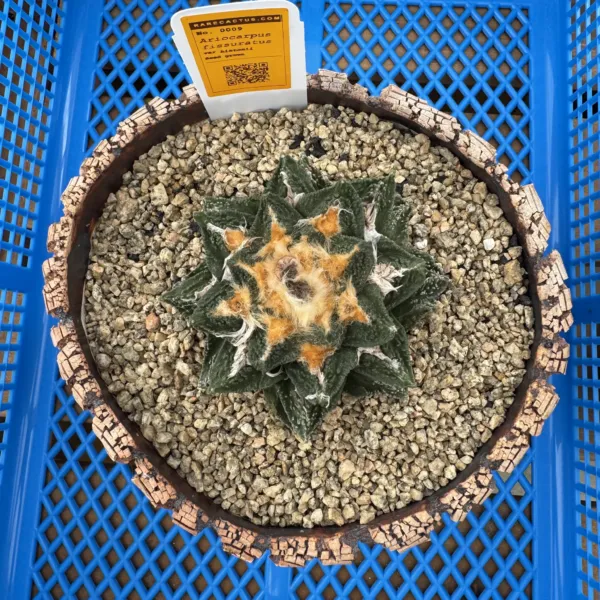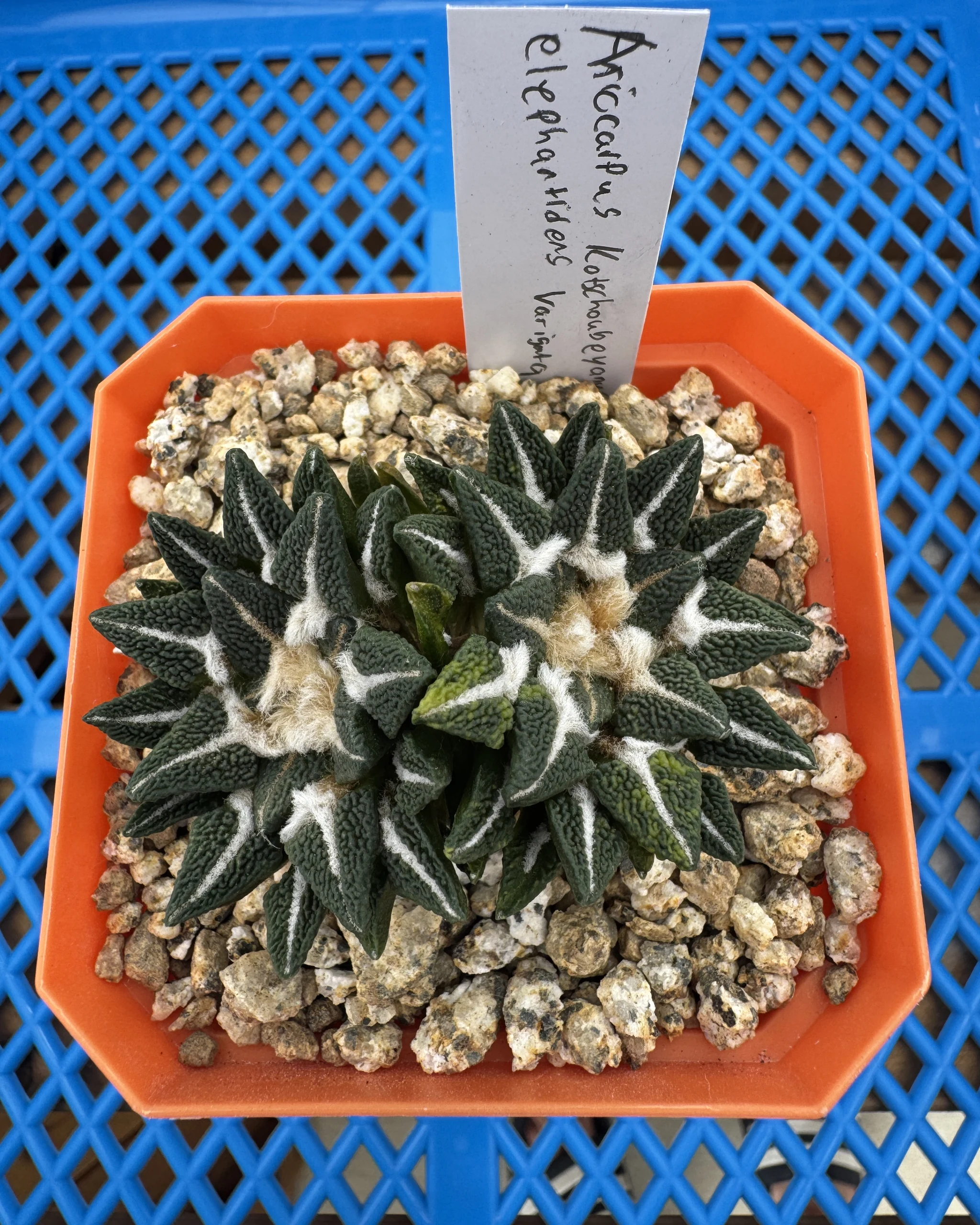
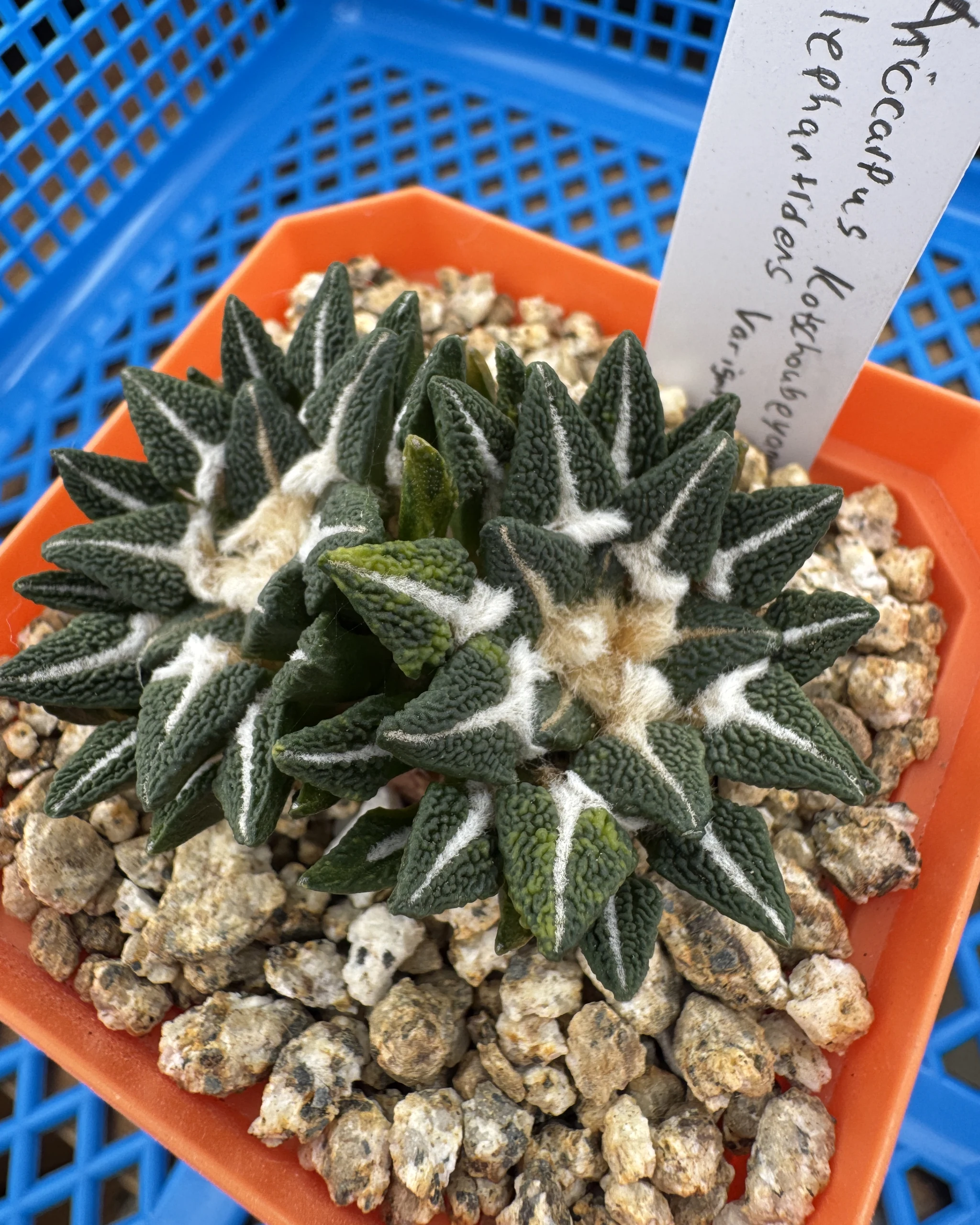
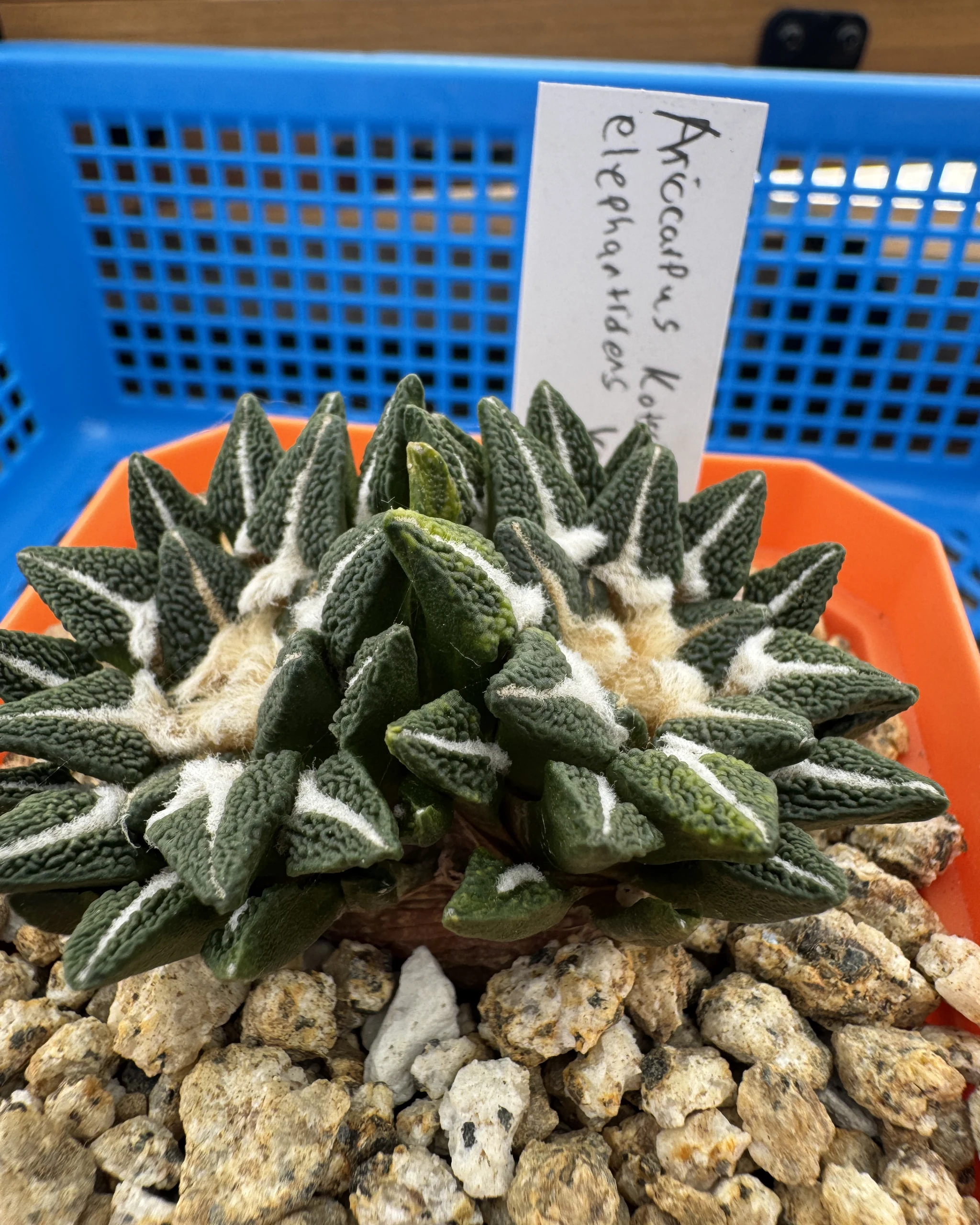
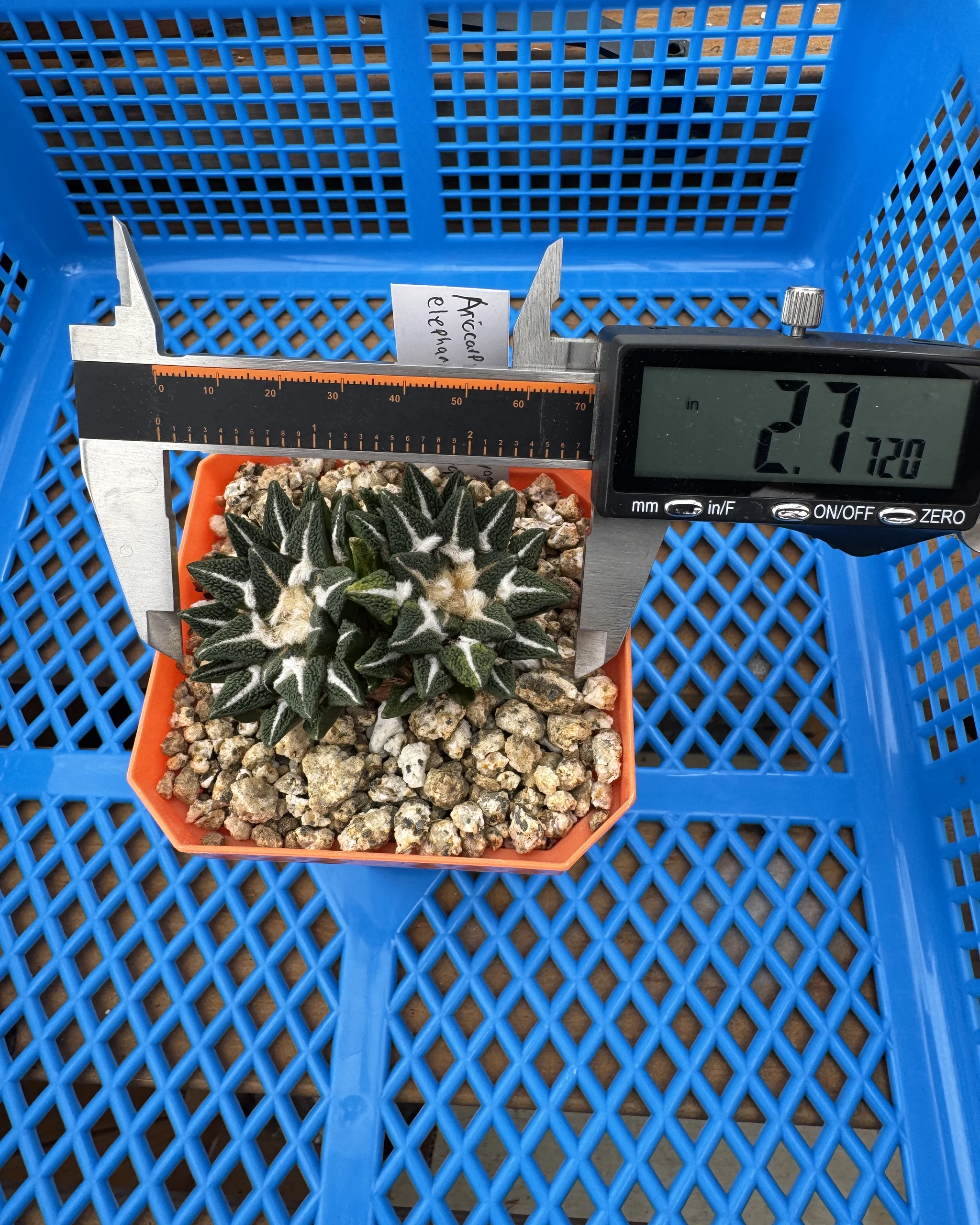
Ariocarpus kotschoubeyanus elephantidens Variegata
Lot ARIO-KOT-ELEVAR-01 1 of 1 the exact plant pictured
$720.00
- Plant: Ariocarpus kotschoubeyanus elephantidens Variegata
- Cultivation: seed grown, with a strong root system
- Size: about 7.1 cm across, dichotomous two-head
- Listing: one-of-a-kind, the exact plant in the photographs
- Grown: cultivated in our greenhouse
Hurry, only 1 item left in stock!
This specimen is one of a kind. The photos show the exact plant you'll receive.
Description
Type: Seed grown · Size: about 7.1 cm across, dichotomous two-head · One-of-a-kind specimen
Ariocarpus kotschoubeyanus elephantidens is for sale here as a single, one-of-a-kind specimen: a seed grown dwarf living rock with the oversized, sharply triangular tubercles that give the form its name, on a variegated body carrying pale cream sectors through the crown. The plant pictured is the exact dichotomous, two-headed specimen you will receive, cultivated in our own greenhouse from seed.
What makes this Ariocarpus kotschoubeyanus elephantidens different
The straight species, Ariocarpus kotschoubeyanus, is the smallest and flattest of the living rocks, a button-sized rosette of narrow, felted tubercles that all but vanishes into the clay flats it grows on. The form long traded as elephantidens, literally elephant-toothed, is the larger southern expression of the same species, with broader, more heavily textured, triangulate tubercles set in a bolder star than the typical northern plant ever produces. At rarecactus.com we grow our Ariocarpus kotschoubeyanus elephantidens from seed on the hard, lean mineral regime the genus demands, and this individual has branched into two heads rather than staying solitary, doubling the display of felted, white-marked tubercles across a single root system. The accepted botany for the species is held at Kew, where the taxonomy folds the elephantidens form back into Ariocarpus kotschoubeyanus; our own Ariocarpus kotschoubeyanus specimen page covers the species in full.
Variegation on a plant this size and this form is unusual. The pale sectors running through several tubercles carry less chlorophyll than plain green tissue, so growth is slower still than the already glacial pace of the species, and the contrast between the cream markings and the deep green body is exactly what collectors pay a premium for.
How we grow it
This Ariocarpus kotschoubeyanus elephantidens sits in a deep, narrow pot of gritty mineral mix with a crushed limestone component, in full sun, watered sparingly only during warm active growth and held bone dry through winter. The species is intolerant of a wet, airless root run at any age, and a variegated plant tolerates it even less, so drainage and restraint matter more than feeding at every stage. Our Ariocarpus care guide details the substrate and the watering calendar.
Flowering and growth
In the cooler months a settled plant opens flowers from the woolly crown, magenta to deep purple against the felted white tubercle markings, a striking combination on a plant this compact. Growth is counted in millimetres a year, slower again on the variegated sectors, so a dichotomous two-head specimen at this size already represents years of patient, dry growing rather than a fast season. New tubercles push from the centre of each head and shoulder the older ones outward, which is how the star pattern of each rosette stays crisp rather than loose.
When your plant arrives
Your Ariocarpus kotschoubeyanus elephantidens ships bare-root and completely dry, the standard and safest way to move any Ariocarpus. Pot it into a deep, narrow container of sharp, limestone-bearing mineral mix sized to the taproot, set it in bright indirect light, and withhold water for about 14 days while it settles in before the first cautious soak. Variegated tissue resents a wet root run more than plain green tissue, so err toward dryness while the plant establishes in its new pot.
Choosing this plant
A good Ariocarpus kotschoubeyanus elephantidens shows a dense, evenly packed rosette on both heads, clean white felting along each tubercle groove, and a stable, well-defined variegation pattern with no scarring, all of which this specimen offers in the photographs. Because you are buying the exact pictured plant, there is no guesswork about how the variegation reads or how the two heads are proportioned. Every plant we offer is grown from seed in our own greenhouse and never lifted from the wild.
Provenance and legality
Seed grown, greenhouse cultivated, never wild collected. Ariocarpus sits on CITES Appendix I, the strictest tier of international wildlife trade protection, and artificially propagated stock like this specimen is the only lawful way to own one. Browse the rest of the genus on the Ariocarpus encyclopedia hub.
This is a one-of-a-kind plant. The dichotomous, two-headed specimen in the photographs, measuring about 7.1 cm across, is the exact plant that ships.
Shipping & Returns
Shipping
Flat $12 shipping anywhere in the United States, for one plant or several. Orders ship within 1 to 3 business days and usually arrive 2 to 5 business days later. Every plant is packed by hand to travel safely.
Returns
Each specimen is a living, one of a kind plant, so all sales are final and we do not accept returns or exchanges. If a plant arrives dead, take clear photos of the plant and the packaging within a couple of days of delivery and email brian@rarecactus.com. If anything else about your order is not right, tell us and we will help where we can.