
Turbinicarpus valdezianus
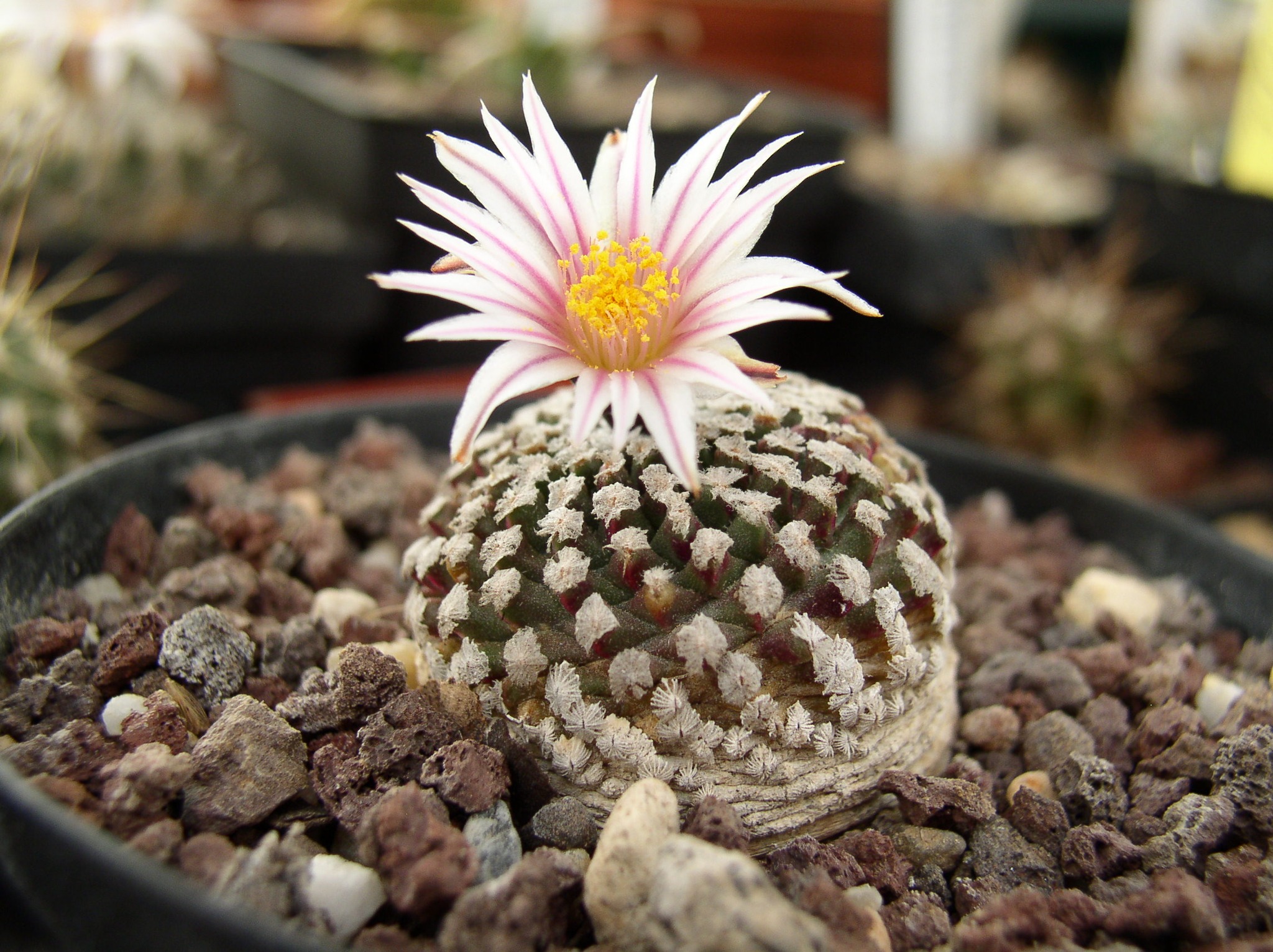
Turbinicarpus valdezianus is among the smallest members of its genus, typically reaching 1 to 2 cm in diameter and 3 to 5 cm above ground, with roughly half the plant mass held below the surface by a taproot proportionally larger than the stem. What makes it immediately recognisable is the spine covering: 25 to 30 radials per areole, feathery and pectinate, white, spread flat and fanning outward until the continuous mass of overlapping spine-fans sheathes the entire body in a dense white felt. There are no central spines. The green epidermis beneath is almost completely hidden.
The species grows on limestone soils in the Chihuahuan Desert of Coahuila and San Luis Potosí, at elevations of 1,400 to 1,600 m above sea level, in rock crevices and calcareous gravel where the microsite provides shelter and accumulated mineral dust for the taproot. Among the confirmed collection localities are Cañón de las Bayas in Arteaga municipality (Coahuila), the Saltillo area, and sites north of Matehuala (San Luis Potosí). The species sits toward one end of the spine-character range in Turbinicarpus: compare the papery twisted spines of Turbinicarpus pseudomacrochele or the long flexible spines of Turbinicarpus saueri against the dense pectinate radials here.
T. valdezianus was originally described by H. Moeller in 1930 as Pelecyphora valdeziana, placing it in the genus then used for pectinate-spined Mexican cacti. The combination was transferred to Turbinicarpus by Glass and Foster in 1977, and it has since passed through Normanbokea, Pseudosolisia, Gymnocactus, and several other segregate names before the current treatment consolidated all of these back into Turbinicarpus. Its historical placement as a Pelecyphora drives the most persistent identification confusion in the trade, which is why the primary FAQ comparison below is with Pelecyphora aselliformis. Both genera share the pectinate spine architecture that no other cactus group produces.
Growth from seed is famously slow even by Turbinicarpus standards. Seed germination itself is fast when seed is fresh, under one week at 21 to 27°C. The challenge is the years after germination: the plant builds its taproot and body mass very slowly, and reaching flowering size takes many years. Collectors who grow Turbinicarpus lophophoroides alongside this species often find T. valdezianus the slower of the two. The reward for patience is a plant with a character unlike anything else in the collection.
Turbinicarpus valdezianus quick reference
A geophytic miniature from the Chihuahuan Desert limestone of Coahuila and San Luis Potosí, 1,400 to 1,600 m elevation, with a large taproot and dense feathery pectinate spines. Values calibrated for seed grown plants in cultivation, drawn from BCSS grower notes, llifle, and specialist grower sources.
Taxonomy & nomenclature
The accepted name is Turbinicarpus valdezianus (H.Moeller) Glass & R.A.Foster, published in Cactus and Succulent Journal (Los Angeles) 49(4): 174 (1977). Kew POWO (accessed 2026-04-21) treats this combination as current and lists Pelecyphora valdeziana H.Moeller (1930) as the accepted basionym. IPNI record urn:lsid:ipni.org:names:259039-2 confirms the Glass & Foster publication details. [Sources 1, 2]
The basionym, Pelecyphora valdeziana H.Moeller, appeared in Möllers Deutsche Gärtn.-Zeitung 45: 179, 207 (1930). Moeller placed the species in Pelecyphora on the basis of the compressed pectinate spines, a character shared with Pelecyphora aselliformis. That placement persisted in informal usage long enough to embed Pelecyphora valdeziana in nursery trade literature, which is why the name still appears on older labels and in some collector databases. No current primary authority (POWO, Caryophyllales Network, IUCN) accepts Pelecyphora as the genus for this species. [Sources 1, 2]
The nomenclatural history between 1930 and 1977 accumulated a notable synonymy. The species passed through Echinocactus (Böedeker, 1930), Thelocactus (Borg, 1937), Mammillaria (Kelsey & Dayton, 1942), Gymnocactus (Backeberg, c.1966), Normanbokea (Kladiwa & Buxbaum, 1969, as the type species of that segregate genus), Pseudosolisia (Y.Itô, 1981, as the type species of that segregate genus), Neolloydia (E.F.Anderson, 1986), and Pediocactus (Halda, 1998). The Caryophyllales Network formally synonymised both Normanbokea and Pseudosolisia with Turbinicarpus in the Caryophyllales Network classification. [Source 4]
Genus circumscription debate: Turbinicarpus s.s. vs Turbinicarpus s.l. Molecular phylogenetic analysis demonstrated that Turbinicarpus sensu lato is polyphyletic: three independent monophyletic lineages had been lumped under the name. Under the Vázquez-Sánchez circumscription, Kadenicarpus and Rapicactus are segregated as distinct genera, leaving Turbinicarpus s.s. as a strongly supported monophyletic genus sister to Ariocarpus. Kew POWO retains the broader Turbinicarpus s.l. circumscription pending further review. T. valdezianus falls within Turbinicarpus s.s. under both treatments; it is not affected by the segregation. This page follows Turbinicarpus as the genus. [Sources 1, 3, 4]
Subgeneric placement: the Caryophyllales Network (Caryophyllales Network) assigns T. valdezianus to Turbinicarpus sect. Normanbokea, the section named for the now-synonymised segregate genus of which it was the type. [Source 4]
The specific epithet valdezianus honours a member of the Valdez family who supplied the type material to Moeller.
The genus name Turbinicarpus combines Latin turbo (spinning top, referring to the fruit shape in the type species) with Greek karpos (fruit). The name was coined by Backeberg and Buxbaum.
Historical synonyms (12)
- Echinocactus valdezianus (H.Moeller) Boed., 1930 basionym
- Pelecyphora valdeziana H.Moeller, 1930 homotypic synonym
- Thelocactus valdezianus (H.Moeller) Borg, 1937 homotypic synonym
- Mammillaria valdeziana (H.Moeller) H.P.Kelsey & Dayton, 1942 homotypic synonym
- Pelecyphora valdeziana var. albiflora Pazout, 1960 homotypic synonym
- Gymnocactus valdezianus (H.Moeller) Backeb., 1966 homotypic synonym
- Gymnocactus valdezianus var. albiflorus (Pazout) Backeb., 1966 homotypic synonym
- Normanbokea valdeziana (H.Moeller) Kladiwa & Buxb., 1969 homotypic synonym
- Pseudosolisia valdeziana (H.Moeller) Y.Itô, 1981 homotypic synonym
- Neolloydia valdeziana (H.Moeller) E.F.Anderson, 1986 homotypic synonym
- Turbinicarpus valdezianus var. albiflorus (Pazout) Zachar, Staník, Lux & Dráb, 1996 homotypic synonym
- Pediocactus valdezianus (H.Moeller) Halda, 1998 homotypic synonym
Sources: POWO (Kew) · IPNI · GBIF · Wikidata
Habitat
T. valdezianus grows in the Chihuahuan Desert matorral and Meseta Central matorral of northeastern Mexico, at elevations of 1,400 to 1,600 m above sea level. The range spans Coahuila and San Luis Potosí, from the Saltillo area southward toward Matehuala, covering an extent of approximately 40,000 km² as reported in llifle from the Fitz Maurice 2017 assessment. [Source 9]
Substrate is limestone or calcareous rock, consistent across all accessible sources. Plants grow in rock crevices and in the mineral-dust accumulations among calcareous pebbles, where the granular substrate provides drainage and the sheltered microsite protects the body from direct mechanical damage. More than 80 per cent of Turbinicarpus plants across the genus grow in rock cracks or under pebbles rather than in open soil, and T. valdezianus fits this pattern. No gypsum or schist substrates are documented for this species. [Source 9]
Climate is arid to semi-arid, Köppen BWh at altitude. Rainfall is seasonally bimodal: a spring pulse and a summer monsoon, with long dry winters. This bimodal pattern is the direct template for the cultivation watering regime: active-season irrigation mimicking the spring and summer rains, a hard dry rest through the winter months.
The plant is partially subterranean. Approximately half the body mass sits below ground, anchored by a large taproot that stores water and nutrients through the dry season. This subterranean habit is characteristic of several miniature Turbinicarpus species and shapes every aspect of cultivation, particularly the container depth requirement and the sensitivity to root-neck moisture.
Morphology
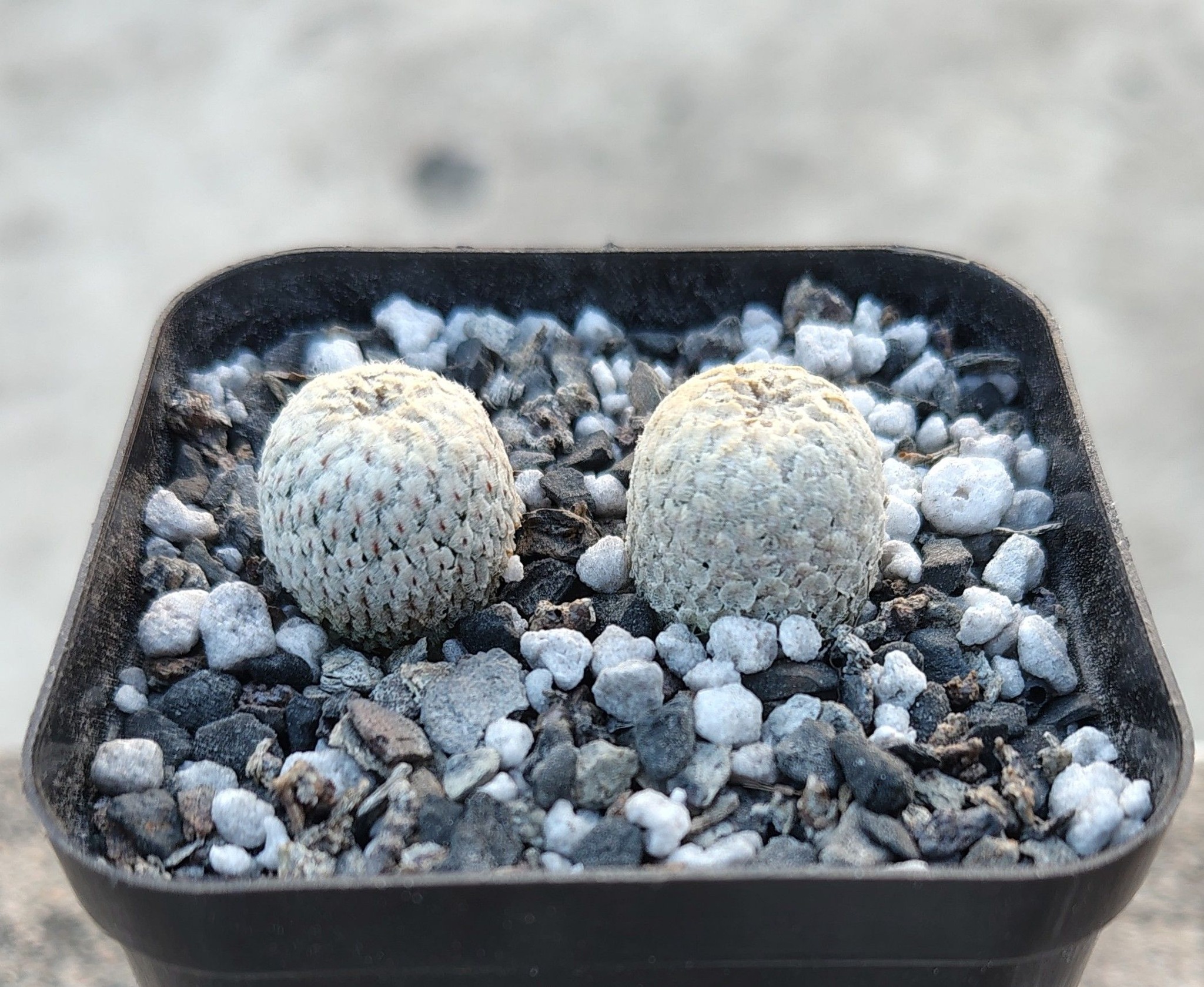
The body is very small: 1 to 2 cm in diameter and 3 to 5 cm above ground. Young plants are spherical; mature plants grade toward short-cylindrical with a slightly narrower base. Usually solitary, occasionally clustering. Epidermis green, though the colour is rarely visible given the spine cover. Tubercles are short, spirally arranged, and laterally compressed (hatchet-shaped), with areoles at each tubercle tip. [Source 9]
The spination is the defining character of the species. Each areole bears approximately 25 to 30 radial spines, white, pectinate, and approximately 0.5 mm long. There are no central spines. Each spine is flattened and comb-like in cross section, and the spines from each areole spread flat in a fan. The fans from adjacent areoles overlap continuously until the entire plant surface is covered. The result is a white felty coating that hides the body beneath and gives the plant a texture quite unlike any other cactus except Pelecyphora aselliformis, to which it was once assigned. [Source 9]
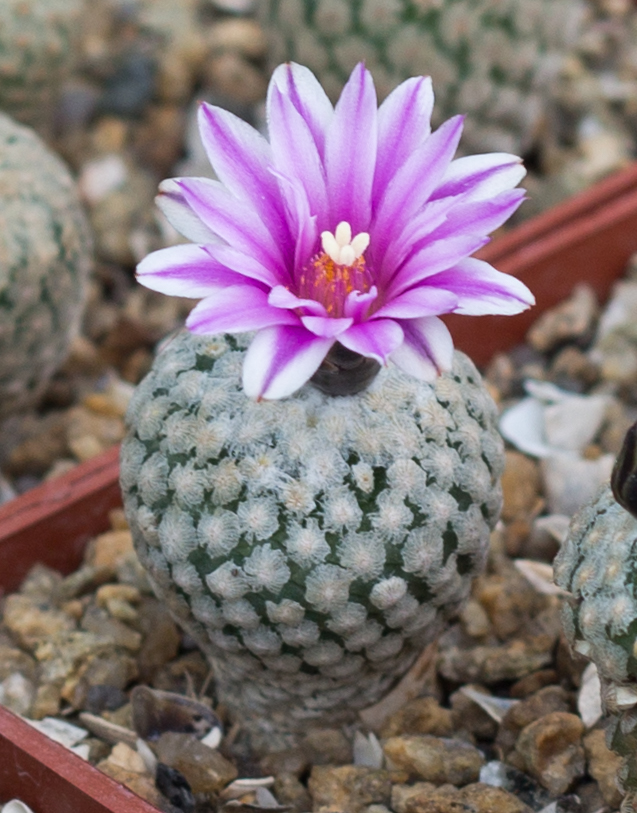
Flowers are produced at the apex, one to five at a time, diurnal. Colour is pinkish-white to bright pink with darker magenta or reddish-brown midveins on the petals. A white-flowered variety, T. valdezianus var. albiflorus (Pazout), is accepted at POWO and appears in trade as SB250 from near Matehuala. Flower size is up to approximately 2.5 cm long and 3 cm in diameter per convergent secondary sources; confirmation against a primary monograph (standard references) was not possible during research. Flowering season is late winter to early spring: bud development begins through November to January and flowers open typically in February or early March in cultivation. The species is noted as among the first in the genus to flower. [Sources 1, 9, 10]
Fruit is spherical to barrel-shaped, dark greenish-brown. Seeds are tiny and dark brown. Fresh seeds germinate quickly, typically within one week at 21 to 27°C; germination vigour declines with seed age, suggesting the species is adapted to germinate with immediate rainfall after seed maturation. [Source 6]
Locality detail
Moeller’s 1930 original description gives Coahuila as the provenance without a more precise locality. The Sierra de Parras region in southeastern Coahuila is the historical type locality region cited in secondary sources. Subsequent field work and the CONABIO population study (GBIF dataset a0ae8151) identified Cañón de las Bayas, in Arteaga municipality south of Saltillo, as a documented population site. Field number SB1468 is cited from Ramos Arizpe (Coahuila); SB250 (var. albiflorus) from near Matehuala marks the southern extent of the range in San Luis Potosí. A possible marginal occurrence in Nuevo León (Puente Oregano, on the San Luis Potosí / Nuevo León border) is noted in BCSS field-number records but is not confirmed in primary taxonomic literature. [Sources 8, 9]
Precise GPS coordinates are not published for any T. valdezianus locality in accessible primary literature. The map below marks regional centroids only. This is consistent with best practice for CITES Appendix I species, where precise locality data in publicly accessible databases demonstrably increases illegal collection pressure. [Sources 5, 6]
Turbinicarpus valdezianus care and cultivation
Two facts drive the cultivation approach, and only one of them is about the mix. The taproot carries a real rot risk: BCSS’s own cultivation notes for the genus call rot the one problem every species can succumb to and call for a well-drained, high-non-organic substrate as the response. The plant is also partially subterranean with a large taproot, so the container must accommodate depth. Everything else follows from those two points.
Substrate
The canonical ratio is 35 per cent pumice, 15 per cent lava rock, 5 per cent zeolite, 20 per cent granite grit, 20 per cent limestone chip, and 5 per cent worm castings. Pumice is the primary drainage aggregate: high internal porosity holds a little air and water without breaking down over years of watering, the same reason it is the site’s default aggregate across every genus. Lava grit provides the structural drainage backbone; the zeolite buffers pH and paces nutrients between waterings. No published cultivation source gives a limestone proportion specific to T. valdezianus; the 20 per cent crushed limestone chip is the site’s bloc-level convention for the Mexican limestone genera, not a species-specific finding. The bulk of the mix is inorganic; the 5 per cent worm castings provide trace organic input without compromising fast drainage.
All seven Turbinicarpus species on this site share a 95/5 mineral-organic baseline; no published grower source gives a per-species limestone proportion for the genus, so limestone is carried as bloc-level convention (Doorbar and Quail’s Mexican-limestone-genera practice), not a species-specific finding. T. lophophoroides currently ships a different limestone and silica split with no cultivation source behind the difference; that figure is under review against the genus baseline.
| Species | Pumice | Lava | Zeolite | Granite | Limestone | Silica | Organic |
|---|---|---|---|---|---|---|---|
| T. alonsoi | 35% | 15% | 5% | 20% | 20% | 0% | 5% |
| T. valdezianus (this page) | 35% | 15% | 5% | 20% | 20% | 0% | 5% |
| T. boedekerianus | 35% | 15% | 5% | 20% | 20% | 0% | 5% |
| T. lophophoroides | 35% | 15% | 5% | 20% | 10% | 10% | 5% |
| T. pseudomacrochele | 35% | 15% | 5% | 20% | 20% | 0% | 5% |
| T. pseudomacrochele subsp. krainzianus | 35% | 15% | 5% | 20% | 20% | 0% | 5% |
| T. saueri | 35% | 15% | 5% | 20% | 20% | 0% | 5% |
Container choice matters. The large taproot requires depth; shallow pots constrain root development and concentrate moisture at the root neck. A long-tom or narrow deep pot is appropriate. Avoid over-potting: a container much larger than the plant retains moisture excessively between waterings, which is the primary route to root-neck rot. Terracotta or unglazed mineral pots suit growers in humid climates; glazed or ceramic options work for drier settings. [Sources 9, 10]
Watering and light
The active season runs from spring through summer. During this period, water approximately every two weeks when the substrate is completely dry (BCSS Cultivation Notes on Turbinicarpus, [Source 11]). Never water while the substrate retains any moisture. Reduce frequency progressively through autumn as temperatures fall. From November through March, suspend watering entirely. The bimodal spring-and-monsoon rainfall pattern of the Chihuahuan Desert at 1,400 m is the template: active season irrigation, hard winter dry rest.
Full sun with good ventilation is the correct light position. Low light produces etiolated, soft growth and reduces the density and character of the pectinate spine cover. The spine covering only fully develops under adequate irradiance; plants grown in shade produce sparse, less felty radials and elongated bodies. Indoors, the brightest available windowsill with supplemental grow lighting is needed to maintain body form. [Sources 9, 10]
Cold tolerance: the safe winter minimum is 5 to 7°C when the substrate is completely dry, per BCSS species page [Source 10]. Keep dry whenever temperatures fall below 10°C. Do not expose to frost. Wet cold at any temperature risks rapid root-neck rot. The hard winter dry rest is not optional; it is the cultivation element most directly linked to survival in temperate-climate collections.
Propagation
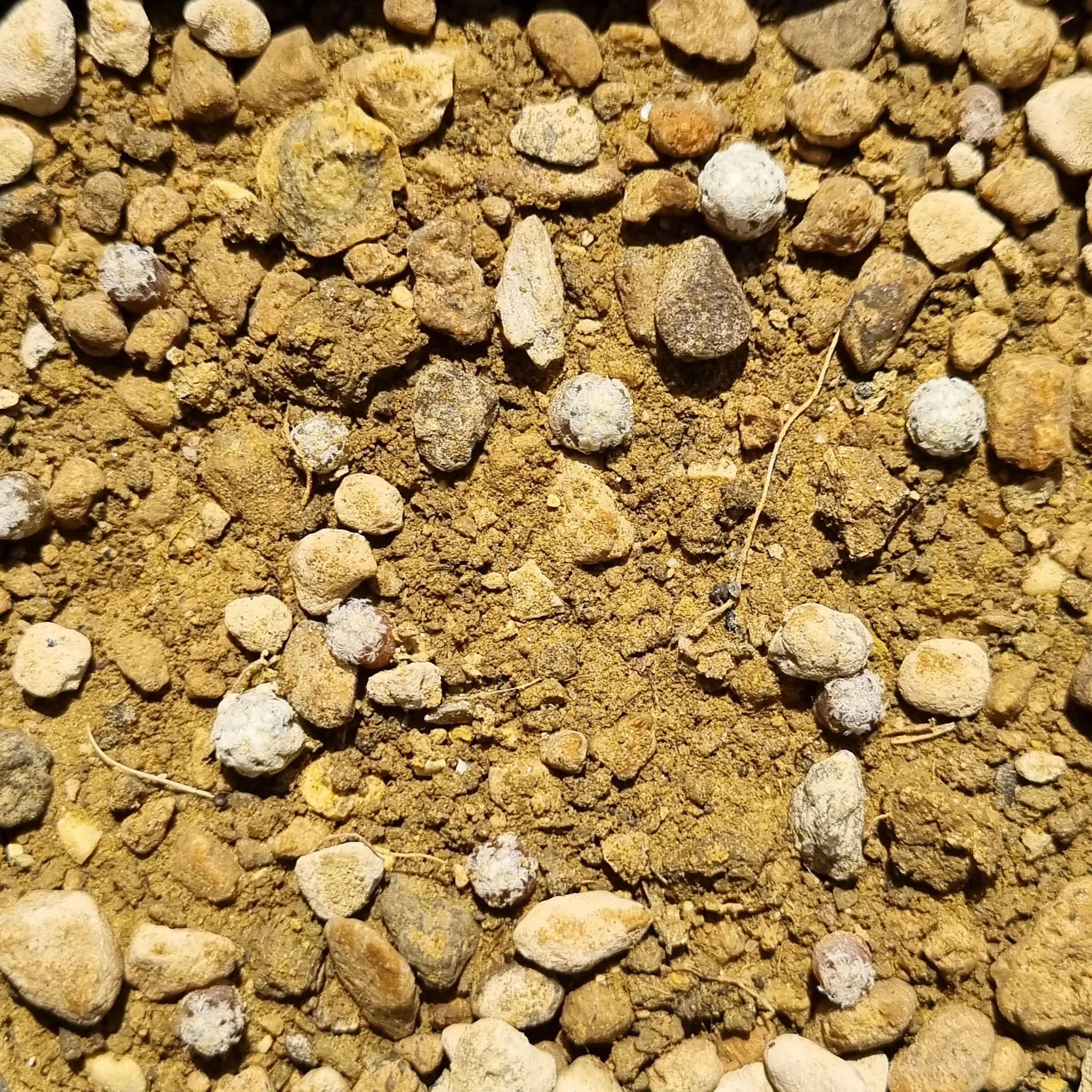
Seed germination is fast when seed is fresh: typically under one week at 21 to 27°C in a humid propagation environment. The slow phase is establishment and growth to flowering size. BCSS notes that bud development is very slow and plants may take many years from germination to first flower without a graft. No specific year-count appears in any accessible authority source; the guidance is to expect many years and plan accordingly.
Seed grown plants are preferred by serious collectors; the morphological authenticity of a slowly developed root system, body proportion, and spine character differs meaningfully from graft-forced stock. Grafting accelerates growth and is common in conservation propagation; Micropropagation via axillary bud development in vitro has been demonstrated. Purchase only from sellers who document propagation method and origin; wild-collected plants are prohibited under CITES Appendix I. [Sources 6, 10]
Comparison
T. valdezianus is most easily compared with T. pseudomacrochele, the closest match for spine character within the genus, which also has pectinate or pectinate-like radials. That species is broader and flatter, approximately 4 cm in diameter, and carries longer spines of about 1.2 mm versus the 0.5 mm radials of T. valdezianus. The body size difference alone separates them in the hand: T. pseudomacrochele is roughly twice the diameter. For collectors holding both species, T. valdezianus is distinctly narrower and taller relative to its width.
The cross-genus comparison that matters is with Pelecyphora aselliformis Ehrenb., the species with which T. valdezianus was historically confused and to which it was once assigned under its basionym Pelecyphora valdeziana. Both genera produce the compressed pectinate spine architecture found nowhere else in Cactaceae. The shared spine type is convergent rather than indicating close relationship; current molecular work places Turbinicarpus and Pelecyphora in separate positions within Tribe Cacteae.
Body size is the fastest field character. P. aselliformis reaches 2 to 7 cm in diameter and up to 12 cm tall, making even a mid-sized specimen of that species larger than a mature T. valdezianus. The spine count also differs: 25 to 30 radials per areole in T. valdezianus versus 40 to 60 in P. aselliformis. Flower colour is the secondary character: the magenta-to-deep-pink of P. aselliformis is a deeper, more saturated hue than the pinkish-white to bright pink with midvein striping of T. valdezianus. The FAQ Q1 table and slider below provide a diagnostic summary.
Within the genus, another useful comparison is with Turbinicarpus boedekerianus, a flat-topped Nuevo León endemic with short pectinate spines and a woolly crown. That species is broader and more disc-shaped than the more cylindrical T. valdezianus, and its crown is notably woolly rather than spine-covered. Distribution also separates them: T. boedekerianus is a Nuevo León endemic while T. valdezianus centres on Coahuila and San Luis Potosí. The shared pectinate spine character in both species reflects the limestone-scree microhabitat that convergently favours this spine type across the genus.
Frequently asked questions
How do you tell Turbinicarpus valdezianus apart from Pelecyphora aselliformis?
The most persistent identification confusion for T. valdezianus is with Pelecyphora aselliformis Ehrenb., to which it was formerly assigned under the basionym Pelecyphora valdeziana. Both genera share the compressed pectinate spine type found nowhere else in Cactaceae. Drag the slider to see both plants side by side, then work through the character table.


Body diameter is the fastest field character: even a mid-sized Pelecyphora aselliformis is larger than a mature T. valdezianus. Spine count per areole (25–30 vs 40–60) is the most reliable hand-lens diagnostic when size is uncertain.
Is Turbinicarpus valdezianus the same as Pelecyphora valdeziana?
Pelecyphora valdeziana H.Moeller (1930) is the basionym of Turbinicarpus valdezianus, not a currently accepted species name. Glass and Foster transferred the species to Turbinicarpus in 1977, and all major nomenclatural authorities (Kew POWO, IPNI, Caryophyllales Network) accept Turbinicarpus valdezianus as the current name. The Pelecyphora name persists on older nursery labels and in some collector databases because the species was associated with that genus for several decades before the transfer. It also briefly passed through Normanbokea and Pseudosolisia, both of which have since been synonymised with Turbinicarpus. [Sources 1, 2, 4]
How long does Turbinicarpus valdezianus take to flower from seed?
T. valdezianus is among the slowest Turbinicarpus species from seed to first flower. BCSS notes that bud development is very slow and plants may take many years to reach flowering size. No authority source provides a specific year-count. Germination itself is fast: fresh seed typically germinates within one week at 21 to 27°C. The slow phase is the subsequent years of taproot and body development before the plant reaches flowering size. Grafted plants flower earlier; seed grown plants take significantly longer but develop the compact body form and authentic spine character that collectors value. [Sources 6, 10]
Is Turbinicarpus valdezianus legal to buy?
Commercially propagated specimens are legal in most countries, but T. valdezianus is listed on CITES Appendix I, the most restrictive trade category, covering species for which international commercial trade in wild-collected plants is prohibited. Nursery-propagated stock can be traded legally with proper documentation under CITES provisions. Mexico also lists the species under NOM-059 (SEMARNAT) for additional federal protection. Purchase only from sellers who can document nursery propagation and provide appropriate CITES paperwork for any international transaction. [Sources 5, 6]
Where does Turbinicarpus valdezianus grow in the wild?
In the Chihuahuan Desert of Coahuila and San Luis Potosí, Mexico, at elevations of 1,400 to 1,600 m above sea level. Plants grow in rock crevices and calcareous gravel on limestone substrate, often with approximately half the body below ground anchored by a large taproot. Confirmed localities include Cañón de las Bayas in Arteaga municipality (Coahuila) and sites near Matehuala in San Luis Potosí. Precise GPS data is not published for this CITES Appendix I species; the map on this page shows regional centroids only. [Sources 8, 9]
Why do Turbinicarpus valdezianus spines look feathery or comb-like?
The spine type is called pectinate: each spine is laterally compressed and bears fine teeth or barbs along its edges, giving a comb-like cross section. In T. valdezianus the pectinate radials are very short (about 0.5 mm) and spread flat in overlapping fans, so the aggregate effect is a continuous white felt rather than distinct spine clusters. The same spine architecture evolved independently in Pelecyphora aselliformis and, in a related but distinct form, in Turbinicarpus pseudomacrochele. The functional hypothesis is that the dense flat spination provides mechanical protection against small invertebrate browsers and reduces radiant heat load on the small body at high-elevation limestone sites. [Source 9]
Sources & further reading
Kew POWO, Turbinicarpus valdezianus (H.Moeller) Glass & R.A.Foster, Plants of the World Online, powo.science.kew.org (accessed 2026-04-21) · IPNI, Turbinicarpus valdezianus (H.Moeller) Glass & R.A.Foster, urn:lsid:ipni.org:names:259039-2, ipni.org (accessed 2026-04-21) · Vázquez-Sánchez M. et al. (2019). Polyphyly of the iconic cactus genus Turbinicarpus. Botanical Journal of the Linnean Society 190(4): 405–420. doi:10.1093/botlinnean/boz027 · Korotkova N. et al. (2021). Cactaceae at Caryophyllales.org. Willdenowia 51(2): 251–270. doi:10.3372/wi.51.51208 · IUCN Red List, Turbinicarpus valdezianus, Assessment ID 41000, version 2017-3, assessors Fitz Maurice, W.A. & Fitz Maurice, B. iucnredlist.org/species/41000/121558667 (assessment PDF 403-blocked during research; VU category and assessors cross-verified via CITES Appendix I listing, NOM-059, and llifle secondary transmission of the Fitz Maurice assessment) · Martínez-Palacios A., Cárdenas Navarro R. & Hernández Ortega D.B. (2016). Micropropagation of Turbinicarpus valdezianus (Möeller) Glass & Foster (Cactaceae). HortScience 51(1): 94–97. doi:10.21273/HORTSCI.51.1.94 · Reyes-Valdés M.H. & Gómez-Martínez M. (2000). Número cromosómico y apareamiento meiótico en Turbinicarpus valdezianus. Acta Botánica Mexicana 53: 17–25 · GBIF Dataset, Estudio poblacional de Turbinicarpus valdezianus en el Cañón de las Bayas, Municipio de Arteaga, Coahuila. CONABIO. gbif.org/dataset/a0ae8151-43d1-4ae0-a2a1-9e4ab9624d72 (accessed 2026-04-21) · llifle Encyclopedia of Living Forms, Turbinicarpus valdezianus, llifle.com/Encyclopedia/CACTI/Family/Cactaceae/1543/ (accessed 2026-04-21) · British Cactus and Succulent Society, Turbinicarpus valdezianus species page, bcss.org.uk/turbinicarpus-valdezianus/ (accessed 2026-04-21) · British Cactus and Succulent Society, Cultivation Notes on Turbinicarpus (Backeb.) Buxb. & Backeb., bcss.org.uk/cultivation-notes-on-turbinicarpus-backeb-buxb-backeb/ (accessed 2026-04-21)