Top 20 Cold Hardy Cactus: Zone 3 to Zone 8 Species
All ArticlesCold hardy cactus species range from Zone 3 (Opuntia fragilis, lab-documented to −50°C in peer-reviewed cryobiology) through Zone 8 (Leucostele atacamensis subsp. pasacana of the Argentine Altiplano). Survival depends on dry substrate as much as temperature. This guide ranks 20 species coldest first, with USDA zone sources, native habitat, and per-species moisture caveats.
How do cacti survive freezing temperatures?
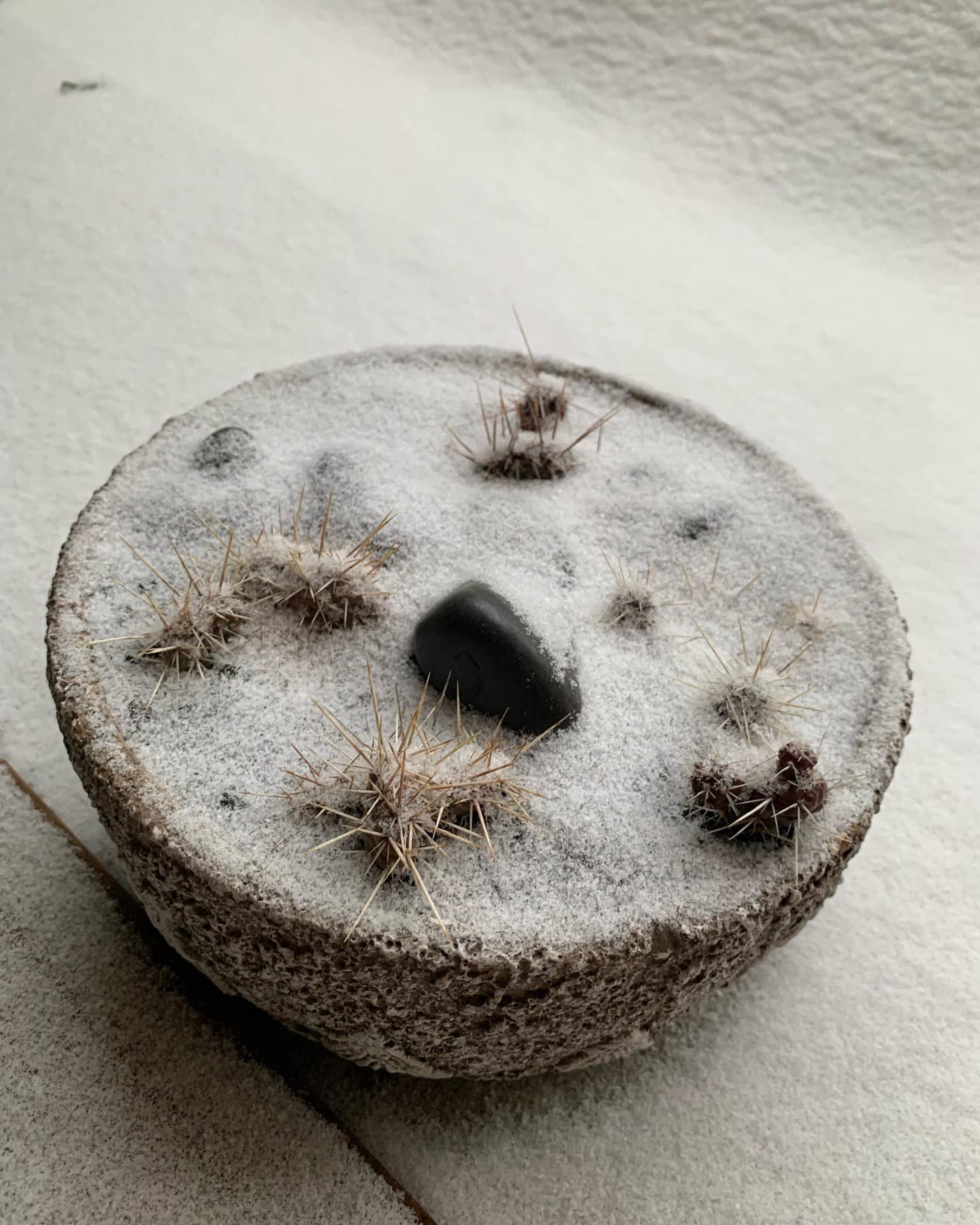
Cold hardy cactus species survive freezing through autumn osmotic adjustment. As day length shortens and night temperatures fall, the plant dehydrates its own tissues and concentrates sugars, mannitol, and starches inside its cells. The resulting solution does not freeze at temperatures that would freeze dilute cellular water. Laboratory measurements on Opuntia fragilis cladodes documented 52 percent of tissue water content lost between September 6 and October 10, with freezing tolerance rising from −7°C to −50°C across the same six weeks.
Comparative work on hardy and tender Opuntia species published in Plant Physiology pinned the mechanism. Hardy O. humifusa raised its intracellular osmotic pressure by 0.38 MPa during cold acclimation through sugar and mannitol accumulation; tender O. ficus-indica raised it by only 0.10 MPa. Tissue thickness in O. humifusa fell 61 to 65 percent over seven weeks. The cells become almost desiccated, ice forms in the extracellular mucilage rather than inside membranes, and cellular structures survive intact through repeated freezing.
The mechanism explains the substrate-moisture rule that runs through every entry below. A cactus rooted in dry substrate can complete the dehydration cycle. A cactus rooted in moist substrate cannot. The roots keep taking up water; cellular fluid stays dilute; ice crystals form inside cells at temperatures the plant would otherwise survive. Cold damage in winter-wet climates is rarely cold itself. It is intracellular ice in cells that never acclimated. For the underlying drainage principle applied across every species we cover, see the five-mineral cactus soil recipe.
What USDA zone do cold hardy cactus species need?
The USDA Plant Hardiness Zone Map (2023 revision, 30-year baseline 1991 to 2020, 13,412 weather stations) describes the average annual extreme minimum winter temperature in 10°F bands. Zone 3 sits between −40 and −30°F (−40 to −34°C). Zone 5 sits between −20 and −10°F (−29 to −23°C). Zone 8 sits between 10 and 20°F (−12 to −7°C). The half-zone suffix (a or b) splits each band into two 5°F sub-zones.
USDA zones encode one variable: a winter minimum temperature. They encode nothing about winter precipitation, snow cover duration, freeze-thaw cycling frequency, summer heat, or soil drainage. For cactus survival those omissions matter. A Zone 5 garden in Denver (10 inches of annual precipitation, mostly summer-falling) supports species that fail in Zone 7 Seattle (40 inches, winter-falling). The zone number is necessary information. It is not sufficient. Every entry below lists the documented zone floor and a per-species moisture caveat: tolerant, needs bone-dry winter, or needs covered overwintering above the floor.
Does wet cold or dry cold matter more for cactus survival?
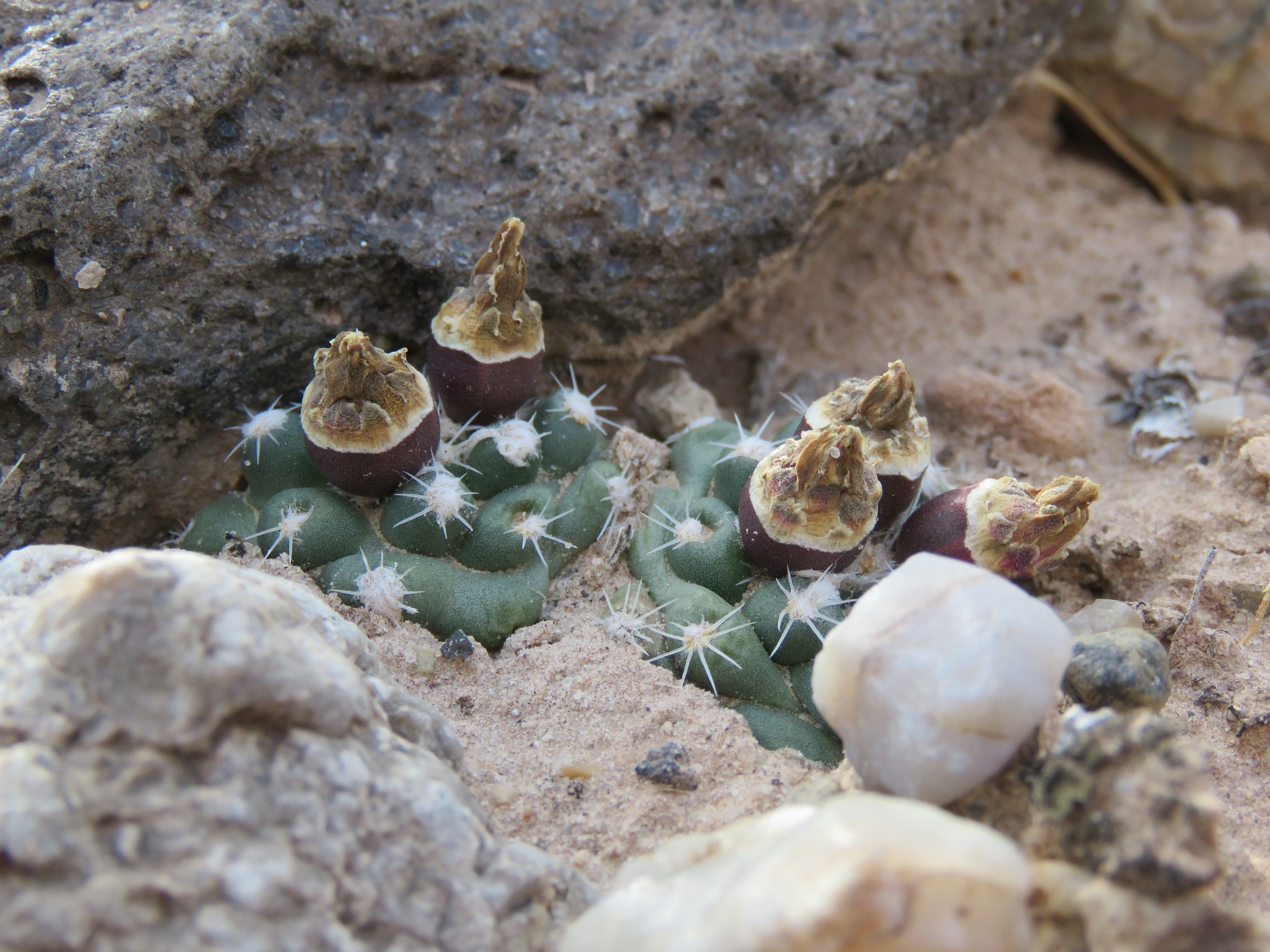
Dry cold matters more. A 12-year field trial in Ottawa, Ontario, published in Madroño, grew 107 specimens across 50 cactus species at Zone 5 ambient. The variable that correlated with winter survival was not native latitude or polyploidy. It was snow cover. Snow insulates the substrate, keeps it dry by sublimation rather than melt, and prevents the freeze-thaw cycling with liquid water that ruptures cells. Plants that survived had snow over them. Plants exposed to winter rain or thaw-refreeze cycles died at temperatures their species otherwise tolerates.
The most common failure pattern in winter-wet climates is not a single hard freeze. It is a sequence of mild wet days followed by one cold night. The plant rehydrates during the wet phase, loses its osmotic adjustment, and freezes intracellularly when the cold returns. By comparison, a continuous run of dry cold (Calgary, Cheyenne, Salt Lake City) preserves the dehydrated state and survival rates climb dramatically. This is why Maihuenia poeppigii from wet Patagonian winters is the genus exception below: it evolved tolerance to the wet-cold combination that kills every North American species on this list. For the broader rot pathology this article cannot cover in full, see why is my cactus dying for crown and root rot diagnosis.
The 20 cold hardy cactus species, ranked coldest first
Ranking is by documented minimum survivable USDA zone with the best-supported source. Where high-elevation provenance seed extends the species range below the standard rating, both numbers are listed. Common names follow the dominant US trade usage; accepted scientific names follow Plants of the World Online.
1. Brittle Prickly Pear (Opuntia fragilis)
Opuntia fragilis is the hardiest cactus on the planet by laboratory record. Cladodes prefrozen slowly to −40°C and then exposed to liquid nitrogen at −196°C still yielded 50 percent survival in published cryobiology trials. In Manitoba populations the species is restricted to south-facing rock outcrops on lake shores, where the substrate drains within minutes of snowmelt and the cladodes never sit in moist soil. Northern-provenance seed produces dramatically hardier clones than southern stock. The small (under 4 cm) detachable pads roll away from herbivores and root themselves where they land, which is the species name.
2. Plains Prickly Pear (Opuntia polyacantha)
Opuntia polyacantha dominates the dry shortgrass prairie from Alberta south through Texas and is the most common cactus in the western US Great Plains. The USDA Forest Service Fire Effects Information System describes it growing on clay loam and sandy loam at zone 3 ambient. Pads visibly flatten and desiccate before hard frost; this is the autumn osmotic adjustment made visible. Variety polyacantha from Alberta is appreciably hardier than var. nicholii from Arizona; provenance matters. Heavier cuticle than O. fragilis gives it some tolerance for summer wet but does not transfer to winter wet.
3. Mountain Ball Cactus (Pediocactus simpsonii)
Pediocactus simpsonii reaches 3,500 m elevation, the highest documented altitude of any cactus native to North America. The USDA Forest Service Plant of the Week feature notes it shrinks below the soil surface during deep dormancy. The plant's entire morphology is a survival kit for dry continental winters: small globular body, minimal exposed surface area, high-elevation snowpack insulation, and a substrate of decomposed granite that drains before sunrise. It is the gap species at the top of every competitive list. Planet Desert's "Top 20 Cold Hardy Cactus" piece omits the genus entirely.
4. Spinystar (Pelecyphora vivipara)
Pelecyphora vivipara has the widest north-south distribution of any US cactus, occurring from southern Manitoba (53°N) to northern Mexico. The northern populations have been documented surviving −45°C ambient air. Older treatments place the species in Coryphantha or Escobaria and the trade still sells most stock under those synonyms; Plants of the World Online now accepts Pelecyphora. Browse our Coryphantha encyclopedia for the closest related-genera context on the site. The plants partly retract below the soil surface during winter dormancy, reducing exposed body surface to cold and wind.
5. Missouri Foxtail Cactus (Pelecyphora missouriensis)
Pelecyphora missouriensis grows tucked at ground level among short bunch grasses on dry sloping clay buttes and gravelly knolls across the Northern Great Plains. The North American Rock Garden Society describes it as bone-hardy from Northern Great Plains seed. Older treatments and most nursery labels still use the synonyms Escobaria missouriensis, Neobesseya missouriensis, or Coryphantha missouriensis; Plants of the World Online currently accepts Pelecyphora. Provenance is decisive: Texas-origin stock will not match the cold tolerance of Montana or North Dakota seed.
6. Eastern Prickly Pear (Opuntia humifusa)
Opuntia humifusa is the only cactus native to the eastern United States and Canada, reaching Massachusetts and southern Ontario as the northern edge of its range. Peer-reviewed cold-acclimation work singled it out as the hardiest of the studied Opuntia species and the one species uniquely capable of synthesizing mannitol during cold acclimation; this sugar alcohol does not appear in the cold-tender congeners. Natural habitat is fast-draining sand dunes, coastal gravels, and shale outcrops. In garden cultivation the plant tolerates summer rain on sand but fails on heavy clay or in beds with winter standing water.
7. Green-flowered Hedgehog (Echinocereus viridiflorus)
Echinocereus viridiflorus is the northernmost member of the genus, reaching South Dakota at 44°N. The pale green flowers are unique in a genus dominated by red and magenta. High-elevation Wyoming and South Dakota seed stock produces appreciably hardier plants than Texas-origin material; commercial coldhardycactus.com listings rate var. correlii at Zone 4 and var. weedinii at Zone 5. The species appears in our Echinocereus encyclopedia alongside six other species. Small solitary or sparsely clumping habit gives it less stored thermal mass than claret cup but also less surface area to lose heat.
8. Lace Hedgehog (Echinocereus reichenbachii)
Echinocereus reichenbachii is the most moisture-tolerant Echinocereus according to records held by the Denver Botanic Gardens. Oklahoma strain seed is documented surviving 30 degrees below zero Fahrenheit. The species name "lace" refers to the dense interlocking pectinate spines that cover the body almost completely. Those interlocked spines provide modest radiation-frost protection by trapping a small boundary layer of still air. The species ranks with viridiflorus as one of two Echinocereus options for wet-tendency Zone 5 gardens. See the broader genus context at our Echinocereus encyclopedia.
9. Andean Maihuen (Maihuenia poeppigii)
Maihuenia poeppigii is the only South American cactus on this list and the only cold-hardy species that tolerates wet winter conditions. The Brooklyn Botanic Garden has called it the best-performing outdoor cactus in Pacific Northwest trials. Native habitat is the Araucaria araucana subalpine forest at 1,500–3,000 m, which receives substantial winter rainfall. The plant retains tiny fleshy leaves that look un-cactus-like to most growers; the genus is one of the earliest-branching lineages in the family. Use the areole test and you will find the spine-bearing structures, confirming it as a true cactus.
10. Claret Cup (Echinocereus triglochidiatus)
Echinocereus triglochidiatus is the state cactus of Colorado and the most photographed claret-flowered species in the Southwest. Plants from the upper end of the elevation range form tight clusters of stems with reduced surface area per unit mass; this is a morphological cold adaptation as much as a genetic one. The species sits in our Echinocereus encyclopedia with species-level cultivation detail. Zone 5 is the conservative rating; high-elevation Colorado seed has been documented to −34°C, which approaches Zone 4.
11. Scarlet Hedgehog (Echinocereus coccineus)
Echinocereus coccineus is regularly misrated in cold-hardy listings. Plants of the World Online treats it as distinct from claret cup (E. triglochidiatus); the two were synonymized under various older treatments and the cultivar trade has not fully caught up. Brooklyn Botanic Garden records document Zone 5 survival in dry continental conditions, which contradicts the Zone 8 to 11 ratings still appearing in some commercial guides. The species reaches 3,000 m in the New Mexico and Arizona uplands. Clone-to-clone variation in cold tolerance is high; northern Colorado provenance seed outperforms low-elevation Arizona stock.
12. Knowlton's Cactus (Pediocactus knowltonii)
Pediocactus knowltonii is one of the rarest cacti in the United States. The US Fish and Wildlife Service listed it as Endangered in 1979 under the Endangered Species Act; the global wild range is approximately 10 hectares of high-desert pinyon-juniper habitat at 1,700–1,900 m elevation near Navajo Lake, New Mexico. The species sits among cacti closest to extinction in the wild. Wild collection is a federal crime; only seed-grown propagation from specialist nurseries is legal. Tiny marble-sized body, dry continental habitat, and Zone 5a cold tolerance combine to make this the rarest entry on the list.
13. Fendler's Hedgehog (Echinocereus fendleri)
Echinocereus fendleri is the species where seed provenance is decisive. High Country Gardens specifically markets Catron County, New Mexico stock and rates it Zone 4–9; the same species from Sonora or southern Arizona seed performs at Zone 6 or warmer. Catron County sits at 2,000–2,400 m in the dry New Mexico uplands and experiences regular winter frost. The species appears in our Echinocereus encyclopedia. The takeaway: for any Echinocereus you intend to grow outdoors at the cold end of its range, provenance matters as much as the species name.
14. Pineapple Cactus (Coryphantha sulcata)
Coryphantha sulcata is the cold-hardy entry from the Coryphantha alliance proper. Plants of the World Online retains it in Coryphantha rather than moving it to Pelecyphora. Native habitat is the Texas hill country and gravelly grasslands of northeastern Mexico, where short freezing snaps are routine but winter precipitation is minimal. Large bright yellow to bronze flowers in May separate it from the magenta-flowered Escobarias. Coryphantha sits in our Coryphantha encyclopedia. Verified Colorado grower reports document Zone 5 performance with perfect drainage; Zone 6 is the conservative published standard.
15. Patagonian Maihuen (Maihuenia patagonica)
Maihuenia patagonica is the second Maihuenia species and the drier of the pair. Native habitat is the Patagonian steppe, where annual precipitation is 130–250 mm concentrated in winter and the summer dry season runs 8–10 months. The morphology is finer than M. poeppigii: short cylindrical segments, thicker cuticle, thinner leaves. In wet-winter cultivation it benefits from a sheet of glass overhead in winter. The species is rare in commercial cultivation; seed-grown plants are increasingly available through South American specialist nurseries. Less moisture-tolerant than its sister species but otherwise broadly similar in handling.
16. Lee's Spiny Star (Pelecyphora sneedii var. leei)
Pelecyphora sneedii var. leei (still widely listed by the trade as Escobaria sneedii) is one of the smallest cold-hardy cacti, with mature plants reaching marble size at most. The Denver Botanic Gardens documents Zone 5 survival from dry-climate observations. Native habitat is limestone cracks in the Guadalupe Mountains where the rooting substrate is essentially pure mineral with rapid drainage. The diminutive size minimizes thermal mass and allows rapid dehydration during acclimation. Federally Threatened under the Endangered Species Act since 1985 (originally listed Endangered in 1979); only seed-grown stock from specialist nurseries is legal.
17. Knippel's Hedgehog (Echinocereus knippelianus)
Echinocereus knippelianus is the species where the wet-cold caveat is most explicit. The Brooklyn Botanic Garden lists it at Zone 5 with the specific note that this rating only holds in dry-continental regions; in winter-wet climates the working zone limit is Zone 7. Native habitat is high-elevation open grassland and pine forest edge in the Mexican Sierra Madre Oriental, where winters are dry and frosty. The small body forms clumps of up to 50 stems. The species sits in our Echinocereus encyclopedia. Container cultivation with sheltered winter positioning is the standard approach in wet-winter regions.
18. Little Nipple Cactus (Mammillaria heyderi)
Mammillaria heyderi has the most unusual cold-tolerance mechanism on this list. The plant grows largely below the soil surface with only the flat top face exposed; the surrounding substrate thermally insulates the bulk of the stem. High-elevation populations in the Santa Catalina Mountains of southern Arizona (around 2,100 m) experience regular winter frost and survive intact. Browse our Mammillaria encyclopedia for the broader genus context. The subterranean habit makes substrate moisture in winter directly contact the plant body, which amplifies the wet-cold risk; field stock from high-elevation seed is decisively more cold-tolerant than commercial nursery clones.
19. Cardon Grande (Leucostele atacamensis subsp. pasacana)
Leucostele atacamensis subsp. pasacana is the high-altitude columnar Andean cactus of the Bolivian and Argentine Altiplano. Trade and older literature list it under the synonyms Echinopsis atacamensis subsp. pasacana and Trichocereus pasacana; Plants of the World Online currently accepts Leucostele. Nightly sub-zero temperatures at 3,000–4,000 m are routine in habitat. The columnar habit gives the plant high thermal mass; large specimens freeze and thaw more slowly than globular cacti of equivalent body volume. The species sits in our Echinopsis encyclopedia, where Echinopsis remains the practical trade umbrella. The trichocereus.net entry phrases the moisture caveat bluntly: high resistance to dry cold down to −10°C for short periods, but not to humid cold which causes rapid rottenness.
20. Rainbow Cactus (Echinocereus pectinatus)
Echinocereus pectinatus closes the list as the borderline-hardy species. Wildflower.org rates it Zone 9a; a field report in the Henry Shaw Cactus and Succulent Society Digest documents specimens dying in a Zone 6 St. Louis garden, with the explicit conclusion that the species cannot tolerate cold and wet. The pectinated comb-spines that give the species its name reflect summer solar radiation effectively; they offer little freeze protection. Zone 7 is achievable only with bone-dry winter conditions and sharp substrate. The species sits in our Echinocereus encyclopedia; for outdoor cultivation in winter-wet climates it is a container plant, not a garden plant.
How to grow cold hardy cactus outdoors
Three variables determine survival in approximate order of importance: substrate drainage, winter moisture, and provenance. Substrate must drain within minutes, not hours; the working recipe for cold-hardy in-ground beds is two parts native subsoil to one part coarse sharp sand to one part crushed mineral grit (granite screenings, expanded shale, decomposed granite, or pumice). Heavy clay is unworkable; raised beds with imported mineral fill are the alternative.
Winter moisture management decides whether the substrate dries fast enough to permit the osmotic-adjustment cycle. In winter-rain climates (Pacific Northwest, UK, Ireland, parts of the eastern seaboard), Zone 3 species rated for −40°C will die in a Zone 7 garden from rotted roots. Solutions: a sloped raised bed with crushed gravel mulch on top, a clear cover over winter, or container cultivation that moves under shelter from November through February. Maihuenia poeppigii is the one species on this list that survives ground cultivation in winter-rain climates without protection.
Provenance is the third variable. Northern-provenance seed of wide-range species (Opuntia fragilis from Saskatchewan, Escobaria vivipara from Alberta, Echinocereus viridiflorus from South Dakota, Echinocereus fendleri from Catron County New Mexico) survives Zone 3 to 4 reliably. Southern-provenance stock of the same species often fails one or two zones north of the published rating. Seed-grown plants from documented localities outperform clones of unknown origin; for the broader collector argument see grafted vs seed-grown. Locality data for many of these species lives in our field-number database.
Frequently asked questions about cold hardy cactus
What is the hardiest cactus for cold climates?
Opuntia fragilis is the hardiest cactus on the planet by laboratory record. Peer-reviewed cryobiology trials documented cladodes surviving −50°C after a six-week autumn acclimation that dropped tissue water content 52 percent. Field-hardy to Zone 3 across Canada and the northern Great Plains. Opuntia polyacantha and Pediocactus simpsonii follow in the same hardiness tier.
Can cacti survive below-zero temperatures?
Yes, with one caveat. Cold hardy cactus species survive sub-zero temperatures through autumn osmotic adjustment: the plant dehydrates its own tissues and accumulates sugars and mannitol that lower the freezing point of cellular fluid. The process requires dry substrate. Published cold-acclimation work documents Opuntia humifusa surviving −24°C through this mechanism. Wet substrate prevents the dehydration and the same species rots.
What USDA zone is cold hardy cactus?
Cold hardy cactus species span USDA Zones 3 through 8. The 2023 USDA Plant Hardiness Zone Map defines Zone 3 as −40 to −30°F (−40 to −34°C) and Zone 8 as 0 to 20°F (−18 to −7°C). The map encodes winter minimum temperature only and does not capture precipitation, snow cover, or substrate drainage, so the zone number is a floor, not a complete prediction.
Why does wet cold kill cactus but dry cold doesn't?
Cactus cold acclimation requires the plant to dehydrate its own tissues. Peer-reviewed cold-acclimation studies show that hardy species raise intracellular osmotic pressure by accumulating sugars and mannitol; this concentrated cellular fluid does not freeze at temperatures that would freeze dilute water. Wet substrate keeps the roots taking up water, prevents the dehydration cycle, and lets ice crystals form inside hydrated cells. The kill mechanism in wet cold is intracellular ice, not the cold itself.
Is Maihuenia cold hardy?
Yes. Maihuenia poeppigii from the southern Andes is hardy to Zone 5 and is unique among cold-tolerant cacti in surviving wet winters. Native habitat is the Araucaria araucana subalpine forest of Chile and Argentina at 1,500–3,000 m elevation, where winters are cold and rainy. The Brooklyn Botanic Garden has called it the best-performing outdoor cactus in Pacific Northwest trials. M. patagonica from drier Patagonian steppe is similar but slightly less moisture-tolerant.
Sources · verified May 2026
Loik, M.E. and Nobel, P.S. (1993). Freezing tolerance and water relations of Opuntia fragilis from Canada and the United States. Ecology 74(6): 1722–1732. DOI: 10.2307/1939931 · Goldstein, G. and Nobel, P.S. (1994). Water relations and low-temperature acclimation for cactus species varying in freezing tolerance. Plant Physiology 104(2): 675–681. PMID 12232118 · Gorelick, R., Drezner, T.D. and Hancock, J.E. (2015). Freeze-tolerance of Cacti (Cactaceae) in Ottawa, Ontario, Canada. Madroño 62(1): 33–45 · Kelaidis, P. (2006). Hardy cacti: living sculptures of the American West. Brooklyn Botanic Garden Record. Denver Botanic Gardens · USDA Plant Hardiness Zone Map (2023). USDA Agricultural Research Service, planthardiness.ars.usda.gov · USDA Forest Service Fire Effects Information System (FEIS): Opuntia polyacantha, Echinocereus fendleri · USDA Forest Service Plant of the Week: Pediocactus simpsonii, Echinocereus coccineus · US Fish and Wildlife Service: Pediocactus knowltonii Endangered Species Act listing (1979) · Plants of the World Online (POWO), Royal Botanic Gardens Kew, powo.science.kew.org · North American Rock Garden Society (NARGS): cold-hardy cactus growers' notes · Henry Shaw Cactus and Succulent Society Digest: Merkelbach (2011), Krupnik (2015), hscactus.org · High Country Gardens: cold-hardy cactus catalog and Catron County, New Mexico seed-provenance notes, highcountrygardens.com