
Coryphantha
Known Species
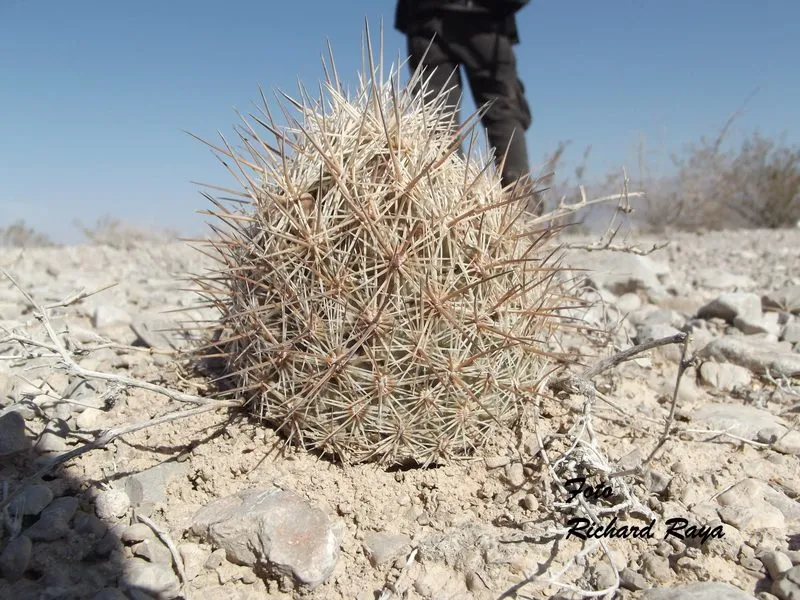


What is Coryphantha and what makes it different from Mammillaria?
Coryphantha is a genus of 43 accepted species (Kew POWO) of dome-shaped to globose tubercled cacti from the southwestern United States and Mexico. The genus was erected in 1868 by Charles Lemaire from a section that George Engelmann had earlier circumscribed inside Mammillaria. Two diagnostic characters separate the two genera. In Coryphantha the flowers emerge from a continuous longitudinal groove running along the upper face of each currently growing tubercle, near the apex of the plant. In Mammillaria the flowers emerge from naked axils between older tubercles, lower down on the body, often forming a complete ring around the stem. Coryphantha tubercles are also typically larger and fewer than those of Mammillaria.
Where does Coryphantha grow in the wild?
The genus spans an unusually wide geographic and climatic range for a tubercled cactus genus its size. The northern limit reaches southern Arizona, southern New Mexico, and the trans-Pecos region of west Texas. The southern limit extends through most of Mexico into Oaxaca and the northern fringe of Chiapas. Highest species diversity is in the Chihuahuan Desert states (Coahuila, Nuevo León, San Luis Potosí, Zacatecas) and the central volcanic belt (Michoacán, Morelos, Guerrero). Elevation runs from approximately 300 m in Sonoran bajadas up to 2,800 m on Mexican highland slopes. Habitats include limestone exposures, basalt scree, alluvial gravel, and oak-pine woodland margins.
How big does Coryphantha get?
Adult body size varies dramatically across the genus. Compact pincushion species (C. ramillosa, C. werdermannii, C. hintoniorum) stay between 4 and 8 cm in diameter and rarely exceed 10 cm in height. Mid-size species (C. cornifera, C. echinus, C. retusa) reach 10 to 18 cm in diameter. The largest species, C. elephantidens, builds a flattened-globose body up to 25 cm across and 15 cm tall, the heaviest plant in the genus. Most species are solitary or form small clumps of 2 to 6 heads; C. clavata and C. sulcata can build loose mats of 20 or more heads with age.
What do Coryphantha flowers look like?
Flowers are large for the body size: 3 to 9 cm across in most species, opening at the apex of the plant from the current-year tubercle groove in late spring and summer. Yellow is the most common colour across the genus, ranging from soft cream-yellow in C. cornifera through bright canary in C. ramillosa to deep gold in C. werdermannii. The notable exception is C. elephantidens, which carries rose-pink to deep magenta flowers 6 to 11 cm wide, the largest and most conspicuously coloured flowers in the genus. Most species are diurnal, with each flower lasting two to three consecutive days; many produce a strong sweet scent.
How cold-hardy is Coryphantha?
Cold tolerance varies substantially across the genus. The US plains and southwestern species (C. ramillosa, C. echinus, C. recurvata) tolerate winter lows down to −15°C if kept dry, and several can be grown outdoors year-round in temperate climates. The Mexican Chihuahuan Desert species (C. werdermannii, C. hintoniorum, C. tripugionacantha) tolerate −5 to −10°C. The volcanic-belt species (C. elephantidens, C. pycnacantha) need protection below −3°C and ideally above 5°C. Wet cold at any temperature damages every species in the genus.
What substrate does Coryphantha need in cultivation?
The genus baseline is the standard 90 to 10 mineral-to-organic mix, adjusted for the substrate type at a species’s wild origin. Limestone-endemic species (C. werdermannii, C. ramillosa, C. hintoniorum) take a 5 to 10% crushed limestone supplement to push the pH toward 7.5. Volcanic-belt species (C. elephantidens, C. pycnacantha) drop the limestone and raise the granite grit to keep the mix close to neutral. The recommended baseline is 40% pumice, 20% lava rock, 15% granite grit, 10% zeolite, 5% silica grit, and 10% worm castings. Pots should drain completely within 30 minutes of watering.
Is Coryphantha legal to own?
Coryphantha falls under the Cactaceae family-wide CITES Appendix II listing, so cross-border movement of plants and seeds requires the appropriate paperwork. One species, C. werdermannii, is currently the genus’s only CITES Appendix I plant, listed in response to historical wild-collection pressure from European and Japanese collectors during the 1970s and 1980s. Its accepted POWO range covers Coahuila, Chihuahua, and Durango, with the Cuatrociénegas region of Coahuila as the population centre. Appendix I status means even nursery-propagated plants need export and import permits and cannot move commercially without specific documentation. C. ramillosa carries US Endangered Species Act listing as Threatened (Federal Register 44:64247, 6 November 1979), which means legitimate plants in the United States must come from documented seed-grown stock. The remaining 41 species are legal to buy, sell, and grow in the United States, the United Kingdom, Canada, the European Union, and Australia from nursery-propagated stock.
Why is Coryphantha werdermannii the only Appendix I species in the genus?
Coryphantha werdermannii occupies a discontinuous range across Coahuila, Chihuahua, and Durango per Kew POWO, with the Cuatrociénegas region of Coahuila as the population centre. The species was added to CITES Appendix I during the early 1990s in response to documented heavy collection pressure throughout the 1970s and 1980s, when wild plants were exported to European and Japanese collectors at unsustainable rates. The Appendix I listing operates on different criteria than the IUCN Red List: CITES responds to trade-pressure history and narrow ecological niche, while the 2017 IUCN assessment of Least Concern reflects current population stability on intact limestone outcrops where chronic disturbance has only a slight positive demographic effect. Both assessments are correct on their own terms. Today only nursery-propagated plants from registered growers move legally between countries, and even those require Appendix I export and import permits in addition to the standard Cactaceae paperwork. The species reaches reproductive maturity at 8 to 12 years from seed; the chalky white-spined globose body and bright yellow flowers make it visually distinctive enough that informed buyers can usually identify legitimate seed-grown stock from documented sellers.
Further reading: trace any wild-origin specimen to its collector and locality in our Coryphantha field numbers database.