
Acanthocereus tetragonus (Fairy Castle)
The fairy castle cactus is the friendly windowsill face of Acanthocereus tetragonus, a wild cactus that looks nothing like the tidy green turrets sold under that name. What garden centres label fairy castle is a monstrose cultivar: a slow, foot-tall mutant that throws up many short ribbed branches of uneven height, crowded together so they read like the towers of a fairy-tale castle. It is one of the houseplant trade’s most mass-produced novelty cacti, not a habitat rarity at all.
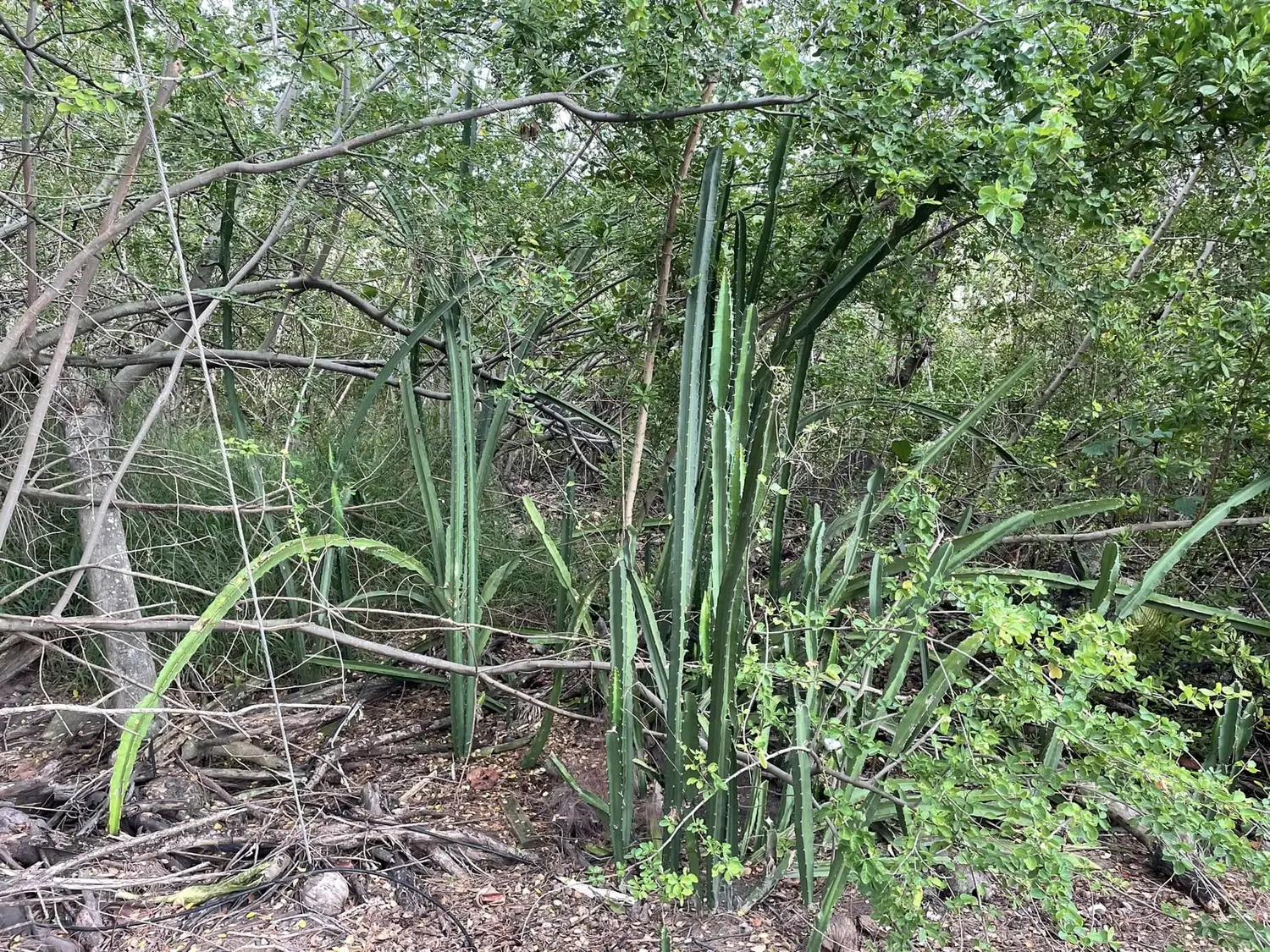
The plant it mutated from is a giant. In the wild A. tetragonus is a sprawling, clambering barbed-wire cactus that can reach two to seven metres, with sharply three- to five-angled green stems lined with stout spines, large white flowers that open only at night, and sweet red edible fruit. The triangle cactus of coastal thickets and the castle on the shelf are the same species wearing two completely different silhouettes.
Because the castle habit is a somatic mutation, the cultivar cannot be grown true from seed and is kept going only from cuttings. That honesty is the whole point of this page. We treat the fairy castle the way we treat the crested boobie cactus, another mass-market novelty that is a vegetative clone rather than a seed grown rarity, and we set it deliberately against a true endemic like Mammillaria humboldtii so the difference between scarce and merely popular stays clear.
One more thing every buyer should know up front: the bright pink, red or yellow blooms you see on castles in shops are almost always fake straw-flowers, glued or pinned on. The real flowers are white, fragrant and nocturnal, and a potted castle seldom produces them at all.
Acanthocereus tetragonus quick reference
A tender, lowland plant from the coastal thickets and dry scrub of the tropical Americas, where the wild barbed-wire cactus grows fast in heat and bright light and shrugs off drought. The fairy castle monstrose is slower and a little softer than the wild column. Values below cover the cultivated plant; note that the fairy castle castle form is a vegetative cultivar grown from cuttings, not a seed grown plant.
Taxonomy & nomenclature
The accepted name is Acanthocereus tetragonus (L.) Hummelinck, in the family Cactaceae. The basionym is Cactus tetragonus L., one of the original Linnaean cactus names of 1753, later moved into the segregate genus Acanthocereus. The genus name joins the Greek akantha, a spine or thorn, to the Latin cereus, a wax candle or column, so the whole reads as ‘spiny column’, which fits the wild plant exactly.
The species carries a long synonymy from the era when columnar cacti were lumped in Cereus and Cactus. Names such as Acanthocereus pentagonus, Acanthocereus floridanus, Cereus pentagonus and several others all fall here, and Kew POWO also sinks the names once used for Texan and Floridian plants, A. occidentalis and A. horridus, into this one wide-ranging species. A. pentagonus is the synonym most often met in older horticultural writing.
‘Fairy Castle’ is not a botanical rank. It is a horticultural cultivar name for a monstrose clone of the species, so the correct way to write the plant is as the accepted species with a parenthetical note that it is the ‘Fairy Castle’ monstrose form. Treating it as A. tetragonus f. anything, or as a species in its own right, overstates it. The genus itself is small, a group of night-flowering, sharply angled American cacti; besides the type it holds species such as the southern Mexican Acanthocereus chiapensis, Acanthocereus macdougallii and the western Acanthocereus rosei, all gathered in the Acanthocereus genus overview, with A. tetragonus the most widespread and the one behind the fairy castle ornamental.
Habitat
Acanthocereus tetragonus is the most widespread cactus of its genus, native across the tropical and subtropical Americas. Its range runs from southern and central Florida and the Keys, through the lower Rio Grande Valley of Texas, across Mexico and Central America, into the Caribbean islands and on to northern South America in Colombia and Venezuela. This is a plant of warm lowlands, not high deserts.
It grows in coastal hammocks, sandy thickets and hot dry scrub, often tolerant of salt-influenced ground near the sea, and its sharply angled spiny stems clamber over and through other vegetation to form dense thorny tangles. People have long planted those tangles as living fences. The plant keeps to low elevations near the coast and in lowland scrub rather than climbing into the mountains, and in a few places outside its native range it has naturalised and turned weedy.
None of this is the world of a cliff-bound rarity. Where a true endemic such as Mammillaria humboldtii clings to a single limestone canyon, the barbed-wire cactus is common, vigorous and wide-ranging, which is exactly why its fairy castle cultivar can be produced by the thousand without touching a wild population.
Morphology
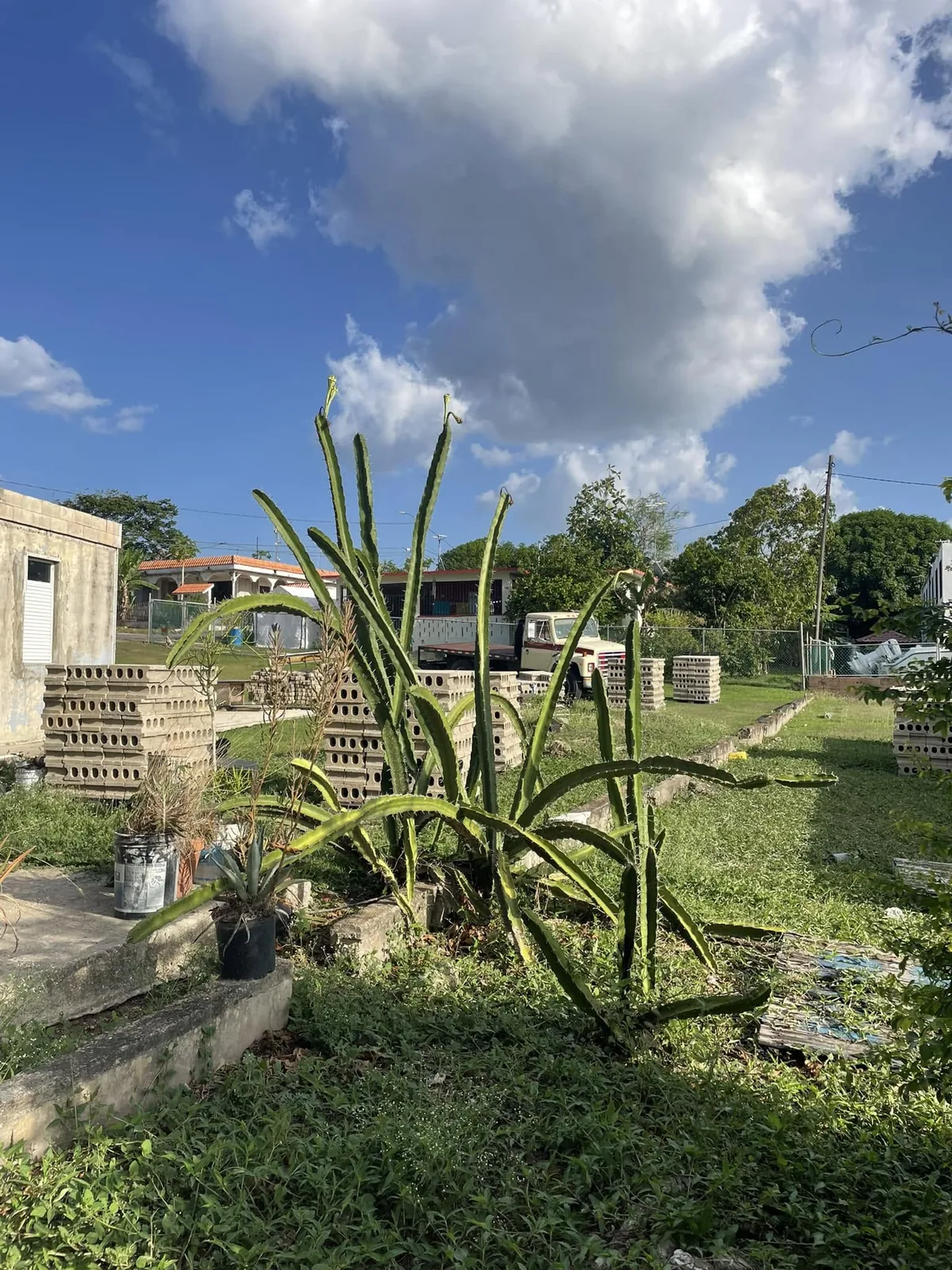
The wild plant is a tall, sprawling to clambering shrub that becomes almost tree-like, reaching two to seven metres as it leans on other growth. Its dark green stems are sharply three- to five-angled, the feature that gives the triangle cactus its name, about six to eight centimetres across, with stout grey to brown spines set along the rib margins. The large flowers are white and funnel-shaped, fragrant, and open only at night for moth pollinators, followed by a shiny red, egg-shaped fruit a few centimetres long that is sweet and edible, as are the young stems.
The fairy castle reworks that plain geometry. In the monstrose cultivar the single growing point breaks down and the plant builds instead from many short, ribbed, upright branches of uneven height, crowded into the turreted clump that earns the name. It keeps the green colour and the little woolly areoles with their short spines, but it stays small, commonly around a foot tall in a pot and only reaching a few feet over many years in ideal conditions. It seldom flowers; the mutation that makes the castle also disrupts the normal flowering geometry.
This is why the colourful blooms on shop plants deserve suspicion. A potted castle so rarely blooms that sellers glue or pin bright straw-flowers, pink, red or yellow, onto the tips to make it sell. They peel off. The species’ genuine flower is the large white night bloom of the wild column, a thing a windowsill castle will almost never show you.
Locality detail
The species ranges across a huge swathe of the warm Americas rather than from any single point, so the map below marks a regional centroid in the western Caribbean rather than a locality. There is no conservation reason to redact it; the plant is abundant and widely cultivated, and the marker simply anchors the broad native range.
From the Gulf and Caribbean core the barbed-wire cactus reaches north to the Florida Keys and the Texas coast and south into Colombia and Venezuela, always in warm lowland country near or not far above sea level. The fairy castle cultivar, of course, has no wild locality of its own: it exists only in cultivation, propagated from cuttings, and any castle you buy traces back to a nursery, never to a wild stand.
Cultivation
Two things make this plant easy: it is tough and it is forgiving. The wild blood shows in how little the fairy castle asks, heat, bright light, sharp drainage and a dry winter, and how readily it shrugs off neglect. Get the watering and the light right and it is one of the best first cacti there is.
Substrate
Grow it in a free-draining, mineral-dominant mix of roughly 45 per cent pumice, 25 per cent decomposed granite, 10 per cent lava rock, 10 per cent silica grit and 10 per cent low-nutrient organic matter, with no limestone or zeolite. The silica grit nods to the sandy coastal ground the wild plant grows in, while the pumice and granite give the instant drainage that keeps the rot-prone base dry. The point is a mix that wets and dries fast and never stays soggy. Our full cactus soil mix recipe scales the same principle up for bigger pots.
The barbed-wire cactus is a vigorous lowland and coastal grower, not a cliff-dwelling specialist, but its mix still runs gritty and sharply draining, with a little silica grit to keep it open. Pumice leads, with granite and lava for structure and only a light organic fraction; the soft monstrose tissue of the fairy castle makes fast drainage matter more here, not less.
| Species | Pumice | Lava | Zeolite | Granite | Limestone | Silica | Organic |
|---|---|---|---|---|---|---|---|
| A. tetragonus (Fairy Castle) (this page) | 45% | 10% | 0% | 25% | 0% | 10% | 10% |
Watering and light
Through the warm months water only when the mix has gone bone dry, then soak it and let it dry out again; this plant would far rather be too dry than too wet, and overwatering is the one thing that reliably kills it, rotting the base and leaving the stems soft and drooping. In winter keep it nearly dry. Give it bright light, but introduce strong sun gradually: too little light stretches the castle into pale leggy growth and dissolves its shape, while abrupt midday sun through glass scorches the soft tissue. Hold the plant above about 10°C / 50°F for unstressed growth, allow only brief, bone-dry dips to near freezing, and keep all hard frost off it.
Here the two halves of the plant part ways, and it is the most important thing on this page. The wild species grows readily from seed and from cuttings, fast and true to type, and good seed grown A. tetragonus is the honest, sustainable way to own the barbed-wire cactus. The fairy castle is a different matter. Its castle habit is a mutation that does not come true from seed, so a sown seed simply gives back an ordinary triangle cactus; the cultivar is kept going only by rooting stem cuttings of castle tissue, not by grafting. At rarecactus.com we grow our cacti from seed in our own greenhouse, and the fairy castle is the exception we are upfront about: it is a vegetative monstrose cultivar, propagated from cuttings, because that is the only way to keep the castle form true. So we never put a seed grown label on a fairy castle, and reserve that label for the wild species where it is honest. For the trade-offs behind the choice, see our guide to grafted versus seed grown cacti.
Comparison
The fairy castle is really a comparison between two things wearing one botanical name. The wild A. tetragonus is a two- to seven-metre barbed-wire cactus of coastal thickets, sharply angled, spiny and night-blooming. The fairy castle is its slow, foot-tall monstrose clone, all uneven green turrets and no real flowers. A buyer should be clear that the castle on the shelf and the sprawling triangle cactus of the field are one species, and that the castle is the cultivated oddity, not the natural shape.
It is worth setting the plant against the company it keeps on this site. Like the crested boobie cactus it is a cheerful vegetative novelty rather than a wild treasure, and unlike a single-cliff endemic it is mass-produced and unthreatened. That is not a knock on it. The fairy castle is an honest gateway plant: easy, characterful and cheap, the kind of cactus that starts a collection rather than ends one.
Within its own genus A. tetragonus is the giant and the generalist, the most widespread of a small group of night-flowering, sharply angled American cacti. The others, southern Mexican and western species among them, share the winged spiny stems and white nocturnal flowers but none has the range, the trade presence or the famous monstrose cultivar of the barbed-wire cactus.
Frequently asked questions
Is the fairy castle cactus hard to grow?
No. It is one of the easiest cacti to keep, which is much of why it sells so widely. Give it gritty, fast-draining soil, bright light and water only when the mix is bone dry, and it asks little else. The two things that kill it are overwatering, which rots the base and makes the stems mushy, and frost, which scars the soft tissue. Keep it warm and on the dry side and it is about as beginner-proof as a cactus gets.
Can you grow a fairy castle cactus from seed?
Not the fairy castle itself. The castle shape is a monstrose mutation that does not come true from seed: sow a seed and you get back an ordinary barbed-wire triangle cactus, not a castle. The cultivar is kept going only by rooting stem cuttings of castle tissue. The wild species, by contrast, grows easily and true from seed, which is why we keep the seed grown label for the species and never for the castle.
Is Acanthocereus tetragonus legal to own?
Yes. Like all cacti it is listed on CITES Appendix II, the family-wide listing rather than the stricter Appendix I, so nursery-grown plants are freely bought, sold and kept and only need export paperwork to cross borders. The species is also common and unthreatened in the wild, assessed as Least Concern, so there is no conservation barrier to owning a cultivated fairy castle.
Where does the fairy castle cactus grow in the wild?
The fairy castle does not grow wild at all; it is a nursery cultivar that exists only in cultivation. Its parent species, Acanthocereus tetragonus, is native across the warm Americas, from southern Florida and the Texas coast through Mexico, Central America and the Caribbean to northern South America, in coastal hammocks, sandy thickets and dry lowland scrub. There it is a large, common, sprawling barbed-wire cactus.
Are the colourful flowers on a fairy castle cactus real?
Usually not. A potted fairy castle seldom blooms, so sellers often glue or pin bright pink, red or yellow straw-flowers onto the tips to make it more appealing, and these fakes eventually peel off. The real flower of the species is large, white, fragrant and opens only at night, and you will rarely see it on a windowsill castle. If a castle in a shop has vivid daytime blooms, assume they are artificial.
Sources & further reading
Hummelinck, P.W. 1938. Acanthocereus tetragonus (L.) Hummelinck (combination; basionym Cactus tetragonus L., Sp. Pl. 1: 466, 1753) · IPNI, International Plant Names Index, Acanthocereus tetragonus, urn:lsid:ipni.org:names:1646-2 · Kew POWO, Acanthocereus tetragonus (L.) Hummelinck (accepted name, Cactaceae; A. pentagonus, A. floridanus, A. occidentalis, A. horridus in synonymy) · GBIF Secretariat, GBIF Backbone Taxonomy, Acanthocereus tetragonus (L.) Hummelinck · Flora of North America, Acanthocereus tetragonus (triangle cactus; morphology and US range) · USF Florida Plant Atlas, Acanthocereus tetragonus (native Florida range and coastal-hammock habitat) · Gardener’s Path, How to Grow Fairy Castle Cactus (monstrose cultivar; seldom blooms; cuttings; slow growth) · World of Succulents, Acanthocereus tetragonus ‘Fairy Castle’ (care and propagation) · Planet Desert, Fairy Castle Cactus (Acanthocereus tetragonus) Care and Growing Guide (light, water, cold, fake flowers) · Royal Botanic Gardens Kew, CITES Cactaceae Checklist; family Cactaceae on CITES Appendix II since 1975 · IUCN Red List of Threatened Species, Acanthocereus tetragonus (Least Concern, assessed 2017) · GISD, Global Invasive Species Database, Acanthocereus tetragonus (naturalised and weedy outside its native range)