
Avonia quinaria
Lot AVON-QUIN-01 1 of 1 the exact plant pictured
$310.00
- Plant: Avonia quinaria (Kew: Anacampseros quinaria), a scaly caudiciform from southern Africa
- Cultivation: seed grown, with a strong root system; never grafted
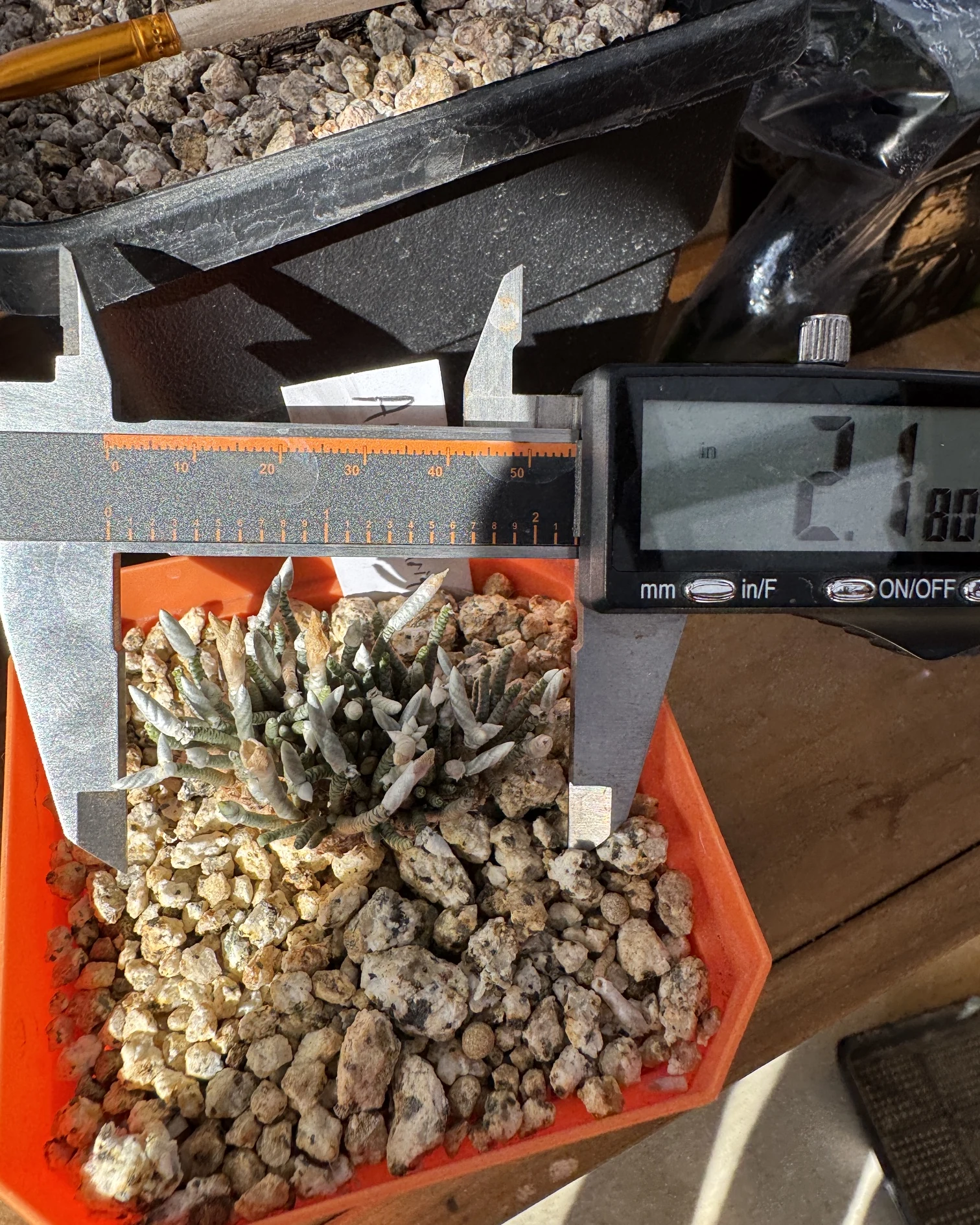
- Size: 2.18 in (5.5 cm) across the branches
- Listing: one-of-a-kind, the exact plant in the photographs
- Grown: cultivated in our greenhouse
In stock
- Free shipping anywhere in the United States on orders of $200 or more, and a flat $12 below that, for one plant or several.
- Ships within 1 to 3 business days and usually arrives 2 to 5 business days later.
- All sales are final. If a plant arrives dead, email photos of the plant and packaging within a couple of days. Shipping and returns
- 238 plants sold
- Grown in Orange County, California
- Artificially propagated, never wild-collected
Description
Type: Seed grown · Size: 2.18 in (5.5 cm) across the branches · One-of-a-kind specimen
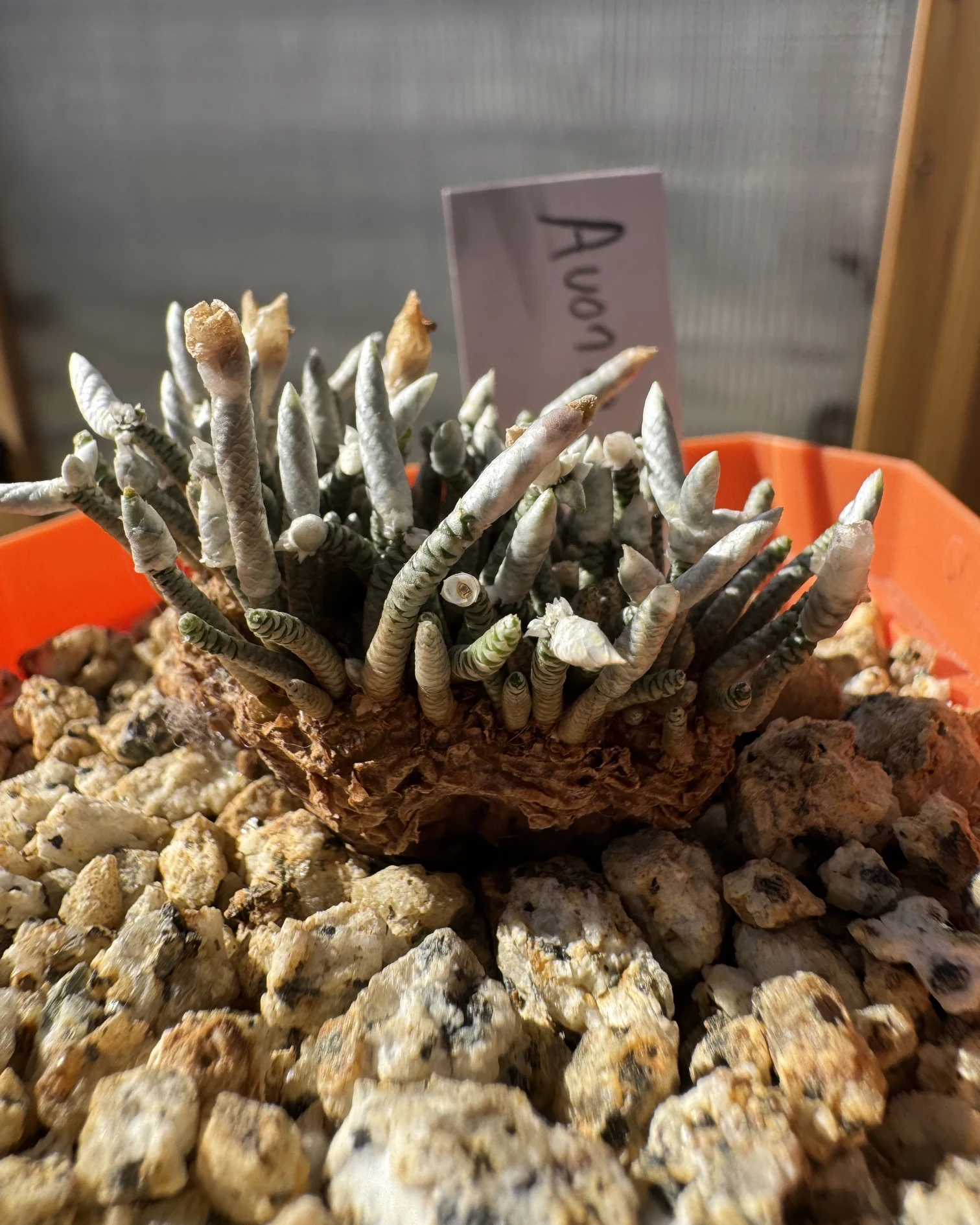
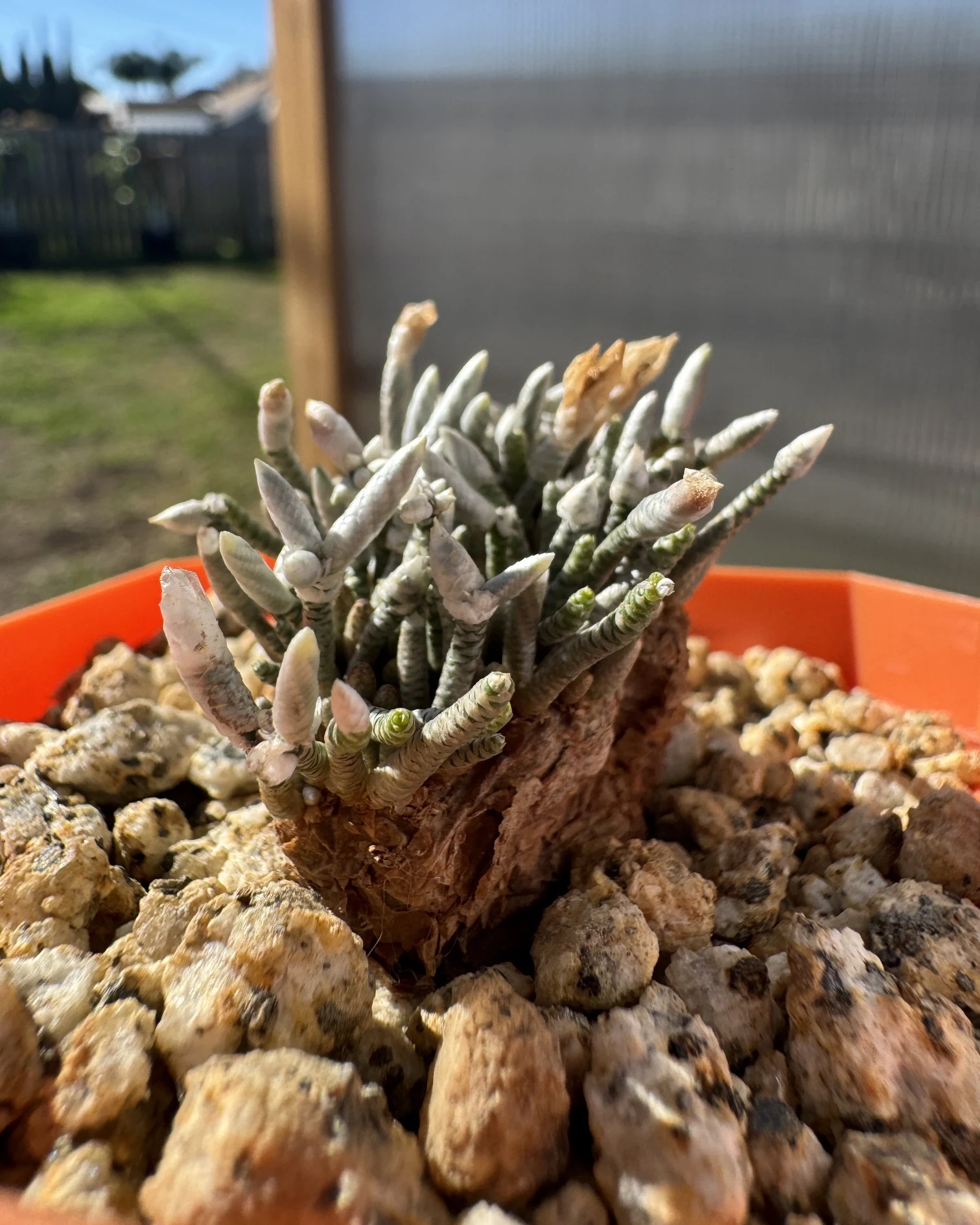
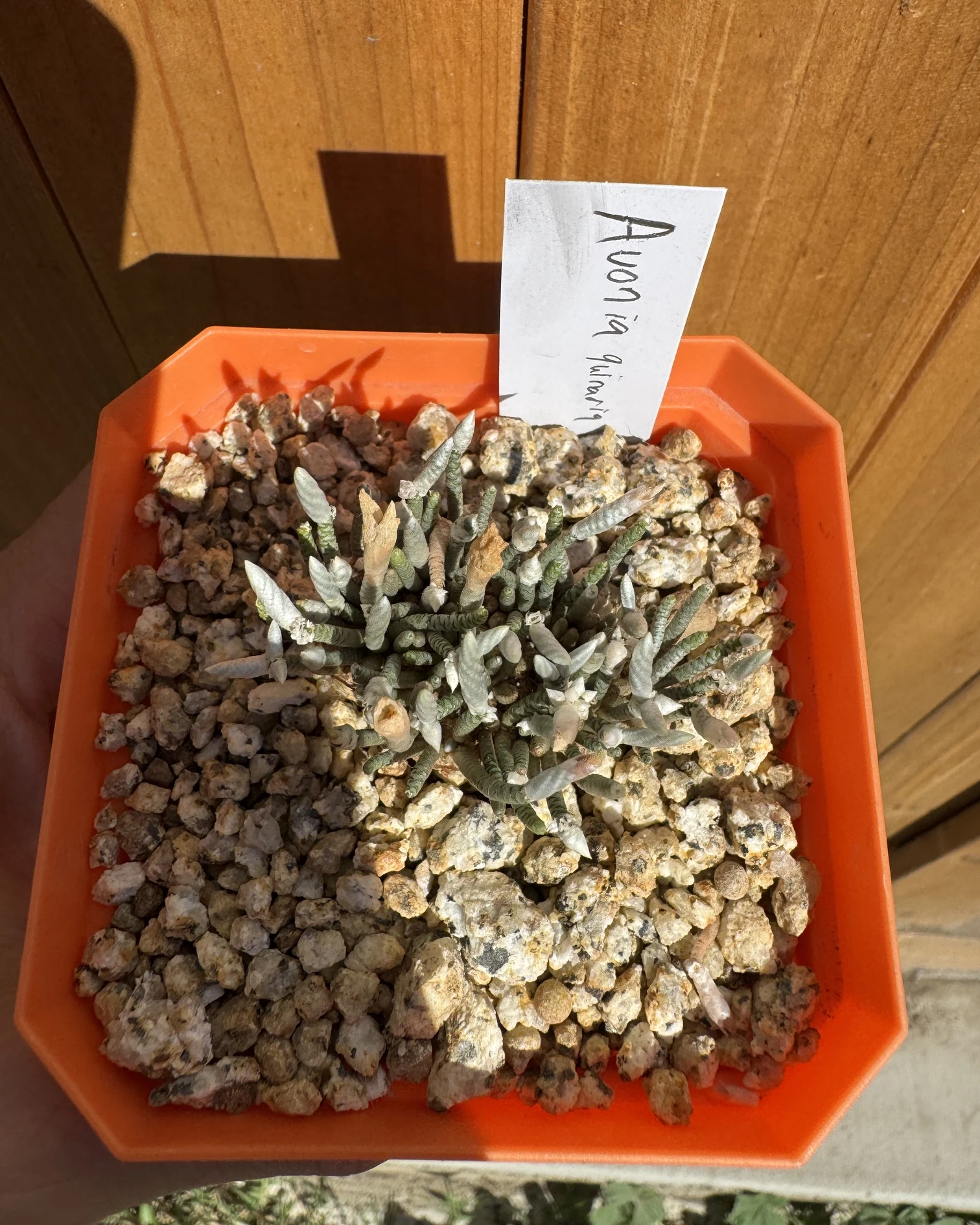
Avonia quinaria is for sale here as a single seed grown plant: a corky, turnip-shaped caudex crowned with dozens of slender branches sheathed in silver scales, 2.18 in (5.5 cm) across on the caliper in the last photograph. The plant in the photographs, tag and all, is the exact one you will receive.
At rarecactus.com we grow our Avonia from seed in our Orange County, California greenhouse, in strong light and an almost entirely mineral mix. That matters more with this species than with most. Avonia quinaria germinates readily, but it builds its caudex so slowly that hardly anyone raises it commercially, and the demand has long been met from the wild instead.
What makes this Avonia quinaria different
Start with the base. The caudex is a swollen storage organ, reddish brown and flaking like old bark, that sits at the surface of the grit with the growing points packed together on top. From it rises a dense crown of branches, each one wrapped in tiny overlapping scales.
Those scales are stipules, not leaves. The true leaves are minute and hidden underneath them, and the scales stack in five spiral ranks, which is what the name quinaria records.
The close-ups show the pattern well: silver-white toward the branch tips, banded in green and grey lower down where the stem shows between the scales. A few tips on the older growth have dried tan and papery.
Kew’s Plants of the World Online files the species as Anacampseros quinaria and folds Avonia into Anacampseros, while the GBIF backbone keeps Avonia as a genus. Collectors and sellers use both names, and this listing uses Avonia, the one most buyers search for. Our Avonia quinaria species page covers the taxonomy, the habitat and the two subspecies in depth.
Not a cactus
Avonia belongs to the Anacampserotaceae, a small family of southern African succulents that was long included in the purslane family, Portulacaceae. It sits in our collection beside the cacti because it lives in the same collector world. In habitat it grows on quartz gravel and red sand in Bushmanland and north-eastern Namaqualand in the Northern Cape, reaching into south-eastern Namibia, with the caudex flush with the ground. The Avonia genus hub compares the seven species we cover.
Flowering
Flowers open singly at the tips of the branches, sitting straight on the scales with no stalk, in the middle of the growing season. In northern hemisphere cultivation that means summer. They need strong sun to open at all, and they open from mid-afternoon into the evening.
Colour varies across the species, from carmine and purple-pink in the southern subspecies to white or pinkish-white in subsp. alstonii, which also carries the larger flowers. This plant is offered at species level.
How we grow it
Our Avonia grow in a shallow pot of pumice, silica grit, zeolite, lava and granite with a small share of organic matter and no limestone, top dressed with granite grit so the caudex sits dry at the surface. They get full sun, a thorough soak from March to October only once the mix has dried right through, and a dry, frost-free rest through winter.
Overwatering is the classic way to lose one. Water must never stand around the caudex, and a wet, cold winter is the fastest route to rot.
A slow plant
Avonia quinaria is easy to germinate and slow to grow. One experienced British grower records about four years from seed to a caudex 1 cm across, and South Africa’s national botanical institute names that slowness as the reason so few nurseries raise it. A caudex the size of this one represents years of steady growth, and it keeps thickening slowly for many more.
Choosing this plant
The listing is for the exact plant pictured for sale, so what you see is what arrives: the corky caudex, the dense crown of silver branches and the few dried tips on the older growth. It is seed grown, with a strong root system, never grafted and never taken from the wild.
When your plant arrives
Your Avonia quinaria ships dry and well rooted, packed so the scaled branches cannot rub. Pot it into a shallow pot of sharply draining mineral mix with the caudex at the surface, never buried, set it in bright indirect light, and withhold water for about 14 days while it settles in. After that, bring it gradually into full sun.
A plant that arrives between November and February is in its winter rest. Keep it dry and above about 5°C until growth starts again in spring, then water on the soak-and-dry cycle through to October.
Provenance and legality
Seed grown and cultivated in our greenhouse, never wild collected. The South African National Biodiversity Institute assesses Avonia quinaria as Endangered in South Africa because of poaching for the plant trade: 8,449 plants were seized between March 2019 and November 2022. Since 5 March 2026 the species has been listed on CITES Appendix I, the treaty’s strictest tier, under the name Anacampseros quinaria, while the rest of the genus stays on Appendix II.
CITES governs international trade, so a plant shipped within the United States needs no permit, and the species is not listed under the US Endangered Species Act. A seed grown plant like this one is the lawful and ethical way to own one. We ship to US addresses only.
One Avonia quinaria is offered: the plant in the photographs, 2.18 in across on the caliper.
Questions before you buy
What exactly arrives?
This plant. One-of-a-kind listings show the exact plant and sell once; the lot number under the title is its record, and the listing states its measured size.
How does it ship?
From our greenhouse in Orange County, California, within 1 to 3 business days, free anywhere in the United States on orders of $200 or more and a flat $12 below that. It usually arrives 2 to 5 business days later.
Is it legal to own?
Yes. Every plant we sell is artificially propagated, seed grown, with no wild collection at any stage. CITES rules apply to international trade, and we sell within the United States only, so no export permit is involved.
What if it arrives dead?
All sales are final, because each plant is a living one of a kind. If it arrives dead, take clear photos of the plant and the packaging within a couple of days of delivery and tell us. If anything else about the order is not right, say so and we will help where we can.
Shipping & Returns
Shipping
Free shipping anywhere in the United States on orders of $200 or more, and a flat $12 below that, for one plant or several. Orders ship within 1 to 3 business days and usually arrive 2 to 5 business days later. Every plant is packed by hand to travel safely.
Returns
Every plant we sell is alive, so all sales are final and we do not accept returns or exchanges. If a plant arrives dead, take clear photos of the plant and the packaging within a couple of days of delivery and email support@rarecactus.com. If anything else about your order is not right, tell us and we will help where we can.