Ariocarpus fissuratus subsp. lloydii — Lloyd’s Living Rock
| Family | Cactaceae |
| Named by | Rose (1911) → Marshall (1941) |
| Native range | S. Coahuila, Zacatecas, E. Durango |
| Altitude | 500–1,500 m |
| Stem diameter | 10–15 cm habitat; larger cultivated |
| Flowers | Pink to magenta, Oct–Nov |
| First bloom | 8–12 years (own root) |
| CITES | Appendix I |
Lloyd’s Living Rock · Peyote Cimarón · Chautle
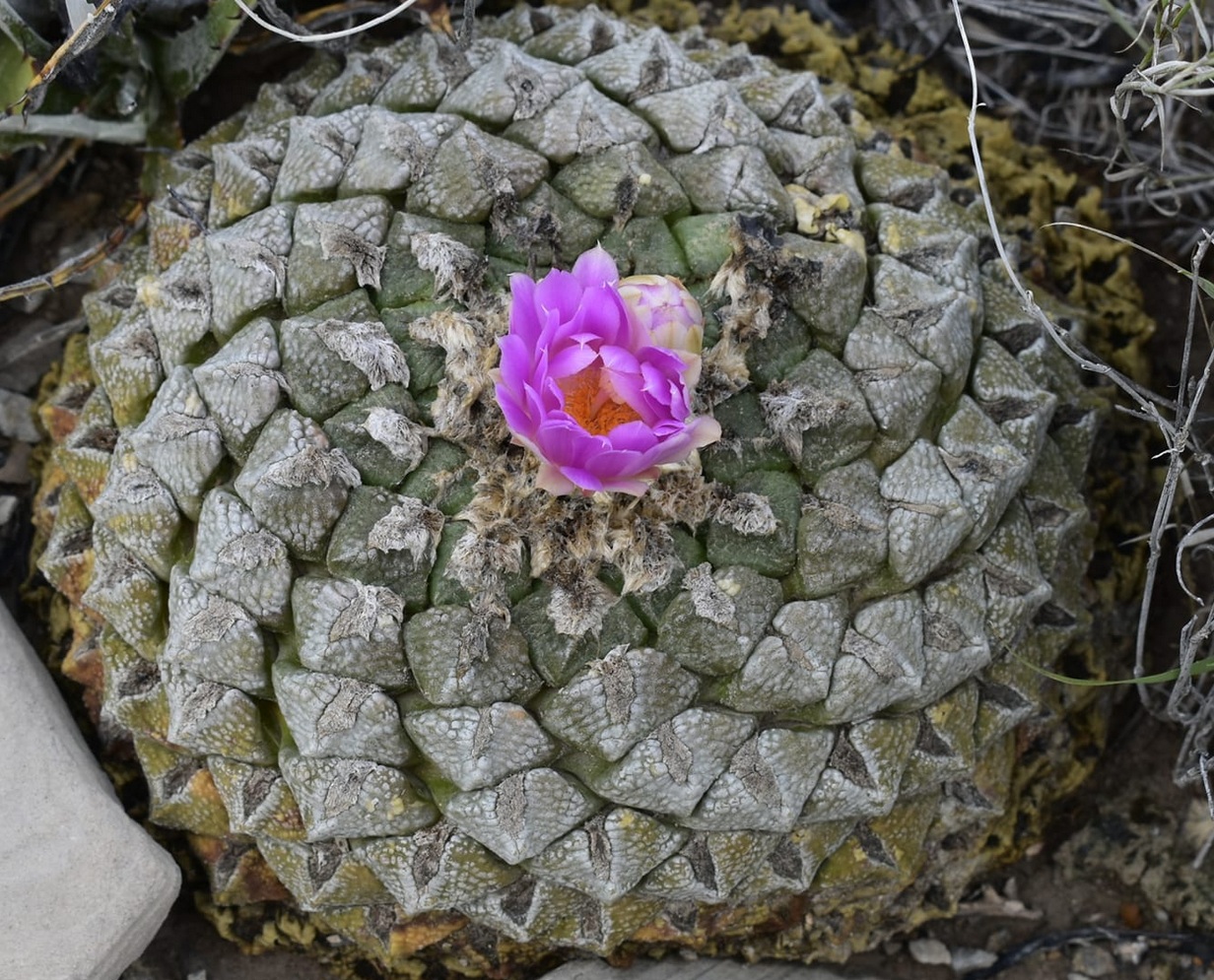
The southern counterpart to the classic living rock, lloydii trades the angular, fissured body of its northern relative for something altogether rounder and more tactile. Where A. fissuratus subsp. fissuratus lies nearly flat against the limestone, lloydii rises slightly above the ground with broad, smooth-faced tubercles that feel almost waxy to the touch. It is one of the most distinctive plants in the Chihuahuan Desert and one of the most rewarding Ariocarpus to grow.
This page covers the taxonomy, native habitat, morphology, how lloydii differs from subsp. fissuratus, the juvenile-to-mature progression, and a full cultivation guide. If you want to understand not just how to keep lloydii alive but why it looks the way it does, read on.
Contents
Taxonomy & Nomenclature
The plant now known as Ariocarpus fissuratus subsp. lloydii has a complicated but instructive history. When botanist Joseph Nelson Rose first described it in 1911, he treated it as a fully separate species — Ariocarpus lloydii — named in honor of Francis Ernest Lloyd, an American botanist who collected specimens in northern Mexico. The reasoning was sound: plants from southern Coahuila looked so different from the A. fissuratus Engelmann had described from Texas that a separate species designation felt entirely justified.
The problem, which only became apparent once more fieldwork was done across Coahuila, is that the two forms grade into one another. Plants from Cuatro Cienegas and Estación Marte — south-central Coahuila — sit right in the middle, sharing characters of both. By 1941, W. T. Marshall had combined lloydii as a variety of A. fissuratus, and that has remained the most broadly accepted treatment. Kew’s Plants of the World Online now recognizes it as Ariocarpus fissuratus subsp. lloydii (Rose) U.Guzmán, while the older varietal epithet (var. lloydii (Rose) W.T.Marshall) still appears across much of the literature.
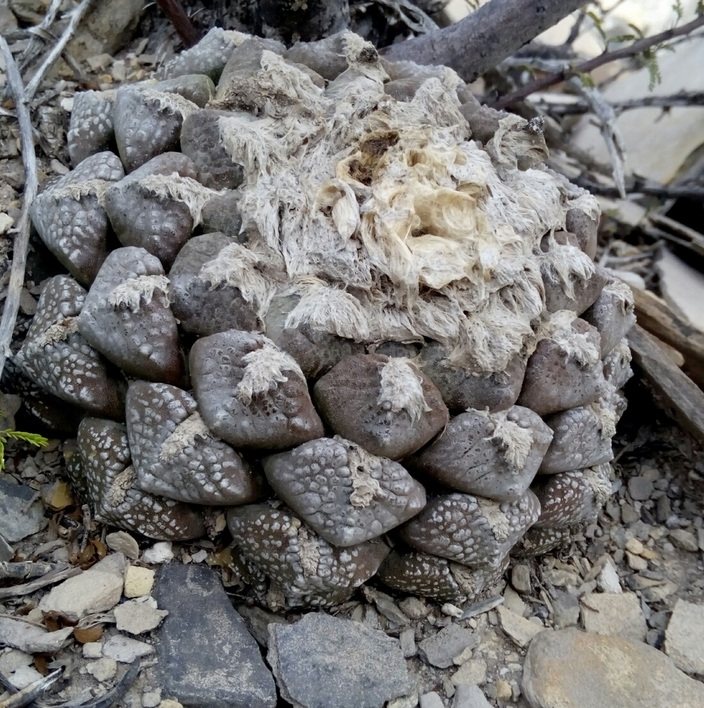
Botanist Jonas M. Lüthy, writing in Cactus & Co. in 2000, put it plainly: the northern populations from Texas and the southern ones from Parras are both easily identifiable, but the intermediate zone makes it genuinely hard to draw a hard taxonomic line. Anderson & Fitz Maurice (1997) even questioned whether varietal status was warranted given the continuous morphological variation. For collectors, the practical takeaway is this: lloydii is a coherent, recognizable form with a well-defined range and a distinctive look, even if its boundaries with the broader species blur at the edges.
The synonymy you will encounter in seed lists and nursery catalogs: Roseocactus lloydii (Rose) A. Berger (1925) and Ariocarpus lloydii var. major Fric (1926) are both synonyms. When you see lloydii seeds or plants listed under any of those names, they refer to the same taxon.
Historical synonyms (12)
- Mammillaria fissurata Engelm., 1856 basionym
- Anhalonium fissuratum (Engelm.) Engelm., 1859 homotypic synonym
- Roseocactus fissuratus (Engelm.) A.Berger, 1925 homotypic synonym
- Ariocarpus fissuratus var. lloydii (Rose) W.T.Marshall, 1941 homotypic synonym
- Ariocarpus fissuratus subsp. pailanus Halda, 1998 homotypic synonym
- Anhalonium engelmannii Lem., 1868 heterotypic synonym
- Ariocarpus lloydii Rose, 1911 heterotypic synonym
- Ariocarpus lloydii var. mayor Fric, 1925 heterotypic synonym
- Roseocactus lloydii (Rose) A.Berger, 1925 heterotypic synonym
- Roseocactus intermedius Backeb. & Kilian, 1960 heterotypic synonym
- Ariocarpus intermedius (Backeb. & Kilian) M.Voldan, 1965 heterotypic synonym
- Roseocactus fissurams A.Berger, heterotypic synonym
Sources: GBIF
Habitat & Native Range
lloydii’s home territory is a distinct band of the Chihuahuan Desert running through the drier interior of Mexico, well south of where A. fissuratus subsp. fissuratus reaches its southern limit. The core range covers southern Coahuila and adjacent Zacatecas, extending east into Durango as far as Nazas and Peñón Blanco. The area around Parras de la Fuente in southern Coahuila is the best-documented locality and remains the reference point for the taxon.
Elevations across this range sit between 500 and 1,500 meters. The terrain is classic Chihuahuan Desert: flat or gently rolling limestone plains, rocky ridges, and the dry hillsides of low limestone hills, carpeted with a sparse scrub community of lechuguilla, ocotillo, and creosote. The substrate is almost uniformly calcareous — thin soils over pale limestone bedrock, with much of the surface composed of loose limestone chips and gravel.
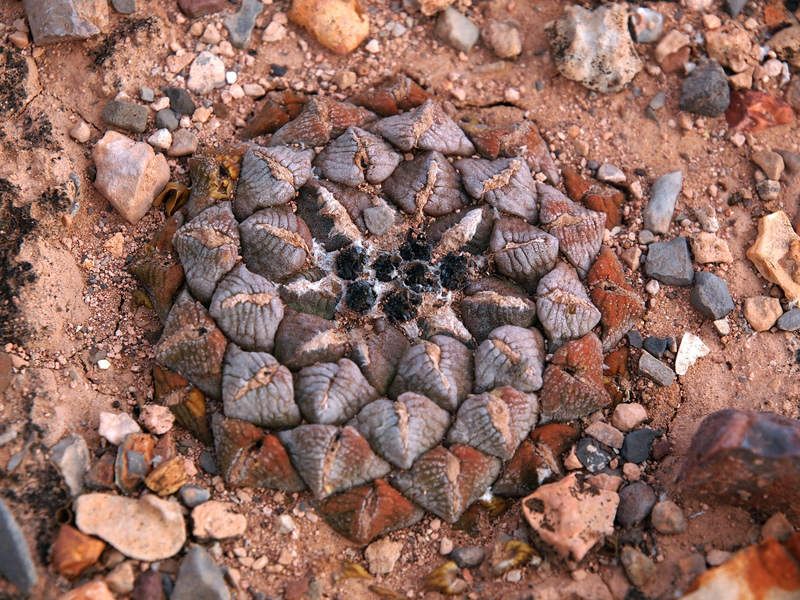
The plants are geophytes in the truest sense — a large portion of the actual plant body is underground. In times of extended drought, the above-ground stem can retract into the soil almost entirely, with loose rock fragments covering what remains. The taproot keeps the plant alive through conditions that would kill most other cacti. This matters in cultivation: lloydii is not built for prolonged surface-level dryness without compensating depth in the root zone.
Rainfall across this range is seasonal and unreliable, averaging roughly 200 to 350 mm per year concentrated in summer. Winter is dry and can include brief, light frosts — lloydii handles temperatures down to approximately −10°C for short periods, though sustained cold is far more dangerous than a single frost event.
Morphology: What Makes lloydii Distinct
Stand lloydii next to a typical A. fissuratus subsp. fissuratus from Texas and the difference is immediately obvious. Where subsp. fissuratus lies nearly flat against the ground with its body a tightly packed rosette of angular, fissured tubercles, lloydii rises. The stem is more convex, hemispherical in mature specimens, sometimes approaching columnar in cultivation — particularly in grafted plants or those given generous water.
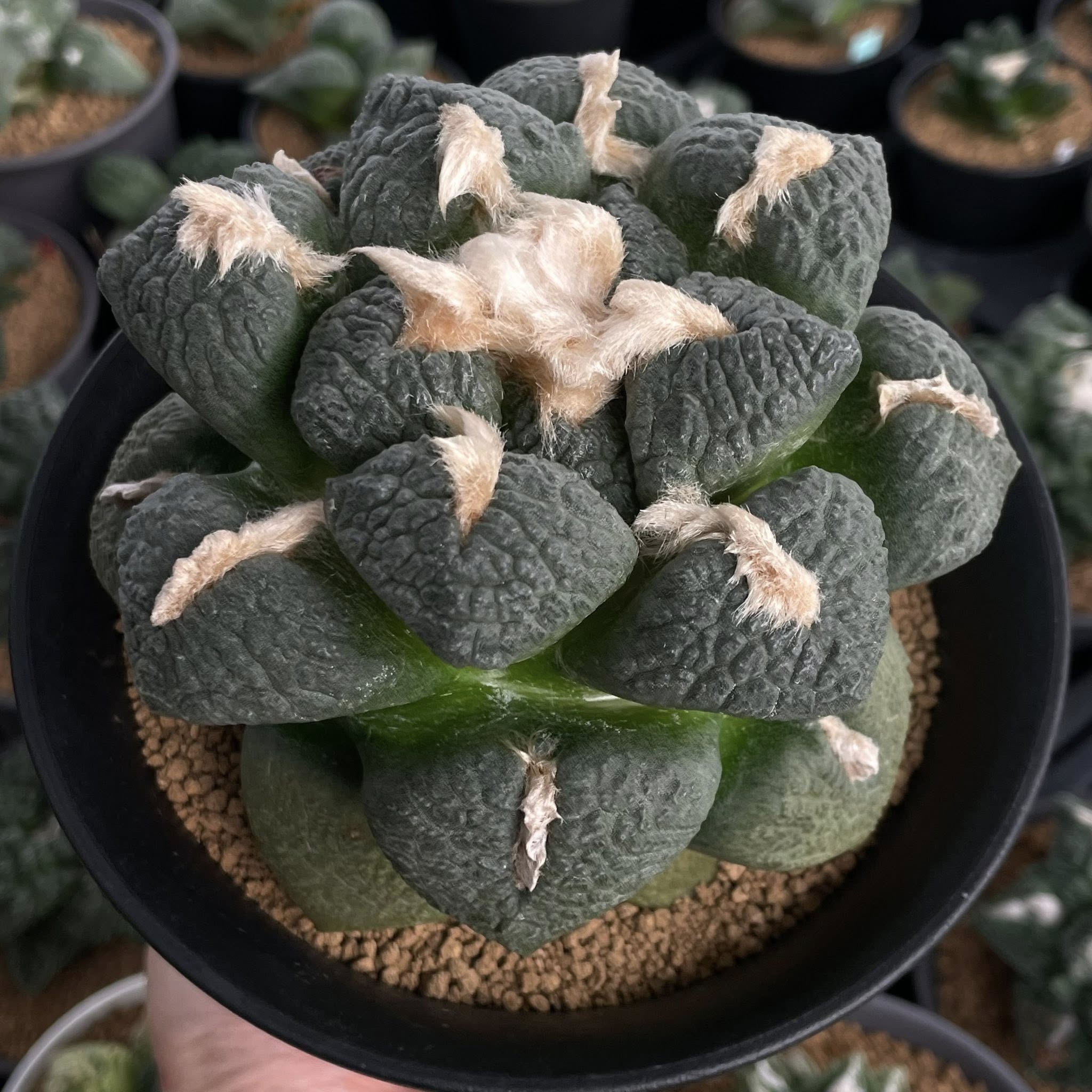
The broad, smooth surface of lloydii’s tubercles is its defining character — no deep fissuring, no lateral furrows. Photo: iNaturalist / CC BY-NC
The tubercles are the key diagnostic feature. In subsp. lloydii, they are imbricated (overlapping), broadly ovate, 2 to 3 cm wide, and rounded at the apex rather than pointed or triangular. The surface is finely rugose — slightly textured but not deeply fissured or papillated in the way that gives subsp. fissuratus its name. There are no lateral longitudinal furrows running along the tubercle edges. The areoles, filled with dense woolly hairs, sit toward the middle of the upper tubercle surface.
The stem color ranges from grey-green to blue-green in younger or well-watered plants, shifting toward brownish-grey during dormancy. The dense, creamy-white wool at the growing center is one of the most visually striking elements of a healthy lloydii — in a well-grown specimen the crown looks almost as if it has been dusted with fine snow. This wool gradually darkens and thins on older tubercles, eventually disappearing from the outermost rows.
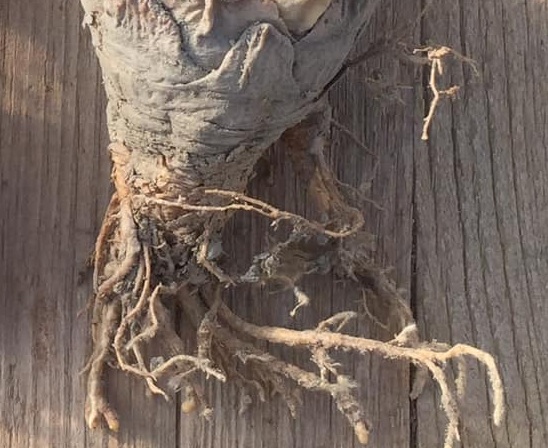
The root system is what most collectors underestimate until they repot one for the first time. lloydii produces a large, napiform (turnip-shaped) taproot that can easily exceed the diameter of the above-ground stem. Deep pots are not optional — the root needs the space, and a root-bound lloydii in a shallow pot will stress badly during drought periods and may crack the container as the root swells.
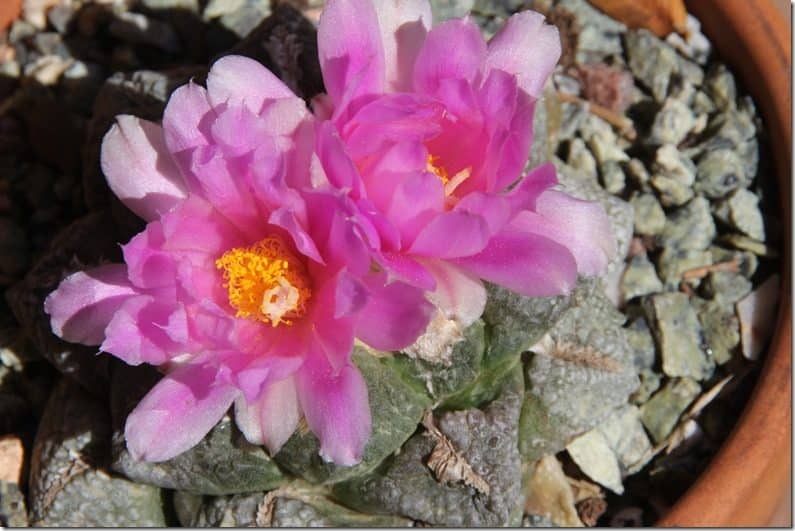
Flowers emerge from the youngest areoles at the center of the plant, appearing centrally located on the stem. They are broadly funnel-shaped, 3 to 4 cm wide when fully open, ranging from soft pink to rich, vibrant magenta. Each flower lasts three to four days. The style and stigma lobes are white, providing a clean contrast to the colored petals. Fruit is ovoidal and pale green, 5 to 15 mm long, with black tuberculate-roughened seeds.
lloydii vs. subsp. fissuratus: The Key Differences
Because these two taxa share a species name and are covered by much of the same cultivation literature, collectors frequently wonder what actually separates them. Here is a direct comparison across the diagnostic characters.
| Character | subsp. lloydii | subsp. fissuratus |
|---|---|---|
| Stem profile | Convex to hemispherical; rises noticeably above soil | Flat to very low; nearly flush with soil surface |
| Tubercle shape | Broadly ovate, rounded apex, 2–3 cm wide | Triangular to rhombic, pointed, densely packed |
| Tubercle surface | Finely rugose, smooth; no deep fissuring | Coarsely papillated, transverse ridges; deeply fissured |
| Lateral furrows | Absent | Present — run along each tubercle edge |
| Native range | S. Coahuila, Zacatecas, E. Durango | SW Texas, Coahuila, Chihuahua, N. Mexico |
| Stem diameter | 10–15 cm habitat; larger in cultivation | Up to 10 cm; rarely to 15 cm |
| Wool at apex | Dense, bright white-cream | Straw-blond to grey with age |
Intermediate forms from Cuatro Cienegas are worth knowing about if you are sourcing from seed operations, as some material will reflect that intermediate morphology — especially in tubercle surface texture. lloydii from Parras-area-sourced material is the most morphologically consistent.
From Seedling to Specimen: What to Expect
One of the things that surprises new growers is how different lloydii looks at different life stages. The juvenile plant looks almost nothing like the adult.
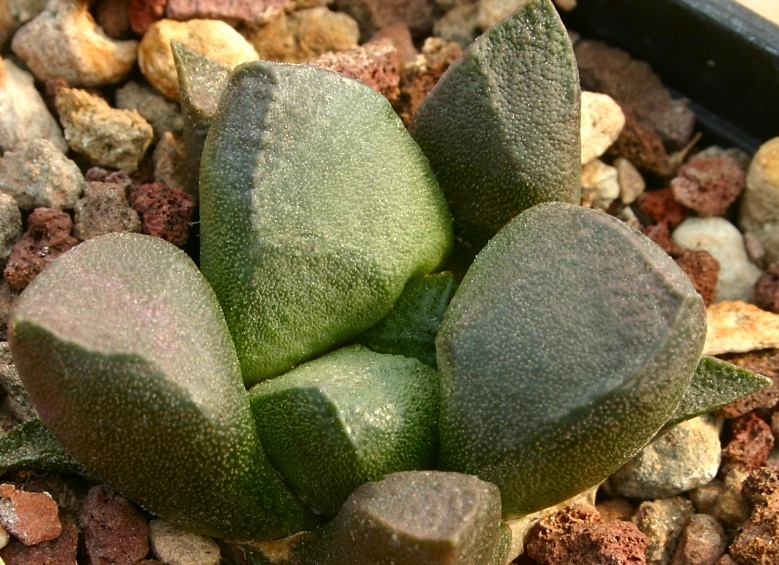
A lloydii seedling at two to three years. The narrow, ascending tubercles give no hint of the broad smooth adult form. Photo: iNaturalist / CC BY-NC-SA
Seedlings begin with a small globular hypocotyl and produce slender, much-elongated tubercles that ascend steeply from the body. These first tubercles have tiny rudimentary spines at the areole tip — the only stage in lloydii’s life when spines appear. This juvenile form is shared across all taxa in the A. fissuratus group; the subspecies cannot be distinguished from each other at this stage.
As the plant approaches its third or fourth year, the tubercles begin to broaden and shorten. The adult form starts to emerge around the growing center while the inner juvenile tubercles persist as a slightly different texture toward the outer edges. This is also when the characteristic woolly crown first develops.
By year five to eight on its own roots, the plant is recognizably lloydii: the convex stem profile, broad smooth tubercles, and creamy wool at the apex are all present. Stem diameter is typically 3 to 6 cm at this stage. Flowering typically does not begin until the plant is 8 to 12 years old on its own roots.
A fully mature specimen — decade-old, grown on its own roots under good conditions — is one of the most tactilely satisfying plants in cactus collecting. The stem is noticeably domed, the tubercles are fat and tightly overlapping, and a healthy specimen shows a distinctive pale grey-green color with a dense central crown of white wool. Grafted plants can reach similar size in considerably less time, but tend to grow taller and more columnar than the low-profile character of a mature habitat plant.
Cultivation
Soil composition
lloydii’s native substrate is thin, alkaline, mineral-dominant limestone-derived soil across the Parras de la Fuente basin and adjacent Zacatecas, with virtually no organic content in the upper layer. The canonical cultivation ratio is 35 per cent pumice, 15 per cent lava rock, 5 per cent zeolite, 20 per cent granite grit, 20 per cent limestone chip, and 5 per cent worm castings. The zeolite buffers pH around 7.0 to 7.8 and paces nutrients; the lava is the structural drainage aggregate. Limestone chip at 20 per cent matches the uniformly calcareous substrate of the Parras type locality. The napiform taproot needs depth: use a long tom or rose-style pot, and allow the mix to dry completely between waterings.
All eleven Ariocarpus pages on this site share the genus calcicole identity; limestone is the load-bearing variable across the range, running 20 per cent for the limestone-hill species and matching that fraction for the gypsum-hill taxa (bravoanus, hintonii) with 5 per cent coarse silica added to reflect calcium-sulphate mineralogy at those localities.
| Species | Pumice | Lava | Zeolite | Granite | Limestone | Silica | Organic |
|---|---|---|---|---|---|---|---|
| A. fissuratus | 35% | 15% | 5% | 20% | 20% | 0% | 5% |
| A. fissuratus subsp. lloydii (this page) | 35% | 15% | 5% | 20% | 20% | 0% | 5% |
| A. retusus | 35% | 15% | 5% | 20% | 20% | 0% | 5% |
| A. retusus subsp. furfuraceus | 35% | 15% | 5% | 20% | 20% | 0% | 5% |
| A. retusus f. cristata | 35% | 15% | 5% | 20% | 20% | 0% | 5% |
| A. kotschoubeyanus | 35% | 15% | 5% | 20% | 20% | 0% | 5% |
| A. scaphirostris | 35% | 15% | 5% | 20% | 20% | 0% | 5% |
| A. agavoides | 35% | 15% | 5% | 20% | 20% | 0% | 5% |
| A. bravoanus | 35% | 15% | 5% | 15% | 20% | 5% | 5% |
| A. bravoanus subsp. hintonii | 35% | 15% | 5% | 15% | 20% | 5% | 5% |
| A. trigonus | 35% | 15% | 5% | 20% | 20% | 0% | 5% |
Watering
lloydii is drought-adapted to an extreme, but that does not mean neglect produces the best plants. During the active growing season — roughly late spring through early autumn — water thoroughly when the substrate has dried completely. In practice, this might be once a week during warm sunny weather, less during cool or cloudy stretches. The drench-and-drought rhythm is what keeps the roots healthy and the tubercles firm.
Once temperatures begin to drop in autumn, start reducing frequency significantly. After flowering, which occurs in October and November, the plant moves into winter dormancy and should receive little to no water. The plant’s above-ground body may flatten slightly during dormancy — this is normal. Resume regular watering in spring once nighttime temperatures are consistently above 10°C and new growth at the apex becomes visible.
Light and color
Full sun is non-negotiable for lloydii grown in northern climates. In its native habitat this plant sits fully exposed on limestone flats at elevations up to 1,500 meters, receiving intense high-UV radiation for most of the year. Insufficient light produces elongated tubercles, a wan yellowish-green body color, and a loose habit that bears no resemblance to the compact domed plant lloydii is known for.
The grey-green color lloydii is prized for in cultivation is partly a stress response. Plants grown with strong light, some temperature fluctuation, and restricted water during dormancy will show a deeper, more saturated grey-green with healthier wool at the apex. The slight bluish cast some lloydii specimens show is most pronounced with very high light intensity — the epidermis thickening in response to UV, exactly what happens in habitat.
Temperature and hardiness
lloydii handles brief frost to around −10°C, though this assumes the plant is completely dry and the cold is short-lived. Wet-cold combinations are far more dangerous than dry-cold. In most of the continental United States, lloydii is manageable outdoors in USDA zones 9b and warmer with winter protection during cold snaps.
Grafting vs. own-root
Grafted lloydii reach blooming size far faster than own-root plants — sometimes flowering as early as year three or four versus eight to twelve on their own roots. The trade-off is aesthetic: grafted plants tend to grow taller and more columnar, losing the flat domed profile that makes a mature own-root specimen so satisfying. Many serious collectors maintain both: grafted stock for propagation and flowering, own-root plants for long-term specimen display.
Related Taxa in the Genus
lloydii sits within a broader complex of closely related Ariocarpus. Understanding where it fits helps make sense of why the taxonomy has been so contested. Species pages for all Ariocarpus are being built throughout 2026.
Ariocarpus retususThe largest species in the genus — faster-growing and more accessible than lloydii, with triangular pointed tubercles and white to pale pink flowers.Ariocarpus retusus subsp. furfuraceusDistinct from retusus in its more papillose tubercle surface and woolly areoles. A popular collector form with a slightly more refined look.Ariocarpus kotschoubeyanusThe smallest Ariocarpus — tiny, flat, and deeply embedded in soil. Its magenta flowers are among the most intensely colored in the genus.Ariocarpus scaphirostrisA narrow endemic from Nuevo León with elongated keel-shaped tubercles unlike anything else in the genus. One of the most sought-after species in cultivation.Ariocarpus agavoidesNamed for its striking resemblance to a miniature agave. Long pointed tubercles — the only Ariocarpus that consistently bears spines as an adult.Ariocarpus bravoanusMorphologically related to the fissuratus complex but with ascending tubercles and a centrally placed areole. Taxonomically one of the most debated species in the genus.Ariocarpus trigonusThe northeast Mexico counterpart to retusus, with a more pronounced triangular-lobed body and a wider, more sprawling growth habit.Ariocarpus bravoanus subsp. hintoniiGeographically isolated in northern San Luis Potosí, hintonii sits between lloydii and bravoanus in morphology — botanically one of the most interesting subspecies in this group.