Gymnocalycium Care: Growing the Chin Cactus
All ArticlesGymnocalycium care is forgiving in one way and exacting in another: the South American chin cacti tolerate more shade than any other cactus genus, yet their shallow roots rot fast in wet soil. Give them bright filtered light, a mineral mix, and a dry winter rest. The genus holds around 70 species, plus the grafted moon cactus.
Can a Gymnocalycium really grow in low light?
Gymnocalycium tolerates lower light than any desert cactus, but bright shade is not the same as a dim room. Many Gymnocalycium grow in the wild among grasses and shrubs in the Chaco scrub and the South American pampas, shaded for much of the day by nurse plants and rocks, which is why the genus handles a bright north window or a spot back from the glass where an Astrophytum would etiolate. Push it into genuine low light, though, and it stretches, pales, and stops flowering.
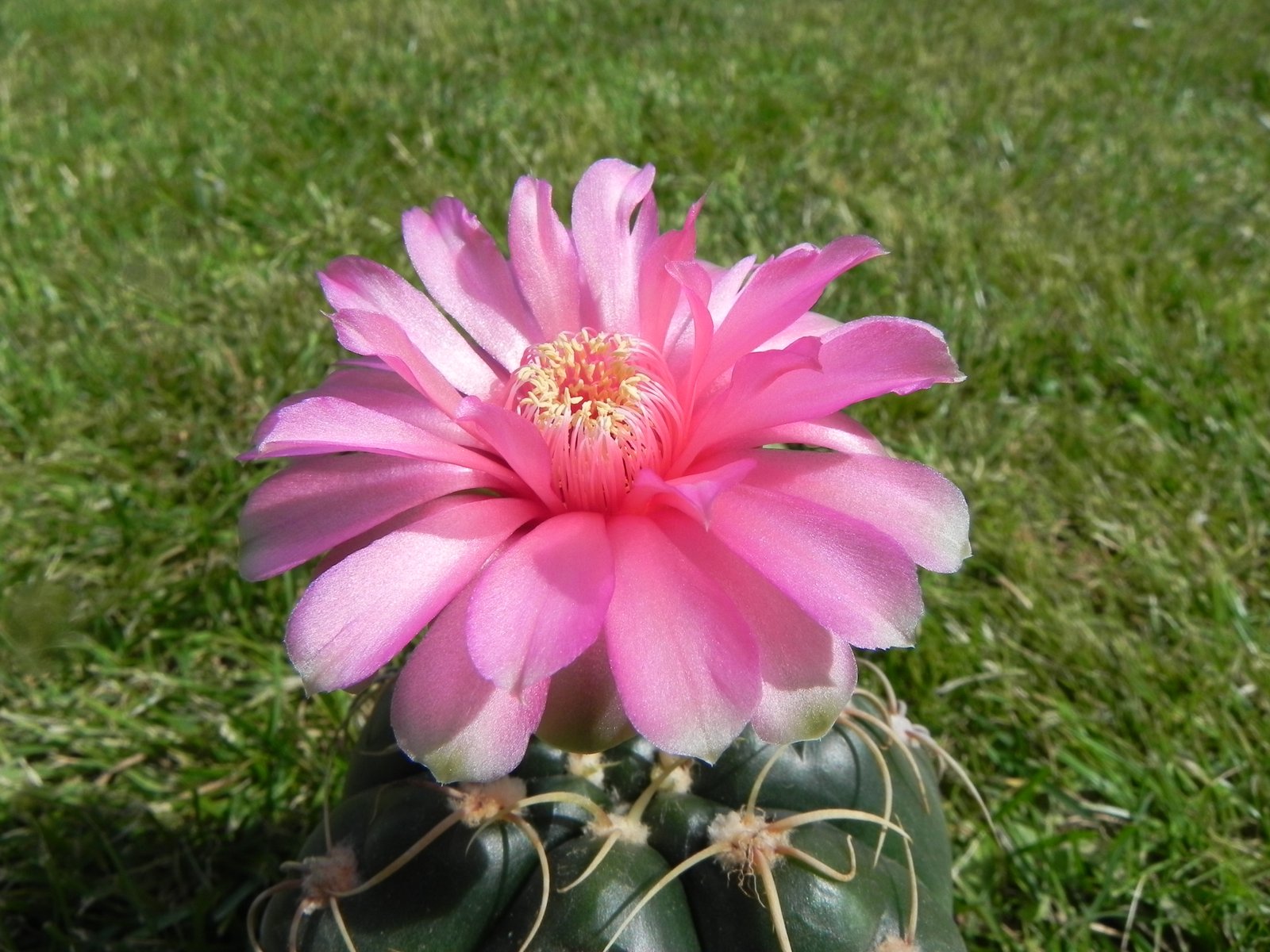
This is the truth behind the genus’s reputation as a bulletproof beginner cactus, and it is only half right. Gymnocalycium are tolerant of shade and of missed waterings, but they are shallow-rooted and acutely sensitive to wet soil, and they rot as readily as any cactus when overwatered. Bright filtered light, not a dark corner, is the target. The common name, chin cactus, comes from the chin-like swelling below each areole; the botanical name means naked calyx, for the smooth, scaly, spineless flower bud that sets the genus apart. The full species list is on the Gymnocalycium genus hub.
How often should you water a chin cactus?
Gymnocalycium grow from spring through autumn on the soak-and-dry method: water thoroughly, then let the mix dry out almost completely before the next watering. In summer heat that can mean weekly for a small plant; the thirsty G. mihanovichii from the well-watered Chaco takes more than the rock-dwelling species. Light shade in the hottest weeks keeps the plants from scorching, but over-shading costs flowers.
Winter is a cool, dry rest, kept nearly dry from late autumn to late winter; watering a Gymnocalycium in a cold, dark winter is the fast route to rot. Cold tolerance is where the genus refuses to be generalised: G. bruchii survives hard frost to around minus fifteen degrees Celsius kept dry, among the most cold-hardy of all South American cacti, while the tropical parent of the moon cactus is tender and wants a minimum near ten degrees. All of that cold tolerance assumes dry roots; wet cold kills well above any of these figures.
How do you care for a grafted moon cactus?
The moon cactus, the bright red, orange, or yellow ball sold grafted onto a green column, is a colour mutant of Gymnocalycium mihanovichii. The vivid forms, including f. rubra, lack chlorophyll entirely, so they cannot photosynthesise and would starve within weeks ungrafted. They survive only because the green rootstock, usually a Hylocereus, feeds the colourful scion. The partly green variegated forms keep enough chlorophyll to grow ungrafted.
Care follows the graft, not the scion. Give it bright indirect light, since the chlorophyll-free top sunburns easily, keep it above about ten degrees because the tropical rootstock is cold-sensitive, and water on soak-and-dry in a standard draining mix. Most moon cacti last one to three years before the rootstock and the slow scion outgrow each other and the graft fails; careful growers stretch that to several years, or re-graft the top to keep it going. The reasoning behind grafting versus growing on natural roots is covered in our grafted versus seed grown guide.
What soil does Gymnocalycium need?
A free-draining mineral mix, with one difference from the desert genera: Gymnocalycium are calcifuge, growing on acidic, sandstone- and granite-derived soils rather than limestone, so leave the crushed limestone out. Build the mix from pumice, granite grit, and a little zeolite, with a modest organic fraction of worm castings, since these plants come from habitats with more leaf litter and clay than a true desert. The genus tolerates a touch more organic matter than an Ariocarpus would, but sharp drainage still rules, because the shallow roots rot in soggy mix. Skip the perlite and builder’s sand that retail mixes lean on; our cactus soil mix guide has the components.
Which Gymnocalycium does the site grow?
Gymnocalycium mihanovichii is the small, flat-globose, banded-ribbed species from the Paraguayan Chaco and the parent of every moon cactus. In its normal green form it grows easily ungrafted, flowers young and pale greenish-yellow, and wants bright filtered light and a calcifuge mix. Gymnocalycium horstii is its opposite in scale: a large, glossy, bright-green Brazilian species reaching fifteen to twenty centimetres across, with spectacular pink-white flowers that can be wider than the plant. It grows slowly, prefers bright shade, and takes brief dry cold to around minus four degrees.
Gymnocalycium buenekeri is the rarity, a matte blue-green Brazilian endemic known from only a handful of tiny wild populations, that carries always-pink flowers and clumps freely in cultivation. Its rank is disputed: some authorities treat it as a full species, others as a subspecies of G. horstii, and the site treats it as a species in its own right. Easy ungrafted and undemanding in a bright spot, it is a forgiving way into the collector end of the genus.
Why is my Gymnocalycium going soft or rotting?
Overwatering is the answer almost every time. The genus’s shallow, fine roots are quick to rot in wet soil, and a body that turns squishy or translucent at the base has usually been watered too often or kept in a mix that holds moisture. Like other thin-skinned globular cacti, Gymnocalycium are susceptible to fungal rots once conditions turn wet and cold, grafted moon cacti included. The defence is the same as the cure is hard: a sharply draining mineral mix, a dry winter, and water only when the mix is dry. Our root rot guide covers catching and treating it.
Red spider mite and mealybug are the usual pests, the mites in hot dry still air and the mealybugs in the areoles and at the roots; both are manageable with airflow, inspection, and prompt treatment. Brown, firm, woody tissue creeping up from the base of an older plant is natural corking, not rot, and is nothing to treat. The distinction is the same throughout the cacti: corking is dry and hard, rot is soft and wet.
Frequently asked questions about Gymnocalycium care
Is Gymnocalycium a good low-light cactus?
It is the best cactus for a lower-light spot, but bright shade is not a dark room. Gymnocalycium grow among grasses and shrubs in the wild and tolerate a bright north window or a position back from the glass that would etiolate a desert cactus. In genuine low light they stretch, pale, and stop flowering. Bright filtered light is the target.
Why must a moon cactus be grafted?
The bright red, orange, and yellow moon cacti are chlorophyll-free colour mutants of Gymnocalycium mihanovichii. Without chlorophyll they cannot photosynthesise, so they would starve within weeks ungrafted. Grafting onto a green rootstock, usually a Hylocereus, keeps them fed. The partly green variegated forms keep enough chlorophyll to grow ungrafted.
How long do moon cacti live?
Most grafted moon cacti last one to three years before the fast rootstock and the slow colour scion outgrow each other and the graft union fails. Careful growers stretch that to five years or more with bright indirect light, warmth above ten degrees Celsius, and soak-and-dry watering. The top can be re-grafted onto fresh rootstock to keep it going indefinitely.
How often should I water a Gymnocalycium?
Water on soak-and-dry through the growing season, spring to autumn: soak the mix, then let it dry out almost completely before watering again, often weekly for a small plant in summer heat. In winter keep it nearly dry, especially in the cold. The shallow roots rot fast in soggy soil, so sharp drainage matters more than frequency.
Is Gymnocalycium really a bulletproof beginner cactus?
Only half true. Gymnocalycium tolerate shade and missed waterings better than most cacti, which earns the easy reputation, but they are shallow-rooted and very sensitive to wet soil and rot readily when overwatered. Treat them as forgiving of drought and shade but unforgiving of wet roots, and they are an excellent and durable beginner genus.
Plants of the World Online (POWO), Royal Botanic Gardens Kew, Gymnocalycium Pfeiff. ex Mittler · IUCN Red List, Gymnocalycium assessments · Anceschi & Magli, Gymnocalycium studies · CITES Appendix II and Annotation #608 (artificially propagated colour mutants) · Anderson, E.F., The Cactus Family (Timber Press) · Hunt, D., The New Cactus Lexicon (DH Books) · llifle, Encyclopedia of Living Forms · North Carolina State Extension, Gymnocalycium mihanovichii
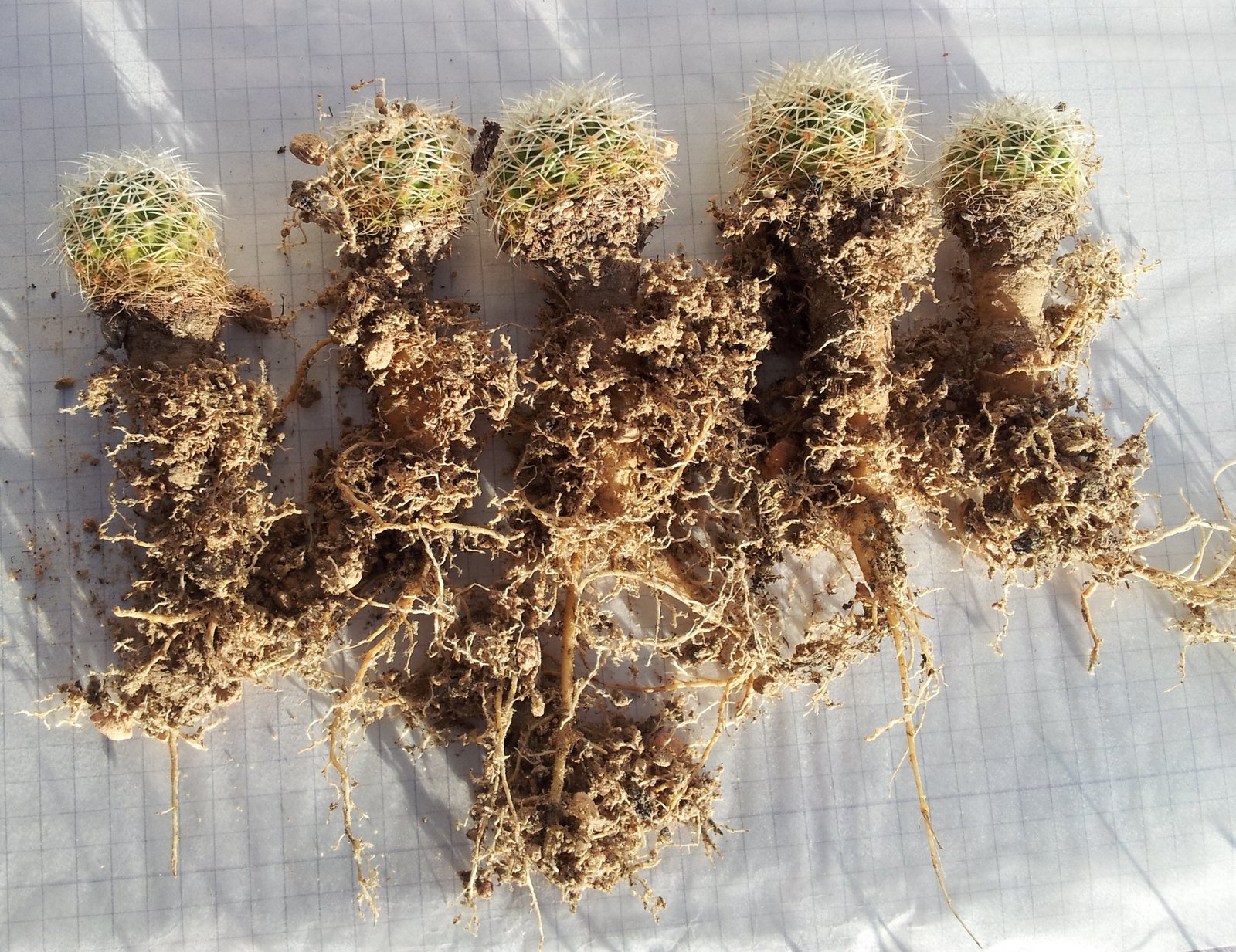
Photos: Gymnocalycium denudatum by Marco Wentzel (CC BY 4.0) and Mammillaria napina roots by Michael Wolf (CC BY-SA 3.0), via Wikimedia Commons.