Rare Cactus of West Texas & Big Bend: A Field Guide
All ArticlesWest Texas cactus diversity peaks in the Chihuahuan Desert around Big Bend National Park, where about 60 cactus species grow, including the living rock (Ariocarpus fissuratus) and the federally Threatened Chisos Mountains hedgehog. This conservation-first field guide maps where they grow, when they bloom, and how to see them without harming them.
Which cacti grow in Big Bend National Park?
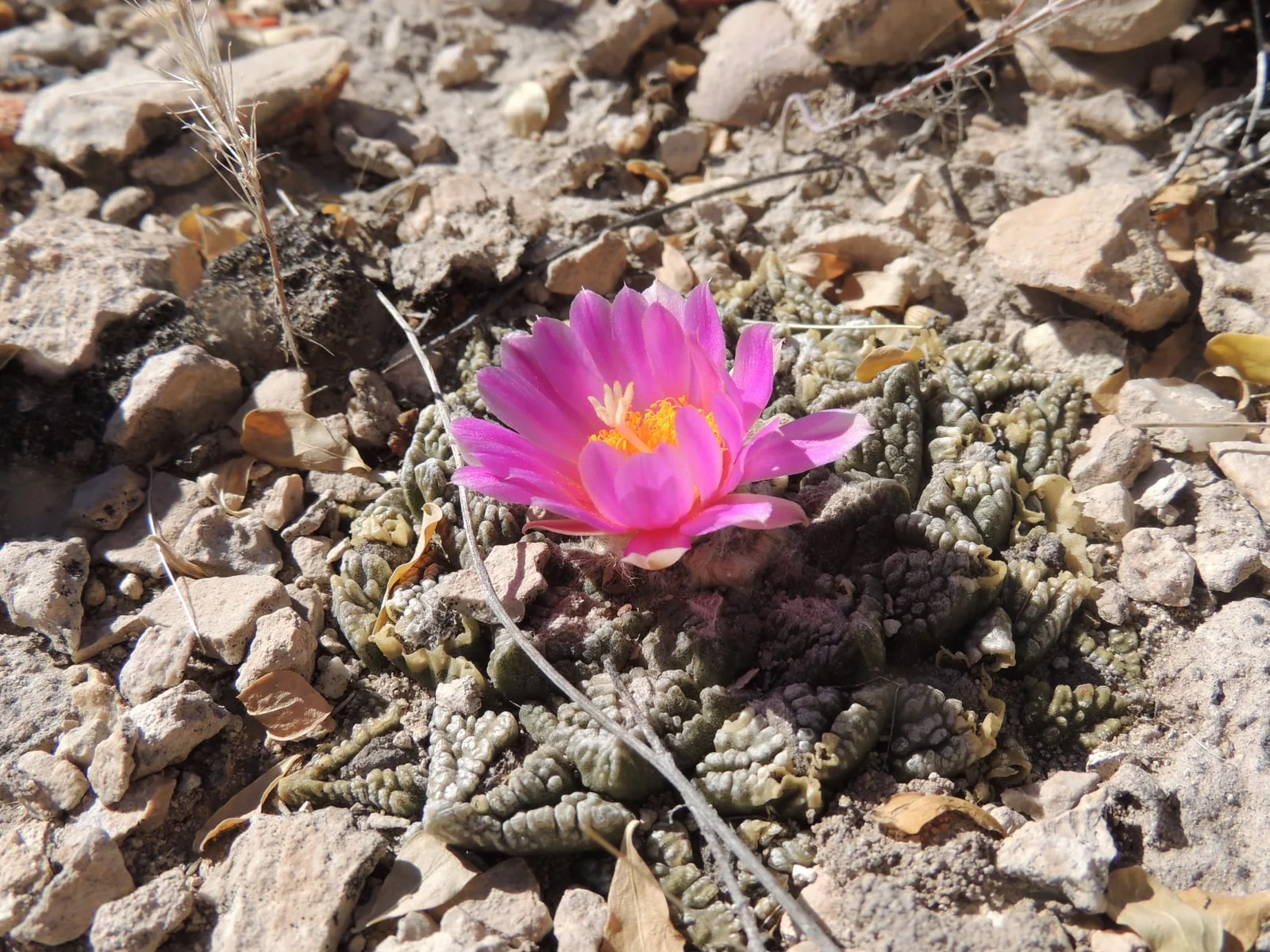
Big Bend National Park holds about 60 cactus species, the richest cactus flora of any national park in the United States. The signature plant is the living rock cactus, Ariocarpus fissuratus, the only Ariocarpus that reaches the United States. It grows wedged into limestone with its warty body flush to the rock, so well camouflaged that most visitors walk past it without a glance.
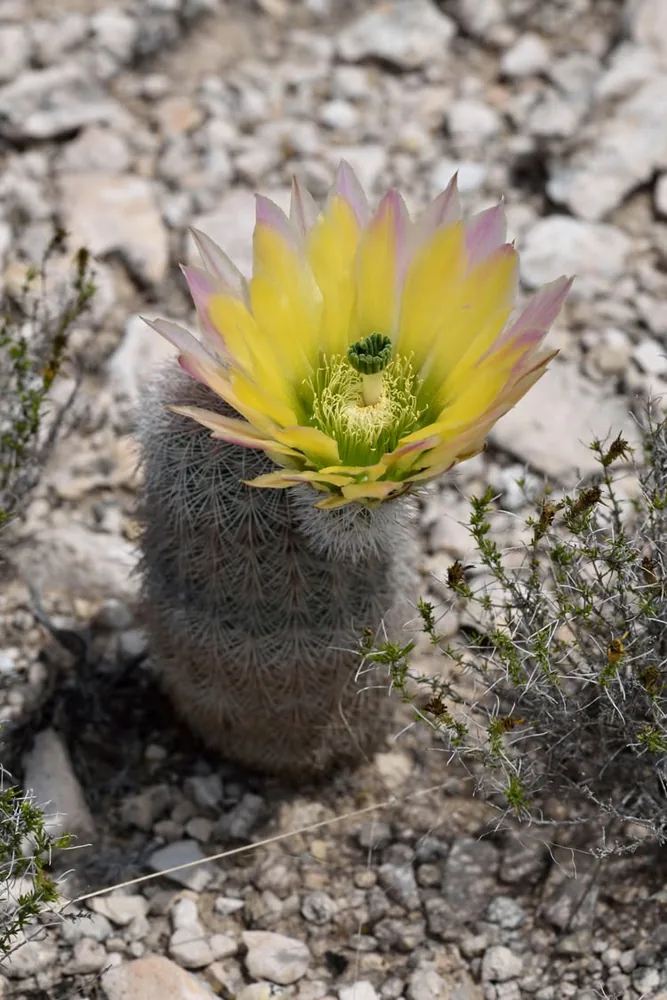
The park’s hedgehog cactus line is a highlight for collectors: the Texas rainbow cactus (Echinocereus dasyacanthus), the claret-cup (E. coccineus), the strawberry hedgehog (E. stramineus), and the Chisos Mountains hedgehog (E. chisoensis), a federally Threatened plant near-endemic to roughly 100 square miles inside the park. Barrels are well represented too, from the Turk’s head (Echinocactus horizonthalonius) on limestone to the Texas barrel cactus (Ferocactus hamatacanthus) near the Rio Grande.
Smaller treasures reward a careful eye. The button cactus (Epithelantha micromeris) is a golf-ball miniature of the rocky slopes, and pincushions of Coryphantha, Escobaria, and prickly pears and chollas of Opuntia, Cylindropuntia, and Grusonia fill out the desert flats. Kew’s POWO now places many of the Trans-Pecos pincushions in Pelecyphora, though the conservation and trade paperwork still files them under Escobaria and Coryphantha.
Cactus native to West Texas and the Trans-Pecos
The Trans-Pecos, the mountain-and-basin corner of Texas west of the Pecos River, is the cactus heart of the state. The regional flora records more than 100 of the roughly 130 Texas cactus taxa here, so Big Bend is the anchor of a much larger range rather than an isolated hotspot. Two federally Endangered pincushions live at its edges. The Nellie cory cactus (Escobaria minima) is confined to novaculite outcrops of the Marathon Uplift in Brewster County, and the Sneed pincushion (Escobaria sneedii) grows in the Franklin Mountains at El Paso and north into the Guadalupes.
Two other West Texas parks extend the trip. Guadalupe Mountains National Park, near the New Mexico line, carries foxtail and beehive Escobaria, Coryphantha, and the Threatened Lee pincushion at its lower elevations. The Davis Mountains around Fort Davis sit high enough to hold Echinomastus, Coryphantha, and Escobaria at the northern edge of their mostly Mexican range. Every one of these plants is a Chihuahuan Desert specialist tuned to thin, fast-draining mineral soil.
Where do these cacti grow?
West Texas cacti sort themselves by rock and by elevation. The living rock cactus and the Turk’s head are limestone specialists, keyed to the pale Cretaceous carbonate shelves that ring the Big Bend lowlands. The endangered Nellie cory cactus is fussier still, restricted to hard, flinty novaculite of the Marathon Uplift and found almost nowhere else. Above the desert flats the Chisos Mountains rise as an igneous sky island toward Emory Peak, and that gain in elevation stacks a cooler, higher-altitude set of pincushions and hedgehogs on top of the heat-loving desert species below.
The map below shows the region at a deliberately coarse resolution. It marks public parks, mountain ranges, and gateway towns, not the precise spots where rare cacti grow. Withholding exact localities is standard practice for heavily collected taxa, and it is why platforms such as iNaturalist automatically blur the coordinates of at-risk species.
When do West Texas cacti bloom?
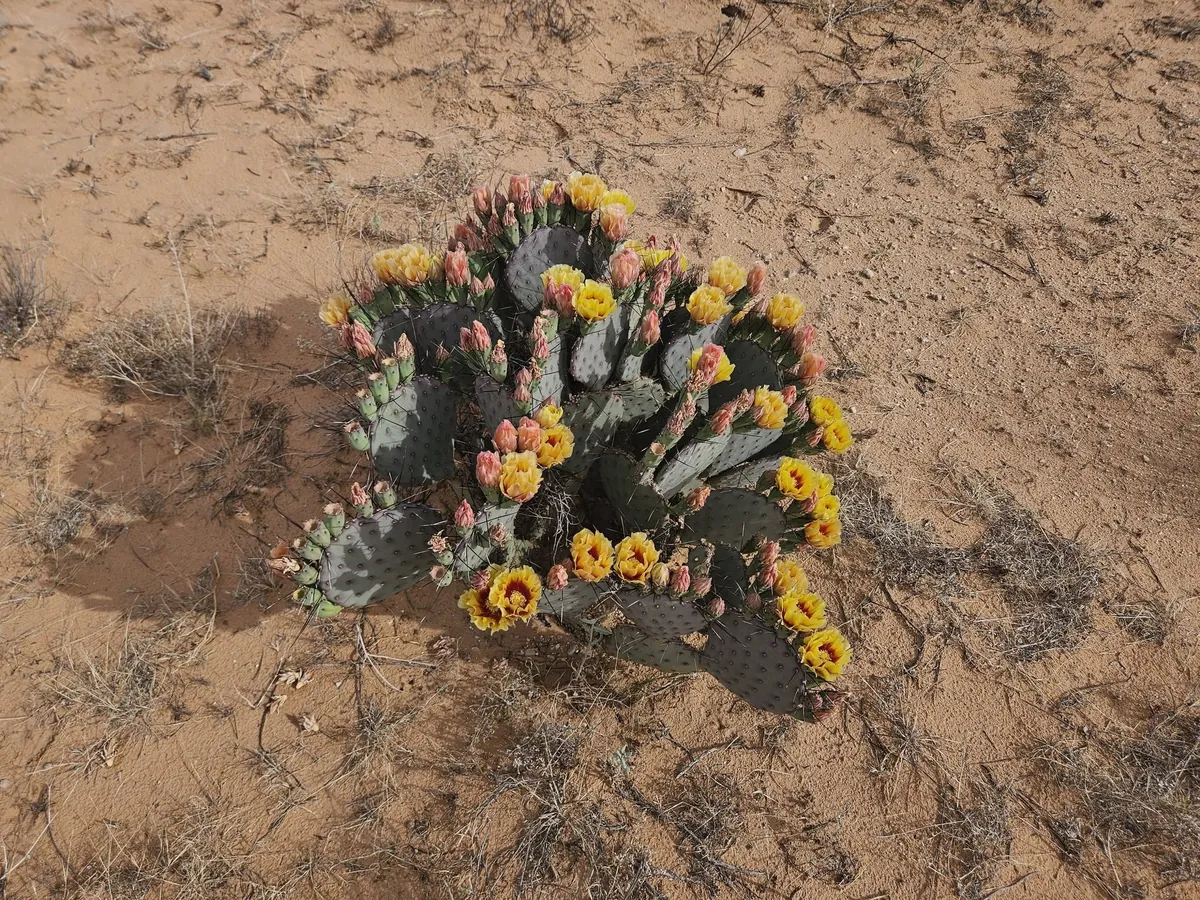
West Texas cacti bloom in two windows. The main show runs mid-March through May, when hedgehogs, prickly pears, and button cactus flush magenta, yellow, and scarlet across the desert, and the barrels carry that color into June after rain. The second window belongs to a single species. The living rock cactus is a fall bloomer, opening pink flowers for a brief spell in October and early November when almost nothing else is in flower. A visitor who wants both spectacles needs two trips, one in spring and one in autumn.
Is it legal to collect cactus in Big Bend?
No. Removing any plant from a national park is a federal offense under 36 CFR 2.1, punishable by up to six months in jail and a fine, and Big Bend states plainly that all of its plants are protected. The rule is not unique to parks. Texas law bars taking protected native plants from public land outright and requires a permit and tagging to harvest them commercially from private land. It does not, however, make every cactus off limits everywhere, so the honest summary is narrow: on park and public land, look and photograph, never dig.
The living rock adds an international layer. The entire genus Ariocarpus has sat on CITES Appendix I since 1992, the strictest tier of the wildlife-trade treaty, so moving a wild-collected plant across a border is effectively prohibited without paired permits for bona fide science. The plant is not listed under the US Endangered Species Act, but its Appendix I status is exactly what let federal prosecutors charge Big Bend traffickers with felonies for mislabeled shipments.
How can you see these cacti responsibly?
The Big Bend country carries a hard lesson in why this matters. A trafficking ring worked the region for years, and a US Fish and Wildlife Service investigation concluded that roughly seven collectors pulled an estimated 10,000 to 15,000 living rock plants out of the desert, shipping them to buyers in Europe and Asia in falsely labeled parcels. Four people were sentenced, paying a combined 118,804 dollars in fines and restitution and forfeiting 17 firearms, and researchers took in thousands of confiscated plants. A slow-growing cliff cactus does not recover from losses on that scale.
Responsible viewing follows from that. Stay on trails, where you avoid crushing seedlings and fragile desert soil crusts. Photograph plants but leave them, and do not post the exact coordinates of a rare cactus, because a geotag is a map for the next poacher. Report any digging or collecting to park rangers, whose enforcement depends on visitor tips. If you want to own one of these plants, buy it seed grown from a nursery that can prove cultivated origin.
At rarecactus.com we grow every living rock cactus from seed, because the wild Big Bend population has already lost thousands of plants to poaching and a seed grown specimen is the only one you can own without adding to that loss. The provenance behind that claim is public: our field-number records index tens of thousands of documented collections, including Ariocarpus material tied to the Big Bend, Marathon, and Terlingua country, so a plant’s history can be traced rather than guessed.
How to plan a visit to Big Bend
Big Bend is remote and rewards a plan. The comfortable season runs late October through April, with the spring bloom concentrated in March and April and summer far too hot for daytime hiking. Panther Junction is the park headquarters and the place to pick up maps and backcountry permits. For desert cacti, the Ross Maxwell Scenic Drive toward Santa Elena Canyon crosses classic Chihuahuan lowland, the Chisos Basin lifts you into the higher-elevation flora, and Rio Grande Village anchors the southeast corner. The park does not signpost rare-cactus localities, and for the reasons above it should not, so keep to the scenic drives and marked trails.
Frequently Asked Questions
What kind of cactus grows in Big Bend National Park?
Big Bend holds about 60 cactus species, the most of any US national park. They include the living rock cactus (Ariocarpus fissuratus), several hedgehogs such as the Texas rainbow (Echinocereus dasyacanthus) and the Threatened Chisos Mountains hedgehog (E. chisoensis), the Turk’s head barrel (Echinocactus horizonthalonius), the button cactus (Epithelantha micromeris), and prickly pears and chollas of Opuntia and Cylindropuntia.
What is the rare cactus in Big Bend?
The rarest and most sought-after is the living rock cactus, Ariocarpus fissuratus, a limestone specialist that grows flush with the rock and is the only Ariocarpus in the United States. It is a CITES Appendix I plant and a repeated poaching target. The federally Threatened Chisos Mountains hedgehog (Echinocereus chisoensis), near-endemic to the park, is the other headline rarity.
When do cacti bloom in West Texas?
Most West Texas cacti bloom from mid-March through May, with barrels carrying color into June after rain. The living rock cactus is the exception: it flowers pink in the fall, over a brief spell in October and early November. Spring is the broad peak, but autumn is the only time to catch the living rock in bloom.
Is it legal to collect cactus in Big Bend?
No. Removing any plant from Big Bend or any national park is a federal offense under 36 CFR 2.1, carrying up to six months in jail and a fine. Texas also prohibits taking protected native plants from public land, and the living rock cactus is CITES Appendix I, so cross-border movement of wild plants is effectively banned. Photograph the plants; never dig them.
What cacti are native to the Chihuahuan Desert?
The Chihuahuan Desert of West Texas and northern Mexico is home to Ariocarpus, many Echinocereus hedgehogs, barrels of Echinocactus and Ferocactus, the pincushions Escobaria, Coryphantha, and Epithelantha, and prickly pears and chollas. Several, including the Nellie cory and Sneed pincushion cacti, are narrow endemics under federal protection.
For deeper species profiles of the genera in this guide, browse the rare cactus encyclopedia.
A. Michael Powell, James F. Weedin & Shirley A. Powell, Cacti of the Trans-Pecos & Adjacent Areas and Cacti of Texas: A Field Guide (Texas Tech University Press) · A. Michael Powell, Cactuses of Big Bend National Park (University of Texas Press) · US National Park Service, Big Bend National Park (nature, plants, fees, and Leave No Trace pages) · US Fish and Wildlife Service, “Catching Cactus Crooks” (2024) · US Immigration and Customs Enforcement / US Department of Justice, Big Bend cactus-trafficking prosecutions · CITES Appendices I and II, Cactaceae listings (Ariocarpus transferred to Appendix I at CoP8, 1992) · IUCN Red List, Cactaceae assessments · US Endangered Species Act listings, Echinocereus chisoensis, Escobaria minima, Escobaria sneedii (US Fish and Wildlife Service ECOS) · Texas Parks & Wildlife Department, listed-plant profiles and Parks & Wildlife Code Chapter 88 · Royal Botanic Gardens Kew, Plants of the World Online (POWO) · UNESCO Man and the Biosphere Programme, Big Bend (1976) and Maderas del Carmen · 36 CFR 2.1 and 18 U.S.C. 1865 (national park resource-protection regulations)