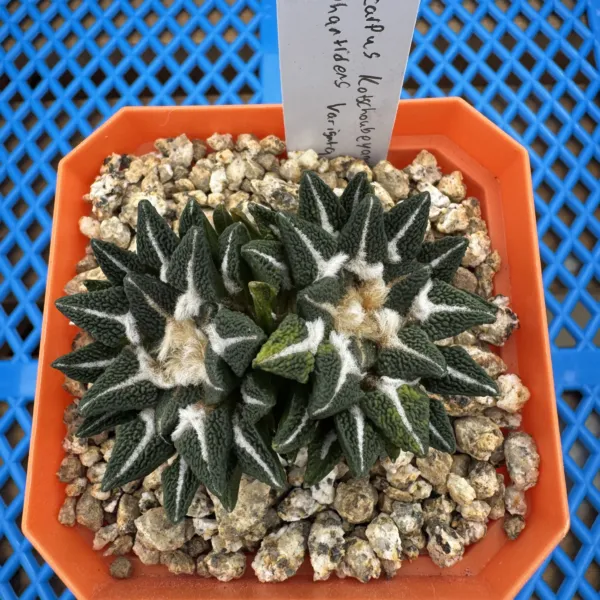
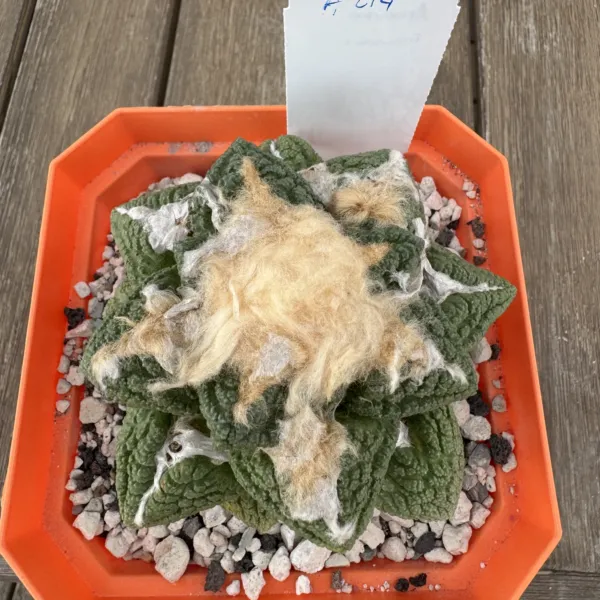
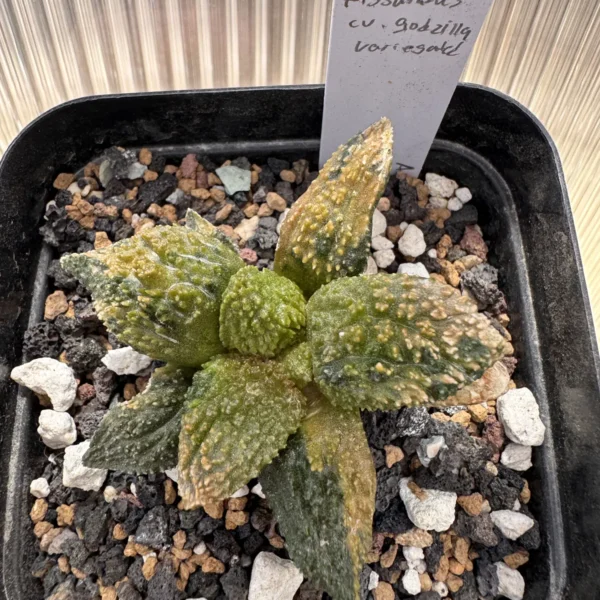
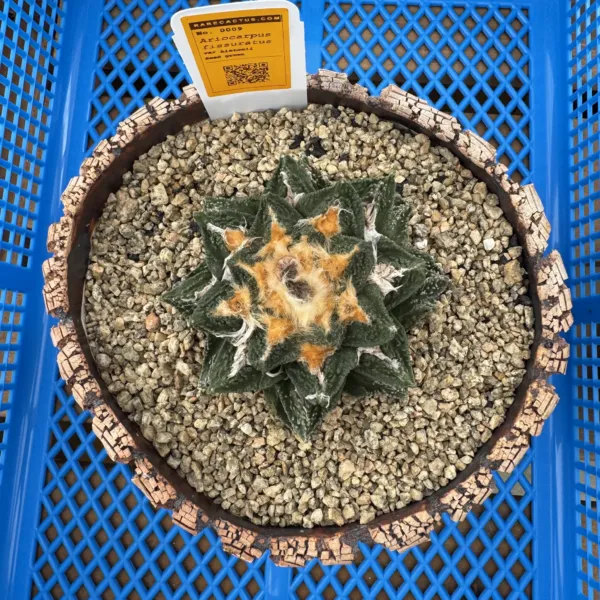
Ariocarpus fissuratus ‘Godzilla’ (Specimen B)
Lot ARIO-FISS-GOD-B sold
$170.00
- Plant: Ariocarpus fissuratus Godzilla (Specimen B)
- Cultivation: seed grown, with a strong root system
- Size: roughly 6 cm
- Listing: one-of-a-kind, the exact plant in the photographs
- Grown: cultivated in our greenhouse
Sold out
This plant has sold
The page stays up as a record of the specimen in the photographs.
For sale now: Ariocarpus fissuratus
Description
Type: Seed grown · Size: roughly 6 cm · This is Specimen B
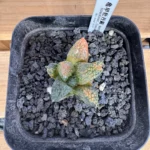
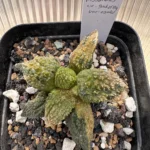
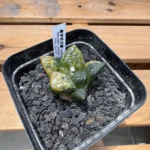
Ariocarpus fissuratus Godzilla is the heavily fissured cultivar of the living rock cactus, and this listing is a second, distinct seed grown plant from the same batch. The specimen pictured is the exact plant you will receive, cultivated in our own greenhouse and offered as a single one-of-a-kind item.
About this Ariocarpus fissuratus Godzilla
Because the Godzilla trait comes through seed rather than cloning, no two plants furrow the same way. Specimen B carries its own pattern of deep, interlocking grooves across the tubercles, a touch different from its sibling, which is part of the appeal of buying a named photograph rather than a generic plant. The cultivar takes the ordinary fissured surface of Ariocarpus fissuratus and pushes it into dense, sculptural relief that looks carved. Our Ariocarpus fissuratus specimen page sets out the species behind the selection.
The plant grows from a stout tuberous taproot and sits flush with the ground, a survival habit for the open limestone flats of the Chihuahuan Desert. Expect pink to magenta flowers from the wool at the centre in the cooler months, on a plant grown slowly to collector size.
How we grow it
This Ariocarpus fissuratus Godzilla is grown in a deep pot of free-draining mineral substrate weighted toward limestone and pumice, given full sun, watered only on a hard wet-then-fully-dry cycle in summer, and kept completely dry through winter. That discipline is what keeps the body flat and the fissures tight. The Ariocarpus care guide walks through the regime step by step.
Flowering and what to expect
In autumn this Ariocarpus fissuratus Godzilla can open a glossy pink to magenta flower from the felted crown, brief but striking against the grey-green body. These are slow plants: a Godzilla of this size is the result of patient, dry growing rather than a fast season, and that restraint is exactly what keeps the tubercles packed and the fissures deep. Buy it for what it is now and enjoy the slow thickening of the relief over the years rather than rapid size.
Receiving and settling your plant
The specimen travels bare-root and dry, the standard for the genus. On arrival, settle it into a deep pot of gritty, limestone-rich mineral mix, keep it dry and shaded from harsh sun for ten days or so while the roots take hold, then begin watering on the usual soak-and-dry rhythm. Handled this way the plant barely notices the move.
Choosing a Godzilla
The plants worth keeping are the ones with the densest, most disordered fissuring and a flat, ground-hugging profile, both of which this specimen shows in the photographs. Because you are buying the exact pictured plant, there is no guesswork about how heavily it furrows. Every plant of this cultivar in our greenhouse is seed grown, with a strong root system, never grafted to force size and never lifted from the wild, so it keeps the natural proportions and slow character that grafted stock loses.
Potting and position
Give this Ariocarpus fissuratus Godzilla a deep pot to suit the taproot, a top dressing of grit to keep the neck dry, and the brightest position you can offer short of scorching summer glass. In good light the body stays compact and well coloured; in shade it softens and stretches. A bright windowsill, a ventilated greenhouse, or a sheltered spot outdoors in warm months all suit it well.
Provenance and legality
Seed grown, greenhouse cultivated, never wild collected. Ariocarpus is a CITES Appendix I genus, so artificially propagated specimens like this are the only lawful and ethical way to own one. See the wider genus on the Ariocarpus encyclopedia hub.
One plant, one photograph. The specimen shown is the specimen that ships, packed dry with its roots intact.
Growing Ariocarpus
Ariocarpus grow from a swollen taproot, and nearly every care decision protects it: strong light, a fast mineral mix, water only through the warm growing season, and a completely dry winter rest.
- Sun exposure
- Full sun
- Give it full sun or your brightest position. Shade cloth at 30 to 40 per cent through the hottest summer weeks stops bronzing on growth that has not hardened.
- Watering
- April to October only
- Soak, then let the mix dry out completely before watering again, April to October, with growth peaking in late summer. From November to March keep the plant bone dry.
- Soil
- 95% mineral
- About 95 per cent mineral (pumice, lava, granite grit, zeolite, limestone chip) plus 5 per cent worm castings. Hard tap water already supplies calcium; rainwater growers rely on the limestone.
- Cold tolerance
- Dry rest at 5–10°C
- Kept completely dry, plants ride out brief frost to about −5°C, but cold with wet soil rots the taproot. A dry 5 to 10°C winter rest is safest.
- Container
- Deep pot
- Use a deep pot for the fleshy taproot; unglazed terracotta helps in humid climates. Repot in spring, no more than every two to three years.
- Growth rate
- 10+ years to flower
- Very slow. Seedlings need two to three years to reach thumbnail width, and most species take ten years or more to flower from seed.
Shipping & Returns
Shipping
Flat $12 shipping anywhere in the United States, for one plant or several. Orders ship within 1 to 3 business days and usually arrive 2 to 5 business days later. Every plant is packed by hand to travel safely.
Returns
Every plant we sell is alive, so all sales are final and we do not accept returns or exchanges. If a plant arrives dead, take clear photos of the plant and the packaging within a couple of days of delivery and email support@rarecactus.com. If anything else about your order is not right, tell us and we will help where we can.