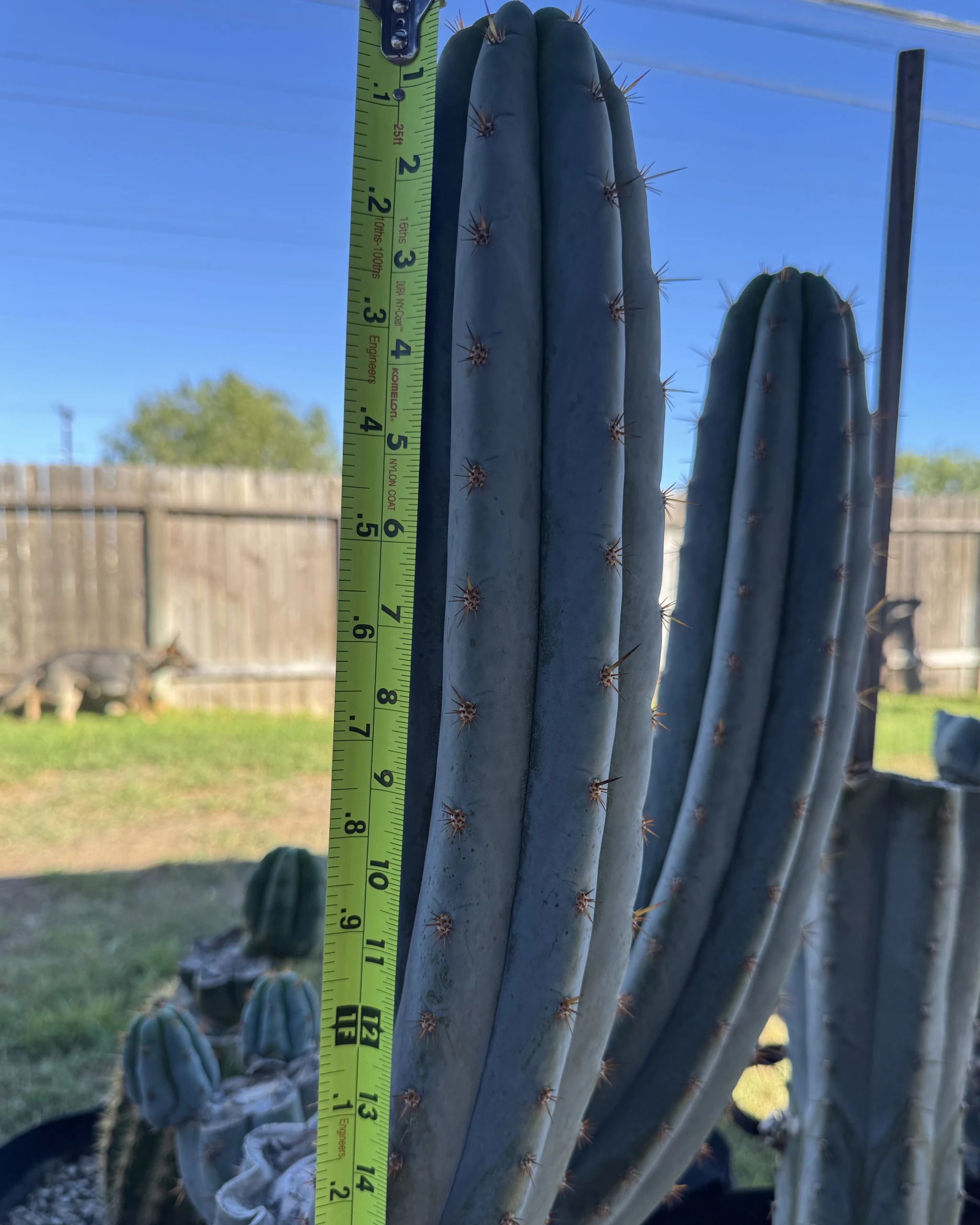
Trichocereus peruvianus ‘Sharxx Blue’ (Peruvian Torch)
Lot ECHI-PERU-SHARXX-01 2 available, sold individually
$120.00
- Plant: Trichocereus peruvianus Sharxx Blue
- Cultivation: unrooted cutting, ungrafted
- Size: about 12 in (30 cm) long
- Also known as: Peruvian torch cactus
- Lineage: Dawsons collection, Australia
- Listing: one cutting from the batch pictured, sold individually
- Grown: our own mother plant, grown outdoors in Orange County
In stock
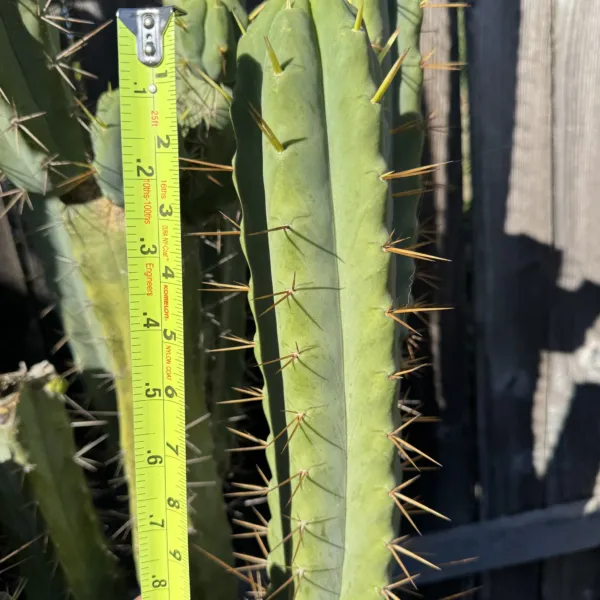
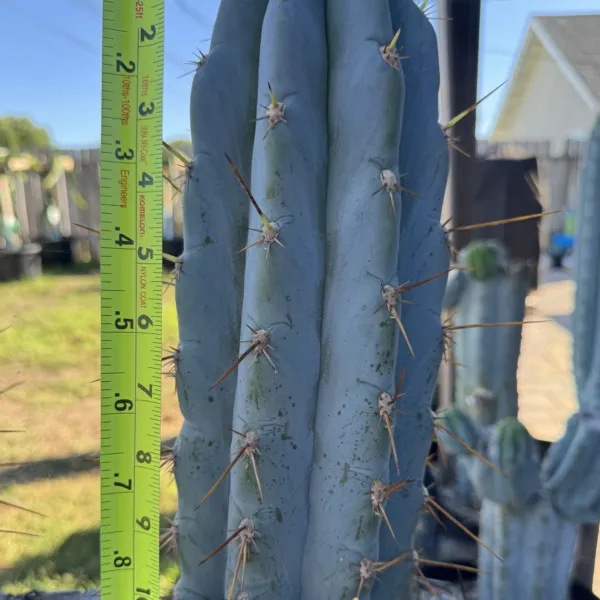
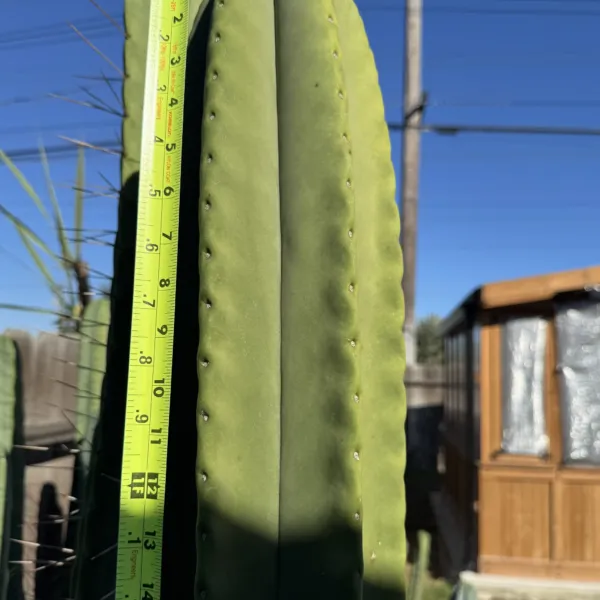
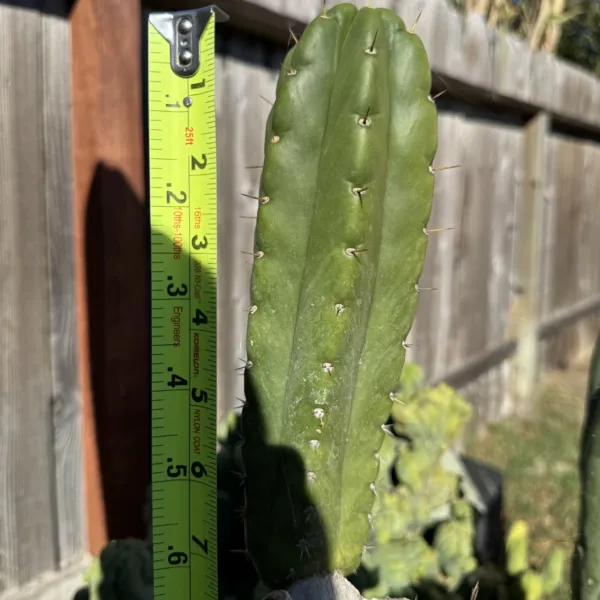
The photo shows a representative cutting. Yours is cut from the same clone to the stated length.
- Flat $12 shipping anywhere in the United States, for one plant or several.
- Ships within 1 to 3 business days and usually arrives 2 to 5 business days later.
- All sales are final. If a plant arrives dead, email photos of the plant and packaging within a couple of days. Shipping and returns
- 237 plants sold
- Grown in Orange County, California
- Artificially propagated, never wild-collected
Description
Type: Unrooted, callused cutting, ungrafted · Length: about 12 in · 2 available, sold individually
Peruvian torch Sharxx Blue is a short-spined Trichocereus peruvianus clone with some of the bluest skin in the group, and we have two 12 inch cuttings of it for sale. The photo shows a representative stem on our mother plant, and your cutting is taken from the same clone at the same length, unrooted and ungrafted.
Where Peruvian torch Sharxx Blue comes from
The clone originated in the well-known Dawsons cactus collection in Australia and takes its name from Sharxx, a member of the Shaman Australis Botanicals (SAB) forum. It spread through SAB circles, with PD, another member, among the growers who passed it on. Accounts differ on who handed out the most cuttings. Everyone agrees the plant has been in Australia for a very long time.
Where it was first collected is unknown.
That gap is normal for clones that reached Australia decades ago, when plants moved between private collections with little paperwork. What carried the name forward was the plant itself, passed from grower to grower as cuttings, which is still the only way to get Sharxx Blue true to type. Seed from it gives you new plants with half its genes, often lovely, never identical.
It may belong with the Matucana peruvianus, close to the Icaro DNA plants, Los Gentiles and the Rosei clones, although some longtime Australian growers regard that link as guesswork. What is certain is how it looks.
What to look for
Sharxx Blue is extremely blue and glaucous, a cold, chalky blue that holds across the whole stem. Spines stay short and neat, reddish brown on new growth, so it is comfortable to handle for a peruvianus. Breeders like it as well. It flowers in cultivation and sets fruit, and open-pollinated Sharxx Blue seed circulates among hybridizers, which has made it a familiar name in Trichocereus crosses.
POWO now files Trichocereus peruvianus under Echinopsis macrogona, and our Echinopsis peruviana species page explains the Peruvian torch and how it differs from pachanoi.
How we grow it
At rarecactus.com we grow our Trichocereus mother plants outdoors in full sun in Orange County, California, in a 50/50 soil mix of organic and inorganic material. Strong light is what keeps Sharxx Blue so blue; in shade the skin drifts toward green within a season. Both cuttings come from our own plant of the clone, and neither has ever been grafted.
When your Peruvian torch Sharxx Blue cutting arrives
Check the base. Once the cut is dry and hard it is ready to root, and if it still looks fresh, give it a few more days upright in bright shade.
Let it root in a dry area, standing upright with a stake if needed, in bright indirect light and with no water at all until roots form, usually a few weeks in warm weather. Then pot it in a 50/50 soil mix of organic and inorganic material, start watering lightly and bring it into full sun gradually over two or three weeks. Hold it near the base when you move it, because the powdery bloom marks easily and takes a season to grow back over.
After the first summer it settles into the usual Peruvian torch rhythm: generous water in the warm months, almost none in winter.
Provenance and legality
CITES lists Trichocereus, like most cacti, on Appendix II, and this cutting is cultivated stock grown in the United States. San Pedro and its relatives are legal to own as ornamentals in all fifty states, and our state-by-state guide cites each statute. More clones are in our Peruvian torch cactus for sale collection, and the Echinopsis encyclopedia hub covers the genus.
Questions before you buy
What exactly arrives?
A cutting from the same clone, cut to the stated length and shipped unrooted, as cuttings are. The photo shows a representative cutting, and the lot line under the title shows how many remain.
How does it ship?
From our greenhouse in Orange County, California, within 1 to 3 business days, for a flat $12 anywhere in the United States. It usually arrives 2 to 5 business days later.
Is it legal to own?
Yes. Every plant we sell is artificially propagated, cut from our own mother plants, with no wild collection at any stage. CITES rules apply to international trade, and we sell within the United States only, so no export permit is involved.
What if it arrives dead?
All sales are final, because each plant is a living one of a kind. If it arrives dead, take clear photos of the plant and the packaging within a couple of days of delivery and tell us. If anything else about the order is not right, say so and we will help where we can.
Growing Echinopsis
Echinopsis are vigorous South American cacti, most of them Andean columns, and they want full sun, a free-draining 50/50 soil mix, generous summer water and a dry winter rest.
- Sun exposure
- Full sun, acclimatised
- Full sun, acclimatised gradually after winter, keeps growth firm. Light afternoon shade helps in the hottest climates, and E. pachanoi tolerates bright filtered light.
- Watering
- Generous, weekly in heat
- Water generously from spring to autumn, weekly in peak summer heat, letting the mix dry between soaks. Keep plants dry or nearly dry through winter, especially below 10°C.
- Soil
- 50/50 organic/mineral
- Half organic, half inorganic: cactus soil cut about 50/50 with pumice, granite grit or lava. That is richer than most succulents take, and it is how we grow our Trichocereus.
- Cold tolerance
- Cold hardy, no freezing
- Cold hardy, but cannot handle freezing temperatures. Protect plants before any frost, and keep them dry through cold spells, since wet cold does the most damage.
- Container
- Deep and stable
- Deep, stable pots for the big columnar species, whose root systems are extensive; repot yearly while young. Spreading E. chamaecereus suits a shallow pan or hanging basket.
- Growth rate
- Fast for cacti
- Fast for cacti. E. pachanoi adds 30 to 60 cm a year in good conditions, E. lageniformis 15 to 30 cm, and E. chamaecereus clumps up quickly.
Shipping & Returns
Shipping
Flat $12 shipping anywhere in the United States, for one plant or several. Orders ship within 1 to 3 business days and usually arrive 2 to 5 business days later. Every plant is packed by hand to travel safely.
Returns
Every plant we sell is alive, so all sales are final and we do not accept returns or exchanges. If a plant arrives dead, take clear photos of the plant and the packaging within a couple of days of delivery and email support@rarecactus.com. If anything else about your order is not right, tell us and we will help where we can.