Trichocereus scopulicola ‘Ripple’ (Spineless San Pedro)
Lot ECHI-SCOP-RIPPLE-01 sold
$160.00
- Plant: Trichocereus scopulicola Ripple
- Cultivation: unrooted cutting, ungrafted
- Size: about 12 in (30 cm) long
- Also known as: spineless San Pedro
- Lineage: GeeBee’s Garden, GB10
- Listing: a single cutting
- Grown: our own mother plant, grown outdoors in Orange County
Sold out
This plant has sold
The page stays up as a record of the specimen in the photographs.
For sale now: Echinopsis scopulicola
Description
Type: Unrooted, callused cutting, ungrafted · Length: about 12 in · A single cutting
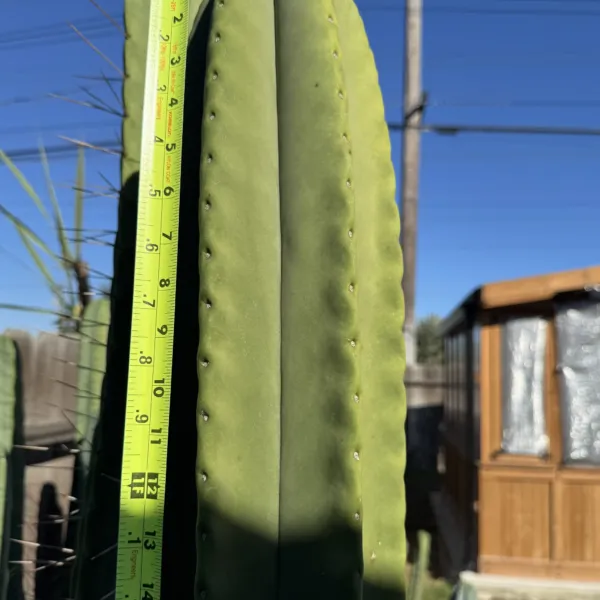
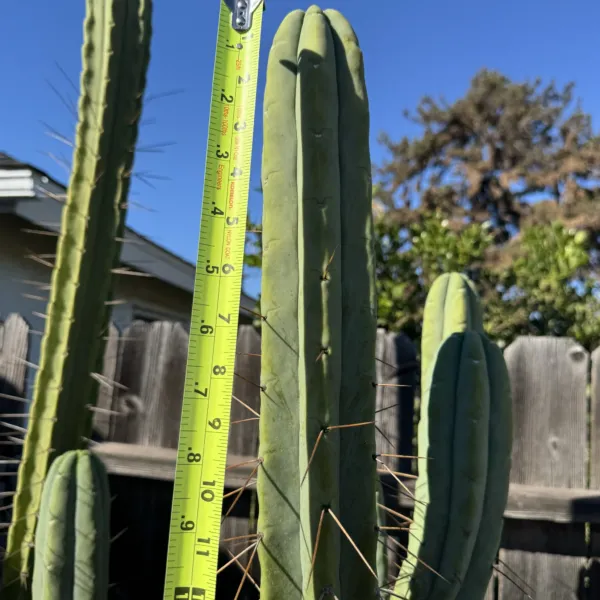
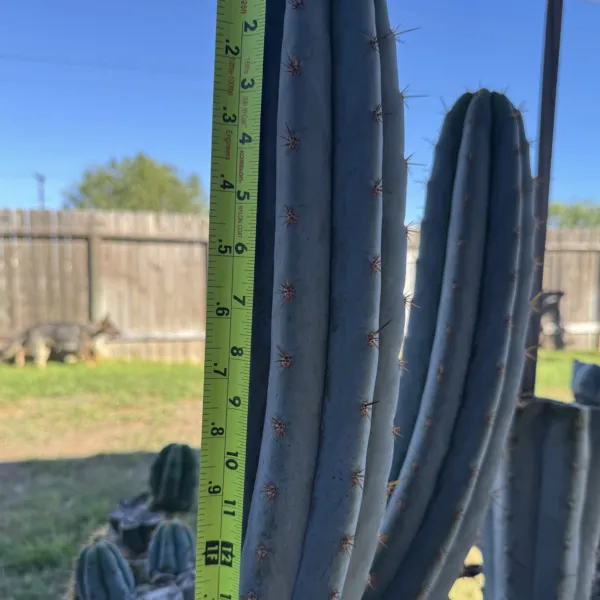
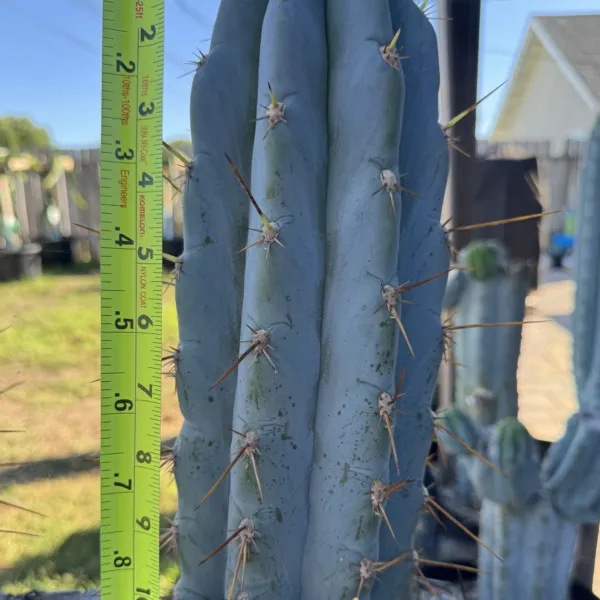
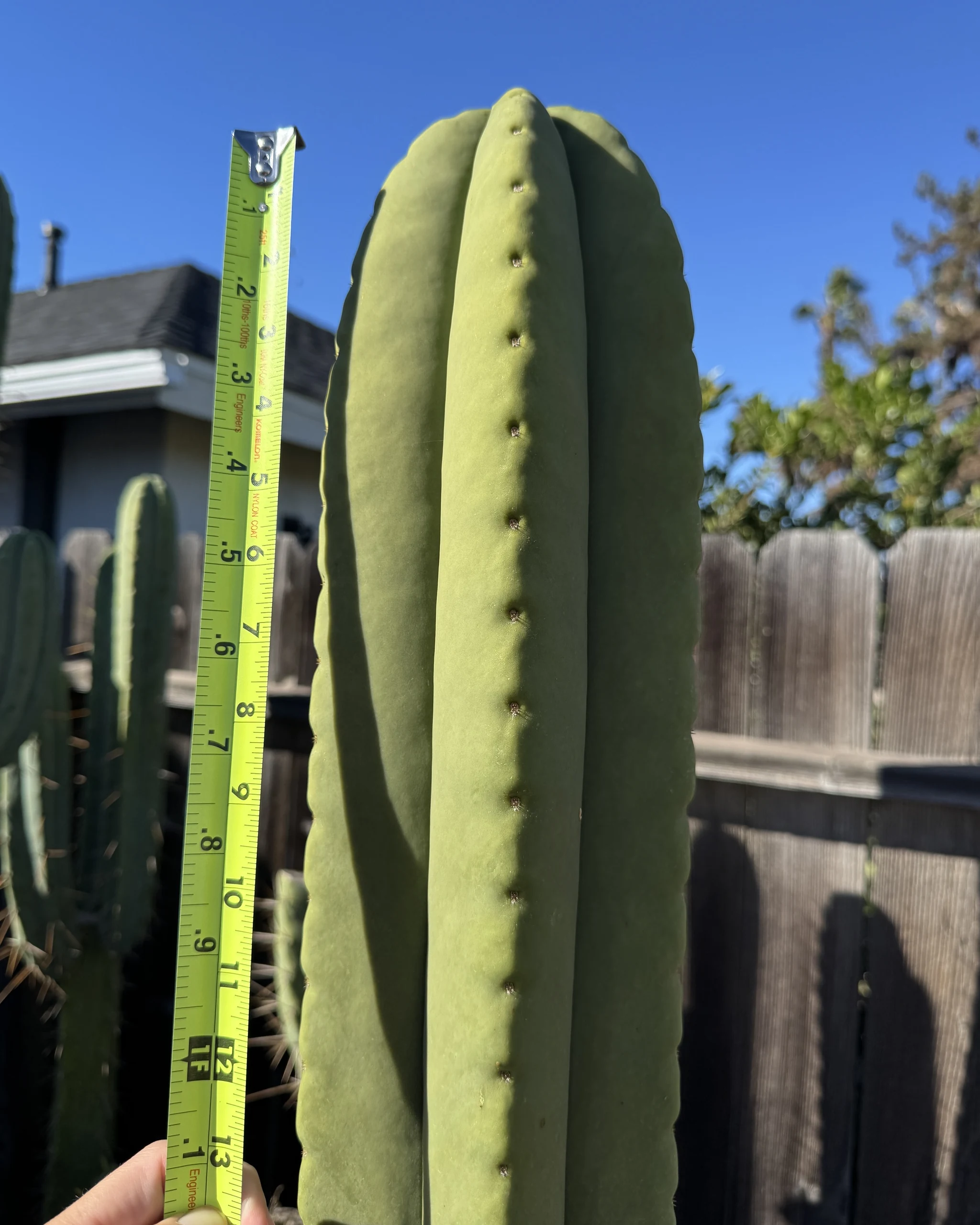
Trichocereus scopulicola Ripple, GB10 in GeeBee’s catalogue, is a nearly spineless scopulicola from GeeBee’s Garden, and this listing is a single 12 inch cutting of it. The photo shows a stem on our mother plant, and the cutting ships unrooted and ungrafted.
What sets Trichocereus scopulicola Ripple apart
GeeBee calls Ripple a true scopulicola, nearly spineless, and the stem in our photo shows why. The skin is mid green, the ribs are broad and rounded, and each areole sits in a small indent with only a stub of spine, if any. Along the rib edge those indents make the outline rise and fall slightly between areoles, a gentle ripple you can see in side light. Growers also know it as a massive scop, thick through the stem once it is established.
The name comes from the Grateful Dead song, in line with much of GeeBee’s catalogue.
Seed origin
Ripple was raised from seed, believed to be Sacred Succulents seed, and the line is thought to trace back to FR991. That is Friedrich Ritter’s collection number for Trichocereus scopulicola itself, from the rocky slopes and boulder fields of mountain forest around Tapecua in the Bolivian department of Tarija, at roughly 1,000 to 1,500 m. Ritter found the species there in 1959. If the link holds, Ripple sits only a few generations from the type population.
Kew POWO now treats scopulicola as a synonym of the Bolivian torch; see the Kew record for Echinopsis scopulicola. Growers keep it separate for its near-spineless adult stems and dark, slightly grainy skin, and so does our Echinopsis scopulicola species page. Most plants of the species carry four to six ribs, usually five, and large adults often drop their spines altogether.
How we grow it
At rarecactus.com we grow our Trichocereus mother plants outdoors in full sun in Orange County, California, in a 50/50 soil mix of organic and inorganic material. Scopulicola grows fast and fat under that regime, adding girth as readily as height, and a well-fed stem gains noticeable thickness in a single good summer. This Ripple cutting comes from our own plant of the clone, and we have never grafted it.
When your Trichocereus scopulicola Ripple cutting arrives
A dry, hard base means it is ready to root now. A soft or damp-looking cut wants a few more days upright in bright shade first.
Root it in a dry area: stand it upright in bright indirect light and do not water until roots form, which takes a few weeks in warm weather. Then pot it in a 50/50 soil mix of organic and inorganic material, begin light watering and move it into full sun over a couple of weeks. Green skin like this scorches if it goes from a shipping box straight into hard summer sun, so take the move slowly.
Once it is growing, water generously through the warm months and keep it dry through winter.
A cutting is the only way to own Ripple itself. Seed from it, even selfed or crossed with another scop, produces new plants that vary, which is why named clones like this one change hands as cuttings and keep their GB numbers.
Provenance and legality
Trichocereus, like most cacti, is listed on CITES Appendix II, and this is cultivated stock grown in the United States. San Pedro and its relatives are legal to own as ornamental plants in all fifty states, and our legality guide gives the statute for each one. Browse the San Pedro cactus for sale collection for more clones, or the Echinopsis encyclopedia hub for the genus.
Growing Echinopsis
Echinopsis are vigorous South American cacti, most of them Andean columns, and they want full sun, a free-draining 50/50 soil mix, generous summer water and a dry winter rest.
- Sun exposure
- Full sun, acclimatised
- Full sun, acclimatised gradually after winter, keeps growth firm. Light afternoon shade helps in the hottest climates, and E. pachanoi tolerates bright filtered light.
- Watering
- Generous, weekly in heat
- Water generously from spring to autumn, weekly in peak summer heat, letting the mix dry between soaks. Keep plants dry or nearly dry through winter, especially below 10°C.
- Soil
- 50/50 organic/mineral
- Half organic, half inorganic: cactus soil cut about 50/50 with pumice, granite grit or lava. That is richer than most succulents take, and it is how we grow our Trichocereus.
- Cold tolerance
- Cold hardy, no freezing
- Cold hardy, but cannot handle freezing temperatures. Protect plants before any frost, and keep them dry through cold spells, since wet cold does the most damage.
- Container
- Deep and stable
- Deep, stable pots for the big columnar species, whose root systems are extensive; repot yearly while young. Spreading E. chamaecereus suits a shallow pan or hanging basket.
- Growth rate
- Fast for cacti
- Fast for cacti. E. pachanoi adds 30 to 60 cm a year in good conditions, E. lageniformis 15 to 30 cm, and E. chamaecereus clumps up quickly.
Shipping & Returns
Shipping
Flat $12 shipping anywhere in the United States, for one plant or several. Orders ship within 1 to 3 business days and usually arrive 2 to 5 business days later. Every plant is packed by hand to travel safely.
Returns
Every plant we sell is alive, so all sales are final and we do not accept returns or exchanges. If a plant arrives dead, take clear photos of the plant and the packaging within a couple of days of delivery and email support@rarecactus.com. If anything else about your order is not right, tell us and we will help where we can.