Ariocarpus scaphirostris — The Boat-Beaked Living Rock
Encyclopedia · Ariocarpus
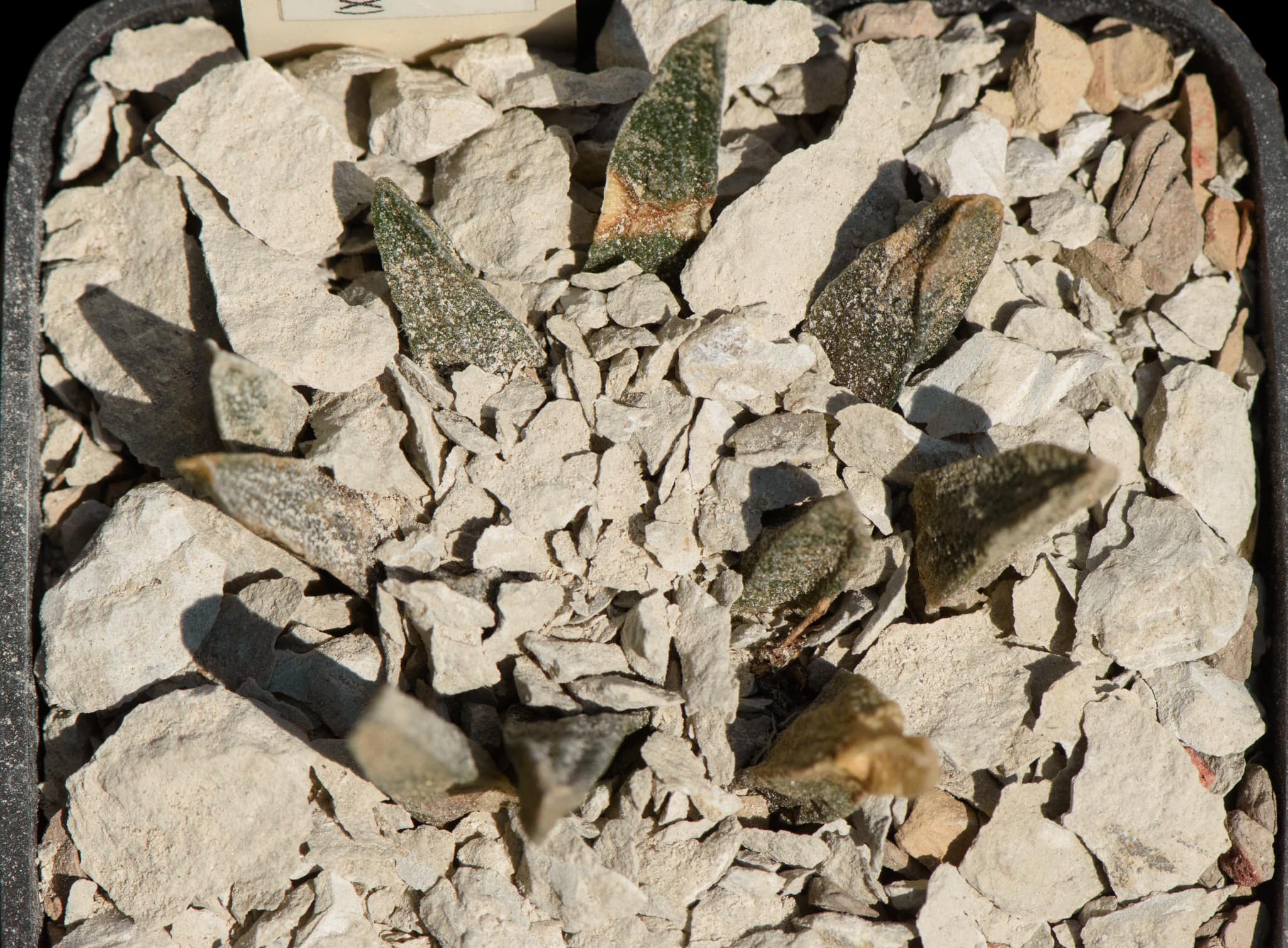
| Family | Cactaceae |
| Named by | Bödeker (1930) |
| Corrected by | D.R. Hunt (1991) |
| Native range | Rayones valley, Nuevo León, Mexico |
| Elevation | 950–1,400 m |
| Stem diameter | up to 9 cm; subglobose |
| Tubercles | up to 4 cm long; boat-shaped |
| Flowers | Magenta-pink; up to 4 cm across |
| Fruit | Greenish to brown; 9–15 mm |
| IUCN status | Endangered |
| CITES | Appendix I |
| Alkaloids | Hordenine (dominant); no mescaline |
Nuevo León Living Rock · Orejas de Conejo · Orejitas
Ariocarpus scaphirostris exists in one valley. Not a broad range fragmented into isolated pockets, not a cluster of satellite populations scattered across a state, but a single limestone valley in Nuevo León where the species occurs and nowhere else on Earth. That valley, near the town of Rayones in the Sierra Madre Oriental, is where every wild individual of this species lives, wedged between layers of flaky limestone schist at elevations between 950 and 1,400 metres. The restriction is absolute and it shapes everything about the plant: its conservation status, its scarcity in cultivation, and the particular intensity of interest it draws from collectors who understand what they are looking at.
What makes Ariocarpus scaphirostris immediately recognisable in a collection is the tubercles. Every Ariocarpus species has them, and most share the same general plan of triangular, flattened projections radiating from a buried stem. But in Ariocarpus scaphirostris, the tubercles are elongated, narrow, sharply pointed, and more than twice as long as they are wide. They diverge outward from the crown at steep angles and carry a subtle keel on their undersides. Bödeker saw the underside profile and thought of a boat’s prow, which is where the name comes from: Greek skaphe, a skiff, and Latin rostrum, a beak. No other species in the genus produces tubercles shaped quite like these, and the character is stable enough that identification is reliable even from a photograph.
Contents
Taxonomy & Nomenclature
Friedrich Bödeker described Ariocarpus scaphirostris in 1930 in the Monatsschrift der Deutschen Kakteen-Gesellschaft, working from material collected by Friedrich Ritter near Monterrey, Nuevo León, in 1928. The original type specimen was not preserved, which has created some nomenclatural complexity over the years. Bödeker’s original spelling was Ariocarpus scapharostrus, a compound that mixed Greek and Latin elements in a way that later taxonomists considered incorrect. In 1991, David Hunt corrected the spelling to Ariocarpus scaphirostris in Bradleya, arguing that the Latin adjectival form -rostris was more appropriate than -rostrus. That correction has been followed by most major references since, though the original and various intermediate spellings still appear in older literature and seed catalogues. Hunt and Taylor later designated Bödeker’s published illustration as the lectotype in 2006, superseding a neotype that Edward Anderson had designated in 1964 from his own collections in west-central Nuevo León.
The species epithet itself tells you what Bödeker found most striking about the plant. He compared the underside of the tubercles to a Bootschnabel, a boat’s beak, and built the Latin name from that image. The construction is Greek skaphe (a light boat or skiff) combined with Latin rostrum (beak or prow). It is one of the more descriptive names in the genus, and once you have turned a tubercle over and seen the keeled profile, the reference makes perfect sense.
Within the genus, Ariocarpus scaphirostris sits comfortably in the subgenus Roseocactus, the group that Alwin Berger separated off in 1925 on the basis of areole morphology. That separation is no longer treated as valid at genus level, but the subgeneric grouping remains useful for understanding relationships. The species closest to Ariocarpus scaphirostris in tubercle morphology is Ariocarpus bravoanus, another restricted-range species from the same general region of northeastern Mexico. Both produce elongated, divergent tubercles with a dark green epidermis, though Ariocarpus bravoanus has a distinctly verrucose (warty) surface texture that Ariocarpus scaphirostris lacks. The two species are sometimes confused in the literature and in collections, particularly when encountered as young seedlings before the adult tubercle characters have fully developed.
The synonymy is relatively clean. The var. swobodae, described by Halda, Horáček and Panarák in 1998, is now treated as a synonym of the type. Common names include Nuevo León Living Rock Cactus in English, and Orejas de Conejo (rabbit ears) and Orejitas (little ears) in local Spanish, both references to the upward-pointing tubercle tips that protrude from the ground surface.
Habitat & Native Range
The entire known wild population of Ariocarpus scaphirostris occupies a single valley near Rayones, a small town in the Sierra Madre Oriental of Nuevo León, roughly 90 kilometres south of Monterrey. The valley measures approximately 50 square kilometres, making this one of the most geographically restricted species in the entire Cactaceae. For context, Ariocarpus fissuratus ranges across the Chihuahuan Desert from central Mexico into Texas. Ariocarpus scaphirostris occupies one valley floor.
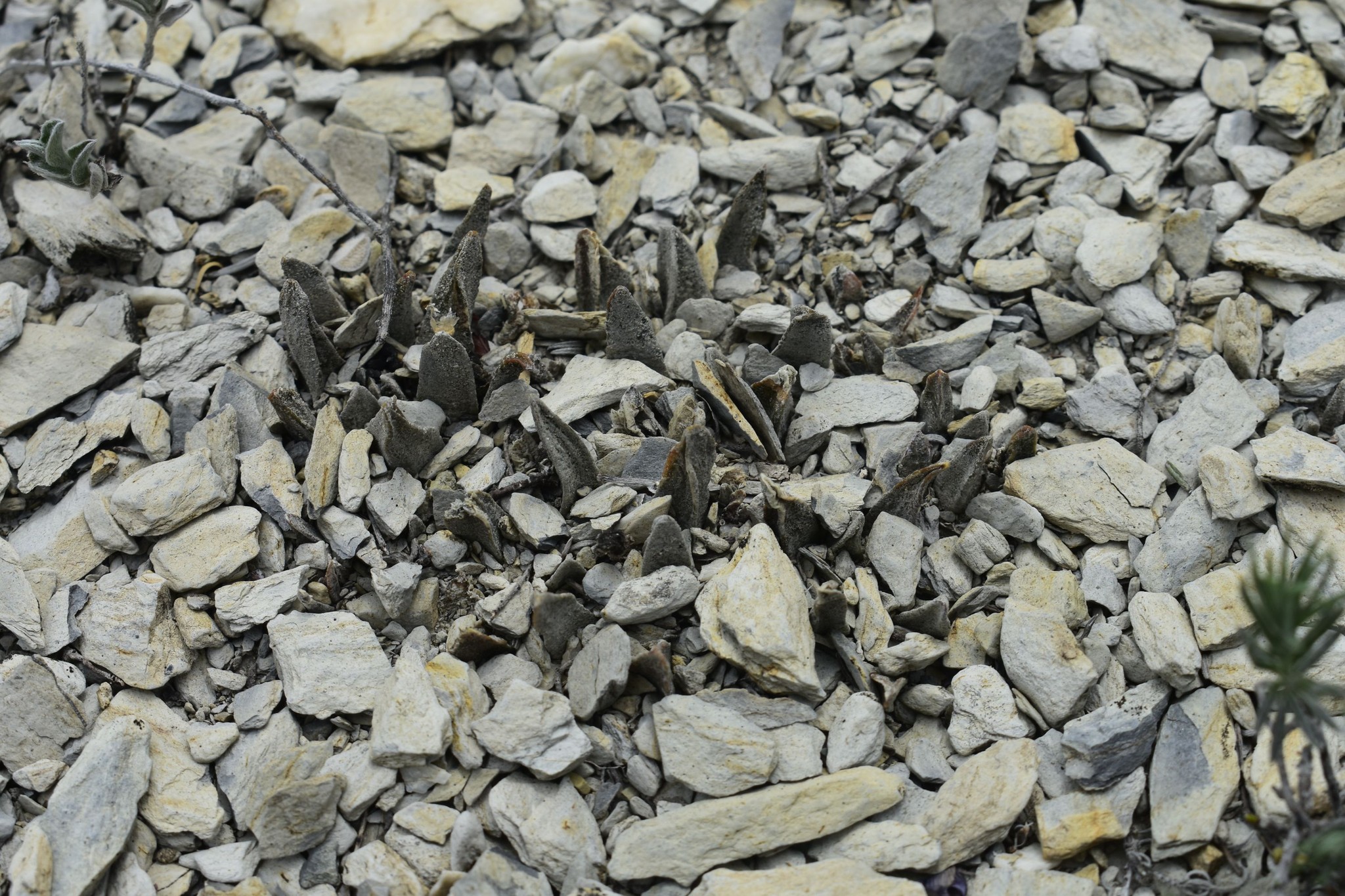
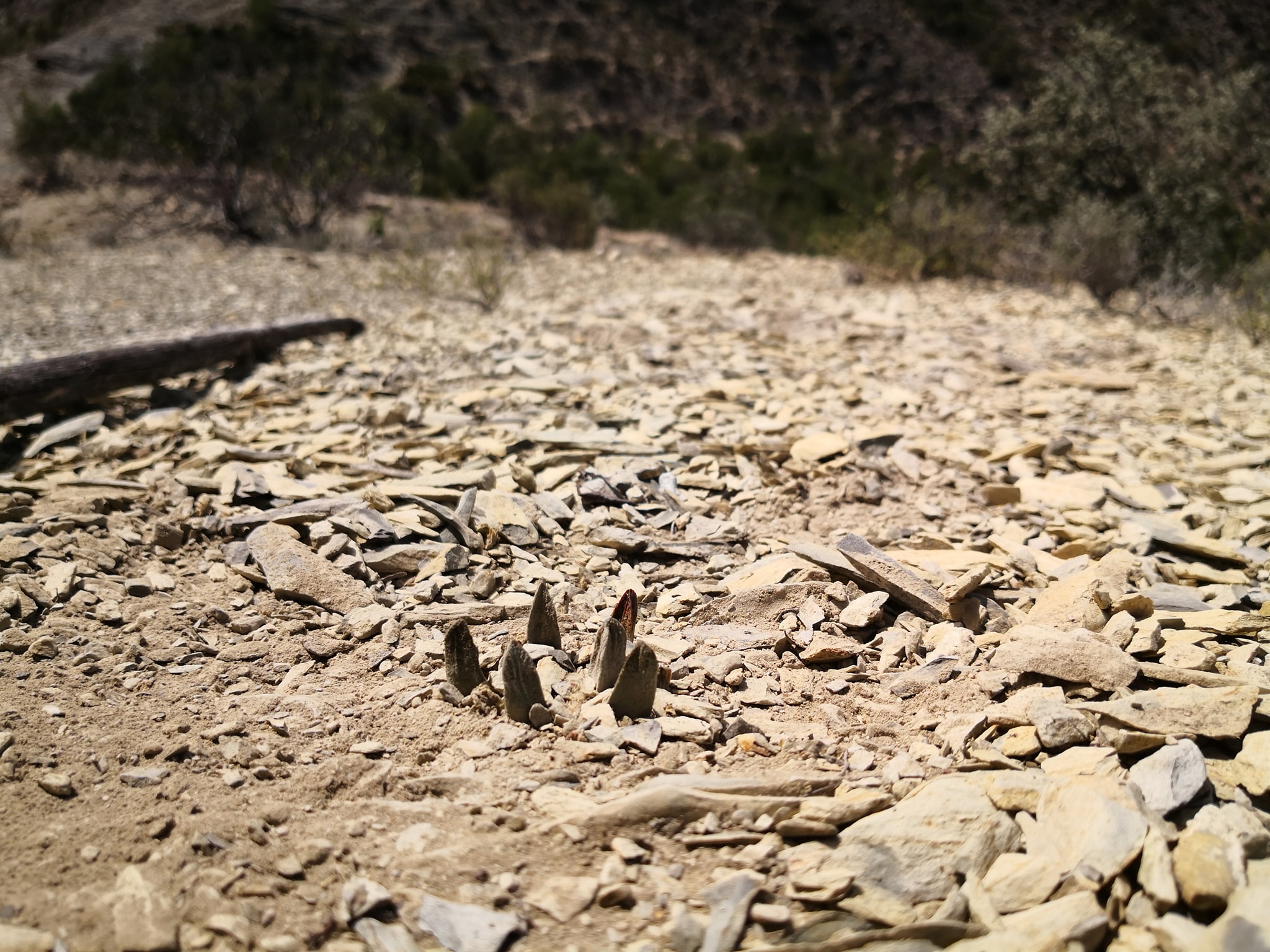
The substrate is specific: flaky limestone schist, laid down in thin horizontal layers with gaps between them where soil, moisture, and roots can accumulate. The plants grow wedged into these gaps, their large taproots threading downward between rock layers while the body sits at or just below the surface. In the dry season, the stem retracts further into the ground, pulling the tubercle rosette nearly flush with the surrounding rock. The dark green to brownish colouration of the epidermis blends effectively with the weathered limestone, and finding plants in the field requires a practised eye. This is living rock camouflage taken to its full expression.
The elevation range of 950 to 1,400 metres places the habitat in a zone of hot summers, cool winters, and strongly seasonal rainfall. The plant community includes xerophytic scrub typical of the Sierra Madre Oriental foothills: Agave, Hechtia, Dasylirion, scattered Opuntia, and various low shrubs. Ariocarpus scaphirostris shares this general landscape with Ariocarpus retusus, which has a much broader distribution through the limestone country of northeastern Mexico but overlaps geographically with the scaphirostris valley. The two species do not typically occur on the same microsites: Ariocarpus retusus favours open limestone flats and shallow soils, while Ariocarpus scaphirostris is tied more closely to the schist layer habitat.
Population density within the valley is aggregated rather than uniform, following the distribution of suitable schist outcrops. A demographic study by Mandujano and colleagues, published in the International Journal of Plant Sciences in 2007, documented a density of roughly 0.25 individuals per square metre in the core population area and found that the population had declined considerably over the preceding twenty years. The study remains one of the most detailed demographic analyses conducted on any Ariocarpus species and provides the best available baseline for understanding what this population looks like on the ground.
Morphology
The body of Ariocarpus scaphirostris is subglobose, solitary, and almost entirely subterranean. The above-ground portion consists of the upper surfaces of the tubercles, arranged in a loose rosette that sits flush with or slightly above the substrate. Total stem diameter reaches up to 9 centimetres in well-grown specimens, though most plants in cultivation fall in the 4 to 7 centimetre range. Body colour is dark green to olive-brown, darker than most other Ariocarpus species and noticeably different from the grey-green of Ariocarpus fissuratus subsp. lloydii or the pale green of Ariocarpus retusus.
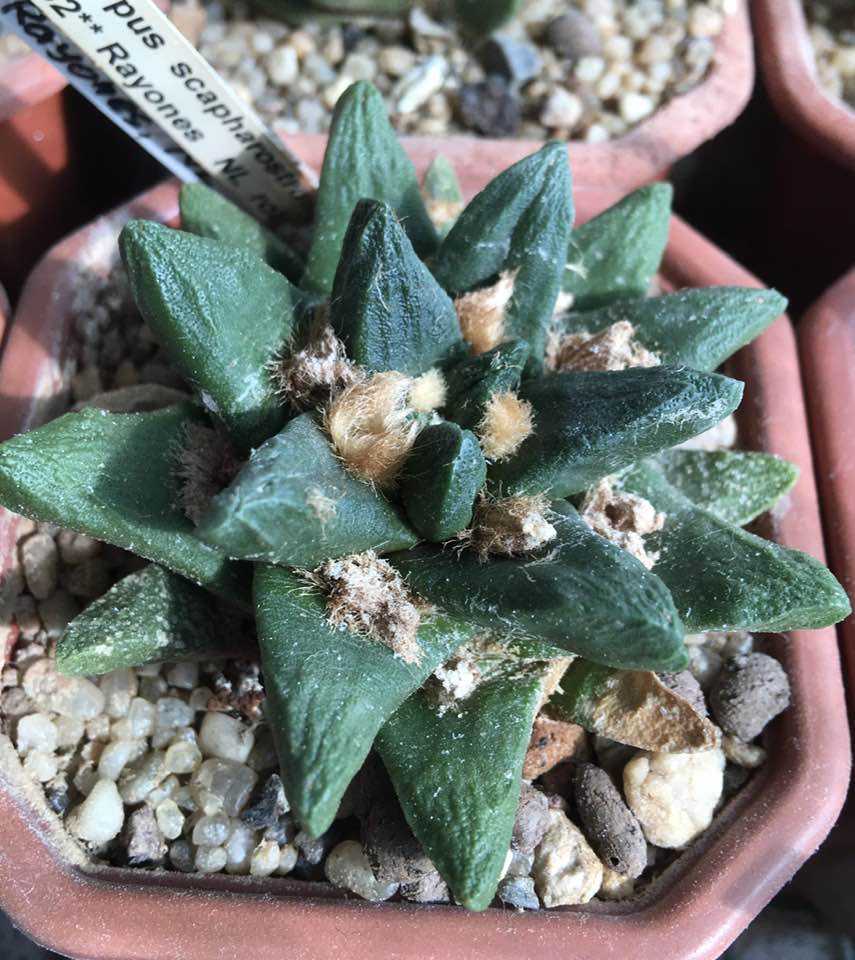
The tubercles are the defining feature and the reason this species is unmistakable once you know what to look for. They are triangular in cross-section, up to 4 centimetres long and roughly 8 millimetres wide, making them more than twice as long as they are broad. They spread outward and slightly upward from the crown, diverging at wide angles. The tips are sharply pointed, not rounded or blunt as in Ariocarpus kotschoubeyanus or fissured and flattened as in Ariocarpus fissuratus. The upper surface is smooth to slightly roughened, without the heavy fissuring seen in the fissuratus group. The underside carries a distinct longitudinal keel, visible when a plant is lifted from its pot, and it is this keeled profile that gives the species its name.
Areoles are either absent entirely or reduced to small, inconspicuous structures located near the tubercle tips. The woolly centre of the plant is less dense than in species like Ariocarpus fissuratus, which produces a thick mat of white wool at the crown. Ariocarpus scaphirostris carries wool, but it is sparse and does not obscure the growing point to the same degree. No spines appear at any stage of adult growth, consistent with the genus as a whole.
Below ground, the taproot is large and fleshy, typical of the genus. It serves as the primary water and nutrient reserve and accounts for the bulk of the plant’s total mass. The root anchors the body firmly between the limestone layers and allows the plant to retract downward during dry periods, a behaviour shared across Ariocarpus but particularly pronounced in this species given its tight fit between schist layers in habitat.
Alkaloid Chemistry
The alkaloid profile of Ariocarpus scaphirostris was first characterised by Jan Bruhn in 1975, working with cultivated material sourced from California. The total alkaloid content measured 0.012% of dry weight, a very low concentration even by Ariocarpus standards. Bruhn identified four phenethylamine compounds: hordenine as the dominant alkaloid, accompanied by N-methyltyramine, N-methyl-3,4-dimethoxy-β-phenethylamine, and N,N-dimethyl-3,4-dimethoxy-β-phenethylamine. No mescaline was detected.
This profile is consistent with the broader pattern across the genus. Hordenine and N-methyltyramine appear in virtually every Ariocarpus species that has been analysed, including Ariocarpus fissuratus, Ariocarpus kotschoubeyanus, Ariocarpus retusus, and Ariocarpus trigonus. The dimethoxyphenethylamines vary somewhat between species in their relative proportions, but the overall picture is one of a genus that produces a narrow range of simple phenethylamines at low concentrations. The absence of mescaline is absolute across all analysed Ariocarpus species, distinguishing the genus cleanly from Lophophora williamsii in biochemical terms even though both genera share the common name “peyote” in some regional usage.
Hordenine itself was first isolated from a cactus by Arthur Heffter in 1894, working with Ariocarpus fissuratus (then Anhalonium fissuratum). He called it “anhalin” before it was later shown to be identical to hordenine from barley. The compound functions as a mild sympathomimetic with some bitter and potentially deterrent properties, which may contribute to the plant’s resistance to herbivory. The ecological role of the alkaloid profile in Ariocarpus scaphirostris specifically has not been studied in detail, but the assumption of chemical defence against grazing animals is reasonable given the low concentrations and simple structures involved.
Flowering & Fruit
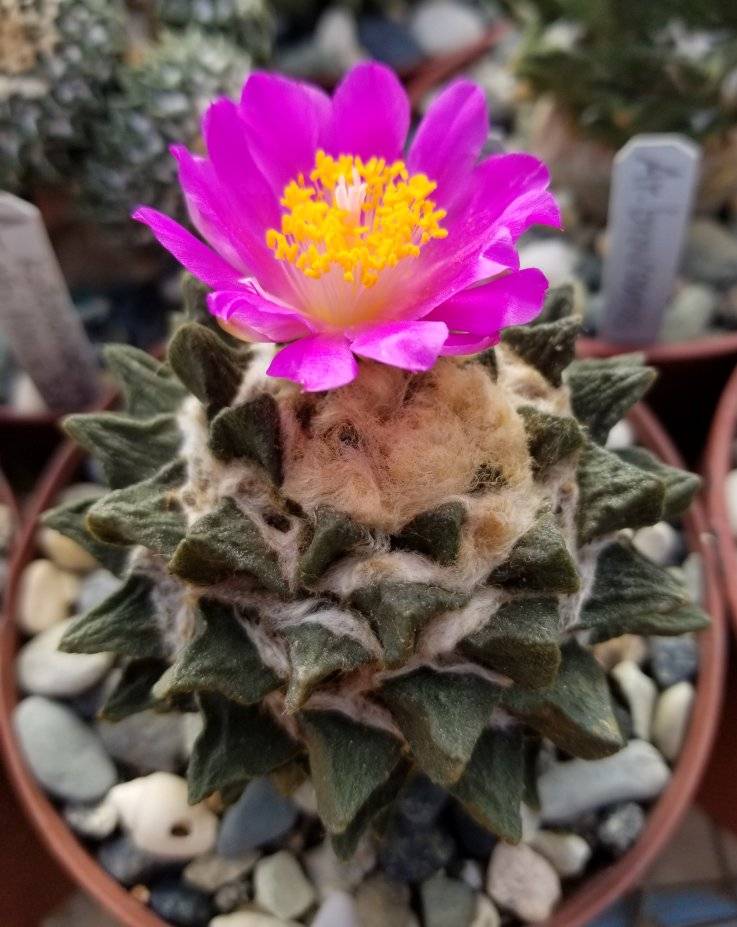
Ariocarpus scaphirostris produces flowers in the magenta to deep pink-purple range, reaching up to 4 centimetres in diameter. The colour is vivid and saturated, closer to the deep magenta of Ariocarpus kotschoubeyanus than to the pale pink of Ariocarpus fissuratus or the white of Ariocarpus retusus. Against the dark green body, the effect in flower is striking. A healthy established plant produces several blooms in sequence through the flowering season.
Flowering occurs primarily in autumn, triggered by the late-season rains in its native range. In cultivation, plants typically flower in September through November following the watering season, though timing can shift depending on local conditions and the grower’s watering schedule. Individual flowers last two to four days. The species is self-fertile, which is an important practical detail for growers working with single specimens. A solitary plant in a collection can set viable seed without a pollination partner, which helps explain why the species has maintained a presence in specialist cultivation despite its extreme rarity in the wild.
The fruit is small, clavate to slightly elongated, greenish when developing and turning reddish-brown at maturity, measuring 9 to 15 millimetres in length. Seeds are black, pear-shaped, and small, consistent with the genus. Fruit typically ripens the spring following flowering. Fresh seed germinates more reliably than stored seed, and growers with fruiting plants tend to sow promptly after harvest for the best results.
From Seedling to Specimen
Ariocarpus scaphirostris is not a fast plant. Nothing in the genus is, but this species is notably slow even by Ariocarpus standards. The timeline from seed to flowering-size own-root plant is measured in decades, not years, and growers who commit to raising this species from seed are signing up for a long relationship with a small object that will reward patience more than any amount of intervention.
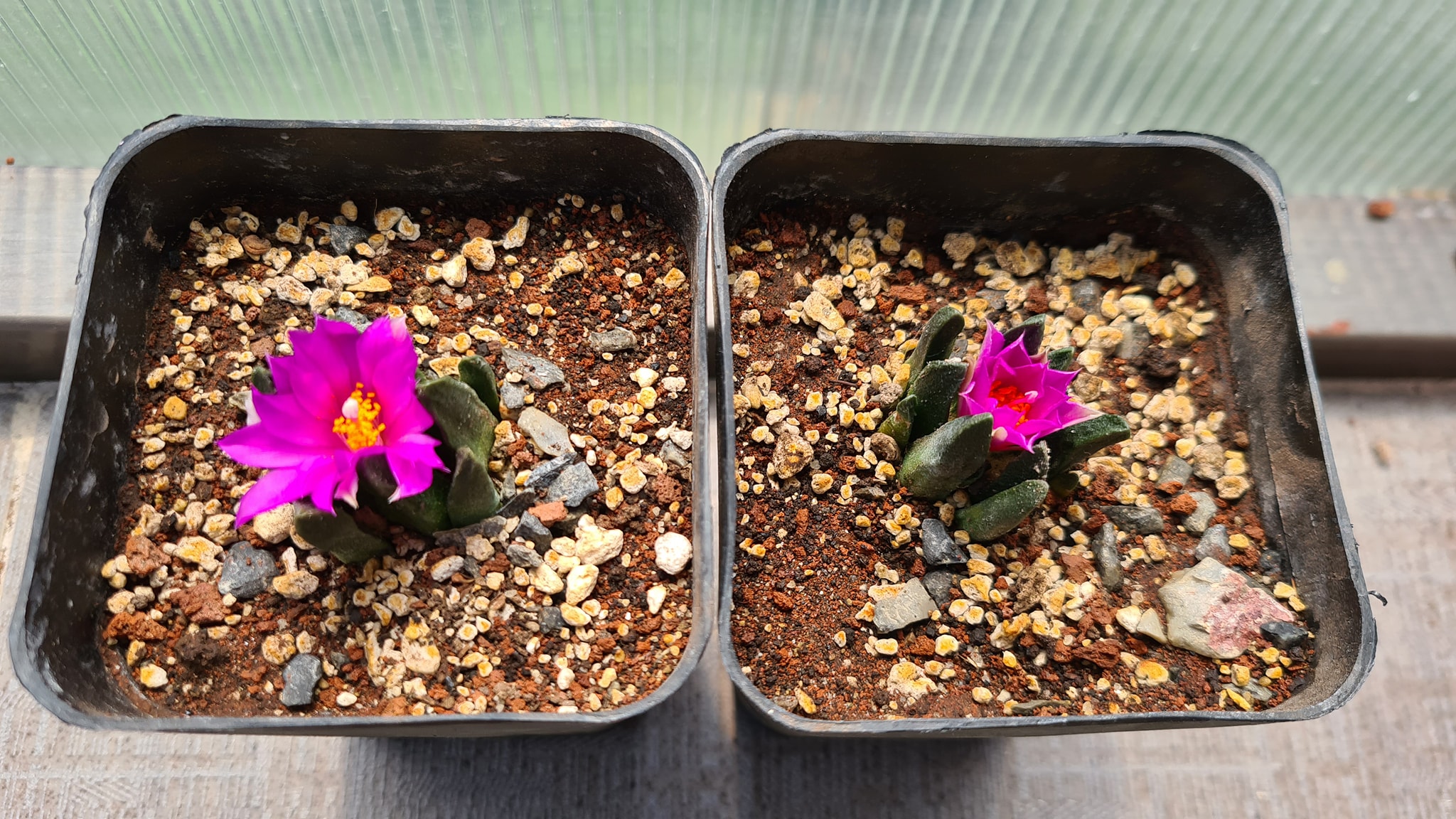
Germination from fresh seed is straightforward under warm, humid conditions. A sealed propagation tray over bottom heat at 25 to 35 degrees Celsius produces visible sprouts within five to ten days. The emerging seedling is small and round, showing paired cotyledons and a tiny green body that bears no obvious resemblance to the adult plant. The elongated, boat-shaped tubercles that define the species do not appear until the plant has been growing for several years and has begun to transition from its juvenile form. During the first two to three years, seedlings of Ariocarpus scaphirostris look much like seedlings of any other species in the genus.
Growth during the first few years demands careful management. Young plants are more sensitive to overwatering than adults, and the developing taproot is particularly vulnerable to rot if conditions stay wet for too long. Bright indirect light for the first two growing seasons reduces bleaching risk while supporting adequate photosynthesis. From year three or four, plants can begin to handle more direct exposure, introduced gradually rather than all at once.
Grafting onto Pereskiopsis rootstock is common for this species in the nursery trade, and for good reason. A grafted seedling can reach flowering size in as few as three to five years, compared to the ten-plus years required on its own roots. The trade-off is familiar to anyone who grows Ariocarpus: grafted plants develop an upright, swollen body form that does not resemble the flat, geophytic profile of a wild or own-root specimen. For growers focused on the species as it actually looks in nature, own-root cultivation from seed remains the standard. The reward is a plant that develops the correct low profile, the dark green colouration, and the proportionally accurate tubercles that define the species at its best. Degrafted plants can re-root and gradually adopt a more natural habit, but they rarely achieve the same character as a plant grown on its own roots from the start.
Cultivation
Substrate
A mineral-dominant substrate is essential. In habitat, Ariocarpus scaphirostris grows in crevices between limestone schist layers where drainage is effectively perfect. The cultivation equivalent is a mix of roughly 85-90% percent inorganic material—pumice, fine granite grit, or a combination—with a small proportion of low-nutrient comite or cactus-grade soil to provide some moisture retention and trace nutrients. Target pH of 7.0 to 8.0, reflecting the calcareous native substrate. A small addition of crushed limestone or dolomite chips is appropriate and beneficial. The substrate must drain completely within seconds of a thorough watering. Any mix that holds moisture visibly at the surface after watering is too retentive for this species.
Containers
Deep pots. The taproot of Ariocarpus scaphirostris is substantial and needs room to develop downward without restriction. Long tom or rose-style pots with a height-to-diameter ratio of at least 1.5 to 1 are the right choice. Unglazed ceramics or plastic pots are best, which helps the substrate dry more evenly between waterings. The pot should have a generous drainage holes. A root-bound Ariocarpus in a shallow container will not develop correctly through its seasonal cycle.
Watering
During the active growing season, from late spring through early autumn, water thoroughly and then wait. Each watering should saturate the substrate completely, with free drainage from the bottom. The interval before the next watering depends on conditions, but should be long enough for the substrate to dry fully. Under warm summer conditions with a 90 percent inorganic mix, this typically means ten to sixteen days. Some growers also provide a second brief watering period in autumn to coincide with the natural flowering season, which can encourage blooming in cultivation.
Stop watering entirely from early to mid-autumn once night temperatures begin to drop below 10 degrees Celsius. A winter dry period of four to five months is standard. Plants kept completely dry during winter tolerate brief temperature dips to around minus 4 degrees Celsius without damage, though prolonged cold below freezing is risky even with dry roots. Resume watering cautiously in spring when the growing season begins and the crown shows signs of fresh activity.
Light and temperature
Full sun through the growing season for mature plants. Direct light produces the tightest body form and maintains the dark green colouration of the epidermis. Plants grown in shade elongate and lose the flat, geophytic profile. In areas where summer temperatures routinely exceed 38 degrees Celsius, some afternoon shade reduces heat stress. The native habitat receives intense insolation on south-facing limestone slopes, so the species is adapted to high light, but cultivation in a pot without the thermal mass of surrounding rock requires slightly more caution. Minimum winter temperature for dry plants is around 5 degrees Celsius for extended periods, with tolerance down to minus 4 degrees for brief overnight dips. USDA zones 9b through 11b are viable for year-round outdoor culture in a sheltered, well-drained position.
Own root vs. grafted
Grafted plants serve a clear purpose: they accelerate growth, allow earlier flowering and seed production, and reduce the risk of losing young plants to rot during the vulnerable first years. For species preservation and seed banking, grafting is a useful tool. For collectors focused on the aesthetic and botanical character of the species, own-root cultivation is the standard. The flat, ground-hugging profile, the correct tubercle proportions, and the dark body colour all develop most fully in own-root material grown with consistent seasonal cycles over years. The two approaches are complementary rather than competing. Many specialist growers maintain both: grafted plants for seed production, own-root plants for the collection bench.
Related Taxa in the Genus
Ariocarpus fissuratusThe living rock. Most widely grown species in the genus, ranging from central Mexico into Texas. Heavily fissured grey-green tubercles and a thick woolly crown.Ariocarpus fissuratus subsp. lloydiiDistinct tubercle character and a convex, smoothly textured body from Coahuila and Zacatecas. Occasionally available in the specialist trade.Ariocarpus retususThe largest species in the genus, reaching 20 centimetres across. Most variable Ariocarpus and the natural starting point for collectors.Ariocarpus retusus subsp. furfuraceusWoolly, papillose tubercle surfaces distinguish it from the type. Preferred by many collectors for its refined texture.Ariocarpus retusus f. cristataThe cristate form. Exceptionally rare. Own-root specimens are almost never seen in collections.Ariocarpus kotschoubeyanusThe smallest Ariocarpus, rarely exceeding 4 centimetres. Magenta flowers on a tiny flat body. Requires perfect drainage.Ariocarpus agavoidesSpine-tipped tubercles resemble a miniature agave. A gypsum specialist with one of the most restricted ranges in the genus.Ariocarpus bravoanusRecently separated from Ariocarpus kotschoubeyanus. Dark green ascending tubercles with a verrucose surface. Includes subsp. hintonii.Ariocarpus bravoanus subsp. hintoniiDistinct form with a restricted range within Nuevo León. Intermediate between bravoanus and the fissuratus group.Ariocarpus trigonusThe only yellow-flowered Ariocarpus. Triangular upward-pointing tubercles and a sprawling wide-bodied growth habit.
Sources & References
Bödeker, F. (1930). Ariocarpus scapharostrus. Monatsschr. Deutsch. Kakteen-Ges. 2: 60–61. · Hunt, D.R. (1991). Notes on miscellaneous genera of Cactaceae. Bradleya 9: 81–92. · Hunt, D.R. & Taylor, N.P. (2006). Notulae systematicae Lexicon Cactacearum spectantes VII. Bradleya 24: 71–80. · Anderson, E.F. (1964). A revision of Ariocarpus (Cactaceae). I. The status of the proposed genus Roseocactus. Amer. J. Bot. 51: 144–151. · Anderson, E.F. & Fitz Maurice, W.A. (1997). Ariocarpus revisited. Haseltonia 5: 1–20. · Anderson, E.F. (2001). The Cactus Family. Timber Press. · Bruhn, J.G. (1975). Phenethylamines of Ariocarpus scapharostrus. Phytochemistry 14(11): 2509–2510. · Mandujano, M.C., Carrillo-Angeles, I.G., Martínez-Peralta, C. & Golubov, J. (2007). Population dynamics of Ariocarpus scaphirostris Bödeker (Cactaceae): evaluating the status of a threatened species. Int. J. Plant Sci. 168(7): 1035–1044. · Fitz Maurice, B., Fitz Maurice, W.A., Smith, M., Gómez-Hinostrosa, C. & Hernández, H.M. (2013). Ariocarpus scaphirostris. IUCN Red List of Threatened Species. · Hernández, H.M. & Gómez-Hinostrosa, C. (2011). Mapping the cacti of Mexico. Succulent Plant Research 7: 1–128. · Halda, J.J., Horáček, P. & Panarák, J. (1998). Ariocarpus scaphirostrus var. swobodae. Acta Mus. Richnov., Sect. Nat. 5: 163. · Hunt, D.R. (2006). The New Cactus Lexicon. dh Books. · Royal Botanic Gardens, Kew. Plants of the World Online. Ariocarpus scaphirostris Boed. Retrieved 2026. · Trout, K. Cactus Chemistry By Species. Ariocarpus scaphirostris analysis notes. troutsnotes.com.