
Cacti Extinct in the Wild: 7 Species Only in Cultivation
All ArticlesSeven cacti extinct in the wild, or functionally so, survive today only in cultivation. Six are IUCN Critically Endangered with documented near-total wild loss, and one, Mammillaria glochidiata, held formal Extinct in the Wild status until 2013, when a tiny colony was rediscovered in an inaccessible Hidalgo canyon.
What does extinct in the wild actually mean for cacti?
The IUCN reserves “Extinct in the Wild” (EW) for species known to survive only in cultivation, captivity, or as naturalised populations outside the historical range. As of the 2025 Red List, no Cactaceae species carries that designation. Mammillaria glochidiata Mart. (1832) was the only cactus ever to hold it, and it lost the listing in 2013 when a small wild colony was documented in the Barranca de Tolimán, an “extremely inaccessible” Hidalgo canyon that almost certainly preserved the population through decades of collection pressure.
Six other species sit so close to that line that the wild population is functionally the cultivation population. The wild type locality of Kroenleinia grusonii, the golden barrel cactus, is at the bottom of a hydroelectric reservoir. Aztekium hintonii lost over ninety per cent of its known mature individuals in a 2019–2021 mass collection event. Mammillaria bertholdii reproduces cryptocarpically, with its seeds trapped inside the plant body, and the wild range covers less than ten square kilometres at coordinates kept secret to prevent poaching. This list ranks seven by tightness of the “greenhouse-only” case, beginning with the species that was actually EW until twelve years ago.
1. Mammillaria glochidiata
Critically Endangered (IUCN 2013, downlisted from Extinct in the Wild) · Barranca de Tolimán, Hidalgo, Mexico · clumping; seed and offsets
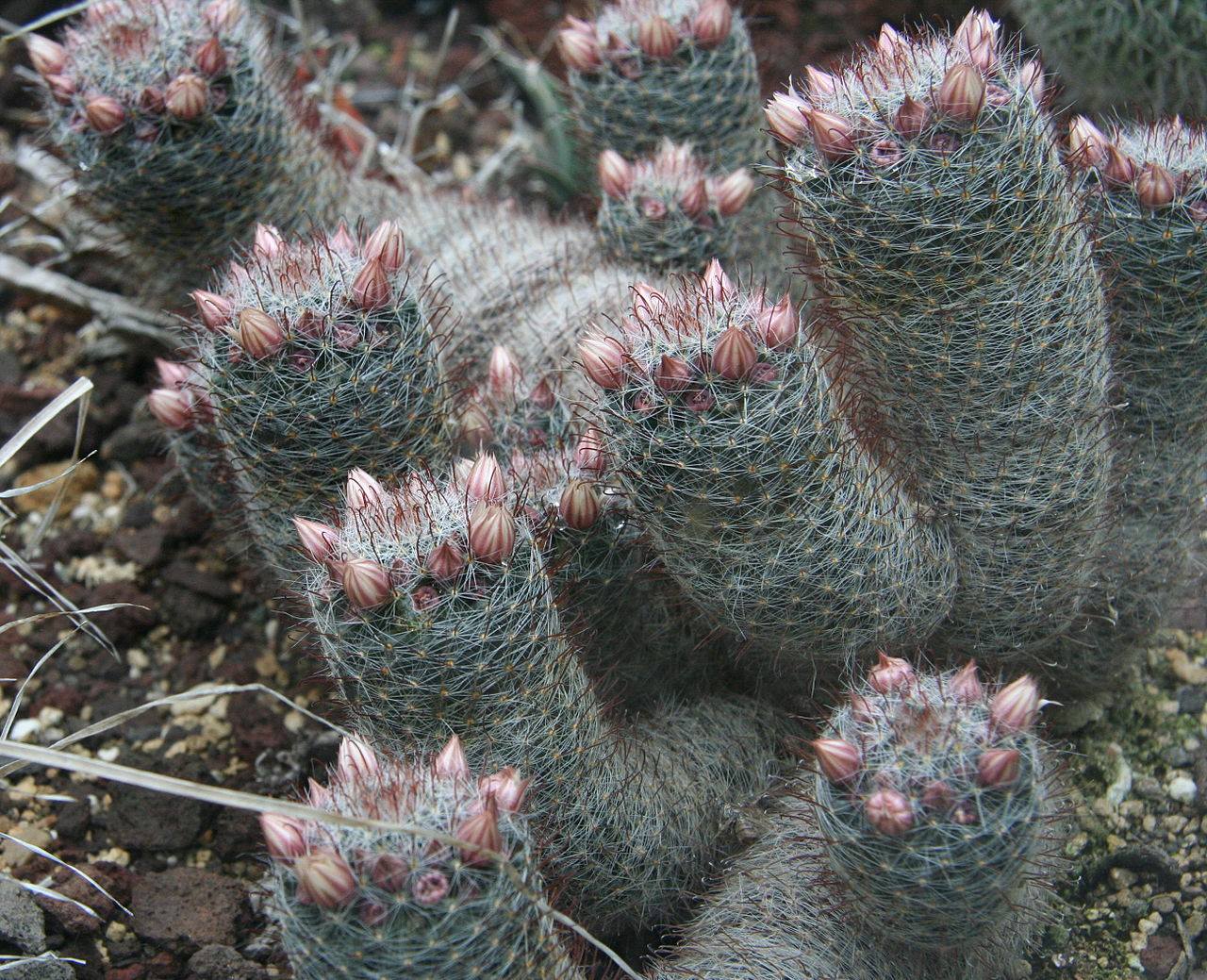
Mammillaria glochidiata Mart. (1832) is the only cactus ever to hold the IUCN’s formal Extinct in the Wild status. The species was assessed EW based on the absence of confirmed wild sightings prior to the rediscovery surveys of 2012–2013. The cultivation lineage in major collections (Royal Botanic Gardens Kew, the New York Botanical Garden, and a handful of European Mammillaria specialists) predates the rediscovery, which means that for most of the twentieth century there were more M. glochidiata alive in greenhouses than in habitat.
The wild colony documented circa 2013 sits in the Barranca de Tolimán, a basaltic lava-bed canyon in Hidalgo described in field surveys as “quite inaccessible.” That inaccessibility almost certainly explains the survival: the species clusters freely on rock faces and sets seed readily, but the canyon’s topography blocked the kind of systematic collection pressure that gutted easier-to-reach Mexican populations across the same era. The IUCN downlisted the species to Critically Endangered after the rediscovery, but the wild population is understood to be very small.
In cultivation the species is forgiving for a CR cactus. Plants cluster freely, set seed without intervention, and tolerate the standard mineral-mix substrates used across the Mammillaria genus. The closest visual relative still safe in habitat is Mammillaria bombycina Quehl, a similar clump-forming white-spined species widespread in cultivation across Jalisco and Aguascalientes. M. glochidiata can be told apart by its hooked central spines and its smaller, tighter clusters.
2. Kroenleinia grusonii (golden barrel cactus)
Endangered (IUCN 2021, filed under Echinocactus grusonii) · Río Moctezuma, Hidalgo, Mexico · ~11,000 wild plants in 2–4 declining locations
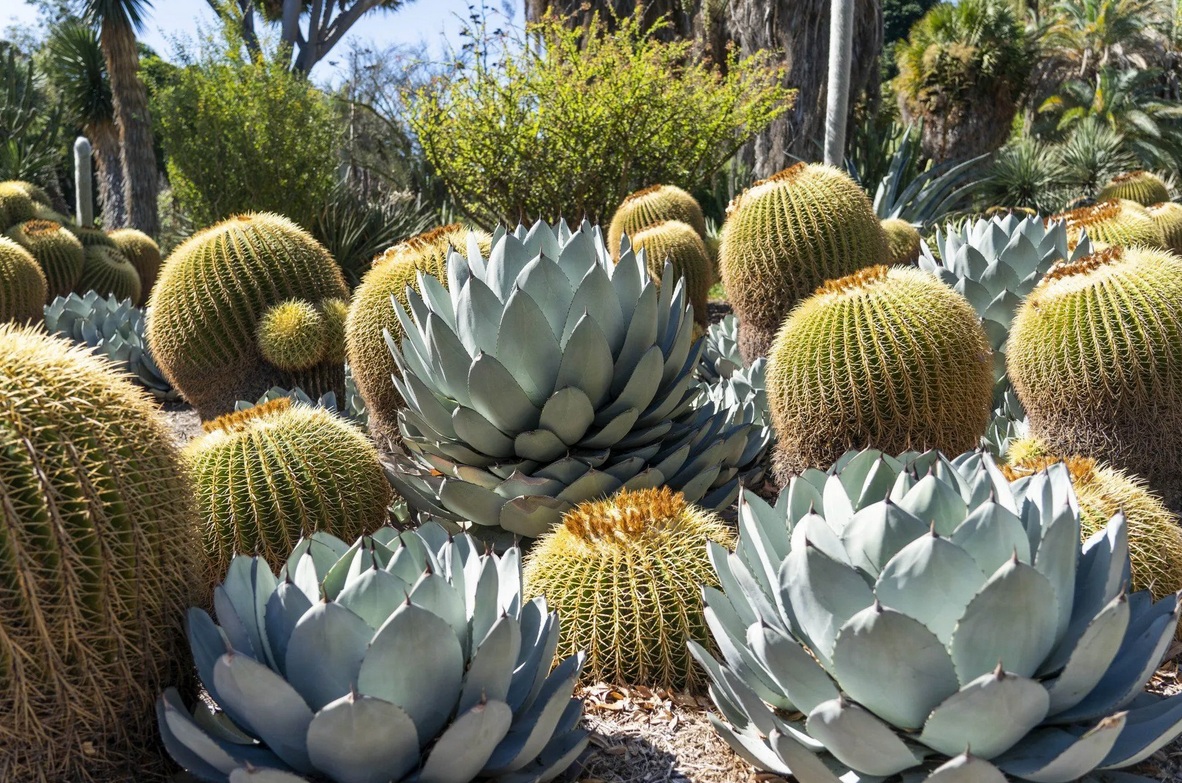
The golden barrel cactus is one of the most-cultivated ornamental cacti on Earth, stocked by the hundred in Phoenix landscape supply yards and Tokyo nurseries. The wild story is the inverse. Kroenleinia grusonii (Hildm.) Lodé (2014), still filed under Echinocactus grusonii in the IUCN Red List, the name horticulture continues to use, was historically restricted to a small set of steep-sided volcanic canyon walls in the Río Moctezuma Valley near Zimapán, Hidalgo, and to a satellite population on Mesa de León, Querétaro.
Construction of the Zimapán hydroelectric dam, completed around 1994, inundated the primary type-locality canyon. A pre-flood rescue operation by Botánico de Querétaro and the Cadereyta Regional Botanic Garden relocated specimens before the reservoir filled, but a substantial fraction of the wild population disappeared with the canyon. Chronic poaching for the horticultural trade, ongoing since the mid-twentieth century, has continued to whittle down the remaining sites. The 2021 IUCN assessment estimates roughly 11,000 wild individuals across two to four severely fragmented locations, with the Querétaro extent of occurrence reduced to about 25 km².
What survives the genus on Earth today is, almost entirely, cultivated. Seed propagation is reliable from commercial seed, the species is non-offsetting, and wholesale supply has made it a fixture of botanical gardens worldwide, the Huntington, the United States Botanic Garden, the Munich Botanic Garden, Cadereyta, and dozens more. The closest wild-secure relative is Echinocactus platyacanthus Link & Otto, the large blue-green barrel cactus of central Mexico still relatively widespread, IUCN Vulnerable. Both produce the globose, golden-spined barrel form the genus is known for, but E. platyacanthus reaches a larger size at maturity and faces lower extinction pressure.
3. Aztekium hintonii
Critically Endangered (post-2021 reassessment) · Galeana, Nuevo León, Mexico · obligate gypsum-cliff specialist; CITES Appendix II
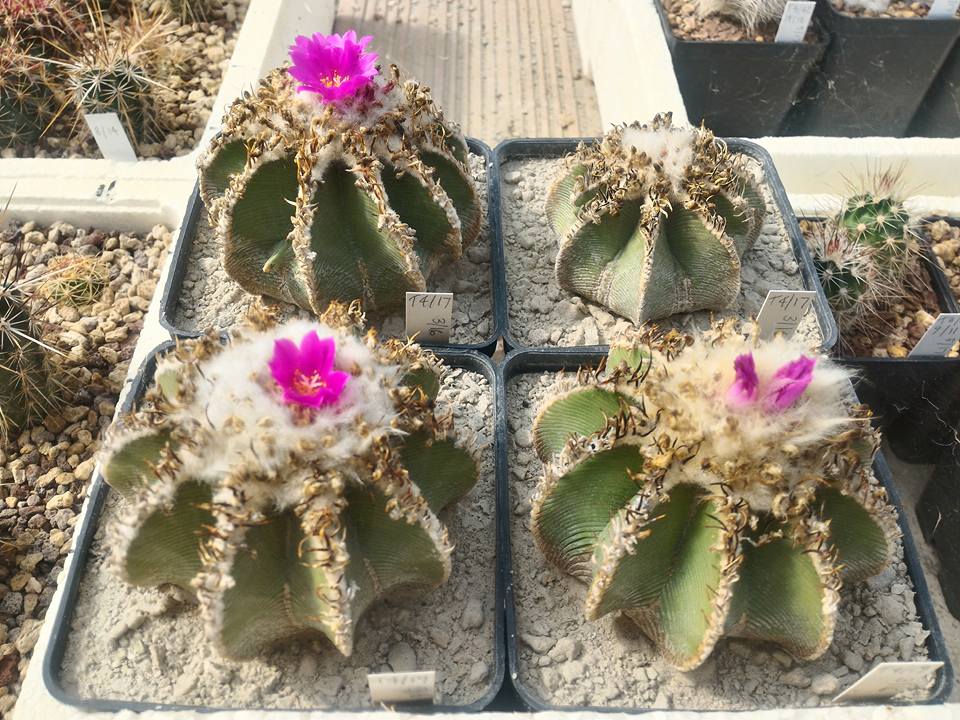
Aztekium hintonii Glass & W.A.Fitz Maur. (1992) was discovered by George Sebastián Hinton on Galeana gypsum outcrops in 1991. The species is an obligate gypsum specialist: it grows nowhere on Earth except near-vertical gypsum cliff faces in the canyon systems of Galeana municipality, Nuevo León. That specificity makes the plant extremely vulnerable to pressure on any single locality.
An earlier IUCN assessment placed the species as Near Threatened with extent of occurrence around 50 km² and stems counted in the tens of millions across dense cliff-face colonies. Between 2019 and 2021 a documented mass illegal collection event removed over ninety per cent of the estimated population. The post-event reassessment placed the species as Critically Endangered with area of occupancy approximately 8 km² and fewer than 250 mature individuals remaining. A July 2025 PROFEPA enforcement action in Mexico City seized six A. hintonii specimens from a single illegal 2,157-cactus shipment. The site holds a full specimen page for Aztekium hintonii with cultivation specifics, and the same trade pressures fall on cases covered in our cactus black market investigation. The species is sympatric with Geohintonia mexicana; legitimate trade is seed only, subject to SEMARNAT export permits under CITES Appendix II.
4. Mammillaria bertholdii
IUCN assessment pending; Mexican NOM-059-SEMARNAT-2010 Endangered; CITES Appendix II · Oaxaca, Mexico · cryptocarpic; area of occupancy under 10 km²
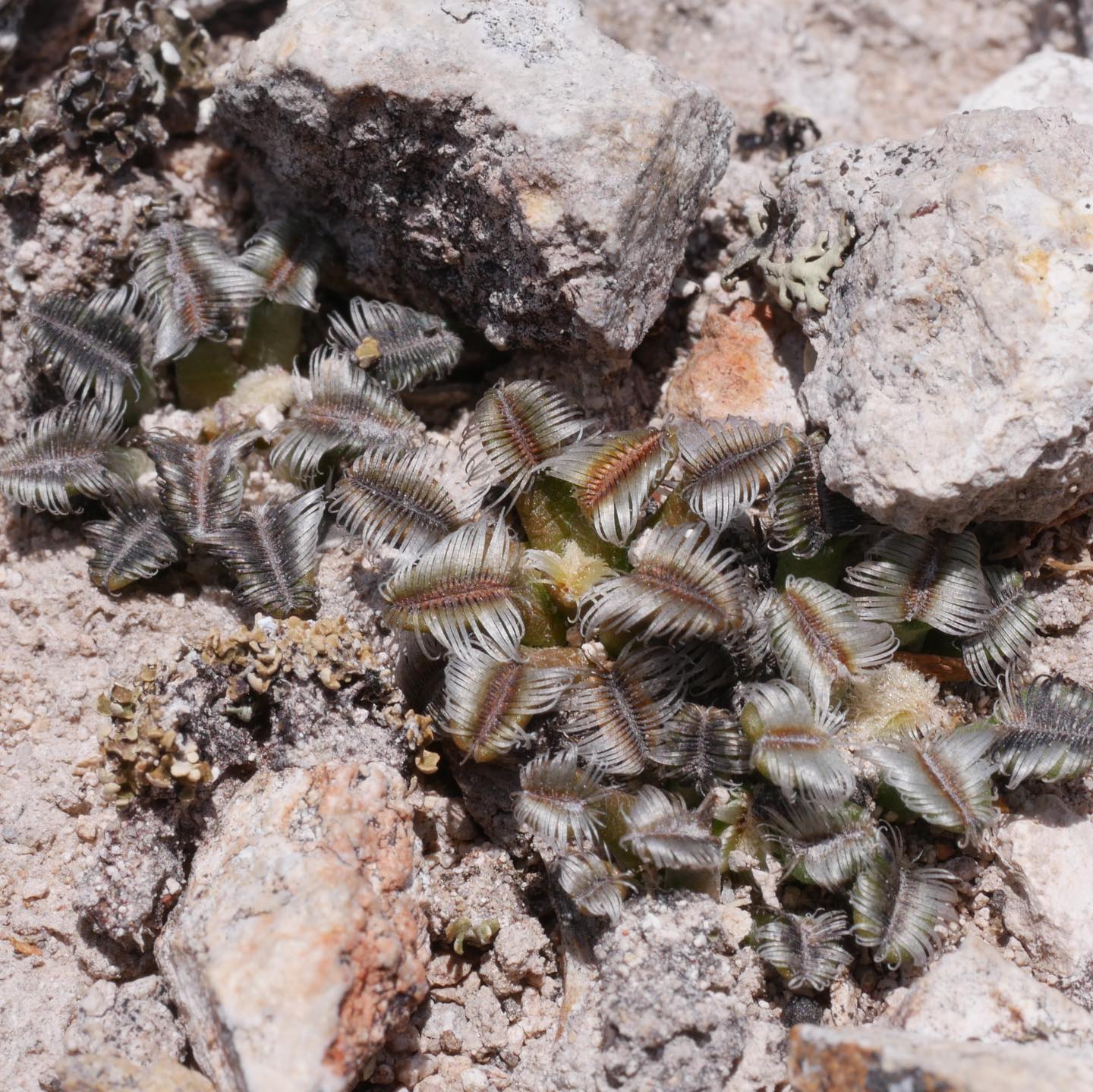
Mammillaria bertholdii T.Linzen was described in 2014 from a population discovered the previous year by Andreas Berthold in Oaxaca. The location coordinates have never been published and are deliberately withheld in every accessible source, a now-standard precaution for newly described Mexican rarities. The known area of occupancy is under ten square kilometres, and the species is classified as Endangered (En peligro de extinción) under Mexico’s NOM-059-SEMARNAT-2010 listing. A formal IUCN Red List assessment is pending.
What makes the species so vulnerable is its reproductive biology. M. bertholdii is cryptocarpic: fruits and seeds develop inside the plant body and never split open, release, or disperse naturally. There is no wind dispersal, no animal dispersal, no natural mechanism for the population to expand into new microhabitats even when conditions allow it. Combined with the extreme range restriction, that biology means the wild population cannot recolonise lost ground, and any single collection event removes a permanent fraction. The site holds a specimen page for M. bertholdii with the full taxonomic and morphological detail.
Almost every M. bertholdii in the legal trade is a grafted plant. Seed-grown specimens are extremely rare because the cryptocarpic fruits must be physically broken open to extract the seeds, and the seedlings grow slowly enough that grafting onto a vigorous rootstock has become the standard cultivation technique. Legitimate cultivated stock can be told from poached wild plants by graft scar, root structure, and provenance documentation. The closest visual relative is Mammillaria herrerae Werderm., a similarly small densely-spined species from the Querétaro/Guanajuato border with wider documented populations and CITES Appendix I protection.
5. Turbinicarpus pseudomacrochele
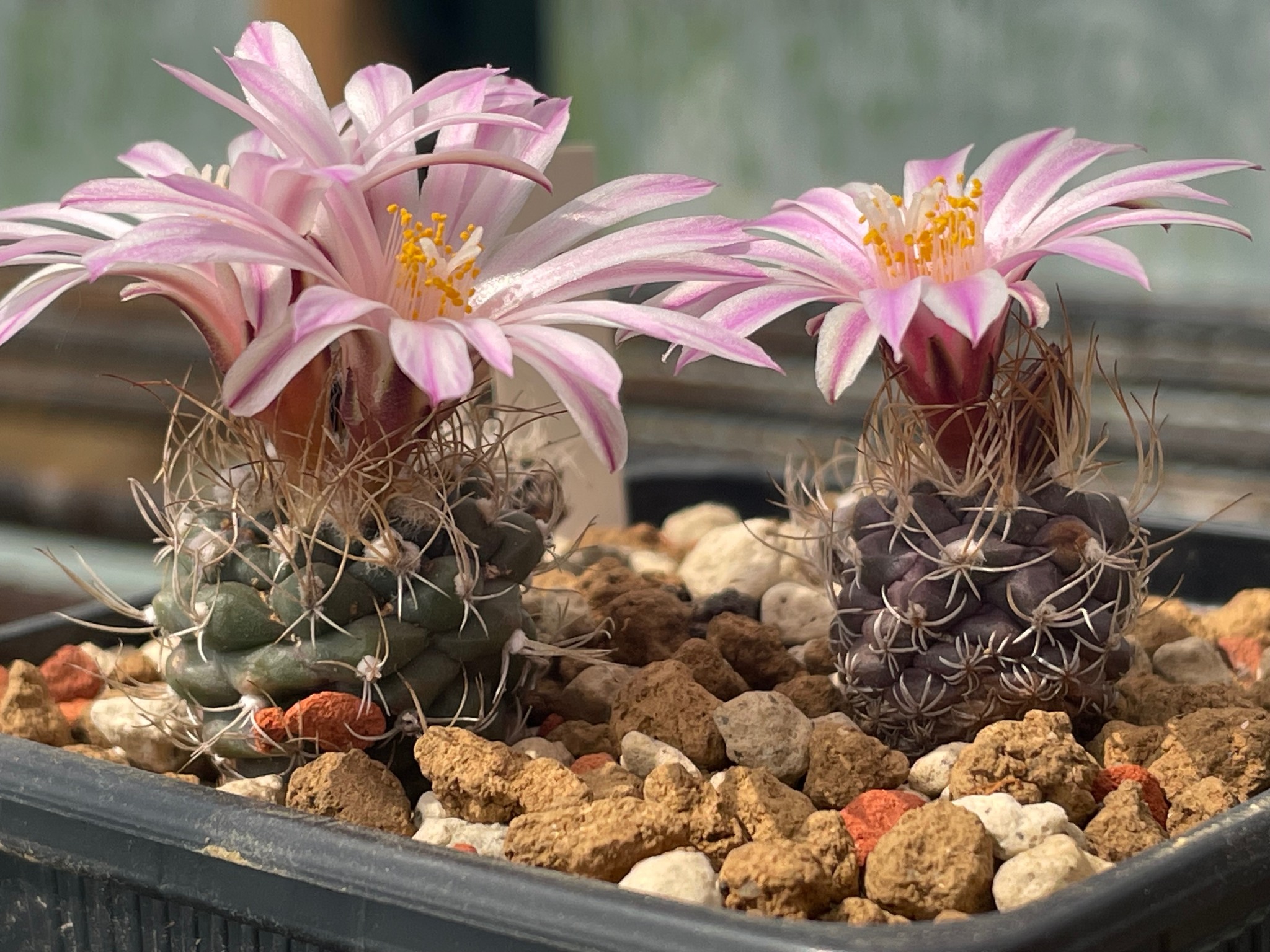
Critically Endangered (IUCN 2013) · Mezquital Valley, Hidalgo / Querétaro, Mexico · CITES Appendix I via the genus
Turbinicarpus pseudomacrochele (Backeb.) Buxb. & Backeb. (1937) was first described as Thelocactus pseudomacrochele Backeb. and transferred to Turbinicarpus soon after. Some recent treatments place it in Kadenicarpus, but POWO retains the Turbinicarpus placement and the IUCN Red List assessment uses the same name. The species occupies calcareous limestone outcrops in the Mezquital Valley region of Hidalgo and across into Querétaro at elevations between roughly 1,600 and 2,000 metres.
The 2013 IUCN assessment classified the species as Critically Endangered under criteria B1ab(i,ii,iii,v) + B2ab(i,ii,iii,v): an extent of occurrence under 100 km² and an area of occupancy under 10 km², both with continuing decline. Decades of collection pressure starting in the 1960s, combined with agricultural encroachment in the Mezquital Valley, reduced the total wild population to a few hundred mature individuals across multiple fragmented colonies. The US Fish and Wildlife Service additionally lists the smaller subspecies T. pseudomacrochele subsp. minimus as a species of concern under the federal Lacey Act framework. A full specimen page for T. pseudomacrochele covers the on-site cultivation specifics.
What sustains the species today is the European collector trade and a concentrated block of botanical garden holdings, the Desert Botanical Garden in Phoenix and a set of European specialist collections. Seed-grown plants are the legitimate route, with specialist nurseries supplying material to the trade under CITES Appendix I protocols covering the entire Turbinicarpus genus. Grafting is widely used to accelerate growth for display, but the ungrafted standard remains the collector preference. The closest wild-secure relative is the namesake Turbinicarpus macrochele (Werderm.) Buxb. & Backeb., which carries longer spines and ranges across Hidalgo, Querétaro, and San Luis Potosí under lower extinction pressure.
6. Chichimecactus corregidorae
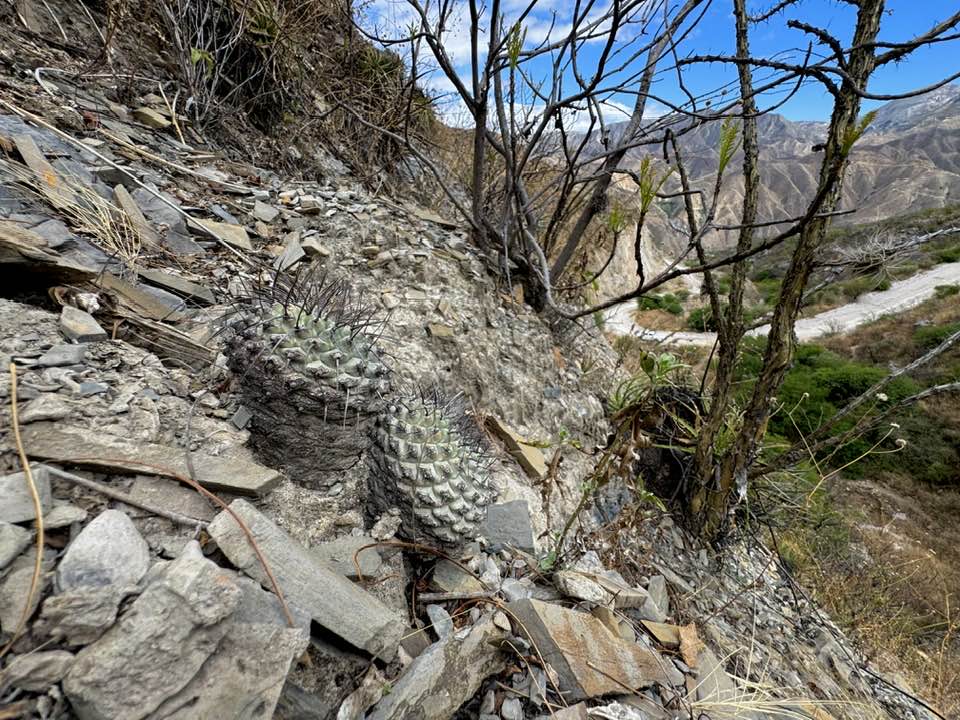
Critically Endangered range; restricted to three localities in the Infiernillo Canyon · Querétaro / Hidalgo border, Mexico · limestone shales at ~1,500 m
Chichimecactus corregidorae (Glass & S.Arias) E.F.Anderson is the post-2021 POWO name for what was originally published as Strombocactus corregidorae Glass & S.Arias in Cactáceas y Suculentas Mexicanas 55(4) in 2010. A 2021 molecular phylogeny in Phytotaxa 512(3) split the species out of Strombocactus and into the newly erected monotypic genus Chichimecactus. The IUCN assessment is still filed under the original name Strombocactus corregidorae and has not yet been updated to reflect the genus split, which is a recurring complication for collectors verifying legal status under CITES Appendix I, the listing that covers the entire Strombocactus genus and propagates to the new Chichimecactus by reference.
The wild range covers exactly three localities in the Infiernillo Canyon system on the Querétaro/Hidalgo border, all on limestone shale outcrops at around 1,500 metres elevation. Total wild population numbers were not published in the 2010 description, but collection pressure that began after publication was acute. The species was poached aggressively from discovery onward, in the same pattern that the rarest cacti in the world typically follow once a new range is mapped. The current conservation status sits in Critically Endangered territory by secondary-source consensus, though the formal IUCN reassessment under the new generic name has not yet been published.
Cultivation today is concentrated in specialist European and North American collections. Almost all trade plants are grafted, partly because the species is challenging from seed and partly because grafting reaches a sellable display size in a fraction of the time. Seed-grown stock exists but is uncommon, and provenance documentation matters, wild-collected plants from Infiernillo continue to surface in unscrupulous trade despite CITES Appendix I protections covering the broader genus context. The closest still-secure relative under the prior Strombocactus placement is Strombocactus disciformis, a wider-ranging limestone-cliff species across the same general region.
7. Discocactus horstii
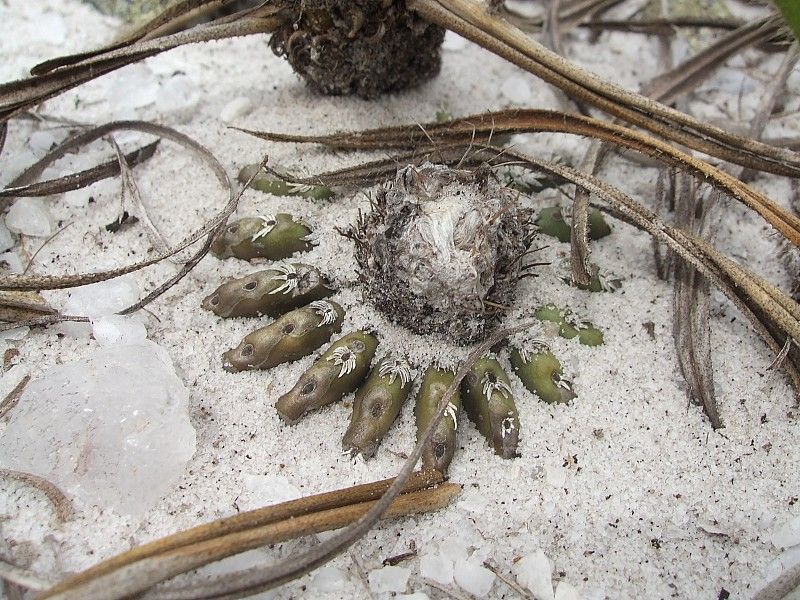
Endangered (IUCN 2002, last documented global assessment); Critically Endangered on Brazil’s national CNCFlora list · Serra do Barão, Minas Gerais, Brazil · area of occupancy ~6 km²; CITES Appendix I
Discocactus horstii Buining & Brederoo (1973) is a small dish-shaped Brazilian cactus restricted to a tiny range in the Serra do Barão, northwest of Grão-Mogol municipality in northern Minas Gerais. Leopoldo Horst discovered the species around 1971 on quartz-sand campo rupestre vegetation at 800 to 1,200 metres elevation. The wild range covers exactly three localities, all now inside the boundaries of Parque Estadual de Grão Mogol since the park’s establishment in 1998. Total extent of occurrence is under 100 km² and area of occupancy is approximately 6 km².
The wild collapse followed a familiar pattern: predatory mass collection beginning almost immediately after the 1973 species description. Wild-dug D. horstii appeared in European specialist nurseries within years, Hollygate Nurseries in Sussex carried wild-collected stock through the late 1970s and 1980s, and the limited wild range could not absorb the off-take. Quartz-sand mining pressure on the silica substrate habitat compounded the collection damage. The 1998 establishment of the state park stopped legal extraction but cannot reverse the population already removed. Current populations are described as stable-but-tiny rather than recovering.
Two separate red lists place the species at different tiers, and the gap matters. The last formally documented IUCN global assessment is the 2002 entry, which classified D. horstii as Endangered under criteria B1ab(iii)+2ab(iii). Secondary aggregators cite a 2013 revision to Vulnerable, but that revision has not been verified against the live IUCN record in this research cycle. Brazil’s national authority CNCFlora, hosted at the Jardim Botânico do Rio de Janeiro, uses Criticamente em perigo (Critically Endangered) on the Brazilian national Red List, which is a separate authority from the IUCN global list and applies to in-country protection. CITES Appendix I covers the entire Discocactus genus regardless of which red list a collector consults. Cultivation today is concentrated in BCSS member collections, specialist Brazilian nurseries, and a handful of European glasshouses; almost every plant in legal trade is grafted, and seed-grown specimens are uncommon and slow. The closest secure relative is Discocactus heptacanthus (Barb.Rodr.) Britton & Rose, the wide-ranging Near Threatened species spanning central-western Brazil, Bolivia, and Paraguay.
How do botanical gardens save extinct-in-the-wild cacti?
The institutional answer to wild extinction in Cactaceae has been ex situ conservation. The Cadereyta Regional Botanic Garden in Querétaro led the pre-flood rescue of Kroenleinia grusonii ahead of the Zimapán reservoir in 1994 and remains the central Mexican holder of cultivated insurance populations for half a dozen federally protected species. The Huntington Botanical Gardens, the Royal Botanic Gardens Kew, and the Botanischer Garten München-Nymphenburg together hold the largest documented international ex situ Cactaceae collection. Several of these institutions sit on the canonical list of places to see rare cacti precisely because the cultivated holdings are now the species’ primary insurance copy.
The work is not just propagation. Seed banking through the Millennium Seed Bank Partnership, DNA voucher specimens at JSTOR Global Plants and major herbaria, environmental education programs that move local cultural attitudes away from wild collection, and CITES documentation that lets documented cultivated stock circulate legally across borders all combine into the safety net that keeps these seven species off the formal Extinct in the Wild list. None of it is a substitute for an intact wild population; all of it is what stands between cultivation and the alternative. The CITES trade records, charted from 1976 to 2023, show documented cultivated stock now making up almost all of the live cacti that exporters report.
Can a cactus extinct in the wild be reintroduced to nature?
Reintroduction of cultivated cacti to historical wild range is technically feasible and, in a few cases, has been attempted. Cadereyta and Botánico de Querétaro have run propagation and education programs around Kroenleinia grusonii for three decades, though no large-scale formal reintroduction has been published. The barriers are habitat rather than horticulture: the original Zimapán type-locality canyon is at the bottom of a reservoir and cannot be restored. Aztekium hintonii’s gypsum-cliff specificity means reintroduction would have to happen on the same canyon walls the wild population still occupies, where active poaching pressure has not abated. Mammillaria bertholdii’s cryptocarpic biology means even a successful reintroduction would not produce natural expansion; every generation past the first would need human-intervened seed extraction and sowing.
Repatriation of seized poached plants is the closest working precedent. The Italian Carabinieri Forestali returned 844 of 1,035 seized Copiapoa to Chile on 19 April 2021 under Operation Atacama. Whether the seven species on this list ever return to nature in numbers depends on whether enforcement against the trade that emptied them holds up long enough for cultivation-based insurance populations to follow.
Frequently Asked Questions
Which cactus species are classified as extinct in the wild by the IUCN?
As of the 2025 IUCN Red List, no Cactaceae species carries formal Extinct in the Wild status. Mammillaria glochidiata Mart. (1832) was the only cactus ever to hold that designation, and it was downlisted to Critically Endangered in 2013 after a small wild colony was rediscovered in the Barranca de Tolimán in Hidalgo, Mexico. Several species sit close to the EW threshold, with type localities lost or wild populations below a few hundred individuals, but none meets the strict definition that requires no documented wild population at all.
What happened to the wild population of the golden barrel cactus?
The golden barrel cactus (Kroenleinia grusonii, formerly Echinocactus grusonii) lost its primary wild type-locality canyon to the Zimapán hydroelectric reservoir on completion of the dam around 1994. A pre-flood rescue by Botánico de Querétaro and the Cadereyta Regional Botanic Garden relocated specimens before the reservoir filled. The 2021 IUCN assessment estimates roughly 11,000 wild individuals remain across two to four severely fragmented locations, with the Querétaro extent of occurrence reduced to about 25 km². Chronic poaching for the horticultural trade continues to reduce the remaining sites.
Can a cactus extinct in the wild be reintroduced to nature?
Reintroduction is technically feasible and has been attempted in adjacent cases. Cadereyta and Botánico de Querétaro have run propagation and education programs around Kroenleinia grusonii since the Zimapán flood, though no large-scale formal reintroduction has been published. The 2021 Italian Carabinieri Forestali repatriation of 844 of 1,035 seized Copiapoa to Chile on 19 April 2021 under Operation Atacama is the working precedent for moving cultivated stock back to habitat. The barriers are habitat condition and ongoing trade pressure rather than horticulture: an inundated type locality cannot be restored, and a species that survives in cultivation only because the trade keeps emptying the wild range has nowhere safer to be returned to.
Why does Mammillaria glochidiata still hold Critically Endangered status if its cultivation lineage is large?
IUCN status assesses wild populations, not cultivated stock. Even when a species is abundant in greenhouses worldwide, the Red List category reflects how many mature individuals are documented in habitat, the extent of the wild range, and the trajectory of those wild numbers. M. glochidiata’s Barranca de Tolimán colony is small enough and pressured enough to keep the species at CR, the rediscovery in 2013 was only enough to lift it off the Extinct in the Wild listing it had carried beforehand.
Are seed-grown cultivated specimens of these species legal to buy?
Yes, with the right paperwork. CITES Appendix II species can be traded internationally with export permits issued by the country of origin (SEMARNAT in Mexico, IBAMA in Brazil). CITES Appendix I species, which include the entire Turbinicarpus genus and several Mexican Mammillaria, require both export and import permits and documented seed-grown provenance. Wild-collected plants are illegal under any of these frameworks, and the line between legitimate seed-grown and laundered wild stock is where most enforcement attention falls. Specialist nurseries in Germany, Italy, the Czech Republic, and Mexico carry legitimate seed-grown material. See our CITES Appendix I cacti reference for the full list of species under the strictest tier.
IUCN Red List, Cactaceae assessments · IUCN Cactus and Succulent Plants Specialist Group · Goettsch et al., “High proportion of cactus species threatened with extinction,” Nature Plants (2015) · Guerrero et al., “Threats to Copiapoa cacti in the Atacama Desert,” Conservation Biology (2024) · Plants of the World Online (Royal Botanic Gardens Kew, 2026) · Anderson, E.F., The Cactus Family (Timber Press) · Hunt, D., The New Cactus Lexicon (DH Books) · Helia Bravo Hollis, Las Cactáceas de México · Glass, C. & Fitz Maurice, W.A., “Aztekium hintonii,” Cactáceas y Suculentas Mexicanas 37: 13–16 (1992) · Linzen, T., “Mammillaria bertholdii spec. nova,” Cactaceae Systematics Initiatives 28 (2014) · Glass, C. & Arias, S., “Strombocactus corregidorae,” Cactáceas y Suculentas Mexicanas 55(4) (2010) · Lodé, J., “Kroenleinia grusonii,” International Cactus-Adventures 102: 27 (2014) · PROFEPA enforcement releases (2025) · Cadereyta Regional Botanic Garden, ex situ conservation accession data · The Huntington Library, Art Museum, and Botanical Gardens; Desert Garden Conservatory accession data · United States Botanic Garden, Conservatory holdings · Royal Botanic Gardens Kew, Arid Collection · Botanischer Garten München-Nymphenburg, Cactus Collection · CITES Appendices I, II, III (current) · Mexican NOM-059-SEMARNAT-2010 · Operation Atacama Italian Carabinieri Forestali repatriation reports (2021) · SEMARNAT & PROFEPA wildlife trafficking enforcement bulletins