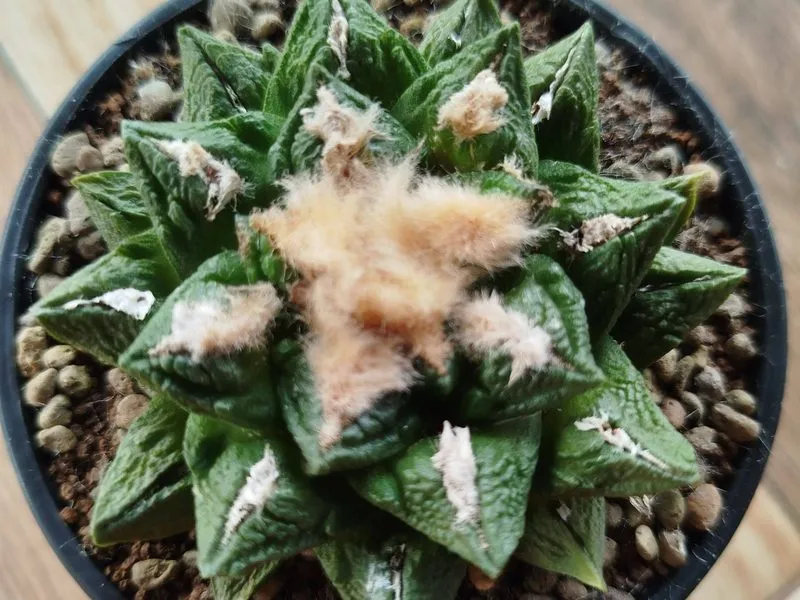
Ariocarpus — Complete Collector’s Guide
Encyclopedia

7 species
- A. retusus (incl. subsp. furfuraceus)
- A. fissuratus (incl. subsp. lloydii)
- A. trigonus
- A. kotschoubeyanus
- A. agavoides
- A. scaphirostris
- A. bravoanus (incl. subsp. hintonii)
Possible additional species
- A. confusus (status debated)
Most people walk past an Ariocarpus in the wild without seeing it. That is not a metaphor. These plants press themselves flat against limestone pavement, grow the colour of dry rock, and produce no spines on the mature body to catch the eye. Field botanists with decades of Chihuahuan Desert experience still miss them. This cryptic quality, combined with growth so slow it borders on philosophical, is what makes the genus the obsession it becomes for serious collectors.
A well-grown Ariocarpus fissuratus the diameter of a coffee cup is probably older than your car. That age is visible in the quality of the body, the depth of the fissures, the density of the wool at the centre. You are not buying a plant, you are buying years. Which is why provenance matters so much, why seed-grown specimens from known collections command the prices they do, and why a wild-collected plant at a bargain price is never actually a bargain and is highly frowned upon. We should never be buying wiold-collected plants of any kind, for any reason whatsoever
This guide is written for collectors at every level. The care sections are honest about what this genus actually needs, not what sounds reassuring. The species profiles reflect what you will realistically find in the specialist trade, not just what exists in herbarium records.
Contents
What is Ariocarpus?
The genus was first described in Mexico in 1838, with A. retusus as the founding species. Seven species are now generally recognised: retusus, fissuratus, trigonus, kotschoubeyanus, agavoides, scaphirostris, and bravoanus. Several of these have accepted subspecies or local forms. Retusus includes subsp. furfuraceus, fissuratus includes subsp. lloydii, and bravoanus includes subsp. hintonii. A further possible species, confusus, looks similar to retusus but with sharp upward-pointing tubercle tips resembling trigonus. Its status remains debated.
All but fissuratus are found only in Mexico, in the central northern plateau. Only fissuratus extends northward into south-western USA, specifically Texas. All species share the same fundamental character: large tap root, slow growth, and large showy flowers that emerge from a woolly centre in September and October.
All species are normally spineless. As the plants mature they produce wool around the central tubercles, and it is from this wool that the flower buds push through each autumn. The popular name “living rock” is accurate without being complete. They do resemble rocks. They also resemble old weathered wood, dried lichen, and pieces of the limestone they grow on. The mimicry is so effective that the taxonomy of the group spent decades confused because botanists kept collecting the same species twice, not recognizing that what looked like two different things was one plant expressing variation in response to its substrate.
Where they come from
The Chihuahuan Desert, covering northern Mexico and parts of New Mexico and Texas, is the habitat of the entire genus. Specifically the limestone zones: exposed cliff faces, rocky plains, hillsides where the calcium-rich substrate has weathered into broken, free-draining terrain that roots can explore but that holds almost no water after rain.
Summers are brutal. Surface temperatures on bare rock regularly exceed 60 degrees Celsius. The plants survive by retreating metabolically and by virtue of their flat profile presenting minimum surface area to the sun. Winters are cold, occasionally frosty, and critically dry. The rain comes in summer, concentrated in July through September, and the plants do most of their growing then.
This matters for cultivation because growers who ignore the seasonal pattern consistently lose plants. The winter dry period is not a suggestion. It is the condition under which every Ariocarpus on earth has been operating for millions of years. Keeping them moist over winter because they look a bit shriveled is the single most common way to kill them.
Species profiles
Seven species are generally recognized, with several important subspecies and local forms. What follows covers each species honestly, including how often they appear in the specialist trade and what their subspecies mean in practical terms.
Ariocarpus retusus
Including subsp. furfuraceus and various local forms
The founding species · Tier B · Most variable
The first Ariocarpus to be described and the largest species. Plants can reach 20cm across with age, displaying prominent pointed tubercles in the star pattern that gives the species its common name. Several local forms and the subspecies furfuraceus are recognized, the latter distinguished by woolly tubercle surfaces that some collectors strongly prefer over the type.
Slightly faster growing than fissuratus. A good second plant for anyone who has successfully kept fissuratus for a season or two. The range of forms within retusus means that even a focused retusus collection offers significant variation.
Collector note: The cristate form is exceptionally rare and valuable. Grafted specimens circulate occasionally. Seed-grown cristata retusus is genuinely rare and worth seeking from a reputable source.
Ariocarpus fissuratus
Including subsp. lloydii · extends into Texas
The living rock · Tier B · Start here
The most widely grown and most forgiving of the genus, and the only species that extends into the United States. Fissuratus grows as a flat circular rosette, the tubercles deeply fissured and grey-green, pressed so close to the ground that the body is often level with the surrounding soil. Subspecies lloydii is a local form with slightly different tubercle character, occasionally available from specialist sources.
This is the species to start with if you are new to the genus. It tolerates modest errors in watering and soil mix that would kill its rarer relatives. A seed-grown plant of 8-10cm diameter is roughly 15-20 years old.
Collector note: Variegated forms with yellow or white sectoral mutations are among the most sought-after plants in the genus. A well-defined variegated fissuratus in good size is serious money in collector circles.
Ariocarpus trigonus
Mexico only · Tamaulipas and Nuevo León
The triangle cactus · Tier A · Underrated
The only species in the genus with yellow flowers, which alone makes it worth growing. The triangular upward-pointing tubercles give mature plants a more architectural quality than most of the genus. Grows large with age, sometimes approaching retusus in diameter.
Available from specialist sources with patience. The yellow flowers in autumn are genuinely striking and make it immediately distinguishable from every other plant in the genus.
Collector note: Historically treated as a variety of retusus in some older classifications and still listed that way in some references. Current taxonomy treats it as a distinct species.
Ariocarpus kotschoubeyanus
Mexico only · central northern plateau
The miniature living rock · Tier A · Not for beginners
The smallest species, rarely exceeding 4-5cm across, growing essentially level with the surrounding soil. The tubercles are tiny and dark, the plant almost invisible even when you know it is there. The flowers are disproportionately large and deep pink, and are arguably the most beautiful in the genus relative to the plant that produces them.
More difficult than fissuratus or retusus. The root system is tuberous and highly rot-prone. It requires excellent drainage, strict winter dryness, and very little tolerance for error. Wait until you have a season or two of Ariocarpus experience before acquiring this species.
Collector note: The white-flowered form albiflorus is genuinely rare and commands strong prices. Most plants sold as albiflorus are not. Verify flower colour before paying a premium.
Ariocarpus agavoides
Mexico only · Tamaulipas · gypsum hills
The agave cactus · Tier S · Bucket list plant
Nothing in the genus prepares you for agavoides. The long, narrow, spine-tipped tubercles look nothing like any other Ariocarpus. The resemblance to a miniature agave is exact enough that the species spent years misidentified. It is endemic to a small area of Tamaulipas, growing on gypsum hills, and is considered critically endangered in the wild.
Seed-grown plants appear occasionally through specialist channels. When they do, they sell quickly. A well-grown, documented seed-grown agavoides of any reasonable size is one of the most significant plants you can own in this genus.
Collector note: The critically endangered wild status makes provenance documentation non-negotiable. Any seller who cannot provide it is selling something you should not buy, regardless of price.
Ariocarpus scaphirostris
Also written scapharostrus · Mexico only · Nuevo León
The boat-nosed cactus · Tier S · Rarest in cultivation
Known from a single small population in Nuevo León. The boat-shaped tubercles are unique in the genus. The flowers are vivid deep pink, large, and striking in a way that seems impossible given how rarely the plant appears. This is probably the rarest Ariocarpus in cultivation anywhere in the world. You will encounter both spellings, scaphirostris and scapharostrus, in different references.
Seed-grown specimens are extraordinarily scarce. The few that change hands do so through established collector networks, not commercial channels. If you encounter one for sale through a reputable source with proper documentation, the price will be high. It will also be worth it.
Collector note: Almost never available commercially. Network with serious collectors. That is the only realistic path to acquiring this species.
Ariocarpus bravoanus
Including subsp. hintonii · Mexico only · San Luis Potosí
Bravo’s living rock · Tier S · Recently separated
Long treated as a subspecies of kotschoubeyanus, now recognised as a distinct species with its own subspecies hintonii. Native to a restricted area of San Luis Potosí. Larger than kotschoubeyanus, with more prominent tubercles and deep pink flowers. The wild population is small and threatened.
Shares the cultivation challenges of kotschoubeyanus: tuberous roots, rot-prone, demanding about drainage and winter dryness. Seed-grown plants appear occasionally through specialist networks.
Collector note: Plants from known collections with documented flower colour and origin are more reliable than those where identification rests on appearance alone.
Ariocarpus confusus
Taxonomic status debated
Possible additional species
Resembles retusus in overall form but with sharp, upward-pointing tubercle tips similar to trigonus. Its status as a distinct species is debated and not universally accepted. Whether it represents a genuinely distinct species, a hybrid, or a local form of retusus is an open question in the taxonomy of the genus.
Collector note: Occasionally available from specialist sources. The uncertain taxonomy means plants under this name vary considerably. Verify what you are being sold.
Flowers and flowering season
The flowers are one of the defining pleasures of growing Ariocarpus. They are disproportionately large for the plant size, emerging from the central wool in September and October and lasting two or three days each. A plant that has sat in a pot looking like a piece of grey rock all year suddenly produces a bloom the size of a small rose. The contrast is striking every time, no matter how many years you have been growing them.
Flower colour divides the genus clearly. Fissuratus, kotschoubeyanus, scaphirostris, bravoanus, agavoides, and some forms of retusus produce deep pink flowers. Retusus itself typically flowers white, sometimes with pink tinges, and pale or white-flowered forms exist in several other species. Trigonus stands alone in the genus with yellow flowers, which make it instantly distinguishable from every other Ariocarpus in a collection.
Seed-grown fissuratus typically begins flowering at five to eight years old. The trigger is the combination of the summer growing period followed by cooling temperatures and drying conditions in autumn. Plants kept warm and watered year-round often fail to flower, or flower irregularly. The dormancy period is not just good for the roots, it appears to set up the flowering response for the following season.
Flower colour by species
Deep pink
- fissuratus
- kotschoubeyanus
- scaphirostris
- bravoanus
- agavoides
- some forms of retusus
White to pale pink
- retusus (typical)
Yellow
- trigonus
Photos of each species in flower will be added to this section as they become available.
Growing them
The single most useful thing to understand about growing Ariocarpus is that almost every failure comes from too much water in cold weather. Get that right and you have solved the majority of the problem. The other details matter, but they are secondary.
Soil
Drainage is everything. The mix needs to be mostly inorganic: pumice, perlite, coarse horticultural grit, or crushed granite. Start at 70-80% inorganic material and 20-30% cactus compost. For kotschoubeyanus, bravoanus, and their subspecies with their tuberous roots, push the inorganic content to 85-90%.
Adding a small amount of crushed limestone or oyster shell to the mix is worth doing. It raises pH slightly toward alkaline and replicates the calcium-rich substrate these plants grew up in. Whether it makes a measurable difference is debated, but it costs almost nothing and the plants seem to respond well to it.
Watering
Water from late spring through early autumn, stopping as temperatures cool in September or October. During the growing season, water thoroughly when the soil has been dry for a week or more. In hot weather this might be every two weeks. In cooler conditions, less often.
From October through April: nothing. Or close to nothing. A single careful watering in late February if a plant is severely shriveled is acceptable. Otherwise dry. A plant that looks slightly sunken in January is healthy. A plant sitting in moist compost in January is dying, and you will not know it until the rot reaches the surface.
Light
As much as you can give them. In the UK and northern Europe this means full south-facing exposure under glass throughout the growing season. In warmer climates, outdoor full sun works well once plants are established. Low light produces stretched, weakened growth that is hard to reverse.
Cold and dormancy
Most Ariocarpus tolerate brief frost when completely dry. A winter minimum of 5 degrees Celsius is a safe practical guideline. Cold plus moisture is lethal. Cold alone, with bone-dry soil, is fine and appears to be beneficial for long-term health and flowering regularity. Plants kept warm and watered through winter may persist for several years but tend to decline gradually.
Pots
Deeper than you think. All species have a large tap root and the root system below ground can be as large or larger than the visible plant above it. A pot roughly twice the depth of the plant diameter is a reasonable guide. Terracotta dries out faster than plastic, which matters here. Repot every three or four years in spring, before watering begins for the season.
Rarity and what to buy
Start with fissuratus or retusus, grow them well for a season or two, then add kotschoubeyanus once you understand how the genus behaves in your conditions. The Tier S plants are not just expensive, they are expensive to lose. A mistake with a 20-year-old agavoides is not a lesson, it is a loss.
When buying any Ariocarpus, the question of whether it is seed-grown or if it’s been grafted. Seed-grown is recommended since they’ll have a stronger root system, but they’ll be more expensive because it took much longer to grow. A previously grafted ariocarpus won’t cost as a seed-grown one if sizes are similar since grafting speeds up growth significantly.
A reputable seller can tell you when their seed was collected, from what plant, and when the seedling germinated. If they cannot, move on.
Legal status
All Ariocarpus species are CITES Appendix I, the top tier of international trade protection, reserved for species at risk of extinction. Commercial trade in wild-collected specimens across international borders is prohibited. Seed-grown plants can be traded legally with appropriate documentation.
In practice: ask for paperwork. Any reputable specialist will have it. If buying within your own country the rules vary, but the principle of knowing what you are buying and where it came from applies regardless of what the law requires. Buying undocumented plants funds collection from the wild and makes the hobby worse for everyone.
Questions collectors ask
How fast do they actually grow?
Slowly. Under good conditions fissuratus gains roughly 3-5mm in diameter per year. A plant 8cm across is 15-20 years old from seed. This is not an exaggeration. It is simply the rate at which these plants grow, and it is part of why mature specimens have the value they do.
My plant is shrivelling. What do I do?
Mild shrivelling in late winter is normal. The plant is drawing on reserves during dormancy and will plump back up with the first watering in spring. Do nothing. Severe shrivelling combined with a soft feel at the base indicates rot. Pull the plant from its pot, cut away everything soft and brown until you reach firm white tissue, dust with sulphur powder or fungicide, let it sit dry for a week or two, and repot into fresh dry mix. Some plants recover. Some do not.
When do they flower?
September and October in the northern hemisphere. The flowers push through the central wool and last two or three days. Seed-grown fissuratus generally starts flowering at five to eight years old. The trigger is the combination of the summer growing period followed by cooling temperatures and drying conditions in autumn.
Is Ariocarpus the same as peyote?
No. The common name “false peyote” refers to superficial visual similarity only. Peyote is Lophophora williamsii, a completely different genus with different alkaloid chemistry and significant legal restrictions in many countries. Ariocarpus contain alkaloids but none with meaningful psychoactive effects and are not subject to the same legal status as Lophophora in most jurisdictions.
Which species should I start with?
Fissuratus. It is the most tolerant, the most available from reliable seed-grown sources, and develops into a genuinely impressive plant over time. Grow it well for two or three seasons. Once you understand how it behaves through the full annual cycle in your conditions, you will have the foundation to tackle everything else in the genus without expensive mistakes.
How do I know if a plant is seed-grown?
Ask for documentation and look at the roots when you repot. Seed-grown plants have intact, well-developed root systems consistent with their age and size. Wild-collected plants often show damaged or truncated roots and growth patterns inconsistent with cultivation. The most reliable signal is a seller who can tell you the seed source, the germination date, and the growing history. If they cannot provide this, that absence tells you something.