What arrives in a San Pedro order
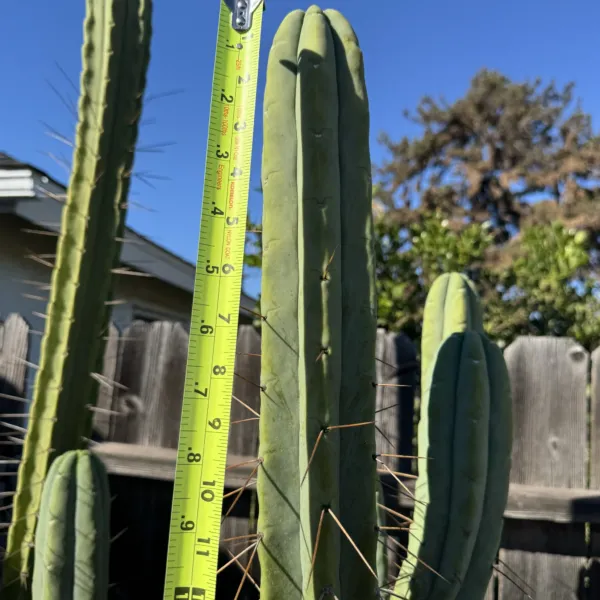
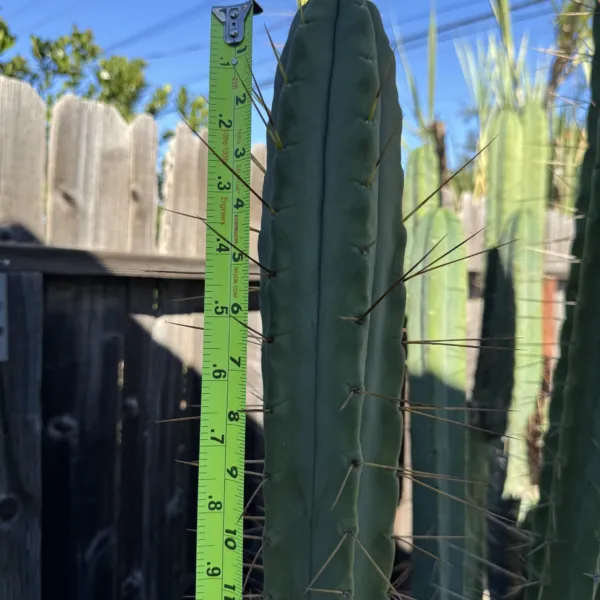
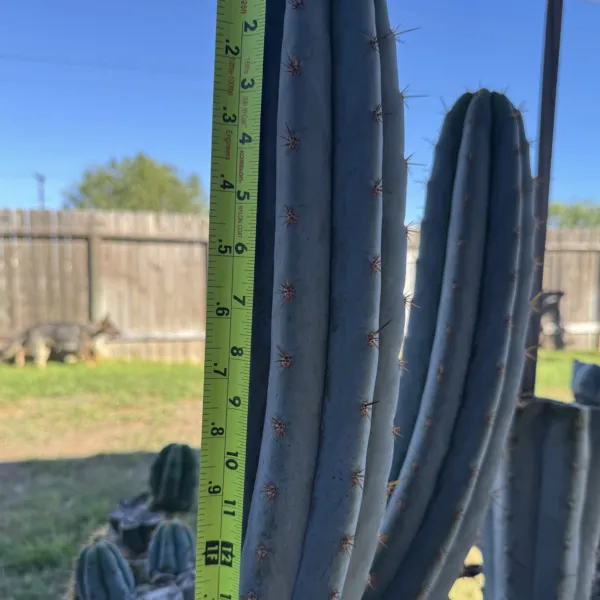
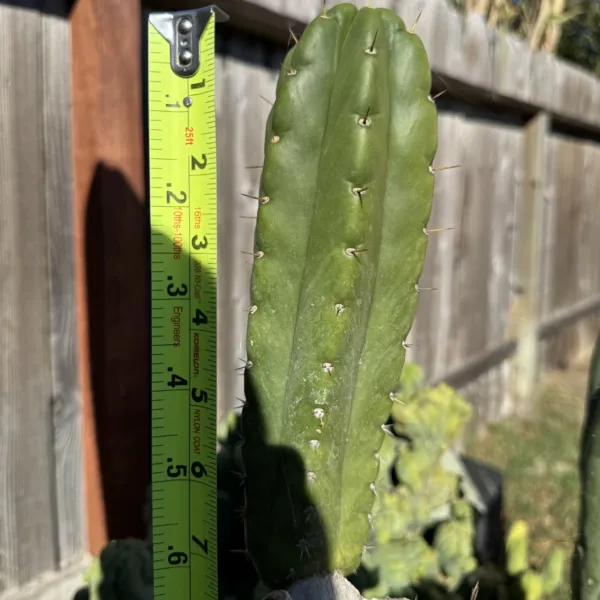
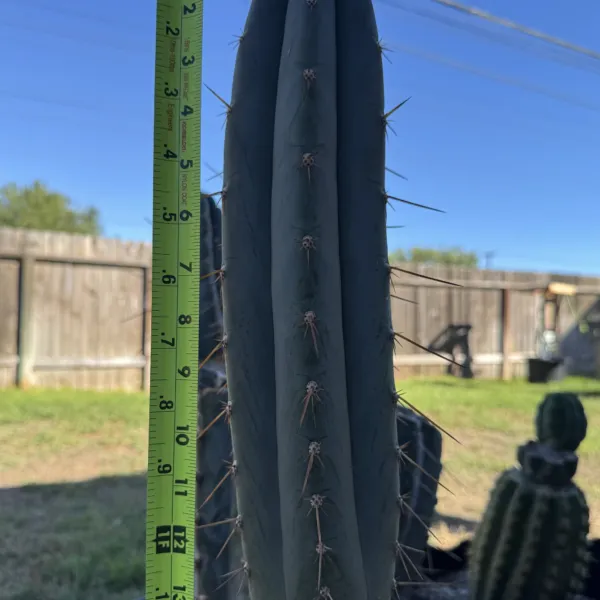
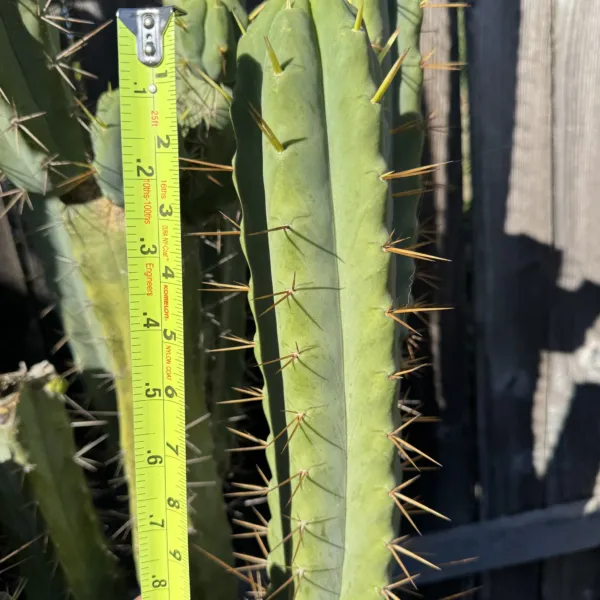
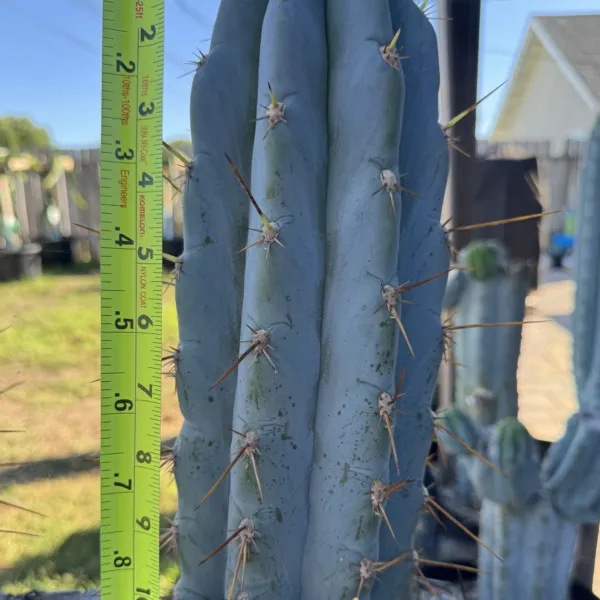
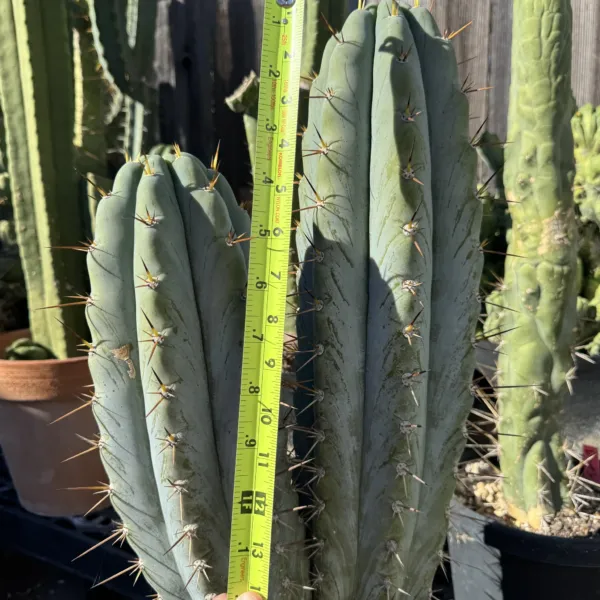
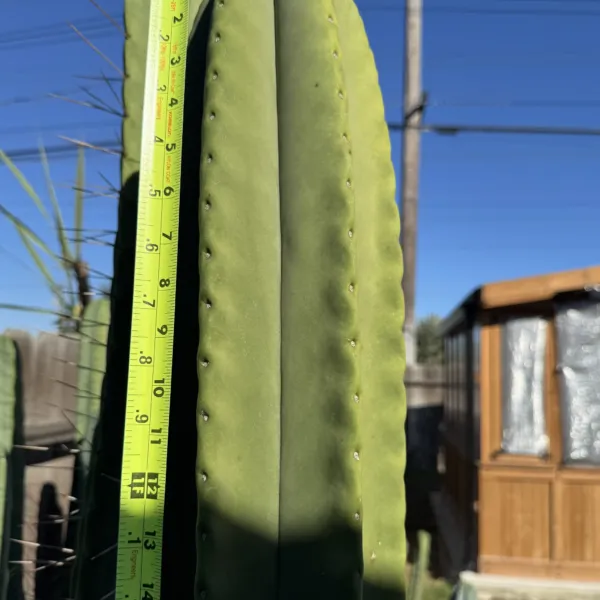
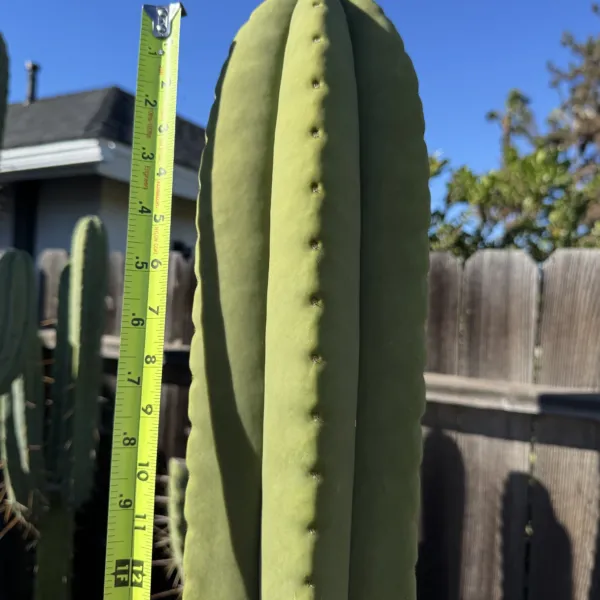
Every San Pedro cactus here ships as an unrooted, callused cutting of a named Trichocereus clone, ungrafted and cut from a mother plant we grow ourselves. Stems run about 8 to 14 inches, and each listing states its cut length.
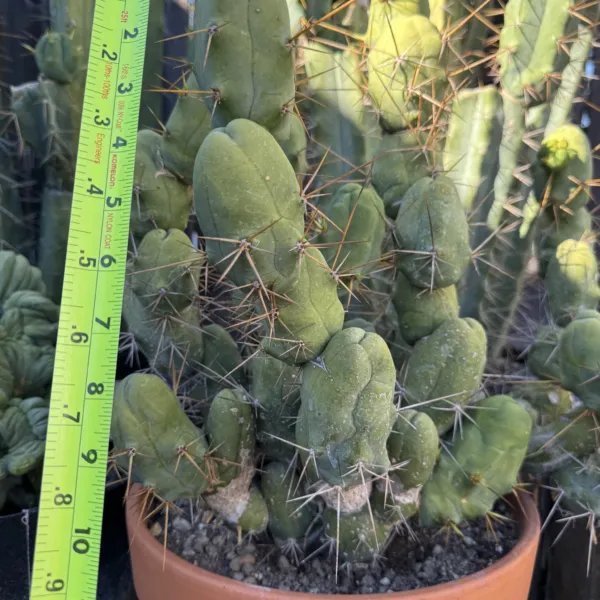
The TBM is sold by count instead, as a cluster of 8 to 10 segments.
One-of-a-kind listings show the exact stem; batch listings show a representative stem, and yours is cut from the same clone to the same size.
How we grow and ship San Pedro cuttings
Our Trichocereus mother plants grow outdoors in full sun in Orange County, California.
Shipping is a flat $12 anywhere in the United States, the only country we ship to. Orders ship within 1 to 3 business days and usually arrive 2 to 5 business days later. All sales are final; the Shipping & Returns section on each listing explains what to do if a cutting arrives dead.
Bolivian torch cactus
The Bolivian torch is Trichocereus bridgesii, a tall, blue-green column from the dry inter-Andean valleys of Bolivia, filed in our encyclopedia as Echinopsis lageniformis. The Eileen, SS02 and RS0005 clones and the TBM, its knobbly monstrose form, are in the Bolivian torch cactus collection.
Peruvian torch cactus
The Peruvian torch is Trichocereus peruvianus, a stout, blue-skinned column from central and southern Peru, with heavier spines than San Pedro, covered as Echinopsis peruviana. Rosei 1, Not Fade Away (NFA), Sharxx Blue and BBG 48.1540 are in the Peruvian torch cactus collection.
Trichocereus pachanoi and scopulicola
San Pedro itself is Trichocereus pachanoi, a fast, nearly spineless column from the Andes of Ecuador and northern Peru, covered as Echinopsis pachanoi. Our clone is Shulgin Ecuadorian.
The spineless San Pedro is Trichocereus scopulicola, a smooth column from Tarija, Bolivia, covered as Echinopsis scopulicola. We offer the Ripple and Kesey clones.
The Echinopsis encyclopedia covers the species behind every clone.
CITES and legality
San Pedro cactus is legal to own as an ornamental plant in all fifty US states, and our state-by-state San Pedro legality guide cites the statute for each. Trichocereus, like most cacti, is listed on CITES Appendix II, which covers international trade only, so a cutting shipped within the US needs no permit.
San Pedro cutting questions
How do you root a San Pedro cutting?
At rarecactus.com we root our own San Pedro cuttings by letting the cut end callus until it is firm, then standing the cutting upright in a dry area with no water at all until roots form. Roots take a few weeks in warm weather. Once rooted, pot it in a 50/50 soil mix of organic and inorganic material and move it into full sun over two to three weeks.
Is a cutting ready to pot when it arrives?
A San Pedro cutting arrives callused and ready to root, not ready to pot. If the cut end still feels soft, give it a few more days upright in bright shade until the callus is firm.
What soil mix does San Pedro cactus need?
San Pedro cactus grows best for us in a 50/50 soil mix of organic and inorganic material, richer than most succulents take. Once potted, water lightly and let the mix dry between waterings.
How fast does San Pedro cactus grow?
San Pedro cactus is fast for a cactus: Trichocereus pachanoi adds about 30 to 60 cm (12 to 24 inches) a year in good conditions, and the Bolivian torch about 15 to 30 cm (6 to 12 inches).