
Mammillaria napina
Quick Facts
| Family | Cactaceae |
| Named by | J.A.Purpus (1912) |
| Subgenus | Dolichothele |
| Synonym | Neomammillaria napina |
| Type locality | W of Tehuacán, Puebla |
| Altitude | 1,700–2,350 m |
| Stem diameter | 4–6 cm |
| Habit | Geophytic, solitary |
| Root | Tuberous, napiform |
| Spines | 10–12 pectinate radials |
| IUCN status | Near Threatened |
| CITES | Appendix II |
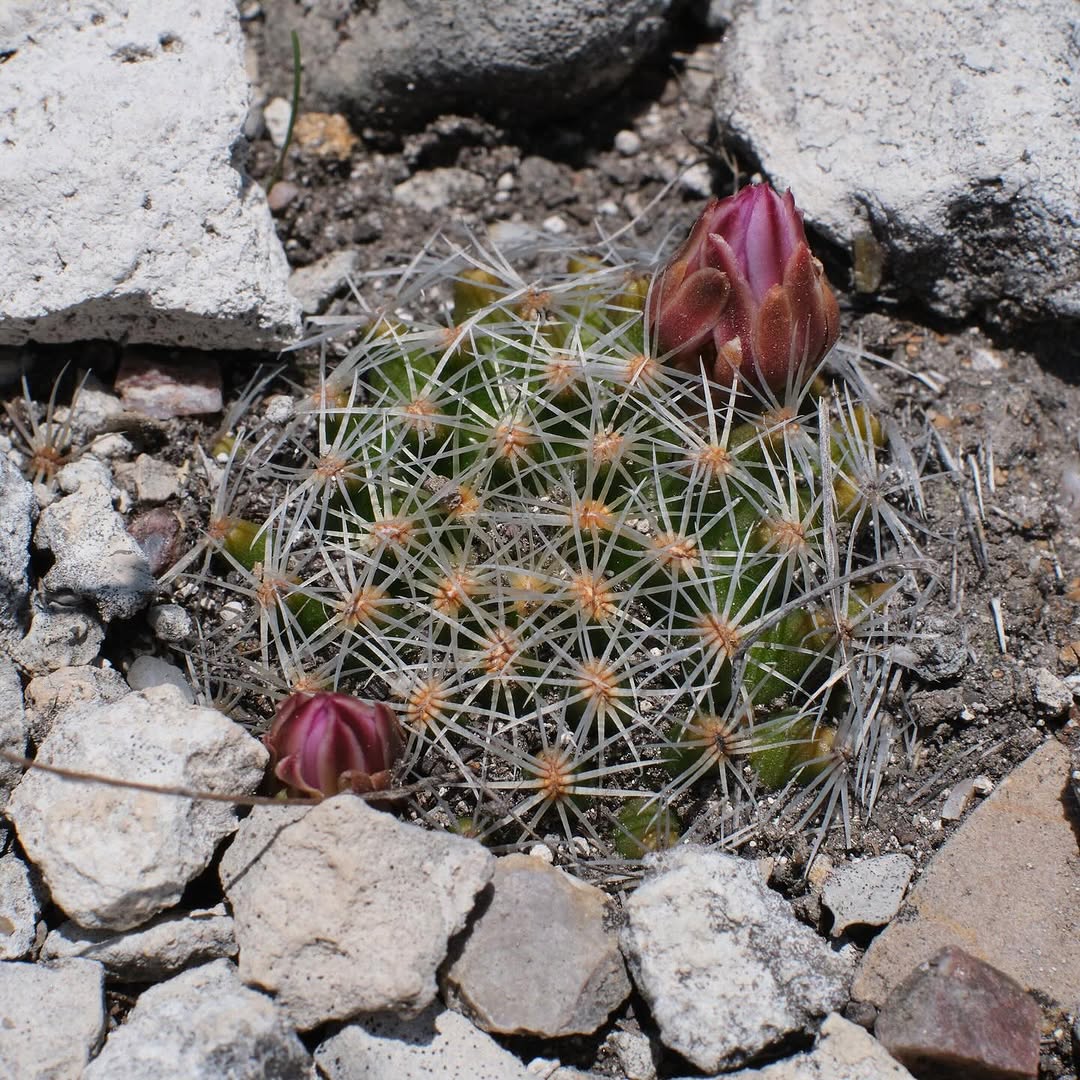
The species epithet says it plainly. Napina comes from the Latin napus, meaning turnip. Joseph Anton Purpus, who described the plant in 1912, was pointing at the single most important anatomical feature: a thick, tuberous, napiform taproot that sits beneath a small, disc-shaped body almost flush with the soil surface. In habitat, the visible stem is barely there. What you see is a circle of pectinate white spines, eight to ten millimeters long with yellow bases, arranged like a flattened asterisk against the gravel. Below ground, disproportionately large, sits the storage organ that keeps the plant alive through the dry months in the Mexican Mixteca.
Mammillaria napina is endemic to southern Mexico, occurring in the states of Puebla and Oaxaca at elevations between 1,700 and 2,350 meters. The type locality is the mountains west of Tehuacán, in the Tehuacán-Cuicatlán Valley, a globally significant arid region and the center of endemism for the Mexican cactus flora. Approximately 25 percent of the cactus species found in this valley occur nowhere else. Mammillaria napina is one of them.
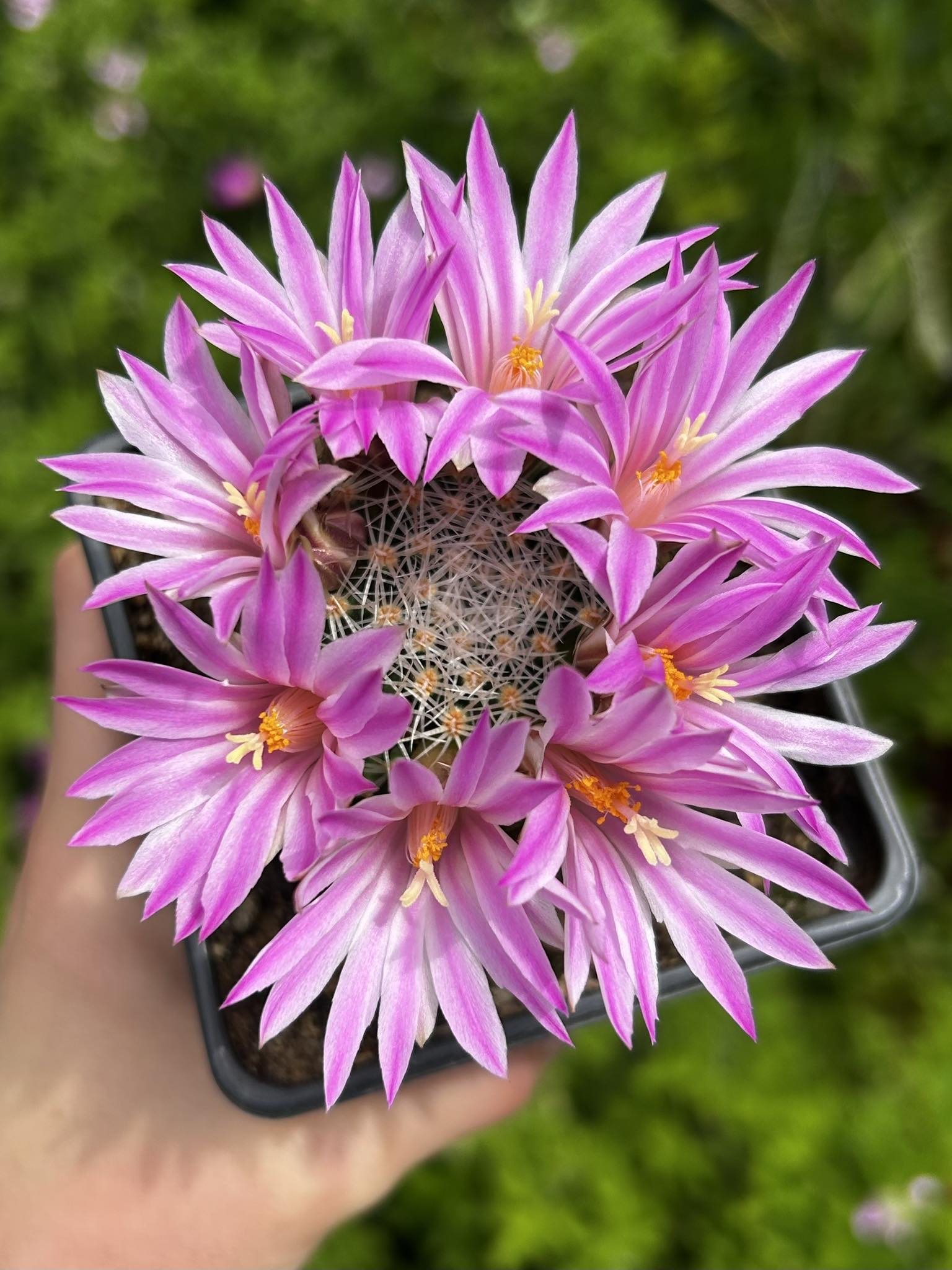
Taxonomically, the species sits in Mammillaria subgenus Dolichothele, section Krainzia, series Longiflorae. The series name reflects the defining floral character: flowers disproportionately large relative to body size, opening from the apex in a full tubular form rather than from the axils between tubercles as in most Mammillaria. The blooms are pale carmine to pink with near-white throats, 3 to 4 centimeters long, making them visually dominant on a plant whose entire visible body rarely exceeds 6 centimeters across.
For collectors, Mammillaria napina is a plant that rewards understanding. It is not flashy in the way of the densely-spined Mammillaria herrerae or the cross-patterned Mammillaria crucigera. Its appeal is subtler: the contrast between the minimal visible body and the oversized tuberous root, the geophytic strategy that parallels Copiapoa hypogaea from an entirely different cactus lineage on a different continent, and the large, almost startling flowers on a plant that looks like it is hiding. Mature seed grown specimens go well into the thousands.
IUCN Red List Status
Mammillaria napina · Near Threatened
Distribution is restricted to Puebla and Oaxaca within the Tehuacán-Cuicatlán Valley and adjacent ranges. Primary threats are illegal collection for the ornamental trade and habitat loss from agricultural expansion and livestock grazing. Portions of the range fall within the Tehuacán-Cuicatlán Biosphere Reserve, providing partial in-situ protection. Assessed by Fitz Maurice, Fitz Maurice, Sánchez & Guadalupe Martínez, 2013/2017.
Taxonomy & Nomenclature
Joseph Anton Purpus published Mammillaria napina in 1912 in Monatsschrift für Kakteenkunde, volume 22, page 161. Purpus was a German botanist who collected extensively in Mexico between 1905 and the First World War, and the type material came from the mountains west of Tehuacán in Puebla. The original description was brief: a small, geophytic Mammillaria with a conspicuous tuberous root, pectinate radial spines, and disproportionately large flowers.
Britton and Rose transferred the species to Neomammillaria napina in 1923 as part of their comprehensive recircumscription of the Cactaceae, a treatment that split the old broad Mammillaria into multiple smaller genera. That split was later reversed by most subsequent authors, and the species has remained in Mammillaria in all modern treatments. R.T. Craig described Mammillaria napina var. centrispina in 1945 to account for plants with central spines present, but the variety was published without a Latin description (a nomenclatural defect under the ICBN rules in force at the time) and has not been widely accepted.
Current infrageneric classification places Mammillaria napina in subgenus Dolichothele, section Krainzia, series Longiflorae. Series Longiflorae groups species characterized by elongated tubular flowers opening from the stem apex, distinct from the typical Mammillaria flowering pattern where flowers emerge from the axils between mature tubercles. The series includes Mammillaria longiflora (the type), Mammillaria napina, and a small number of related taxa.
Historical synonyms (3)
- Neomammillaria napina (J.A.Purpus) Britton & Rose, 1923 basionym
- Mammillaria napina var. centrispina R.T.Craig, 1945 homotypic synonym
- Bartschella napina (J.A.Purpus) Doweld, 2000 homotypic synonym
Sources: GBIF
Habitat & the Tehuacán-Cuicatlán Valley
The Tehuacán-Cuicatlán Valley spans southern Puebla and northern Oaxaca, bounded by the Sierra Madre del Sur to the south and the Sierra de Juárez to the east. It is a rain-shadow valley, sheltered from Atlantic moisture by the surrounding mountains, with annual precipitation ranging from 300 to 600 millimeters falling primarily in a short summer rainy season. The vegetation is semi-arid thorn forest and xerophytic shrubland, dominated by columnar cacti (Neobuxbaumia, Cephalocereus), agaves, and a remarkably diverse understory of small cacti including Mammillaria, Mammillaria crucigera, Mammillaria pectinifera, and our subject.
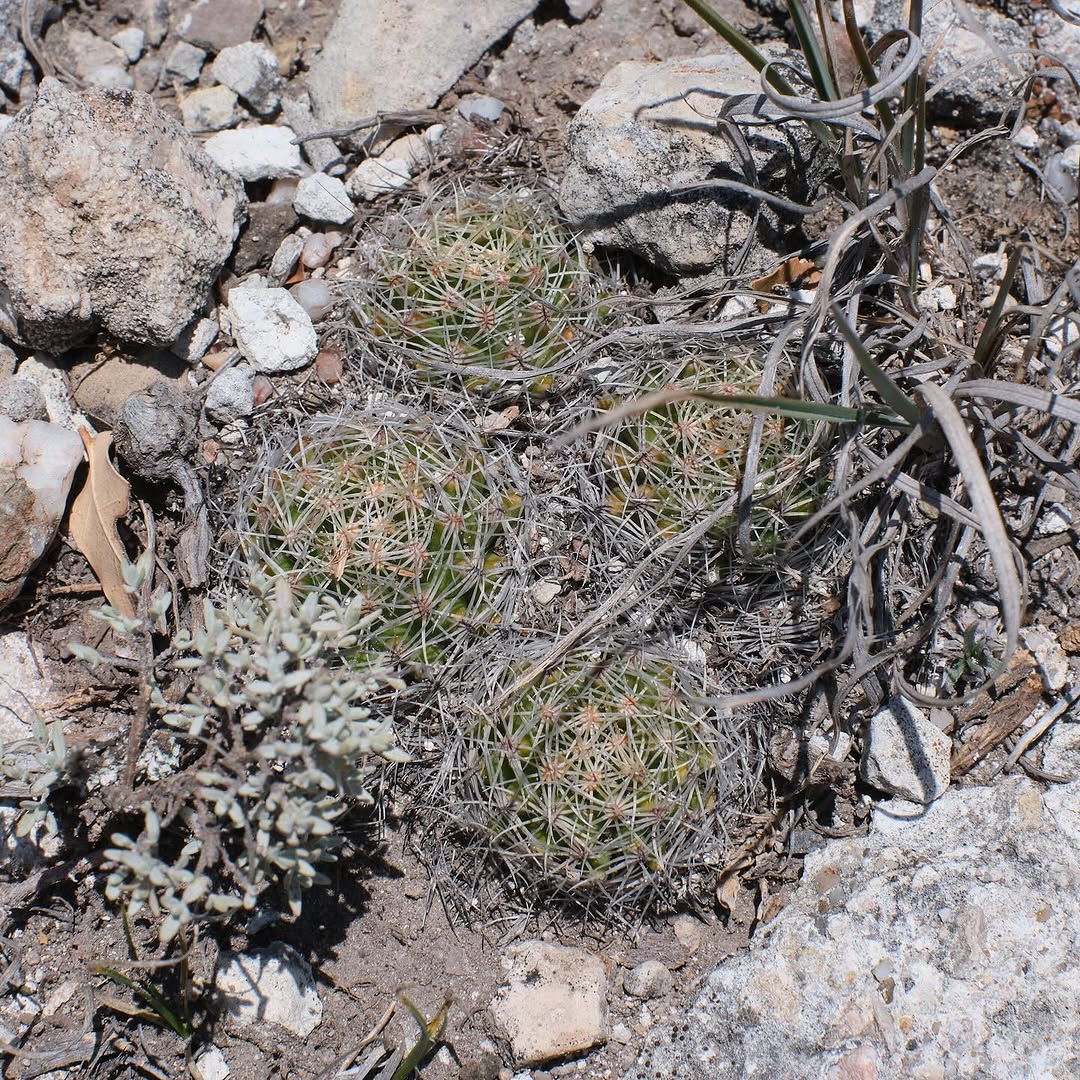
Mammillaria napina grows at elevations between 1,700 and 2,350 meters, typically on rocky limestone slopes with sparse vegetation cover. The substrate is skeletal: shallow soil over weathered limestone, heavily mineral, with negligible organic content. Plants are usually partially concealed among small stones and leaf litter, with only the flat apex and its radiating spines visible above the surface. This cryptic habit, combined with the small body size, makes the species easy to overlook in the field. It is not uncommon for experienced botanists to walk past populations without seeing them until a plant is flowering.
The Tehuacán-Cuicatlán Biosphere Reserve, established in 1998, covers a significant portion of the species range and provides the primary in-situ conservation protection. Outside the reserve, threats include agricultural expansion (particularly goat grazing, which both damages plants directly and degrades habitat), road construction, and illegal collection. The species is included in CITES Appendix II, meaning international trade requires permits, and collection from the wild is prohibited under Mexican law.
Morphology
The pectinate (comb-like) spine arrangement of Mammillaria napina. Ten to twelve radial spines per areole, 8 to 10 millimeters long, glassy white with distinct yellow bases. Spines lie nearly flat against the body surface.
The stem is semiglobose to globose, 4 to 6 centimeters in diameter and approximately the same height, but in habitat the visible portion is far less. The plant sits with most of its body below the soil surface, exposing only the flat or slightly convex apex. The epidermis is grey-green to olive-green, smooth, without the dark pruinose coating of Chilean Copiapoa species or the reddish cast of some Ariocarpus.
Tubercles are conical, low, circular in cross-section, without latex. This absence of milky sap is a diagnostic character: Mammillaria species split into those with latex (series Mammillaria and related) and those without (series Longiflorae and others). The tubercles spiral around the stem in parastichies of 8 and 13, a Fibonacci arrangement common in the genus. The axils between tubercles are either naked or sparsely woolly, not the dense bristly axillary wool of some other Mammillaria species.
Spination is the most visually distinctive feature. Each areole produces 10 to 12 radial spines, pectinate (arranged like the teeth of a comb), slightly curved, 8 to 10 millimeters long. The spines are glassy white with distinct yellow bases, giving a two-toned effect that is most visible on fresh new growth. They spread laterally and interlace with spines from adjacent areoles, creating a flat, fan-like covering over the body surface. Central spines are typically absent (the variety centrispina accounts for plants with occasional centrals, but this condition is uncommon).
The root is disproportionately developed. A thick, napiform (turnip-shaped) taproot descends from a narrow neck connecting to the base of the stem. In plants that have divided into clusters of 3 or 4 heads, the root becomes somewhat spindle-shaped. The root can exceed the visible body in size by a factor of three or more, and at repotting it reveals the true proportions of a geophytic cactus: a small green disc on top of a storage organ doing most of the work.
Flowers are the other defining feature. They are large for a Mammillaria, 3 to 4 centimeters long, pale carmine to pink in color, with near-white throats. The flowers emerge from the apex rather than from axils between tubercles, consistent with the series Longiflorae diagnostic character. The tube is elongated and funnel-shaped. Fruits are small, green to reddish, maturing to pale red, with black seeds approximately 1 millimeter in diameter.
The Geophytic Strategy
Mammillaria napina is a geophyte: most of its mass sits below ground in a storage root, and only a small photosynthetic disc projects at or near the soil surface. This growth strategy has evolved multiple times in the Cactaceae, always in response to extreme seasonal drought. Copiapoa hypogaea from the coastal Atacama of Chile follows the same pattern on a different continent. Ariocarpus species in the Chihuahuan Desert of northern Mexico show a seasonally retractile version, pulling their bodies into the soil during drought and re-emerging when moisture returns. Aztekium and some Turbinicarpus species show similar adaptations.
The advantages are clear. A body sunk below ground loses less water to evaporation than one exposed to full sun and wind. The soil acts as thermal insulation, buffering the temperature swings between cold nights and hot days. The tuberous root, sitting in deeper cooler soil layers, can access moisture that surface-rooted plants cannot reach. And when the annual drought arrives, the plant does not need to maintain photosynthesis at a high rate. It can shut down, shrink slightly as water reserves deplete, and wait.
The trade-off is slow growth. A plant that devotes most of its mass to water storage rather than photosynthetic surface area grows slowly by definition. Seedling Mammillaria napina may take three to four years to reach a body diameter of one centimeter. Flowering maturity takes five to eight years in cultivation under favorable conditions, longer in habitat. The species compensates for slow individual growth with long individual lifespans: well-grown cultivated plants can live 40 years or more, and habitat plants likely live longer still.
Locality Detail
The distribution is centered on the Tehuacán-Cuicatlán Valley and the adjacent mountain ranges in Puebla and Oaxaca. Documented localities occur west of Tehuacán (the type locality), south through the Mixteca region of Oaxaca, and in isolated populations in the foothills of the Sierra Madre Oriental. Hernández & Gómez-Hinostrosa (2015), in their comprehensive atlas Mapping the Cacti of Mexico part II: Mammillaria, provide the most complete published distribution data for the species.
Population density varies considerably across the range. Some sites support dense aggregations of hundreds of plants within a small area; others support only scattered individuals. Where the species is protected within the Tehuacán-Cuicatlán Biosphere Reserve, populations appear stable. Outside the reserve, fragmentation from agriculture and road development has reduced connectivity between subpopulations, with potential long-term genetic consequences.
Mammillaria napina care and cultivation
Substrate and containers
The tuberous root dictates the container choice. A deep pot, at least twice the depth of the visible body, is essential. Substrate must be heavily mineral: 45 per cent pumice as the primary component, 15 per cent lava rock for drainage aggregate, 5 per cent zeolite for cation exchange, 30 per cent granite grit for structure, and no limestone chip; no cultivation-tier source recommends adding it for this species, so the mix stays lime-free by default. Round out with 5 per cent worm castings. Organic content above 10 per cent holds too much moisture around the root neck and is a direct path to rot.
All ten Mammillaria species on this site share the same declared house-formulation blend for pumice, lava, zeolite and granite; no published source gives species-specific figures for those four. Organic sits at a flat 5 per cent across the genus, the floor of the rot-risk band and not a per-species finding. Limestone is the one component with any cultivation basis, and only a few species carry it, on a named grower’s practice rather than on habitat rock.
| Species | Pumice | Lava | Zeolite | Granite | Limestone | Silica | Organic |
|---|---|---|---|---|---|---|---|
| M. herrerae | 40% | 15% | 5% | 25% | 10% | 0% | 5% |
| M. napina (this page) | 45% | 15% | 5% | 30% | 0% | 0% | 5% |
| M. pectinifera | 40% | 15% | 5% | 25% | 10% | 0% | 5% |
| M. duwei | 40% | 15% | 5% | 20% | 5% | 0% | 15% |
| M. schwarzii | 45% | 20% | 10% | 15% | 0% | 0% | 10% |
| M. bertholdii | 40% | 15% | 5% | 30% | 0% | 0% | 10% |
| M. luethyi | 45% | 15% | 5% | 25% | 0% | 0% | 10% |
| M. huitzilopochtli | 45% | 15% | 5% | 20% | 5% | 0% | 10% |
| M. crucigera | 30% | 20% | 10% | 25% | 10% | 0% | 5% |
| M. herrerae f. albiflora | 40% | 10% | 5% | 20% | 15% | 5% | 5% |
Watering and light
Water moderately during the active growing season (spring through early autumn) with complete dryout between applications. A thorough soaking followed by 10 to 14 days of drying is a reasonable starting point. In winter, keep completely dry. The tuberous root stores water for months, and cool-wet winter conditions kill more cultivated specimens of this species than any other factor. The narrow neck between root and stem is the rot entry point, and a wet root collar in cold weather is fatal.
Full sun produces the most characterful plants: compact growth, dense spine development, and reliable flowering. Shade produces etiolated, soft plants with reduced spination. In climates with intense summer sun, light shade during the hottest afternoon hours is acceptable, but the species tolerates and responds to strong light better than many geophytic cacti.
Seed grown versus grafted
Seed grown is the collector standard. The disc-shaped habit, the properly proportioned root, and the reliable flowering are all characters that develop best in plants grown slowly from seed, never grafted. Grafted plants grow considerably faster (often flowering in 2 to 3 years versus 5 to 8 from seed) but tend to produce elongated, unnaturally large bodies that sit above the soil rather than flush with it. A grafted Mammillaria napina that looks like a miniature barrel cactus has lost the defining aesthetic of the species.
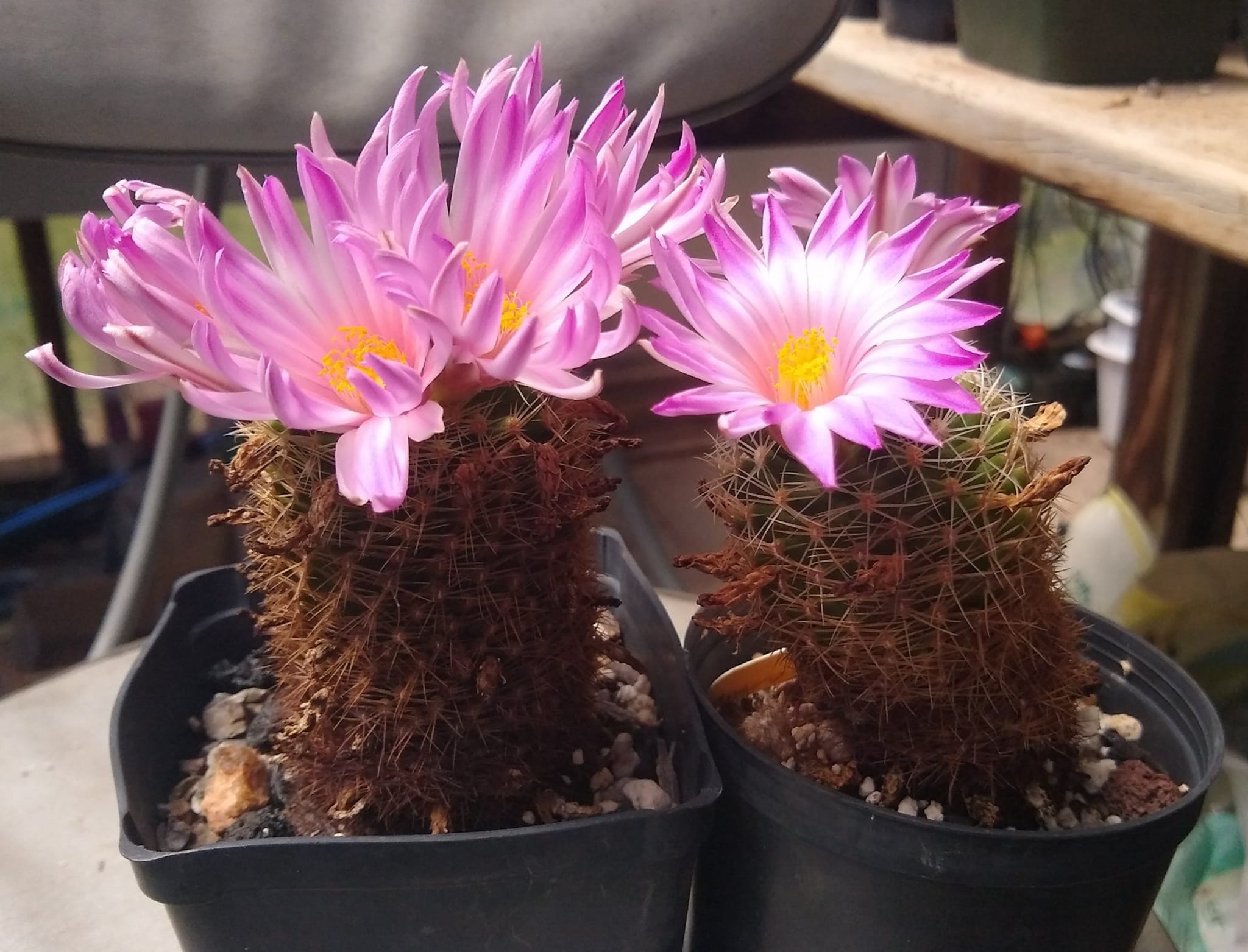
Seed grown specimens are slow. Plants from seed require five to eight years to reach flowering size and ten or more to develop the full spine density and tuberous root proportions of a mature specimen. This slow timeline is reflected in pricing: mature seed grown plants with documented provenance go well into the thousands from specialist dealers. Grafted material is more affordable but less valued by serious collectors for reasons already covered.
Comparing Mammillaria napina to Related Species
Within series Longiflorae, the closest relatives are Mammillaria longiflora (the type species of the series) and Mammillaria saboae. Mammillaria longiflora is larger-bodied and more freely clumping, with a less pronounced geophytic habit. Mammillaria saboae is smaller and more densely clustering. Both share the elongated apical flowers that define the series, but neither matches the extreme root-to-body ratio of Mammillaria napina.
Outside the series, the most informative comparison is with Copiapoa hypogaea from the Atacama Desert of Chile. The two species are not closely related phylogenetically (they sit in different subfamilies within Cactaceae and on different continents), but they have converged on nearly identical growth strategies: a small, disc-shaped above-ground body combined with a disproportionately large tuberous taproot. The cases demonstrate that the geophytic habit is a repeatable evolutionary solution to extreme aridity, with different cactus lineages arriving at similar anatomies from entirely different starting points.
The differences are in detail. Copiapoa hypogaea has fewer, shorter spines and produces yellow flowers with reddish outer segments; Mammillaria napina has more numerous pectinate white spines and produces carmine-pink flowers from the apex. Copiapoa hypogaea grows in coastal fog desert near sea level; Mammillaria napina grows in rain-shadow valleys at 1,700 to 2,350 meters elevation. The two occupy ecologically similar niches on different continents in different climate zones.
Within Mammillaria more broadly, the geophytic habit of napina is unusual. Most Mammillaria species have well-developed above-ground stems with fibrous or minor tuberous roots. The other Tehuacán-Cuicatlán endemic species we cover, such as Mammillaria crucigera and Mammillaria pectinifera, have much less pronounced geophytic tendencies, though Mammillaria pectinifera is also flat and partially sunken in habitat.
Frequently asked questions
How difficult is Mammillaria napina to grow?
How is Mammillaria napina propagated from seed?
Is Mammillaria napina legal to own?
Where does Mammillaria napina grow in the wild?
When does Mammillaria napina flower?
Related Taxa in the Genus
Sources & further reading
Purpus, J.A. (1912). Mammillaria napina sp. nov. Monatsschrift für Kakteenkunde 22: 161. · Britton, N.L. & Rose, J.N. (1923). The Cactaceae, vol. 4: 104. · Craig, R.T. (1945). The Mammillaria Handbook. · Hunt, D. (2013). The New Cactus Lexicon. · Fitz Maurice, W. et al. (2013/2017). Mammillaria napina. IUCN Red List: e.T152476A121495093. · Hernández, H.M. & Gómez-Hinostrosa, C. (2015). Mapping the Cacti of Mexico part II: Mammillaria. Succulent Plant Research 9: 1–189. · Villaseñor, J.L. (2016). Checklist of the native vascular plants of Mexico. Revista Mexicana de Biodiversidad 87: 559–902. · Royal Botanic Gardens, Kew. Plants of the World Online. Retrieved 2026.